Reviewed · PRIVATE
Art Nouveau Treasures of Budapest – Exclusive Private Tour
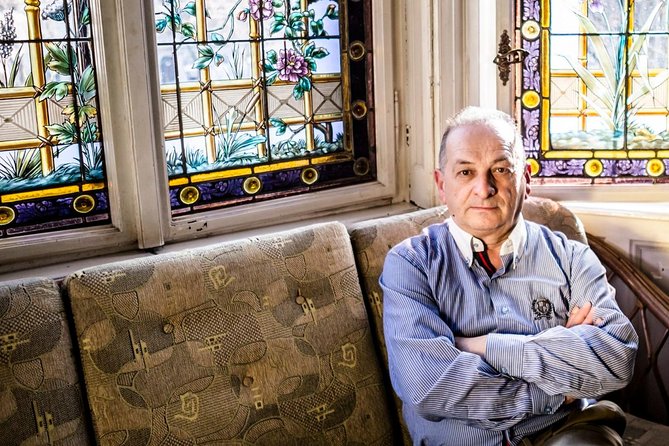
Budapest’s Art Nouveau is not confined to one grand boulevard. This private walk links colorful Secessionist buildings, Gellért Baths, historic bridges, and a private apartment containing a stained-glass window by Miksa Róth. Guide Miklós brings the buildings to life with art, architecture, and city history.
I like the small private format, which gives you room to ask questions and adjust the pace. I also like the rare access to interiors, especially the Miksa Róth window and a historic staircase with leaded glass. The main drawback is that the tour lasts about two and a half to three hours but includes walking and public transport, so it may feel rushed if you want long stops or detailed sketching time.
In This Review
- Key points at a glance
- Why Budapest’s Art Nouveau deserves a dedicated walk
- Starting at Central Market Hall
- Gellért Baths, where architecture meets bathing culture
- Crossing Budapest’s first stone bridge
- Ödön Lechner’s Postal Savings Bank
- Nemzeti Bank and the Palace District
- Gutenberg Square and the Miksa Róth connection
- The private apartment and its stained-glass window
- What the private format adds
- Price, transport, and practical value
- Who should book this Art Nouveau walk
- Should you book it?
- FAQ
- Where does the tour begin?
- Where does the tour end?
- How long does the tour last?
- Can I choose the starting time?
- Is this a private tour?
- Is public transportation included?
- Is private transportation provided?
- Is admission to Gellért Thermal Bath included?
- Are food and drinks included?
- Can I cancel for a full refund?
- Can most people participate?
Key points at a glance
- Miksa Róth stained glass: Finish in a private, century-old apartment with an original work by one of Hungary’s leading stained-glass artists.
- Ödön Lechner’s tilework: See the Postal Savings Bank on Hold utca, a bold Secessionist building covered in color and folk-inspired design.
- Gellért Baths: Study the exterior and artistic character of one of Budapest’s famous thermal bath buildings without paying an admission fee.
- Private group of up to five: Ask questions freely and request a start time that fits your Budapest plans.
- Walking with public transport: The route does not include a private vehicle, so wear comfortable shoes and budget for a transit ticket.
- Art historian guide: Miklós explains both the visual details and the way Art Nouveau shaped Budapest at the turn of the twentieth century.
Why Budapest’s Art Nouveau deserves a dedicated walk
Budapest is often sold through its castle, Parliament, river views, and thermal baths. Those sights matter, but the city’s Secessionist architecture tells a more distinctive story. Around the turn of the twentieth century, Hungarian designers borrowed from European Art Nouveau while adding local folk patterns, colorful ceramics, and national motifs.
That combination is easy to miss on an ordinary sightseeing walk. You may pass a building with an unusual roofline or a riot of glazed tiles and simply file it under old Budapest. On this tour, Miklós points out how the decoration works, who designed it, and why the building looks unlike a standard French or Austrian Art Nouveau façade.
The tour is especially useful if you already care about design. One participant who traveled to Budapest specifically for Secessionist architecture wanted more time spent on design details and less on general history. That is sensible advice. You should tell Miklós at the start how much you want to focus on tiles, stained glass, ironwork, interiors, or the broader story of the city.
A few more Budapest tours worth comparing
- Private Budapest TukTuk Tour: Custom Route, Hotel Pickup
★ 5.0 · 1,307 reviews - Budapest Essentials Private Tour Highlights and Hidden Gems
★ 5.0 · 861 reviews - Budapest Private Tuk Tuk Half-Day Tour
★ 5.0 · 606 reviews
Starting at Central Market Hall
The experience begins at Central Market Hall, Budapest 1093, with hotel pickup also available by arrangement. This is a practical meeting point, particularly if you are staying near the city center or want to combine the tour with time at the market before or after.
The first stop is listed as Central Market Hall, with about 20 minutes allocated and admission not included. The building itself fits the theme well: it gives you an immediate sense of Budapest’s interest in decorative architecture and large civic structures. Still, the supplied schedule does not explain whether the visit is an interior tour of the market or a short architectural introduction, so clarify that point when booking.
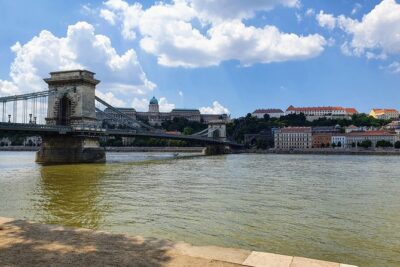
The route then crosses one of Budapest’s handsome bridges toward the foot of Gellért Hill. This is one of the tour’s pleasant transitions. Instead of moving directly from one address to another by car, you get changing views across the Danube and a look toward the Hungarian Royal Palace.
You should expect a real city walk rather than a series of parked stops. The bridges provide scenic pauses, but they also mean weather matters. Rain did not prevent one previous tour from being enjoyable, but dry shoes and a light waterproof layer will make the experience easier.
Gellért Baths, where architecture meets bathing culture
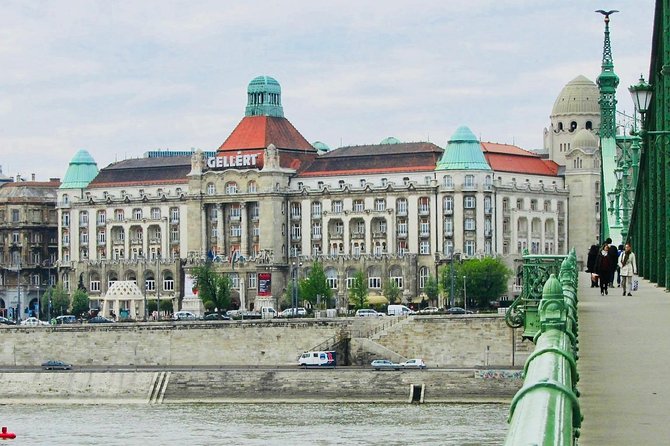
The next stop is St. Gellért Thermal Bath and Swimming Pool, with about 20 minutes set aside. Admission is listed as free for this tour, so this is an exterior and architectural visit, not a bathing session.
Hotel Gellért and its bath complex have been a major presence on the western bank of the Danube for about a century. The building is described as dominantly Secessionist, and that makes it a useful example of how Budapest designers applied Art Nouveau ideas to a public institution.
You will not have time here for a full bath visit. Instead, the value comes from looking carefully at the building as a work of art. Miklós can help you notice the relationship between a thermal bath, a hotel, and the decorative style used to make a practical public building feel ceremonial.
This stop also gives the tour a welcome change of scale. Some Art Nouveau examples are residential or commercial façades. Gellért Baths show how the style could shape a major public complex. If you are hoping to tour the pools, buy a day ticket, or spend an afternoon bathing, plan that separately.
Crossing Budapest’s first stone bridge
The route continues across Budapest’s first stone bridge, with views toward the grand Hungarian Royal Palace. The bridge crossing is not a formal museum stop, but it adds something a bus-based tour cannot provide.
You get a sense of how the river divides and connects the city. The western bank leads toward Buda and Gellért Hill, while the route eventually returns to Pest for later buildings. The bridge also gives you a chance to step back from close architectural details and see Budapest as a city shaped by the Danube.
This part of the walk may be one of the most enjoyable sections if you like photographs and city views. It is also one reason to avoid scheduling the tour immediately after a long walking excursion. The distance is manageable for most people, but the route includes several crossings and transfers rather than one compact block.
A different kind of day in Budapest:
- Budapest: City Highlights Cruise with Welcome Drink
★ 4.6 · 35,610 reviews - Budapest: Unlimited Prosecco, Beer and Aperol Spritz Cruise
★ 4.8 · 25,310 reviews - Budapest: Széchenyi Spa Day Ticket with Optional Upgrades
★ 4.3 · 23,911 reviews - Budapest: Nighttime or Daytime Sightseeing Cruise
★ 4.2 · 21,062 reviews
Ödön Lechner’s Postal Savings Bank
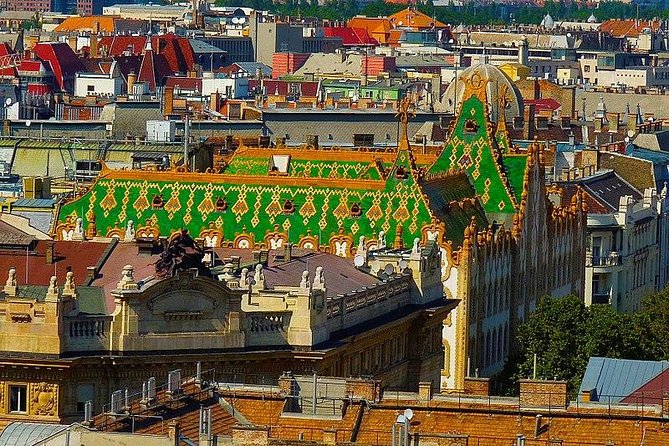
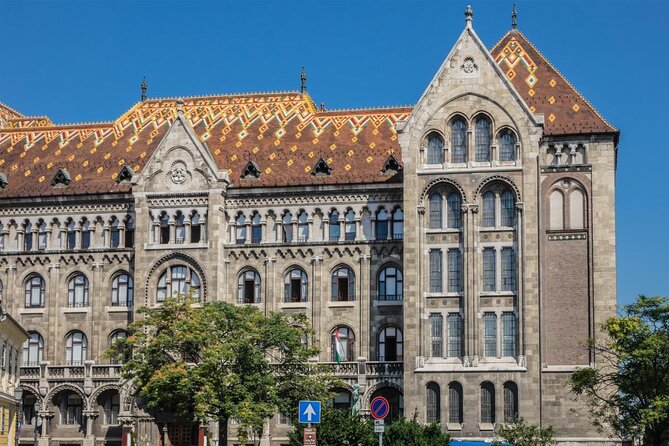
The Postal Savings Bank on Hold utca is the architectural high point for many people on this route. Ödön Lechner designed it in 1901, and the building is known for its colorful ceramic tiles and folk-inspired motifs.
Lechner is central to the Hungarian version of Art Nouveau. His work did not simply copy Paris or Vienna. It used Hungarian decorative ideas, strong color, curved forms, and roof decoration to create buildings with a very local identity.
The exterior rewards slow looking. Instead of taking one photograph and moving on, examine how the tiles cover the surface and how the folk motifs fit into the larger design. This is the kind of building that benefits from an art historian’s explanation because its exuberance can otherwise seem merely playful.
The schedule gives the stop about 20 minutes and lists admission as free. That timing is enough for an informed exterior discussion, though it is not enough for a long architectural study. The itinerary also includes a separate Nemzeti Bank stop and then the Postal Savings Bank, while describing the Hold utca building as the Postal Savings Bank. Since the supplied route details overlap here, ask Miklós to confirm exactly which exterior or entrance will be visited on your date.
Nemzeti Bank and the Palace District
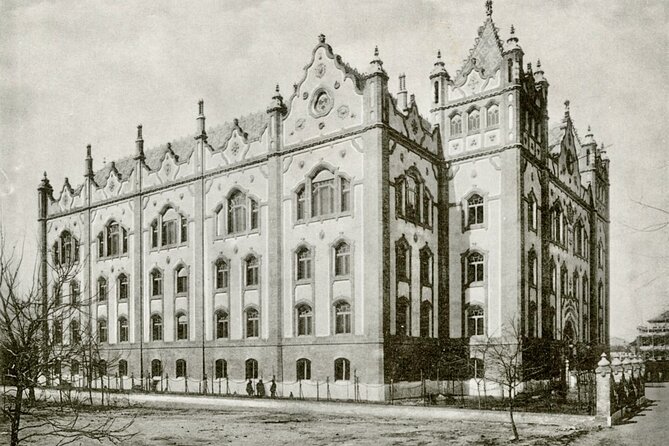
The itinerary identifies Nemzeti Bank as another stop, followed by the Postal Savings Bank. The description attached to both refers to Lechner’s Postal Savings Bank, so the names may indicate nearby points in the same part of the route rather than two fully separate architectural visits.
This matters if you are booking mainly to see a specific building. The tour clearly promises Lechner’s famous Secessionist structure, but the precise treatment of the Nemzeti Bank stop is not fully explained. A quick message before booking can remove any uncertainty and help you tailor the discussion to the buildings you most want to see.
The surrounding area also adds context. Art Nouveau in Budapest was not limited to isolated masterpieces. Banks, apartments, hotels, and public buildings all used the new style to project modernity and civic pride. With Miklós, you can connect the decorative surface to the purpose of the building, rather than treating each façade as a separate postcard.
Gutenberg Square and the Miksa Róth connection
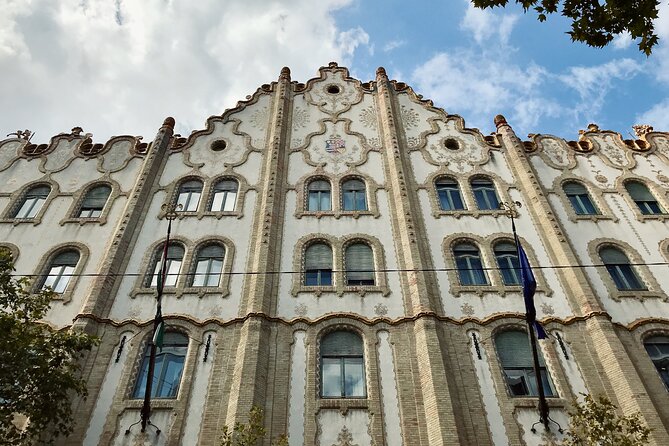
Gutenberg Square brings another architectural period into the walk. Here you see a historic building in Budapest’s eighth district, in the Palace area, with an impressive staircase and leaded glass associated with Miksa Róth.
The description calls the building Art Deco, so this stop also shows how decorative design developed beyond the earlier Art Nouveau period. That is useful if you want to understand Budapest as a sequence of artistic experiments rather than one fixed style.
The staircase is particularly important. Exterior façades can be admired by anyone passing on the street, but interior details often require local knowledge or a private arrangement. The chance to see a staircase with leaded glass gives the tour a more personal feel than a standard architecture walk.
The stop is listed at about 15 minutes. That is enough to appreciate the details and hear the story, but not enough for an extended interior photography session. Access may also depend on the building’s arrangements on the day, so treat the interior visit as a special feature rather than a guaranteed museum-style entry.
The private apartment and its stained-glass window
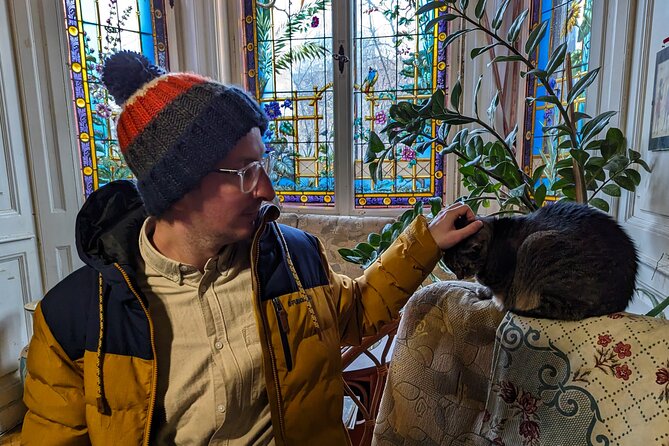
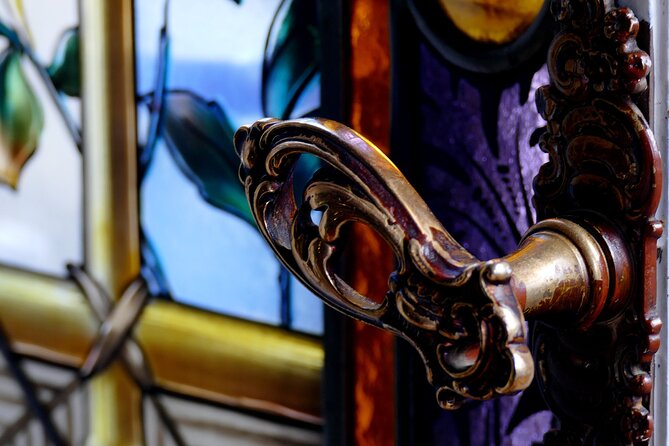
The tour finishes in a century-old private apartment, where you can see an original stained-glass window by Miksa Róth. This is the experience’s most unusual feature.
Róth was a major Hungarian stained-glass artist, and his work can also be found in important public buildings, including the Parliament. Many of those interiors are not part of ordinary sightseeing access. Here, the appeal is not simply seeing a famous name, but seeing how decorative art functioned in a residential setting.
The apartment is connected with Fungarian’s office and was built in 1898. That gives you a direct setting for discussing what Art Nouveau meant in everyday residential architecture. You are not only looking at a grand public façade. You are seeing how the period’s taste appeared inside a home.
The private setting is also the main reason this tour feels different from a general city walk. Access is exclusive to your group, but remember that the apartment is a private space, not a public museum. Be considerate about photography and ask before taking pictures.
The published meeting details say the tour ends in Budapest at Rákóczi tér, while the fuller description says it finishes at the private apartment. Because those details do not perfectly match, confirm the final address and plan your onward route after booking.
What the private format adds
The tour is for your group only, with up to five people. That is a good size for architecture. You can stand close enough to hear without relying on a microphone, ask why a certain motif appears, and request more or less detail at a stop.
The start time is flexible on request. This helps if you have a morning train, a late arrival, or another Budapest appointment. It also lets you place the walk when the weather forecast looks best, though start-time changes should be arranged in advance.
Miklós is named in the feedback and comes across as passionate about Budapest and its architecture. His style appears to combine clear explanation with personal enthusiasm. One useful point from the tour experience is that he sometimes includes a short break at an Art Nouveau-furnished café. If you would rather use every minute for buildings, say so when you meet. If you like a pause to discuss what you have seen, the break may suit you.
Price, transport, and practical value
The price is $261.67 per group of up to five. For a full group, that works out to about $52 per person. For one or two people, the per-person cost is much higher, but you are paying for a private guide and access to a residential interior that a standard group tour is unlikely to include.
The price includes a local guide and professional art historian guide, along with a customizable start time. Food, drinks, and public transport tickets are not included. The tour does not provide private transportation, so you should budget for transit and expect to walk between locations.
That arrangement keeps the experience focused and personal, but it is not the easiest option for someone who wants a chauffeured tour. Most people can participate, and service animals are allowed. Comfortable shoes are more important than dressy clothes.
The 2 hour 30 minute to 3 hour duration is reasonable for a first look at Budapest’s Secessionist architecture. It is less ideal if you want to enter every building or spend several minutes photographing each decorative detail. If you are a serious Art Nouveau enthusiast, ask about extending the route. One suggestion made directly to the guide was to use the full three hours and add more buildings beyond the apartment, which is a sensible request for a specialist audience.
Who should book this Art Nouveau walk
I would choose this tour if you care about architecture, decorative arts, stained glass, or the way national identity appears in design. It is also a good choice if you have already seen Budapest’s main landmarks and want a more focused subject.
The private format suits couples, families, and small groups who do not want to follow a fixed script. It is especially useful for anyone who likes asking detailed questions. An art student, photographer, interior-design fan, or museum enthusiast will get more from it than someone who only wants a quick list of famous sights.
I would hesitate if you dislike walking, want a fully vehicle-based tour, or expect long indoor visits at every stop. The route includes public spaces and exterior viewing, and some interior access may depend on arrangements. It is also worth confirming the exact order of the Nemzeti Bank, Postal Savings Bank, Gutenberg Square, and final apartment stops before you commit.
Should you book it?
Book this tour if you want Budapest’s Art Nouveau explained by a specialist rather than simply pointed out from a bus window. The strongest reasons are the small group, flexible timing, Lechner’s colorful Postal Savings Bank, Gellért Baths, and the private Miksa Róth stained-glass window.
For the best value, bring four or five people and tell Miklós what interests you most. Ask for extra design analysis, confirm the apartment endpoint, and check how much time will be devoted to the overlapping Nemzeti Bank and Postal Savings Bank entries. If those details suit your plans, this is a thoughtful, personal way to see a less obvious side of Budapest.
FAQ
Where does the tour begin?
The listed starting point is Central Market Hall in Budapest, 1093, Hungary. Pickup can also be arranged from your Budapest hotel or another central meeting point.
Where does the tour end?
The tour description says it finishes in a century-old private apartment where you see a Miksa Róth stained-glass window. The endpoint is also listed as Budapest, Rákóczi tér, so confirm the exact final address when arranging your tour.
How long does the tour last?
The experience lasts approximately 2 hours 30 minutes to 3 hours.
Can I choose the starting time?
Yes. The starting time is customizable on request, and the operator can arrange a time that suits your schedule.
Is this a private tour?
Yes. Only your group participates, with up to five people included in the listed group price.
Is public transportation included?
No. The tour uses walking and public transportation, but public transport tickets are not included in the price.
Is private transportation provided?
No. The experience does not include private transportation.
Is admission to Gellért Thermal Bath included?
Admission is listed as free for the tour. The information provided describes a visit to the bath and hotel building, not a bathing session.
Are food and drinks included?
No. Food and drinks are not included unless specifically stated. A short refreshment break may be offered during the tour.
Can I cancel for a full refund?
Yes. You can cancel at least 24 hours before the local start time for a full refund. Cancellations or changes made less than 24 hours before the start are not accepted for a refund.
Can most people participate?
Yes. Most people can participate, the tour is near public transportation, and service animals are allowed. Because the route is conducted on foot with public transport, comfortable shoes are advisable.
Recently added around Budapest
- Hiking + Chairlift ride + viewpoints in Budapest★ 5.0 · 3 reviews
- FoolsCode: EscapeRoom/Sightseeing tour with Actor Tourguide★ 5.0 · 3 reviews
- Grand Budapest tour with private transportation★ 5.0 · 3 reviews
- Budapest: Private Customizable Tour in French★ 5.0 · 3 reviews
- Budapest: Private, Personalized Pub Crawl, 3 drinks included★ 4.5 · 3 reviews
- Budapest Drinks and Piano Show Cruise★ 4.5 · 3 reviews
- Discover Budapest Using Tram Two★ 5.0 · 3 reviews
- Budapest: Private 3-Hour Gödöllő Palace Tour★ 4.9 · 3 reviews
Private, compared.

Private Budapest TukTuk Tour: Custom Route, Hotel Pickup
Read our review →
Budapest Essentials Private Tour Highlights and Hidden Gems
Read our review →
Budapest Private Luxury Sightseeing Tour with Guide and Transport
Read our review →
Private Budapest City tour with Classic Russian Jeep or G-Wagon!
Read our review →
Budapest Private Full Day City Sightseeing Tour Walking or by Car
Read our review →