
Reviewed · WALKING TOURS
Budapest Art Nouveau Walking Tour
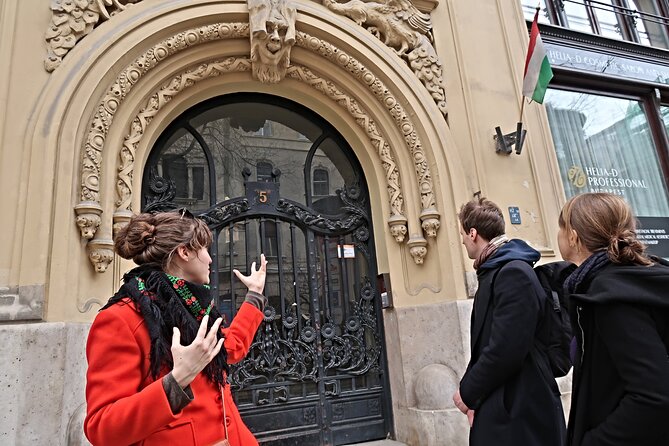
Budapest’s Art Nouveau is not a soft, sleepy style. It is bold, playful, and often surprising, with brightly colored ceramics, curved lines, folk patterns, and Asian-inspired details. This tour focuses on the Hungarian version of the movement, called Hungarian Secession, with Ödön Lechner, often nicknamed Hungary’s Gaudi, at its center.
I like the chance to see both the Palace of the Royal Post and Gresham Palace, including their entrance interiors. I also like that the walk moves beyond famous facades to flower shops, banks, a department store, a coffee house, and Zsolnay ceramic work. The main consideration is timing: some interiors close on weekends, and entry fees for the House of Hungarian Art Nouveau and Kazinczy Street Synagogue are extra.
In This Review
- Key points at a glance
- Why Budapest’s Art Nouveau deserves a dedicated walk
- Starting in central Budapest
- Bedő House and the first look at Hungarian Secession
- The Hungarian State Treasury and Ödön Lechner’s ceramic imagination
- Gresham Palace and the polished side of Art Nouveau
- Rózsavölgyi Street and the everyday side of design
- Thonet House and Zsolnay tiles
- Paris Passage and the commercial city
- The Orthodox Synagogue on Kazinczy Street
- Weekend changes and alternative buildings
- What the $123 price buys you
- Who should book this walk
- Should you book the Budapest Art Nouveau Walking Tour?
- FAQ
- How long is the Budapest Art Nouveau Walking Tour?
- What language is the tour offered in?
- Is the tour private or shared?
- Where does the tour start?
- Is hotel pickup available?
- Are tram and metro tickets included?
- Is the Orthodox Synagogue on Kazinczy Street open every day?
- Can you enter the Hungarian National Bank on weekends?
- Are admission fees included?
- Can the route change if a building is closed?
Key points at a glance
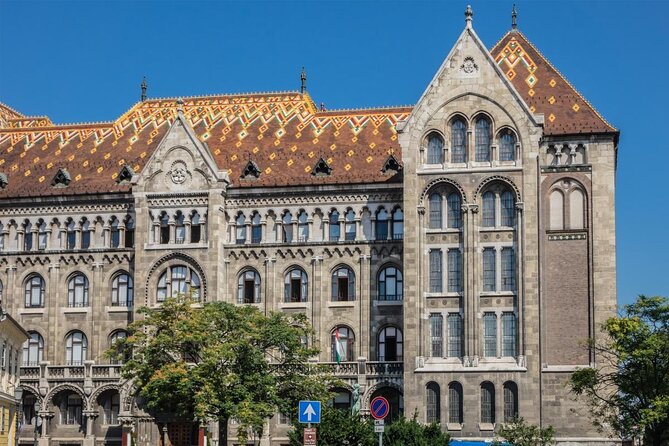
- Ödön Lechner’s Postal Bank: See the architect’s fanciful use of color, ceramics, and Hungarian motifs.
- Gresham Palace interiors: Step inside the entrance hall for a closer look at the building’s decorative design.
- Zsolnay porcelain everywhere: Learn why durable, glazed ceramics became a signature of Hungarian Art Nouveau.
- Asian references: Understand how imagined eastern origins of the Hungarian people shaped local design.
- A small-group or private format: Ask questions and adjust the walk toward the buildings that interest you most.
- Weekend planning matters: The Hungarian National Bank and Kazinczy Street Orthodox Synagogue may not be open.
Why Budapest’s Art Nouveau deserves a dedicated walk
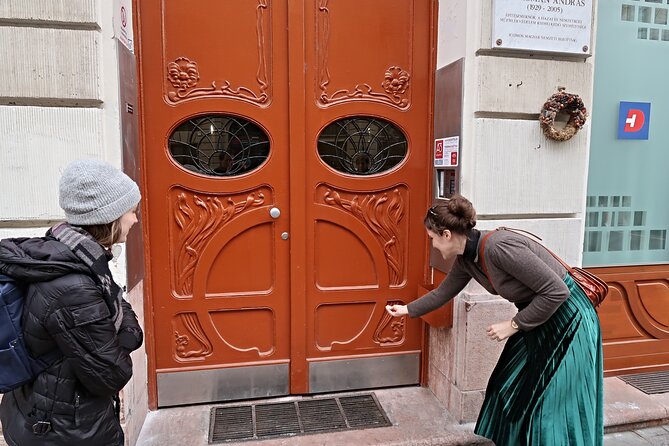
Budapest is full of grand buildings, but the Art Nouveau examples can be easy to miss if you are simply walking from one major sight to the next. Their decoration often sits above eye level, around doorways, inside entrance halls, or behind ordinary-looking street fronts.
This three-hour walk gives you a way to read those details. Instead of seeing a colorful tile pattern as mere decoration, you learn how it connects to Hungarian identity, industrial progress, European Orientalism, and the city’s confidence during the Belle Époque.
Hungarian Art Nouveau developed its own voice. Across Europe, designers were breaking away from older historic styles, but Hungarian architects often added folk references and eastern motifs to their work. The effect can feel both modern and national, especially when paired with ceramics from the Zsolnay factory in Pécs.
The guide is an art and architecture historian, and the tour is offered in English. Anna led one recent tour and was praised for her friendly manner and strong command of Budapest’s art and history. A German-language tour has also been available, with very good German spoken by the guide.
More walking tours in Budapest:
- Budapest: Buda Castle Walk with Saint Stephen’s Hall
★ 4.5 · 3,012 reviews - Big Bus Budapest Hop-On Hop-Off Bus and Walking Tour
★ 3.5 · 2,206 reviews - Budapest: Buda Castle District Walking Tour
★ 4.6 · 2,108 reviews
Starting in central Budapest
Your starting point depends on the option you choose. You can arrange a central meeting point at Madal Café on Alkotmány u. 4, or select pickup from your hotel or holiday flat if that option is offered for your booking.
This is a walking tour, but you may need tram or metro tickets depending on the route and meeting arrangement. Those tickets are not included, so keep a small transport budget in mind.
The three-hour length is useful for this subject. A shorter walk could show you two or three facades, but it would leave little time to explain the materials and ideas behind them. Here, you have enough time to compare buildings and ask why Hungarian designers favored certain shapes, colors, and motifs.
The pace is likely to suit you best if you enjoy stopping often to look upward and examine details. Art Nouveau is not a style you can fully appreciate by marching past buildings. You need time for the guide to point out the smaller features.
Bedő House and the first look at Hungarian Secession
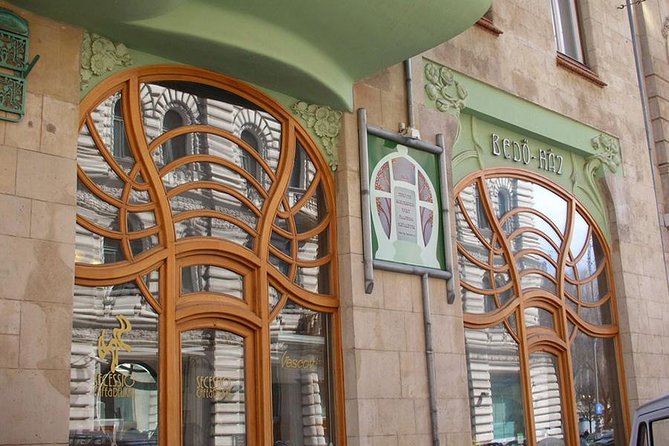
Bedő House provides an early introduction to the decorative language of Budapest’s Art Nouveau. The building is associated with the work of Emil Vidor and gives you a chance to see how the city’s architects moved away from strict historical imitation.
Expect the guide to explain the relationship between the building’s facade and the larger Hungarian Secession movement. You may notice ornamental patterns, curved forms, and decorative elements that do more than copy French or Belgian Art Nouveau.
This is a good first stop because it prepares you for Lechner’s work later. You begin to see that Hungarian Art Nouveau is not one fixed formula. Some buildings are restrained and elegant, while others are almost theatrical.
The drawback is that a facade can be difficult to study in a busy central street. Your guide’s explanations matter here, since the visual details may be spread across several floors and partly hidden by street-level activity.
The Hungarian State Treasury and Ödön Lechner’s ceramic imagination
The Hungarian State Treasury, also known as the Palace of the Royal Post, is one of the main reasons to book this walk. Ödön Lechner designed it as a bold expression of Hungarian Art Nouveau, and its decoration shows why he is often called Hungary’s Gaudi.
Lechner used color and surface in a way that makes the building feel almost crafted rather than simply constructed. Zsolnay ceramic tiles play an important part. Made in Pécs, these tiles allowed architects to place weather-resistant color and pattern directly onto a facade.
You will learn why Zsolnay ceramics are so important to Budapest’s architecture. The material was practical, but it also gave designers freedom to create a building that looked fresh, bright, and unmistakably modern for its time.
The tour may also discuss the building’s Hungarian references and eastern-looking motifs. These ideas were tied to the belief in the eastern origins of the Hungarian nation, though they also reflected a wider European interest in Orientalism.
Take time to look at the roofline, tile work, and decorative shapes rather than focusing only on the overall outline. The building rewards close attention. It is one of those places where a guide can help you see several layers of meaning in a few minutes.
A different kind of day in Budapest:
- Budapest: City Highlights Cruise with Welcome Drink
★ 4.6 · 35,610 reviews - Budapest: Unlimited Prosecco, Beer and Aperol Spritz Cruise
★ 4.8 · 25,310 reviews - Budapest: Széchenyi Spa Day Ticket with Optional Upgrades
★ 4.3 · 23,911 reviews - Budapest: Nighttime or Daytime Sightseeing Cruise
★ 4.2 · 21,062 reviews
Gresham Palace and the polished side of Art Nouveau
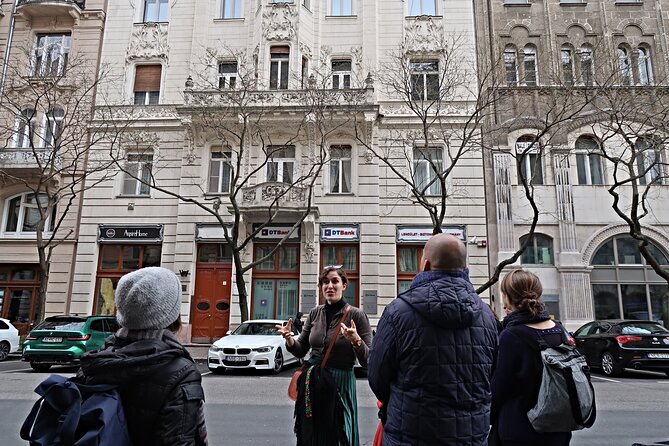
Gresham Palace presents a different mood. It is grand, refined, and tied to the international business world of early twentieth-century Budapest. Its location and decoration reflect a city that wanted to be seen as wealthy, modern, and cosmopolitan.
The facade has plenty to examine, but the entrance hall is especially useful. Visitors can enter the hall, allowing you to see interior details rather than viewing the building only from the pavement.
Your guide can point out the Art Nouveau approach to metalwork, stone, glass, and ornament. Look for the way decorative elements work together instead of appearing as separate pieces. Art Nouveau designers often treated a building as a complete artistic work, from the exterior line of the facade to the smallest interior fitting.
Gresham Palace also helps you compare two sides of the movement. The Postal Bank is more daring and strongly linked to Lechner’s Hungarian style. Gresham is more polished and international. Seeing both in one morning or afternoon makes the differences much clearer.
Access to the interior is a benefit, but it is not the same as taking a full architectural tour of every room. The available visit centers on the entrance hall, so you should book this experience for a focused look at Art Nouveau details, not for a complete inspection of the palace.
Rózsavölgyi Street and the everyday side of design
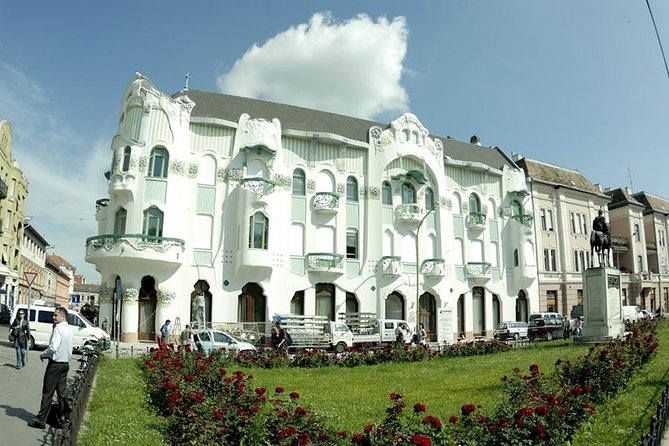
Rózsavölgyi Street adds a smaller-scale stop to a route otherwise filled with large public buildings. This helps show how Art Nouveau appeared in commercial and ordinary urban settings, not only in monumental architecture.
The walk also includes a flower shop with its original interior, a department store, several bank offices, and a small Art Nouveau museum and coffee house. These stops are valuable because they connect architecture with applied arts and daily life.
A flower shop, for example, lets you see how a design movement could shape a customer’s experience through shelving, fittings, glass, and decorative surfaces. A bank office shows how financial institutions used style to project confidence and modernity.
The small museum and coffee house offer a chance to see objects and interiors at closer range. This matters because facades can make Art Nouveau seem like a purely architectural movement. In fact, it also shaped furniture, ceramics, metalwork, glass, and commercial interiors.
The exact order of these stops can depend on opening hours and the day of your tour. If you have a particular interest in interiors, tell your guide at the start. Private and small-group arrangements make that sort of conversation easier.
Thonet House and Zsolnay tiles
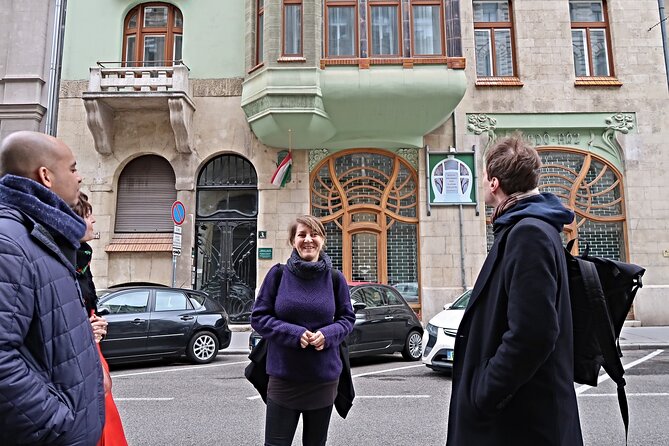
Thonet House is another strong stop for understanding the role of materials. The building is known for its use of Zsolnay porcelain tiles, and the guide can explain how the factory’s work changed what architects could do with a facade.
Zsolnay ceramics were not simply painted decoration. Their glazed surfaces could handle the weather while adding strong color and complex patterns. On a city street, that gave buildings a visual character that stone and plaster alone could not provide.
I find this one of the most useful parts of the tour because it gives you a practical way to identify Hungarian Art Nouveau later. Once you know to look for Zsolnay ceramics, you begin noticing how often Budapest’s designers used them.
The guide may also connect the tile patterns to folk art and Asian motifs. These references were not always literal copies of one culture. They formed part of a larger search for new shapes and a Hungarian style that differed from older European architectural traditions.
Paris Passage and the commercial city
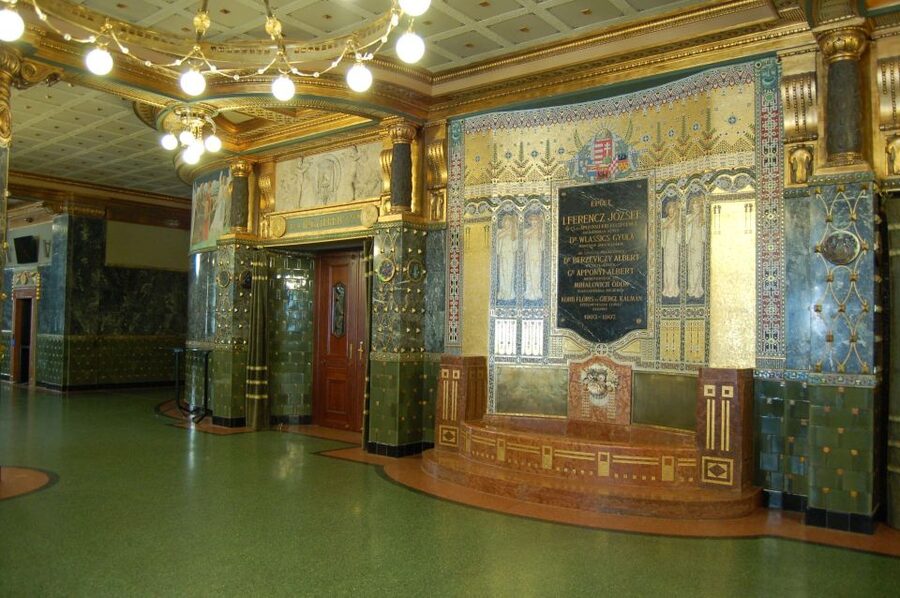
Paris Passage brings the tour back to the world of shops and public interiors. Its name hints at the international mood of Budapest at the time, when the city was eager to present itself as a sophisticated European capital.
The passage gives you another chance to see how Art Nouveau worked in a commercial setting. Instead of a government building or palace, you are looking at a place designed for movement, trade, and public life.
This contrast is helpful. The grand buildings show official ambition, while passages, shops, and department stores show how the style reached ordinary city routines. Your guide can place these details in the wider story of Budapest’s early twentieth-century growth and confidence.
Paris Passage is also a good point for comparing design elements from earlier stops. Notice how curves, plant-like lines, decorative glass, ceramics, and metalwork may appear in different combinations. Art Nouveau was flexible, and Budapest’s designers used it with varying degrees of restraint.
The Orthodox Synagogue on Kazinczy Street
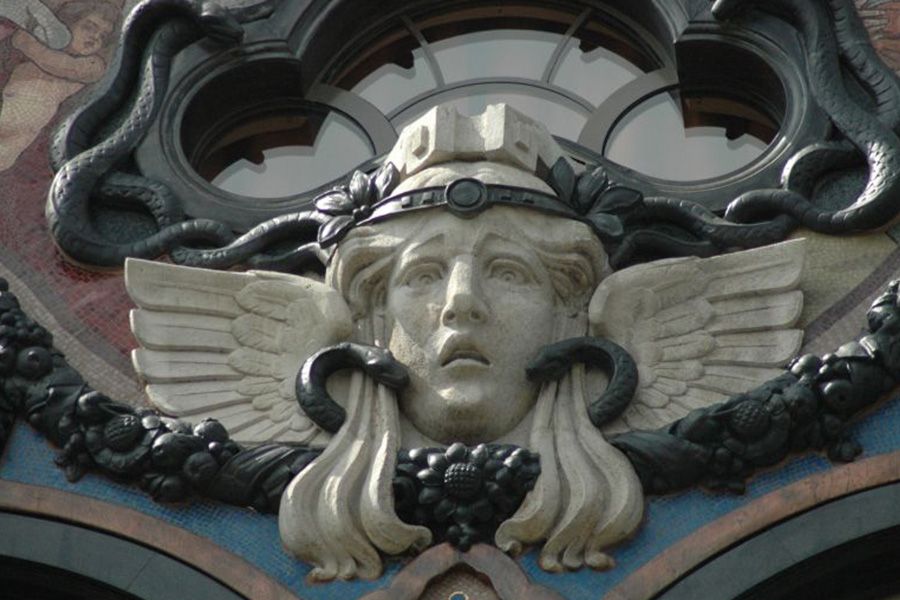
The tour can finish at the Orthodox Synagogue on Kazinczy Street, a small but striking Art Nouveau building with an especially interesting interior. Its inclusion broadens the tour beyond secular banks, palaces, and shops.
The synagogue shows how Art Nouveau could be adapted to a religious setting. The interior design adds another layer to the story of Budapest’s Jewish community and the city’s artistic life, while the decorative style gives the building a distinct character.
Entry costs about 2,000 HUF per person, roughly $7, when the site is open and included in your route. It is closed on Saturdays, so check the day before booking if this interior is important to you.
The synagogue is not always part of the exact same visit. Opening schedules can change the route, and the guide may substitute another Art Nouveau building or extend the tour with a different stop. Ask specifically about Kazinczy Street when arranging your time.
Weekend changes and alternative buildings
The Hungarian National Bank is closed on weekends, and it contains fine examples of Zsolnay porcelain. If you take the tour on a Saturday or Sunday, you may miss this interior.
The Orthodox Synagogue is also closed on Saturdays. These restrictions do not ruin the experience, since Budapest has many Art Nouveau buildings, but they can affect the balance between exterior and interior visits.
Possible alternatives include the Gellért Bath Hotel, the Museum of Applied Arts, and the Geology Museum. The exact replacement depends on the day and the interests of your group.
If you care most about seeing interiors, avoid Saturday and ask about the National Bank and synagogue before confirming. If your schedule only allows a weekend, the tour can still make sense for the exterior architecture and the guide’s interpretation.
What the $123 price buys you
At $123 per person, this is not a budget sightseeing walk. The value depends heavily on how much you care about architecture and on whether you book a private or small-group format.
You are paying for three hours with an art and architecture historian, rather than a general city orientation. That distinction matters. The tour is built around close observation, historical context, and access to selected entrance halls and interiors.
The price is easier to justify if you would otherwise walk past these buildings without understanding them. It is also more appealing if you want to ask detailed questions or adjust the route around your interests.
Remember to add the cost of public transport tickets, if needed. Entry fees may also apply at the House of Hungarian Art Nouveau, about 1,000 HUF per person, and the Orthodox Synagogue, about 2,000 HUF per person.
The private or small-group option gives this experience a personal feel, but it may not suit someone who only wants a quick overview of Budapest. If you prefer a broad introduction to the city’s major sights, a standard city tour will cover more ground for less money.
Who should book this walk
I would choose this tour if you like architecture, decorative arts, photography, or the story of how cities express their identity through buildings. It is particularly useful for anyone who has already seen Budapest’s major sights and wants a more focused subject.
You do not need formal art training. The guide’s job is to explain what you are seeing in clear terms and show you where to look. Still, you should enjoy walking, standing outdoors, and spending time on details rather than rushing between headline attractions.
The tour also suits repeat visitors. Budapest rewards a second look, and a specialist guide can change the way you see streets you may already have crossed.
It is less suitable if you want a fully indoor activity, a large group with a fixed script, or a tour centered on Budapest’s political history. Weather and opening hours can affect the experience, and several attractions are best appreciated when you have time to stop and look carefully.
Should you book the Budapest Art Nouveau Walking Tour?
Book it if Hungarian design, Zsolnay ceramics, and early twentieth-century architecture sound more interesting to you than ticking off a long list of sights. The strongest parts are the Postal Bank, Gresham Palace, the material-focused explanation of Zsolnay tiles, and the smaller commercial interiors that show how Art Nouveau entered daily life.
Before booking, confirm the meeting arrangement, weekend access, and which extra entry fees apply. If you can choose your day, avoid Saturday if the Kazinczy Street Synagogue interior matters to you, and ask about the Hungarian National Bank on weekends.
For a focused, guide-led look at Budapest’s most distinctive design movement, this is a worthwhile three-hour investment. Anna’s friendly, well-informed approach is another reason to request her if she is available, though guide assignment is not guaranteed.
FAQ
How long is the Budapest Art Nouveau Walking Tour?
The tour lasts three hours.
What language is the tour offered in?
The tour is offered in English with a live guide.
Is the tour private or shared?
Private and small-group options are available.
Where does the tour start?
The starting location depends on the option selected. A central meeting point can be arranged at Madal Café, Budapest, Alkotmány u. 4.
Is hotel pickup available?
Pickup is optional. You can choose a central meeting point instead of pickup from your hotel or holiday flat.
Are tram and metro tickets included?
No. Tram and metro tickets are not included in the tour price.
Is the Orthodox Synagogue on Kazinczy Street open every day?
No. The synagogue is closed on Saturdays.
Can you enter the Hungarian National Bank on weekends?
No. The Hungarian National Bank is closed on weekends.
Are admission fees included?
Some admission fees are extra. The House of Hungarian Art Nouveau costs about 1,000 HUF per person, and the Orthodox Synagogue costs about 2,000 HUF per person when those sites are open.
Can the route change if a building is closed?
Yes. The tour can be adapted to your interests or extended with other Art Nouveau sites, including the Gellért Bath Hotel, the Museum of Applied Arts, and the Geology Museum.
Recently added around Budapest
- Hiking + Chairlift ride + viewpoints in Budapest★ 5.0 · 3 reviews
- FoolsCode: EscapeRoom/Sightseeing tour with Actor Tourguide★ 5.0 · 3 reviews
- Grand Budapest tour with private transportation★ 5.0 · 3 reviews
- Budapest: Private Customizable Tour in French★ 5.0 · 3 reviews
- Budapest: Private, Personalized Pub Crawl, 3 drinks included★ 4.5 · 3 reviews
- Budapest Drinks and Piano Show Cruise★ 4.5 · 3 reviews
- Discover Budapest Using Tram Two★ 5.0 · 3 reviews
- Budapest: Private 3-Hour Gödöllő Palace Tour★ 4.9 · 3 reviews
Walking Tours, compared.

Big Bus Budapest Hop-On Hop-Off Bus and Walking Tour
Read our review →
3-Hour Orientation Walking Tour of Buda and Pest
Read our review →
Budapest All in One Small Group Walking Tour with Strudel Stop
Read our review →
Buda Castle District Walking Tour with a Historian
Read our review →
BloodThirsty Hungary: Walking tour & Dark Historical Stories
Read our review →
Browse the lists this tour appears in