
Reviewed · WALKING TOURS
Budapest Art Nouveau Walking Tour
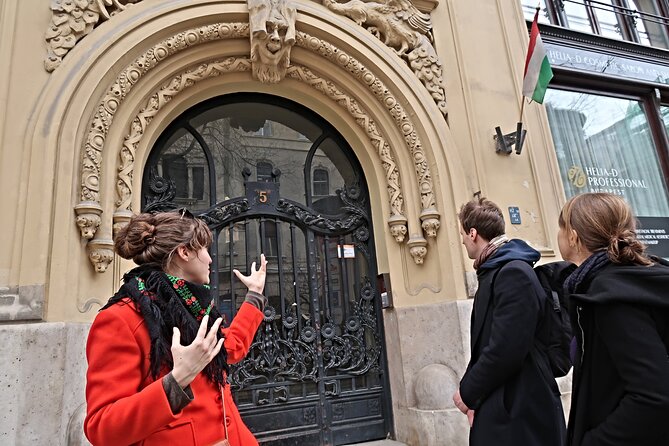
Budapest’s Art Nouveau is not just a collection of pretty façades. It is a distinctly Hungarian style, full of colored tiles, playful roofs, plant shapes, and national influences. This three-hour walk gives you a clear route through that story, from grand Gresham Palace to Ödön Lechner’s wonderfully odd Royal Postal Savings Bank.
I especially like the historian guide and the focus on details you could easily miss alone, such as how Zsolnay ceramic tiles changed Budapest’s streets. I also like the small-group format, with the tour described as limited to six in its overview and capped at eight in the practical details. The main drawback is cost: at $126.16 per person, this is a serious splurge for a walking tour, and you must also pay for public transport and possibly synagogue admission.
In This Review
- Key points at a glance
- Why Budapest Art Nouveau deserves three hours
- Starting near Madal Cafe on Alkotmány Street
- Gresham Palace and Budapest’s grand opening act
- The Royal Postal Savings Bank and Lechner’s bold ideas
- Thonet House and the story of Zsolnay tiles
- Kazinczy Street Synagogue and a different Art Nouveau setting
- What the historian guide adds
- Is $126.16 a fair price?
- Who should book this walk?
- Final call: a specialist walk worth the splurge
- FAQ
- How long does the Budapest Art Nouveau Walking Tour last?
- Where does the tour begin?
- Where does the tour end?
- What language is the tour offered in?
- What buildings are visited?
- Is public transportation included?
- Is admission to the synagogue included?
- What is the maximum group size?
Key points at a glance
- Ödön Lechner takes center stage: Learn why Hungary’s best-known Art Nouveau architect is often compared with Gaudí.
- Four sharply different stops: Compare a luxury hotel, a bank, a tiled commercial building, and an Orthodox synagogue.
- Look up at the roofs: Thonet House and the Royal Postal Savings Bank show how Hungarian ceramics transformed façades.
- The synagogue adds a living religious setting: Interior access is usually part of the route except on Saturdays, with admission charged separately if open.
- Small groups suit architecture fans: The tour is offered in English, with morning or afternoon departures.
- Plan for extra walking costs: Public transport passes are not included, and comfortable shoes are a must.
Why Budapest Art Nouveau deserves three hours
Budapest rewards people who look above street level. Along major avenues and quieter side streets, Art Nouveau appears in rooflines, ironwork, mosaics, stained glass, ceramic ornament, and curving forms inspired by plants. Some buildings are grand and obvious. Others reveal their character only when your guide points out a roof edge or a patch of decorative tile.
This tour is useful because it connects those details to a larger idea. You are not simply checking off attractive buildings. You are learning how architects in Hungary adapted Art Nouveau to local taste and materials, rather than copying French or Belgian models.
That Hungarian angle is the heart of the experience. Ödön Lechner is the central figure, and you will hear how his work helped shape the country’s own version of the movement. His buildings often combine bold color, folk influences, unusual ornament, and ceramics made by the Zsolnay factory in Pécs.
The route takes about three hours. That is long enough for a proper architectural explanation without turning into an all-day march. You should still expect a moderate amount of walking, plus some public transport between locations. Wear comfortable shoes and keep a little room in your schedule for pauses.
More walking tours in Budapest:
- Budapest: Buda Castle Walk with Saint Stephen’s Hall
★ 4.5 · 3,012 reviews - Big Bus Budapest Hop-On Hop-Off Bus and Walking Tour
★ 3.5 · 2,206 reviews - Budapest: Buda Castle District Walking Tour
★ 4.6 · 2,108 reviews
Starting near Madal Cafe on Alkotmány Street
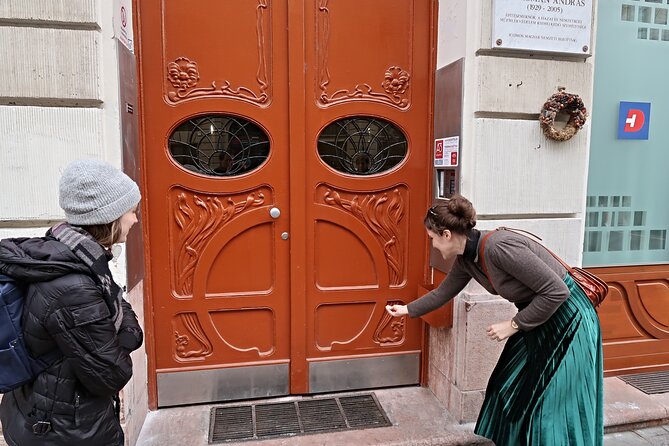
The tour begins at Madal CafeBudapest, at Alkotmány u. 4. This is a practical central meeting point, close to public transportation, but it can be busy. Give yourself time to locate the guide rather than arriving at the last minute.
One useful point from the tour’s practical details is that group size may be described in two ways: the overview calls it a small group limited to six, while the additional information gives a maximum of eight. Either way, this is much more personal than a large city walk. If the exact group limit matters to you, confirm it when booking.
The tour is offered in English and has both morning and afternoon departures. The choice matters in Budapest, especially if you are fitting in museums, the Parliament building, or an evening concert. The three-hour length also makes it easy to place this walk between other plans.
You should bring money or a transport pass for the public transit sections. Those passes are not included. Food and drinks are also your responsibility, though the route begins at a café and finishes in the Jewish Quarter, where you can make your own plans afterward.
Gresham Palace and Budapest’s grand opening act
The first stop is Gresham Palace, one of Budapest’s most polished Art Nouveau buildings. Today it operates as the city’s most luxurious hotel. In an earlier life, it held offices and luxury apartments, so the building reflects both business and private wealth.
You will have about 20 minutes to study the façade and interior design. The stop is free, but access is naturally shaped by the fact that this is an operating hotel. Your guide can help you understand the building’s decorative program and point out details that would otherwise blur into general grandeur.
Gresham works well as an introduction because it presents the elegant side of the style. Expect a building where ornament is controlled and upscale rather than eccentric. It sets up a useful contrast with Lechner’s more exuberant work later in the walk.
I would not treat this as a guaranteed hotel tour. The route includes time to admire the façade and interior designs, but the practical experience of entering a working luxury property can vary. The value here is the explanation and comparison, not a long private visit.
The Royal Postal Savings Bank and Lechner’s bold ideas
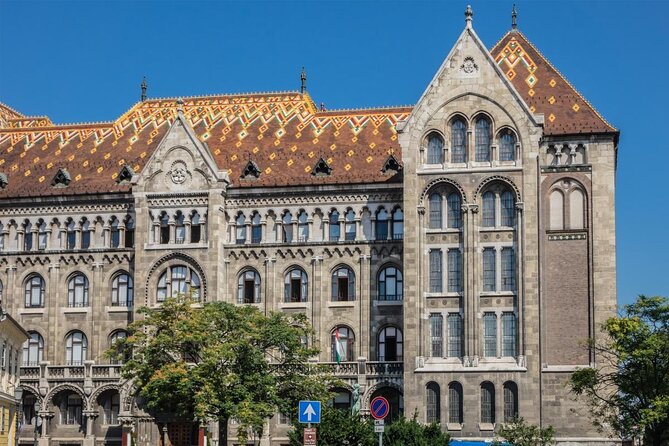
The Royal Postal Savings Bank, also called Postatakarek Bank, is the architectural centerpiece. It was designed by Ödön Lechner, Hungary’s best-known Art Nouveau architect, and is often linked with the nickname Gaudí of Hungary.
The comparison is useful but imperfect. Lechner developed his own visual language, drawing on Hungarian and wider eastern influences while making dramatic use of ceramics. The building’s exterior is flamboyant, and the entrance hall gives your guide a chance to explain how interior design elements support the architecture outside.
You will spend about 20 minutes here. That may sound short, but a focused explanation can make the time count. Look for the relationship between the roof, façade ornament, and the building’s function as a financial institution. A bank could have been stern and heavy. Lechner made this one theatrical.
This is where a specialist guide earns the price of the tour. Without context, the building may look like an extravagant collection of colored shapes. With context, you begin to see decisions about materials, national identity, public image, and the arrival of modern design.
The tour does not list admission to an interior tour of the bank. Expect to discuss the entrance hall and design from the places available on the route, rather than assuming you will explore every room.
A different kind of day in Budapest:
- Budapest: City Highlights Cruise with Welcome Drink
★ 4.6 · 35,610 reviews - Budapest: Unlimited Prosecco, Beer and Aperol Spritz Cruise
★ 4.8 · 25,310 reviews - Budapest: Széchenyi Spa Day Ticket with Optional Upgrades
★ 4.3 · 23,911 reviews - Budapest: Nighttime or Daytime Sightseeing Cruise
★ 4.2 · 21,062 reviews
Thonet House and the story of Zsolnay tiles
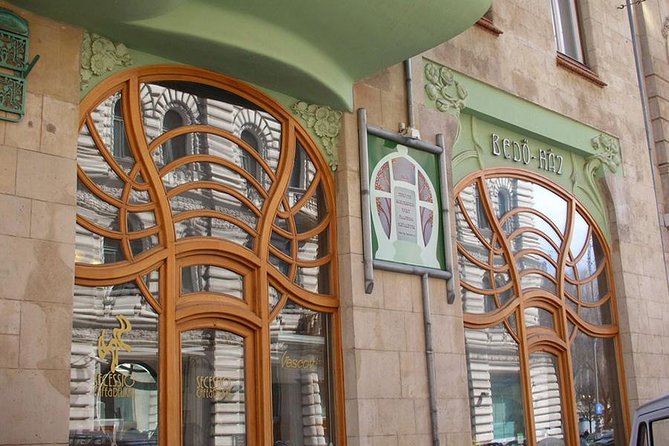
At Thonet House, the focus shifts from one architect’s overall vision to the material that helped make Hungarian Art Nouveau so recognizable: ceramic tile.
The building is tied to innovations from the Zsolnay porcelain and ceramics factory in Pécs, a city in southern Hungary. Zsolnay’s work allowed architects to use durable, colorful ceramic decoration on façades. That meant ornament could survive outdoors while also giving buildings a distinct local character.
Your guide will pause for about 20 minutes to discuss the tiles and their role in the building’s design. This is a good moment to slow down and look carefully. Notice how the surface treatment changes the building’s personality. A plain wall becomes patterned, reflective, and almost textile-like.
Thonet House is valuable because it explains a practical side of Art Nouveau. The style was not only about curves and flowers. New or improved materials made those ideas possible at a larger scale. Ceramic decoration could turn a commercial building into a piece of public art.
You will not visit the Zsolnay factory on this tour, and Pécs is not part of the route. Instead, you get the Budapest example and the material story behind it. If you enjoy architecture because of construction methods, craft, and design technology, this stop may be one of the most satisfying.
Kazinczy Street Synagogue and a different Art Nouveau setting
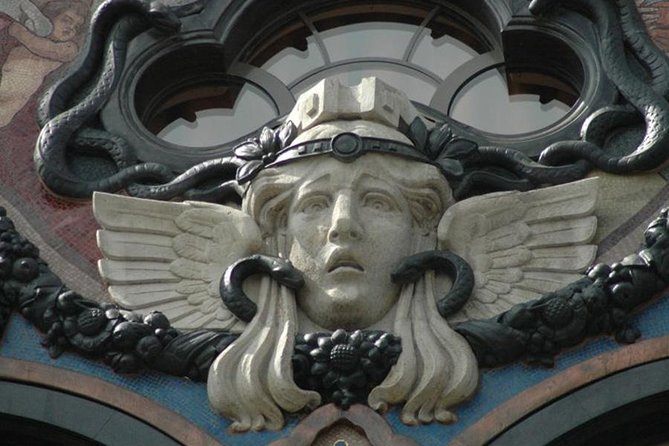
The tour ends at the Orthodox Kazinczy Street Synagogue, at Kazinczy u. 29-31. Its Art Nouveau decoration gives you a very different setting from a palace, bank, or commercial building.
The synagogue is not simply another façade to photograph. It is a functioning religious site, and that changes how you should approach the visit. The tour description indicates that the group visits the interior except on Saturdays. If the site is open on the day of your tour, admission costs extra.
You will spend about 25 minutes here. Your guide can help you understand how Art Nouveau elements were adapted to a sacred interior, where decoration has a different purpose from the ornament on a hotel or bank. This final stop broadens the tour’s subject and gives the route a stronger sense of place.
Saturday is the key limitation. Do not assume the interior visit will be available then. Even on other days, access depends on the site being open, and the additional admission is not included in the tour price.
Finishing in the Jewish Quarter is convenient if you want to continue exploring. The tour itself does not include food or drinks, and it does not promise a neighborhood meal or extra sightseeing after the synagogue. You are free to make your own plans once the walk ends.
What the historian guide adds
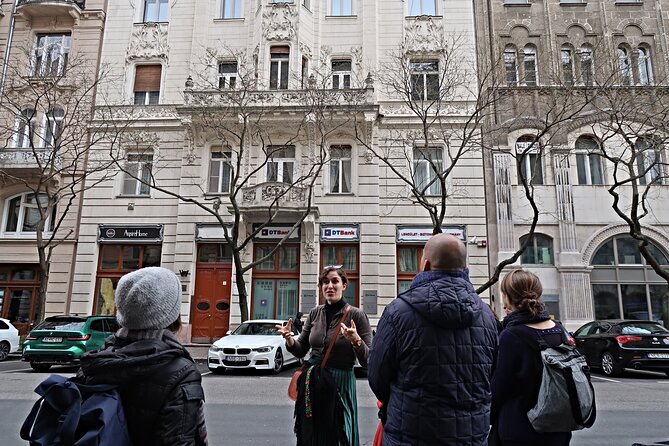
The strongest reason to book this experience is the guide’s role. The tour is built around architectural interpretation, not just movement from one address to another. You learn the history of the style, its visual elements, and the designs that made Budapest’s version distinctive.
The guide can also adjust the conversation. One especially useful detail in the feedback is that a guide was willing to take the group to places of interest elsewhere in the city. That suggests some flexibility when the group wants to ask questions or follow a related architectural thread, though you should not assume the official route will change substantially.
The recorded feedback also points to two practical lessons. First, the buildings and the stories behind them are the main reward. Second, the meeting point can be confusing because it is busy. Arrive early, identify the café clearly, and keep your phone available in case you need to contact the operator.
There are no guide names provided for this experience, so you should not book expecting a particular named historian. You can expect an English-speaking historian guide, but the individual guide may vary.
Is $126.16 a fair price?
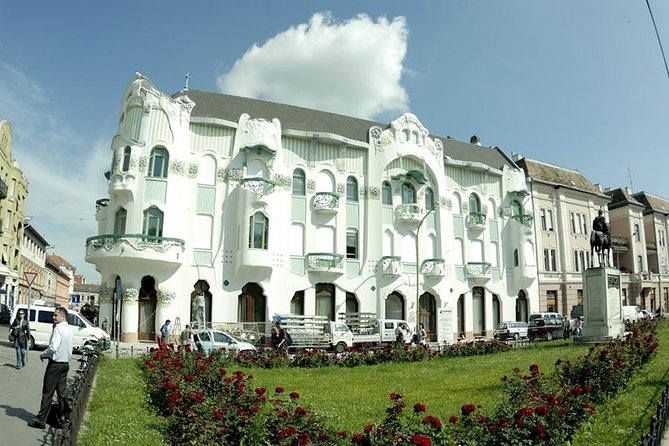
At $126.16 per person, this walk is not a budget introduction to Budapest. The price makes more sense if you care about architecture and want a serious explanation in a small group. It is less attractive if you mainly want a quick orientation or a general city stroll.
The value comes from four things:
- The specialist subject, which is narrower than a standard Budapest tour.
- The historian guide and architectural context.
- The small group, listed as six in the overview and eight maximum in the additional information.
- A route that brings together several building types and materials.
The price does not cover public transportation, food, drinks, or possible admission to the Orthodox Synagogue. Those extras are not likely to transform the cost, but they matter when you are comparing this with a cheaper walking tour.
You also pay for focus. A general city tour might show you the Parliament, Castle District, or Great Market Hall. This one spends its time on Art Nouveau buildings that can be missed without a trained eye. If that is your interest, the narrower route is the point.
The experience has a 4.9 rating from 17 ratings, with 100 percent of participants recommending it. That is a small sample, so I would treat it as a helpful signal rather than a guarantee. The clearest praise centers on the guide’s architectural knowledge, the beauty of the buildings, and the quality of the stories.
Who should book this walk?
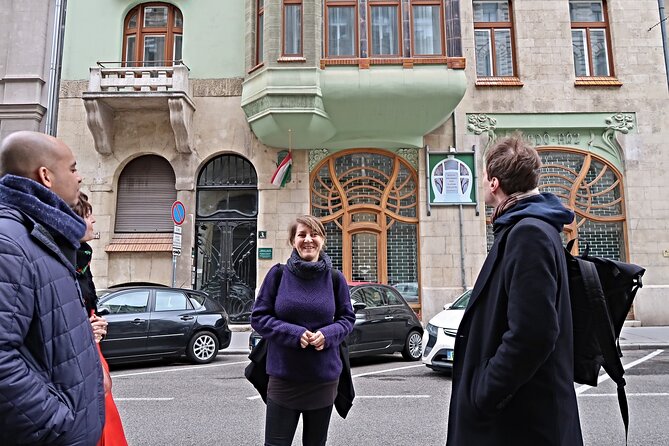
I would choose this tour if you:
- Enjoy architecture, decorative arts, or urban design.
- Want to understand Hungarian Art Nouveau rather than simply photograph it.
- Prefer a small group and an English-speaking specialist.
- Like comparing different building types in one focused route.
- Can manage moderate walking and some public transport.
- Are willing to pay extra for transit and possible synagogue admission.
It is also a good choice for repeat visitors who have already seen Budapest’s main sights. The route gives you a fresh subject and a reason to explore buildings you might otherwise pass without noticing.
I would skip it if you want a broad first look at Budapest, dislike walking between stops, or consider $126.16 too high for a three-hour activity. It may also be a poor fit if you are visiting on Saturday and the synagogue interior is important to you.
Free cancellation is available up to 24 hours before the start time. Changes or cancellations inside that window are not accepted for a refund, so check your plans before the deadline.
Final call: a specialist walk worth the splurge
Book the Budapest Art Nouveau Walking Tour if you want a focused look at the city’s architecture and prefer explanations over a quick list of sights. Gresham Palace gives you glamour, the Royal Postal Savings Bank supplies Lechner’s drama, Thonet House explains the importance of Zsolnay ceramics, and Kazinczy Street Synagogue adds a religious and cultural setting.
The cost is high, and the extras are not all included. Still, the route is carefully chosen, the subject is distinctive, and the guide-led format helps you see why Budapest’s Art Nouveau feels Hungarian rather than simply European. For an architecture-minded visitor, that focus can justify the price.
FAQ
How long does the Budapest Art Nouveau Walking Tour last?
The tour lasts approximately three hours.
Where does the tour begin?
It begins at Madal CafeBudapest, Alkotmány u. 4, 1054 Budapest, Hungary.
Where does the tour end?
It ends at the Budapest Orthodox Synagogue at Kazinczy u. 29-31, 1075 Budapest, Hungary.
What language is the tour offered in?
The tour is offered in English.
What buildings are visited?
The route includes Gresham Palace, the Royal Postal Savings Bank, Thonet House, and the Orthodox Kazinczy Street Synagogue.
Is public transportation included?
No. Public transportation passes are not included, so you pay for them yourself.
Is admission to the synagogue included?
No. Additional admission may be charged if the Orthodox Synagogue on Kazinczy Street is open on the day of the tour. The interior visit does not take place on Saturdays.
What is the maximum group size?
The tour overview describes a small group limited to six people, while the additional details give a maximum of eight participants. If the exact group size is important to you, confirm it before booking.
Recently added around Budapest
- Hiking + Chairlift ride + viewpoints in Budapest★ 5.0 · 3 reviews
- FoolsCode: EscapeRoom/Sightseeing tour with Actor Tourguide★ 5.0 · 3 reviews
- Grand Budapest tour with private transportation★ 5.0 · 3 reviews
- Budapest: Private Customizable Tour in French★ 5.0 · 3 reviews
- Discover Budapest Using Tram Two★ 5.0 · 3 reviews
- Budapest: Private, Personalized Pub Crawl, 3 drinks included★ 4.5 · 3 reviews
- Budapest Drinks and Piano Show Cruise★ 4.5 · 3 reviews
- Budapest: Private 3-Hour Gödöllő Palace Tour★ 4.9 · 3 reviews
Walking Tours, compared.
Big Bus Budapest Hop-On Hop-Off Bus and Walking Tour
Read our review →
3-Hour Orientation Walking Tour of Buda and Pest
Read our review →
Budapest All in One Small Group Walking Tour with Strudel Stop
Read our review →
Buda Castle District Walking Tour with a Historian
Read our review →
BloodThirsty Hungary: Walking tour & Dark Historical Stories
Read our review →
Browse the lists this tour appears in