
Reviewed · BUDA CASTLE TOURS
Budapest: Buda Castle Cave Tour
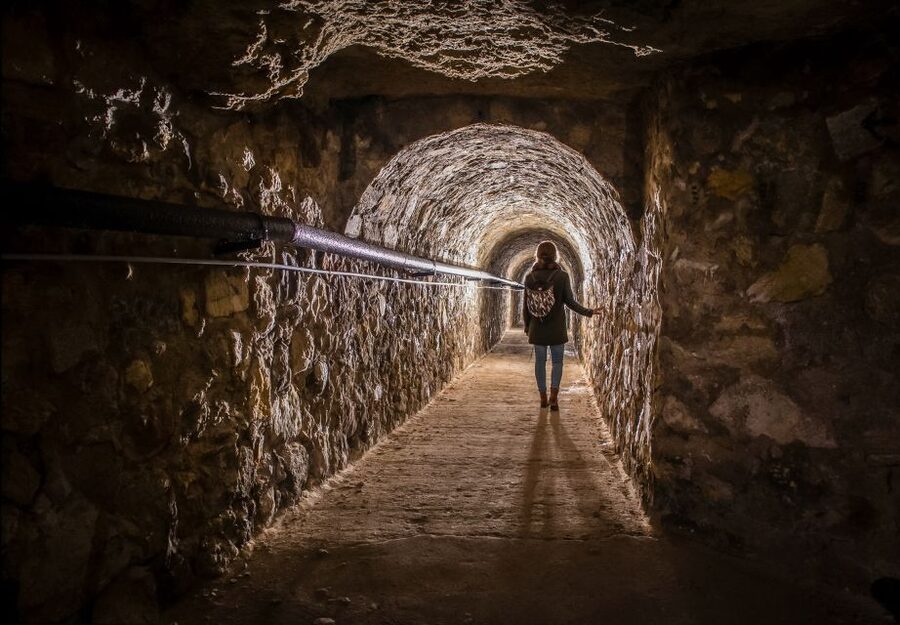
Beneath Budapest’s grand Buda Castle District lies a world of natural limestone caves joined to centuries-old cellars, tunnels, and shelters. This tour takes you below the streets and into a part of Castle Hill that most sightseeing visitors never see. The setting is cool, dim, and atmospheric, but the paved, lighted route is more spacious than the word labyrinth might suggest.
I like two things especially. First, the tour connects geology with human history: you see what nature formed, then what people cut, stored, built, and used over hundreds of years. Second, the guides make the material lively. Vicky, Viktoria, and Eva are among the guides praised for clear explanations, funny stories, and a welcoming manner. The main drawback is that the short option lasts only 40 minutes, while the full route can take about 1.5 hours and is offered less often.
In This Review
- Key points at a glance
- Why these caves are worth your time
- Starting at Trinity Square or Dárda Street
- The first steps underground
- Limestone chambers and 800-year-old cellars
- A passage through medieval and Ottoman-era Buda
- Wartime shelters and the modern past
- The 40-minute route or the 1.5-hour tour?
- What the guides add
- Price, comfort, and overall value
- Who should book this cave tour?
- Practical tips before you go
- Should you book the Buda Castle Cave Tour?
- FAQ
- How long does the Buda Castle Cave Tour last?
- Where does the tour meet?
- What temperature is it inside the cave?
- What should I wear and bring?
- Is the tour suitable for children and people with mobility issues?
- Is the underground hospital included?
Key points at a glance
- 800-year-old cellars: See man-made underground spaces linked to the medieval development of Buda Castle.
- Natural and human-made caves: The route shows how limestone formations and human labor became one connected underground system.
- Medieval to wartime history: Learn how the tunnels served as wine cellars, a prison, bomb shelters, and other practical spaces.
- Two tour lengths: The short route takes about 40 minutes, while the regular walking route covers roughly 1.5 kilometers and can last up to 1.5 hours.
- Cool, muddy conditions: The cave stays around 12°C, and walls or damp sections may dirty your clothes and shoes.
- English-speaking guides: The experience depends heavily on the guide’s storytelling, with Vicky, Viktoria, and Eva receiving particular praise for their delivery.
Why these caves are worth your time
Budapest is famous for its thermal baths, grand boulevards, and Danube views. The Buda Castle Cave Tour gives you a different Budapest, one shaped by rock, storage needs, war, and survival.
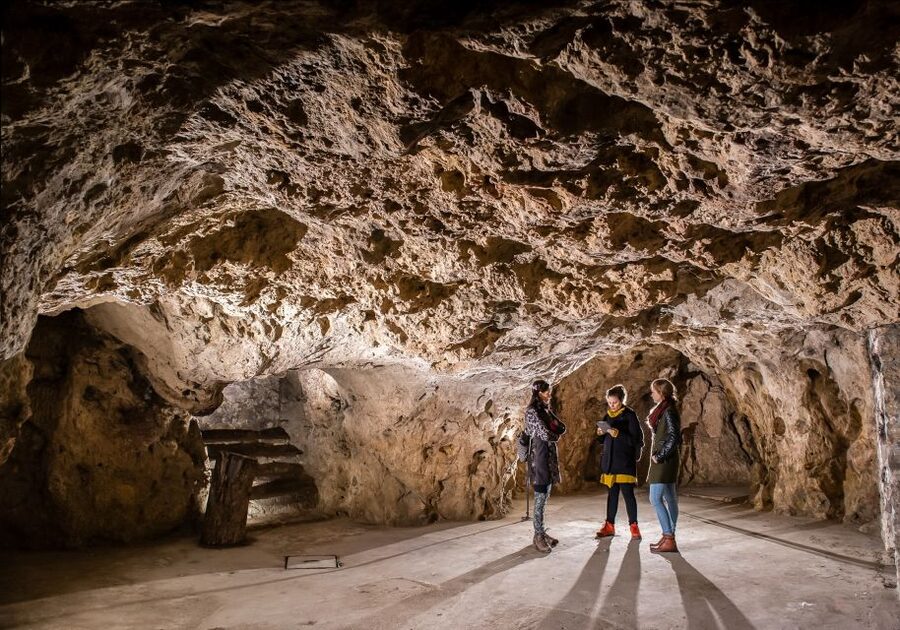
The cave system beneath Castle Hill is not simply a natural cavern with a few stalactites. It is a meeting point between geology and city life. Some sections began as natural limestone formations. Others were enlarged, connected, or adapted by people over many centuries. The result is a network where a cave may lead into a cellar, a cellar may connect with a passage, and a passage may recall a much more recent period of danger.
I find that combination more interesting than a standard underground attraction built around scenery alone. You are not just looking at stone. You are learning why people used the space and how the underground world changed along with the city above it.
The tour also adds texture to a visit to Buda Castle. After seeing the churches, squares, and grand buildings above ground, you can step below the district and understand that Castle Hill has another layer entirely. The underground route gives you a strong sense of place without requiring a long trip outside central Budapest.
More of Buda Castle and the castle district:
- Budapest: Buda Castle District Vampires and Myths Night Tour
★ 4.6 · 3,830 reviews - Budapest: Buda Castle Walk with Saint Stephen’s Hall
★ 4.5 · 3,012 reviews - Budapest: Buda Castle District Walking Tour
★ 4.6 · 2,108 reviews
Starting at Trinity Square or Dárda Street
Your meeting point depends on the option you book. The longer tour starts at Trinity Square, or Szentháromság tér, in the heart of the Buda Castle District. The shorter option meets at Dárda Street, where you enter the underground cave system.
Pay close attention to this detail when planning your day. The two options do not use the same meeting point, and the available starting times can vary. Tour times may be announced only some weeks or days before the actual tour, so check the current schedule rather than assuming a convenient departure will be available.
After a short introduction, your guide leads the group underground. This is a guided walking tour, not an audio experience, and that matters here. Caves are quiet, phone service disappears, and there is plenty of visual detail to take in. A live guide can point out a wall, chamber, passage, or unusual formation at the right moment and explain why it matters.
The route is lit and paved, but this is still a cave. Wear closed-toe shoes with a decent grip. Clothes that can get dirty are a wise choice, especially if you tend to lean against walls or if a section of the road is muddy.
The first steps underground
The opening section introduces the basic geology of the caverns and the way the underground network developed. You learn about the natural limestone and the forces that created the original spaces before people began adapting them.
This early part is valuable because it gives the rest of the tour a clear framework. Without it, the cellars and tunnels might seem like a random series of rooms. With it, you can begin to notice the contrast between the uneven work of nature and the more practical marks left by human hands.
The cave temperature remains about 12°C, or 54°F, throughout the visit. That can feel pleasant in hot Budapest weather, but chilly if you arrive in light summer clothing. Bring a warm layer even if the day above ground is sunny.
The caves are not completely silent or isolated from the group. The route has lighting and paved roads, and one recent description called the spaces quite open rather than severely confined. Still, the experience includes enclosed passages, dim chambers, and underground walls on both sides. If you have claustrophobia, you should think carefully before booking.
Limestone chambers and 800-year-old cellars
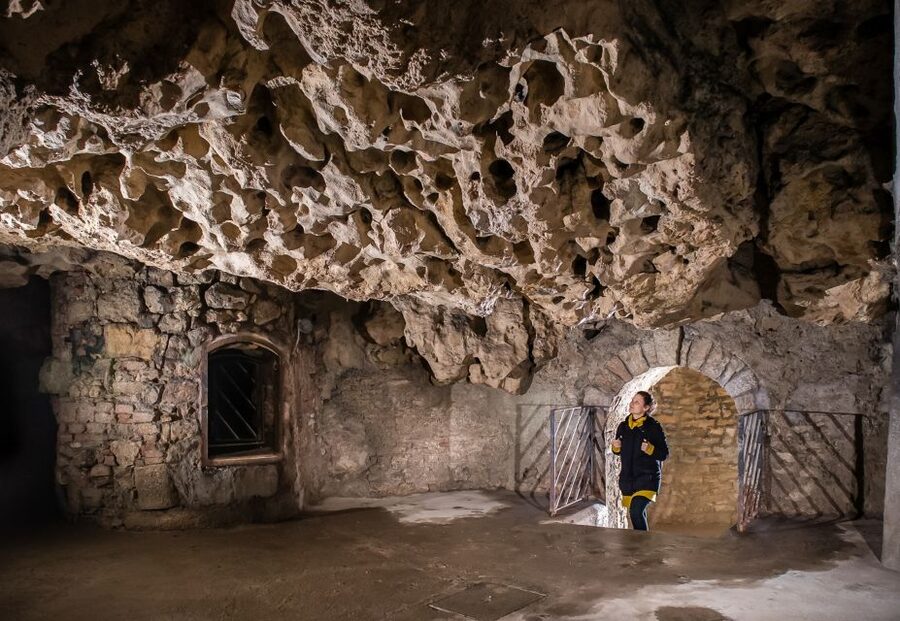
The main visual pleasure comes from seeing natural limestone alongside the underground spaces created by people. You can admire the rock itself, then consider the amount of labor required to cut, extend, and link parts of the system.
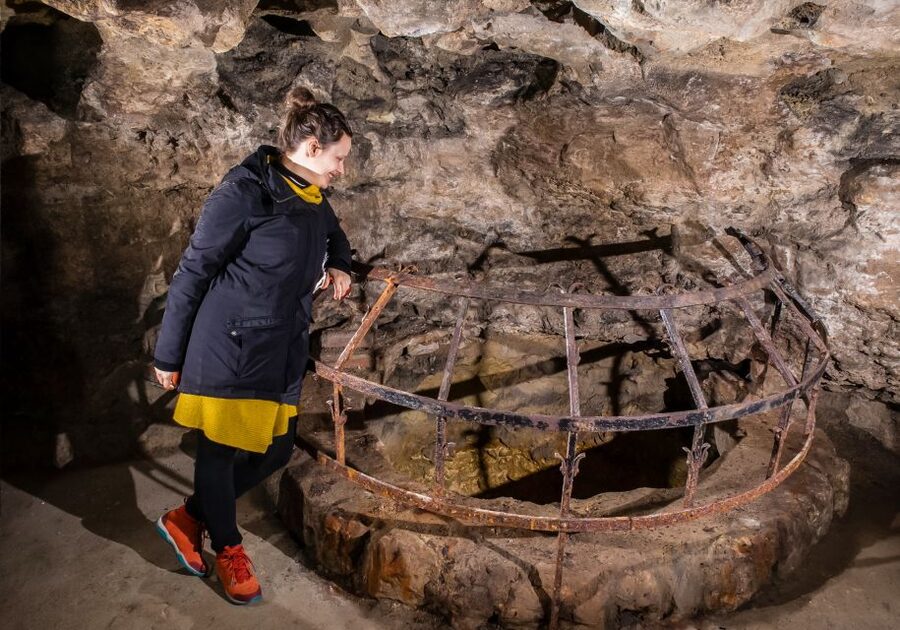
The 800-year-old man-made cellars are the clearest reminder that Buda Castle was not only a royal and military center. Underground rooms had practical value. They could provide cool storage and protected space, making them useful for wine and other supplies.
The guide helps turn these plain functions into a story about daily life. A cellar is not just an empty room. It shows how people worked with the terrain rather than ignoring it. The cave system became part of the settlement above it.
You might also hear about unusual details from the area’s past, including animal remains and objects connected with different periods of use. The exact stories can vary with the guide, but the route is designed to cover geology, archaeology, and the human uses of the tunnels.
The best guides keep this from becoming a lecture. Vicky is often praised for mixing facts with humor and for keeping the pace comfortable. Viktoria has also been described as a strong storyteller who uses visual explanation well. You should expect an engaging presentation, but the guide available on your date may be someone else.
More Buda cave trips:
- Budapest: Semlő-hegyi & Pál-völgyi Caves Guided Walking Tour
★ 4.8 · 343 reviews - Private Cave Walking Tour in Budapest
★ 5.0 · 52 reviews - Walk in Buda with Hospital in the Rock Underground Cave Visit
★ 4.5 · 18 reviews - Lake Balaton Tihany & Tapolca Cave Lake trip by Private Transport
★ 5.0 · 10 reviews
A passage through medieval and Ottoman-era Buda
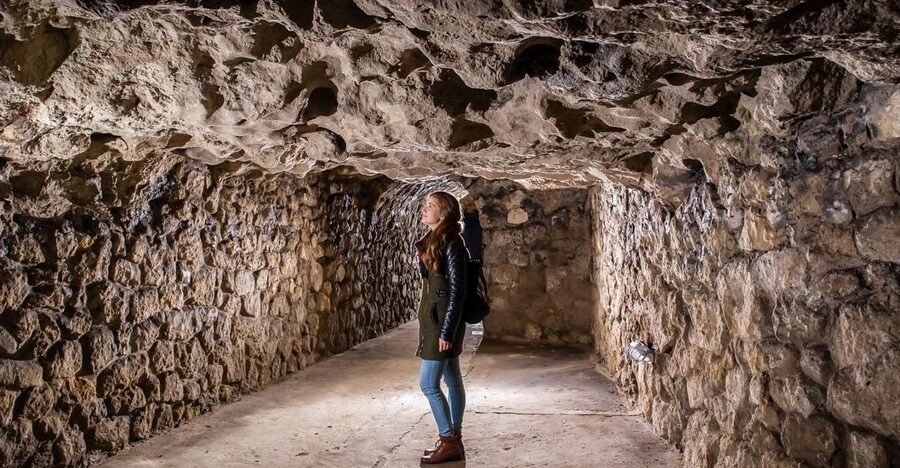
The cave network gives the tour its time-travel quality. The spaces connect the natural past of the limestone with the medieval growth of Castle Hill and later periods of occupation and change.
You may encounter references to medieval cellars, a prison, and Ottoman Arab heritage. These details help show that the tunnels were not made for one single purpose. They were altered and reused as needs changed.
This is where the tour becomes more than a geology walk. You are standing in spaces shaped by people who lived, stored goods, guarded supplies, and dealt with conflict on the hill above. The underground route lets you see history at close range, often through walls and passages rather than grand monuments.
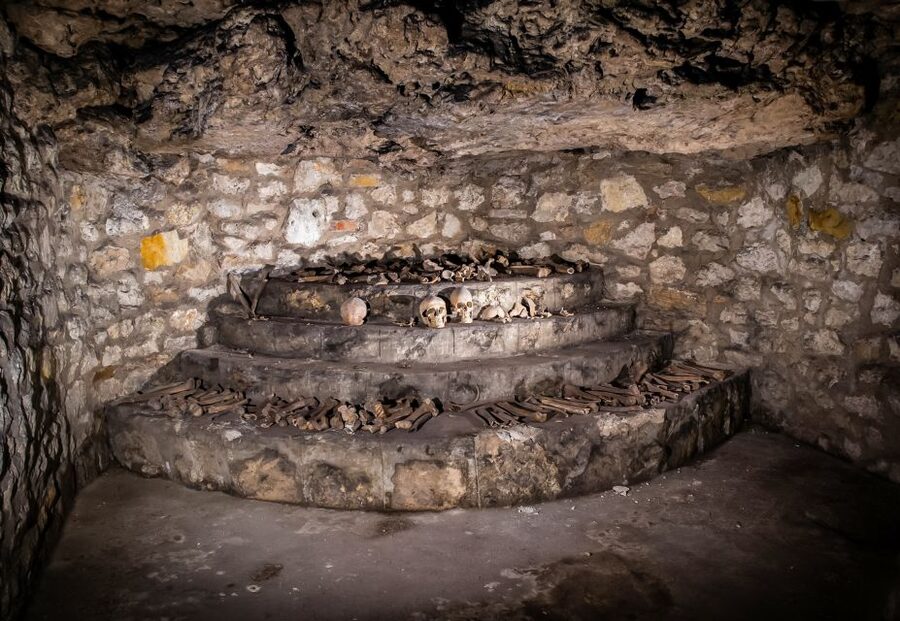
Some historical details can be grisly. If you enjoy the unusual side of history, that adds interest. If you prefer a gentle family attraction, keep in mind that the guide may discuss prison use, wartime conditions, burials, or other unsettling subjects.
Wartime shelters and the modern past
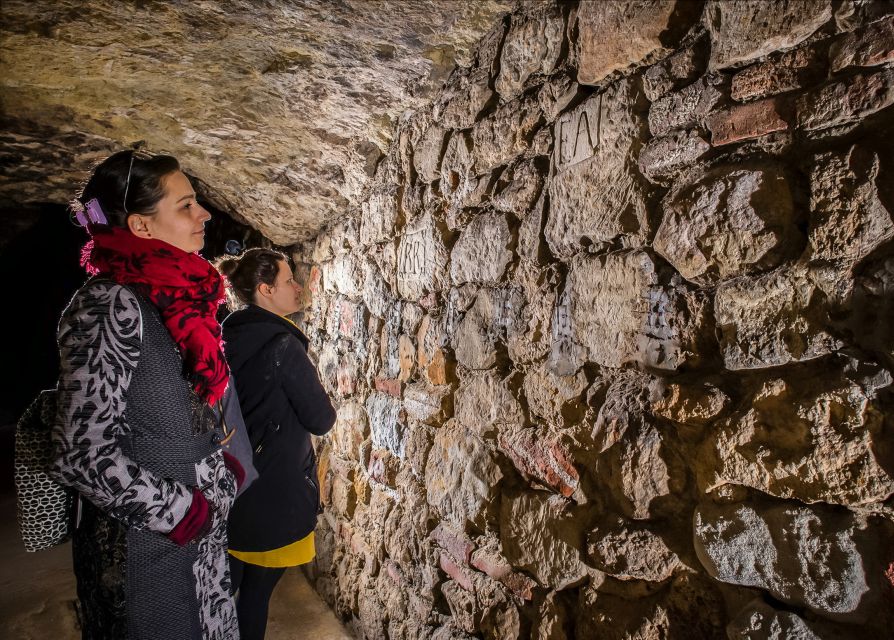
The tunnels also served as bomb shelters, bringing the story into the twentieth century. This section gives the route a strong emotional shift. The medieval cellar is about storage and survival over the long term. The wartime shelter reflects immediate danger and the need to protect people during bombardment.
The caves were used through different periods, including World War II and later decades. The underground world therefore links the medieval past with modern urban history. One part of the route may feel ancient, while another recalls the practical demands of a city under threat.
This is one of the most useful reasons to choose the longer tour. The full route allows more room for the guide to connect the different eras instead of rushing through them. One recent booking described the longer route as a worthwhile way to move from wartime shelters to sixteenth-century and thirteenth-century spaces.
Do not assume that every underground attraction in the castle district is included. The underground hospital is a separate attraction and is not part of this cave tour. If that hospital is your main interest, you need to plan it separately rather than expecting this ticket to cover both sites.
The 40-minute route or the 1.5-hour tour?
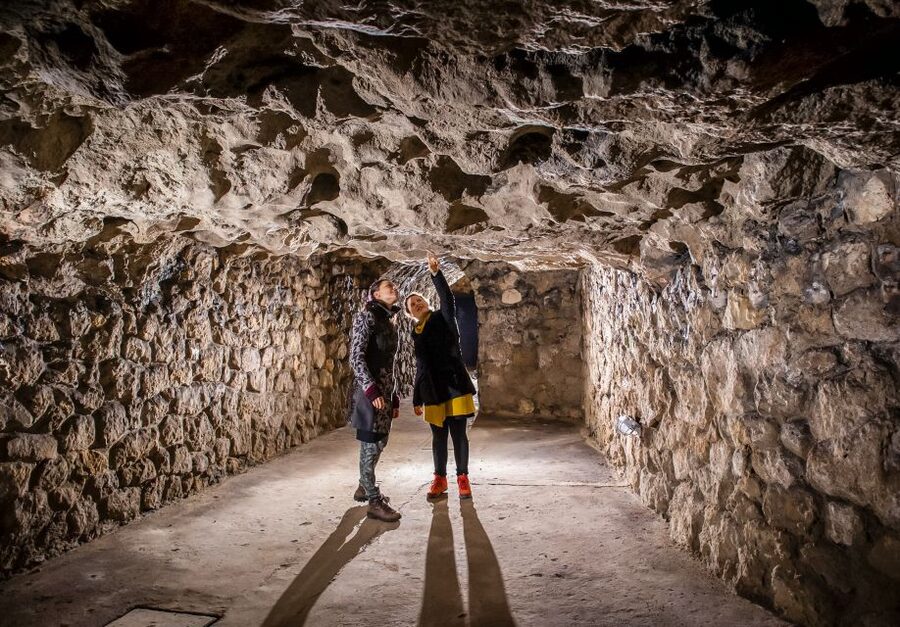
The short tour is a good choice if your day is packed or you want a quick look at the underground system. Forty minutes is enough to get a taste of the caves, hear the main historical points, and experience the cool, unusual setting beneath Castle Hill.
The limitation is simple: you see less. A short route cannot provide the same range of geological features, cellars, historical periods, and tunnel sections as the regular walking tour.
The longer option lasts about 1.5 hours and covers roughly 1.5 kilometers. It is the better pick if underground history is a main reason you are booking. It also gives the guide more time to explain how the network developed and how the different chambers relate to each other.
Book ahead if you want the longer route. Availability can be limited, with the longer tour sometimes running only once a day. The short tour can still be satisfying, but it should be chosen as a compact introduction rather than treated as an equal substitute for the full experience.
What the guides add
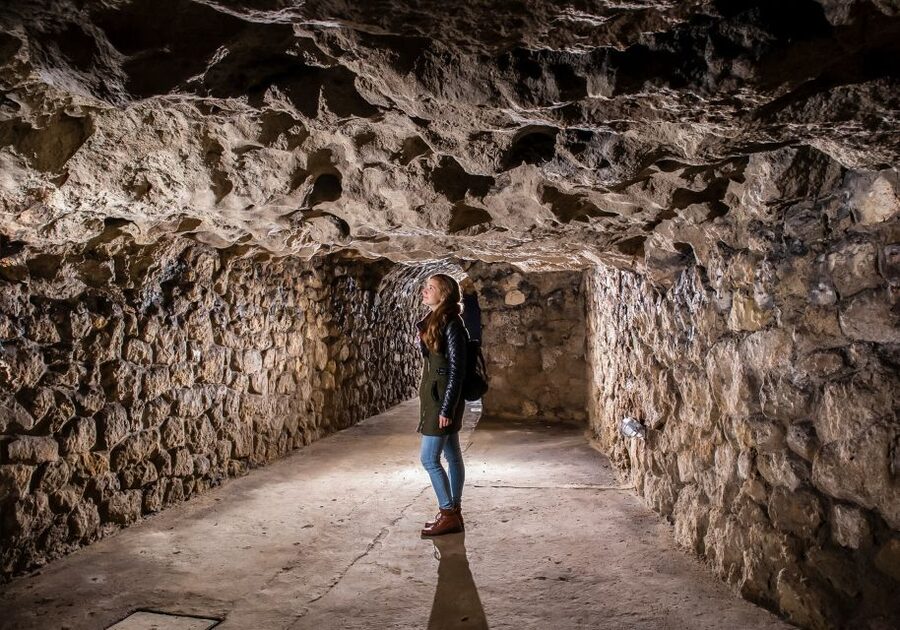
A cave system needs a guide. Without one, you would see rock, walls, lights, and passages, but much of the meaning would be missing.
The strongest part of this experience is the style of guiding. The guides use humor, clear speaking, and stories to make the history easy to follow. Vicky is frequently singled out for being friendly, funny, and well paced. Eva has been praised for explaining both the geology and the historical use of the caves. Viktoria is noted for combining stories with visual explanation.
The guide also helps with the practical side of the route. They keep the group moving, explain rules, and make sure people understand how to behave in the cave. You are expected to follow all spoken and written instructions. Smoking, food, drinks, alcohol, drugs, littering, pets, strollers, and video recording are not allowed.
This is not the right place for disruptive behavior. Anyone who is unruly or under the influence can be removed or turned away without a refund. Those rules may sound strict, but they protect a fragile underground setting and keep the group together.
Price, comfort, and overall value
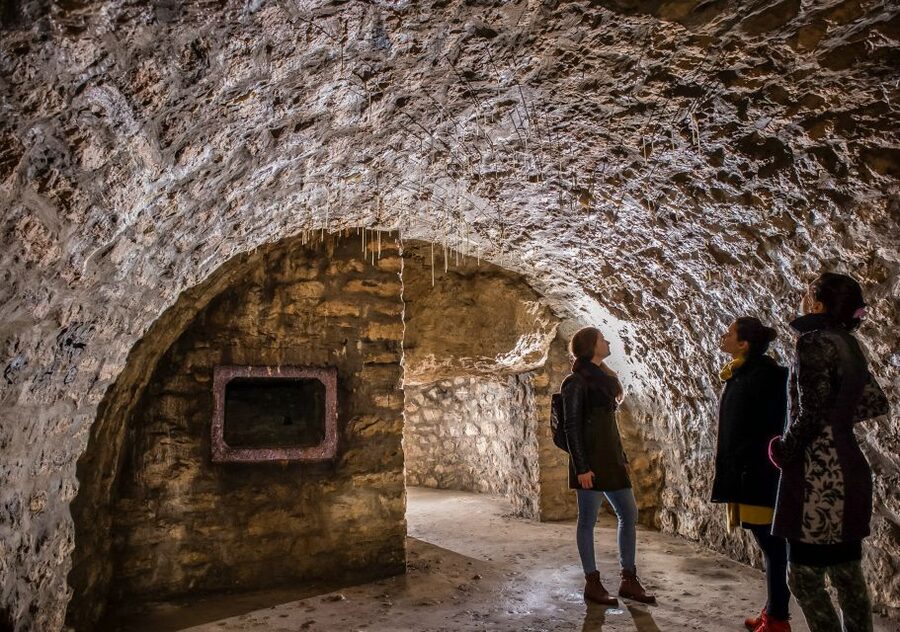
At about $19 per person, this is a reasonably priced guided activity in central Budapest. The value comes from the combination of access and interpretation. You are not paying only to walk through a cave. You are paying for a live English-speaking guide who explains the geology, the construction of the cellars, and the many uses of the underground passages.
The price works best for the longer tour. At 1.5 hours, it gives you a substantial activity that fits neatly into a visit to the castle district. The short route is still fair value if you want something unusual between above-ground sights, but it may feel brief if you have made a special trip to Castle Hill for the caves.
There is free cancellation up to 24 hours before the activity, and you can reserve now and pay later. Those policies are useful when your Budapest schedule is still shifting, but the key decision remains the route length and meeting point.
Who should book this cave tour?
I recommend it to you if you enjoy unusual historical sites, underground spaces, geology, or places where ordinary city life has left physical marks. It is also a good fit if you have already explored the main castle sights and want a fresh way to understand Castle Hill.
The tour can work for older children, but children under three are not allowed. It is not suitable for wheelchair users, people with mobility impairments, or visitors with visual impairments. The route is not designed for people who find enclosed spaces distressing.
You should also be comfortable walking on paved underground roads for up to 1.5 kilometers. The surface is lit, but the cave can be damp and your clothing may get dirty. Closed shoes, warm clothing, and a relaxed attitude toward mud will make the experience much easier.
Practical tips before you go
- Check the exact meeting point, since Trinity Square and Dárda Street serve different tour options.
- Choose the longer tour if you want the broadest mix of natural chambers, cellars, and historical periods.
- Wear a warm layer. The cave temperature is about 12°C year-round.
- Use closed-toe shoes and avoid clothing you would hate to mark with mud.
- Leave food, drinks, pets, strollers, and recording equipment behind.
- Expect no cell phone service once underground.
- Avoid booking if you have serious mobility limits or claustrophobia.
- If the underground hospital interests you, arrange that as a separate visit.
Should you book the Buda Castle Cave Tour?
Yes, if you want a side of Budapest that is strange, practical, and tied closely to the city’s past. The caves are not a polished show with dramatic lighting at every turn. Their appeal comes from the real mix of limestone, rough passages, old cellars, wartime shelter space, and human adaptation.
Choose the 1.5-hour tour when possible. It offers the fuller story and better value for your time. Choose the 40-minute option if your schedule is tight, but book early for the longer route because departures may be limited.
The main reason to go is the guide. A good guide turns a cool underground walk into a clear story about how nature and people shaped Castle Hill. Add warm clothes, sturdy shoes, and a willingness to hear a few grisly details, and this becomes one of Budapest’s more memorable small-scale excursions.
FAQ
How long does the Buda Castle Cave Tour last?
You can choose between a shorter tour of about 40 minutes and a regular walking tour that lasts roughly 1.5 hours. The regular route covers about 1.5 kilometers.
Where does the tour meet?
The meeting point depends on the option booked. The longer tour meets at Trinity Square, also called Szentháromság tér. The shorter tour meets at Dárda Street.
What temperature is it inside the cave?
The cave temperature is about 12°C, or 54°F. Bring warm clothing, even during warm weather in Budapest.
What should I wear and bring?
Wear warm clothing, closed-toe shoes, and clothes that can get dirty. The road may be muddy, and leaning against the cave walls can mark clothing.
Is the tour suitable for children and people with mobility issues?
Children under three are not permitted. The tour is not suitable for people with mobility impairments, wheelchair users, people with claustrophobia, or people with visual impairments.
Is the underground hospital included?
No. The underground hospital is not part of this cave tour, so you need to arrange it as a separate attraction if you want to visit it.
Recently added around Budapest
- Hiking + Chairlift ride + viewpoints in Budapest★ 5.0 · 3 reviews
- FoolsCode: EscapeRoom/Sightseeing tour with Actor Tourguide★ 5.0 · 3 reviews
- Grand Budapest tour with private transportation★ 5.0 · 3 reviews
- Budapest: Private Customizable Tour in French★ 5.0 · 3 reviews
- Budapest: Private, Personalized Pub Crawl, 3 drinks included★ 4.5 · 3 reviews
- Budapest Drinks and Piano Show Cruise★ 4.5 · 3 reviews
- Discover Budapest Using Tram Two★ 5.0 · 3 reviews
- Budapest: Private 3-Hour Gödöllő Palace Tour★ 4.9 · 3 reviews
Buda Castle Tours, compared.

Buda Castle District Vampires and Myths Night Tour
Read our review →
Buda Castle District Dark History, Legends and Vampire Night Tour
Read our review →
Buda Castle District Walking Tour with a Historian
Read our review →


Browse the lists this tour appears in