
Reviewed · CYCLING TOURS
Budapest Highlights Bike Tour with a local guide
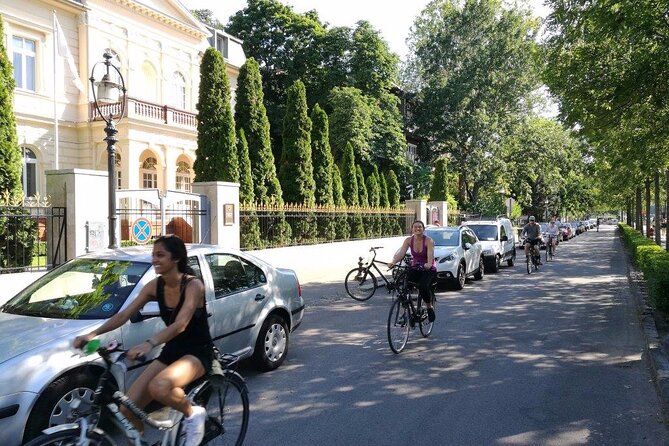
Budapest is spread wide, and this 3.5-hour bike tour gives you a smart way to connect its grand avenues, parks, bridges, and riverfront landmarks without spending the whole day on foot. You ride at an easy pace, stopping often for stories and photos, with guides such as Danny, Daniel, Balasz, and Ivana bringing Hungarian history to life.
I like the broad route, which reaches places that would take much longer to link on foot. I also like the balance between cycling and sightseeing: you can cover roughly 15 kilometers while still pausing at 15 scenic stops. The main consideration is simple: you need to be comfortable on a bicycle, and the tour runs in rain or shine.
In This Review
- Key points to know before booking
- Why a bicycle works so well in Budapest
- Starting at Rumbach Sebestyén Street
- Elizabeth Square and the road toward Andrassy Avenue
- Heroes’ Square and City Park
- What you get at the shorter museum stops
- St. Stephen’s Basilica and Szabadsag Square
- Parliament, the Danube, and the Chain Bridge
- Elizabeth Bridge and the return to the center
- The history is the tour’s strongest feature
- Pace, distance, and physical demands
- Is $34 good value?
- Who should book this Budapest bike tour?
- Practical details that matter
- Should you book it?
- FAQ
- How long does the Budapest Highlights Bike Tour last?
- How much does the tour cost?
- Where does the tour begin?
- What is included in the tour?
- Is the tour conducted in English?
- Can I use an e-bike?
- What is the minimum age?
- Does the tour operate in bad weather?
- Can I cancel for a full refund?
- Can I reserve now and pay later?
- Which sights does the route visit?
Key points to know before booking
- Covers both sides of Budapest: Ride from Pest across the Danube toward Buda and see the Chain Bridge, Castle Bazaar, Elizabeth Bridge, Parliament, and central Pest landmarks.
- Strong history focus: Expect stories about Hungary’s founding, the Ottoman period, Nazi occupation, and Communist rule.
- Good first-day orientation: The route links many major sights, helping you decide which places deserve a later, longer visit.
- Comfortable pace with frequent stops: The tour mixes riding with photo stops, rather than pushing you through the city without breaks.
- Quality bike and helmet included: E-bikes can be arranged for an additional fee if you prefer motor assistance.
- Best for riders aged 12 and up: Children under 12 cannot join, and anyone unable to ride a bike should choose another way to see Budapest.
Why a bicycle works so well in Budapest
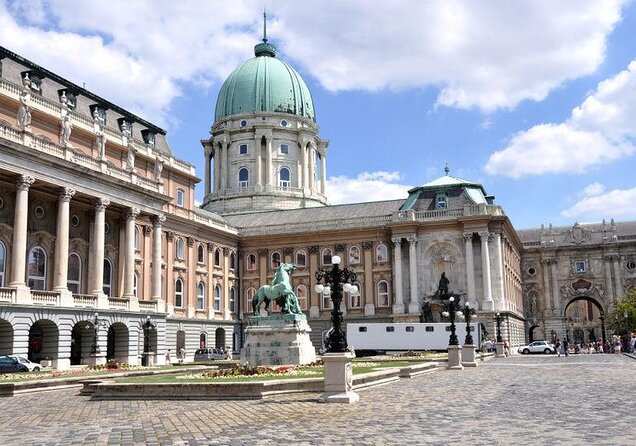
Budapest’s sights are not packed into one small square. Andrassy Avenue leads out toward Heroes’ Square and City Park, while the Parliament and the bridges sit along the Danube. Buda’s Castle district rises on the opposite side of the river.
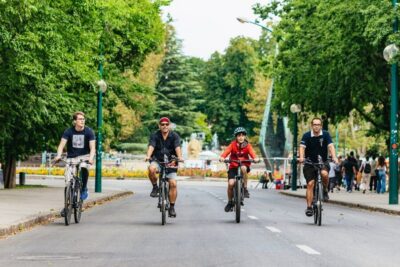
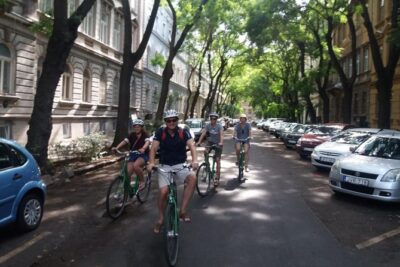
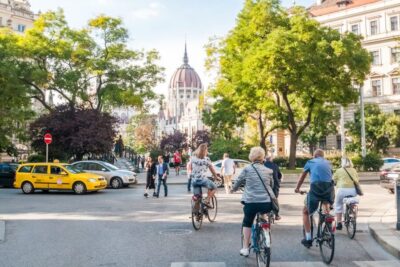
That spread is exactly why the bicycle helps. You get more ground than you would on foot, but you still travel slowly enough to notice the grand buildings, monuments, and changing character of each district. The route is designed for sightseeing, not speed, with stops built in for explanations and photographs.
I would use this tour early in a Budapest stay. You get a useful map in your head, then you can return later to the Parliament, thermal baths, museums, or the Buda Castle area with a better sense of how everything fits together.
The cycling is not just transportation between attractions. It is part of the experience. You see the city as a connected place instead of a checklist of isolated monuments.
More bike days around Budapest:
- Budapest: Grand Sightseeing Bike Tour
★ 4.8 · 984 reviews - Budapest Highlights Bike Tour
★ 5.0 · 770 reviews - Budapest: Guided City Discovery Bike Tour
★ 4.7 · 702 reviews
Starting at Rumbach Sebestyén Street
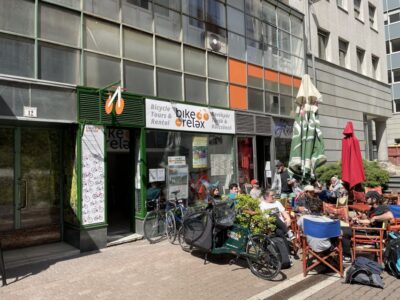
The tour begins at Rumbach Sebestyén u. 10, in Budapest’s central 7th District. At the main gate, ring bell number 105 and continue into the courtyard.
The starting point is near Elizabeth Square, making it a practical launch point for the central Budapest route. Bikes and helmets are supplied, so you do not need to arrange equipment separately. The experience is conducted in English by a local professional guide.
Allow a little time to find the entrance and courtyard before the scheduled departure. The meeting instructions are specific, but a central city address can still take a moment to locate if you are watching street signs rather than building numbers.
Elizabeth Square and the road toward Andrassy Avenue
The first stop is Elizabeth Square, a central urban space that helps introduce you to Budapest’s Pest side. This is a short sightseeing pause, not a long visit, but it gets the group moving and gives the guide a chance to set the scene.
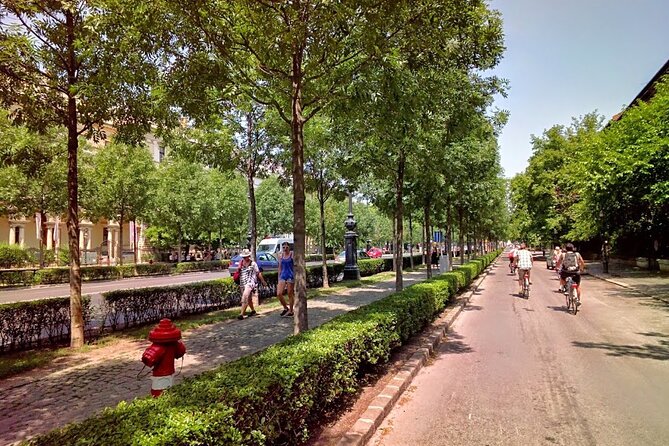
From there, you ride along Andrassy Avenue. This broad, elegant boulevard is one of Budapest’s major ceremonial routes and a UNESCO-listed part of the city. Its grand architecture gives the ride a formal opening, while the bicycle lets you take in the avenue as a whole rather than seeing one building at a time.
The Hungarian State Opera House receives its own stop. You should expect a brief look and explanation from outside, with time for photographs. This is a good example of how the tour works: the guide gives you the essential context, but the schedule does not include extended interior visits.
Heroes’ Square and City Park
The ride continues toward Heroes’ Square, one of Budapest’s most recognizable open spaces. The Millennium Monument commemorates important figures in Hungarian history, and the stop provides useful context about the country’s origins and its millennium celebrations in 1896.
This is one of the strongest history moments on the route. The guide connects the monument to the founding of Hungary more than 1,100 years ago, helping you read the statues and columns as part of a national story rather than as decorative stonework.
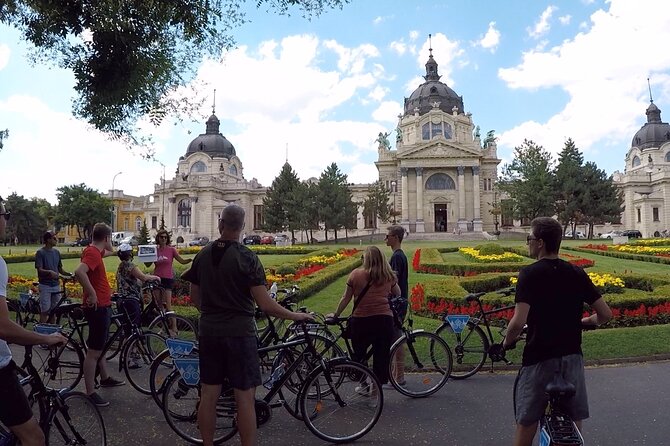
Next comes Városliget, or City Park. The route spends time here before moving to the Széchenyi Thermal Bath, Vajdahunyad Castle, and the House of Music Hungary. These stops show a different side of Budapest from the grand central avenues: open parkland, leisure, architecture, and modern cultural buildings.
Széchenyi Thermal Bath is visited as a sightseeing stop, not as a bathing session. That distinction matters. You will see the famous complex and hear about its place in Budapest’s thermal-bath culture, but the tour does not include time to use the pools.
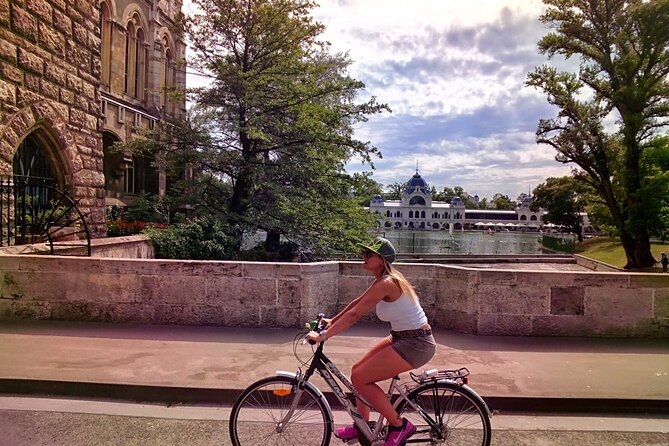
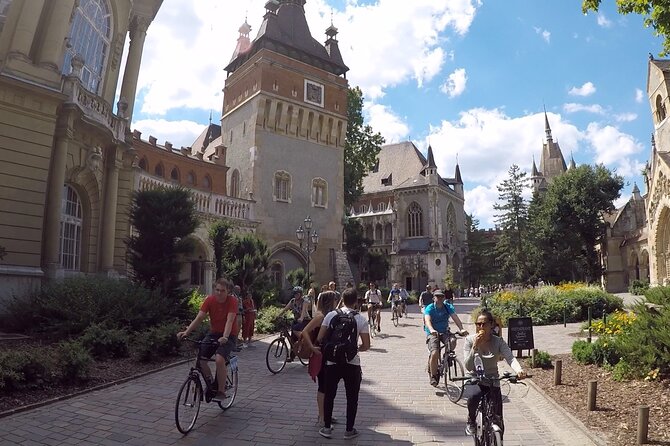
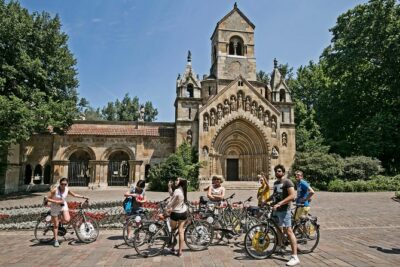
Vajdahunyad Castle makes a particularly photogenic pause. Its unusual architecture and park setting give the route variety after the monumental scale of Heroes’ Square. The House of Music Hungary adds a newer cultural note, while the Ethnographic Museum offers another brief stop nearby.
A few more Budapest tours worth comparing
- Budapest: Parliament Building Entry Ticket and Audio Guide
★ 4.5 · 3,844 reviews - Budapest: Opera House Guided Tour
★ 4.6 · 1,533 reviews - Budapest Small-Group Guided Tour on MonsteRoller e-Scooter
★ 5.0 · 1,517 reviews - Budapest: Guided Tour of the Parliament Building in Spanish
★ 4.6 · 1,240 reviews
What you get at the shorter museum stops
The House of Terror, Ethnographic Museum, and House of Music Hungary receive shorter visits than the major landmarks. These pauses last only about five minutes, so think of them as orientation points rather than museum tours.
The House of Terror is especially important for understanding Hungary’s 20th-century experience. The guide’s broader history discussion covers the Nazi period and Communist rule, along with the Ottoman Turkish occupation. You will not have time to explore the museum itself, but you will have a clearer idea of why these chapters matter to Budapest.
This is one place where the guide makes a real difference. A building viewed without context can be easy to pass over. A short explanation can show you how the city’s streets and institutions reflect several layers of political change.
If one of these museums interests you, make a note and return independently. The bike tour gives you a useful introduction, not a substitute for an indoor museum visit.
St. Stephen’s Basilica and Szabadsag Square
The route returns toward the central Pest side and stops at St. Stephen’s Basilica. The building is one of Budapest’s major religious and architectural landmarks, and the stop gives you time to appreciate its scale and central location.
The next pause is Szabadsag Square. Here, the guide continues the story of Budapest through its political history and public spaces. The tour’s value is not only in seeing famous buildings. It is also in learning how Hungarian identity, occupation, war, and Communist rule shaped the city you see today.
The central section is well suited to a first look at Budapest because it combines architecture with explanation. You can ask questions as you go, and the guides are prepared to add facts beyond the basic names and dates. Daniel, also called Danny by some participants, is particularly noted for answering questions and adding extra details. Balasz is described as an energetic guide, while Ivana brings strong enthusiasm to the stories of her country.
Parliament, the Danube, and the Chain Bridge
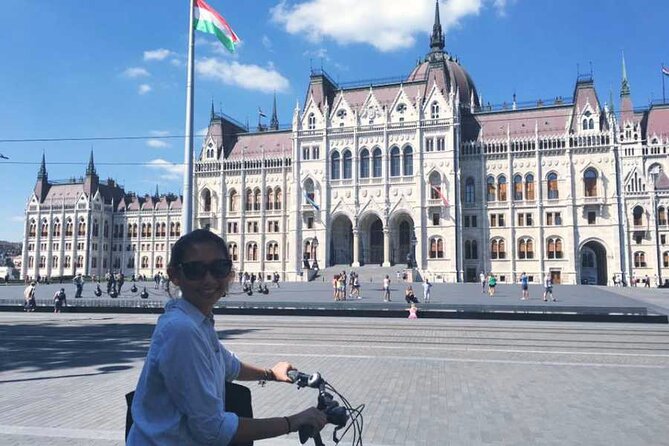
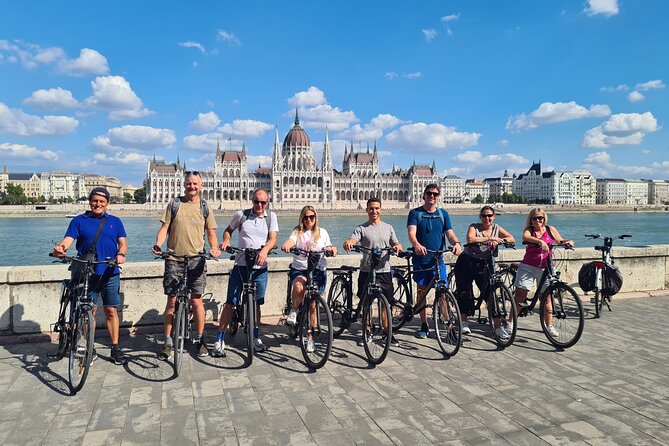
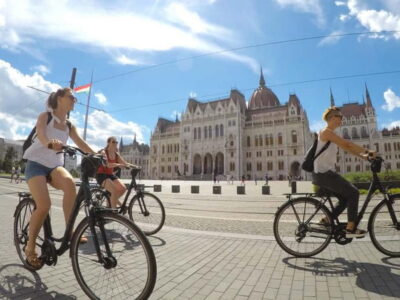
The Hungarian Parliament Building is one of the tour’s major highlights. You stop for photographs and an explanation of the building and its place along the Danube. The tour does not include a Parliament interior visit, so you should arrange a separate ticket if you want to see inside.
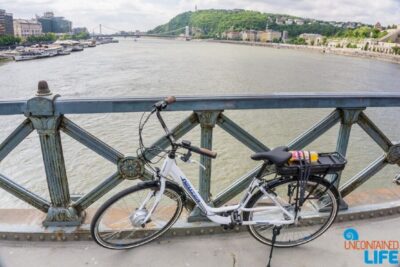
From Parliament, the route moves toward the river and across the Chain Bridge. This is where the geography of Budapest becomes especially clear. The Danube divides Buda and Pest, and the bridge connects the two historic halves in a way that is easy to understand from a bicycle.
The Chain Bridge is more than a crossing. It is one of the city’s most recognizable symbols, with strong views toward the riverbanks and the hills of Buda. You get a moving view as you approach, followed by a stop for photographs and commentary.
The route then reaches the Castle Bazaar on the Buda side. This gives you a taste of the lower approach to the Castle district without turning the tour into a long uphill visit. It is a useful introduction, especially if you plan to return later for Buda Castle and the surrounding historic quarter.
Elizabeth Bridge and the return to the center
After the Castle Bazaar, the route continues to Elizabeth Bridge. This final river crossing brings you back toward Pest and completes the tour’s broad loop through central Budapest.
The Elizabeth Bridge stop gives you another chance to see how the city is arranged around the Danube. By this point, you have connected the parks and monuments of northern Pest with the central avenues, Parliament, Chain Bridge, and the Buda riverfront.
You return to Rumbach Sebestyén u. 10. The route includes 15 scenic stops, though the actual time at each varies. Major locations receive around 10 to 15 minutes, while shorter museum and city-center pauses may take only five minutes.
The history is the tour’s strongest feature
I would choose this experience for the storytelling as much as for the cycling. Budapest has a complicated past, and the route gives the guide room to explain it in a sensible sequence.
You hear about Hungary’s early history and the 1896 millennium celebration at Heroes’ Square. The story then moves through Ottoman Turkish rule, the Nazi occupation, and Soviet Communist control. Those subjects can feel disconnected when encountered separately in museums, but the bike route places them against the actual streets and buildings where the city’s past unfolded.
The guides are English-speaking locals, and their role is more than pointing out landmarks. They explain Hungarian life and the people who call Budapest home. If you enjoy asking questions, this is a useful format because you can raise them during the regular stops instead of waiting for a formal lecture to end.
The best guide experiences reported from this tour include Daniel’s extra facts, Balasz’s lively presentation, and Ivana’s passion for Hungarian stories. Guide assignments can vary, so you should not assume a particular person will lead your departure.
Pace, distance, and physical demands
The route is described as comfortable, with plenty of stops. One outing covered about 15 kilometers over close to four hours, including sightseeing pauses. The official duration is 3.5 hours, so leave some flexibility around the end of the experience.
You do not need to be a serious cyclist. The point is to move through the city at a relaxed sightseeing pace. Still, this is an active tour, and you must be able to ride a bicycle. The minimum age is 12, and the experience is not suitable for children under that age.
E-bikes are available as an extra. That may be worth considering if you want assistance on the longer route or simply prefer to conserve energy for museums and evening plans. The supplied bikes are described as being in excellent condition, and helmets are included.
The tour operates rain or shine. Check the forecast before you leave, and dress for the conditions. If rain is likely, bring suitable clothing rather than assuming the tour will be postponed.
Is $34 good value?
At $34 per person, this is a strong value if you want a broad first look at Budapest. The price includes the bicycle, helmet, and English-speaking local guide. You are also getting transport between many major sights, plus explanations that would be difficult to gather quickly on your own.
The value is strongest when you consider the distance covered. On foot, visiting Andrassy Avenue, Heroes’ Square, City Park, Parliament, Chain Bridge, and the Buda riverfront in one half-day would require careful planning and plenty of walking. By bike, the route links them naturally.
There are limits. Entry fees and interior visits are not part of the experience, so you will need separate plans for the Széchenyi baths, Parliament, museums, or Basilica interior. The five-minute stops are useful for orientation but not enough for a full museum visit.
For a first day in Budapest, I think the cost is easy to justify. You see the major outline of the city, learn which sights deserve more time, and receive practical suggestions for the rest of your stay.
Who should book this Budapest bike tour?
I would recommend it to active adults, couples, friends, solo visitors, and families with children aged 12 or older who can comfortably ride a bike. It suits anyone who prefers seeing a city in motion rather than spending half a day inside one attraction.
It is also a good match for history-minded people. The guide spends real time explaining Hungary’s past, and the stops give those stories a physical setting.
I would think twice if you cannot ride, dislike outdoor activities, or want detailed interior visits. The tour is also less suitable if rain would spoil your day, since it runs in all weather.
The strongest reason to book is orientation. You will leave with a practical sense of Budapest’s scale, the relationship between Buda and Pest, and a list of places to revisit.
Practical details that matter
The experience costs $34 per person and lasts 3.5 hours. Starting times vary, so check availability for your chosen date.
You meet at Rumbach Sebestyén u. 10, 1075 Budapest. Ring bell 105 at the main gate, then enter the courtyard. The tour is conducted in English.
Free cancellation is available up to 24 hours before departure for a full refund. You can also reserve now and pay later, which helps if your Budapest plans are still shifting.
For a private family bike tour, contact Budapest Bike Breeze directly. The standard experience is not suitable for children under 12.
Should you book it?
Book this tour if you want to see a lot of Budapest in one half-day and prefer a local explanation to a self-guided ride. The route is broad, the pace is manageable, and the included bike and helmet keep the price reasonable.
I would book it near the start of your visit, then return on foot to the places that catch your interest. Choose an e-bike if you want extra assistance, and skip it only if cycling is not comfortable for you or if you need substantial time inside museums and landmarks.
FAQ
How long does the Budapest Highlights Bike Tour last?
The tour lasts 3.5 hours. Depending on the number and length of sightseeing stops, you may want to allow some extra flexibility around the return time.
How much does the tour cost?
The listed price is $34 per person.
Where does the tour begin?
The meeting point is Budapest, Rumbach Sebestyén u. 10, 1075 Hungary. Ring bell number 105 at the main gate, then enter the courtyard.
What is included in the tour?
Use of a quality bicycle and helmet is included, along with an English-speaking local professional guide.
Is the tour conducted in English?
Yes. The live tour guide speaks English.
Can I use an e-bike?
E-bikes can be booked as an extra. They are not included in the standard tour price.
What is the minimum age?
The minimum age is 12. Children under 12 cannot join this tour.
Does the tour operate in bad weather?
Yes. The tour takes place rain or shine.
Can I cancel for a full refund?
You can cancel up to 24 hours in advance for a full refund.
Can I reserve now and pay later?
Yes. The reserve now and pay later option lets you hold a place without paying immediately.
Which sights does the route visit?
The route includes Elizabeth Square, Andrassy Avenue, the Hungarian State Opera House, Heroes’ Square, Városliget, Széchenyi Thermal Bath, Vajdahunyad Castle, House of Music Hungary, the Ethnographic Museum, House of Terror, St. Stephen’s Basilica, Szabadsag Square, the Hungarian Parliament Building, Chain Bridge, Castle Bazaar, and Elizabeth Bridge.
Recently added around Budapest
- Hiking + Chairlift ride + viewpoints in Budapest★ 5.0 · 3 reviews
- FoolsCode: EscapeRoom/Sightseeing tour with Actor Tourguide★ 5.0 · 3 reviews
- Grand Budapest tour with private transportation★ 5.0 · 3 reviews
- Budapest: Private Customizable Tour in French★ 5.0 · 3 reviews
- Budapest: Private, Personalized Pub Crawl, 3 drinks included★ 4.5 · 3 reviews
- Budapest Drinks and Piano Show Cruise★ 4.5 · 3 reviews
- Discover Budapest Using Tram Two★ 5.0 · 3 reviews
- Budapest: Private 3-Hour Gödöllő Palace Tour★ 4.9 · 3 reviews
Cycling Tours, compared.

Browse the lists this tour appears in