
Reviewed · MUSEUMS
Budapest: Mika Tivadar Secret Museum Entry Ticket
The Mika Tivadar Secret Museum turns one small Kazinczy Street building into a time machine. Inside, you’ll trace the area’s hotels, cabaret life, first cinema, steam baths, wartime changes, and Budapest’s former ghetto through photographs, antique objects, sound effects, and short stories.
I like the low $5 price and the freedom to explore at your own pace with audio in eight languages. I also like the cocktail bar, which lets you sit with a drink after seeing the exhibits. The main drawback is its size: the museum covers only 140 square meters, so it is a compact stop rather than a full afternoon museum.
In This Review
- Key things to know before you go
- Entering the Mika Tivadar building on Kazinczy Street
- A 140-square-meter map of Budapest’s past
- The hotel, royal visitors, and international Budapest
- From the Blue Cat cabaret to Hungary’s first cinema
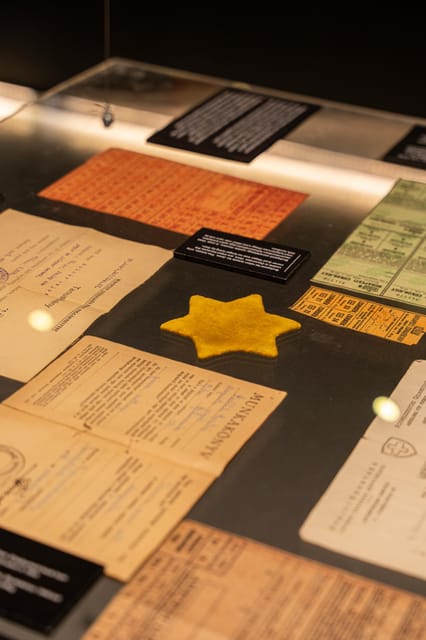
- War, the Budapest ghetto, and difficult chapters
- The copper shop, restaurant, and cocktail bar
- How the audio guide works
- How long the visit takes
- Is the $5 ticket good value?
- Who will enjoy this museum most?
- Should you book the Mika Tivadar Secret Museum?
- FAQ
- Where does the Mika Tivadar Secret Museum visit begin?
- How long does the museum visit take?
- Is a museum guide or tour guide included?
- Which languages are available for the audio guide?
- Is Wi-Fi available at the museum?
- Is the museum suitable for wheelchair users?
Key things to know before you go
- A small museum with a large subject: The displays connect one building to the story of Kazinczy Street and District 7.
- A self-guided visit: You receive a printed flyer, then use your charged smartphone to scan for the audio chapters.
- Eight language options: Voiceovers, sound effects, and free Wi-Fi make the material easier to follow.
- A cocktail bar inside the historic setting: You can pair the museum visit with a drink, brunch, or a meal.
- Famous names and unexpected links: The story includes Edward VII, Otto von Bismarck, Milan I of Serbia, Michael Curtiz, Sylvester Stallone, and Arnold Schwarzenegger.
- Allow about 30 minutes: You may spend longer, but the main experience is short and easy to fit into a District 7 walk.
Entering the Mika Tivadar building on Kazinczy Street
You begin at the Hotel Mika Downtown reception. This matters because the museum is not presented like a grand civic institution with a large street entrance and a formal ticket hall. It is part of a working hotel, restaurant, and cocktail bar, so the first impression feels informal and local.
The museum’s name refers to Mika Tivadar, a copper merchant whose former workshop became part of the site’s story. The building is also tied to the hotel’s heritage designation, making the visit less about a single collection and more about the building and its surroundings.
You receive a flyer with basic information, but there is no museum guide or tour guide leading you from room to room. Instead, you use your own mobile phone for the audio chapters. Bring a charged smartphone, and connect to the free Wi-Fi if needed.
I like this arrangement for a quick city visit. You can pause, replay sections, and move at your own speed. The tradeoff is that you need to manage the audio yourself, and visitors who prefer a live guide will not get one here.
More museums in Budapest:
- Budapest: Cat Museum Budapest Entry Ticket
★ 4.4 · 2,210 reviews - Budapest: Light Art Museum – Immersive New Media Experience
★ 3.9 · 1,269 reviews - Budapest: Budapest Retro Interactive Museum Ticket
★ 4.4 · 373 reviews
A 140-square-meter map of Budapest’s past
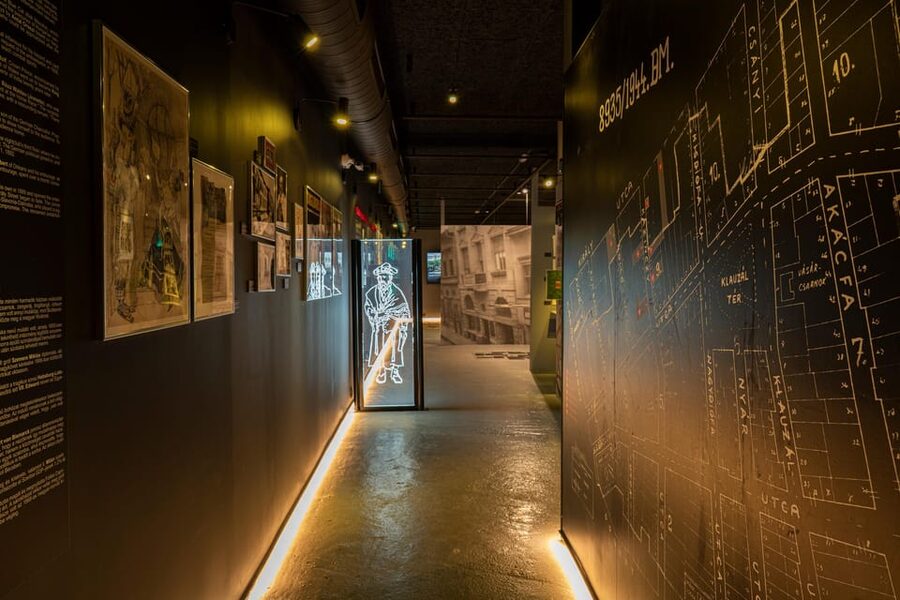
The museum occupies about 140 square meters, so you should set your expectations before entering. You will not find a large collection spread across grand galleries. Instead, the space compresses several eras and several nearby buildings into a tight route.
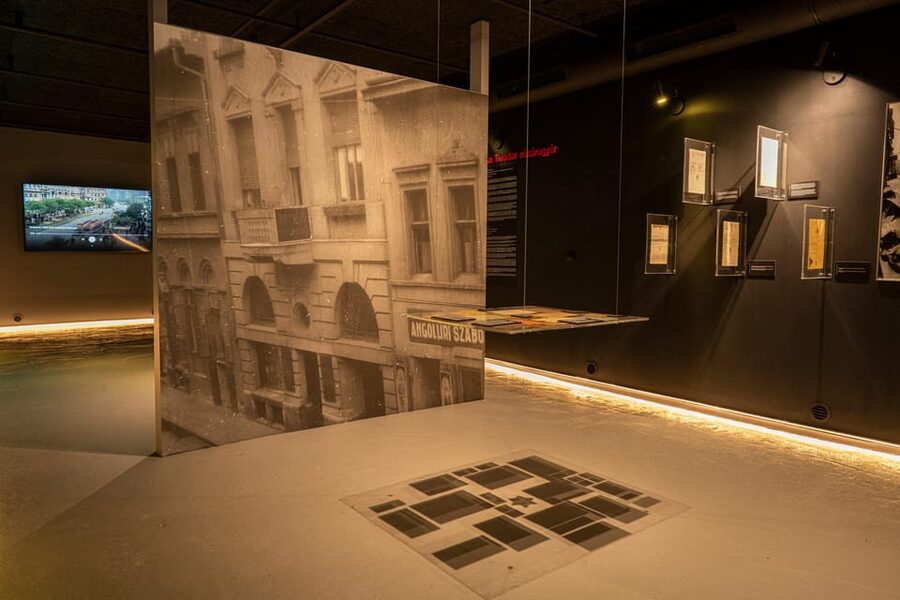
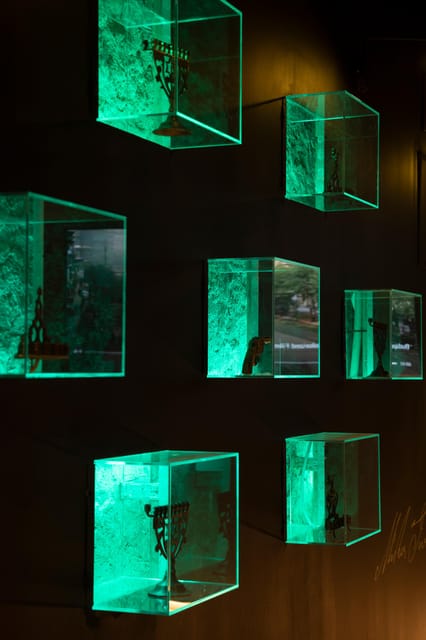
That compression is the point. The museum uses the history of one house to explain Kazinczy Street, then widens the story to include the surrounding buildings and District 7. Photographs, antique objects, written panels, and period-style installations help you connect the present-day street with the late 19th century and the years between the two world wars.
This approach works best if you enjoy place-based history. You are not simply looking at old objects with no context. You are learning why the street mattered, who used its buildings, and how entertainment, commerce, travel, religion, migration, and war changed the neighborhood.
Some subjects are serious, including the Budapest ghetto and the appearance of the property during World War II. Other sections are more playful, including Budapest’s nightlife, famous visitors, and the surprising connection between a small Kazinczy Street house and Sylvester Stallone and Arnold Schwarzenegger.
The result is a museum with a broad range of subjects, but not much physical space. The audio is useful here because it adds background that the displays alone cannot provide.
The hotel, royal visitors, and international Budapest
One of the museum’s most unusual features is its focus on the building’s former hotel life. It is described as Hungary’s first hotel museum, and the exhibits recall the period when international figures passed through Budapest.
The names connected with the site include King Edward VII of the United Kingdom, German statesman Otto von Bismarck, and Milan I of Serbia. Their presence helps you picture the hotel as part of a wider European network rather than an isolated Budapest address.
This international angle is one of the museum’s strongest qualities. The story does not treat Hungarian history as a sealed-off national tale. It shows how events in Hungary connected with the larger political and cultural world of Europe’s great powers.
The displays also give attention to the many ethnic communities living in Hungary. That makes the museum more useful for international visitors, since you may find familiar cultural links or at least a clearer sense of how varied Budapest’s population was.
I would pay attention to this section if you have already visited the city’s major national museums. The Mika Tivadar museum offers a more focused look at how ordinary urban life and international events met on one street.
From the Blue Cat cabaret to Hungary’s first cinema
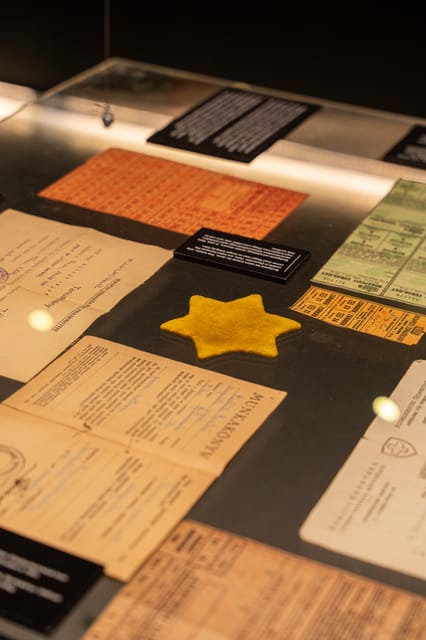
Kazinczy Street was not only a place of hotels and workshops. The building once housed the Blue Cat, described as Europe’s most famous cabaret. That detail gives the museum a sharper sense of nightlife and entertainment in the district.
The museum also marks the site as the place where Hungary’s first cinema opened. This is a particularly good story for film fans, since Michael Curtiz, the Oscar-winning director of Casablanca, began his film career here.
You may find that these stories change how you see today’s District 7. The area is now closely associated with restaurants, bars, and nightlife, but the museum shows that entertainment has long been part of its identity. The modern party district did not appear from nowhere.
The audio and background music help set the period mood. Music plays while you read the stories, adding atmosphere without requiring a live performance or a long presentation. You should still expect a self-guided format rather than a theatrical show.
A few more Budapest tours worth comparing
- Budapest: Széchenyi Spa Day Ticket with Optional Upgrades
★ 4.3 · 23,911 reviews - Budapest: Parliament Building Entry Ticket and Audio Guide
★ 4.5 · 3,844 reviews - Budapest: Full-Day Gellért Spa Ticket
★ 4.2 · 3,340 reviews - Budapest: Cinema Mystica Entry Ticket
★ 4.3 · 3,103 reviews
War, the Budapest ghetto, and difficult chapters
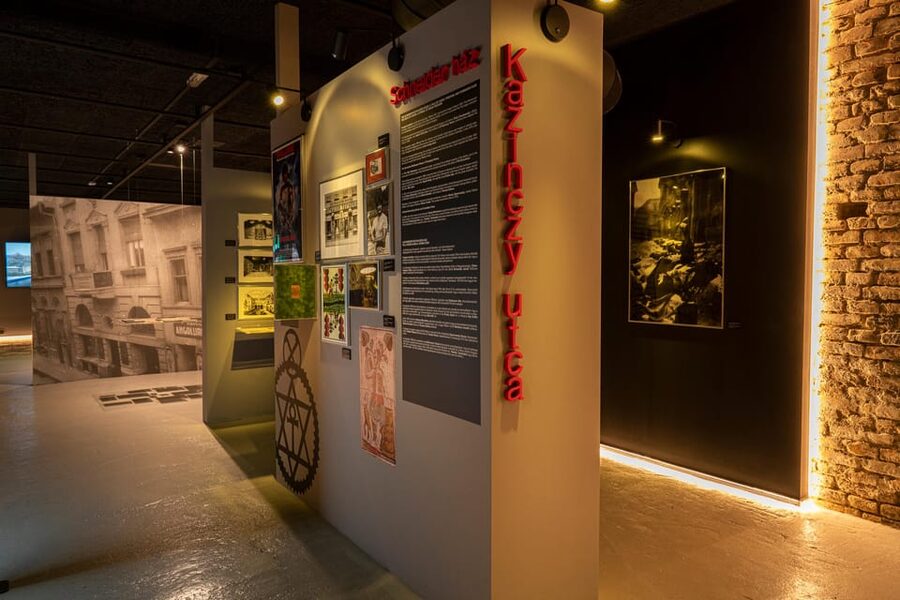
The museum does not limit itself to glamorous hotel names and cabaret history. It also explains how the property and the surrounding area changed during World War II, including the story of the Budapest ghetto.
The subject is handled through photographs, written accounts, and the building’s changing role. You may also learn about the Hungarian first steam bath, which once stood opposite the museum site and has since become a hotel.
These details are valuable because they show how a street can change function while keeping traces of its earlier life. A hotel, bath, workshop, cinema, and entertainment venue can all belong to the same local story.
The museum also connects Hungarian veterans of the 1848 to 1849 Revolution with the Mexican Civil War. That is the sort of unexpected international link that gives the visit its appeal. You come for a quick look at one Budapest building, then find yourself following the movement of people and ideas across borders.
Because the space is small, the treatment cannot match a major war museum in depth. If you want a detailed account of the Holocaust in Hungary or the 1848 to 1849 Revolution, you will need a larger institution. Here, the value comes from seeing those events through one street and one property.
The copper shop, restaurant, and cocktail bar
The museum’s on-site food and drink option is more than a practical extra. The cocktail bar and restaurant occupy a space that was once a copper shop during World War II, giving the room a direct link to the building’s working past.
You can have a cocktail while exploring the museum area, then stay for a meal or brunch. This makes the experience easy to fit into a District 7 evening. You might visit before dinner, take a break with a drink, or use it as a short indoor stop between nearby sights.
I like the contrast. The museum does not force you to separate history from modern city life. You can read about the former shop and earlier residents, then sit in the same general setting with a contemporary drink.
Still, the bar may not suit everyone. If you want a quiet museum atmosphere, background music and a nearby restaurant can make the setting feel less formal. The attraction works best for you if you enjoy a social venue with historical displays rather than a silent gallery.
How the audio guide works
The audio guide is accessed on your own smartphone. Free Wi-Fi is available, and the chapters include voiceovers and sound effects in eight languages. The printed flyer helps you understand what you are seeing, while the audio fills in the stories.
This is a practical feature for mixed-language groups. You do not need to share one guide’s spoken language, and you can listen at a comfortable volume through your own device. It also means you can take more time with sections that interest you and move past subjects you already know.
Make sure your phone is charged before you arrive. This is the one item specifically worth remembering, since the audio depends on your device. If you forget, the written displays and flyer still provide some information, but you will miss part of the intended experience.
The lack of a live guide is both a benefit and a limitation. You get privacy and control, but you cannot ask questions about a photograph or request more detail about the ghetto, the cabaret, or the cinema. I would treat the museum as a flexible introduction, not a guided history lesson.
How long the visit takes
The advertised duration is 30 minutes, which is a sensible planning time. You can make the visit part of a larger walk around Kazinczy Street and District 7 without giving up half a day.
Some people spend closer to an hour, especially when listening to the audio chapters, reading the written narratives, and taking a drink at the bar. The museum is not a timed route, so you can stay as long as the venue allows.
For a fast visit, focus on the hotel story, the Blue Cat cabaret, the first cinema, the wartime displays, and the building’s links to nearby sites. If you enjoy reading every panel, allow extra time.
This short format also makes the museum suitable for rainy weather, a mid-afternoon break, or a final stop before dinner. It is less suitable if you need a major attraction to fill several hours.
Is the $5 ticket good value?
At $5 per person, the museum is inexpensive by Budapest attraction standards. The price includes entry to the 140-square-meter museum, the flyer, free Wi-Fi, and audio access in eight languages.
The value comes from the number of stories packed into the visit. You get a hotel museum, a local heritage site, nightlife history, cinema history, wartime context, and international connections in one stop.
The small size keeps the cost reasonable, but it also defines the experience. You are paying for a concentrated local history stop, not a huge collection or a full guided tour. If you judge museums by the number of rooms or objects, you may find it limited. If you value context and unusual local stories, the price is easy to justify.
Free cancellation up to 24 hours before the visit and a reserve-now, pay-later option also make it a low-risk addition to your schedule. Starting times vary, so you should check availability before planning it around dinner or another timed attraction.
Who will enjoy this museum most?
I would recommend the Mika Tivadar Secret Museum to you if you enjoy unusual city history, small specialty museums, and places that connect modern streets with earlier lives. It is especially useful if you are already spending time in District 7.
Film fans should look for the Michael Curtiz connection. History-minded visitors will appreciate the sections on the Budapest ghetto, World War II, the 1848 to 1849 Revolution, and the international links to Mexico.
It also suits couples and small groups who want a museum visit with a cocktail or meal built into the same stop. Families may appreciate the short duration, though the wartime and ghetto material may require a thoughtful explanation for younger children.
You should consider skipping it if you need wheelchair access, since the experience is not suitable for wheelchair users. You may also want a different attraction if you prefer a formal guide, a large collection, or a major historical museum with extensive academic displays.
Should you book the Mika Tivadar Secret Museum?
Book it if you want a short, affordable look at District 7’s layered past, especially before dinner or during a walk along Kazinczy Street. The combination of hotel history, the Blue Cat cabaret, Hungary’s first cinema, Michael Curtiz, the former copper shop, and wartime Budapest gives you plenty to think about for a 30-minute visit.
I would not make it your only history stop in Budapest. Instead, use it as a compact local-history experience, then let the street outside provide the modern contrast. At $5, with eight-language audio and an on-site cocktail bar, it is an easy choice for most able-bodied visitors who enjoy independent exploration.
FAQ
Where does the Mika Tivadar Secret Museum visit begin?
The meeting point is the Hotel Mika Downtown reception.
How long does the museum visit take?
The stated duration is 30 minutes. You may stay longer, and some visitors spend about an hour exploring the displays and using the audio guide.
Is a museum guide or tour guide included?
No live museum guide or tour guide is included. Staff greet you, provide a printed flyer, and briefly explain what you can discover. The audio chapters are available on your own mobile device.
Which languages are available for the audio guide?
Audio guide voiceovers are available in eight languages. You need a charged smartphone to access them.
Is Wi-Fi available at the museum?
Yes. Free Wi-Fi is available for accessing the audio guide on your mobile device.
Is the museum suitable for wheelchair users?
No. The experience is not suitable for wheelchair users.
Recently added around Budapest
- Hiking + Chairlift ride + viewpoints in Budapest★ 5.0 · 3 reviews
- FoolsCode: EscapeRoom/Sightseeing tour with Actor Tourguide★ 5.0 · 3 reviews
- Grand Budapest tour with private transportation★ 5.0 · 3 reviews
- Budapest: Private Customizable Tour in French★ 5.0 · 3 reviews
- Budapest: Private, Personalized Pub Crawl, 3 drinks included★ 4.5 · 3 reviews
- Budapest Drinks and Piano Show Cruise★ 4.5 · 3 reviews
- Discover Budapest Using Tram Two★ 5.0 · 3 reviews
- Budapest Urban Treats – Cake and Coffee House Tour★ 5.0 · 3 reviews
Museums, compared.

Light Art Museum – Immersive New Media Experience
Read our review →

Budapest Card: Free Public Transport, Spa & Museums with Delivery
Read our review →
Travelling Galaxy Star Wars Interactive Exhibition
Read our review →
Skip the Line: Budapest Pinball Museum Admission Ticket
Read our review →Browse the lists this tour appears in