
Reviewed · WALKING TOURS
Downtown Pest Walking Tour
Pest tells Budapest’s modern story in grand stone. On this three-hour walk, a historian connects Parliament, the Danube memorial, Freedom Square, Art Nouveau buildings, the Great Synagogue, and Heroes Square to the rise of Hungary’s political and cultural capital.
I like the strong historical thread, which follows Pest from its 19th-century financial ambitions to its national monuments. I also like the chance to see several famous buildings on foot, including the Stock Exchange Palace and St. Stephen’s Basilica, without spending your day inside museums.
The main consideration is the price: $123 per person is a serious charge for a walking tour. It makes the most sense if you value a private or small-group setting and want an expert guide who can take questions, explain difficult history clearly, and adjust the pace.
In This Review
- Key Points
- Starting Beside Parliament at Kossuth Square
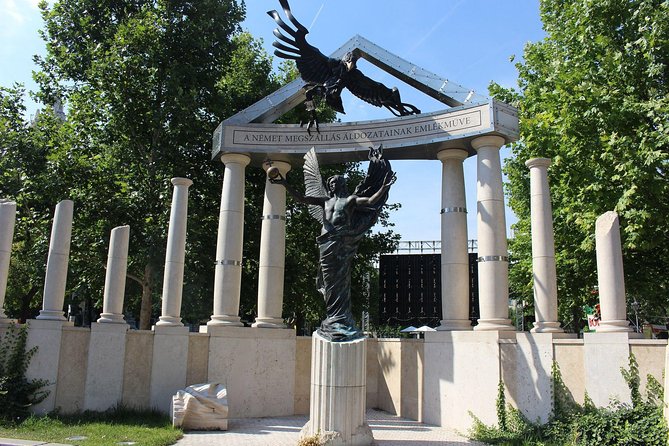
- Remembering the Danube Memorial Behind Parliament
- Reading the Financial Story on Freedom Square
- Art Nouveau Streets and St. Stephen’s Basilica
- The Great Synagogue and Jewish Budapest
- Andrassy Boulevard, the Opera House, and the Final Stretch
- What the Three Hours Feel Like
- Is $123 Per Person a Fair Price?
- Who Should Book This Pest Walk
- Should You Book the Downtown Pest Walking Tour?
- FAQ
- Where does the Downtown Pest Walking Tour meet?
- How long does the walking tour last?
- What language is the tour offered in?
- Is this a private tour or a group tour?
- What places are included along the route?
- Does the tour include entry inside Parliament or the other major buildings?
- Can I cancel the tour for a full refund?
Key Points
- Parliament begins the story: Start at Kossuth Square beside Hungary’s grandest political building.
- The Danube memorial adds difficult context: Learn about the Jewish citizens murdered on the riverbank during World War II.
- Freedom Square reveals wealthy Pest: See the massive Stock Exchange Palace and grand bank buildings.
- András and Zsofia are named guides: The tour is conducted in English by a historian, with private and small-group options.
- The route links several eras: Finish at Heroes Square after passing St. Stephen’s Basilica, the Great Synagogue, the Opera House, and Andrassy Boulevard.
Starting Beside Parliament at Kossuth Square
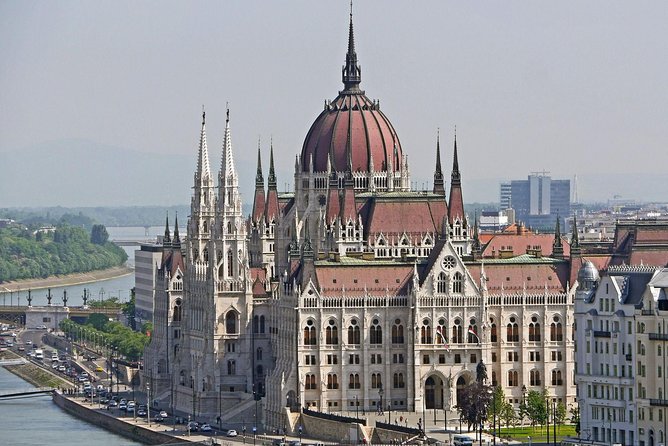
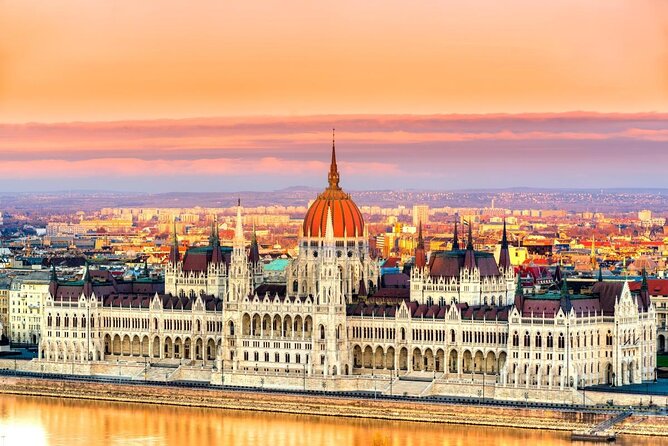
The tour begins at Szamos Cafe, at Budapest’s Kossuth Lajos tér 10, in front of Parliament. This is a useful starting point because Parliament immediately gives you the scale and ambition of modern Pest.
When the building was inaugurated in 1896, it was the largest and most costly structure ever built in Hungary. You first take in its exterior, with its enormous size and ceremonial setting, then look at the art and political meaning tied to the building. The tour description also points to the lavish interior and its paintings and sculpture, but this experience is described as a walking tour rather than a guided interior visit. You should not book it expecting a full Parliament entry tour.
Kossuth Square is more than a photo stop. Your guide can use the surrounding buildings and monuments to explain how Pest became the political center of the new Hungarian nation during the second half of the 19th century. That framing is valuable. Instead of seeing Parliament as an isolated landmark, you see it as part of a deliberate effort to give Hungary a capital suited to its growing wealth and national ambitions.
The square also gives you a clear sense of the tour’s subject. This is not mainly a stroll through picturesque lanes. It is a walk through the institutions, public spaces, and grand architecture that shaped the country.
More walking tours in Budapest:
- Budapest: Buda Castle Walk with Saint Stephen’s Hall
★ 4.5 · 3,012 reviews - Big Bus Budapest Hop-On Hop-Off Bus and Walking Tour
★ 3.5 · 2,206 reviews - Budapest: Buda Castle District Walking Tour
★ 4.6 · 2,108 reviews
Remembering the Danube Memorial Behind Parliament
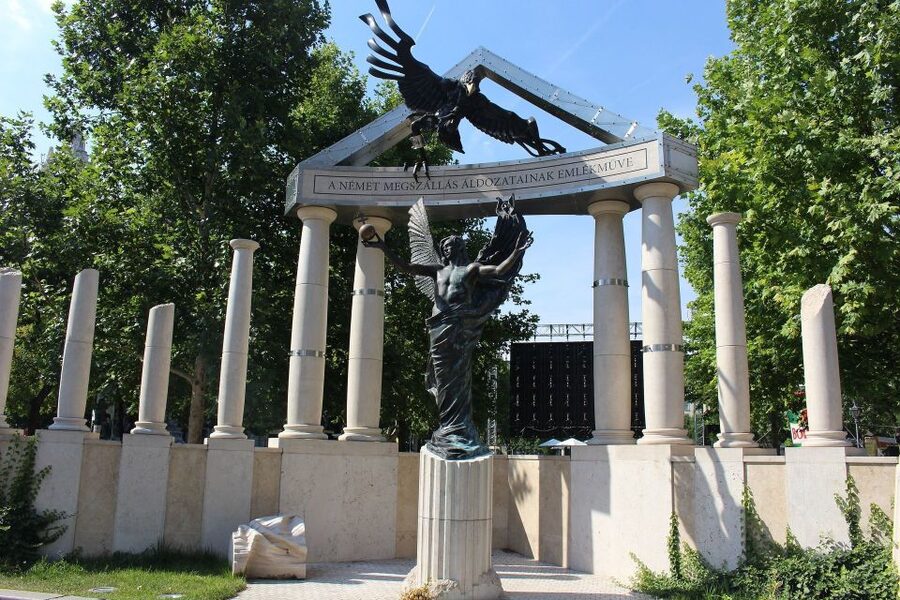
From Parliament, the route reaches the Holocaust Monument on the Danube riverbank. The memorial honors the thousands of Jewish citizens of Budapest murdered at that spot during the final months of World War II.
This is one of the most important stops on the walk, and it changes the mood. The tour does not present Pest only as a city of banks, palaces, and national celebration. It also confronts the destruction of a major part of Budapest’s Jewish community.
The memorial is especially affecting because of its location beside the river. Your guide can place the site within the wider story of Budapest during the war, then connect it to the city’s Jewish population and the role that community played in the development of Pest. The supplied details do not specify a long visit or a separate museum component, so expect a guided stop and historical explanation rather than an extended memorial program.
I value this part of the route because it gives the rest of the walk moral weight. The grand city you see later was built by many communities, and its history includes both remarkable achievement and terrible loss.
Reading the Financial Story on Freedom Square
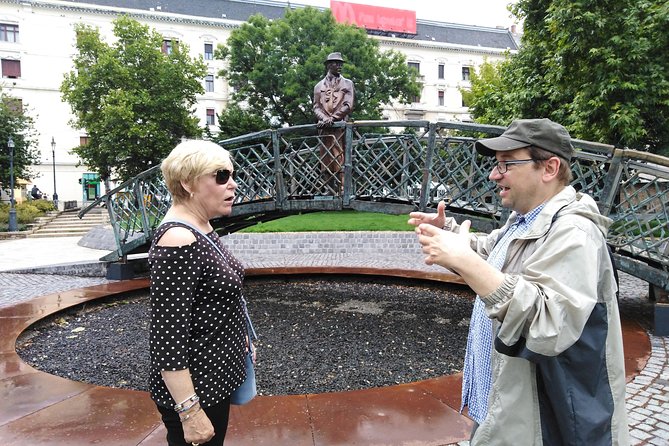
Freedom Square is the next major stop. It was created as the financial center of the city, and the architecture here shows the confidence of Budapest’s wealthy 19th-century business class.
The massive Stock Exchange Palace is the visual anchor. You also see opulent buildings that still house several banks. Look up as you walk. The point is not simply that the buildings are attractive. Their size and decoration reflect the money flowing through Pest when the city was developing into a political and financial capital.
This is where an attentive historian makes a real difference. Without context, you may see another elegant European square. With an explanation of who funded these buildings and why this location mattered, the square becomes a lesson in the making of modern Budapest.
Freedom Square is also a useful counterpoint to Parliament. Kossuth Square represents state power. Freedom Square shows private wealth and financial power. Together, the two spaces explain why Pest became so important in the late 19th century.
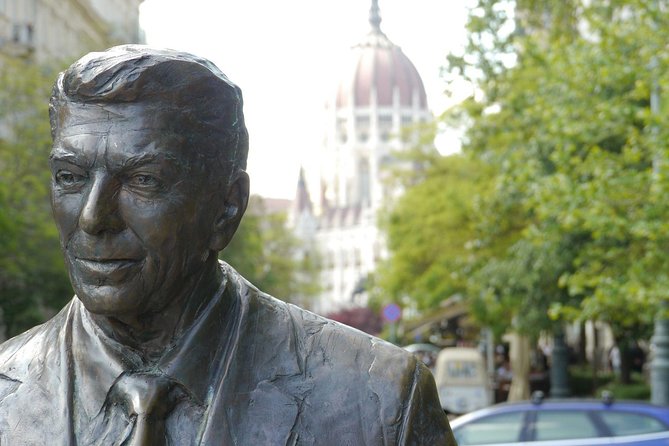
The stop at the statue of Cardinal Mindszenty adds a later political chapter. Mindszenty, head of Hungary’s Catholic Church, spent 15 years hidden in the United States embassy while pursued by the Communist government. That story brings the route forward from imperial-era construction to the tensions of Communist Hungary.
You should be ready for a lot of information here. The square contains several buildings, monuments, and political references, so the quality of the explanation matters. Past participants singled out András for taking time with questions and giving an objective account of people and events. That is exactly the sort of approach this stop needs.
Art Nouveau Streets and St. Stephen’s Basilica
The walk continues toward St. Stephen’s Basilica, passing several Art Nouveau buildings along the way. Budapest is famous for this style, and seeing it in ordinary city streets is one of the pleasures of a walking tour.
The route does not promise an interior visit to the basilica, so treat it as an architectural and urban stop. The building helps show how Budapest combined national identity with the grand European tastes of the period. Along the way, the Art Nouveau façades add variety after the formal institutions of Kossuth Square and Freedom Square.
I like this change of pace. The tour moves from monumental government and banking buildings to details that reward slower looking: curved lines, decorative surfaces, and the playful design language associated with Budapest around the turn of the 20th century.
The route is still a city walk, not a series of museum admissions. You will be looking at buildings from the street and listening to the guide’s interpretation. That makes comfortable walking shoes and attention to the surroundings more useful than expecting long indoor visits.
A different kind of day in Budapest:
- Budapest: City Highlights Cruise with Welcome Drink
★ 4.6 · 35,610 reviews - Budapest: Unlimited Prosecco, Beer and Aperol Spritz Cruise
★ 4.8 · 25,310 reviews - Budapest: Széchenyi Spa Day Ticket with Optional Upgrades
★ 4.3 · 23,911 reviews - Budapest: Nighttime or Daytime Sightseeing Cruise
★ 4.2 · 21,062 reviews
The Great Synagogue and Jewish Budapest
Farther along, you reach the second-largest synagogue in the world, the Great Synagogue in Budapest. The stop highlights the important role of the city’s Jewish population and wealthy bourgeois in the growth of Budapest.
This is another place where the tour’s broad historical plan works well. Parliament shows national power. Freedom Square shows finance. The synagogue helps explain the people and communities who helped build the city’s commercial and cultural life.
The supplied details do not say that the tour enters the synagogue. Plan on viewing it as part of the walking route unless your booking confirmation says otherwise. If you want a full interior visit, check that separately before paying for admission elsewhere.
The guide’s explanation is likely more useful than a quick exterior photograph. Budapest’s Jewish history cannot be reduced to one memorial or one building. Here, you get a link between religious life, urban wealth, and the development of the city. The earlier Danube memorial also gains more meaning after this stop, since you have already learned about the community that played such a large role in Budapest.
Andrassy Boulevard, the Opera House, and the Final Stretch
The route then reaches Andrassy Boulevard, an esplanade designed for Hungarian nobility. The boulevard expresses a different kind of ambition from the financial district. Its scale and form were meant to give the upper class a grand route through the capital.
The tour travels along and under Andrassy Boulevard, then pauses at the Opera House. That wording suggests you will encounter both the broad avenue and its underground transport setting, though the supplied information does not promise a subway ride or an interior Opera House visit. Consider this a walking stop focused on the boulevard and the building’s place in Budapest’s 19th-century civic life.
Andrassy Boulevard is a strong late-route choice because it gathers several themes together. You see the desire for order, elegance, and national prestige. You also see how public design can tell you who a city was built to serve.
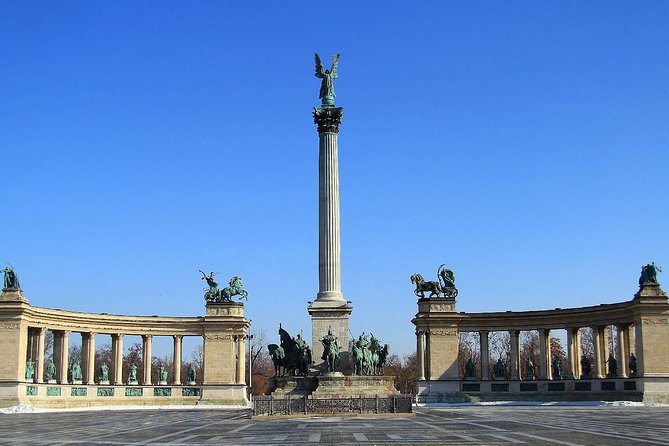
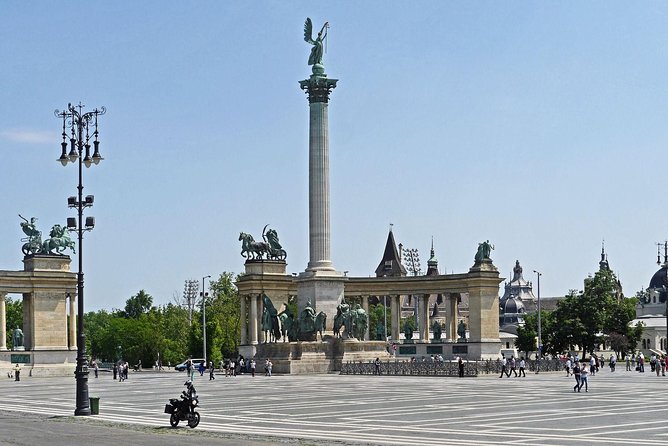
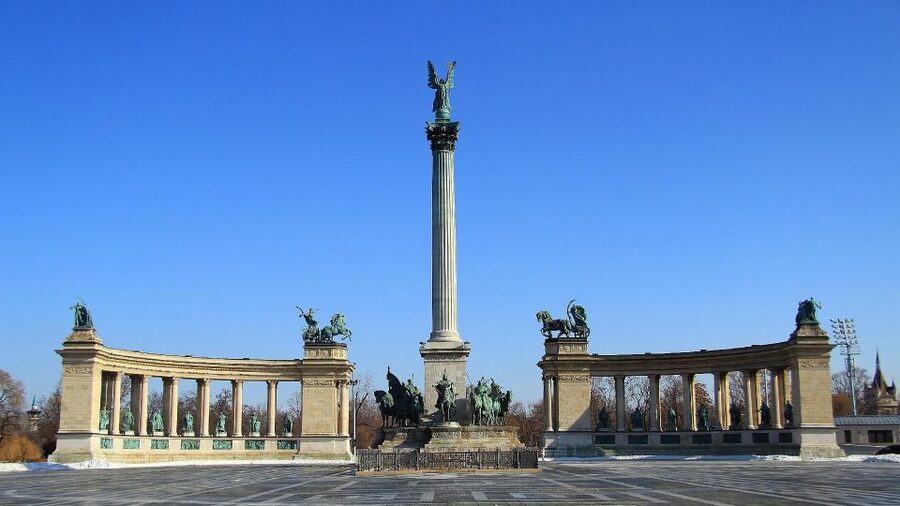
The tour ends at Heroes Square, where Hungarians celebrated the 1,000-year anniversary of the founding of their kingdom in 1896. This gives the walk a clear finish. You begin beside Parliament, a symbol of the modern nation, and end with a monument to a much older national story.
Heroes Square is not just a final landmark to tick off. It helps explain why 1896 mattered so much. Hungary was looking backward to its origins while presenting itself as a modern European nation. The entire route follows that same tension between old identity and new power.
What the Three Hours Feel Like
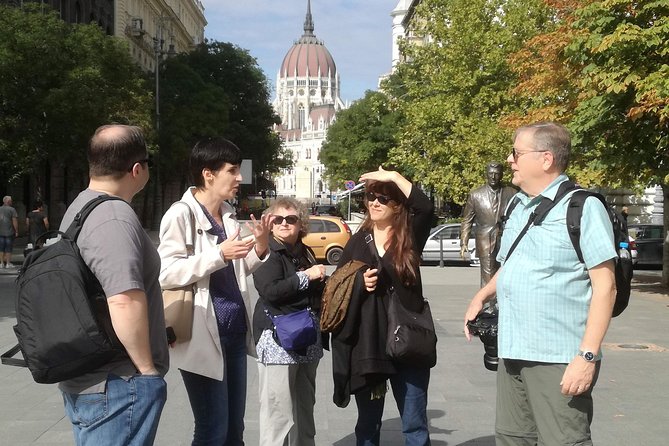
Three hours is long enough to cover a large section of Pest, but short enough to fit into a busy Budapest visit. You will need to keep moving through central streets, squares, and avenues, with stops for explanation and questions.
The tour’s greatest strength is the guide. The experience is offered in English, and named guides include András and Zsofia. András is described as patient, good-humored, strongly connected to Hungarian history, and exceptionally comfortable in English. Zsofia is described as an excellent storyteller. Another detailed account specifically praises the time given to questions and the objective treatment of history.
Those details matter because this route covers sensitive subjects and many historical periods. A guide who simply lists dates would make the walk tiring. A guide who can explain people, politics, architecture, and competing viewpoints will make the three hours pass quickly.
The tour is available as a private or small-group experience. That option affects the value considerably. In a private setting, you can ask more questions about subjects that interest you, such as Jewish Budapest, Communist rule, Art Nouveau, or the 1896 celebrations. A small group can offer much of the same interaction while keeping the cost lower than a fully private experience, depending on the booking format.
The route is not designed for someone who wants a relaxed café stroll with only a few facts. It covers many major sites and carries a serious historical load. You should choose it if you enjoy walking, asking questions, and looking closely at buildings rather than rushing from one photo stop to the next.
Is $123 Per Person a Fair Price?
At $123 per person, this is not a budget walking tour. The value depends on what you want from the guide and on the size of your group.
For a large group, the price may feel high compared with a standard city walk. You are paying for a three-hour historian-led experience, not for entry tickets to several attractions. Parliament, the synagogue, the Opera House, and the basilica are described as stops along the route, not guaranteed interior visits.
For a private or very small group, the calculation is different. You receive a concentrated introduction to central Pest, with a guide who can explain the city’s political, financial, religious, and architectural development. If András or Zsofia is available, their strong English and patient approach could make the extra cost worthwhile for you.
I would see this as an orientation tour for an inquisitive first-time visitor, or as a focused history walk for someone who has already seen Budapest’s main sights but wants the connections between them. It is less useful if you prefer to explore independently with an audio guide or if your main goal is entering famous buildings.
The reserve-now-and-pay-later option gives you some flexibility, and cancellation is free up to 24 hours before the start for a full refund. Those policies do not change the price, but they reduce the risk of fitting the tour into a changing Budapest schedule.
Who Should Book This Pest Walk
I would recommend this experience to you if you want:
- A historian rather than a guide who only points out photo stops
- A clear explanation of how Pest became Hungary’s political and financial center
- Architecture paired with social and political context
- A route that includes both national monuments and Jewish history
- A private or small-group setting
- A three-hour introduction to central Pest
You may want something else if you need extensive interior visits, a short route, or a low-cost group tour. The walk includes many major exteriors and historical sites, but the available information does not promise admission inside Parliament, the Great Synagogue, St. Stephen’s Basilica, or the Opera House.
Should You Book the Downtown Pest Walking Tour?
Book it if you want Budapest to make sense as a city, not just as a collection of famous buildings. The route links Parliament, the Danube memorial, Freedom Square, the synagogue, Andrassy Boulevard, and Heroes Square into one readable story.
The strongest reason to choose it is the guide-led interpretation. András and Zsofia are named options, and the available feedback gives particular weight to patient answers, strong English, objective history, and storytelling. Ask about guide availability if a specific person matters to you.
At $123 per person, I would book this for a private or small group with a real interest in Budapest’s past. I would skip it if you are mainly seeking entry to landmarks or a cheap overview. For the right audience, it is a useful, serious, and well-shaped introduction to Pest.
FAQ
Where does the Downtown Pest Walking Tour meet?
The meeting point is Szamos Cafe at Budapest Kossuth Lajos tér 10, in front of Parliament.
How long does the walking tour last?
The tour lasts three hours.
What language is the tour offered in?
The live tour guide speaks English.
Is this a private tour or a group tour?
Private and small-group options are available.
What places are included along the route?
The route includes Parliament and Kossuth Square, the Danube Holocaust Monument, Freedom Square, the Stock Exchange Palace, Cardinal Mindszenty’s statue, St. Stephen’s Basilica, the Great Synagogue, Andrassy Boulevard, the Opera House, and Heroes Square.
Does the tour include entry inside Parliament or the other major buildings?
The provided details describe a guided walking route and do not confirm interior admission to Parliament, the Great Synagogue, St. Stephen’s Basilica, or the Opera House.
Can I cancel the tour for a full refund?
Yes. You can cancel up to 24 hours in advance for a full refund. You can also reserve now and pay later.
Recently added around Budapest
- Hiking + Chairlift ride + viewpoints in Budapest★ 5.0 · 3 reviews
- FoolsCode: EscapeRoom/Sightseeing tour with Actor Tourguide★ 5.0 · 3 reviews
- Grand Budapest tour with private transportation★ 5.0 · 3 reviews
- Budapest: Private Customizable Tour in French★ 5.0 · 3 reviews
- Budapest: Private, Personalized Pub Crawl, 3 drinks included★ 4.5 · 3 reviews
- Budapest Drinks and Piano Show Cruise★ 4.5 · 3 reviews
- Discover Budapest Using Tram Two★ 5.0 · 3 reviews
- Budapest: Private 3-Hour Gödöllő Palace Tour★ 4.9 · 3 reviews
Walking Tours, compared.
Big Bus Budapest Hop-On Hop-Off Bus and Walking Tour
Read our review →
3-Hour Orientation Walking Tour of Buda and Pest
Read our review →
Budapest All in One Small Group Walking Tour with Strudel Stop
Read our review →
Buda Castle District Walking Tour with a Historian
Read our review →
BloodThirsty Hungary: Walking tour & Dark Historical Stories
Read our review →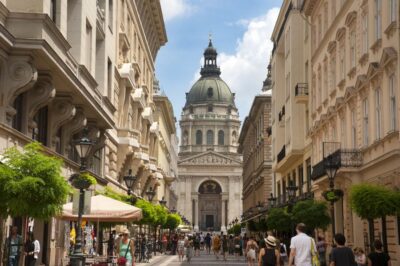
Browse the lists this tour appears in