
Reviewed · BUDAPEST
Pest side stories with a Historian
Pest Side Stories is a history walk with real range. In three hours, you move from a former market square and Stalin-era public space to grand boulevards, a castle built for a 19th-century exhibition, and the oldest underground railway on mainland Europe. Guides such as Steven, Andrew, and Greg bring different personalities, but the focus stays on Hungarian history and the forces that shaped Budapest.
I like the small group limit of 10, which gives you a better chance to ask questions and hear the guide clearly. I also like that refreshments and metro tickets are included, since the route covers a lot of ground and uses public transport rather than pretending Pest can be understood from one square.
The main drawback is the amount of walking. You cover a large part of central Pest in about three hours, and one review describes a hot day with long distances. Wear good shoes, and think twice before booking if you need a slow, low-effort outing.
In This Review
- Key points to know before booking
- Why this Pest walk feels different
- Elizabeth Square starts with changing Budapest
- St. Stephen’s Basilica adds scale and ceremony
- Heroes’ Square puts 1,100 years into view
- Vajdahunyad Castle explains a clever 1896 creation
- Andrassy Avenue shows Budapest at its grandest
- The Millennium Underground makes transport part of the story
- Vörösmarty Square brings the walk back to commerce
- What the guides do best
- The walking demands are real
- Who will get the most from the $58.94 price
- Should you book Pest Side Stories?
- FAQ
- Where does the tour start?
- What time does the tour begin?
- Where does the tour end?
- How many people can join?
- Are metro tickets included?
- What is the cancellation policy?
Key points to know before booking
- A historian-led walk across central Pest: The route links political history, architecture, religion, commerce, and daily city life.
- Small groups capped at 10 people: This is far more personal than a large bus tour, especially when the guide is explaining statues and buildings.
- Seven major stops in about three hours: Expect a brisk but manageable pace between Elizabeth Square, Heroes’ Square, Vajdahunyad Castle, and the city center.
- Metro travel is part of the plan: The Millennium Underground helps connect the distant parts of the route and adds a piece of Budapest history.
- Several guides lead the experience: Andrew, Greg, and Steven, nicknamed Steven the tall by one participant, have all guided this walk.
- Good value for a history-minded visitor: At $58.94, the price includes the guide, refreshments, and metro tickets, but not a slow private tour.
Why this Pest walk feels different
Budapest is often sold through grand views from the Danube, but Pest rewards a closer look at street level. This walk gives you that view. You see how a former market square became a Stalin-era public space and later a popular meeting place, how Hungarian rulers are presented at Heroes’ Square, and how a temporary exhibition castle became a lasting city sight.
The route also connects places that can feel scattered when visited alone. The Basilica, Andrassy Avenue, Heroes’ Square, and Vajdahunyad Castle are not all neighbors. By using the Millennium Underground, the guide turns the distance into part of the story rather than a nuisance.
The price is $58.94 per person. That is not the cheapest walking tour in Budapest, but it covers roughly three hours, a professional historian guide, refreshments, and metro tickets. For you, the value depends on your priorities. If you want a quick list of photo stops, this may feel expensive. If you want the political and cultural links between those stops explained clearly, the cost is easier to justify.
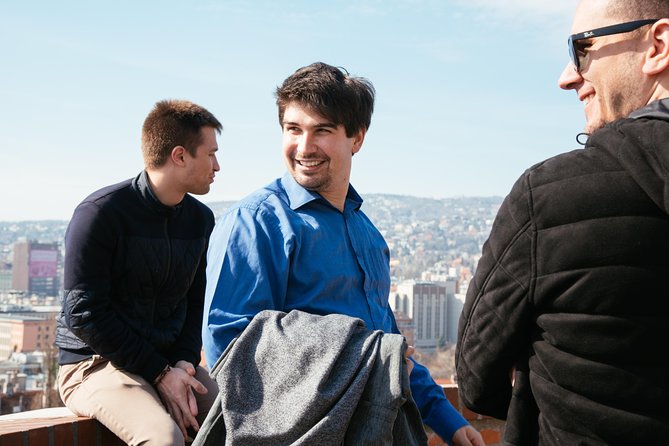
The group size matters here. With no more than 10 people, the guide can keep the pace together and respond to questions. You also avoid the lost feeling that can come with a large bus group, where the guide’s voice disappears and every stop becomes a head count.
Other Budapest outings people book alongside this one:
- Budapest: City Highlights Cruise with Welcome Drink
★ 4.6 · 35,610 reviews - Budapest: Unlimited Prosecco, Beer and Aperol Spritz Cruise
★ 4.8 · 25,310 reviews - Budapest: Széchenyi Spa Day Ticket with Optional Upgrades
★ 4.3 · 23,911 reviews
Elizabeth Square starts with changing Budapest
The walk begins at Kempinski Hotel Corvinus Budapest, at Erzsébet tér, at 2 p.m. Elizabeth Square is a useful opening because it has changed roles many times. It was once a market square, later a Stalin-era square, and also served as a bus station. Today, it is associated with younger city life, nightlife, and public gathering.
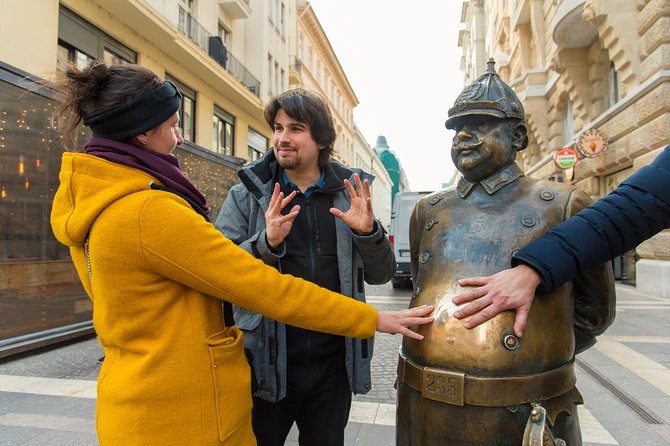
Allow about 20 minutes here. The point is not simply to admire a square. You are introduced to the way Budapest keeps rewriting its public spaces. Statues and other details help the guide explain how political ideas, transport, commerce, and leisure have occupied the same patch of ground.
This is a good place to settle into the tour’s style. You are not just being marched toward famous buildings. The guide is asking you to read the city as a record of changing priorities.
St. Stephen’s Basilica adds scale and ceremony
St. Stephen’s Basilica is one of the major landmarks in central Pest and the largest church in Budapest. The group spends about 20 minutes here, with entry possible if the group wants to go inside.
That last point is worth noting. Interior access is not presented as a guaranteed feature of every departure, so you should be prepared for the guide to focus on the exterior if the group does not choose to enter. Even from outside, the Basilica gives the tour a strong architectural and religious anchor.
The name refers to Stephen I, Hungary’s first king, and the church’s place in the center of Pest makes it an easy meeting point later. The walk may finish here, although it can also end at another central point close to the start. If you have evening plans, leave yourself some flexibility.
Heroes’ Square puts 1,100 years into view
Heroes’ Square receives about 30 minutes, making it one of the more substantial stops. This is where the guide frames more than 1,100 years of Hungarian history through monuments, rulers, and national symbols.
You do not need to arrive with a detailed grasp of Hungarian history. In fact, this is one of the best places to let the guide build a basic timeline. The square can look like a grand ceremonial space at first glance, but the statues and layout carry arguments about identity, power, and the people Hungary chose to honor.
The strength of this stop depends on the guide’s explanation. A quick photo visit would miss the point. Andrew, one of the guides associated with the experience, is described as keeping an easy pace while providing detailed historical context, even with the large amount of ground covered.
Expect open space and time on your feet. On a hot afternoon, the square can feel demanding, so bring water and use the included refreshment break sensibly.
A different kind of day in Budapest:
- Budapest: Nighttime or Daytime Sightseeing Cruise
★ 4.2 · 21,062 reviews - Budapest: 1-Hour Evening Sightseeing Cruise with Drink
★ 4.5 · 8,330 reviews - Budapest Danube Cruise and Dinner Options, Live Music and Dance
★ 4.5 · 7,428 reviews - Budapest: Historic Cruise with Welcome Drink
★ 4.7 · 6,512 reviews
Vajdahunyad Castle explains a clever 1896 creation
Vajdahunyad Castle receives roughly 30 minutes. It looks medieval, but it was built in 1896. That contrast is the reason to visit.
The castle was created for the Millennium Exhibition, marking a major anniversary in Hungarian history. The important detail for you is that this is not a surviving medieval fortress transported intact to Budapest. It is a later architectural creation that borrows styles from different periods and places.
That makes it a particularly good stop for a historian-led walk. You can look at the romantic towers and courtyard, then learn why a modern city built something that appeared old. The story says as much about 19th-century Hungary and its view of the past as it does about the building itself.
Vajdahunyad Castle is described as less visited than some of Budapest’s headline sights. That can make it a welcome change of pace after the ceremonial scale of Heroes’ Square. It also gives the tour a more visual, slightly playful moment.
Andrassy Avenue shows Budapest at its grandest
About 30 minutes are devoted to Andrassy Avenue, often called the pride of Budapest. It has been a UNESCO World Heritage site since 2002, and it offers a long look at the city’s grand planning, architecture, and public ambition.
The guide uses the avenue to connect buildings and streets with the people and ideas behind them. One account of the walk describes discussion of Budapest’s financial institutions, a former grain exchange, and the marks left by invading powers and 20th-century wars. Those details help you see that the avenue is not only a beautiful address.
This is also a section where the walking adds value. From a vehicle, you might register the scale of the boulevard. On foot, you have time to notice façades, statues, monuments, and the relationship between the avenue and the surrounding city.
The tradeoff is distance. You cover a large area, and the three-hour schedule does not allow for long stops at every building. If you prefer a slow architecture tour with time for interiors and photographs, this walk may feel fast. If you want a broad introduction, the pace keeps the experience moving.
The Millennium Underground makes transport part of the story
The Millennium Underground is not just a way to save your feet. It is the oldest underground railway on the European continent, and the ride adds a practical piece of Budapest history to the afternoon.
Metro tickets are provided, which removes one small task from the day. More important, using the underground shows how Budapest’s transport system helped support the city’s growth and grand avenues. The route is not a string of disconnected sights. The transport between them has a place in the story.
This section is especially helpful after Heroes’ Square and Vajdahunyad Castle, which sit farther from the central starting area. Instead of spending the entire afternoon walking back through the same streets, you use a historic rail line to return toward central Pest.
The tour information does not specify exactly how long you ride, but the Millennium Underground stop is allocated about 30 minutes. That likely includes explanation and time around the system, not simply a short journey. Your guide will determine the precise flow.
Vörösmarty Square brings the walk back to commerce
Vörösmarty Square receives about 15 minutes, a shorter stop near the end of the route. It is one of central Pest’s best-known squares and gives the guide a chance to discuss commerce, luxury goods, and the city’s historic center.
After the ceremonial spaces and political monuments, this stop changes the subject. Budapest is also a place of trade, shopping, cafés, and public life. The square helps bring the discussion back to how people use the city now.
Do not expect a long shopping break. Fifteen minutes is enough to understand the square’s role and orient yourself, not enough for a serious browse through stores. If you want to return later, its central location makes that easy.
What the guides do best
The strongest part of this experience is the historical connection between places. The guides do not merely identify the Basilica, square, or castle. They explain the effect of invading powers, wars, political systems, national symbols, and changing public taste on the city you are seeing.
The named guides bring slightly different impressions. Steven, known in one account as Steven the tall, led a route through the waterfront and downtown area while discussing the Basilica, financial institutions, a former grain exchange, statues, and buildings shaped by conflict. Andrew is associated with detailed explanations and an easy walking pace. Greg led an afternoon around Pest that focused on interaction as well as place.
You should not expect a scripted performance with every departure identical. The guide may adjust the emphasis based on the group’s interests, especially at the Basilica, where entering depends on group preference. That flexibility is a benefit for curious participants, though it means the exact balance of indoor and outdoor time can vary.
The experience is offered in English. Most people can participate, and service animals are allowed. It operates near public transportation, with the metro built into the route.
The walking demands are real
Three hours is not a long time for Budapest, but this is a large route. You move between central Pest and City Park, stop for explanations, ride the metro, and continue on foot. Several comments describe the distance as substantial while also noting that the pace remained manageable.
I would rate it as moderate rather than strenuous, based on the information provided, but conditions matter. A hot day can make Heroes’ Square and the long stretches of Andrassy Avenue feel harder. Comfortable shoes are essential. The tour starts in the afternoon, so summer heat may still be present at 2 p.m.
This is not the best choice if you want frequent café stops, extensive indoor sightseeing, or a gentle wander with no fixed rhythm. It is a better match for you if you like covering territory and want a clear framework for the city.
Who will get the most from the $58.94 price
I think the price makes the most sense for a first visit to Budapest, especially if you want orientation on the Pest side without joining a large bus group. The route covers enough ground to show how central Pest, City Park, and the main ceremonial avenues connect.
It also suits history-focused visitors who want more than architectural labels. The themes include Hungarian identity, rulers, war, occupation, commerce, religion, and the city’s changing public spaces. You should come ready to listen, not just collect photographs.
The tour may also work well early in a Budapest stay. Afterward, you will know which places deserve a longer return visit. You may want more time at the Basilica, Heroes’ Square, Vajdahunyad Castle, or Vörösmarty Square, but the walk helps you choose.
For a repeat visitor, the value depends on how much of Pest you already know. The historian’s explanations and the small group can still make familiar streets worthwhile, but the route is designed as a broad introduction rather than a specialist study of one neighborhood.
The cancellation terms are sensible: cancel at least 24 hours before the 2 p.m. start for a full refund. Changes or cancellations inside that window are not accepted for a refund.
Should you book Pest Side Stories?
Book it if you want a small, English-language group and enjoy learning why Budapest looks the way it does. The strongest reasons are the historian-led explanations, the limited group size, and the smart use of the Millennium Underground to connect distant sights.
Skip it if you want a short, mostly seated tour or guaranteed extended time inside every landmark. The route covers a lot of ground, and the Basilica interior depends on group interest.
At $58.94, this is a fair choice for a history-minded visitor who values context, refreshments, and included metro tickets. The 4.9 rating from 14 ratings and a 100 percent recommendation record suggest a consistently positive experience, but the walking requirement remains the key practical issue. Bring good shoes, allow for a warm afternoon, and you will be set up to get real value from the route.
FAQ
Where does the tour start?
It starts at Kempinski Hotel Corvinus Budapest, at Erzsébet tér 7-8, Budapest 1051.
What time does the tour begin?
The start time is 2:00 p.m.
Where does the tour end?
The planned end point is St. Stephen’s Basilica, although the tour may finish at another central point in Pest close to the starting area.
How many people can join?
The group has a maximum of 10 travelers.
Are metro tickets included?
Yes. Metro tickets are included, along with the guide and refreshments.
What is the cancellation policy?
You can cancel at least 24 hours before the start time for a full refund. Cancellations or changes made less than 24 hours before the experience are not accepted for a refund.
Recently added around Budapest
- Hiking + Chairlift ride + viewpoints in Budapest★ 5.0 · 3 reviews
- FoolsCode: EscapeRoom/Sightseeing tour with Actor Tourguide★ 5.0 · 3 reviews
- Grand Budapest tour with private transportation★ 5.0 · 3 reviews
- Budapest: Private Customizable Tour in French★ 5.0 · 3 reviews
- Budapest: Private, Personalized Pub Crawl, 3 drinks included★ 4.5 · 3 reviews
- Budapest Drinks and Piano Show Cruise★ 4.5 · 3 reviews
- Discover Budapest Using Tram Two★ 5.0 · 3 reviews
- Budapest: Private 3-Hour Gödöllő Palace Tour★ 4.9 · 3 reviews