Reviewed · PRIVATE
Rise Against the Soviet: The 1956 Revolution – Private Tour
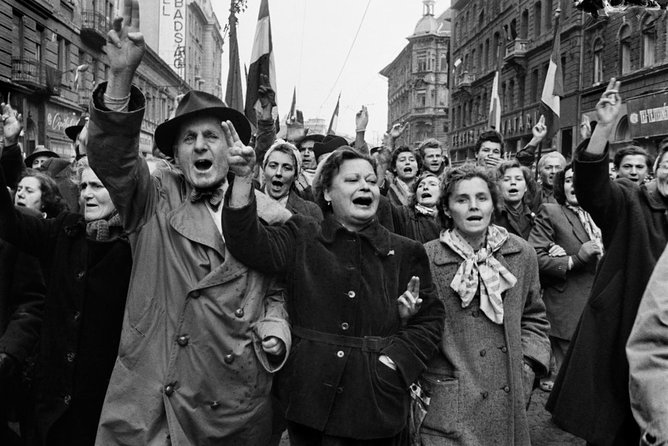
The most powerful part of this Budapest tour is the way it turns the 1956 Revolution into a walk through real streets, squares, cafés, and former battle sites. You move from the massacre at Kossuth Square to the resistance center at Corvin Cinema, while your guide explains how ordinary Hungarians challenged Soviet rule.
I like the personal stories from the Communist era, especially when guides such as Peter and Miklos connect political events with daily life. I also like the private format, since your group can ask questions and adjust the pace. The main drawback is time: three hours is short for a subject that reaches from the 1848 revolution through the fall of Communism in 1990.
In This Review
- Key points
- Why Budapest’s 1956 story needs more than a museum visit
- Kossuth Lajos Square and the massacre outside Parliament
- The White House and Imre Nagy near Margaret Bridge
- Bem Square, student protest, and a Communist-era café
- Sándor Petőfi and the words that called for revolt
- Radio Budapest, where revolutionaries pleaded for help
- Corvin Cinema and the young resistance
- A route that uses Budapest’s streets and public transport
- What the private format adds
- Handouts, personal testimony, and the guide’s approach
- Who should book this Budapest history tour?
- Should you book Rise Against the Soviet?
- FAQ
- How much does the private tour cost?
- How long does the tour last?
- Is the tour private?
- Is the tour offered in English?
- Can the guide pick me up at my hotel?
- What locations does the tour visit?
- Are any items included with the tour?
- Can I cancel for a full refund?
Key points
- Six locations trace the uprising across Budapest, from Parliament and Bem Square to Radio Budapest and Corvin Cinema.
- Private touring keeps the discussion flexible, with only your group participating.
- Guides Peter and Miklos bring personal insight into life before and after 1956.
- Public transport links several stops, and tickets or passes are not included.
- A Communist-era souvenir and handouts are included, adding useful context after the tour.
- The subject is serious and sometimes sobering, especially at Kossuth Square and the former radio headquarters.
Why Budapest’s 1956 story needs more than a museum visit
The 1956 Revolution was not a brief protest that suddenly appeared in October. It grew from decades of tension involving Hungarian independence, the memory of the 1848 revolution, postwar Soviet control, and the hard conditions of Communist rule.
That wider frame is one of this tour’s strengths. You are not simply shown a statue and given a date. The route links the 1956 uprising with earlier struggles against government power and follows the story through the eventual fall of Communism in 1990.
I especially value this approach if you know little about Hungary before arriving. The sites make more sense when you understand why poems, statues, radio broadcasts, and public squares mattered so much. The tour also suits anyone who has already studied 1956 and wants to connect the facts with Budapest’s streets.
The subject can be heavy. You will hear about massacres, imprisonment, executions, Soviet tanks, and people asking the outside world for help. That is part of the point, but this is not a light sightseeing walk.
A few more Budapest tours worth comparing
- Private Budapest TukTuk Tour: Custom Route, Hotel Pickup
★ 5.0 · 1,307 reviews - Budapest Essentials Private Tour Highlights and Hidden Gems
★ 5.0 · 861 reviews - Budapest Private Tuk Tuk Half-Day Tour
★ 5.0 · 606 reviews
Kossuth Lajos Square and the massacre outside Parliament
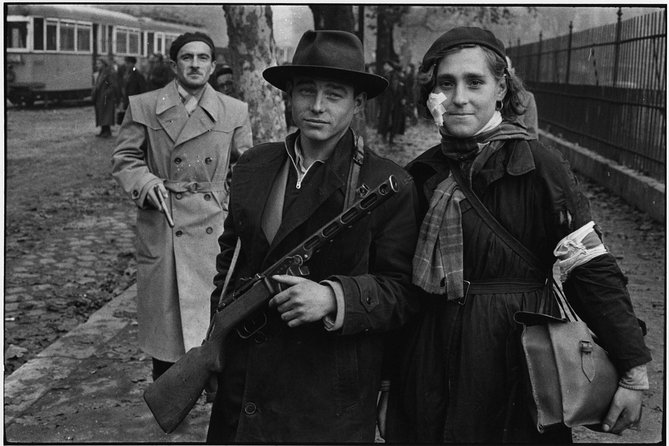
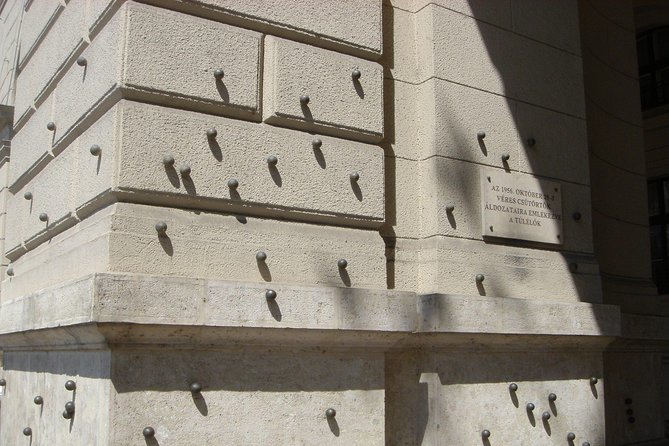
The tour begins at Kossuth Lajos Square, home to the Hungarian Parliament and several impressive government buildings. It is a grand setting, but your guide quickly brings the focus to the violence that took place there during the 1956 demonstrations.
After a mass gathering, dozens of people were massacred by the government. The square can look formal and peaceful today, which makes the explanation especially stark. You are standing in a national political center while hearing how a public protest turned deadly.
Allow about 25 minutes here. There is no admission charge for the stop, and the value comes from the guide’s explanation rather than from entering a paid attraction.
This is a good opening because it shows the gap between the official image of the state and the experience of people who opposed it. If you are mainly interested in military tactics, this first stop may feel more political than battlefield-focused. If you want to understand the human cost of the uprising, it sets the right tone.
The White House and Imre Nagy near Margaret Bridge
The route then moves toward Margaret Bridge and the Danube. Here you see the building once known as the White House, the headquarters of Hungary’s Communist Party.
The building’s importance comes from its role as a center of political power. Your guide can explain how decisions made by the Communist government shaped the crisis, and how the government responded as protests spread.
Nearby is a statue of Imre Nagy, the Prime Minister associated with the 1956 Revolution. Nagy later became a symbol of Hungary’s attempt to break away from Soviet control, and he was eventually murdered. His story gives the tour a personal political figure to follow, rather than leaving the uprising as an abstract clash between governments.
This stop takes about 20 minutes. It is also a useful point for questions, particularly if you want to sort out the changing roles of the government, the Soviet leadership, and Hungarian reformers.
Bem Square, student protest, and a Communist-era café
At Bem Square on the Buda side of the river, the tour reaches one of the most important starting points of the uprising. In 1956, about 200,000 Hungarian students gathered here in a rally that had originally been organized in support of Polish workers.
That detail matters. The protest was tied to events elsewhere in Eastern Europe, but it quickly became a Hungarian demand for change. A large public gathering could express national feeling in a way that private complaints could not.
The square also helps you see the role of students and young people in the movement. They were not simply watching events unfold. They helped push the protest into the open and gave it a clear public voice.
The planned stop lasts around 30 minutes and includes Bambi Eszpresszó on Frankel Leó utca. This café has continued operating since the 1960s with the same interior design and atmosphere. It became a meeting place for Buda-side intellectuals, and its preserved appearance offers a small but useful look at the social world that followed the revolution.
Bambi is not a grand monument. That is exactly why it adds something. Political history can feel distant when you only visit official buildings. A long-running café gives you a sense of how people gathered, talked, and carried on after the fighting ended.
Food and drinks are not included, so any purchase there is your responsibility. The stop is best understood as a cultural pause, not a full café visit.
A different kind of day in Budapest:
- Budapest: City Highlights Cruise with Welcome Drink
★ 4.6 · 35,610 reviews - Budapest: Unlimited Prosecco, Beer and Aperol Spritz Cruise
★ 4.8 · 25,310 reviews - Budapest: Széchenyi Spa Day Ticket with Optional Upgrades
★ 4.3 · 23,911 reviews - Budapest: Nighttime or Daytime Sightseeing Cruise
★ 4.2 · 21,062 reviews
Sándor Petőfi and the words that called for revolt
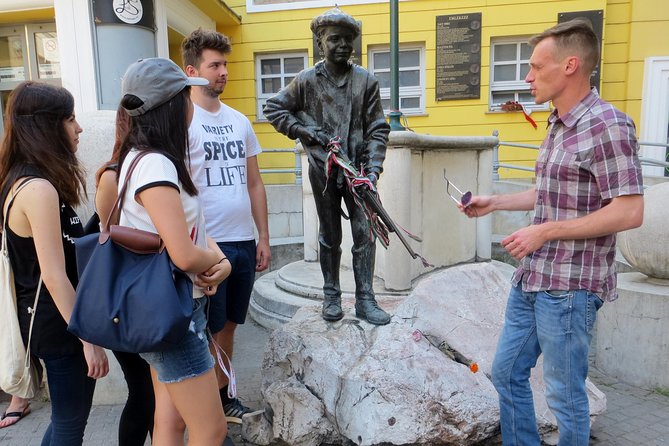
The statue of Sándor Petőfi links the 1956 uprising to the earlier 1848 revolution. Petőfi was a key figure in that earlier struggle, and his name came to represent resistance to government control.
The statue remains a meeting point for political events and protests. That continuing role is important because it shows that public monuments in Budapest are not only decorations. They can carry political meaning long after the original event.
During the 1956 Revolution, actor Sinkovits Imre came to the statue and recited Petőfi’s revolutionary words. He was later arrested and imprisoned. Your guide uses this episode to show how performance, poetry, and public speech could become acts of defiance.
This is a short stop of about 15 minutes. It is not likely to satisfy you if you want a long lecture on the 1848 revolution, but it works well as a bridge between Hungary’s older independence movement and the Communist-era revolt.
Radio Budapest, where revolutionaries pleaded for help
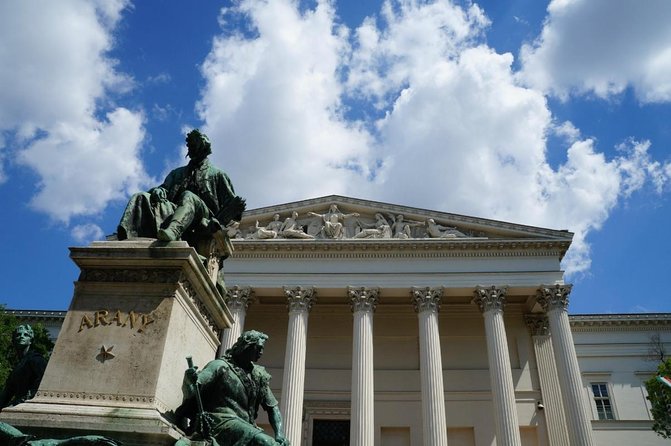
The itinerary identifies this part of the route with the Hungarian National Museum area, but the historical focus is the nearby Magyar Rádió building, also called Radio Budapest. The building sits along narrow, one-way Sándor Bródy Street, away from the city’s main routes.
Radio Budapest was one of the main centers of fighting in 1956. Revolutionaries tried to broadcast their message and appealed to the wider world for assistance. The building therefore represents two sides of the uprising: armed conflict in the streets and the desperate need to make the outside world listen.
This stop lasts about 20 minutes. There is no admission ticket involved, and the building is viewed from the outside as part of the street-based route.
I find this one of the most important stops for understanding modern protest. Control of information was central to Communist power, so control of the radio mattered. Once revolutionaries tried to use it, the building became a target.
You should also keep expectations realistic. This is not a museum visit with a large indoor display. The guide’s explanation is what gives the site its meaning.
Corvin Cinema and the young resistance
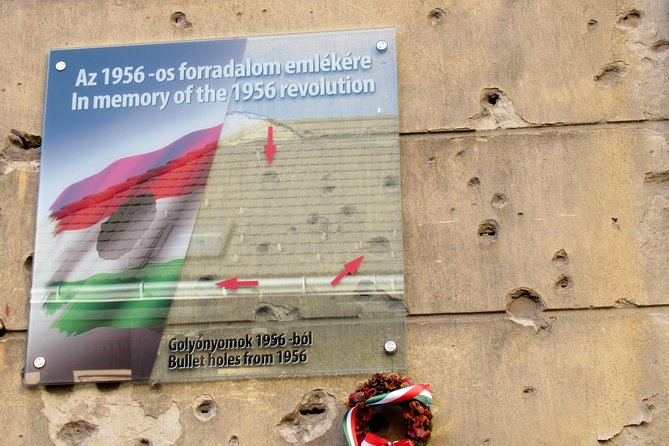
The final major stop is Corvin Cinema, beside Corvin köz in southeastern Budapest. In 1956, this area became a major resistance center.
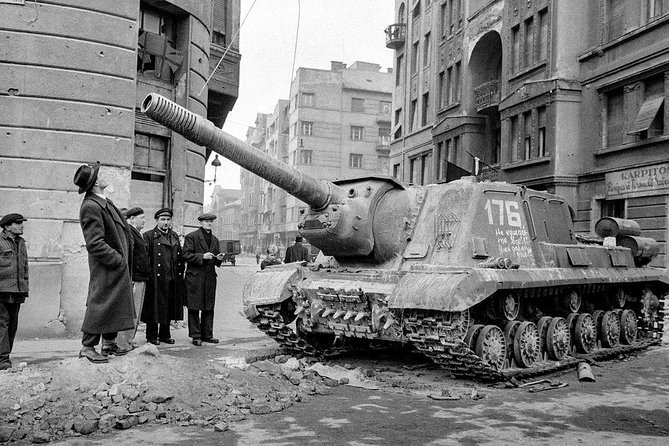
Local young people fought the invading Soviet forces with guns taken from soldiers and Molotov cocktails. They faced Soviet tanks with far fewer resources, making Corvin a powerful symbol of courage and the uneven nature of the conflict.
The site is especially useful because it shifts the story away from government offices and famous politicians. You hear about neighborhood resistance and the people who chose to fight in streets they knew. Your guide discusses the Soviet invasion, the battles around Corvin, and what followed after the uprising was defeated.
Plan on about 30 minutes here. The area contains reminders of the fighting, but you should not expect a preserved battlefield or a large memorial complex based on the information provided. The history comes through in the places themselves and in the explanation you receive.
This ending is dramatic, but it also leaves you with difficult questions. The resistance was brave, yet it could not overcome Soviet military power. A good guide will help you understand both the courage and the limits of the uprising.
A route that uses Budapest’s streets and public transport
This is not a single-site walking tour. The route crosses the city, beginning around Parliament and continuing through Buda before ending near Corvin Cinema.
Public transportation is part of the experience. That can be an advantage because you see how the locations fit into modern Budapest, rather than treating each one as an isolated point. It also means you should allow some flexibility around transfers and movement between stops.
Tickets and passes are not included. You will need to budget for those separately, although the tour price covers the guide and the private service.
The route requires a moderate level of physical fitness. You should be comfortable walking between stops, standing during explanations, and using public transport. Pickup is available from your Budapest hotel or from a central meeting point arranged with the provider, which makes the start easier for visitors unfamiliar with the city.
One useful detail is that the tour can last longer than the advertised three hours. A guide has extended it by about 30 minutes in the past, but you should not treat that as guaranteed. Avoid scheduling a tight dinner reservation or another timed attraction immediately afterward.
What the private format adds
The price is $228.66 for a group of up to five people. At full capacity, that works out to about $45.73 per person for roughly three hours, before transport tickets and any food or drinks.
For a solo visitor, the cost is much harder to justify. For five people sharing the fee, it becomes more reasonable, particularly because the tour is private and conducted only for your group.
The private format matters most if you have specific questions or a family connection to 1956. One group included a 91-year-old father who had escaped Hungary during the revolution. The guide adjusted the pace and made room for topics that mattered especially to him.
That kind of flexibility is difficult on a large group tour. You can ask for more detail about Imre Nagy, the student protests, the Soviet invasion, or daily life under Communism. You can also ask the guide to slow down if someone in your group has trouble keeping up.
The tradeoff is that a private tour is only as good as the guide leading it. The strongest reports describe Peter and Miklos as personable, clear, and able to answer detailed questions. One experience was less focused, with too much general Hungarian history and not enough time on the 1956 Revolution itself. That is a fair warning for anyone booking this specifically for a tightly structured history lesson.
Handouts, personal testimony, and the guide’s approach
Handouts are included, along with a souvenir related to Communism. These are modest extras, but they help you remember names and events after the tour ends.
The best feature is the guide’s ability to connect large events with personal experience. Miklos is described as having lived through the Communist era, and Peter is associated with a broad command of Budapest history. Personal testimony can make the period easier to picture, especially when the discussion turns to everyday life before and after 1956.
At the same time, you should tell the guide at the start what you want from the three hours. If you already know the basic timeline, ask for more site-specific detail. If you are new to Hungarian history, say so and allow the guide to build the background carefully.
The tour is offered in English. Service animals are allowed, and the route is near public transportation. It is not presented as a fully accessible tour, so anyone with mobility concerns should discuss their needs with the provider before booking.
Who should book this Budapest history tour?
I would choose this experience if you have a serious interest in the Cold War, Communist legacies, Hungarian independence, or the political history of Budapest. It is also a strong choice if you want a private guide rather than a standard sightseeing circuit.
It suits families and small groups particularly well. Up to five people can share the price, and the private setup gives you room to ask questions without holding up strangers.
You should also consider it if a relative experienced the 1956 Revolution or emigrated from Hungary during that period. The route can provide a physical connection to a family story, and the guides have shown that they can adjust the pace and discussion.
I would be more cautious if you want only military history. The tour includes battles and resistance sites, but it also covers the 1848 revolution, political power, culture, public speech, and the fall of Communism. It is broad by design.
Likewise, this may not be the right pick if you want a polished museum presentation. Several stops are outdoor locations, and the guide does much of the teaching. You need to listen, ask questions, and use your imagination.
Should you book Rise Against the Soviet?
Book it if you want Budapest’s 1956 Revolution explained through the places where people protested, broadcast, fought, and died. The route is strongest when the guide adds personal insight, connects 1956 to earlier Hungarian struggles, and gives you time to ask questions.
The main caution is focus. Three hours cannot cover every important site or fully explain such a large subject. Tell your guide that the revolution is your priority, and consider the private price worthwhile only if you have a small group, a strong interest in the period, or a personal connection to Hungary.
With a 4.7 rating from 11 ratings and a 91 percent recommendation rate, the experience has a good record, though the sample is small. I would book it for the human stories and the street-level history, not simply for a checklist of monuments.
FAQ
How much does the private tour cost?
The price is $228.66 per group of up to five people. Food, drinks, and public transportation tickets or passes are not included.
How long does the tour last?
The tour is advertised as approximately three hours. It may run longer, with one reported tour lasting about 30 minutes beyond the scheduled time.
Is the tour private?
Yes. Only your group participates in the activity.
Is the tour offered in English?
Yes. English is the listed tour language.
Can the guide pick me up at my hotel?
Yes. Pickup can be arranged from your Budapest hotel or from a central meeting point agreed with the provider.
What locations does the tour visit?
The route includes Kossuth Lajos Square, the area near Margaret Bridge and the former White House, Bem Square, the Sándor Petőfi statue, the Magyar Rádió building near the Hungarian National Museum area, and Corvin Cinema.
Are any items included with the tour?
Yes. Handouts and a souvenir related to Communism are included.
Can I cancel for a full refund?
Yes, if you cancel at least 24 hours before the experience start time. Cancellations made less than 24 hours before the start time are not refunded, and changes within that period are not accepted.
Recently added around Budapest
- Hiking + Chairlift ride + viewpoints in Budapest★ 5.0 · 3 reviews
- FoolsCode: EscapeRoom/Sightseeing tour with Actor Tourguide★ 5.0 · 3 reviews
- Grand Budapest tour with private transportation★ 5.0 · 3 reviews
- Budapest: Private Customizable Tour in French★ 5.0 · 3 reviews
- Budapest: Private, Personalized Pub Crawl, 3 drinks included★ 4.5 · 3 reviews
- Budapest Drinks and Piano Show Cruise★ 4.5 · 3 reviews
- Discover Budapest Using Tram Two★ 5.0 · 3 reviews
- Budapest: Private 3-Hour Gödöllő Palace Tour★ 4.9 · 3 reviews
Private, compared.
Private Budapest TukTuk Tour: Custom Route, Hotel Pickup
Read our review →
Budapest Essentials Private Tour Highlights and Hidden Gems
Read our review →
Budapest Private Luxury Sightseeing Tour with Guide and Transport
Read our review →
Private Budapest City tour with Classic Russian Jeep or G-Wagon!
Read our review →
Budapest Private Full Day City Sightseeing Tour Walking or by Car
Read our review →