
Reviewed · HISTORICAL TOURS
7 Days Balkan tour to historic Croatia and Bosnia Herzegovina
This is a big-history, big-scenery journey packed into one week. From Budapest, you cross into Croatia, follow the Adriatic coast, enter Bosnia and Herzegovina, then return through eastern Croatia and Pécs in Hungary. The route takes in Roman ruins, medieval towns, Ottoman-era sites, war history, and some of Europe’s most striking water views.
I like the way Plitvice Lakes and Dubrovnik anchor the trip with two very different showstoppers. I also like the chance to see Mostar, Blagaj, Počitelj, and Sarajevo in one organized route, places that can be awkward to connect by public transport. The tradeoff is a quick pace, with several long coach days, border crossings, and only short visits at major sights.
The tour costs $1,160.11 per person and includes six breakfasts, modern air-conditioned coach transport, a tour manager, and at least 3-star lodging. You pay extra for many attraction tickets, optional activities, personal expenses, and a required cash gratuity of €10 per person per day.
In This Review
- Key points to know before booking
- What the $1,160.11 price really covers
- Day 1: Zagreb’s cathedral, squares, and tiled roof
- Day 2: Four hours among the lakes at Plitvice
- Day 3: Zadar’s Sea Organ and Split’s Roman core
- Day 4: Dubrovnik behind its stone walls
- Day 5: Počitelj, Blagaj, and Mostar
- Day 6: Sarajevo, the Latin Bridge, and a complicated past
- Day 7: Pécs and the return to Budapest
- The guide, group, and language setup
- Who will get the most from this Balkan tour?
- Practical details that affect your week
- Should you book this Croatia and Bosnia tour?
- FAQ
- Where does the tour begin?
- Where does the tour end?
- How long does the tour last?
- What accommodation is included?
- Are meals included?
- Are attraction tickets included?
- How large can the group be?
- Can English and Chinese-speaking groups share a coach?
- What luggage can I bring?
Key points to know before booking
- Seven countrieside days, three countries, and many border crossings: You travel through Hungary, Croatia, and Bosnia and Herzegovina, with passport checks and changing hotel locations built into the route.
- Plitvice Lakes is the natural highlight: The park has 16 connected lakes, waterfalls, wooden walkways, and trails, with about four hours scheduled for the visit.
- Dubrovnik gets the grandest city treatment: You see the Old Town, Rector’s Palace, Franciscan Monastery, defensive fortifications, and the city area, with a cable car available as an option.
- The tour uses an English-speaking manager, but the group may be mixed-language: GoEUgo may combine English and Chinese groups, and one tour leader may speak both languages.
- Most admission fees are extra: Plitvice, Počitelj, Blagaj, Mostar, Sarajevo, Zadar, and Pécs are listed without a general package of entrance tickets.
- The schedule suits active sightseers: You need to manage luggage, walk on historic streets and park paths, and accept hotel locations outside the main city centers when required.
What the $1,160.11 price really covers
At first glance, the price looks reasonable for seven days across a large section of the Balkans. You receive six nights in comfortable hotels rated at least 3 stars, daily coach transport, a professional driver, an experienced tour manager, and six breakfasts. For a route with multiple international borders and one-way travel across Croatia and Bosnia, that convenience has real value.
The price does not cover everything you will spend. Attraction tickets are often separate, and the tour manager collects €10 per person per day in cash for gratuities. You also pay for lunches, dinners, drinks, optional activities, and personal costs such as laundry, phone calls, or internet access.
Hotel locations can change from the named city to a nearby town. Zagreb, Zadar, Neum, Sarajevo, and Vinkovci are listed as overnight bases, but exact hotel details arrive only 24 to 48 hours before check-in. That is normal for a coach tour, but it makes this a poor choice if you need a hotel beside a particular station or old town.
The booking includes one piece of luggage up to 30 kilograms and one small carry-on. Pack with restraint. A large suitcase is manageable, but you will be moving between several hotels, sometimes after a full day on the road.
More history walks in Budapest:
- Budapest: Historic Cruise with Welcome Drink
★ 4.7 · 6,512 reviews - Budapest Historical Sightseeing – Free Walking Tour
★ 5.0 · 1,302 reviews - Buda Castle District Dark History, Legends and Vampire Night Tour
★ 4.5 · 1,240 reviews
Day 1: Zagreb’s cathedral, squares, and tiled roof
The tour begins at 8:30 a.m. at Budapest-Keleti railway station, at Kerepesi út 2-4. From there, the coach heads south toward Zagreb, Croatia’s capital.
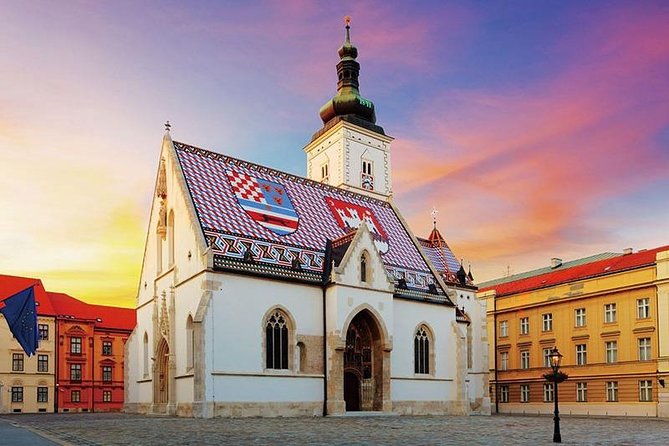
Zagreb is a good opening city because its central sights are compact and give you a quick introduction to Croatian culture. You visit Zagreb Cathedral, Ban Josip Jelačić Square, and St. Mark’s Church. The route moves between grand public space, Gothic church architecture, and the historic Upper Town.
Ban Jelačić Square is the city’s main meeting point and a useful place to get your bearings. Zagreb Cathedral offers a more formal look at the city’s religious past, while St. Mark’s Church is famous for its colorful tiled roof. The surrounding old streets reward a slower wander, though your scheduled time is limited.
The sightseeing stops are each listed at about an hour, but the repeated descriptions suggest they form one city tour rather than three separate full excursions. Admission is not included, so ask your tour manager which interiors are practical during the available time.
You sleep in Zagreb or nearby in a minimum 3-star hotel. If you want a longer evening in the capital, check how far the hotel is from the center once the details arrive.
Day 2: Four hours among the lakes at Plitvice
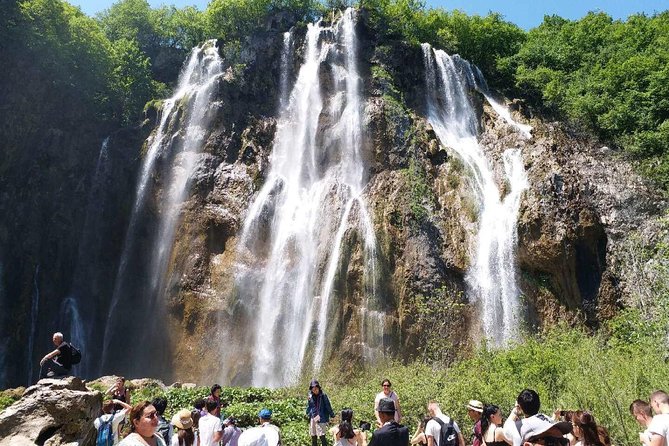
Plitvice Lakes National Park is the trip’s major nature stop. The park contains 16 lakes linked by waterfalls and natural travertine barriers. Wooden walkways and hiking paths lead through wooded scenery, with water colors changing according to minerals, light, and depth.
You have about four hours here, which is one of the more generous sightseeing blocks on the tour. That matters because Plitvice is not a single viewpoint. You need time to walk, pause at the water, cross the paths, and take in the waterfalls without treating the whole visit as a hurried photo stop.
The park is listed with admission included, unlike most of the historic attractions later in the week. Wear shoes suitable for uneven paths and expect to spend much of the visit on foot. The schedule does not promise a particular walking route, so the exact experience will depend on park conditions and the group’s pace.
The coach continues to Zadar or a nearby town for the night. This is an efficient pairing, but it also means you should not expect a leisurely nature holiday. Plitvice is a focused stop inside a wider road journey.
Day 3: Zadar’s Sea Organ and Split’s Roman core
Zadar brings together medieval streets and modern waterfront art. The old city retains narrow lanes and historic buildings, while the coast is home to the Sea Organ, known locally as Morske Orgulje.
The Sea Organ uses the movement of the water to create sound through pipes below the waterfront steps. It is one of those attractions best understood by standing quietly and listening rather than simply taking a photograph. The nearby Sun Salutation adds a second modern element, using solar energy for a light display.
About an hour is scheduled for Zadar and the Sea Organ. That is enough for a guided introduction and some free time, but not enough for a full museum visit or a slow meal. Admission to the Sea Organ area is listed as not included, although the waterfront itself is accessible as part of the city visit.
Later, the coach heads to Split, Croatia’s second-largest city. The main sight is Diocletian’s Palace, a Roman complex built in the fourth century. Split’s old center is unusual because the ancient palace is not isolated behind museum walls. Streets, homes, shops, and public spaces occupy parts of the old structure.
The Peristyle, the palace’s central square, is the key stop. Look up at the stone columns and imagine the scale of the original Roman residence, then notice how later periods reused the site. The visit is listed at about an hour, so you will get the essential view rather than a full archaeological study.
The overnight base is Neum or a nearby town. This part of the route involves crossing from Croatia into Bosnia and Herzegovina, then continuing along the coast. Keep your passport accessible, and do not put it in checked luggage.
A different kind of day in Budapest:
- Budapest: City Highlights Cruise with Welcome Drink
★ 4.6 · 35,610 reviews - Budapest: Unlimited Prosecco, Beer and Aperol Spritz Cruise
★ 4.8 · 25,310 reviews - Budapest: Széchenyi Spa Day Ticket with Optional Upgrades
★ 4.3 · 23,911 reviews - Budapest: Nighttime or Daytime Sightseeing Cruise
★ 4.2 · 21,062 reviews
Day 4: Dubrovnik behind its stone walls
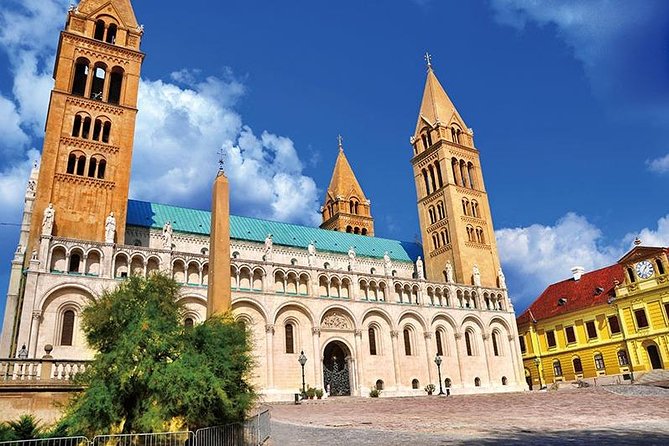
Dubrovnik is the emotional high point for many people on this route. Its Old Town sits within massive fortifications above the Adriatic, and the polished stone streets, red roofs, churches, and palaces create a strong sense of place.
You visit the Old Town, defensive tower, Rector’s Palace, and Franciscan Church and Monastery. The visit is divided into several stops, with around two hours listed for Dubrovnik itself and about an hour each for the named sites. Treat those figures as a guided overview, not as a promise of several free hours.
The Rector’s Palace explains how Dubrovnik’s former government operated, while the Franciscan Monastery offers a quieter religious setting and historic architecture. The city walls are among the most rewarding paid options if you have enough free time, since they give a better sense of Dubrovnik’s defenses and its position above the sea.
A cable car up the mountain is also available as an optional activity. It can provide a broad view of the walled city, but you should confirm the time and price before committing. The tour does not include optional activities or attraction tickets unless specifically stated.
Dubrovnik can feel crowded and expensive, even on a short visit. The organized route helps you reach it without arranging a complicated transfer, but the short schedule limits your ability to explore side streets, sit for a long meal, or see every museum.
Day 5: Počitelj, Blagaj, and Mostar
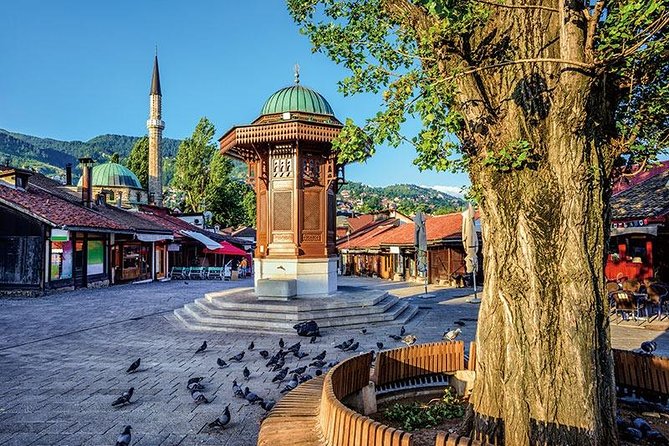
Day 5 crosses more fully into Bosnia and Herzegovina and brings a valuable change in mood. Počitelj is a stepped medieval fortress village, with stone buildings climbing the hillside. Its position and old architecture make it a sharp contrast to the Roman remains of Split and the maritime grandeur of Dubrovnik.
Bring shoes with a firm grip. The village is built on a slope, and the sightseeing is not simply a flat stroll. The stop lasts about an hour and admission is listed as free.
Blagaj follows, with a Dervish monastery beside a clear spring and a high cliff. The setting is the reason to come: water, rock, and religious architecture gathered in a small area. The tour gives you about an hour, enough to see the site and take photographs, but perhaps not enough for a long, unhurried visit.
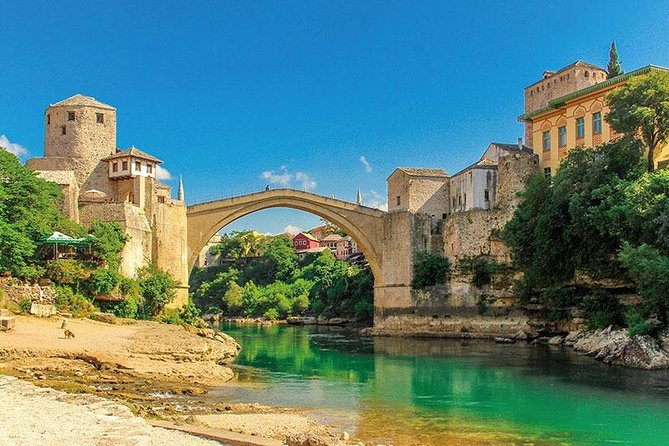
Mostar is the day’s main city. The Old Bridge crosses the Neretva River and links the old city’s two sides. The bridge area is visually striking, but it also carries difficult memories because Mostar was heavily damaged during the Bosnian War. The rebuilt bridge is both an architectural landmark and a reminder of the city’s divided past.
You have about an hour for Mostar and another hour around the Old Bridge area. Use free time carefully. The old streets can be uneven, and the short stop means you should focus on the bridge, river views, and the surrounding historic quarter before browsing shops or stopping for food.
The coach continues to Sarajevo or a nearby town for the night. After several coastal and southern stops, the move inland gives the trip a stronger sense of Bosnia’s Ottoman, Austro-Hungarian, and modern European influences.
Day 6: Sarajevo, the Latin Bridge, and a complicated past
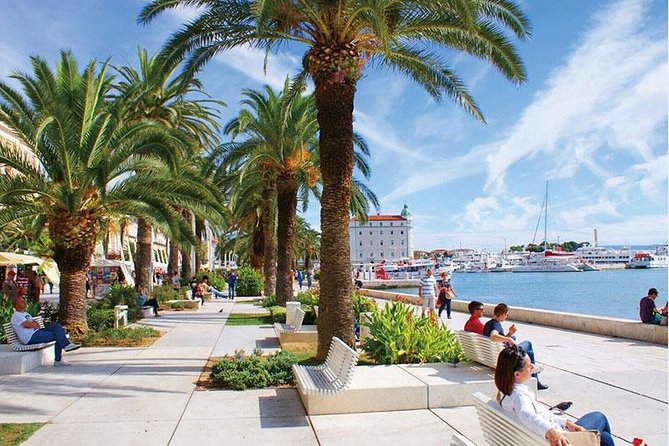
Sarajevo is the most historically layered stop on the tour. The city served as a meeting point between eastern and western traditions, and its old center brings different religious and architectural influences close together.
The Latin Bridge is linked with the 1914 assassination of Archduke Franz Ferdinand, an event that helped trigger the First World War. The stop is brief, about an hour for Sarajevo and another hour for the bridge, so listen closely to the guide and use your free moments to notice the city’s Meeting of Cultures Line in the Old Town.
Sarajevo also asks more of you than a pretty photograph. The city’s recent war history remains part of its identity, even as newer buildings and daily life show its recovery. A short organized visit cannot explain every layer, but it gives you a useful first look.
After Sarajevo, you cross back into Croatia and continue to Vinkovci or a nearby town. This is likely one of the longest road days, and the border crossing can affect the schedule. Have your documents ready, and keep snacks and water in your carry-on because the day is built around transport as much as sightseeing.
Day 7: Pécs and the return to Budapest
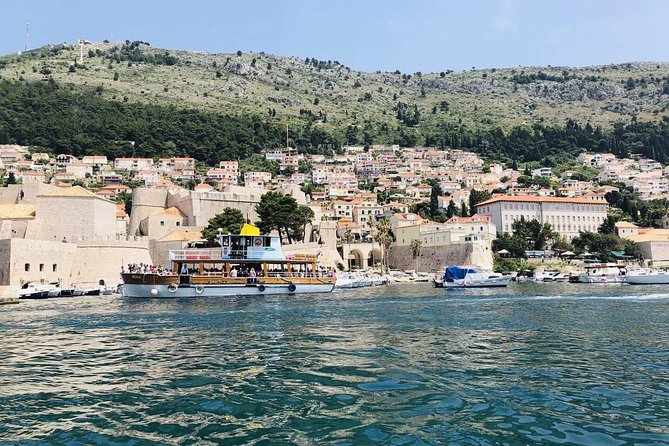
The final morning takes you into Hungary for a stop in Pécs, a city between the Danube and Drava rivers. Pécs is known for its museums, Turkish remains, music, opera, and ballet, but the main scheduled sight is Pécs Cathedral on Szent István Square.
The cathedral rises over the square and gives the final day a calmer, more local feel after the major sights of Dubrovnik and Sarajevo. You have about an hour for Pécs, the cathedral, and Szent István Square, so think of this as an introduction rather than a full city visit.
The coach returns to Budapest in the afternoon, ending at the original meeting point. A post-tour hotel in Budapest can be arranged as an option, but accommodation before the tour and on the last day is not part of the standard package.
The guide, group, and language setup
The tour includes an experienced tour manager and a professional coach driver. In several cities, local guides may also lead the sightseeing, which is useful at places such as Diocletian’s Palace, Dubrovnik, Mostar, and Sarajevo where context adds a lot.
One past tour had an English-speaking guide named Kenny, who also spoke fluent Mandarin. His storytelling, humor, and care for the group were singled out as major strengths, and some passengers made new international friendships during the trip. Kenny may not lead every departure, so treat that as an example of the guide style you might receive, not a guarantee.
GoEUgo may combine English and Chinese-speaking groups when numbers are low. One bilingual tour leader can serve both languages, but the arrangement may affect the rhythm of explanations and group movement. The maximum group size is 30 people, large enough to slow down a little at busy sights but still manageable for a coach tour.
Group discounts are available. Children under 18 must travel with an adult, and room rules are important for families. A twin room can hold two adults and one child aged 2 to 11 without a separate bed, but no triple rooms are arranged for three adults.
Who will get the most from this Balkan tour?
I would choose this tour if you want to cover a lot of ground without arranging buses, border crossings, hotels, and transfers yourself. It works especially well for a first visit to Croatia and Bosnia and Herzegovina when your priority is seeing the main historic places rather than settling into one region.
It suits you if you can walk comfortably, pack light, rise early, and accept that some visits last only an hour. You will see far more than on a relaxed city break, but you will have less time for long meals, independent museums, nightlife, and spontaneous detours.
It is less suitable if you dislike coach travel or want guaranteed central hotels. The exact accommodations are provided shortly before arrival, and several overnights may be outside the named city. You should also think carefully about the mixed-language group setup if detailed English commentary is your top priority.
The strongest praise connected with this experience centers on the guide’s storytelling, humor, and personal attention. That can make a fast schedule feel much easier, especially when local guides join in. Still, guide quality can vary by departure, and the itinerary itself remains demanding.
Practical details that affect your week
The tour begins at Budapest-Keleti at 8:30 a.m. and ends back at that meeting point on Day 7. You need a passport valid for at least six months and are responsible for checking visa, health, insurance, and entry rules for every country on the route.
Confirmation is normally issued at booking, but reservations made within seven days of departure may take up to 48 hours. The operator also says its booking system must issue an official tour voucher, so do not rely only on a downloadable ticket from the booking platform.
Most people can take part, but the route includes historic streets, park paths, steps, and frequent hotel changes. Keep your passport, medication, valuables, and one change of clothes in your small carry-on.
Cancellation is allowed for a full refund up to three full days before the start time. Cancellations or changes inside that window are not accepted, and the tour requires a minimum number of passengers.
Should you book this Croatia and Bosnia tour?
Book it if you want a high-value sampler of the western Balkans and prefer a guided coach to complicated independent planning. The route includes the places most first-time visitors hope to see, from Plitvice’s waterfalls and Dubrovnik’s walls to Mostar’s bridge and Sarajevo’s historic center.
Skip it if you want slow travel, fixed central hotels, or lots of independent time. The best way to approach this week is as an energetic introduction. You will return with a clear sense of the region’s beauty, faiths, empires, and recent past, then know exactly where you would like to come back and stay longer.
FAQ
Where does the tour begin?
It begins at Budapest-Keleti, Budapest, Kerepesi út 2-4, 1087 Hungary, with an 8:30 a.m. start.
Where does the tour end?
The tour ends back at the Budapest-Keleti meeting point on Day 7.
How long does the tour last?
The experience lasts approximately seven days.
What accommodation is included?
Accommodation is included in comfortable hotels rated at least 3 stars, with private facilities in twin, double, or single rooms.
Are meals included?
Six breakfasts are included. Lunches, dinners, drinks, and other meals are not listed as included.
Are attraction tickets included?
Most attraction tickets are not included. Plitvice Lakes National Park is listed with admission included, while many other stops show admission as not included.
How large can the group be?
The tour can have a maximum of 30 travelers.
Can English and Chinese-speaking groups share a coach?
Yes. GoEUgo may combine English and Chinese-speaking groups when one group has fewer passengers. A bilingual tour leader may provide service in both languages.
What luggage can I bring?
Each passenger may bring one piece of luggage weighing no more than 30 kilograms and one small hand-carry item, such as a purse, backpack, or camera bag.
Recently added around Budapest
- Hiking + Chairlift ride + viewpoints in Budapest★ 5.0 · 3 reviews
- FoolsCode: EscapeRoom/Sightseeing tour with Actor Tourguide★ 5.0 · 3 reviews
- Grand Budapest tour with private transportation★ 5.0 · 3 reviews
- Budapest: Private Customizable Tour in French★ 5.0 · 3 reviews
- Budapest: Private, Personalized Pub Crawl, 3 drinks included★ 4.5 · 3 reviews
- Budapest Drinks and Piano Show Cruise★ 4.5 · 3 reviews
- Discover Budapest Using Tram Two★ 5.0 · 3 reviews
- Budapest: Private 3-Hour Gödöllő Palace Tour★ 4.9 · 3 reviews
Historical Tours, compared.
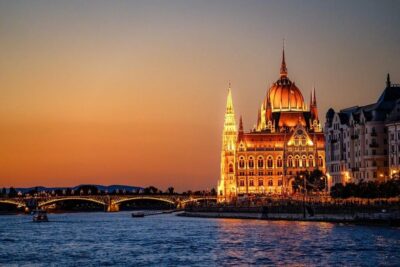
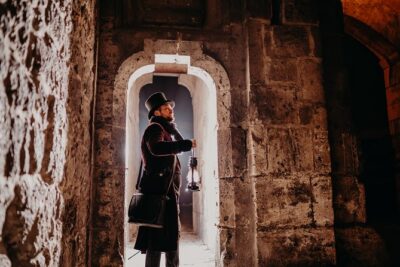
Buda Castle District Dark History, Legends and Vampire Night Tour
Read our review →
BloodThirsty Hungary: Walking tour & Dark Historical Stories
Read our review →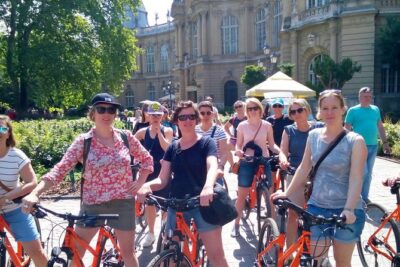
Budapest Historic Downtown Bicycle Tour in small groups
Read our review →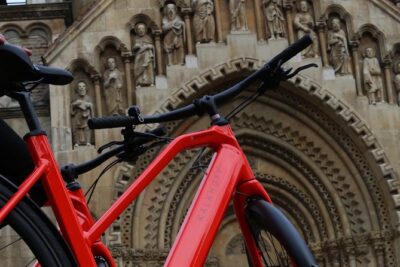
Historic Downtown ride on E-Bicycles Buda & Pest
Read our review →
Historic Downtown Bicycle Ride with Scenic Views
Read our review →Browse the lists this tour appears in