
Reviewed · HISTORICAL TOURS
Budapest Historical Sightseeing – Free Walking Tour
Budapest’s past is not tucked away in one museum. It sits in the pavement, on building walls, beside the Danube, and in the uneasy mix of imperial pride and Communist memory. This walk gives you that broad picture, moving from the National Museum and Jewish Quarter to Parliament, Liberty Square, and the Shoes on the Danube memorial.
I like the strong first-day orientation and the way guides such as Victoria, Peter, Elizabeth, George, and Sabi add practical advice about food, transport, customs, and later sightseeing. I also like the price: $3.63 gets you an English-speaking guide for about two and a half hours, though a tip is expected and is the guide’s main payment.
The main catch is simple: this is a long urban walk of about three miles, often over cobblestones, with little time for indoor visits. A group can reach 50 people, and a few visitors have found it hard to hear in busy areas, so this suits walkers more than anyone seeking a relaxed or highly personal tour.
In This Review
- Key things to know before you book
- Why this walk works well on your first day
- Kálvin tér and the National Museum gardens
- Unger’s House and the city’s layered architecture
- Elizabeth Square, Astoria, and the Jewish Quarter
- St. Stephen’s Basilica and Budapest’s central axis
- Liberty Square and Hungary’s difficult 20th century
- Stock Exchange Palace and the Reagan statues
- Parliament Square and the Danube views
- Across the river by sight, not by foot
- Chain Bridge and the final Danube memorial
- Guides, group size, and the pace
- Weather, breaks, and what to bring
- Who should book this Budapest walk?
- FAQ
- Where does the Budapest Historical Sightseeing Free Walking Tour start?
- Where does the tour finish?
- How long is the walking tour?
- Is the tour really free?
- Are tickets to the buildings included?
- Does the tour visit Buda Castle and Fisherman’s Bastion?
- Is food or coffee included?
- What happens if the weather is poor?
Key things to know before you book
- You see Pest, not the Buda Castle district: The route finishes near Chain Bridge after views across the river toward Fisherman’s Bastion, Matthias Church, and the palace.
- The Communist past gets serious attention: Liberty Square, the Soviet memorial, the Reagan statue, and Hungary’s difficult 20th-century story are major parts of the walk.
- The Jewish Quarter is explained in context: You learn how the district changed from a Jewish community to a wartime ghetto, then to an arts, student, shopping, and nightlife area.
- It is an orientation walk, not a collection of admissions: You see the exteriors of Parliament, St. Stephen’s Basilica, and major landmarks, but entrance fees are not included.
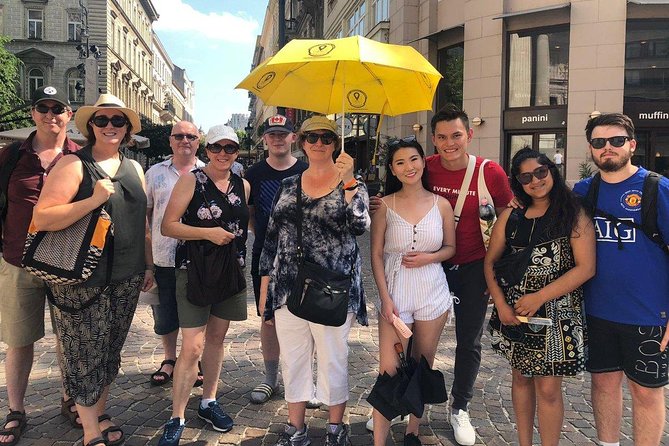
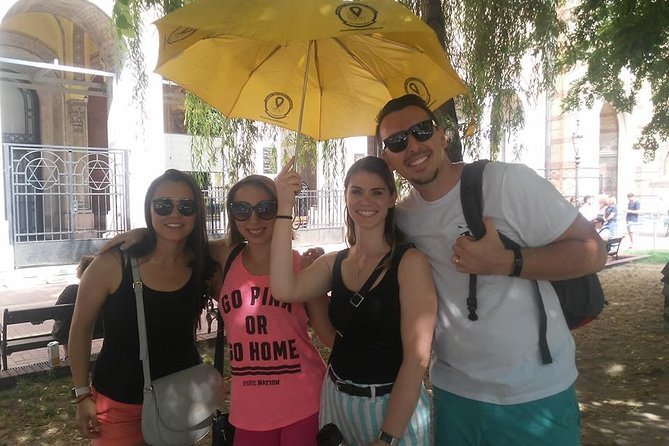
- The meeting point is easy to reach: Look for the guide in yellow at OTP Bank, Kálvin tér 12 to 13.
- Bring weather gear and cash: Water, sunscreen, an umbrella or warm coat matter, and tips cannot always be paid by card.
Why this walk works well on your first day
I would put this tour near the start of a Budapest visit. It gives you a working map of the Pest side and helps you decide what deserves a second look. You pass squares, churches, monuments, nightlife streets, and riverfront landmarks, while the guide connects them to Hungarian politics and everyday life.
The value is not just the number of sights. Budapest can seem scattered at first, with grand avenues on one side and quiet courtyards on the other. A guide helps you understand how the pieces fit together. Several guides also offer advice on transport, restaurants, local customs, and what to do for the rest of your stay.
The experience is conducted in English and includes an in-person guide. There is a short five-minute break for drinks and the toilet, but no coffee, tea, or food is served. Bring a bottle of water before you arrive. The company specifically advises against expecting the guide to carry luggage or other equipment.
The advertised price is remarkably low. Think of it as a minimal booking fee for a tip-supported walk, not a fully paid private excursion. If you enjoy the tour, plan to tip in cash. One practical wrinkle is that card tipping may not be available at the end, so having Hungarian forints ready is wise.
More history walks in Budapest:
- Budapest: Historic Cruise with Welcome Drink
★ 4.7 · 6,512 reviews - Buda Castle District Dark History, Legends and Vampire Night Tour
★ 4.5 · 1,240 reviews - BloodThirsty Hungary: Walking tour & Dark Historical Stories
★ 4.9 · 633 reviews
Kálvin tér and the National Museum gardens
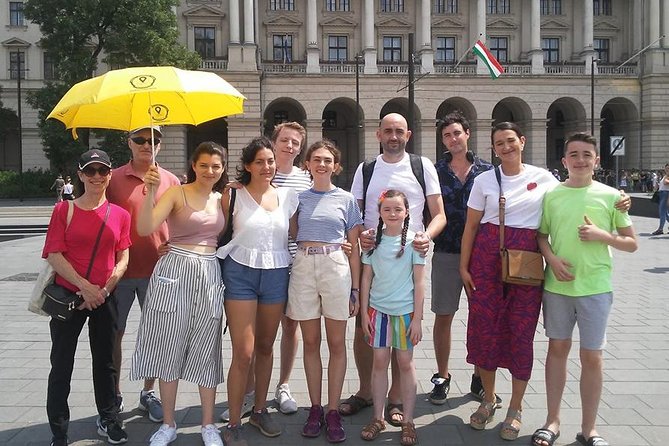
The meeting point is at OTP Bank on Kálvin tér, where the guides wear yellow. The square is named after John Calvin, the French Protestant reformer, and it offers places to sit and some shelter if the weather turns unpleasant.
The route includes the gardens of the Hungarian National Museum. Here you see the mythical turul bird, a powerful symbol in Hungarian tradition, and hear about the museum, its founder, and its collections. The stop also introduces the 1948 uprising and the VIII District, once known for grand palaces and now marked by a more mixed urban character.
This opening section is useful because it establishes the tour’s tone. You are not simply being led from postcard to postcard. The guide is likely to connect architecture, national identity, political struggle, and neighborhood change.
The National Museum itself is not included as an interior visit. You only spend a short time in the gardens, so plan a separate museum visit if you want the collections.
Unger’s House and the city’s layered architecture
Unger’s House is a quick stop, but it shows why Budapest rewards anyone who looks above street level. Miklós Ybl’s unusual building combines Byzantine, Gothic, Moorish, Renaissance, and Romantic elements in one fading palace.
You stand in the courtyard rather than touring the building at length. That limitation is also part of the appeal. A guide can point out details you might walk past alone, while you get a sense of Budapest’s habit of placing grand design beside buildings that need care.
The short visit keeps the route moving. It also means you should not expect a detailed architectural lecture at every stop. The walk covers a wide area, so each place receives a focused introduction rather than a long study.
Elizabeth Square, Astoria, and the Jewish Quarter
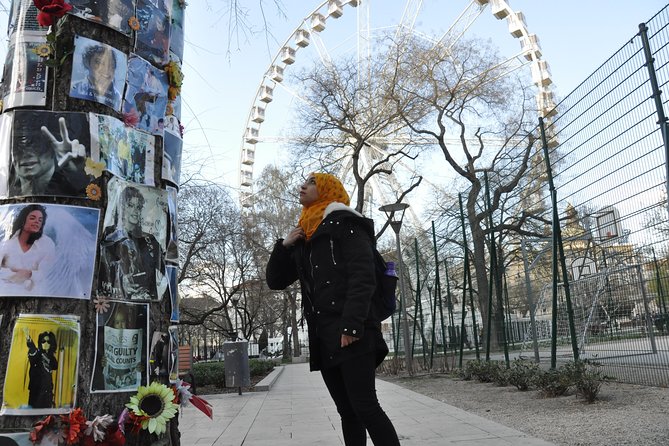
Elizabeth Square brings the tour into present-day Budapest. The Budapest Eye rises here, and the guide explains the square’s past while pointing out the bars and nightlife close by. This is a useful contrast with the earlier monuments. Budapest is not only a city of royal buildings and memorials. It is also a social city, with nightlife concentrated around central squares and side streets.
The Danubius Hotel Astoria gives you another glimpse of old Budapest. Its French Empire style and cosmopolitan reputation reflect the city’s former position as an international capital. The building has hosted famous figures and film productions, including the Josephine Baker Story directed by Brian Gibson.
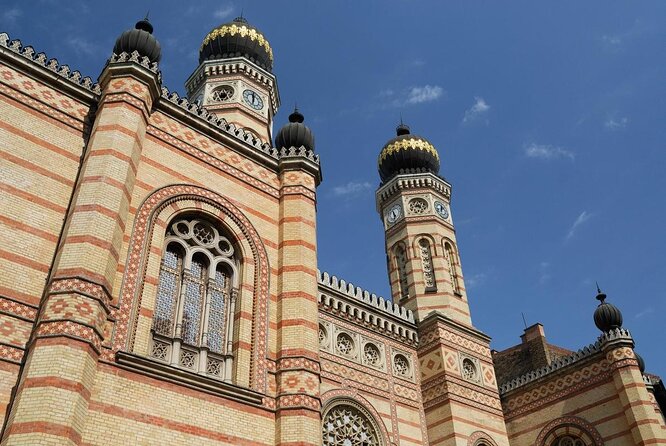
The walk then passes through the Jewish Quarter, one of the most important sections of the experience. You hear how it developed as the home of a Jewish community, became a ghetto during the Second World War, and later changed into an area associated with artists, students, independent shops, designers, and bars.
This part calls for attention and respect. The district’s current energy does not erase its wartime suffering. A good guide helps you hold both realities at once: the streets are places for ordinary modern life, but they also carry painful memories.
More walking tours in Budapest:
- Budapest: Buda Castle Walk with Saint Stephen’s Hall
★ 4.5 · 3,012 reviews - Big Bus Budapest Hop-On Hop-Off Bus and Walking Tour
★ 3.5 · 2,206 reviews - Budapest: Buda Castle District Walking Tour
★ 4.6 · 2,108 reviews - Budapest City Landmarks Walking Tour in 2 Hours
★ 5.0 · 2,048 reviews
St. Stephen’s Basilica and Budapest’s central axis
At St. Stephen’s Basilica, the guide explains the name of Hungary’s first king and the role the building plays in the city. You remain outside, so admission is not included. The exterior alone is an important orientation point, and the surrounding area is useful for later independent exploring.
I like this stop because it gives you a clear reference point in central Pest. After the tour, you can return to the basilica or use it as a marker while walking to other parts of the city. The guide’s local suggestions can also help you decide where to eat or stop for a drink nearby.
Expect exterior sightseeing throughout much of the route. If you want to go inside the basilica, the Parliament, or other buildings, you will need to arrange that separately and pay any applicable entrance fee.
Liberty Square and Hungary’s difficult 20th century
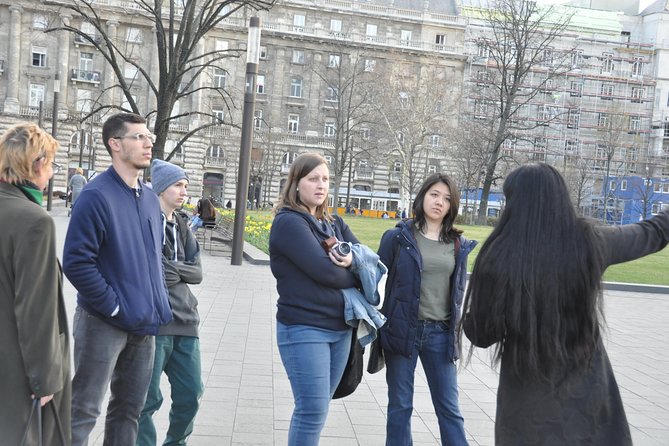
Szabadság tér, or Liberty Square, is one of the tour’s strongest history stops. You see the Communist memorial and hear about the forces that shaped modern Hungary. The square carries competing messages, and it is a good place to ask questions about how Budapest remembers occupation, dictatorship, war, and political change.
This walk does not soften the country’s past. Hungary’s history includes long periods without its own form of government, and the guide may speak directly about the bitterness and hardship behind national symbols. That frank approach will appeal to you if you prefer history with sharp edges rather than a polished city-tour script.
It can also feel heavy. One negative account describes a guide who spoke harshly and focused too much on the grim side of Hungary. That appears to be an exception within a very high overall rating, but it is fair to know that the subject matter and some guides’ direct style may not suit everyone.
Stock Exchange Palace and the Reagan statues

The Stock Exchange Palace is a brief exterior stop. Its size, about 50,000 square meters, makes it one of Budapest’s major privately owned historic landmarks. The guide uses it to add another piece to the city’s architectural and financial story.
At Liberty Square, the Ronald Reagan statue adds a touch of political theater. Reagan is shown walking toward the square, away from Parliament, while George H. W. Bush waits nearby. The guide explains why the statues are positioned as they are.
These are quick stops, but they help make the tour feel less predictable. You get major landmarks, yet also smaller details that explain how Budapest presents its modern political identity.
Parliament Square and the Danube views
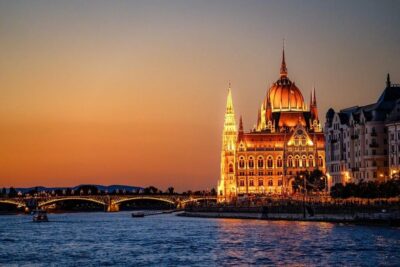
The Hungarian Parliament Building is one of the walk’s headline moments. You stand outside and take in the Neo-Gothic and eclectic exterior from the Danube side. The view across the water toward Buda gives you the classic Budapest scene, but the guide adds context about the buildings around the square.
You learn about the former Ministry of Justice, the agricultural museum, and the chocolate museum, among other places of interest. This prevents Parliament from becoming an isolated photo stop. You begin to understand the square as a civic center filled with institutions and stories.
The building’s interior is not part of this experience. That is important when comparing tours. This walk gives you the outside view and historical explanation, while a separate Parliament visit would require its own ticket and booking arrangements.
Busy conditions can affect this section. One account describes a group of about 25 people finding it difficult to hear near crowded streets. Guides are asked to project their voices, and you should tell the guide promptly if you cannot hear. Staying close also helps.
Across the river by sight, not by foot
From the Pest side, the route gives you views toward Fisherman’s Bastion, Matthias Church, and the Hungarian National Palace. You also see Gellért Hill and Margaret Island from across the Danube.
This is not a Buda Castle tour. You do not cross over to walk through the castle district, climb the bastion, or enter Matthias Church. Instead, the guide explains what you are seeing and helps you plan a later visit.
That arrangement is useful if you have limited time and want a broad survey first. It is less satisfying if your main goal is an in-depth look at Buda’s monuments. You should treat these views as a preview, not a substitute.
Chain Bridge and the final Danube memorial
The walk continues to Széchenyi Chain Bridge, often simply called Chain Bridge. The guide discusses its construction, importance, and reconstruction. The bridge links the two sides of the city and gives the tour a natural transition from Pest toward the Buda views.
The official end point is near Id. Antall József rkp. 1, close to the bridge. From here, you can walk back toward the meeting area or continue into the city center with relative ease.
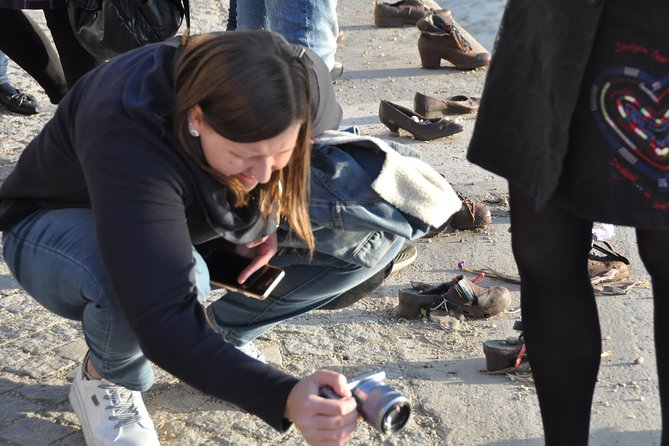
The route also includes the Shoes on the Danube Bank memorial. Sixty pairs of iron shoes honor Jewish people who were ordered to remove their shoes before being shot on the riverbank during the Holocaust. It is a spare and haunting memorial, and the guide explains why the simple design is so powerful.
This is not a light sightseeing stop, and it should not be rushed. Give yourself a moment to look at the memorial and the river. The combination of a pleasant waterfront and a terrible story is exactly what makes the place so affecting.
Guides, group size, and the pace
Guide quality is central to a tip-supported walk. Victoria receives especially strong praise for her command of Hungarian history, clear English, humor, and practical advice. One description highlights the notebook of photographs she used to make past events easier to understand. Peter is also praised for clear explanations and strong command of the subject, while Elizabeth is noted for an engaging approach. Sabi has helped visitors understand Budapest’s public transport.
The guide assigned to your departure can vary, so you cannot reserve a particular personality from the information provided. Most evidence points to an enthusiastic and well-prepared experience, but one account had a poor interaction with Victoria, describing a late start, a fast delivery, and an overly harsh manner. The company responded that the group had repeatedly talked over the guide and that direct discussion of Hungary’s painful past was intentional.
That exchange suggests a useful expectation: guides may be candid, serious, and occasionally blunt. If you want a gentle, polished presentation with no political edge, a paid private tour may suit you better.
The maximum group size is 50, though some departures are smaller. A large group can make crossings, questions, and hearing more difficult. The pace is generally described as manageable, but you should be able to walk roughly three miles. Comfortable shoes are essential on Budapest’s cobblestones.
The tour is best suited to adults and children over 12, though younger children are welcome. Most people can participate, and service animals are allowed. Dogs are not permitted, except for guide dogs carried with official papers. There is no hearing induction loop.
Weather, breaks, and what to bring
This is an outdoor activity with only a short break. Wear sunscreen in warm weather and bring an umbrella if rain is possible. In cold weather, take the advice seriously and wear a proper warm jacket. Budapest can be extremely cold in winter, and stopping for coffee is not built into the route.
The company asks you to buy drinks before the start because a large group stopping at a café could add 30 minutes to the tour. Public toilets cost about 100 to 500 HUF, so carry a little local currency.
The experience requires good weather. If poor conditions force cancellation, you are offered another date or a full refund. You can cancel for a full refund up to 24 hours before the start, but late cancellations and late changes are not accepted.
Who should book this Budapest walk?
Book it if you want a low-cost introduction to Pest, clear historical context, and practical suggestions for the rest of your visit. It is especially useful for a first day, a short stay, or anyone who wants to understand the city before choosing which museums and neighborhoods to explore alone.
Skip it if you dislike long walks, need frequent indoor rests, want guaranteed small-group attention, or expect entry into Parliament, the basilica, or Buda Castle. You will see and discuss those landmarks, but you will not tour their interiors.
For the price, this is a strong way to get your bearings. Reserve ahead if possible, since it is commonly booked around 20 days in advance. Then arrive early, find the yellow-shirted guide, bring water and comfortable shoes, and carry cash for a tip. The reward is a wide-ranging introduction to Budapest that treats its beauty and its difficult past as parts of the same city.
FAQ
Where does the Budapest Historical Sightseeing Free Walking Tour start?
The tour starts at OTP Bank, Budapest, Kálvin tér 12 to 13, 1085 Hungary. The meeting area is near public transportation, and guides wear yellow.
Where does the tour finish?
The tour finishes near Chain Bridge at Id. Antall József rkp. 1, 1052 Budapest. From there, you can walk back toward the meeting point or continue easily toward the city center.
How long is the walking tour?
The tour lasts approximately two hours and 30 minutes. You should be prepared to walk about three miles.
Is the tour really free?
The booking price is listed as $3.63 per person, and the tour operates on a minimal fee plus tips. Tips are not included, but they are an important part of the guide’s income.
Are tickets to the buildings included?
No. The route visits the exteriors of places such as St. Stephen’s Basilica, the Stock Exchange Palace, and Parliament. Admission fees are not included.
Does the tour visit Buda Castle and Fisherman’s Bastion?
No. You view Fisherman’s Bastion, Matthias Church, the palace, Margaret Island, and Gellért Hill from the Pest side of the Danube. The walk does not cross the river for a Buda Castle visit.
Is food or coffee included?
No food or drink is served. There is a short five-minute break for you to buy a drink and use the toilet. Public toilets cost about 100 to 500 HUF.
What happens if the weather is poor?
The tour requires good weather. If it is canceled because of poor conditions, you are offered a different date or a full refund.
Recently added around Budapest
- Hiking + Chairlift ride + viewpoints in Budapest★ 5.0 · 3 reviews
- Grand Budapest tour with private transportation★ 5.0 · 3 reviews
- FoolsCode: EscapeRoom/Sightseeing tour with Actor Tourguide★ 5.0 · 3 reviews
- Budapest: Private Customizable Tour in French★ 5.0 · 3 reviews
- Budapest: Private, Personalized Pub Crawl, 3 drinks included★ 4.5 · 3 reviews
- Budapest Drinks and Piano Show Cruise★ 4.5 · 3 reviews
- Discover Budapest Using Tram Two★ 5.0 · 3 reviews
- Budapest: Private 3-Hour Gödöllő Palace Tour★ 4.9 · 3 reviews
Historical Tours, compared.
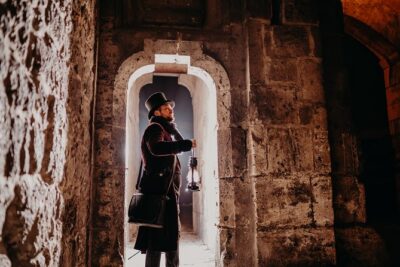
Buda Castle District Dark History, Legends and Vampire Night Tour
Read our review →
BloodThirsty Hungary: Walking tour & Dark Historical Stories
Read our review →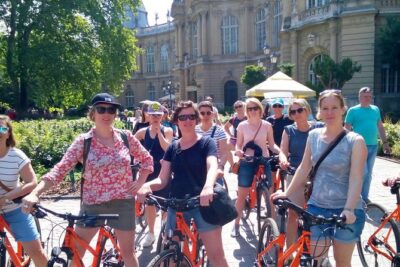
Budapest Historic Downtown Bicycle Tour in small groups
Read our review →
Historic Downtown ride on E-Bicycles Buda & Pest
Read our review →
Historic Downtown Bicycle Ride with Scenic Views
Read our review →Browse the lists this tour appears in