
Reviewed · BUDA CASTLE TOURS
Buda Castle Tour: Fisherman’s bastion and hidden gems
Buda Castle’s best moments come one after another: a tiled church roof, Danube views from Fisherman’s Bastion, royal statues, an old pastry shop, and quiet lanes on Castle Hill. This two-hour walking tour links the headline sights with places many visitors pass by.
I like the small group limit of 10 and the low price of $3.63 per person. I also like the mix of grand monuments and local details, from the lucky horse statue of András Hadik to the story of the Hospital in the Rock.
The main catch is pace. There is a lot to cover in about two hours, with hills, steps, and several short stops. In hot weather or heavy rain, you may not complete every part comfortably, so sensible shoes, water, and a weather check matter.
In This Review
- Key points at a glance
- Why Buda Castle works best on foot
- Matthias Church and Trinity Square
- Fisherman’s Bastion and the Danube panorama
- Ruszwurm, Hadik, and the everyday side of the hill
- Residential Buda and the Hospital in the Rock
- Sándor Palace and the Carmelite Monastery
- The Funicular, Riding Hall, and Matthias Fountain
- Buda Castle and the finish near the National Gallery
- Guide style and group size
- Is $3.63 good value?
- Who should book this Castle Hill walk?
- My booking advice
- FAQ
- How long does the Buda Castle tour last?
- What language is the tour offered in?
- Where does the tour begin?
- Where does the tour end?
- Is admission to Matthias Church included?
- How large is the tour group?
- Can I cancel for a full refund?
Key points at a glance
- Fisherman’s Bastion views: Take in broad views over the Danube and Budapest from its fairy-tale terraces.
- Royal and religious landmarks: See Matthias Church, Trinity Square, Sándor Palace, the Carmelite Monastery, and Buda Castle.
- Local history with personality: Hear about the plague column, András Hadik, the Hospital in the Rock, and Ruszwurm Confectionery.
- A compact small-group walk: The group can include no more than 10 people, which makes it easier to hear the guide.
- English guidance: The tour is offered in English, with guides such as Sou, Sophie, Ignacio, Nacho, and Bayler appearing among the guide team.
- Very low-cost introduction: At $3.63, the tour offers an inexpensive way to get your bearings before deciding which museums or paid sights deserve more time.
Why Buda Castle works best on foot
Buda Castle is not one building with a single entrance. It is a district spread across Castle Hill, with churches, government buildings, palace courtyards, monuments, terraces, museums, and residential streets. A walking tour helps you connect these pieces instead of seeing them as isolated photo stops.
The route begins at Szentháromság tér, or Trinity Square, and finishes near the entrance of the National Gallery at Buda Castle. That makes the walk useful early in your Budapest visit. You can use the guide’s recommendations for restaurants, bars, and museums to plan the rest of your time.
The tour is short, but the route is not entirely flat. You will encounter hills and steps, and one person noted that reaching the castle on foot can feel like a workout. If you are reasonably fit, the climb is manageable, but allow more energy in summer heat or poor weather.
More of Buda Castle and the castle district:
- Budapest: Buda Castle Cave Tour
★ 4.7 · 5,677 reviews - Budapest: Buda Castle District Vampires and Myths Night Tour
★ 4.6 · 3,830 reviews - Budapest: Buda Castle Walk with Saint Stephen’s Hall
★ 4.5 · 3,012 reviews
Matthias Church and Trinity Square
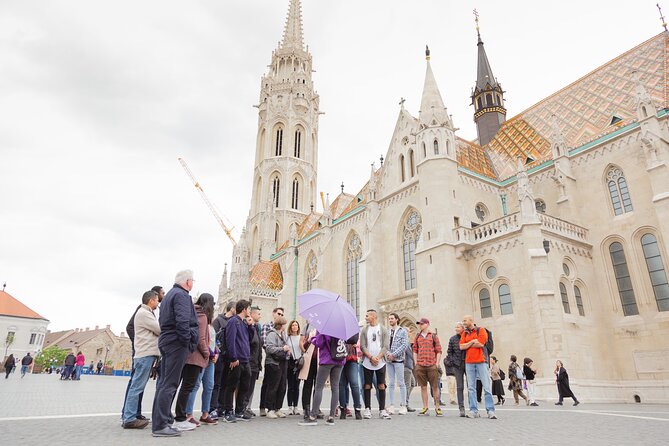
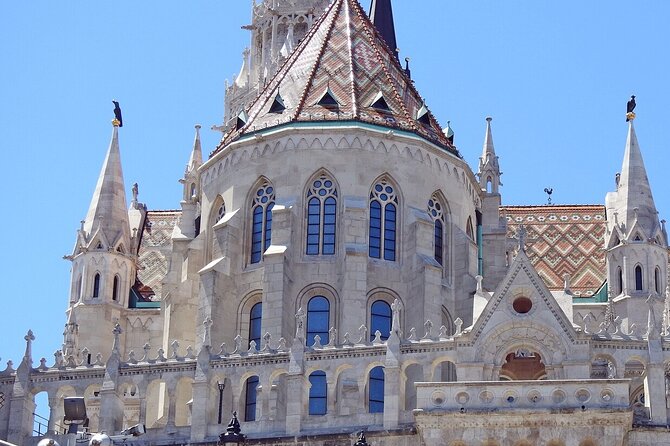
The first major stop is Matthias Church, one of the most recognizable buildings in the Castle District. Its patterned roof, Gothic Revival form, pointed spires, and interior artwork make it an immediate visual marker for the hilltop.
The guide explains the church’s royal connections and artistic details, but this tour takes photos from outside. Admission is not included, and you do not enter as part of the scheduled stop. That is important if the church interior is high on your list. You may want to return later on your own, subject to opening hours and admission arrangements at that time.
Nearby, the Holy Trinity Column gives the square another layer of meaning. The monument commemorates the end of the 18th-century plague and is filled with carved detail. You only spend about five minutes here, so expect a concise explanation rather than a long study of the sculpture.
The square also offers one of the route’s useful orientation points. From here, your guide can explain how the church, Fisherman’s Bastion, and the surrounding Castle District fit together.
Fisherman’s Bastion and the Danube panorama
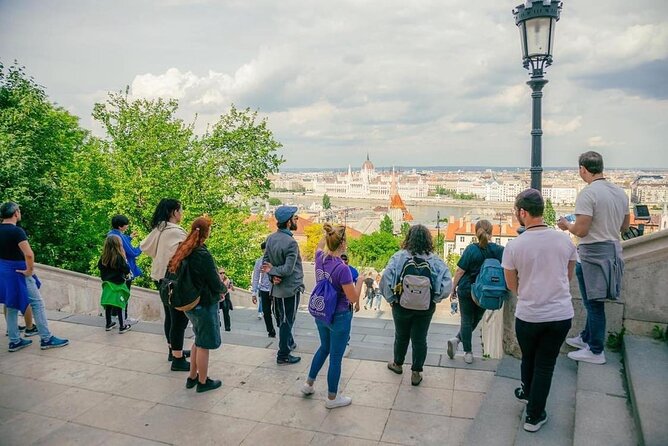
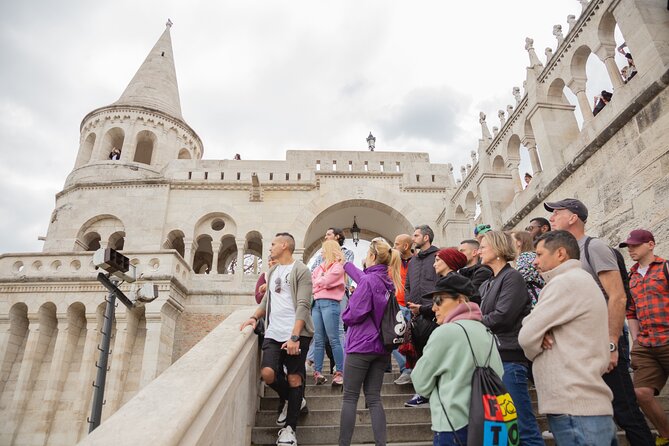
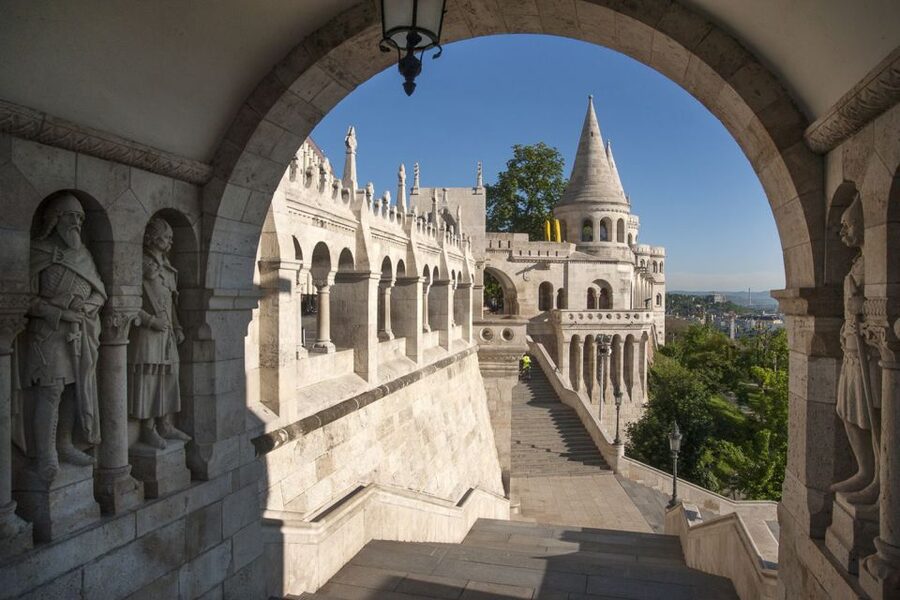
Fisherman’s Bastion is the visual centerpiece of the walk. Its towers, arches, terraces, and stairways have a storybook look, but the real reason to come is the view. From the upper terraces, you can look across the Danube toward Budapest’s skyline and major riverfront buildings.
The scheduled stop lasts about 15 minutes. That is enough for an introduction and photographs, but not enough for a slow exploration of every turret and walkway. Some sections of Fisherman’s Bastion may also have separate access arrangements, so ask your guide what is included on the day.
This is where weather can change the experience. Heavy rain can make the stone surfaces unpleasant, while intense sun can make the exposed terraces tiring. A guide named Bayler was praised for keeping the tour engaging during torrential rain, but good humor cannot replace a raincoat or comfortable footwear.
Bring a camera, but do not spend the whole stop looking through it. The view is the point, and the guide’s explanation gives the panorama more meaning than a quick photo alone.
Ruszwurm, Hadik, and the everyday side of the hill
After the grand monuments, the route shifts toward small details that make Castle Hill feel like a lived-in district.
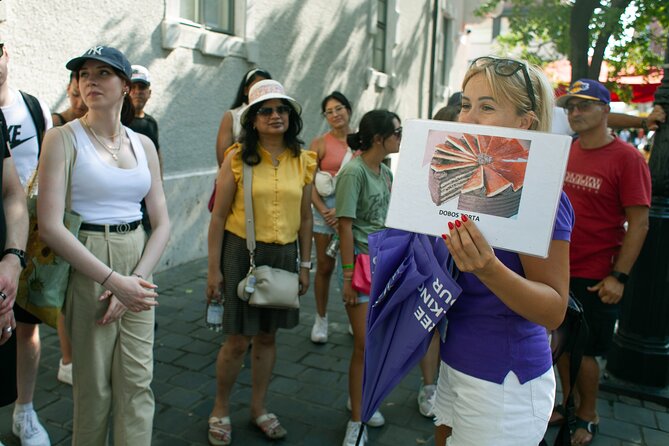
Ruszwurm Confectionery has served cakes and pastries since 1827. The shop is known for its old-fashioned setting and handmade Hungarian sweets, including Dobos torta and krémes. The stop lasts about 10 minutes, and admission is free, but any food or drink you order is your own expense.
This is a good place to ask for a recommendation rather than treating it as a full café break. With a tightly timed route, you may only have time to look around or choose one small pastry. If you want to sit down for a longer tasting, plan to return after the tour.
The statue of András Hadik adds a bit of humor. Hadik was a famous Hungarian soldier and a favored general of Maria Theresa. The bronze horse has a shiny area that people touch for luck. Your guide will point out the tradition, and you will quickly see why this statue attracts attention even from people who know nothing about military history.
These two stops are valuable because they break up the formal monuments. You get a taste of local food culture and a quirky custom, not just palace dates and architectural labels.
More at Fisherman’s Bastion:
- Walking tour in the Buda Castle incl. Fisherman’s Bastion
★ 5.0 · 467 reviews - Buda Castle Walking Tour: Fishermans Bastion – Royal Palace
★ 4.9 · 128 reviews - Budapest: E-Scooter Top Sights Tour with Fisherman’s Bastion
★ 4.9 · 42 reviews - Budapest: Evening Castle Hill Tour with Fishermen’s Bastion
★ 4.9 · 28 reviews
Residential Buda and the Hospital in the Rock
The Árpád Tóth Promenade shows a quieter side of the Castle District. This is a residential part of the hill, away from the main photo terraces and palace façades. You spend about 10 minutes here, enough to notice the contrast between daily life and the nearby ceremonial buildings.
The route also passes the Hospital in the Rock. The museum offers private guided visits in English, but this walking tour does not enter. You hear the story from outside and can decide later if the museum deserves a separate booking.
That distinction matters. The tour introduces several sites without pretending to provide a full visit to each one. If underground spaces, wartime history, or medical history interest you, the Hospital in the Rock may be worth returning to on its own. The walking tour gives you context, not the museum experience itself.
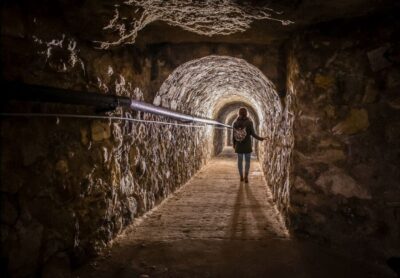
Another brief pass-by is the Castle District labyrinth. It is presented as one of the lesser-known corners of Buda Castle, but you do not receive a full underground exploration during this walk. Think of it as a pointer to a possible later visit.
Sándor Palace and the Carmelite Monastery
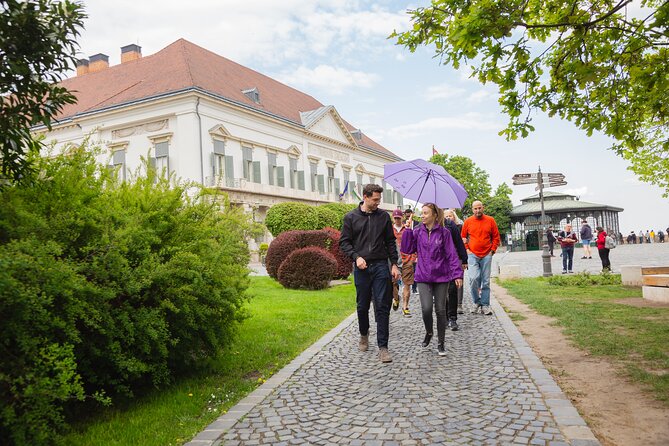
Sándor Palace is the official residence of Hungary’s President. The building takes its name from Count Sándor Móricz, known for daring horse-riding stunts and the nickname Devil’s Rider.
The stop is about five minutes. You will not spend long inside, and the value comes from understanding the building’s present political role and its connection to an earlier aristocratic owner. It is a compact stop, but it helps show that Buda Castle is not simply an old monument district. It still has an active civic function.
The nearby Carmelite Monastery has changed roles over time. It began as a monastery, later served as a theater and concert hall, and now houses the Hungarian Prime Minister’s Office. The tour allows about 10 minutes here.
I like this part of the route because it shows how Budapest reuses historic buildings. A church or monastery can move through religious, cultural, and political chapters without losing its older identity. You should not expect a long interior visit, but the exterior and the story give the building more weight.
The Funicular, Riding Hall, and Matthias Fountain
The Buda Hill Funicular links the Chain Bridge with the Castle District. It has operated since 1870 and offers a short ride with Danube views. On this tour, the Funicular receives about 10 minutes, and the ride itself is not listed as included.
That means you should not assume the group will board. The guide may explain how it works and point out its place in Budapest’s transport history. If you want to ride it, ask about the current ticket arrangement and decide whether to return separately.
The Royal Riding Hall, or Királyi Lovarda, was built as a royal equestrian facility and has been restored. The stop lasts about five minutes. It is more about seeing the building and hearing its purpose than touring a working stable or exhibition.
The Matthias Fountain offers another quick look at royal imagery. The Baroque-style monument centers on King Matthias Corvinus on horseback and recalls the power and cultural life of his 15th-century reign. The 10-minute stop gives you time for photographs and a short explanation.
These three locations show the range of Castle Hill: transport, courtly life, and royal symbolism. The drawback is that the time can feel divided into many small pieces. If you prefer one site explored at length, this route may seem hurried.
Buda Castle and the finish near the National Gallery
The final stop is Buda Castle, the Royal Palace complex at the top of the hill. Today, the palace area includes the Hungarian National Gallery, the Budapest History Museum, and the National Library.
The tour finishes at the entrance of the National Gallery on Szent György tér. This is a useful ending because you can continue into a museum if you have the time and interest. Museum admission is not included in the walking tour, so plan for a separate ticket.
The palace stop itself lasts around 15 minutes. You receive an overview of the complex and its museums rather than a museum visit. I would treat this as a planning advantage. The guide gives you enough background to choose between art, local history, and literature, instead of wandering into the first open doorway without a plan.
Because the route begins in Trinity Square and ends by the National Gallery, it covers a broad portion of the hill without requiring you to retrace every step. Still, the precise pace may depend on the guide, weather, and group.
Guide style and group size
The tour is offered in English and uses professional guides. Named guides connected with the experience include Sou, Sophie, Ignacio, Nacho, and Bayler. Their styles are described as engaging, funny, friendly, and full of useful local recommendations.
Sou is noted for involving everyone in the discussion. Sophie is described as funny and informative, while Ignacio is associated with practical suggestions for places to eat, drink, and visit. Nacho received particular praise for being entertaining and approachable. Bayler kept the mood light during very wet weather.
You should not assume you will receive a specific guide when booking. The useful point is that the company has several guides with a lively presentation style. This matters on a walking tour because the route contains many short stops. A dry lecture would make the pace feel longer, while a good storyteller can make a five-minute statue stop worthwhile.
The maximum group size is 10. That is small enough for you to hear explanations more clearly and ask questions without speaking over a large crowd. It also makes it easier for the guide to keep the group together around viewpoints and busy public spaces.
Is $3.63 good value?
At $3.63 per person, this is unusually inexpensive for a guided introduction to one of Budapest’s major districts. The value comes from the route and the local explanation, not from included admissions, food, or transport.
You pay separately for anything inside Matthias Church, the National Gallery, the Budapest History Museum, the Hospital in the Rock, the Castle labyrinth, or other paid sites. Food at Ruszwurm is also extra, and the Funicular ride is not listed as included.
That is not a serious flaw at this price. The tour works as a low-cost orientation walk. It helps you decide where to spend your museum money later, and the tailor-made recommendations for restaurants, bars, and museums add practical value.
The trade-off is time. Twelve listed stops plus several brief pass-bys in two hours means you will get an overview rather than a slow, detailed visit. I would book it for context, photos, and planning, not as a substitute for entering every attraction.
Who should book this Castle Hill walk?
I would choose this tour if you are visiting Budapest for the first time, want an English-speaking guide, and prefer a clear route through a confusing historic district. It also suits anyone who wants the major views while picking up small stories about pastry, lucky statues, government buildings, and old transport.
It is a good fit for families and mixed-age groups if everyone can manage hills and steps. The small group and short explanations help keep the route moving, though very young children may find the number of stops tiring.
You may want a different plan if you need a fully accessible, flat route, a long church interior visit, or a detailed museum tour. The available information says most people can participate and service animals are allowed, but it does not provide a complete route assessment for every mobility need.
The experience is available near public transportation, and confirmation is provided at booking. Free cancellation is available up to 24 hours before the start time. If you cancel later, the amount paid is not refunded.
My booking advice
Book this walk if you want a cheap, compact introduction to Buda Castle with strong views and plenty of background. The best parts are Fisherman’s Bastion, the church and Trinity Square area, the local stories at Ruszwurm and the Hadik statue, and the final orientation around the palace museums.
Go prepared for a brisk route. Wear shoes suited to hills and steps, carry water, and bring rain protection or sun protection as needed. If the weather turns extreme, give yourself permission to leave before the final stops.
For $3.63, the tour is an easy value choice. Just remember what you are buying: a lively overview led by an English-speaking guide, not a collection of full admissions or extended visits inside each site.
FAQ
How long does the Buda Castle tour last?
The tour lasts approximately two hours.
What language is the tour offered in?
The tour is offered in English.
Where does the tour begin?
It begins at Szentháromság tér in Budapest’s Castle District, at 1014 Hungary.
Where does the tour end?
It ends at Buda Castle on Szent György tér, near the entrance of the National Gallery.
Is admission to Matthias Church included?
No. The tour takes photos outside Matthias Church, and admission is not included.
How large is the tour group?
The maximum group size is 10 people.
Can I cancel for a full refund?
Yes. You can cancel at least 24 hours before the experience start time for a full refund. Cancellations or changes made less than 24 hours before the start time are not accepted for a refund.
Recently added around Budapest
- Hiking + Chairlift ride + viewpoints in Budapest★ 5.0 · 3 reviews
- FoolsCode: EscapeRoom/Sightseeing tour with Actor Tourguide★ 5.0 · 3 reviews
- Grand Budapest tour with private transportation★ 5.0 · 3 reviews
- Budapest: Private Customizable Tour in French★ 5.0 · 3 reviews
- Budapest: Private, Personalized Pub Crawl, 3 drinks included★ 4.5 · 3 reviews
- Budapest Drinks and Piano Show Cruise★ 4.5 · 3 reviews
- Discover Budapest Using Tram Two★ 5.0 · 3 reviews
- Budapest: Private 3-Hour Gödöllő Palace Tour★ 4.9 · 3 reviews
Buda Castle Tours, compared.

Buda Castle District Vampires and Myths Night Tour
Read our review →
Buda Castle District Dark History, Legends and Vampire Night Tour
Read our review →
Buda Castle District Walking Tour with a Historian
Read our review →
Browse the lists this tour appears in