

Reviewed · BUDA CASTLE TOURS
Buda Castle’s Secrets with a Historian
Buda Castle is not just one palace. It is a whole hilltop district of churches, royal courtyards, cobbled lanes, government buildings, and battle scars. This 2.5-hour walking tour gives the area a clear story, from medieval kings and Habsburg power to World War II and modern Hungary.
I like the small-group format, which makes it easier to ask questions and hear your guide. I also like that Matthias Church admission is included, since the interior is one of the tour’s real highlights. The main consideration is the price, $65.31, and the fact that some stops, including Fisherman’s Bastion and the funicular area, may involve extra admission costs.
In This Review
- Key points to know before you book
- Why Buda Castle makes a better guided walk than a quick photo stop
- Holy Trinity Column: start with the square’s big picture
- Fisherman’s Bastion: more than a pretty balcony
- Matthias Church: the tour’s essential indoor stop
- National Archives and the evidence left by war
- Sándor Palace and the working side of Castle Hill
- Funicular views from the top station
- Prince Eugene’s statue and the Habsburg chapter
- Buda Castle and the royal palace panorama
- King Matthias Fountain: a fitting finish
- The guides make the difference
- Is $65.31 a fair price?
- Who should book this Castle District walk?
- Should you book Buda Castle’s Secrets with a Historian?
- FAQ
- How long is Buda Castle’s Secrets with a Historian?
- Where does the tour begin?
- Where does the tour finish?
- Is Matthias Church admission included?
- Is Fisherman’s Bastion admission included?
- Is entry to Buda Castle included?
- What language is the tour offered in?
- How large is the group?
Key points to know before you book
- Matthias Church is included: You go inside this remarkable church with a licensed guide, rather than seeing it only from the square.
- The history is the main event: Guides such as Petra, Monika, Judit, Gabor, and Raymond explain Hungary’s kings, Habsburg rule, wars, and political past.
- Expect a relaxed walking pace: The route covers Castle Hill’s streets and major sights over about two and a half hours.
- The views are excellent: Look across the Danube to Parliament, Pest, Chain Bridge, St. Stephen’s Basilica, Margaret Island, and the Elizabeth Bridge.
- Group size is designed to stay personal: The tour is promoted as an intimate experience, with up to 10 people in the highlights, while the additional booking information lists a maximum of 15.
- Come ready for questions: Guides are praised for making the walk interactive, offering local suggestions, and explaining both old and modern Hungary.
Why Buda Castle makes a better guided walk than a quick photo stop
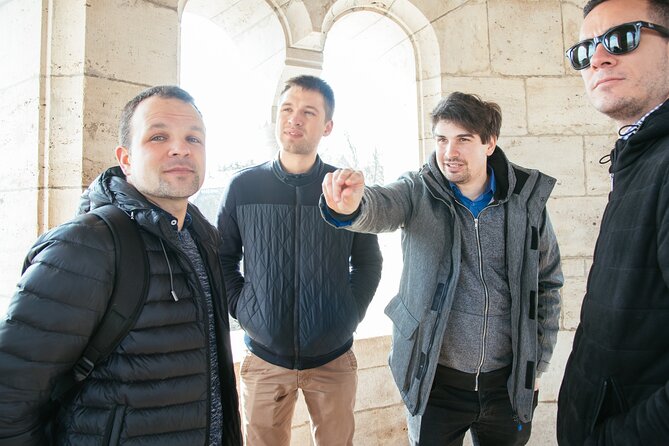
Many people reach Castle Hill, take pictures at Fisherman’s Bastion, look into Matthias Church, and leave. That gives you the postcard. It does not necessarily explain why the hill matters, why the buildings look the way they do, or how often this district has been rebuilt.
This tour works best if you want those connections. The route moves from the Holy Trinity Column through the church quarter and royal palace area, so the castle district becomes a sequence of events rather than a collection of pretty facades.
I especially like the focus on Hungary’s complicated past. The guide does not deal only in kings and grand architecture. You hear about the Habsburgs, military campaigns, World War I, World War II, Communist rule, and modern Hungarian culture. That wider frame gives the palace and its courtyards more meaning.
The walk is offered in English and uses a mobile ticket. The advertised group is small, though the stated maximum varies between 10 and 15 people. Even at the larger number, this is more personal than a big city coach tour, but I would not assume every departure will have only a handful of people.
More of Buda Castle and the castle district:
- Budapest: Buda Castle Cave Tour
★ 4.7 · 5,677 reviews - Budapest: Buda Castle District Vampires and Myths Night Tour
★ 4.6 · 3,830 reviews - Budapest: Buda Castle Walk with Saint Stephen’s Hall
★ 4.5 · 3,012 reviews
Holy Trinity Column: start with the square’s big picture
The meeting point is the Holy Trinity Statue in Budapest’s Castle District. This is a useful place to begin because you are surrounded by the district’s main architectural pieces almost at once.
You get an introduction to Budapest and Hungarian history while looking at the square and its surrounding buildings. The stop lasts about 30 minutes, which gives the guide time to establish the story before the group moves on.
That opening matters. Buda and Pest are often treated as one city by first-time visitors, but the two sides of the Danube developed with different roles and different moods. Beginning on Castle Hill helps you understand why this high ground was valuable and why rulers, churches, soldiers, and government offices gathered here.
The tour starts in a busy sightseeing zone, so listen for your guide’s instructions and stay close. The meeting point is in the Castle District rather than down at the river, and clear directions are especially useful if you are arriving by public transportation.
Fisherman’s Bastion: more than a pretty balcony
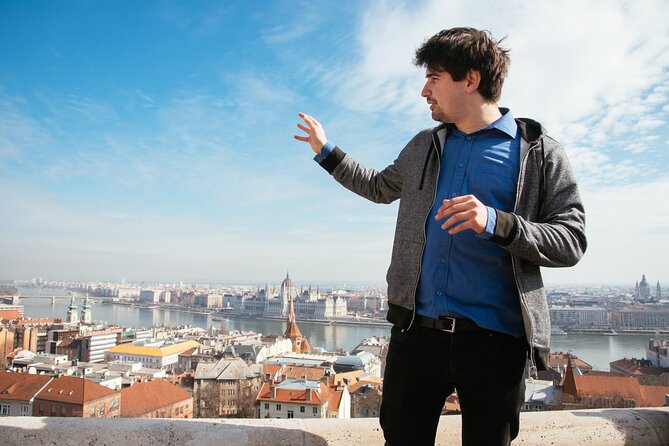
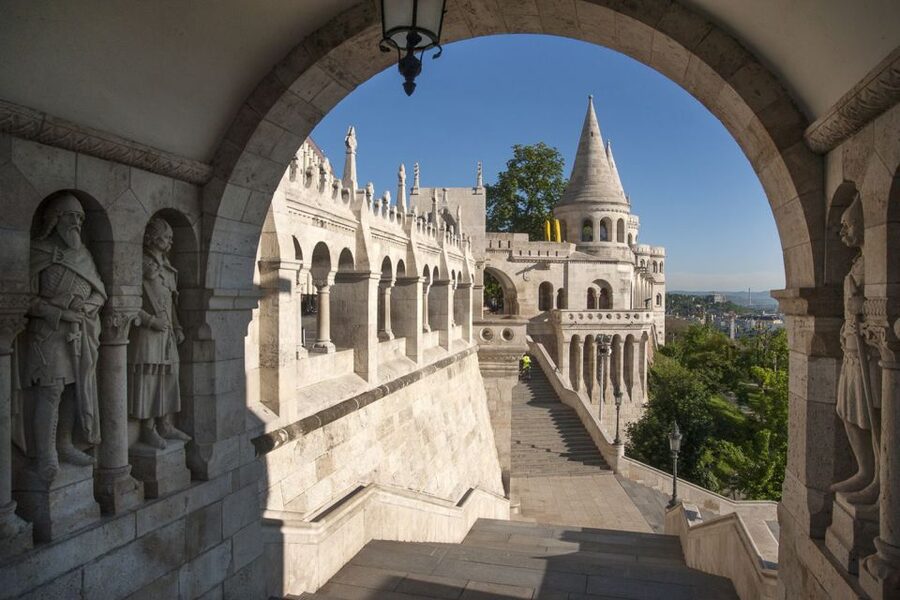
Fisherman’s Bastion is one of Budapest’s most photographed sights, and the view is the obvious draw. From its terraces, you look over the Danube toward Parliament and the Pest side of the city.
The guide also explains the bastion’s story and its true function. That is useful because the structure can look like a medieval fortress, even though its appearance and role are more complicated than the first glance suggests.
The stop lasts about 20 minutes. Admission to Fisherman’s Bastion is not included, so budget for a possible entrance fee. The tour information does not give the exact amount, and access arrangements can vary by area, so it is wise to carry a payment method and ask your guide what applies on the day.
This is also one of the best places for photographs. If you want a clear shot of Parliament, tell the guide early that you would like a moment for pictures. The route is not rushed, but the group still needs to keep moving.
Matthias Church: the tour’s essential indoor stop
Matthias Church is the one major interior visit included in the tour price. You spend about 30 minutes inside with a licensed guide, hearing legends and stories tied to the building.
The church is visually different from many European churches. Its decoration and columns reflect the layered past of the site, and the colorful roof makes the exterior immediately recognizable. Inside, the guide can help you read the building as a historical record rather than simply admire its ornament.
This is where the tour’s historian-led approach pays off most clearly. You are not only shown an attractive church. You are given context about monarchy, religious change, and the periods when Budapest was shaped by different powers.
The timing is sensible. Thirty minutes is long enough to appreciate the interior and ask questions, though not so long that the visit turns into a full architectural lecture. One fortunate departure included organ music during the visit, but that was a coincidence, not a promised part of the experience.
Dress and behave as you would for any active church. The tour data does not specify a dress code, but the guide’s stories take place inside a working religious building, so respectful clothing and quiet attention are appropriate.
A different kind of day in Budapest:
- Budapest: City Highlights Cruise with Welcome Drink
★ 4.6 · 35,610 reviews - Budapest: Unlimited Prosecco, Beer and Aperol Spritz Cruise
★ 4.8 · 25,310 reviews - Budapest: Széchenyi Spa Day Ticket with Optional Upgrades
★ 4.3 · 23,911 reviews - Budapest: Nighttime or Daytime Sightseeing Cruise
★ 4.2 · 21,062 reviews
National Archives and the evidence left by war
As you continue, the walk passes the National Archives building. This is one of the less obvious points on the route, and it adds a useful layer to the tour.
The building still shows marks from the past, including bullet holes connected with World War II. Those details can be easy to miss when you are focused on decorative facades and church towers.
I like this kind of stop because it keeps the tour from becoming too polished. Castle Hill is beautiful, but it has also been damaged, fought over, and rebuilt. Seeing physical traces of that violence makes the story of Budapest more immediate.
You do not enter the National Archives on this route. It is a pass-by stop, so your guide’s explanation is what gives it value.
Sándor Palace and the working side of Castle Hill
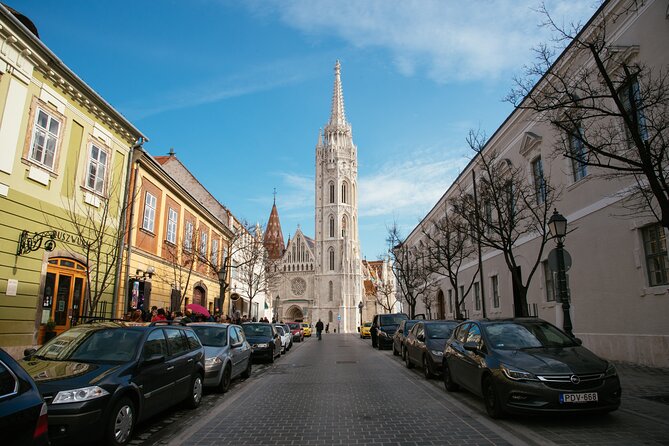
The walk then follows historic cobbled streets and narrow alleyways toward Sándor Palace, the office of Hungary’s president. The stop lasts about 20 minutes.
This part of the tour shows that Buda Castle is not only a preserved monument. It is also a functioning civic district. The contrast between old stone streets and an active state office helps explain why the area remains politically important.
Admission to Sándor Palace is not included. The tour description presents it as an exterior stop, so you should not expect a palace interior visit.
The cobbles are manageable for people with moderate fitness, but they are still cobbles. Wear shoes with good grip and avoid treating this as a polished, flat city stroll. Children must be accompanied by an adult, and anyone who finds uneven walking difficult should consider how comfortable they will be over two and a half hours.
Funicular views from the top station
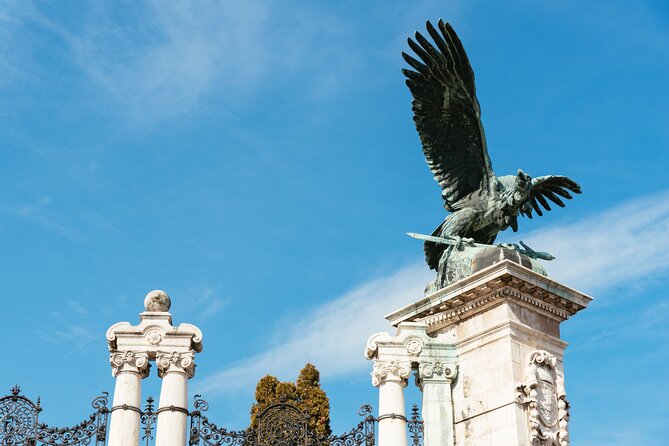
The Buda Hill Funicular area provides another elevated view over the river and Pest. The scheduled stop is about 10 minutes, with attention to the panorama from the top station.
You may see Parliament and the city spread out below, depending on visibility. This is a short stop, so it functions more as a viewpoint and orientation point than as a full funicular ride.
Admission is not included. The tour information does not promise a ride, so check with your guide if riding the funicular is important to you and be prepared to pay separately.
This is a good place to understand Budapest’s shape. The Danube is not just a scenic strip. It divides two historic halves of the city, and the height of Castle Hill gives you a quick visual explanation of that relationship.
Prince Eugene’s statue and the Habsburg chapter
At the equestrian statue of Prince Eugene of Savoy, the guide discusses a decisive military campaign that affected European history for centuries. The stop takes about 10 minutes.
The statue also opens the door to the Habsburg connection with Hungary. This is important context because Hungarian history is not a simple story of local rulers acting alone. Relations with the Habsburgs involved power, resistance, military strategy, and changing attitudes toward the Hungarian kingdom.
The statue itself is free to see. The stop is brief, but it can be one of the most useful if you want to understand why Budapest’s story reaches far beyond the city’s own walls.
Guides such as Raymond and Gabor are praised for explaining major events in an approachable way and for adding personal views about Hungarian figures and culture. That style suits this stop, where a date-heavy explanation could otherwise feel dry.
Buda Castle and the royal palace panorama
The route reaches Buda Castle, the former seat of Hungarian kings and emperors. You get time to admire the palace architecture and walk to a terrace with broad views over the city.
The panorama can include Margaret Island, Parliament, Chain Bridge, St. Stephen’s Basilica, the Budapest Eye, and Elizabeth Bridge. This is the moment to take stock of the full route. From the palace terrace, the city’s landmarks line up below, and the geography you have been hearing about becomes easy to grasp.
Admission to the palace itself is not included. The tour focuses on the exterior grounds and views, so do not book this experience expecting entry to every museum or palace collection. The Hungarian National Gallery and Budapest History Museum are associated with the palace complex, but they are not listed as included visits on this walk.
That distinction matters when comparing the $65.31 price with other Castle District options. You are paying mainly for a historian’s interpretation, the guided church entry, and a structured route through the district. If you want museum interiors, you will need extra time and separate tickets.
King Matthias Fountain: a fitting finish
The tour usually ends at the Fountain of King Matthias on St. György Street. The final stop lasts about 10 minutes.
Here you hear the legends surrounding Matthias Corvinus and why he is regarded as a favorite king by many Hungarians. The fountain is a strong ending because it brings the story back to a memorable royal figure after the tour has covered churches, wars, Habsburg politics, and modern state buildings.
The endpoint is not the same as the starting square. That is convenient if you plan to continue exploring the palace grounds, but it means you should not expect to be returned to the Holy Trinity Column.
You can use the ending to keep exploring independently, visit a palace museum with a separate ticket, or simply remain on Castle Hill for more views. Ask your guide for suggestions. Several guides are praised for offering practical ideas for further sightseeing.
The guides make the difference
The experience depends heavily on the person leading it. The guide team includes historians and licensed guides, and the named guides praised most often include Petra, Monika, Judit, Gabor, Raymond, Susanna, Julia, and Barbara, also called Barinka.
Their shared strengths are clear: strong English, clear explanations, friendly conversation, and a willingness to answer questions. Judit is especially noted for sending meeting instructions and contact information ahead of time. Monika is praised for keeping a relaxed pace, while Petra is noted for her grasp of Budapest’s history and culture.
Some departures have been very small, including one with only two people. That can turn the walk into something close to a private tour, though you should not count on that result.
A coffee or pastry break is not listed as an included feature, but several guides have taken groups to a local café, with coffee, cappuccino, tea, or strudel enjoyed during the walk. Treat this as a possible guide-led pause, not a guaranteed part of the booking. If you need a break, ask politely. The route already allows time for photographs and questions.
Is $65.31 a fair price?
At $65.31 per person, this is not the cheapest way to see Castle Hill. You can walk through much of the district on your own for free, and the views from the public areas cost nothing.
The value appears when you want a well-paced route and a coherent explanation. Matthias Church admission is included, and a guide helps you connect the church, palace, Habsburg story, war damage, and city views. You also avoid spending your first hour wondering which alley leads where.
I would consider the price fair for a first visit if you care about Hungarian history and prefer asking questions as you walk. It is less appealing if you only want photographs, plan to enter several museums, or dislike guided schedules.
Free cancellation is available when you cancel at least 24 hours before the start time. Changes or cancellations inside that window are not accepted for a refund. The activity accepts mobile tickets, permits service animals, and operates near public transportation.
Who should book this Castle District walk?
I would choose this tour for a first or second day in Budapest, especially if you want historical bearings before exploring on your own. It also suits couples, families with older children, and solo visitors who prefer a small group rather than a large crowd.
History fans will get the most from it, particularly those interested in royal politics, the Habsburgs, World War II, Communist Hungary, and the city’s changing identity. The guide’s explanations give the monuments a human and political setting.
You should think twice if you have limited mobility, since the route includes cobbled streets and hilltop walking. A moderate fitness level is requested, and the tour lasts about two and a half hours.
Should you book Buda Castle’s Secrets with a Historian?
Book it if you want more than a checklist of Castle Hill sights. The combination of Matthias Church entry, small-group conversation, war-era details, royal stories, and excellent views gives the walk a useful balance.
Skip it if your priority is palace museum admission or a fast photo tour. For most first-time visitors who want to understand why Buda Castle matters, the historian-led format is worth the extra cost, particularly if you can join a small departure with a guide such as Judit, Petra, Monika, or Raymond.
FAQ
How long is Buda Castle’s Secrets with a Historian?
The tour lasts approximately 2 hours and 30 minutes.
Where does the tour begin?
It begins at the Holy Trinity Statue on Szentháromság Street in Budapest’s Castle District.
Where does the tour finish?
It usually ends at the Fountain of King Matthias on St. György Street.
Is Matthias Church admission included?
Yes. The entrance ticket to Matthias Church is included in the tour.
Is Fisherman’s Bastion admission included?
No. Admission to Fisherman’s Bastion is not included.
Is entry to Buda Castle included?
The tour includes the Castle District and exterior palace areas, but admission to Buda Castle is not included.
What language is the tour offered in?
The tour is offered in English.
How large is the group?
The experience is promoted as an intimate small-group tour of up to 10 people, while the additional booking information gives a maximum of 15 travelers. Group sizes can therefore vary within those stated limits.
Recently added around Budapest
- Hiking + Chairlift ride + viewpoints in Budapest★ 5.0 · 3 reviews
- FoolsCode: EscapeRoom/Sightseeing tour with Actor Tourguide★ 5.0 · 3 reviews
- Grand Budapest tour with private transportation★ 5.0 · 3 reviews
- Budapest: Private Customizable Tour in French★ 5.0 · 3 reviews
- Budapest: Private, Personalized Pub Crawl, 3 drinks included★ 4.5 · 3 reviews
- Budapest Drinks and Piano Show Cruise★ 4.5 · 3 reviews
- Discover Budapest Using Tram Two★ 5.0 · 3 reviews
- Budapest Urban Treats – Cake and Coffee House Tour★ 5.0 · 3 reviews
Buda Castle Tours, compared.

Buda Castle District Vampires and Myths Night Tour
Read our review →
Buda Castle District Dark History, Legends and Vampire Night Tour
Read our review →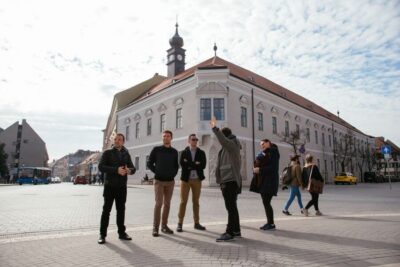
Buda Castle District Walking Tour with a Historian
Read our review →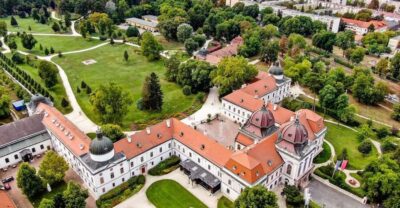

Browse the lists this tour appears in