
Reviewed · BUDA CASTLE TOURS
Budapest: The WWII Siege of Buda Castle & Bomb Shelter Tour
The most powerful part of this tour comes underground, where the Buda Castle Cave and an original bomb shelter make the 1944 to 1945 siege feel close and human. You hear how soldiers, wounded people, and civilians endured darkness, cold, hunger, disease, and overcrowding beneath Castle Hill.
I like the way the tour connects the tunnels to what you can still see above ground, including bullet holes, old doorways, and shelter ventilation shafts. I also like the thoughtful length: 90 minutes is enough time for serious history without turning the visit into an all-day march.
The main drawback is the footing. You walk on cobbles, climb steep stairs, and pass through narrow, sometimes wet corridors. The cave stays around 54°F (12°C), so wear good shoes and bring a warm layer. Claustrophobia and limited mobility are real concerns here.
In This Review
- Key points to know before you go
- Why Buda Castle’s siege story matters
- Starting at Dísz Square and walking Úri Street
- Entering the Buda Castle Cave
- The old cellar and original bomb shelter
- How the guides shape the 90 minutes
- What the route feels like in practical terms
- Is $24 a fair price?
- Who will get the most from this tour?
- Should you book the Buda Castle siege tour?
- FAQ
- Where does the tour start?
- Where does the tour finish?
- How long does the tour last?
- What language is the tour in?
- What is included in the price?
- How much does the tour cost?
- What should I wear?
- Is the tour suitable for people with mobility challenges?
- Is the tour suitable for children?
Key points to know before you go
- The siege lasted 52 days: Learn how Soviet forces encircled Budapest on Christmas Eve 1944 and what followed.
- The underground section is the heart of the tour: Spend about 35 minutes in the Buda Castle Cave and related cellar spaces.
- Survivor accounts shape the story: Diaries and memoirs help explain the human cost behind the military events.
- Guides add personal depth: Rita, Jonas, Kopp, and Balazs are praised for clear explanations, enthusiasm, and thoughtful answers.
- You need steady footing: Expect cobbled streets, stairs, narrow corridors, and solid surfaces that may be wet.
- The tour costs $24: For a small-group English tour with a rare underground site, that is a fair price, especially for visitors interested in wartime history.
Why Buda Castle’s siege story matters
Budapest is often remembered for its grand river views, palace courtyards, and ornate churches. This tour asks you to look at Castle Hill differently. Beneath the handsome streets and rebuilt façades lies the setting for one of the most brutal episodes in the city’s modern past.
On Christmas Eve 1944, the Soviet Red Army encircled German-occupied Budapest. The siege continued for 52 days. Buda Castle became a crowded defensive position and refuge for German and Hungarian troops, wounded soldiers, and civilians.
The underground spaces were not comfortable shelters in the modern sense. People faced little food and water, freezing conditions, poor air, darkness, and disease. Many were also trying to protect possessions and parts of the Royal Palace’s treasures while the fighting destroyed the city above them.
I appreciate that the tour does not treat the siege as a list of troop movements. The guide uses diaries and memoirs to show what daily survival meant. That approach gives you a better sense of why the siege is often compared with Stalingrad, another terrible encirclement battle.
This is difficult material. One participant described the tour as emotionally sad, though worthwhile. You should expect a sober account, not a light sightseeing walk with a few wartime facts added on.
More of Buda Castle and the castle district:
- Budapest: Buda Castle Cave Tour
★ 4.7 · 5,677 reviews - Budapest: Buda Castle District Vampires and Myths Night Tour
★ 4.6 · 3,830 reviews - Budapest: Buda Castle Walk with Saint Stephen’s Hall
★ 4.5 · 3,012 reviews
Starting at Dísz Square and walking Úri Street
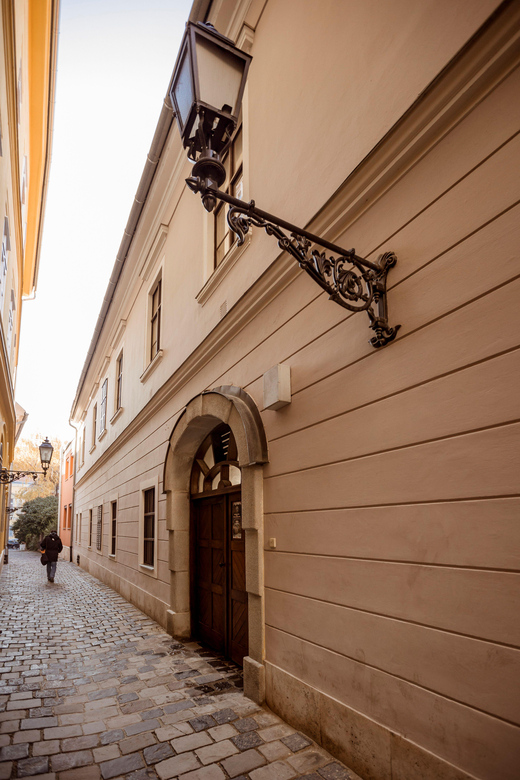
The meeting point is De la Motte B. Palace at Dísz Square 15, beside the Posta building. Look for the large green gate and a staff member with a turquoise umbrella marked with the Buda Castle Walks logo.
Construction or other work around the square can make the starting point harder to spot. Give yourself extra time, especially if you are arriving from another part of Budapest. The group leaves promptly, and the guide cannot wait for late arrivals.
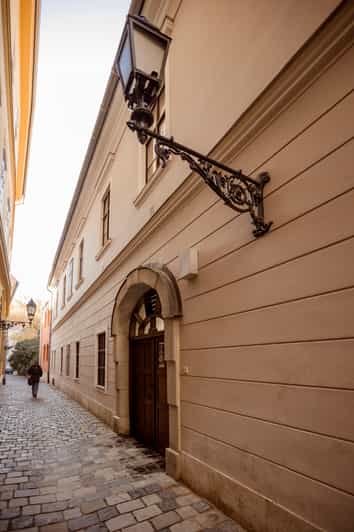
From Dísz Square, the walk heads along Úri Street through the Castle District. This above-ground section is important because it places the caves in their neighborhood setting. You are not simply being taken into an isolated attraction. You first see the old residential quarter where ordinary people lived above the cellar and cave system.
The outdoor portion also lets the guide point out surviving traces of the siege. Bullet holes, concealed doorways, and ventilation shafts connected to public shelters can be easy to miss on your own. Once someone shows you what to look for, the buildings begin to reveal another layer of the district.
The streets are cobbled, so this is not the place for slick fashion shoes. Wear trainers or walking shoes with a firm sole. The route is not suitable for wheelchair users or people with mobility limitations.
Entering the Buda Castle Cave
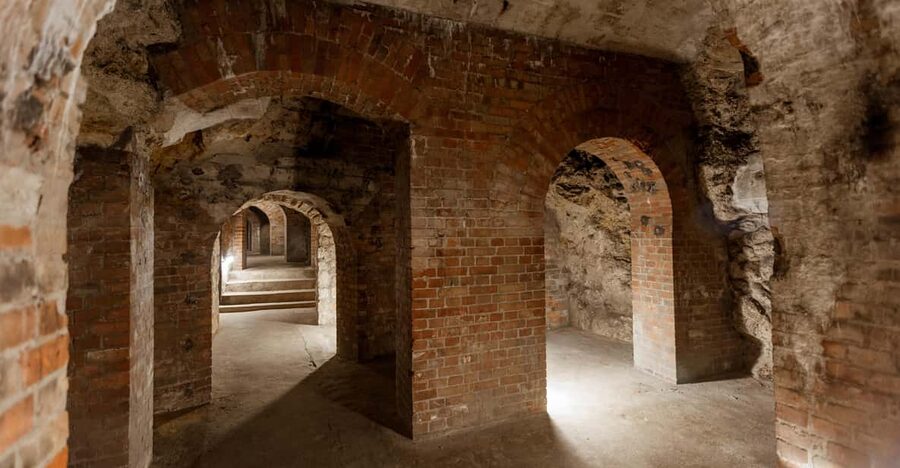
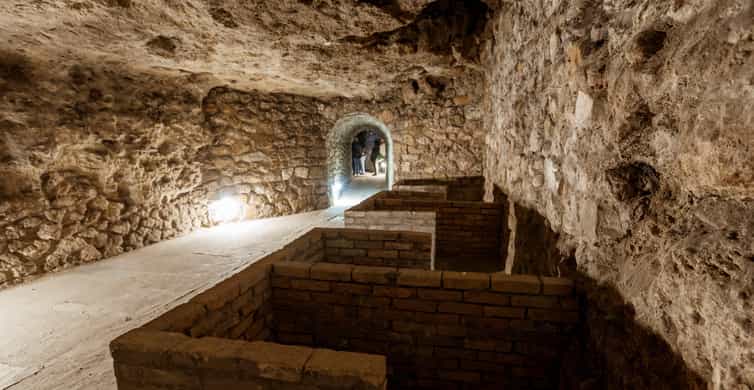
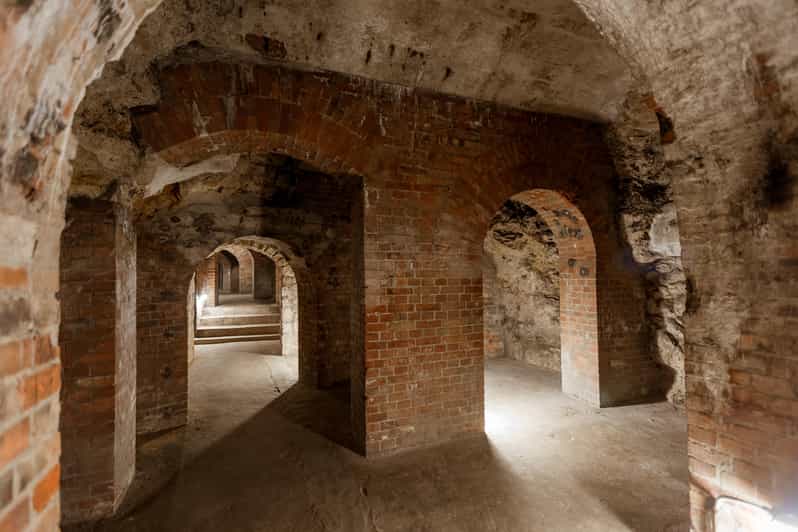
The Buda Castle Cave is the main reason to choose this tour over a standard Castle Hill walk. The cave system extends beneath the historic quarter, linking natural and man-made underground spaces, cellars, and shelters.
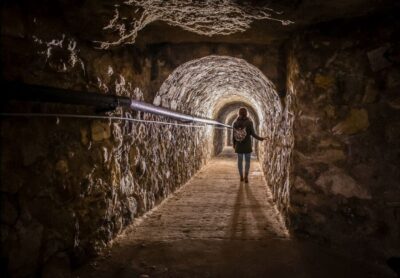
The visit to the cave area lasts about 35 minutes, though the whole programme lasts 90 minutes. You walk through dark but illuminated sections, narrow passages, and steep stairways. The surfaces are solid, but some may be damp, so take your time.
The cave temperature remains about 54°F (12°C) throughout the year. In summer, this can feel refreshingly cool. In winter, it can feel cold, especially if you have just arrived from outdoors. Dress in layers rather than relying on a heavy coat that becomes awkward in tight corridors.
The underground spaces help explain the siege in a way that a museum display cannot. You can picture people sheltering in close quarters, with little light and limited supplies, while fighting continued at street level. The physical setting does not recreate the suffering, but it gives the story scale and texture.
If you dislike tight spaces, consider this carefully. One person specifically noted that the tunnels could feel claustrophobic. The programme is not suitable for people with claustrophobia, and that warning should be taken seriously.
The old cellar and original bomb shelter
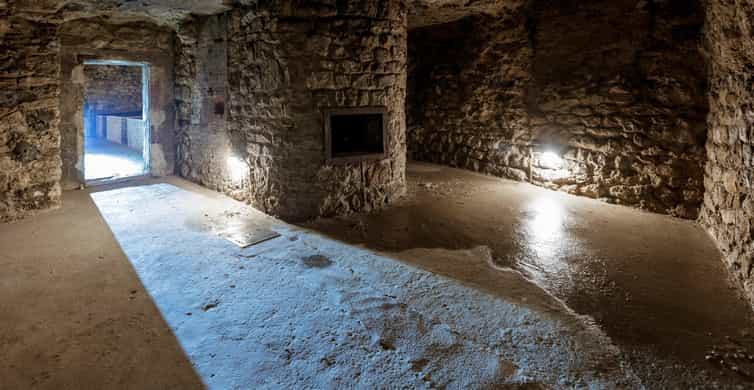
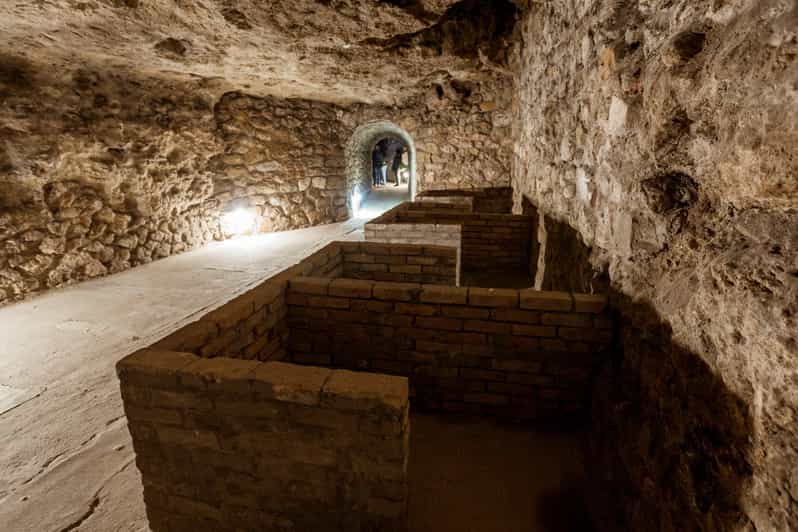
The tour includes the cellar of an old dwelling house and an authentic Second World War bomb shelter. These are especially useful stops because they connect military history with civilian life.
A cellar can sound ordinary on paper, but here it represents the kind of space where people tried to wait out bombardment. The shelter shows how the district’s underground network became part of the city’s survival system. The guide explains how civilians and soldiers shared these spaces, despite very different roles in the conflict.
You also hear about the shortage of water and food, the cold, the darkness, and the spread of disease. The stories of wounded people make the setting more distressing, but they also prevent the siege from becoming an abstract story about armies.
Personal headphones are provided on the tour. That is useful in a cave, where sound can bounce off walls and where the guide may be standing several paces away. They also help when the group is walking between stops.
The underground visit is not a theatrical show. Its value comes from the place itself and from the explanation around it. If you want special effects or a fast-paced attraction, this will feel restrained. If you want context and physical evidence, the shelter is the strongest part of the afternoon.
A different kind of day in Budapest:
- Budapest: City Highlights Cruise with Welcome Drink
★ 4.6 · 35,610 reviews - Budapest: Unlimited Prosecco, Beer and Aperol Spritz Cruise
★ 4.8 · 25,310 reviews - Budapest: Széchenyi Spa Day Ticket with Optional Upgrades
★ 4.3 · 23,911 reviews - Budapest: Nighttime or Daytime Sightseeing Cruise
★ 4.2 · 21,062 reviews
How the guides shape the 90 minutes
The quality of this tour depends heavily on the guide. The strongest reports focus on guides such as Rita, Jonas, Kopp, and Balazs, who bring different strengths to the walk.
Rita is praised for giving detailed background on Budapest before, during, and after the Second World War. That wider context matters because the siege did not happen in isolation. You need some understanding of the city’s wartime position to see why Castle Hill became so important.
Jonas is described as easy to listen to, engaging, and well informed. His explanations help keep the walk moving without losing the thread. One useful point to keep in mind is that pronunciation may vary by guide, and one participant found Jonas occasionally difficult to understand as a non-native English speaker.
Kopp is praised for enthusiasm and for answering questions beyond the planned subject. His style suits people who want to connect the siege with wider questions about politics and history. He also points out details above ground, which can encourage you to explore the Castle District again after the tour.
Balazs is described as passionate about the period and especially strong at explaining what civilians endured below the castle. These names are drawn from recent guide experiences, but your assigned guide may be different.
The tour is in English. A small group makes it easier to hear, ask questions, and keep pace. Headphones also help, though you should still stay close to the guide through the darker areas.
What the route feels like in practical terms
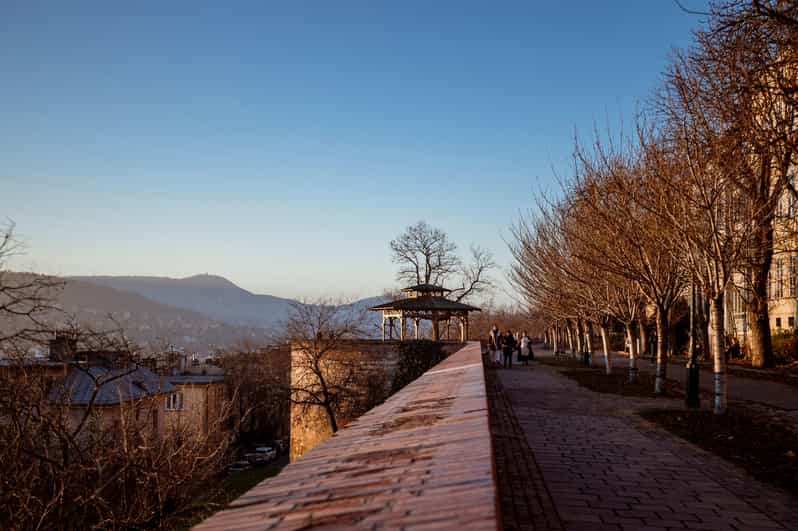
This is an outdoor and indoor programme, not a simple cave visit. You begin in the Castle District, move through Úri Street and nearby roads, enter cellar and cave spaces, then continue along Lovas Way before finishing at Szentháromság Square.
The finish at Szentháromság Square is useful for continuing your visit. You are left near one of the best-known parts of the Castle District, rather than returned to the starting point. Plan your route afterward with that in mind.
The walk includes a good amount of movement. One participant called attention to how much walking is involved, while another found the length just right. I would describe it as manageable for anyone comfortable with a 90-minute city walk, but not ideal if you need frequent seating or have trouble with stairs.
The tour runs in all weather, including rain. Bring water and a snack, especially if you are fitting it between other Castle Hill visits. Comfortable shoes are essential, and a warm layer is useful even during warm weather because of the cave temperature.
The tour is recommended for ages 14 and older. The subject matter is serious, and the physical conditions are better suited to teenagers and adults than younger children.
Is $24 a fair price?
At $24 per person, this is good value if you want more than the standard Castle Hill sights. The fee covers an English guided walk through the Palace District and entry to the Buda Castle Cave, including the underground bomb shelter experience.
You are paying for three things at once: access to a place you might not understand on your own, a clear account of the siege, and help spotting small wartime traces above ground. The cave visit gives the tour a physical focus, while the guide’s storytelling gives it meaning.
The price is less compelling if you have little interest in the Second World War or if underground spaces make you uncomfortable. Much of the appeal depends on listening carefully and accepting a serious subject. This is not a general city highlights tour.
Free cancellation up to 24 hours before the start gives you some flexibility, and you can reserve now and pay later. Check the available start times when booking, since the exact departure time varies.
Who will get the most from this tour?
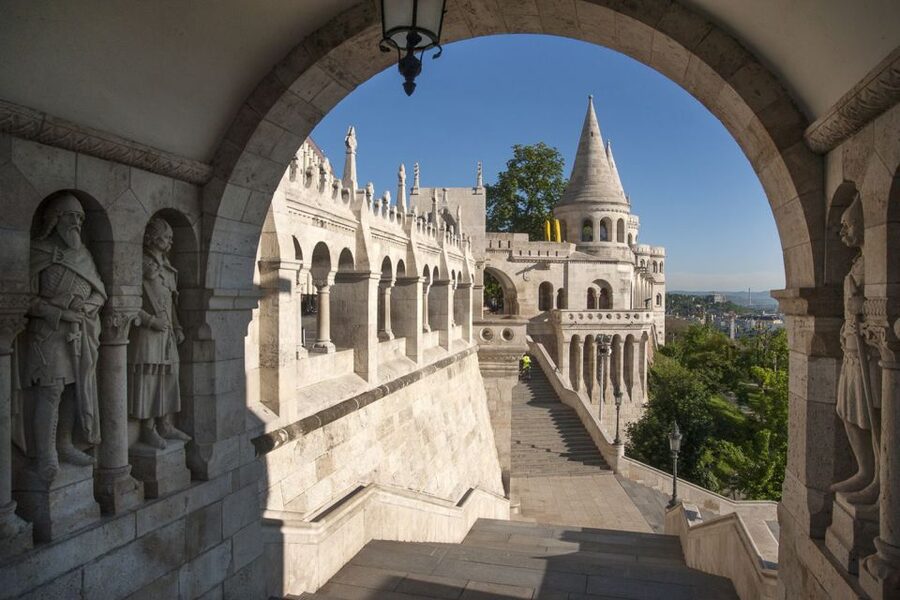
I would choose this tour for a visitor who has already seen the Matthias Church and Fisherman’s Bastion, or who wants a different side of Buda Castle from the usual postcard views.
It suits:
- People interested in the Second World War and Central European history
- Visitors who prefer personal accounts to broad sightseeing commentary
- Anyone curious about Budapest’s underground spaces
- Students of history, politics, or philosophy
- Adults and older teenagers who can manage stairs and uneven ground
- Visitors who want a focused activity lasting only 90 minutes
I would skip it if you want a relaxed, sunny walk or if you dislike enclosed spaces. You should also choose another Castle Hill activity if cobbles, steep stairs, or damp surfaces are difficult for you.
The tour can also work well early in a Budapest visit because it gives the Castle District added meaning. Afterward, you may notice details you would otherwise walk past, such as damage in old walls or the signs of former shelter systems.
Should you book the Buda Castle siege tour?
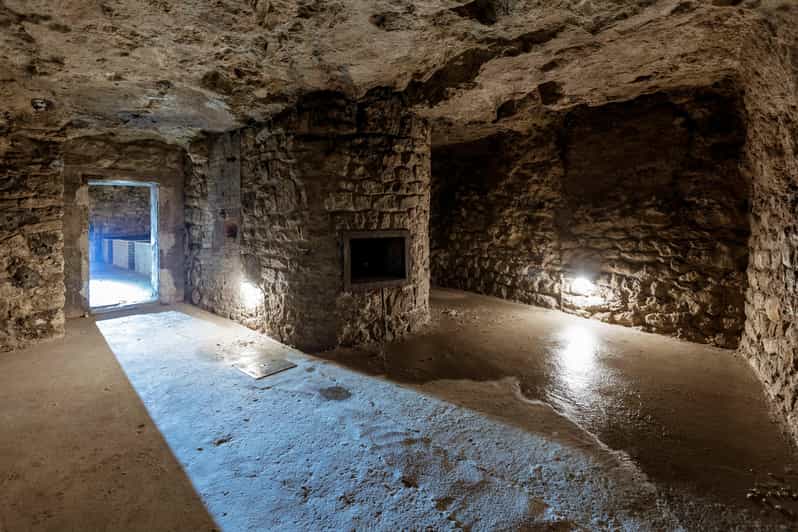
Book it if you want to understand what happened to people inside Buda Castle during the final months of the war, not just admire the restored buildings. The combination of survivor accounts, cellar spaces, the bomb shelter, and visible traces above ground gives the 52-day siege a clear human scale.
At $24, the tour offers solid value, especially for history-focused visitors. Just arrive early at the green gate on Dísz Square, wear shoes that can handle stairs and cobbles, and bring a layer for the 54°F cave.
Skip it if you are claustrophobic, have mobility challenges, or prefer cheerful sightseeing. For the right visitor, this is a moving and unusually grounded way to see Buda Castle.
FAQ
Where does the tour start?
It starts at De la Motte B. Palace, 1014 Budapest, Dísz tér 15, beside the Posta building. Meet at the large green gate and look for the turquoise Buda Castle Walks umbrella.
Where does the tour finish?
The tour finishes at Szentháromság Square, also called Szentháromság tér.
How long does the tour last?
The full tour lasts 90 minutes. The visit to the Buda Castle Cave takes about 35 minutes.
What language is the tour in?
The tour is conducted in English with a live guide.
What is included in the price?
The price includes the guided English walking tour through the Palace District and the Buda Castle Cave.
How much does the tour cost?
The listed price is $24 per person.
What should I wear?
Wear comfortable walking shoes and dress in layers. The cave and cellar remain around 54°F (12°C) all year, and some surfaces can be wet.
Is the tour suitable for people with mobility challenges?
No. The route includes cobbled streets, steep stairs, narrow corridors, and solid surfaces that can be wet. It is not suitable for wheelchair users or people with mobility impairments.
Is the tour suitable for children?
The programme is recommended for ages 14 and older and is not suitable for children under 14.
Recently added around Budapest
- Hiking + Chairlift ride + viewpoints in Budapest★ 5.0 · 3 reviews
- FoolsCode: EscapeRoom/Sightseeing tour with Actor Tourguide★ 5.0 · 3 reviews
- Grand Budapest tour with private transportation★ 5.0 · 3 reviews
- Budapest: Private Customizable Tour in French★ 5.0 · 3 reviews
- Budapest: Private, Personalized Pub Crawl, 3 drinks included★ 4.5 · 3 reviews
- Budapest Drinks and Piano Show Cruise★ 4.5 · 3 reviews
- Discover Budapest Using Tram Two★ 5.0 · 3 reviews
- Budapest: Private 3-Hour Gödöllő Palace Tour★ 4.9 · 3 reviews
Buda Castle Tours, compared.

Buda Castle District Vampires and Myths Night Tour
Read our review →
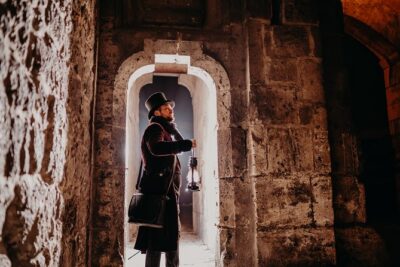
Buda Castle District Dark History, Legends and Vampire Night Tour
Read our review →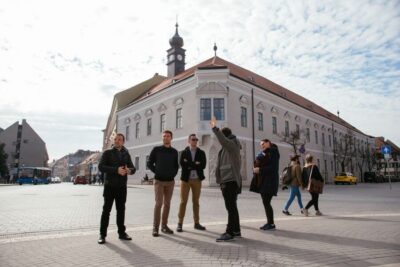
Buda Castle District Walking Tour with a Historian
Read our review →
Browse the lists this tour appears in