
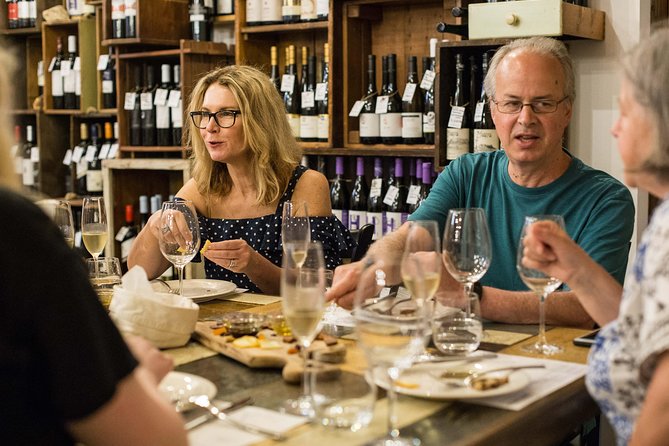
Reviewed · HUNGARIAN WINE TASTINGS
Hungarian Wine Tasting (with Cheese and Charcuterie) in Budapest
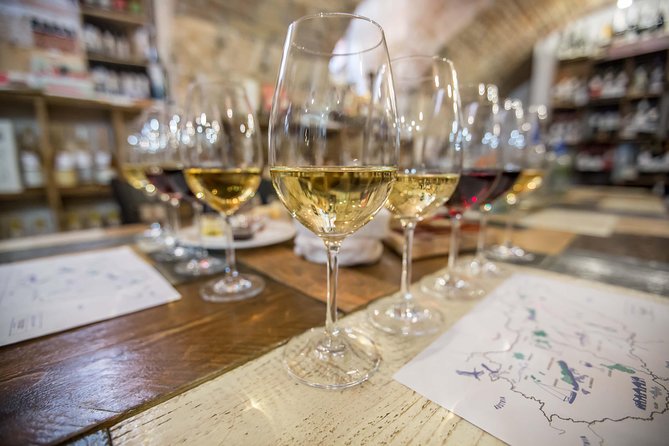
Hungary’s wine culture comes into focus over five generous glasses in a vaulted 19th-century cellar. At Taste Hungary’s Tasting Table Cellar, your sommelier connects native grapes, soil, food, and the country’s changing past without turning the afternoon into a lecture.
I like the rare Hungarian varietals and the chance to taste wines that can be difficult to find outside the country. I also like the food pairing: four cheeses, four cured meats, bread, and water give the wines a useful local setting. The main consideration is quantity. The board is good quality, but some people may find it a little modest for a $50 tasting, especially if they arrive hungry.
In This Review
- Key points to know before booking
- A Budapest wine lesson beneath vaulted ceilings
- Five glasses that show more than one side of Hungary
- Local cheese and charcuterie make the wines easier to understand
- What the 90-minute schedule feels like
- The history behind Hungary’s food and wine revival
- Is $50 a fair price for the tasting?
- Who will enjoy this most?
- Practical details that matter on the day
- Should you book the Hungarian wine tasting?
- FAQ
- How long does the Hungarian wine tasting last?
- What time does the experience start?
- Where does the tasting take place?
- How many wines are included?
- What food is included?
- Can vegetarians participate?
Key points to know before booking
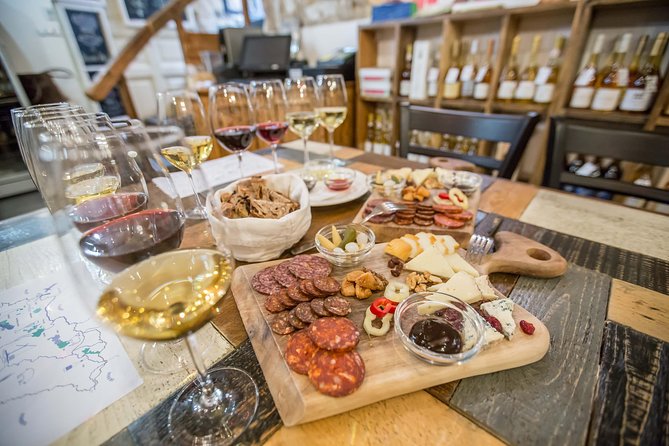
- Five Hungarian wines: Taste indigenous grape varieties and examples from several wine regions.
- Local food pairings: The board includes four cheeses, four cured meats, artisan bread, and mineral water.
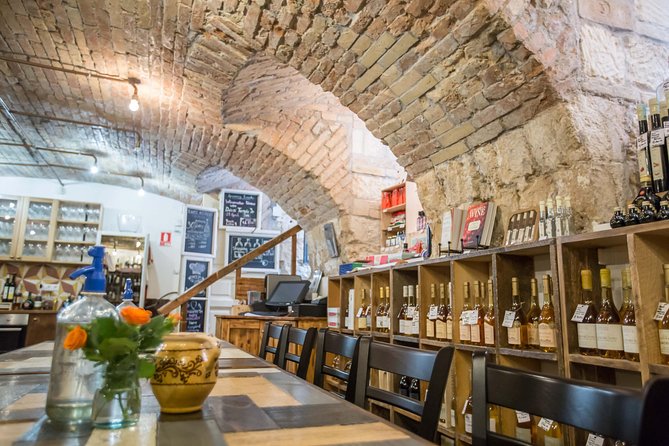
- Historic cellar setting: The vaulted room dates to the 19th century and gives the tasting a genuine sense of place.
- A real wine lesson: Your sommelier covers grapes, soils, regions, winemaking, and Hungary’s wine past.
- Communal seating: You sit at shared tables, which can be a pleasant way to meet people from different countries.
- Easy afternoon timing: The tasting starts at 3 p.m., lasts about 90 minutes, and ends where it begins.
A Budapest wine lesson beneath vaulted ceilings
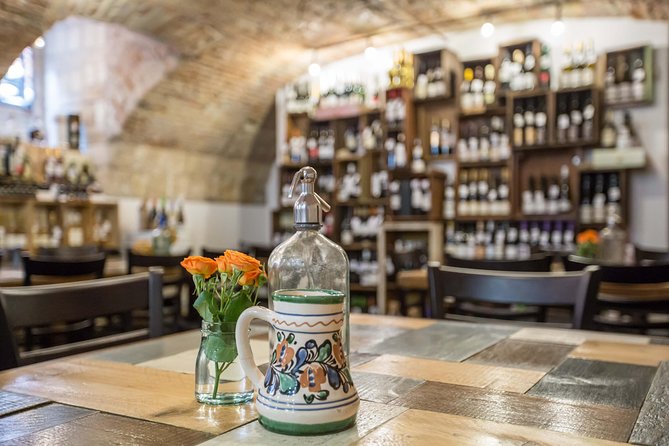
The experience begins at Tasting Table Cellar, Bródy Sándor u. 9, in Budapest’s eighth district. You meet your host at the cellar and take a seat at a communal table. The room’s old vaulted ceiling does much of the work here. You are not tasting wine in a bright hotel meeting room. The setting feels tied to the city and to the long tradition of storing and drinking wine underground.
The English-language session is led by a sommelier. Hosts named in the experience include Sam, Thomas, Tomas, Matthew, and Cleveland John, so the exact personality at the front of the room can vary. The useful constant is the format: you get a guided explanation of Hungarian wine rather than a simple flight of glasses placed in front of you.
That matters in Hungary. The country is not just a place where familiar international grapes are made. It has native varieties and distinct wine areas that may be new to you. A good guide helps you notice the difference between tasting an unfamiliar grape and simply deciding that you do not like it.
You receive tasting sheets and a map of Hungarian wine regions. Use them. The map gives the discussion a geographic anchor, while the sheet helps you remember a wine you may want to seek out later. The hosts are open to questions, so this is suitable for a serious wine enthusiast and for someone who normally feels lost when people start talking about acidity, soil, or grape clones.
More Hungarian wine regions:
- Budapest: Premium Sightseeing Cruise with Tokaj Frizzante
★ 4.7 · 2,510 reviews - From Budapest: Etyek Wine Tasting Tour with 3-Course Meal
★ 4.8 · 557 reviews - Budapest River Cruise with 1 Free Tokaj Frizzante and Audio Guide
★ 4.5 · 473 reviews
Five glasses that show more than one side of Hungary
The tasting includes five glasses made from indigenous Hungarian grape varieties, including harder-to-find local wines. The point is variety, not a single grand finale. You move through different styles and regions, gaining a broad first look at the country’s wine production.
The exact wines are not specified in advance, so I would not book this expecting a fixed bottle list. That flexibility can be useful because the selection may reflect what the provider wants to present at the time. It also means you should ask your sommelier to write down the names of any bottles you particularly enjoy.
The conversation covers grape types, growing areas, soil composition, and the science of winemaking. That last point is especially helpful. You learn not only what is in the glass, but why it may taste as it does. The guide also explains the history of Hungarian viticulture and how wine production changed over time.
One well-liked part of the format is the balance between instruction and breathing room. The sommelier explains each wine, then allows time to taste it with the food. A 90-minute session can feel brisk if every pour becomes a long technical discussion, so the best approach is to ask questions as you go and make notes while the glass is still in front of you.
A sweet Tokaji wine may appear near the end, though the exact order and selection can change. Tokaji gives the tasting a memorable finish and introduces one of Hungary’s best-known wine traditions. Even if you usually prefer dry wine, it is worth paying attention to how the sweetness, acidity, and food work together.
Local cheese and charcuterie make the wines easier to understand
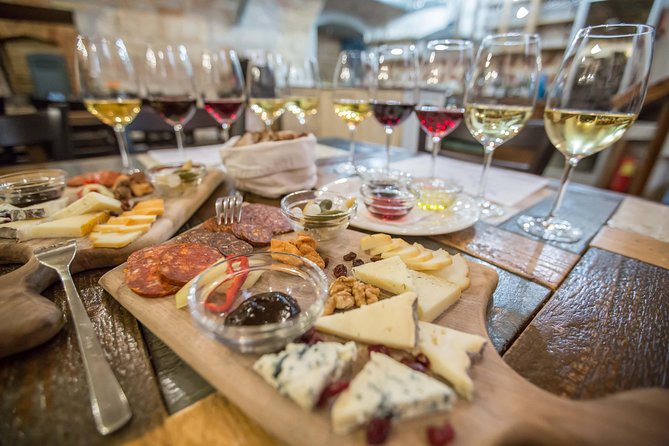
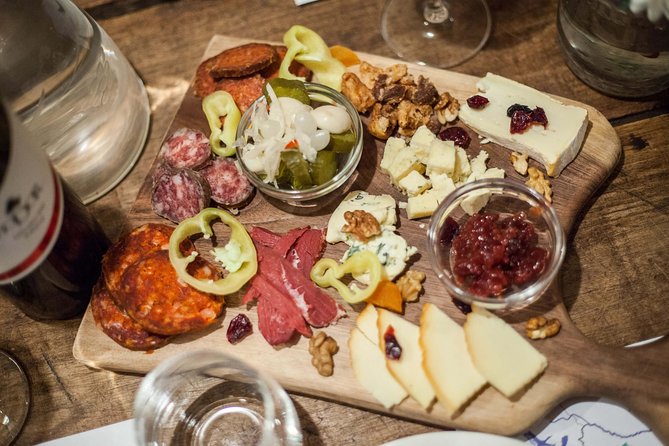
The food is not an afterthought. You receive four kinds of cheese and four kinds of cured meat, along with fresh artisan bread and mineral water. The selection can include beef sausage, smoked duck breast, free-range water buffalo salami, and Mangalica pork sausages.
That is a useful introduction to Hungarian food culture. Mangalica pork, in particular, gives you a taste of a prized local product, while the duck, beef, and buffalo offer different textures and levels of smoke or seasoning. The cheeses help show how a wine changes when tasted alone and then with something creamy, salty, or savory.
The food pairing is one of the strongest reasons to choose this over a basic bar tasting. Wine can seem sharp or plain when tasted on its own. A bite of cured meat or cheese can bring out fruit, soften acidity, or make a dry finish easier to understand.
Still, keep your expectations sensible. This is a tasting board, not dinner. The products are described as high quality, but the portions may not satisfy someone arriving without lunch. If you want a full meal, eat beforehand or plan dinner afterward. Extra food and drinks are not included.
Vegetarians can take part if alternatives are requested in advance. Do not wait until you sit down to mention it. The standard board centers on cured meats, so early notice gives the team time to prepare suitable replacements.
What the 90-minute schedule feels like
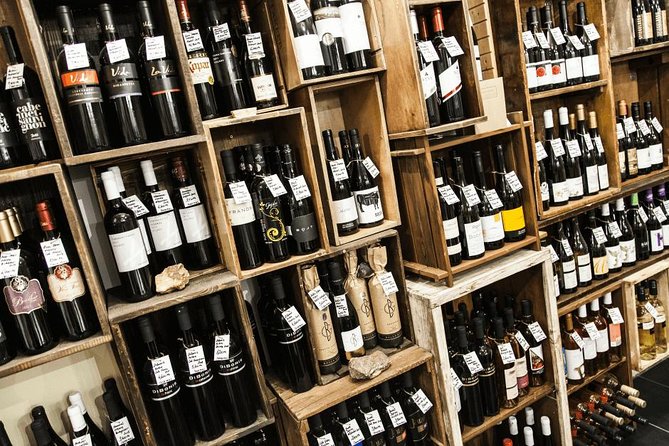
The advertised duration is approximately one hour and 30 minutes. A typical flow is straightforward:
- You arrive for the 3 p.m. start and meet the sommelier.
- The host introduces Hungarian wine regions, grapes, and the tasting format.
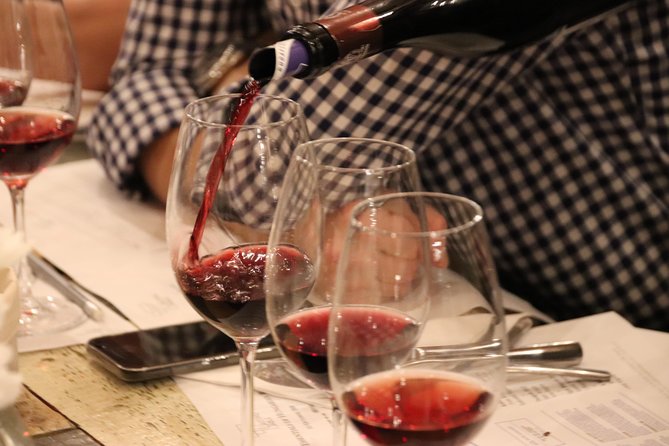
- Five wines are poured and discussed alongside the cheese and charcuterie.
- You have time to taste, ask questions, and make notes.
- The session finishes back at the cellar.
The communal table is part of the experience. If you come alone, you are not placed in a private corner. You may share the table with people from the United Kingdom, Poland, the United States, and elsewhere. That can make the afternoon more social and relaxed, though it is worth knowing if you prefer a quiet, private tasting.
The maximum group size is 24 people. That is large enough for a social room but still small enough for a guide to address questions. The actual feel will depend on attendance and seating. A full group may mean less individual attention, while a smaller one can give the sommelier more time to discuss your preferences.
Pacing deserves a small warning. Most of the appeal comes from having enough time to listen and taste, but the room may need to prepare for a later group. If you want a long, leisurely tasting with extended conversation over every bottle, this may feel structured. If you want a clear introduction before an evening in Budapest, the 90-minute schedule works well.
More Budapest wine tastings:
- Countryside Half-day Gastro-Wine Tour from Budapest Meal & pickup
★ 5.0 · 1,450 reviews - Budapest Centre Food Tour with 10+ Tastings, Wine & Street Food
★ 5.0 · 810 reviews - Budapest: Wine, Cheese, and Charcuterie Tasting
★ 4.9 · 647 reviews - Budapest Cooking Class & Market Tour with Local Guide & Wines
★ 5.0 · 553 reviews
The history behind Hungary’s food and wine revival
The tasting also places modern Hungarian products in a wider context. You hear about the revival of artisanal cheese and charcuterie after the end of the Communist era. That background helps explain why small-scale producers and traditional specialties matter today.
This is not just a list of local foods. It shows how the country’s food culture has changed and how producers have returned attention to quality, regional identity, and craft. The same broad story appears in the wine discussion, where native grapes and local regions receive more attention than they might have in a mass-market setting.
I find this historical layer valuable because it gives the tasting a reason to exist beyond drinking five glasses. You begin to understand why a bottle from a lesser-known Hungarian region can matter, even if you had never heard of the grape before arriving in Budapest.
The guide’s style makes a difference. Sam, Thomas, Tomas, Matthew, and Cleveland John are all associated with sessions of this type, and the strongest descriptions of the experience emphasize hosts who are engaging as well as technically informed. You do not need a wine vocabulary to participate. The sommelier explains the material for mixed groups, not only for industry professionals.
Is $50 a fair price for the tasting?
At $50 per person, this is not the cheapest way to drink wine in Budapest. You could order a glass and a snack for less. But a fair comparison includes five pours, eight food samples, bread, water, the cellar setting, printed tasting material, and a professional guide.
The value is strongest if you want an introduction to Hungarian wine and expect to ask questions. You are paying for context as much as for liquid. The map and tasting sheet also have practical value if you plan to visit wine shops, explore regional bottles, or take a vineyard trip later.
The value is weaker if you mainly want a large meal or full glasses of wine. The board is designed for pairing, and additional food or drinks cost extra. Someone who does not care about wine explanations may find the price harder to justify.
For wine lovers, the possibility of tasting bottles that are hard to locate elsewhere improves the calculation. You may also discover producers or grapes you want to buy during your stay. The tasting is connected to Taste Hungary, and some participants have gone on to order wines for delivery after returning home, though purchasing wine is not part of the stated package.
Who will enjoy this most?
I would recommend this experience to you if you fit one of these descriptions:
- You want a clear introduction to Hungarian wine before visiting more wine bars or regions.
- You like pairing wine with cheese and cured meat.
- You enjoy food history and want more than a list of tasting notes.
- You are traveling alone and do not mind shared seating.
- You already know wine and want to explore native Hungarian grapes.
- You want a weather-proof afternoon activity in central Budapest.
It also works well for couples and small groups. You can compare impressions as you taste, but you do not need to arrive with a full party. The social format means solo participants can easily become part of the conversation.
This is less suitable if you need a private table, dislike communal seating, or expect a substantial lunch. It may also disappoint someone seeking a vineyard visit. You stay in the Budapest cellar, so you learn about the regions without seeing the vineyards themselves.
The legal drinking age is 18, and anyone aged 18 or older can participate. Most people can take part, and the cellar is near public transportation. The experience is offered in English.
Practical details that matter on the day
The meeting point is Tasting Table Cellar, Bródy Sándor u. 9, 1088 Budapest. The activity ends at the same location, which makes it easy to continue into the city afterward rather than arranging a return transfer.
The listed start time is 3 p.m. Arrive ready to begin, especially if you want to settle into the shared table and look over the map before the first pour. Since the tasting includes five wines, avoid treating it as a quick pre-dinner drink. It is a structured alcohol tasting, and the food is there to accompany the wine rather than replace a meal.
Mobile tickets are accepted. Confirmation is sent at booking, and the minimum group requirement means the provider can cancel if too few people sign up. If that happens, you are offered another date or experience, or a full refund.
The cancellation rule is strict: the booking is non-refundable and cannot be changed for any reason. Check your Budapest schedule before committing, particularly if you are moving between cities or booking several activities on the same day.
Should you book the Hungarian wine tasting?
Book it if you want a friendly, well-organized introduction to Hungarian wine with real local food and a memorable cellar setting. The strongest parts are the five native-grape wines, the sommelier’s explanations of regions and soils, and pairings that include Mangalica pork, smoked duck, buffalo salami, and Hungarian cheeses.
Think of it as a tasting class with snacks, not a full meal or a vineyard tour. Eat something earlier, request vegetarian substitutions in advance, and leave room in your schedule for the pace to vary. For $50, it is a solid choice for curious drinkers who want to understand what they are tasting, not simply check wine off a list.
FAQ
How long does the Hungarian wine tasting last?
The tasting lasts approximately one hour and 30 minutes.
What time does the experience start?
The listed start time is 3 p.m.
Where does the tasting take place?
It takes place at Tasting Table Cellar by Taste Hungary, at Bródy Sándor u. 9, 1088 Budapest.
How many wines are included?
Five glasses of Hungarian wine are included, with selections made from indigenous Hungarian grape varieties.
What food is included?
The tasting includes four kinds of cheese, four kinds of cured meat, fresh artisan bread, and mineral water. The food may include specialties such as beef sausage, smoked duck breast, free-range water buffalo salami, and Mangalica pork sausages.
Can vegetarians participate?
Yes. Vegetarians are welcome, but you need to request alternative food in advance so it can be prepared.
More Food Tours in Budapest
- Budapest: Unlimited Prosecco, Beer and Aperol Spritz Cruise
★ 4.8 · 25,310 reviews - Budapest: Unlimited Prosecco, Beer & Aperol Spritz Cruise
★ 4.5 · 3,371 reviews - Budapest: Guided Foodie Walking Tour with Food and Drinks
★ 4.9 · 453 reviews - Budapest Food Tour: Market to Tavern with 14+ Tasters & Wines
★ 5.0 · 434 reviews
More Cheese in Budapest
- Evening Wine, Cheese, & Charcuterie Tasting in Budapest
★ 5.0 · 121 reviews - Budapest Private Tuk Tuk Tour with Wine Tasting and Cheese Platter
★ 4.5 · 35 reviews
Recently added around Budapest
- Hiking + Chairlift ride + viewpoints in Budapest★ 5.0 · 3 reviews
- FoolsCode: EscapeRoom/Sightseeing tour with Actor Tourguide★ 5.0 · 3 reviews
- Grand Budapest tour with private transportation★ 5.0 · 3 reviews
- Budapest: Private Customizable Tour in French★ 5.0 · 3 reviews
- Discover Budapest Using Tram Two★ 5.0 · 3 reviews
- Budapest: Private, Personalized Pub Crawl, 3 drinks included★ 4.5 · 3 reviews
- Budapest Drinks and Piano Show Cruise★ 4.5 · 3 reviews
- Budapest: Private 3-Hour Gödöllő Palace Tour★ 4.9 · 3 reviews
Hungarian Wine Tastings, compared.
Premium Sightseeing Cruise with Tokaj Frizzante
Read our review →

Budapest River Cruise with 1 Free Tokaj Frizzante and Audio Guide
Read our review →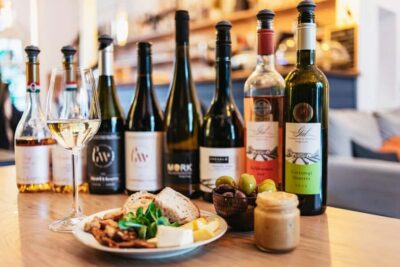
Budapest Paddle Steamer Danube Cruise with Tokaj & Audio Guide
Read our review →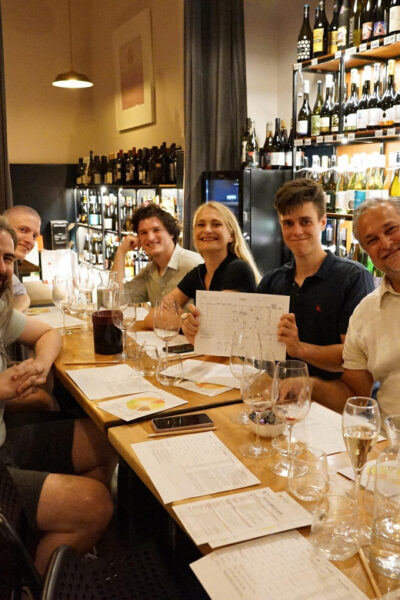
8-Tier Hungarian Wine Tasting in a Cozy Downtown Wine Bar
Read our review →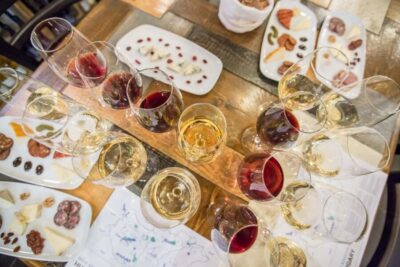
Browse the lists this tour appears in