
Reviewed · HUNGARIAN WINE TASTINGS
Budapest: Essentials of Hungarian Wine Tasting Class
Hungary’s wine story is far more interesting than most visitors expect, and this two-hour class gives you a useful map of it, glass by glass. You’ll taste eight wines, hear how soil and climate shape them, and finish with sweet Tokaj aszú. Tomas, Carlos, John, and Sebastian are among the hosts who have led sessions here.
I especially like the direct connection to small producers and the generous food pairings of Hungarian cheese, meats, bread, and other local flavors. The old cellar setting near the National Museum adds atmosphere, while the relaxed format makes it easy to meet people from other countries. The one caution is that the pours can be closer to small glasses than formal tasting sips, so pace yourself.
In This Review
- Key points to know before booking
- Why Hungarian wine deserves two hours of your Budapest time
- Arriving at The Tasting Table Budapest
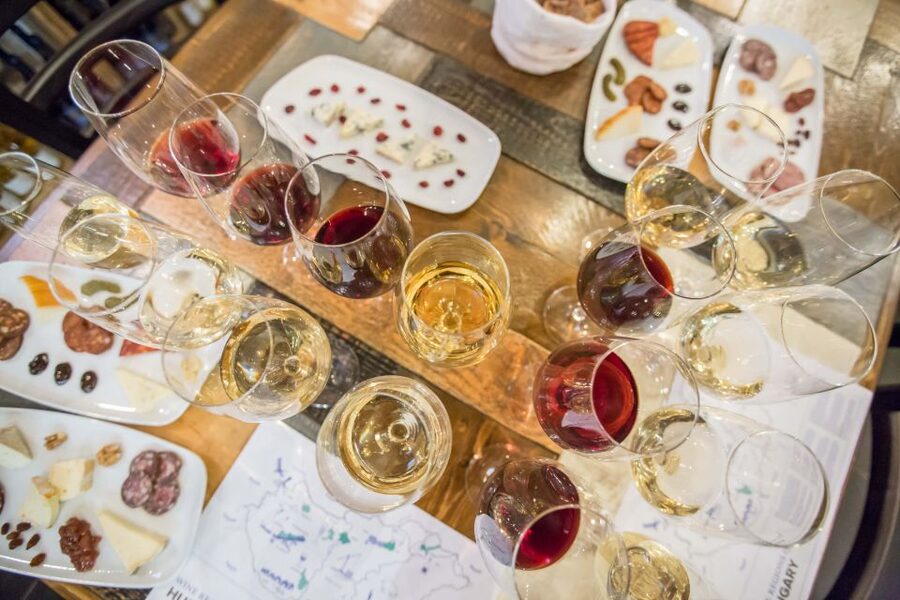
- The first glass: an aperitif and a sense of place
- White wines, red wines, and the Hungarian grape lesson
- Local cheese, charcuterie, and a filling evening meal
- Ending with Tokaj aszú
- The social side of the shared table
- How to get the most from the tasting
- Who will get the most from this class
- Is $65 a fair price?
- Should you book the Hungarian wine tasting class?
- FAQ
- Where does the Hungarian wine tasting take place?
- How long does the activity last?
- How many wines are included?
- Is the tasting held in English?
- What food is included?
- Is mineral water provided?
- Do I need previous wine experience?
- What is the minimum age?
- How close is the venue to public transport?
- Can I cancel for a refund?
Key points to know before booking
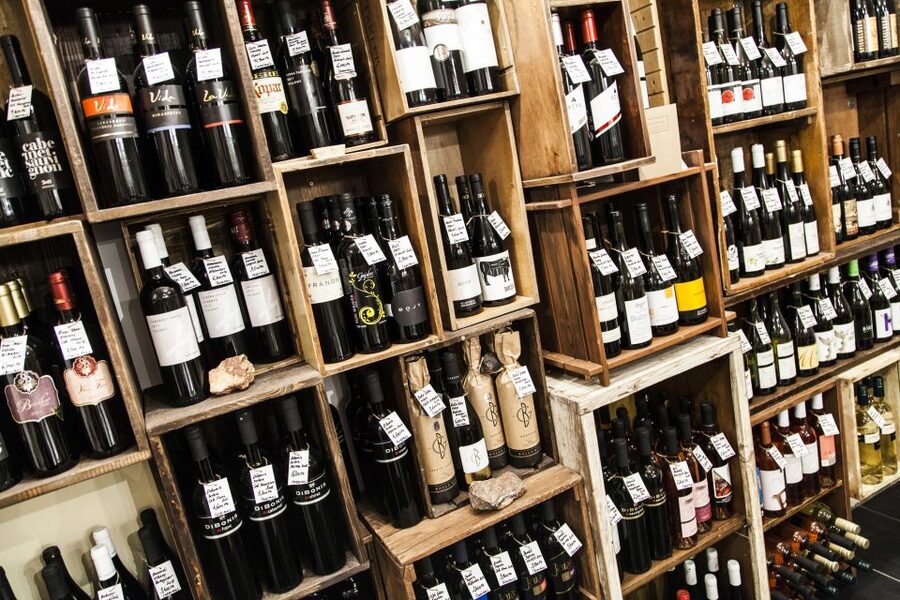
- Eight wines tell a broad Hungarian story: Expect an aperitif, whites, reds, perhaps a rosé, and a botrytised Tokaj aszú.
- The class is led in English: Hosts including Tomas, Carlos, John, and Carlos have been praised for warmth, humor, and clear explanations.
- Food is part of the value: Cheese, charcuterie, bread, and Hungarian flavors make the tasting feel substantial.
- The location is easy to reach: The Tasting Table Budapest is five minutes from Astoria or Kálvin tér, and only 150 meters from the National Museum.
- It is social, not stiff: You taste around a shared table, with time to talk between explanations.
- Plan for real alcohol intake: Eight pours over two hours can leave you tipsy, especially if you do not spit.
Why Hungarian wine deserves two hours of your Budapest time
Hungary is best known abroad for Tokaj, but stopping with sweet wine would give you only one chapter of the story. The country has several wine regions, many grape varieties, and styles that can surprise anyone used to the usual French, Italian, Spanish, or New World lineup.
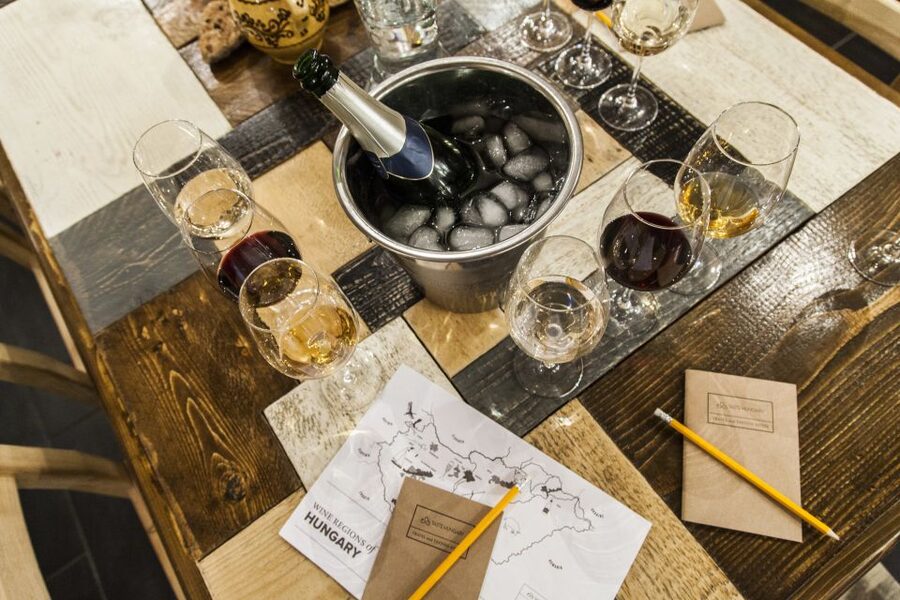
This class gives you a practical introduction without asking you to spend a day reaching a vineyard. You learn where the main wine regions sit on a map, how Hungary’s winemaking past shaped the present, and which grapes matter now. The aim is not to turn you into a sommelier in one evening. It is to help you recognize what makes Hungarian bottles worth seeking out during the rest of your trip.
I like that the wines are bought directly from producers the team has come to know over time. That matters because the selection is not simply a parade of famous labels. The bottles are chosen to illustrate a point, often with an emphasis on smaller producers and less familiar grapes.
The class also gives you a better chance of ordering well in a Budapest restaurant. You may leave with a few names, styles, or regions to look for, rather than a vague sense that the country makes good wine.
More Hungarian wine regions:
- Budapest: Premium Sightseeing Cruise with Tokaj Frizzante
★ 4.7 · 2,510 reviews - From Budapest: Etyek Wine Tasting Tour with 3-Course Meal
★ 4.8 · 557 reviews - Hungarian Wine Tasting (with Cheese and Charcuterie) in Budapest
★ 5.0 · 531 reviews
Arriving at The Tasting Table Budapest
The meeting point is The Tasting Table Budapest at Bródy Sándor utca 9, in District VIII. It is just 150 meters from the National Museum, so it fits neatly into an evening that begins around the museum quarter.
From Astoria on metro line M2 or Kálvin tér on metro line M3, allow about five minutes on foot. Trams 47 and 49 also serve both areas. This is useful after a full day of sightseeing because you do not need a special wine-country excursion or a complicated transfer across the city.
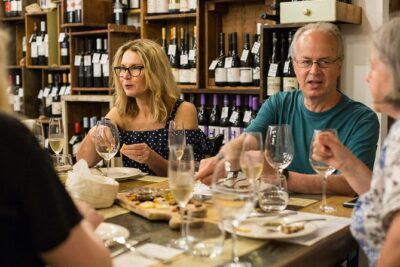
The venue is described as a shop and tasting room, with an old brick cellar that gives the evening a little character. It is not a grand palace dining room, and that is part of its appeal. The setting feels suited to bottles, conversation, and a plate of food rather than formal ceremony.
Arrive ready to listen, but do not worry about dress or wine expertise. The experience is intended for anyone curious about Hungarian wine. Several hosts, including Carlos and John, have been praised for making the room feel friendly and unpretentious.
The first glass: an aperitif and a sense of place
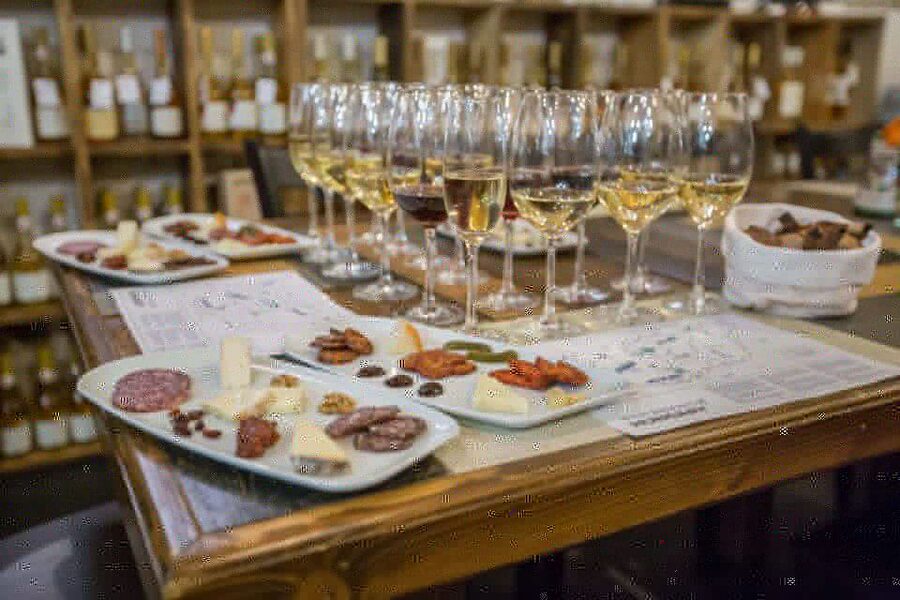
The tasting usually begins with an aperitif. This opening glass eases you into the session and gives the sommelier a natural starting point for the basics: how the evening will work, what to notice, and why the wines have been placed in their particular order.
You will receive tasting sheets and a map of Hungarian wine regions. Use them. The information comes quickly, and even simple notes can help later when you are standing in a wine shop trying to remember which bottle had the style you liked.
The opening portion also sets the tone. This is not a silent exam in which you must identify aromas correctly. You can ask questions, compare impressions with people at the table, and listen for the larger themes. Hosts such as Sebastian, Christian, and Nikki have been praised for making the subject accessible to people who do not know much about wine.
White wines, red wines, and the Hungarian grape lesson
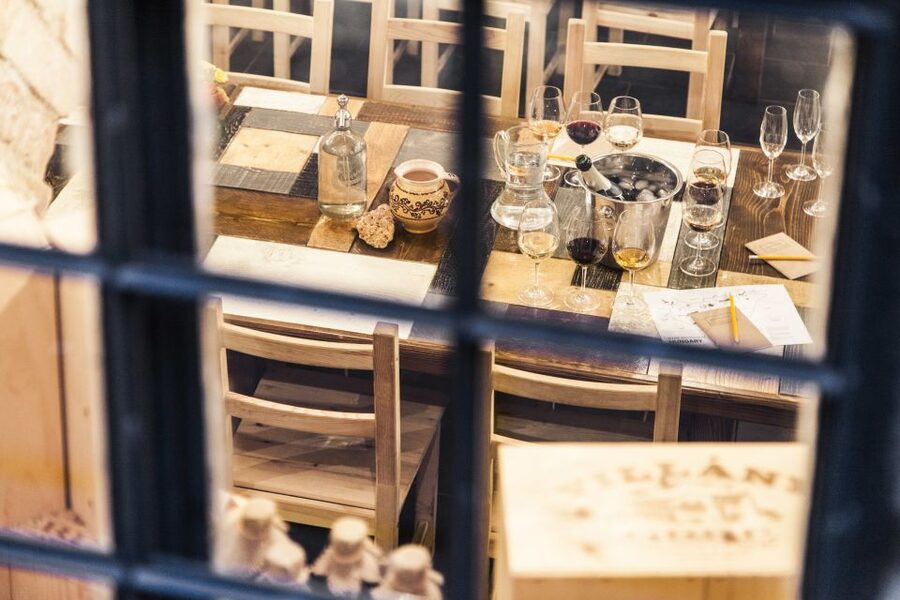
After the aperitif, the class moves through whites and reds, with a rosé possible depending on the selection. The exact bottles can change, which is useful if you return to Budapest for another session, but it also means you should not book this expecting a fixed bottle list.
This middle section is the heart of the class. You are introduced to major regions, important grapes, and the effect of climate and soil on flavor. A good host does not merely tell you if a wine is dry, fruity, light, or full-bodied. You also hear why it tastes that way and how it fits into Hungarian winemaking.
That regional context is one of the strongest reasons to book. Hungary is not one uniform wine area, and tasting several styles in one sitting makes the differences easier to grasp. You can compare wines from different parts of the country instead of trying to remember separate facts from a shop shelf.
Hosts have included Tomas, Carlos, John, and others, and the teaching style can vary. Some sessions are highly conversational. Some contain a lot of detail. One evening reportedly became an extended discussion lasting about two and a half hours, while another class member found the amount of information a little heavy. If you enjoy history, geography, and grape facts, that detail will likely be welcome. If you prefer a simple social tasting, the presentation may occasionally feel dense.
The best approach is to treat the class as a guided conversation, not a lecture you must memorize. Take notes on the bottles you enjoy most. Your own taste is more useful than trying to develop the perfect expert answer.
More Budapest wine tastings:
- Countryside Half-day Gastro-Wine Tour from Budapest Meal & pickup
★ 5.0 · 1,450 reviews - Budapest Centre Food Tour with 10+ Tastings, Wine & Street Food
★ 5.0 · 810 reviews - Budapest: Wine, Cheese, and Charcuterie Tasting
★ 4.9 · 647 reviews - Budapest Cooking Class & Market Tour with Local Guide & Wines
★ 5.0 · 553 reviews
Local cheese, charcuterie, and a filling evening meal
The wine comes with food pairings built around local Hungarian flavors. Expect cheese, charcuterie, meats, bread, and related accompaniments. Some sessions have included generous cheese and meat boards, and the portions can be substantial enough to function as much of your evening meal.
That makes the $65 price easier to assess. You are not paying only for eight tastes. You are also paying for a two-hour English-language lesson, mineral water, food, printed tasting material, and a central venue. Compared with booking separate drinks and dinner, the package can offer solid value, particularly if you appreciate guided instruction.
The pairings also have a useful purpose. Food changes the way wine tastes, and local cheese or cured meat gives you a better sense of how these bottles work at the table. I would not expect a full restaurant dinner for everyone, but the boards are more than a token snack.
One practical note: the food supply may not feel equally generous to every person. One person wished for more nibbles alongside the wine, while others found the cheese and charcuterie abundant. If you have a large appetite, eat a light meal beforehand or plan food afterward.
Ending with Tokaj aszú
The final wine is expected to be a sweet, botrytised Tokaj aszú. This is the natural closing note for a Hungarian tasting because Tokaj has long been the country’s best-known wine name.
The sweet wine provides contrast after the dry whites and reds. It also shows why a tasting built around regional variety is more useful than a night focused on one category. You finish with a wine that has a distinct style and an important place in Hungary’s wine identity.
By this point, you will have tasted eight wines in total. The usual progression is one sparkling or other aperitif, three whites, three reds, and one sweet wine, though the precise lineup may change. The portions have been described as generous, sometimes close to a normal glass rather than a tiny sample.
That is good news if you want a proper sense of each wine. It is less good news if you have another late-night plan requiring a clear head. Drink the mineral water provided, eat the food, and do not feel obliged to finish every pour.
The social side of the shared table
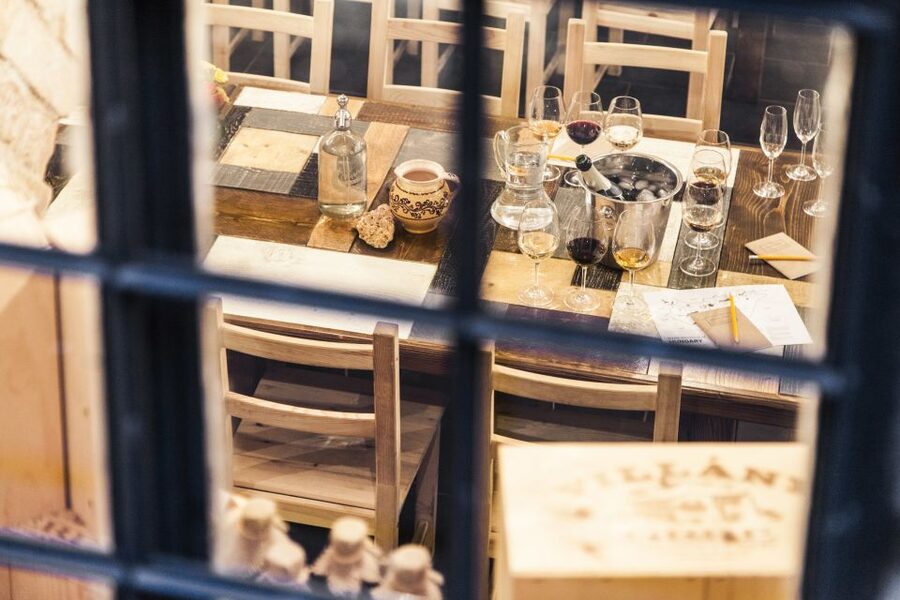
This is a good choice if you like meeting people while you learn. The class brings people together around one table, and the pauses between explanations leave room for conversation. One session ended with the whole group continuing for a drink afterward, which tells you something about the easygoing mood the format can create.
Solo visitors can fit in well because the shared setting gives you a natural way to talk with others. Couples and small groups also have enough structure to keep the evening moving without being forced into constant group activities.
The room can become noisy, though. One person found that continuous side conversations made parts of the presentation hard to hear. If you want a quiet, highly formal tasting, this may not be your ideal format.
On the other hand, the informal energy is a major part of the charm. Hosts have been praised for humor, patience, and a relaxed manner. Carlos, in particular, has been described as entertaining and generous with his time, while Tomas has been praised for explaining how soil and climate affect flavor.
How to get the most from the tasting
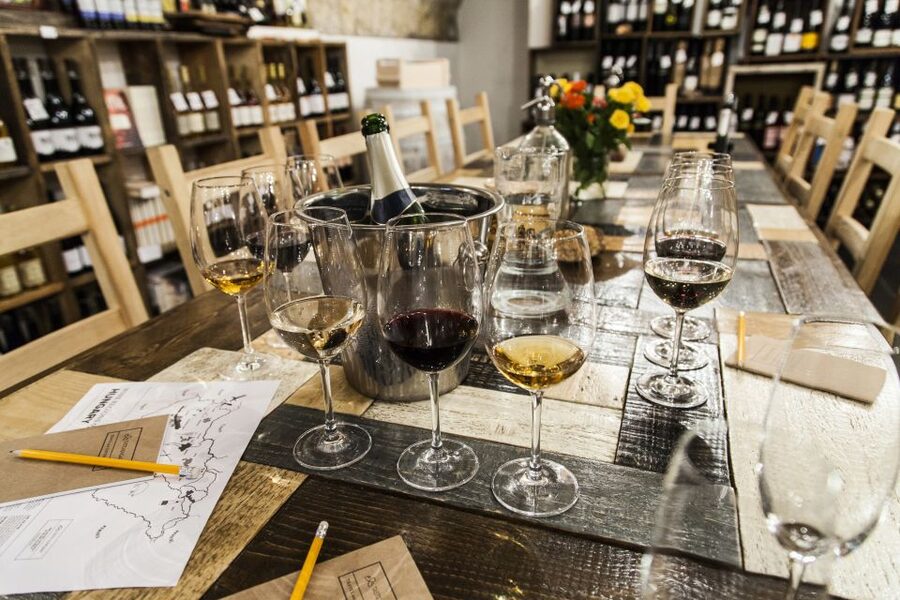
I would make three small preparations.
First, do not arrive after a heavy meal, but do not come hungry either. The food pairings are meaningful and sometimes plentiful, yet the experience is still a wine tasting rather than a guaranteed dinner.
Second, bring your phone or use the provided tasting sheet to record favorite bottles. Write down the producer, grape, and region. The team may offer the chance to buy additional Hungarian wines, and the shop has offered discounts on tasted bottles. Those options are most useful when you can remember what you actually liked.
Third, give yourself an open evening. The listed duration is two hours, commonly from 6:00 PM to 8:00 PM, but conversations can continue and some sessions have run longer. You may also want time afterward to eat, walk, or have a final drink.
You do not need to know wine vocabulary. If you can say that you prefer fresh whites, earthy reds, or sweet wines, the class gives you enough context to make the evening rewarding. The hosts aim to explain rather than intimidate.
Who will get the most from this class
I would recommend it to:
- You if Hungarian wine is new to you and you want a fast, organized introduction.
- You if you enjoy local food and want cheese and charcuterie included with the tasting.
- You if you are traveling alone and like a social evening around a shared table.
- You if you want a central Budapest activity that does not require a day trip.
- You if you are considering visiting Hungarian wine regions later and want help choosing where to go.
- You if you enjoy history, geography, and the story behind small producers.
I would hesitate only if you dislike group tastings, need a quiet room, or are looking for a full dinner. The amount of explanation can also feel like a lot if you want nothing more than a few casual glasses.
The legal drinking age is 18, and the class is offered in English. A minimum of two people applies, so a booking can be canceled if too few people are scheduled, with an alternative or full refund offered. You can cancel up to 24 hours before the experience for a full refund, and reserve now while paying later, which is handy when your Budapest plans are still shifting.
Is $65 a fair price?
At $65 per person, this is not the cheapest way to drink wine in Budapest. You could order several Hungarian glasses in a bar for less, especially if you are not interested in instruction.
But that comparison misses the point. Here, you get eight selected wines, a sommelier-led explanation, regional context, mineral water, tasting notes, a map, and local food. If the pours are generous, the alcohol and food alone make the price feel reasonable, while the teaching gives the evening its real value.
The price works best for curious drinkers who would otherwise spend time and money guessing what to order. It works less well for someone who already knows Hungarian wine and simply wants a single favorite bottle.
Should you book the Hungarian wine tasting class?
Yes, if you want an efficient and sociable introduction to Hungary’s wine regions without leaving central Budapest. The combination of eight varied wines, a historic cellar setting, useful maps and notes, and local cheese and charcuterie makes this more than a simple bar tasting.
Book it early in your Budapest stay if possible. That gives you time to use what you learn at restaurants and shops afterward. Choose the 6:00 PM session if you want to make the tasting the main event of your evening, and plan to pace yourself.
Skip it if you want a private experience, a full sit-down dinner, or a fixed list of famous labels. For most curious visitors, though, this is a practical way to discover the Hungarian bottles you might otherwise overlook.
FAQ
Where does the Hungarian wine tasting take place?
It takes place at The Tasting Table Budapest, Bródy Sándor utca 9, 1088 Budapest, in District VIII.
How long does the activity last?
The tasting lasts two hours. Most evening sessions run from 6:00 PM to 8:00 PM, depending on availability.
How many wines are included?
Eight Hungarian wines are included. The usual sequence begins with an aperitif, continues through whites and reds, and ends with a sweet Tokaj aszú wine.
Is the tasting held in English?
Yes. The host or greeter and the tasting session are in English.
What food is included?
The experience includes food pairings made with local Hungarian flavors, including cheese, charcuterie, meats, bread, and related accompaniments.
Is mineral water provided?
Yes. Mineral water is included with the wines and food.
Do I need previous wine experience?
No. The class is designed for anyone interested in learning more about the relatively unknown wines of Hungary.
What is the minimum age?
The legal drinking age in Hungary is 18, so participants must be at least 18 years old.
How close is the venue to public transport?
The tasting room is a five-minute walk from Astoria on metro line M2 or Kálvin tér on metro line M3. Trams 47 and 49 also stop at both locations.
Can I cancel for a refund?
Yes. You can cancel up to 24 hours in advance for a full refund. A minimum of two participants applies, and if the activity cannot run because too few people are booked, you will be offered an alternative or a full refund.
More Workshops in Budapest
- Budapest: Hungarian Chimney Cake Workshop in the City Center
★ 4.8 · 885 reviews - Chimney Cake Workshop Budapest Downtown – Kürtőskalács Class
★ 5.0 · 220 reviews - Budapest: Hungarian Cooking Class and Market Walk
★ 5.0 · 91 reviews - Hungarian Strudel Making Class: Stretch & Fill Two Ways
★ 5.0 · 76 reviews
More Food Tours in Budapest
- Budapest: Unlimited Prosecco, Beer and Aperol Spritz Cruise
★ 4.8 · 25,310 reviews - Budapest: Unlimited Prosecco, Beer & Aperol Spritz Cruise
★ 4.5 · 3,371 reviews - Budapest: Guided Foodie Walking Tour with Food and Drinks
★ 4.9 · 453 reviews - Budapest Food Tour: Market to Tavern with 14+ Tasters & Wines
★ 5.0 · 434 reviews
Recently added around Budapest
- Hiking + Chairlift ride + viewpoints in Budapest★ 5.0 · 3 reviews
- FoolsCode: EscapeRoom/Sightseeing tour with Actor Tourguide★ 5.0 · 3 reviews
- Grand Budapest tour with private transportation★ 5.0 · 3 reviews
- Budapest: Private Customizable Tour in French★ 5.0 · 3 reviews
- Budapest: Private, Personalized Pub Crawl, 3 drinks included★ 4.5 · 3 reviews
- Budapest Drinks and Piano Show Cruise★ 4.5 · 3 reviews
- Discover Budapest Using Tram Two★ 5.0 · 3 reviews
- Budapest: Private 3-Hour Gödöllő Palace Tour★ 4.9 · 3 reviews
Hungarian Wine Tastings, compared.

Premium Sightseeing Cruise with Tokaj Frizzante
Read our review →
Hungarian Wine Tasting (with Cheese and Charcuterie) in Budapest
Read our review →
Budapest River Cruise with 1 Free Tokaj Frizzante and Audio Guide
Read our review →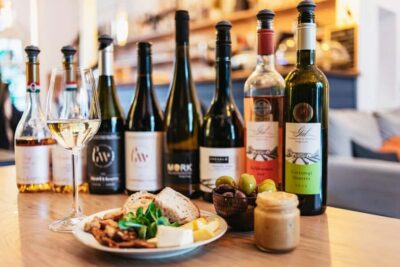
Budapest Paddle Steamer Danube Cruise with Tokaj & Audio Guide
Read our review →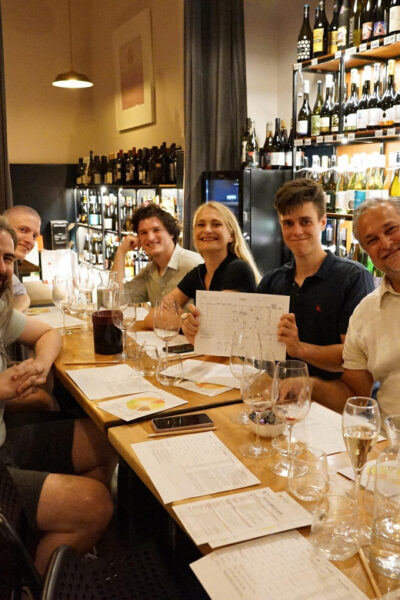
8-Tier Hungarian Wine Tasting in a Cozy Downtown Wine Bar
Read our review →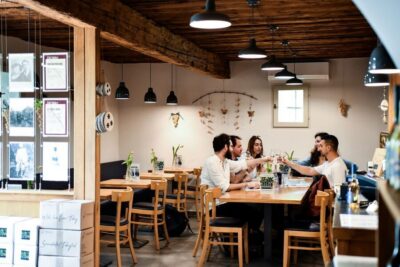
Browse the lists this tour appears in