
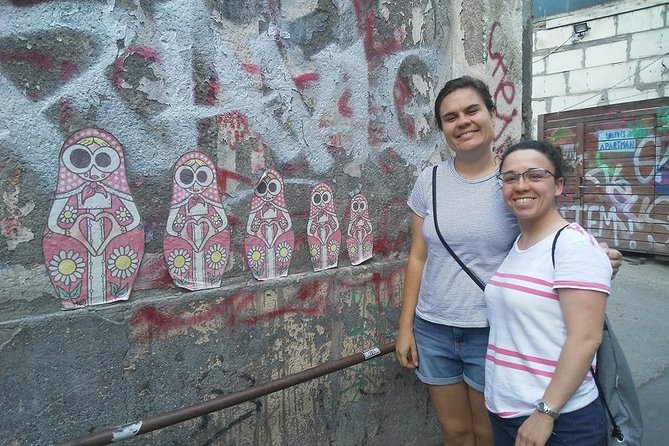
Reviewed · WALKING TOURS
Alternative Street Art Free Walking Tour of Budapest
Budapest’s street art is not just decoration. On this 100-minute walk through the Jewish Quarter, murals and small pieces become clues to Hungary’s political past, changing neighborhoods, and present-day youth culture. Guides such as Victoria, Peter, and Alexandria bring the art into focus with stories about local life, post-Communist Hungary, and the area’s Jewish heritage.
I like the tour for two clear reasons: the tiny booking price gives you an affordable way to see a less formal side of Budapest, and the guide does not treat street art as a string of photo stops. The walk also ends around the city’s famous ruin-bar culture, often with Szimpla Kert as the final stop. The main consideration is meeting-point confusion: the details name Rákóczi tér, while the directions also refer to a yellow umbrella at Blaha Lujza Tér, so check your confirmation carefully.
In This Review
- Key points at a glance
- Why Budapest street art tells a bigger story
- Walking the Jewish Quarter beyond the postcard route
- What happens during the 1-hour-40-minute route
- The art itself, from murals to smaller pieces
- The history behind the colors
- Ending among Budapest’s ruin bars
- Is the $3.62 price really good value?
- Who will enjoy this walk most?
- Practical details that affect your choice
- Should you book the Alternative Street Art Free Walking Tour?
- FAQ
- Where does the tour start?
- Where does the tour finish?
- How long is the walking tour?
- What language is the tour offered in?
- How much does the tour cost?
- Is a guide included?
- How large is the group?
- Is the tour accessible to most people?
- Can I cancel for a full refund?
Key points at a glance
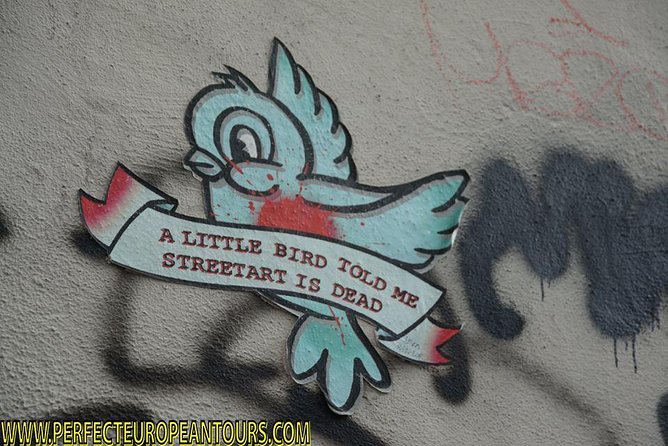
- Street art with context: Learn how murals, graffiti, and commissioned works connect to Hungarian history and current social life.
- A different Jewish Quarter walk: See a district shaped by wartime memory, post-Communist change, art, and nightlife.
- Guides with personality: Victoria is especially noted for clear historical explanations, while Peter and Alexandria are also named as guides for this experience.
- A very low entry price: Pay about $3.62 per person as a booking fee, then plan on leaving a tip for the guide.
- Ruin bars at the finish: The route ends around a grassroots ruin bar, with Szimpla Kert listed as the final stop.
- Small-group format: The maximum is 15 people, which gives the guide more room to answer questions than a large city walk.
Why Budapest street art tells a bigger story
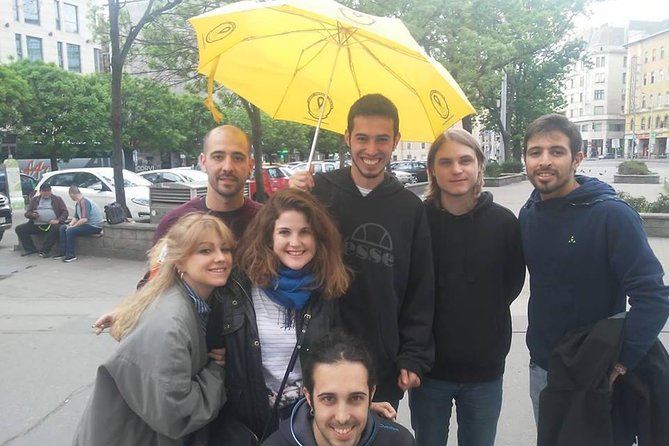
I like tours that use a narrow subject to explain an entire city. This one starts with urban art, but the useful part is the surrounding story: why the Jewish Quarter became a center for alternative culture, how the city changed after Communism, and how public art reflects political and social concerns.
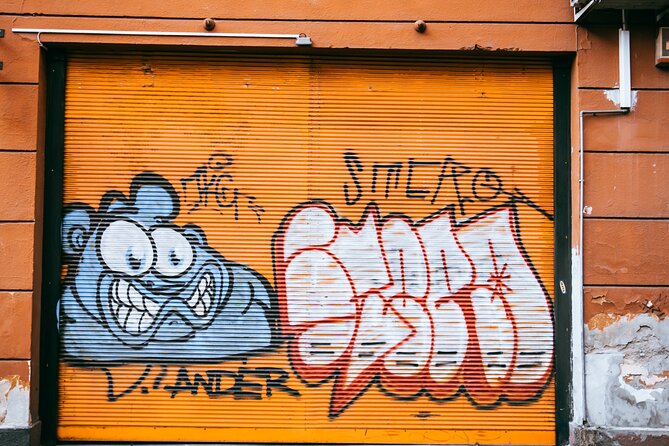
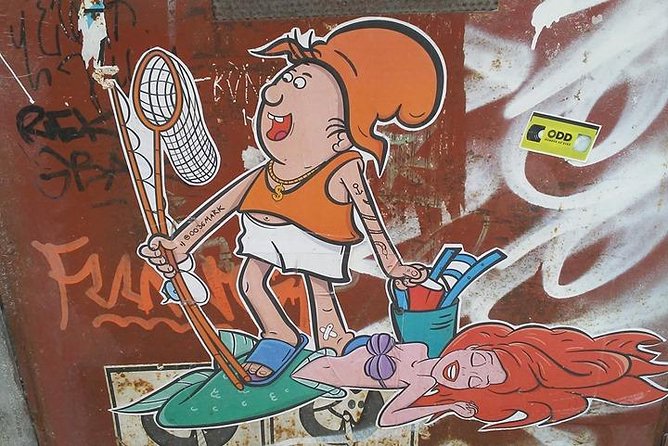
You will see a mix of large commissioned murals, local artists’ smaller pieces, and graffiti. That variety matters. A polished wall painting can reflect a commercial or civic project, while a rougher work may feel more personal or temporary. The guide’s job is to help you notice the difference rather than simply point at a colorful wall and move on.
The strongest guide feedback centers on historical explanation. Victoria is praised for linking the art with Hungary’s past and present, including everyday life and the effects of post-Communist change. She is also described as direct, witty, and willing to share personal experience from living in Hungary for more than 25 years.
That gives the tour a useful balance. You get the visual appeal of street art, but you also hear why the neighborhood looks and feels the way it does. If you want only a photo walk, this may feel too talkative. If you want art that comes with social and historical meaning, that extra explanation is the point.
More street art walks in Budapest:
- Budapest: Street Art and Underground Movements Walking Tour
★ 5.0 · 238 reviews - Street Art and Alternative Tour in Budapest
★ 5.0 · 52 reviews - Budapest: Alternative Street Art & Jewish Tour
★ 4.8 · 49 reviews
Walking the Jewish Quarter beyond the postcard route
The Jewish Quarter is one of Budapest’s most layered areas. The supplied route information does not provide a full list of street names or every artwork, so you should not expect a fixed museum-style sequence. The exact pieces can change as walls are repainted, covered, or replaced.
What you can expect is a guided walk through an area where Jewish history, nightlife, public art, and alternative culture sit close together. The guide explains how the district became a focus for art and youth culture, rather than presenting it as a simple entertainment zone.
That distinction is important. The quarter is easy to reduce to ruin bars and colorful walls. A good guide gives you a better sense of the forces behind that image. You may hear about the district before and after Communism, the way the pandemic affected local life, and the social issues reflected in current art.
I also like that the experience includes general observations about Hungarian people and daily life, not only famous sites. One guide, Victoria, is described as offering an academic and backstreet view of Budapest in the same walk. You should take that as a sign that the tour is better suited to curious visitors than to anyone seeking a quick list of Instagram locations.
What happens during the 1-hour-40-minute route
The walk lasts about one hour and 40 minutes, a sensible length for a neighborhood tour. It is long enough to build a story, but short enough to fit before dinner or an evening at a ruin bar.
The route begins at the published meeting point on Rákóczi tér in Budapest’s 1084 district. Other directions identify a yellow umbrella at Blaha Lujza Tér as the easy way to find the guide. Since those details do not match perfectly, I would check the booking confirmation before setting out and allow extra time to move between the two locations if needed.
Once the group is together, expect a walking lesson rather than a formal gallery visit. The guide leads you from piece to piece, explaining what you are seeing and adding context about the area. Since the maximum group size is 15, you should have a fair chance to hear the explanation and ask a question.
The walk does not appear to be rushed. Several descriptions emphasize time to explore and talk, and one account describes a private tour when no other participants arrived. That will depend on the date, of course, but the small maximum should still make the experience more personal than a large sightseeing group.
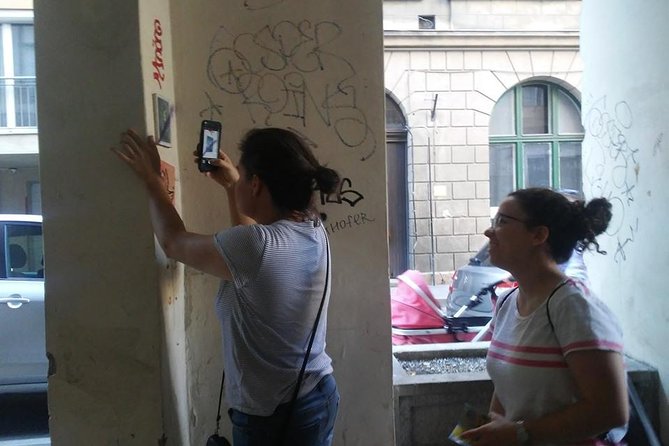
Wear comfortable shoes and keep your attention on the walls as well as the guide. Street art is often easy to miss when you are focused on traffic, entrances, and side streets. The value here lies partly in being shown works you could pass without noticing.
The art itself, from murals to smaller pieces
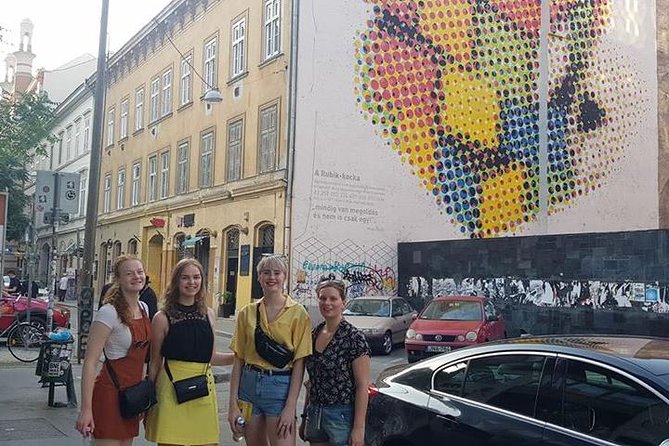
The art selection is deliberately broad. You may see corporate commissioned work alongside graffiti and independent pieces, which gives you a more honest picture of the city’s public art scene.
Commissioned murals can tell you how a neighborhood presents itself to the public. Smaller works and graffiti can point to personal expression, humor, protest, or simple experimentation. The tour does not force all of these forms into one category, and that is a strength.
You should also expect the art to be interpreted rather than declared important. The guides explain how pieces connect with social and political perspectives, both historical and current. That makes the walk useful even if you are not already interested in urban art.
For serious street-art fans, there is one practical limit: the experience is short and the precise artwork list is not provided. You will get a guided introduction, not a complete survey of Budapest’s scene. Art changes quickly, and a route built around current walls may not be identical every time.
Still, the mix of work gives you a clear sense of the neighborhood. You are not being shown only the most polished murals. You are being shown how different forms of public expression share the same streets.
More walking tours in Budapest:
- Budapest: Buda Castle Walk with Saint Stephen’s Hall
★ 4.5 · 3,012 reviews - Big Bus Budapest Hop-On Hop-Off Bus and Walking Tour
★ 3.5 · 2,206 reviews - Budapest: Buda Castle District Walking Tour
★ 4.6 · 2,108 reviews - Budapest City Landmarks Walking Tour in 2 Hours
★ 5.0 · 2,048 reviews
The history behind the colors
The most highly praised part of the experience is the guide’s historical storytelling. The art gives the walk its shape, but Hungary’s history gives it weight.
Expect discussion of the Jewish Quarter before and after the Communist period, the district’s present-day culture, and the ways political and social events influence public art. One guide is specifically praised for explaining how the quarter became a center for art and youth culture. Another is praised for helping visitors understand Hungarian life today.
This is not a substitute for a dedicated Jewish heritage tour. The information provided does not promise visits inside synagogues, memorial sites, or museums. Instead, the quarter forms the setting for a conversation about change, identity, memory, and urban culture.
That makes the experience a useful companion to a more traditional Budapest sightseeing walk. You will not get the same focus on grand architecture or major monuments. You will get a closer look at the ordinary streets between them, where political ideas and local culture often show up in less formal ways.
I would choose this tour early in a Budapest stay if you like to understand a city before exploring it alone. The guide can give you a frame for the quarter, and you can return later for bars, food, or a slower look at the walls.
Ending among Budapest’s ruin bars
The advertised final stop is Szimpla Kert, Budapest’s best-known ruin bar. The tour information also describes the end as a grassroots community ruin bar at Auróra u. 11, so the exact finish may vary by route or date. Confirm the final address before arranging a taxi or meeting someone afterward.
The ruin-bar finish is more than a convenient endpoint. These venues are part of the Jewish Quarter’s modern identity, and the guide explains their place in the area’s culture. The experience may include mention of other ruin bars as well, giving you options beyond the most famous name.
A particularly nice feature is the chance to stay for a drink after the walk. One guide accompanied a participant into a bar because she was heading that way, but that is a personal courtesy, not something to count on as a formal extra. The tour itself does not include drinks.
If you are not interested in nightlife, you can still treat the ending as a final cultural stop and leave afterward. If you do want to see a ruin bar, finishing here saves you from having to find one without context. Just remember that the booking covers the guide, not your drink or any other purchase.
Is the $3.62 price really good value?
At about $3.62 per person, this is priced as a complimentary walking tour with a booking fee and tip model. The low upfront cost makes it one of the easier Budapest activities to add to a tight budget.
The value depends on how you approach it. If you treat the fee as the full cost and skip the guide’s tip, you may be paying very little for nearly two hours of local explanation. A fair tip should be part of your budget if the guide gives you a worthwhile experience.
The tour includes a professional guide. Parking is not included, and using a public toilet costs extra. Those exclusions are minor, but they are worth knowing because the walk is long enough that you may need a restroom break.
The best value comes from the combination of three things: street art you might not notice alone, historical explanation, and an introduction to ruin-bar culture. A private or small-group feel may also be possible on quieter dates, though it is not guaranteed.
At 94 percent recommended and rated 4.7 from 53 reviews, the overall satisfaction level is strong. I would not use the rating alone to decide, but it matches the specific strengths described in the experience: clear guides, useful historical context, a relaxed pace, and an unusual route.
Who will enjoy this walk most?
I would recommend it to:
- First-time Budapest visitors who want an alternative to the usual monument circuit.
- Art fans who enjoy murals, graffiti, design, and public space.
- History-minded visitors who want social and political context with their sightseeing.
- Young adults and curious couples interested in the Jewish Quarter’s art and nightlife.
- Budget-conscious visitors who want a guided activity without a large entry charge.
- Repeat visitors who have already seen the major sights and want a different angle on the city.
Families can participate because most visitors can take part and service animals are allowed. Still, the subject matter is aimed more at people who enjoy listening and discussing culture than at children who need constant activity.
The tour is offered in English only. That makes it a good fit for English-speaking visitors, but not for anyone seeking a multilingual experience.
Practical details that affect your choice
The group maximum is 15 people, which is a useful limit for a walking tour based on conversation. You will not necessarily get a tiny group, but you should have a better chance of hearing the guide than on a large city tour.
The experience is near public transportation, and the start is in central Budapest. Because the meeting information names both Rákóczi tér and Blaha Lujza Tér, I would not rely on a vague map pin. Look for the guide’s instructions and the yellow umbrella reference in your confirmation.
Good weather is required. If poor weather cancels the walk, you can receive a different date or a full refund. The same applies if the minimum number of participants is not reached.
You can cancel for a full refund up to 24 hours before the start time. Changes or cancellations inside that 24-hour window are not accepted, and the cutoff uses Budapest local time.
Should you book the Alternative Street Art Free Walking Tour?
Book it if you want Budapest explained through its walls, not only through palaces and famous squares. The strongest reason to go is the guide’s mix of street art, Jewish Quarter history, present-day culture, and ruin-bar background.
I would especially choose it for a first or second day in the city, when the neighborhood context can help shape the rest of your visit. It is also a smart low-cost choice when you want a guided activity but do not want to commit to a full museum tour.
Skip it if you want a precise, published art checklist, a major architectural tour, or a fully indoor activity. The weather requirement and meeting-point inconsistency also call for a little planning.
For most English-speaking visitors with an interest in modern culture, history, or Budapest nightlife, the price makes this an easy yes. Check the start and finish details, bring comfortable shoes, and allow room in your budget for a tip and perhaps a drink at the end.
FAQ
Where does the tour start?
The published meeting point is Rákóczi tér, Budapest, 1084, Hungary. The directions also refer to finding a guide with a yellow umbrella at Blaha Lujza Tér, so check your confirmation for the exact meeting instructions.
Where does the tour finish?
The tour is advertised as finishing at Szimpla Kert, Budapest’s most famous ruin bar. The end address is also given as Auróra u. 11, Budapest, 1084, so confirm the final location before making plans afterward.
How long is the walking tour?
The experience lasts approximately 1 hour and 40 minutes.
What language is the tour offered in?
The tour is offered in English.
How much does the tour cost?
The listed price is about $3.62 per person. It is described as a complimentary tour where you pay a booking fee and tip.
Is a guide included?
Yes. A professional guide is included. Guides named for this experience include Victoria, Peter, and Alexandria.
How large is the group?
The maximum group size is 15 participants.
Is the tour accessible to most people?
Most participants can take part. The experience is a walking tour, and service animals are allowed.
Can I cancel for a full refund?
Yes. You can cancel at least 24 hours before the start time for a full refund. Cancellations or changes made less than 24 hours before the start are not accepted. If bad weather or an insufficient minimum group causes cancellation, you will be offered another date or a full refund.
Recently added around Budapest
- Hiking + Chairlift ride + viewpoints in Budapest★ 5.0 · 3 reviews
- FoolsCode: EscapeRoom/Sightseeing tour with Actor Tourguide★ 5.0 · 3 reviews
- Grand Budapest tour with private transportation★ 5.0 · 3 reviews
- Budapest: Private Customizable Tour in French★ 5.0 · 3 reviews
- Budapest: Private, Personalized Pub Crawl, 3 drinks included★ 4.5 · 3 reviews
- Budapest Drinks and Piano Show Cruise★ 4.5 · 3 reviews
- Discover Budapest Using Tram Two★ 5.0 · 3 reviews
- Budapest Urban Treats – Cake and Coffee House Tour★ 5.0 · 3 reviews
Walking Tours, compared.

Big Bus Budapest Hop-On Hop-Off Bus and Walking Tour
Read our review →
3-Hour Orientation Walking Tour of Buda and Pest
Read our review →
Budapest All in One Small Group Walking Tour with Strudel Stop
Read our review →
Buda Castle District Walking Tour with a Historian
Read our review →
BloodThirsty Hungary: Walking tour & Dark Historical Stories
Read our review →
Browse the lists this tour appears in