

Reviewed · BUDA CASTLE TOURS
Budapest: Castle District Walking Tour
Buda Castle Hill gives you Budapest’s best history lesson in a compact walk. In two hours, you move from royal palaces and church towers to war damage, Jewish heritage, Ottoman connections, underground passages, and a broad view across the Danube to Pest. Guides such as Rita, Boulash, Gary, and Odea bring plenty of humor and local detail.
I like the way the route reaches the main sights without wasting time, and I like that it goes past the famous photo stops into less obvious corners of the district. The price is also eye-catching, but remember that the $2.27 charge is mainly a booking fee. Tips are expected, with about €10 per person suggested for a good tour.
The catch is the hill. You face a 10-minute uphill walk, stairs, and plenty of standing. This is not a good fit for wheelchair users, and a stroller can be awkward or impractical on the route.
In This Review
- Key points at a glance
- Starting at Batthyány tér, with Parliament in view
- The uphill approach to Buda Castle Hill
- Matthias Church and Fisherman’s Bastion
- The royal palace and Hungary’s national symbols
- Jewish heritage and baroque residential streets
- Ottoman connections and Gül Baba’s pilgrimage site
- Beneath the streets: caves, labyrinths, and defense
- The final panorama across the Danube
- Price, tipping, and what the two hours are worth
- Which guide style will suit you?
- Who should book this Castle District walk?
- Should you book it?
- FAQ
- Where does the Castle District walking tour start?
- How long does the tour last?
- What language is the tour conducted in?
- What sights are included?
- Is the tour physically difficult?
- Is the tour suitable for wheelchair users or strollers?
- What does the listed price include?
Key points at a glance
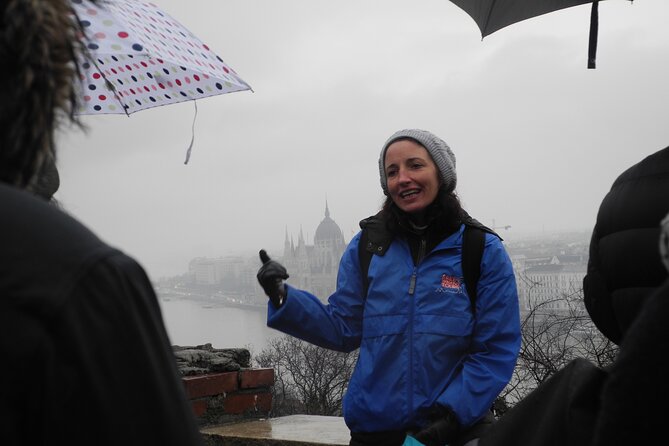
- See the royal heart of Buda: Visit the former residence of Hungary’s kings, along with Matthias Church and Fisherman’s Bastion.
- Go beyond postcard views: Hear about WWII destruction, the Medieval Jewish Prayer House, Ottoman history, public art, and the Castle Hill cave system.
- Expect a real uphill walk: The route includes a 10-minute climb, steps, and uneven effort, so comfortable shoes matter.
- Meet at Batthyány tér: Find the guide near the metro exit, about 15 to 30 meters from St. Anna Church, holding a royal blue flag.
- Get practical Budapest advice: Guides finish with time for questions and can suggest restaurants and other places to visit.
- Small booking fee, tip-based tour: The listed price covers administration and marketing, so budget separately for your guide’s tip.
Starting at Batthyány tér, with Parliament in view
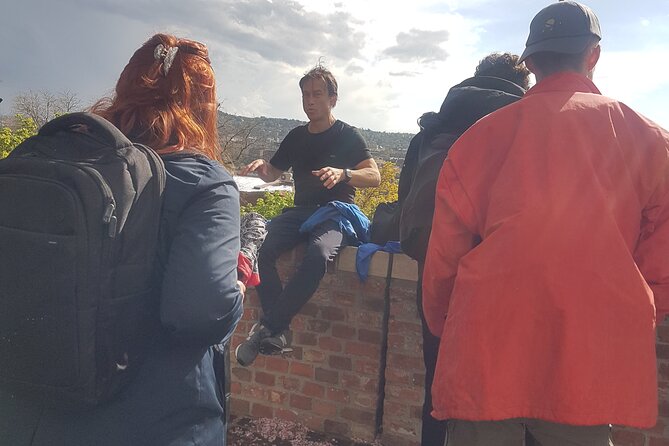
The meeting point is Batthyány tér, a handy place to begin because the metro exit is close to St. Anna Church. Look for a guide holding a blue flag, specifically a royal blue sign according to the meeting instructions. Public toilets and a food market are available nearby, which is useful before setting off.
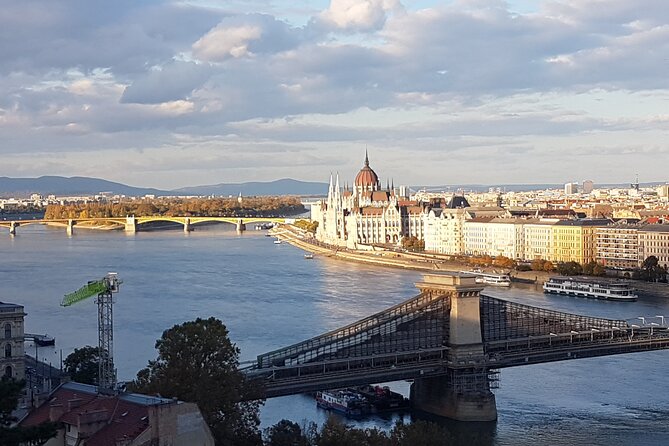
This side of the river gives you an immediate visual reward. From Batthyány tér, you are positioned on the Buda bank with views toward the grand buildings of Pest. The walk then turns uphill toward the Castle District, so you get your bearings before tackling the climb.
The guide-led format is helpful here. Castle Hill is not hard to reach, but its streets, terraces, towers, courtyards, and historic buildings can make a first visit feel scattered. Your guide links the stops into one story instead of leaving you to work out which church, palace, or lookout matters most.
The group can include up to 30 people, though groups of eight or more are not allowed to book this activity. That rule is worth noting for extended families, school groups, or friends traveling together. You should also arrive looking for the flag rather than relying only on a precise doorway, since the meeting point is described by its position near the metro and church.
More of Buda Castle and the castle district:
- Budapest: Buda Castle Cave Tour
★ 4.7 · 5,677 reviews - Budapest: Buda Castle District Vampires and Myths Night Tour
★ 4.6 · 3,830 reviews - Budapest: Buda Castle Walk with Saint Stephen’s Hall
★ 4.5 · 3,012 reviews
The uphill approach to Buda Castle Hill
The first serious point to understand is physical effort. The walk includes a 10-minute uphill section, and some parts involve stairs. One guide, Andras, reportedly allowed the group to catch up before continuing the commentary, which is the right rhythm for a history walk on a hill.
You should wear shoes with good grip and bring water. The tour lasts two hours, but that does not mean two hours of easy pavement. There are pauses for explanations, photographs, and views, yet you will still need enough stamina to keep moving uphill.
That climb is part of the experience rather than a flaw by itself. Castle Hill’s height explains its defensive role and its importance through centuries of conflict. Still, the activity details understate the challenge if you interpret moderate physical fitness too generously. If stairs are difficult for you, the route may be tiring.
The tour is not suitable for wheelchair users. A stroller may also cause trouble, since the route includes steps and an uphill walk. If you are traveling with young children, ask yourself whether you can carry the child and manage the equipment through those sections.
Matthias Church and Fisherman’s Bastion
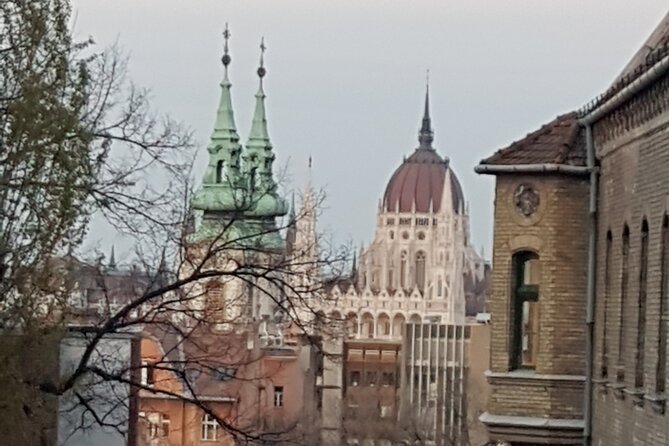
Matthias Church is one of the district’s key stops. The tour places it within the wider story of Castle Hill, rather than treating it as an isolated church visit. You learn how the area changed through wars, occupations, rebuilding, and the daily lives of the people who lived here.
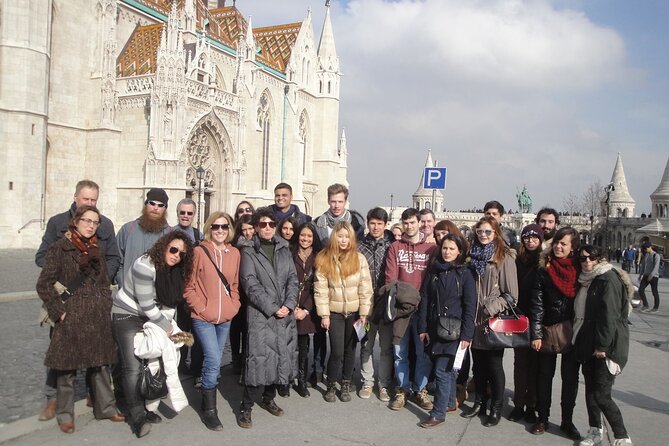
Fisherman’s Bastion supplies the grand views and the familiar white stone architecture. From its terraces, you can look across the Danube toward Pest. The setting is ideal for photographs, but the guide adds the details that make the place more than a scenic stop.
One of the tour’s playful subjects is the connection between Walt Disney and Fisherman’s Bastion. You also hear about crosses with one, two, or three bars, a small detail that opens a door into Hungarian and regional symbolism.
The guide may test you with questions about the main landmarks and Hungarian life. This keeps the walk from becoming a stream of dates. It also gives you a simple way to remember what you have seen after the tour ends.
The main limitation is time. Two hours is enough for an overview and plenty of explanation, but it is not designed for a slow, private visit inside every major building. One person specifically wished for more free time at the top of the castle. I would plan to return to any place that deserves a longer look.
The royal palace and Hungary’s national symbols
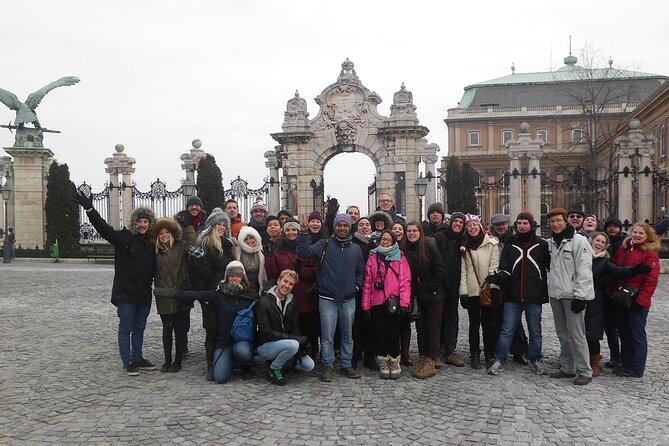
The former Royal Palace is the largest visual reminder of Buda’s royal past. It was once the residence of Hungary’s kings and has been rebuilt many times after war damage. That repeated rebuilding is central to understanding the Castle District. The buildings you see are not simply preserved from one peaceful period. They reflect destruction, political change, and reconstruction.
The guide also points out the mythical bird associated with Hungary. This kind of symbol can be easy to miss when you are moving through a busy historic area, so having someone explain its meaning adds value.
You see where the president’s and prime ministers’ offices are located, along with other important government buildings. The route helps you separate the old royal center from the modern functions that still operate on the hill.
For me, this is where a guide earns the fee. A photo of the palace tells you little about its repeated rebuilding or its political role. A clear explanation turns a large building into a record of Hungary’s difficult past.
More walking tours in Budapest:
- Big Bus Budapest Hop-On Hop-Off Bus and Walking Tour
★ 3.5 · 2,206 reviews - Budapest: Buda Castle District Walking Tour
★ 4.6 · 2,108 reviews - Budapest City Landmarks Walking Tour in 2 Hours
★ 5.0 · 2,048 reviews - 3-Hour Orientation Walking Tour of Buda and Pest
★ 4.8 · 1,834 reviews
Jewish heritage and baroque residential streets
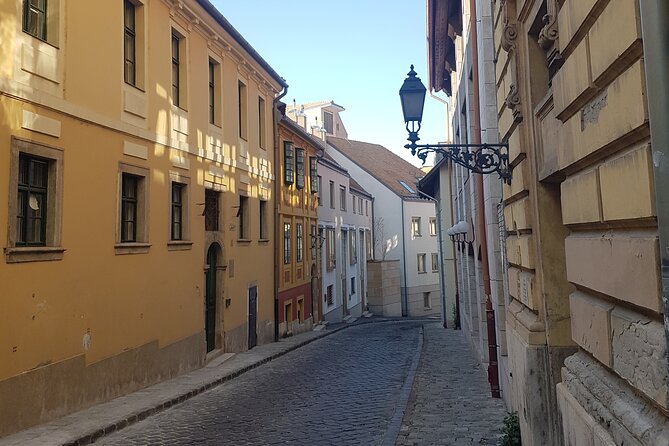
The Castle District is not only a royal quarter. The walk includes the Medieval Jewish Prayer House and the surrounding baroque residential buildings. This section broadens the story beyond kings, soldiers, and government offices.
You learn about the German, Jewish, and Hungarian populations who lived in the district. That focus on everyday life is important because Castle Hill can otherwise feel like a polished stage set of palaces and viewpoints. The neighborhood had residents, shops, homes, religious spaces, and social divisions.
The baroque houses are worth seeing at street level. Their value is not only architectural. Together, they show how the district functioned as a lived-in town, not just a ceremonial center.
The tour also covers the heavy destruction caused by WWII and identifies the former Nazi stronghold. This is difficult material, but it explains why so much of the district has been rebuilt or altered. You leave with a clearer sense of why old-looking streets can contain buildings from very different periods.
A guide can handle this subject with more care than a quick sign or online paragraph. Several guides, including Udit and Odea, are noted for laying out Hungarian history in a clear order, which is especially useful when the story moves across centuries of invasion and political change.
Ottoman connections and Gül Baba’s pilgrimage site
Castle Hill’s story includes Ottoman rule, and the tour connects the district with Gül Baba, an Ottoman Turkish monk and soldier. You learn where the Muslim pilgrimage site associated with him is located and how that fits into the wider history of the hill.
This stop helps break the habit of seeing Budapest only through a Hungarian or Austro-Hungarian lens. The city’s past includes German, Jewish, Hungarian, and Ottoman chapters, often layered on top of one another.
The route also points out where wealthier Hungarians live today. That detail brings the tour back to the present. You are not only studying ruins and royal buildings, but also seeing a functioning neighborhood with private homes and official offices.
The subject matter can be dense, so the guide’s personality matters. Rita is described as warm, funny, patient, and good at offering restaurant suggestions. Boulash is known for a lively presentation, while Gary is praised for detailed explanations and enthusiasm even in rainy weather. Different guides will have different styles, but the strongest part of the experience appears to be the human storytelling.
Beneath the streets: caves, labyrinths, and defense
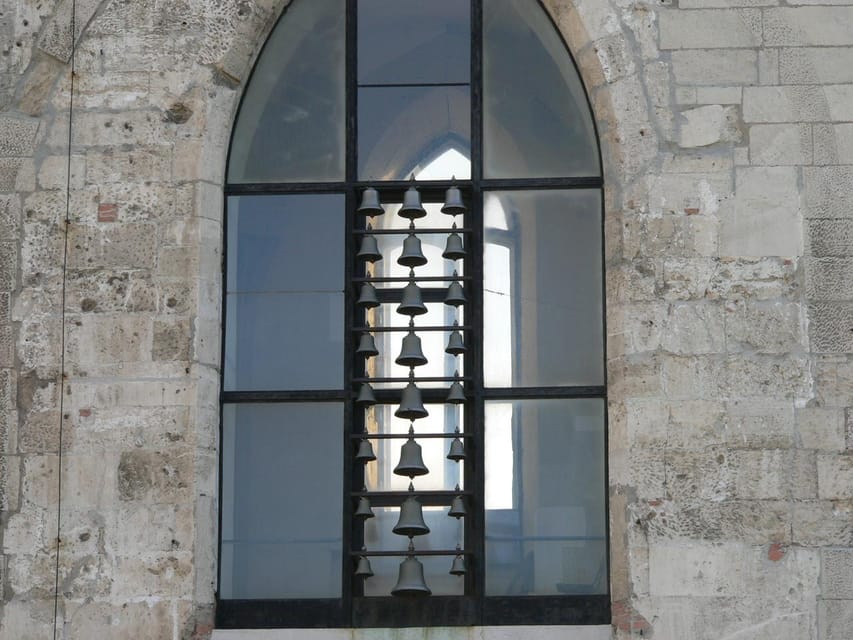
Castle Hill has an underground side. The tour explains its caves and labyrinths, including their role in defense over the centuries. You should not expect this walk to be a dedicated underground cave visit, but you do get context about the life below the streets.
That perspective changes how you read the hill above. The Castle District was valuable because of its height, walls, buildings, and protected spaces below ground. In wartime, underground areas could serve practical defensive purposes.
This section is also a good example of why an organized route saves time. Without a guide, you might pass over an ordinary-looking entrance or street without realizing that the hill continues beneath your feet.
The route includes public art mini monuments and some of Budapest’s funnier statues. You also hear about the huszar, the light cavalry fighter remembered for boldness and womanizing. These details add a lighter tone after the more serious discussions of war and occupation.
I like this balance. A tour made only of dates can become exhausting. A tour made only of amusing stories can feel shallow. Here, the best guides use humor to keep you attentive while still explaining the hard parts.
The final panorama across the Danube
The walk finishes back at the meeting point, but the view from Castle Hill is one of its strongest moments. From a terrace, you look across the Danube toward Pest and see Budapest as a connected city rather than two separate sightseeing zones.
This is the point where the route’s physical effort pays off. You have climbed through the district, followed its history, and reached a viewpoint that makes the geography clear. Bring a camera, but also give yourself time to look past the obvious photo.
The tour does not appear to include a long period of free exploration at the top. One useful way to handle this is to mark the places you want to revisit and return later on your own. The guide’s final practical advice can help you decide what deserves another visit.
You also have time to ask remaining questions. That matters because Castle Hill can raise as many questions as it answers. You might want clarification about symbols, rebuilding, religious sites, or where to eat next. Guides such as Rita have also offered useful restaurant and sightseeing suggestions at the end.
Price, tipping, and what the two hours are worth
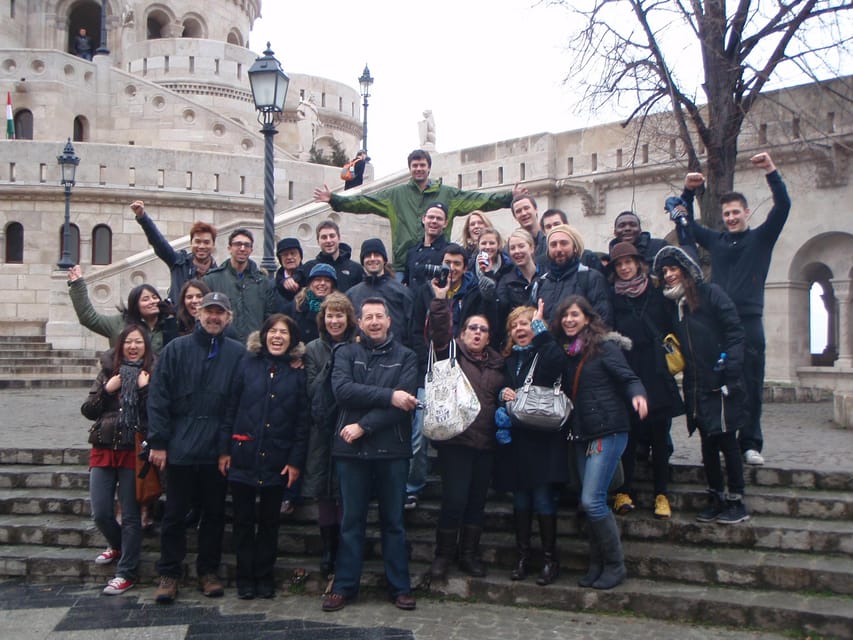
At $2.27 per person, the listed price looks almost too low for a two-hour guided walk. The explanation is important: this is a booking, administration, and marketing fee paid through GetYourGuide. The guide relies on tips, and about €10 per person is suggested for a tour you value.
That makes the real cost higher than the headline price. You should decide on your tip budget before booking so there is no surprise at the end. The value depends on how much you want an organized introduction, historical context, and practical advice rather than a self-guided walk.
For many first-time visitors, the arrangement can still be good value. You cover the district’s main sights and several less obvious subjects in a short period. You also avoid spending your first hours in Budapest trying to understand the layout of Castle Hill.
The tip-based model will not suit everyone. If you prefer a fully fixed price, a private guide, or guaranteed time inside attractions, this may not be the right format. The tour is best seen as an affordable orientation walk, not a complete museum or palace visit.
Which guide style will suit you?
The activity uses English-speaking local guides, and the names attached to the experience include Gary, Dora, Boulash, Andras, Rita, Udit, Odea, Odia, Zsolt, Sofie, Charlotte, and Judith. You cannot choose a particular guide from the information provided, so expect the personality and pace to vary.
The most praised traits are clear historical explanations, humor, patience on the hill, and practical recommendations. Gary is associated with detailed commentary and enthusiasm in poor weather. Dora is described as friendly, well informed, and funny. Andras kept the group together during the climb.
Rita appears especially strong at explaining historical background, answering questions, and giving food suggestions. Odea and Odia are praised for organizing a large span of Hungarian history in an easy-to-follow way, with Odia also teaching a few basic Hungarian words.
That range is useful to know. If you want a dry academic lecture, the playful stories may feel informal. If you want a light walk with no history, the number of dates and political changes may be more than you expect. The best match is someone who wants serious content delivered in a friendly way.
Who should book this Castle District walk?
I would choose this tour early in a Budapest visit if you want to understand Buda Castle Hill before exploring it on your own. It is especially useful for first-time visitors, history fans, photographers who want the main viewpoints, and anyone who prefers local explanations to guidebook reading.
It also suits independent visitors who want structure without paying for a private tour. You get a planned route, a live English guide, time for questions, and advice for the rest of your stay.
I would think twice if stairs are a problem, if you need a wheelchair-accessible route, or if you are bringing a stroller. Large groups of eight or more cannot book, and the overall group may reach 30 people, so this is not a private or highly personal tour.
Bring water, dress for the weather, and wear comfortable shoes. Rain does not necessarily ruin the walk, but wet stone and uphill sections make the effort harder.
Should you book it?
Book it if you want a fast, story-filled introduction to Buda Castle Hill, with the Royal Palace, Matthias Church, Fisherman’s Bastion, WWII sites, Jewish heritage, Ottoman connections, public art, and Danube views in one route.
Skip it if you want long free time at each sight, a wheelchair-friendly outing, or a fully fixed price with no expected tip. For most reasonably fit first-time visitors, the tour offers a useful starting point and much more historical context than a quick walk between photo stops.
FAQ
Where does the Castle District walking tour start?
It starts at the Batthyány tér metro exit, about 15 to 30 meters from St. Anna Church. Look for a local guide holding a blue flag or royal blue sign.
How long does the tour last?
The walking tour lasts two hours. Starting times vary, so check availability when booking.
What language is the tour conducted in?
The live tour guide speaks English.
What sights are included?
The route includes Buda Castle, the Royal Palace, Matthias Church, Fisherman’s Bastion, the Maria Magdalena Church Tower area, important historic buildings, public art mini monuments, lookout terraces, and Castle Hill’s underground history.
Is the tour physically difficult?
You should have a moderate level of fitness and be able to manage a 10-minute uphill walk. The route also includes stairs and standing, so comfortable shoes are recommended.
Is the tour suitable for wheelchair users or strollers?
The activity is not suitable for wheelchair users. Because of the uphill sections and stairs, a stroller may also be difficult to manage on the route.
What does the listed price include?
The $2.27 charge is a booking, administration, and marketing fee. The guide works for tips, with about €10 per person suggested for a tour you feel was worthwhile.
Recently added around Budapest
- Hiking + Chairlift ride + viewpoints in Budapest★ 5.0 · 3 reviews
- FoolsCode: EscapeRoom/Sightseeing tour with Actor Tourguide★ 5.0 · 3 reviews
- Grand Budapest tour with private transportation★ 5.0 · 3 reviews
- Budapest: Private Customizable Tour in French★ 5.0 · 3 reviews
- Budapest: Private, Personalized Pub Crawl, 3 drinks included★ 4.5 · 3 reviews
- Budapest Drinks and Piano Show Cruise★ 4.5 · 3 reviews
- Discover Budapest Using Tram Two★ 5.0 · 3 reviews
- Budapest: Private 3-Hour Gödöllő Palace Tour★ 4.9 · 3 reviews
Buda Castle Tours, compared.

Buda Castle District Vampires and Myths Night Tour
Read our review →
Buda Castle District Dark History, Legends and Vampire Night Tour
Read our review →
Buda Castle District Walking Tour with a Historian
Read our review →

Browse the lists this tour appears in