

Reviewed · BUDA CASTLE TOURS
Budapest Castle District Walking Tour
Budapest’s Castle District is more than a palace and a postcard view. It is a hilltop town shaped by royal power, Ottoman rule, Jewish life, war, rebuilding, and modern Hungarian government. This two-hour walking tour ties those layers together while taking you from Batthyány Square up to Buda Castle and the Danube lookout terraces.
I like two things in particular. First, the tour covers more than the usual Matthias Church and Fisherman’s Bastion photo stop, including the medieval Jewish Prayer House, National Archives, wartime destruction, underground defenses, and the statue-filled corners of Castle Hill. Second, the guides make room for questions and rest stops. Guides such as Dora, Rita, Zsófia, Gary, Sophia, and Valeria have been praised for clear stories, humor, and a relaxed pace.
The main catch is the hill itself. You should expect a 10-minute uphill walk, flights of stairs, and plenty of standing. Fisherman’s Bastion can also be crowded, and some guides speak faster or use a drier style than others. The final castle section may feel brief if you want lots of time for photographs.
In This Review
- Key points to know before you go
- Starting at Batthyány Square with the Parliament in view
- The uphill route to Matthias Church
- Fisherman’s Bastion and the free Danube view
- Medieval Jewish life among Baroque homes
- National Archives, war damage, and Ottoman connections
- Underground Castle Hill and the Hospital in the Rock
- Buda Castle, royal power, and modern government
- Prince Eugene’s statue and the final panorama
- Guide style, group pace, and what the price means
- Who will get the most from this Castle District walk
- Should you book the Budapest Castle District Walking Tour?
- FAQ
- How long does the Budapest Castle District Walking Tour last?
- Where does the tour begin?
- Where does the tour end?
- Is the tour offered in English?
- Does the tour enter Matthias Church or the Hospital in the Rock Museum?
- How difficult is the walking route?
- What happens if I need to cancel?
Key points to know before you go
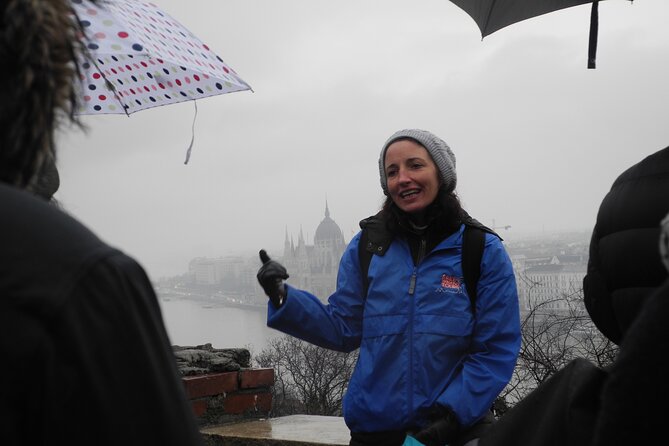
- The route climbs from Batthyány Square to Castle Hill, so wear sturdy shoes and prepare for stairs.
- You see the outside of major sights, including Matthias Church, Fisherman’s Bastion, and Buda Castle. Church and museum admission are not included.
- The history goes beyond royal buildings, covering Jewish life, German and Hungarian communities, Ottoman influence, wartime destruction, and Cold War-era defenses.
- The English-speaking guides vary by departure, with praised names including Dora, Zsófia, Rita, Gary, Sophia, Endre, Judit, and Valeria.
- The $3.62 charge is an administration fee, while the guide depends on your optional donation at the end.
- The walk finishes about 30 minutes from the meeting point, at Prince Eugene of Savoy’s equestrian statue.
Starting at Batthyány Square with the Parliament in view
The tour begins at Batthyány tér 1, by the metro exit in the park. Take care here: the meeting point is specifically the Batthyány Square metro exit, not a general spot somewhere around the square. The guide meets you there, introduces the plan, and leads the group toward the Castle District.
This is a smart place to begin. Batthyány Square sits on the Pest side of the Danube, with a memorable view across the water toward the Hungarian Parliament. From here, you understand the basic geography of Budapest at once: flat Pest on one bank, hillier Buda on the other.
The first ten minutes are used for orientation. You learn what makes Castle Hill important and get a preview of the Royal Palace, Matthias Church, Fisherman’s Bastion, Maria Magdalena Church Tower, public art, terraces, and underground spaces. The opening is brief, but it helps you see the district as a living quarter rather than a single attraction.
You should arrive ready to walk. The group can include up to 30 people, although some departures may feel smaller. The tour is offered in English and comes with a mobile ticket, making it easy to keep your booking on your phone.
More of Buda Castle and the castle district:
- Budapest: Buda Castle Cave Tour
★ 4.7 · 5,677 reviews - Budapest: Buda Castle District Vampires and Myths Night Tour
★ 4.6 · 3,830 reviews - Budapest: Buda Castle Walk with Saint Stephen’s Hall
★ 4.5 · 3,012 reviews
The uphill route to Matthias Church
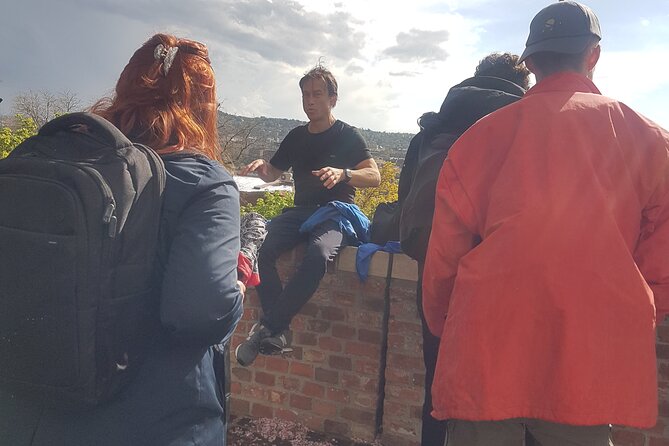
The climb is part of the experience, but it is also the section that demands the most from you physically. The route includes a ten-minute uphill stretch and later flights of stairs. Guides often pause to let the group catch its breath, find shade, and continue the story while people regroup.
That pacing matters. This is not a flat stroll along a riverbank. If you have movement difficulties, balance concerns, or trouble walking uphill, think carefully before booking. The activity is not wheelchair accessible, and it requires a moderate level of fitness.
At Matthias Church, the guide explains roughly 800 years of local history. Castle Hill has seen wars, occupations, rebuilding, and changes in population, and this stop puts those events into human terms. You hear about the daily lives of German, Jewish, and Hungarian residents, not just the dates of kings and battles.
The tour does not enter the church. That is important if your main goal is to see its interior. You will receive an explanation from outside and can return later if you want a longer visit on your own. As a guided introduction, though, the stop gives you useful context before the route spreads through the older streets.
Matthias Church is one of the district’s most recognizable buildings, but the surrounding buildings deserve attention too. Look beyond the church facade and notice the mix of residential architecture, paved lanes, terraces, and restored structures. The guide helps you connect what you see today with the district’s repeated destruction and repair.
Fisherman’s Bastion and the free Danube view
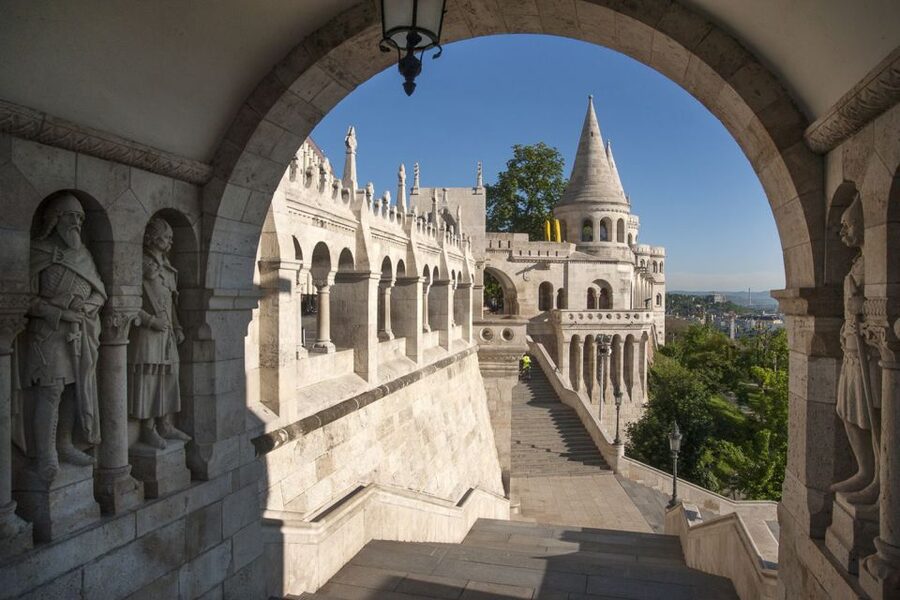
Fisherman’s Bastion is the tour’s most obvious photo stop. Its white stone towers and arcades frame the Danube and Pest side of the city, making it one of Budapest’s best-known viewpoints.
Your guide explains the connection between the bastion and Walt Disney, along with details about Hungarian symbols and the meaning of crosses with one, two, or three bars. These small points are useful because they give you something to look for after the group moves on.
One practical benefit is the guidance on finding a free view from Castle Hill. Some portions of the bastion area can involve admission charges at certain times or locations, while other viewpoints are free. The tour focuses on helping you enjoy the panorama without assuming you need to pay for every terrace.
Crowds are the weak point here. Fisherman’s Bastion is popular, and a busy day can make it hard to pause, hear every word, or compose a clear photograph. Stay close to the guide and expect the group to keep moving if the space is packed.
The view itself is worth the effort. From the terrace, you can place the Danube, Parliament, bridges, and Pest in one broad scene. I would bring your camera out quickly, then put it away long enough to listen. The tour gives you more value when you understand why the view matters, not just where to point your lens.
Medieval Jewish life among Baroque homes
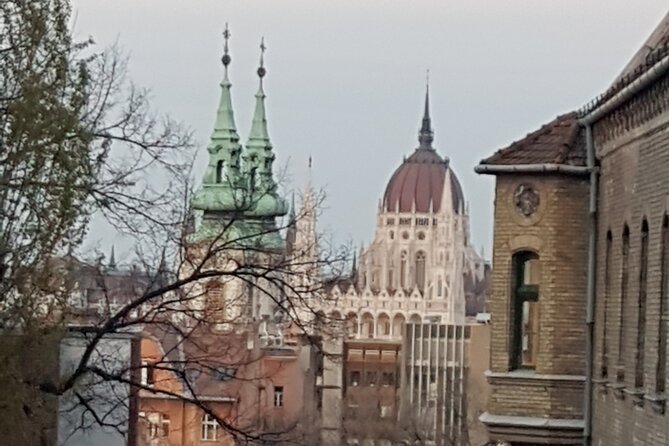
The Medieval Jewish Prayer House is a quieter stop and one of the more unusual parts of the route. It moves the focus away from grand royal buildings and toward the communities that lived and worshipped on Castle Hill.
The guide also points out the Baroque residential buildings around it. This pairing is useful. You get both the religious and domestic sides of the district, with an explanation of how German, Jewish, and Hungarian residents shaped everyday life over the centuries.
Do not expect a long indoor visit here. The stop is about introduction and context, with around ten minutes devoted to the site. Still, it breaks up the palace-and-panorama rhythm and gives the walk a more complete picture of Buda.
This is the kind of stop I value on a first visit. A quick list of famous buildings can leave you thinking Castle Hill was only a royal compound. The prayer house and nearby homes show that it was also a neighborhood.
More walking tours in Budapest:
- Big Bus Budapest Hop-On Hop-Off Bus and Walking Tour
★ 3.5 · 2,206 reviews - Budapest: Buda Castle District Walking Tour
★ 4.6 · 2,108 reviews - Budapest City Landmarks Walking Tour in 2 Hours
★ 5.0 · 2,048 reviews - 3-Hour Orientation Walking Tour of Buda and Pest
★ 4.8 · 1,834 reviews
National Archives, war damage, and Ottoman connections
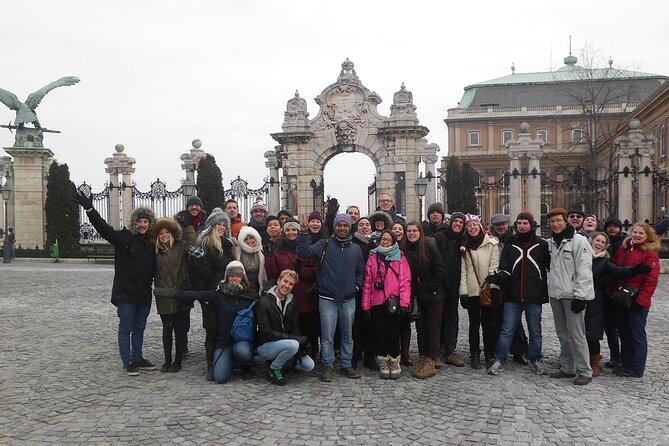
Near the National Archives of Hungary, the guide discusses the massive destruction caused during World War II. You learn where the Nazi stronghold was and how severely the district was damaged.
That information changes how you read the buildings around you. Restored facades can look polished, but the tour reminds you that much of Castle Hill was rebuilt after wartime destruction. The district’s appearance is not simply a preserved medieval scene. It is also the result of difficult reconstruction.
This section also touches on social contrasts. The guide points out where wealthy Hungarians lived and explains the connection to Gül Baba, an Ottoman Turkish monk and soldier whose site of pilgrimage lies elsewhere in the Buda area. The subject helps place Ottoman rule within the wider story of the city.
The ten-minute stop is short, so you will not receive a full military or architectural lecture. Instead, you get a set of useful anchors. Later, as you explore Buda on your own, you can recognize the difference between old fabric, rebuilt structures, and modern use.
Underground Castle Hill and the Hospital in the Rock
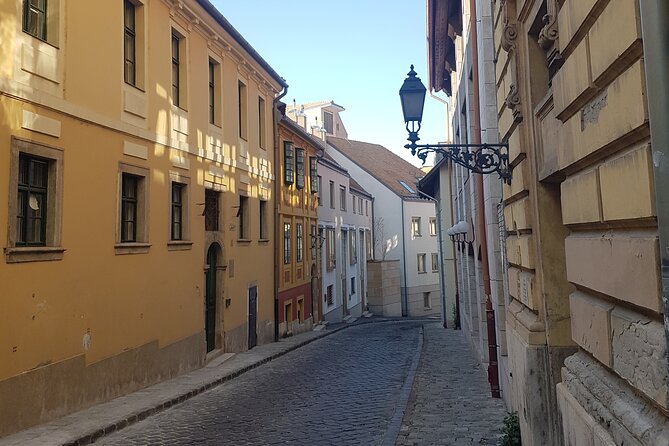
The Hospital in the Rock Nuclear Bunker Museum is introduced from the outside rather than visited as part of the tour. The guide explains the underground life of Castle Hill, its labyrinths, and the role these spaces played in defense over the centuries.
If you want to enter the museum, plan a separate visit and check its admission arrangements independently. This walking tour does not include museum entry. That distinction matters because the name may suggest a full bunker tour, but here you receive an overview of the underground network and its military purpose.
The stop also brings in some lighter subjects. You may hear about Budapest’s funny public statues and the huszar, the light cavalry fighter associated with Hungarian military tradition. These details give the route some humor after the heavier discussion of war and destruction.
This is one place where guide style makes a real difference. A lively guide can turn military history and public art into memorable stories. A faster or more monotone delivery may make the same material harder to follow, especially in heat or cold.
The weather deserves attention throughout the walk. One departure continued successfully in freezing wind at around minus 7 Celsius, while another account described the difficulty of touring on a very hot day. Bring water, dress for the forecast, and use the rest pauses. There are bathrooms at Buda Castle, and you can refill water bottles there.
Buda Castle, royal power, and modern government
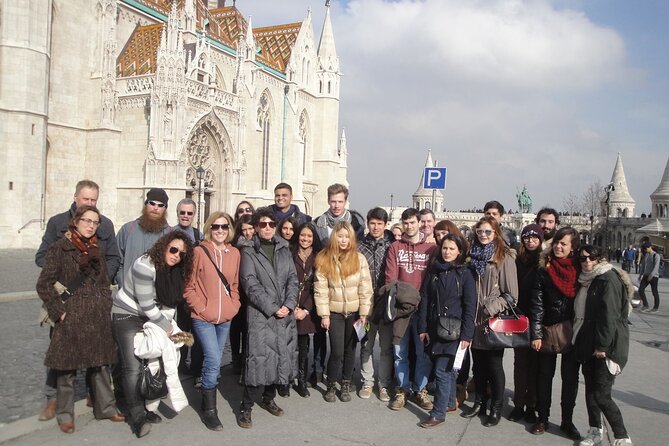
Buda Castle is the largest stop, with about 20 minutes devoted to the building and its setting. You see the massive former royal residence and learn how war damage led to repeated rebuilding.
The guide covers the mythical bird of Hungary, the Turul, and points out where the offices of the president and prime ministers are located. This gives you a useful link between the district’s royal past and its role in present-day public life.
Do not expect a full palace interior tour. The emphasis is on the exterior, surrounding terraces, political history, and the way the complex has changed over time. If you want museum galleries or a detailed look inside, you will need to return separately.
Some people may find the time here too short, especially because Buda Castle offers excellent photo opportunities. Keep that in mind when setting expectations. The route covers many stops in two hours, so each one receives a compact explanation rather than a long visit.
Still, the broad coverage is the tour’s strength. You see the castle after hearing about residents, religious communities, wartime damage, defenses, and symbols. By this point, the palace feels connected to the whole hill rather than isolated from it.
Prince Eugene’s statue and the final panorama
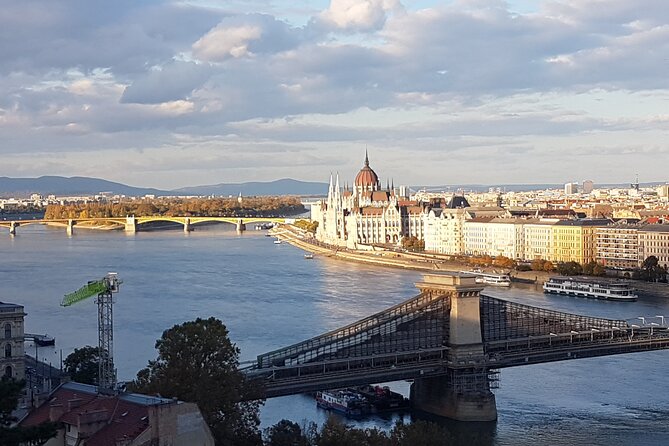
The tour ends at the equestrian statue of Prince Eugene of Savoy, on the terrace overlooking the Pest side of the Danube. This is a fitting finish because it returns you to the city-wide view that helps make Castle Hill special.
The guide may test your memory with questions about the main landmarks and Hungarian life. It is a light way to tie together the material from the walk, and you have time to ask anything that remains unclear.
The ending is practical as well. You receive suggestions for continuing your visit and can ask final questions before separating from the group. Since the finish is about a 30-minute walk from the starting point, do not plan to return to Batthyány Square immediately unless you have allowed time.
The final terrace is another place to take photographs, but the schedule can feel tight. If you want unhurried views, stay in the district after the tour and explore at your own pace.
Guide style, group pace, and what the price means
The tour costs $3.62 per person, but that payment is an administration and booking fee. It does not go toward the guide’s earnings. Guides depend entirely on donations at the end, and the amount is your choice.
That makes this a low-cost way to get oriented, but it is not truly a no-cost experience in practice. If your guide, such as Dora, Zsófia, Rita, Gary, Sophia, Endre, Judit, or Valeria, gives you a useful morning of history and local advice, plan to make a donation that reflects that value.
The strongest guiding qualities are clear storytelling, humor, patience, and the ability to keep a group moving without leaving anyone behind. Rita has been praised for mixing wit and history, while Gary’s relaxed but lively approach suits people who prefer a calmer pace. Sophia has been noted for clarity and quick help during a medical incident, and several guides have made a point of pausing on the stairs.
Style can vary. One guide was considered too dry on a hot day, and another spoke quickly enough that some information was missed. If you struggle to hear, move near the guide and ask for a repeat. The maximum group size is 30, so positioning yourself well matters.
The tour is recommended by 98 percent of customers and carries a 4.9 rating from 630 reviews, which points to consistently strong guide-led experiences. I would still judge it by its format: this is a broad outdoor introduction, not an indoor museum visit or a slow architectural study.
Who will get the most from this Castle District walk
I would choose this tour for a first or second day in Budapest, especially if you want to understand the Buda side before exploring it alone. The mix of major sights, small historical stops, public art, military stories, and viewpoints gives you a useful framework for the rest of your visit.
It also suits families with older children and teenagers. The route includes symbols, legends, castles, underground defenses, funny statues, and questions, which can hold attention better than a long lecture on dates.
You should think twice if you want a flat route, a wheelchair-accessible activity, or lots of uninterrupted time at each landmark. You may also prefer a private tour if you need a very slow pace or a tightly focused subject.
The tour runs in changing weather, subject to cancellation for poor conditions. A free cancellation is available up to 24 hours before the start time. If bad weather cancels the experience, you are offered another date or a full refund.
Should you book the Budapest Castle District Walking Tour?
Book it if you want a lively introduction to Buda Castle District at a very low upfront price, and you are comfortable paying the guide a voluntary donation afterward. The route covers far more than the headline sights, and the best guides turn the climb into a clear story about Budapest’s rulers, residents, wars, faiths, and rebuilding.
Go prepared for stairs, weather, crowds, and a brisk schedule. You will not enter Matthias Church or the Hospital in the Rock Museum, and you may want extra time at Buda Castle and the final viewpoint for photographs. For most first-time visitors with moderate fitness, this is a smart way to get your bearings before returning to the places that catch your interest.
FAQ
How long does the Budapest Castle District Walking Tour last?
The tour lasts approximately two hours.
Where does the tour begin?
It begins at the Batthyány Square metro exit, at Budapest, Batthyány tér 1, 1011 Hungary. The guide meets you in the park by the exit.
Where does the tour end?
The walk ends at the Statue of Prince Eugene of Savoy in Budapest, 1013 Hungary. The conclusion point is about a 30-minute walk from the starting location.
Is the tour offered in English?
Yes. The tour is offered in English with a local guide.
Does the tour enter Matthias Church or the Hospital in the Rock Museum?
No. The tour introduces Matthias Church from outside, and the Hospital in the Rock Nuclear Bunker Museum is also presented without included admission.
How difficult is the walking route?
You should have a moderate level of physical fitness. The route includes a 10-minute uphill walk and flights of stairs, and it is not wheelchair accessible.
What happens if I need to cancel?
You can cancel up to 24 hours before the start time for a full refund. Cancellations or changes made less than 24 hours before the start are not refunded or accepted.
Recently added around Budapest
- Hiking + Chairlift ride + viewpoints in Budapest★ 5.0 · 3 reviews
- FoolsCode: EscapeRoom/Sightseeing tour with Actor Tourguide★ 5.0 · 3 reviews
- Grand Budapest tour with private transportation★ 5.0 · 3 reviews
- Budapest: Private Customizable Tour in French★ 5.0 · 3 reviews
- Budapest: Private, Personalized Pub Crawl, 3 drinks included★ 4.5 · 3 reviews
- Budapest Drinks and Piano Show Cruise★ 4.5 · 3 reviews
- Discover Budapest Using Tram Two★ 5.0 · 3 reviews
- Budapest: Private 3-Hour Gödöllő Palace Tour★ 4.9 · 3 reviews
Buda Castle Tours, compared.

Buda Castle District Vampires and Myths Night Tour
Read our review →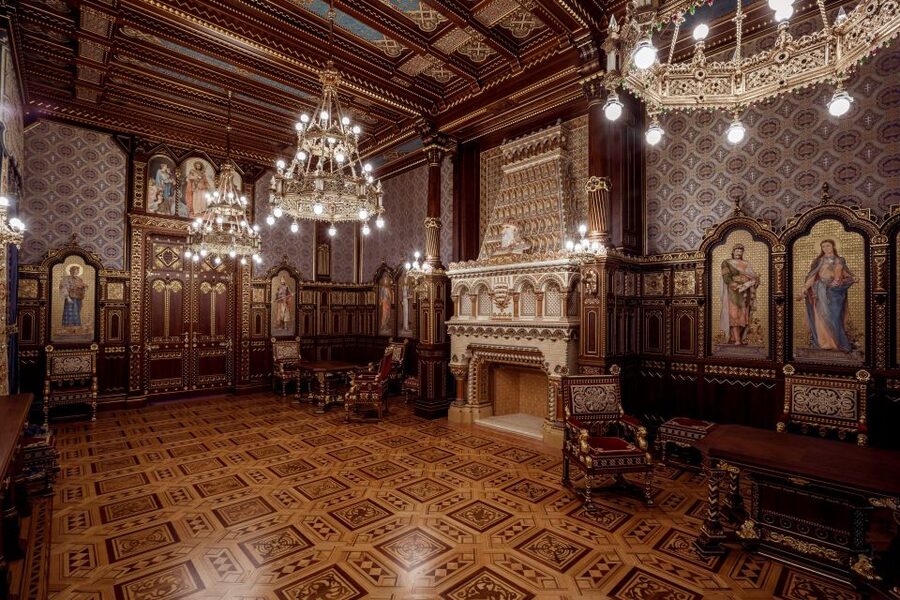
Buda Castle District Dark History, Legends and Vampire Night Tour
Read our review →
Buda Castle District Walking Tour with a Historian
Read our review →

Browse the lists this tour appears in