
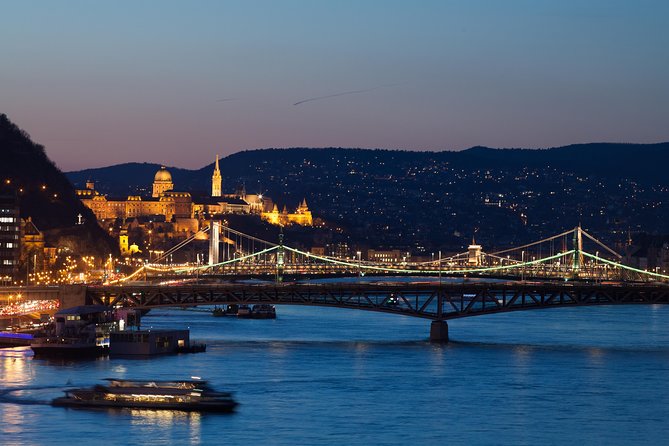
Reviewed · FOOD & DRINK
Budapest Essential Walk&Food tasting
Budapest Essential Walk&Food tasting packs an impressive sweep of the city into one private afternoon. In roughly three to four hours, you move from Deák Square to Heroes’ Square, Parliament, Castle Hill, and the Chain Bridge, using the metro to cover ground without turning the tour into a long march.
I like the mix of major sights and public transit, especially the ride on the Millennium Underground, Europe’s first underground railway. I also like the stop at the Strudel House for coffee and poppy-seed strudel, a small local touch that breaks up the monuments and politics.
The main drawback is pace. You cover a lot of Budapest in a short time, and most stops are outside visits rather than long interior tours. The listed meeting information also gives two possible end points, so confirm the finish with the provider before setting your plans.
In This Review
- Key points at a glance
- A smart way to get your Budapest bearings
- Deák Square, Elizabeth Square, and the Opera House
- The Millennium Underground to Heroes’ Square
- Szechenyi Baths and the city’s thermal tradition
- St. Stephen’s Basilica and Hungarian identity
- Coffee and poppy-seed strudel at Strudel House
- Liberty Square and Budapest’s difficult 20th century
- Parliament and the Shoes on the Danube
- Metro 2 beneath the Danube to Castle Hill
- Down Castle Hill and the Chain Bridge
- How much value do you get for $90.11?
- What the guide adds to the experience
- Who should book this Budapest walk?
- The final call
- FAQ
- How long does Budapest Essential Walk&Food tasting last?
- How much does the tour cost?
- Where does the tour begin?
- Where does the tour finish?
- Is this a private tour?
- Does the experience include food and drink?
- Can I cancel for a full refund?
Key points at a glance

- A broad Budapest sampler: See the Opera House, Heroes’ Square, Vajdahunyad Castle, Parliament, Fisherman’s Bastion, and the Chain Bridge in one outing.
- Historic metro rides included: The route uses the Millennium Underground and Metro 2, making transport part of the sightseeing.
- Private attention: Only your own group participates, allowing the guide to adjust explanations and walking speed.
- Strudel and coffee break: The stop at the Strudel House includes coffee and poppy-seed strudel.
- Guide Gabor’s strong personal touch: He is described as flexible, highly informed across European and wider world history, and willing to continue despite difficult weather.
- A good first-day overview: The tour connects Pest and Buda, helping you understand Budapest’s layout quickly.
A smart way to get your Budapest bearings
This is not a slow museum tour. It is a city overview with food, short walks, public transportation, viewpoints, and historical commentary woven together. You begin in central Pest and finish around the Castle District or Chain Bridge area, depending on the final arrangement.
That makes the experience useful early in a Budapest visit. After a few hours, you will have seen where the grand avenues, government buildings, Jewish Quarter vicinity, City Park, Danube promenade, and Castle Hill fit together. You will not master every site, but you will know which ones deserve a longer return visit.
The private format matters here. Budapest has a lot of names, rulers, political changes, and architectural styles to sort out. With only your own group, you can stop to ask about a particular building or request a slower pace when the route gets busy.
The tour is scheduled between 3:00 and 9:00 PM, with the activity itself lasting about three to four hours. That timing gives you a late-afternoon start, though the exact light and atmosphere will change with the season. In poor weather, the experience may be canceled, with a different date or a full refund offered.
More food tours in Budapest:
- Budapest: Unlimited Prosecco, Beer and Aperol Spritz Cruise
★ 4.8 · 25,310 reviews - Budapest: Unlimited Prosecco, Beer & Aperol Spritz Cruise
★ 4.5 · 3,371 reviews - Budapest Centre Food Tour with 10+ Tastings, Wine & Street Food
★ 5.0 · 810 reviews
Deák Square, Elizabeth Square, and the Opera House
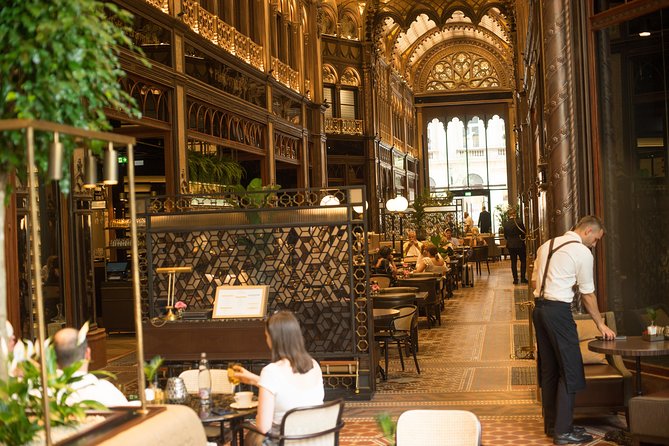
The meeting point is at the stairs of the Lutheran Church on Deák Ferenc Square, one of the easiest central locations to reach by public transportation. From there, the route heads toward Elizabeth Square and the Hungarian State Opera House.
This opening section gives you useful urban context instead of dropping you straight at a single monument. Deák Square is a practical central hub, while Elizabeth Square introduces the city’s more open public spaces. The Opera House then shifts the mood toward Budapest’s grand 19th-century architecture.
You see the Opera House from the outside, so you should not book this expecting an interior performance-space visit. The value is in learning how the Opera House fits into Budapest’s period of ambitious construction, along with the other opulent buildings along the route.
The first walk lasts about 20 minutes. That is enough for an introduction, but not enough for every architectural detail. If the Opera House is a priority for you, treat this stop as a preview and plan a separate visit.
The Millennium Underground to Heroes’ Square
One of the tour’s best ideas is using the Millennium Underground rather than treating transportation as dead time. This historic line is identified as Europe’s first underground railway, and riding it gives the city’s transport system a place in the story.
You continue to Heroes’ Square and City Park, where monumental sculpture and national symbolism replace the ornate downtown streets. Heroes’ Square is one of Budapest’s grandest public spaces, and it provides a useful setting for learning about the people and periods represented there.
The route also includes Vajdahunyad Castle. The castle is especially interesting because its architecture draws on several styles, giving the guide a natural chance to explain how Hungarians presented their national past through buildings.
The listed time for this whole section is about 30 minutes. That is a quick look, not a full City Park visit. You can expect orientation, exterior views, and explanation rather than a long exploration of the castle grounds or nearby museums.
Szechenyi Baths and the city’s thermal tradition
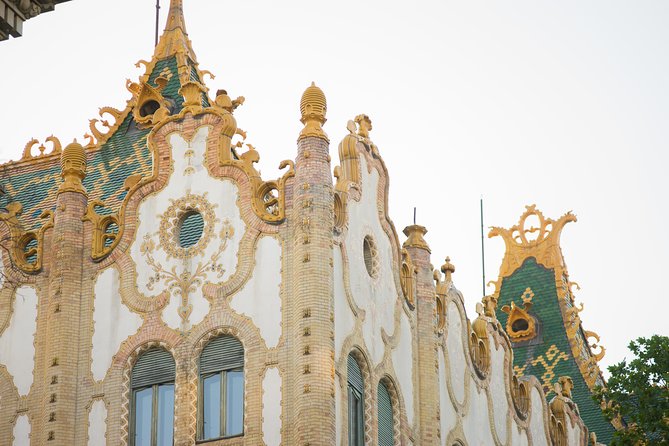
The next stop is the Szechenyi Baths and Pool, Budapest’s most visited thermal bath. The focus is on the history of the bath and its role in the city, with a possible glimpse of the outdoor pools through a side entrance if conditions allow.
That last point is important. This is not a bathing session, and entrance to the pools is not presented as part of the tour. You may get a look inside, but you should not arrive expecting time to change, soak, or use the facilities.
Still, the stop makes sense. Budapest’s thermal baths are central to the city’s identity, and seeing Szechenyi helps explain why a visit to Budapest often includes more than churches and imperial buildings. The guide can place the bath culture beside the city’s architecture and public life.
The visit lasts around 20 minutes before you take the underground back toward central Pest. This keeps the schedule moving, but it also means bath fans may want to return on another day for a proper visit.
A different kind of day in Budapest:
- Budapest: City Highlights Cruise with Welcome Drink
★ 4.6 · 35,610 reviews - Budapest: Széchenyi Spa Day Ticket with Optional Upgrades
★ 4.3 · 23,911 reviews - Budapest: Nighttime or Daytime Sightseeing Cruise
★ 4.2 · 21,062 reviews - Budapest: 1-Hour Evening Sightseeing Cruise with Drink
★ 4.5 · 8,330 reviews
St. Stephen’s Basilica and Hungarian identity
Back downtown, you stop at St. Stephen’s Basilica, or Szent Istvan Bazilika. The discussion centers on the birth of Catholic Hungary, King Stephen, and other important figures from Hungarian history, including football legend Ferenc Puskás.
This combination is useful because it widens the story beyond kings and buildings. King Stephen represents the foundation of Christian Hungary, while Puskás connects the national story to modern popular culture. A good guide can help you see how both figures occupy a place in Hungarian identity, even though they belong to very different eras.
The basilica stop lasts about 15 minutes and is listed as an outside visit. That is enough for a concise explanation and a look at the setting, but not a full interior tour. If you want to study the mosaics, dome, or chapel, reserve separate time.
Coffee and poppy-seed strudel at Strudel House
The food portion arrives as a welcome pause. You stop at the Strudel House for coffee and strudel, with poppy-seed strudel specifically highlighted as part of the experience.
This is a modest tasting rather than a full food tour. That is both its strength and its limitation. You get a chance to sit down, try a familiar Central European pastry in a distinctly Hungarian form, and talk with the guide without walking. You do not get a long series of dishes or a broad survey of Budapest restaurants.
The poppy-seed version is a particularly good choice if you want something beyond the usual apple pastry. The break also gives the afternoon a more human rhythm. After monuments, royal stories, and political discussion, coffee and a sweet pastry make the tour feel less like a checklist.
Because the walk is fairly active, this stop matters more than its small size might suggest. It gives you a chance to rest before the route continues toward Liberty Square and Parliament.
Liberty Square and Budapest’s difficult 20th century
From the Strudel House, you walk toward the banking district and Szabadság tér, or Liberty Square. The square is presented as one of Budapest’s most beautiful, but its importance is not only visual.
You learn about the last remaining Soviet statue, the American Embassy, and the memorial to the German occupation. These nearby sites place several competing versions of modern Hungarian history in one public space. The result is a more complicated picture than a simple parade of national heroes.
This is one of the tour’s more valuable stops for anyone who wants political context. Budapest’s past is not limited to medieval kings or Austro-Hungarian grandeur. The city also carries the marks of occupation, Soviet influence, war, and arguments over how those events should be remembered.
The stop lasts about 20 minutes. That gives you a clear introduction, though the subject is dense. You may want to ask Gabor to explain any monument that catches your eye, particularly because the private format makes follow-up questions easier.
Parliament and the Shoes on the Danube
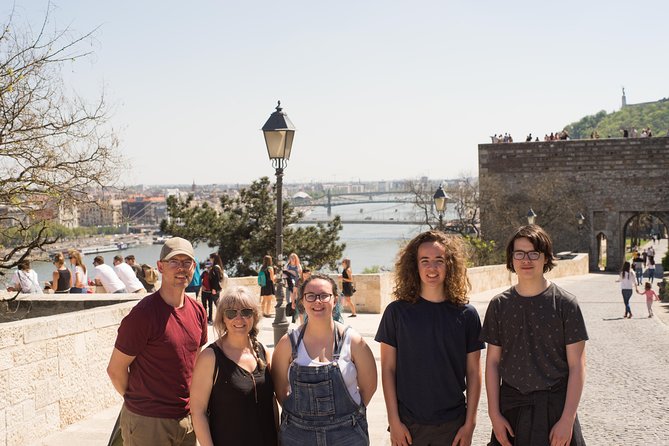
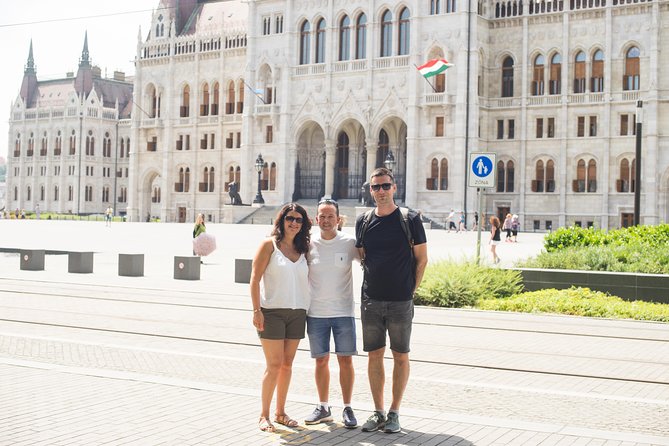
The route continues to Kossuth Square for a view of the Hungarian Parliament Building. Here the conversation covers architecture, older political events, and more recent political issues.
Parliament is one of the city’s defining views, especially from the Danube side, but the tour does not list an interior visit. You will be learning about the building and its setting from outside. If you want to enter Parliament, that would require a separate ticket and plan.
Nearby, you visit the Shoes on the Danube Promenade memorial. The simple row of shoes on the riverbank commemorates people killed during the Second World War. It is a quiet, serious stop, and the tour’s earlier discussion of Liberty Square gives it added political and historical context.
The Parliament and memorial section is listed at about 20 minutes. That is enough to see both and hear their basic stories, but be ready for a compact presentation. The subject deserves attention, so this is a place where asking questions can make the short stop more meaningful.
Metro 2 beneath the Danube to Castle Hill
After Parliament, you take Metro 2, the red line, under the Danube. This is another practical choice that saves your legs while showing how Budapest’s two sides connect.
You then reach Castle Hill and begin the Buda section at Fisherman’s Bastion. The contrast is immediate: central Pest is associated with broad civic spaces and government buildings, while Castle Hill brings you into a more elevated historic quarter.
Fisherman’s Bastion provides a panoramic viewpoint, and the tour uses the lookout terrace as the starting point for the Castle District walk. The view is one of the strongest visual payoffs of the afternoon, with the Danube and Pest spread below.
The listed time is about 30 minutes. You will have time for the panorama and a historical introduction, but not an exhaustive visit to every lane, church, or palace room. The route then continues toward the Royal Palace area, giving you a useful first look at Buda’s historic center.
Down Castle Hill and the Chain Bridge
The final section takes you down Castle Hill along the Funicular. The guide explains the Széchenyi Chain Bridge, Budapest’s first permanent bridge, along with stories about its famous lions.
This ending works well because the bridge is more than a photo stop. It explains the physical and political connection between Buda and Pest, the two cities that joined to form modern Budapest. After seeing both sides during the tour, you can better appreciate why the bridge became such a powerful city symbol.
The Chain Bridge section is listed at about 30 minutes. The provided meeting information is slightly inconsistent: one part names the Chain Bridge as the end point, while another says the walk finishes in the Castle District at Holy Trinity Square, just off Matthias Church. Confirm the exact finish with Budapest Tour Guy, especially if you have an evening reservation or need to meet a driver.
How much value do you get for $90.11?
At $90.11 per person, this is not the cheapest way to see Budapest. Its value depends on what you want from a first look at the city.
You are paying for a private experience, a guide, a carefully connected route, public transit between distant districts, and a coffee and strudel break. You are also covering a remarkable number of major locations without arranging the metro rides yourself.
The price makes more sense for two or more people who value personal attention. A private tour can be especially useful if you want to ask about Hungarian politics, religious history, architecture, or figures such as Ferenc Puskás rather than listen to a fixed script.
The value is weaker if you prefer long interior visits, relaxed photography, or a food tour with several tastings. Most stops are short, and the admission tickets are listed as free because the experience focuses on exteriors and commentary. You are buying guidance and structure, not a package of museum entries.
What the guide adds to the experience
Gabor is the named guide associated with the experience. The strongest practical detail about his approach is flexibility. During one outing, heavy rain and strong wind did not stop him from continuing, and he extended the route close to 6 PM before returning the couple to their hotel.
That account also points to his range. He discusses European history and subjects beyond Europe, while continuing the conversation during metro and tram rides rather than treating transportation as silence between stops.
You should still remember that one guide’s style shapes a private tour. If you enjoy historical explanation and conversation, this format should suit you well. If you want a quiet walk with only short facts, the amount of discussion may feel like a lot.
The private setting also lets you ask for more detail at the stops that matter most to you. I would use that advantage at Parliament, Liberty Square, and the Shoes on the Danube memorial, where a few extra questions can add needed context.
Who should book this Budapest walk?
I would recommend it most strongly for first-time visitors who want a city-wide orientation in one afternoon. It suits couples, families, or small private groups that like walking but also appreciate public transportation when the distances grow.
It is also a good match for anyone who wants history with a human guide rather than a self-guided route. The program moves from medieval and Catholic Hungary to imperial architecture, thermal culture, wartime memory, Soviet influence, and present-day politics.
You should think twice if you have limited mobility or dislike frequent changes of pace. The tour includes walking, metro rides, hills around Castle Hill, and a descent toward the bridge. The supplied information says most people can participate, but it does not give a detailed accessibility assessment for every section.
Service animals are allowed, and the tour is near public transportation. A mobile ticket is provided, and confirmation arrives at booking. You can cancel for a full refund up to 24 hours before the start time. Changes or cancellations inside that window are not refunded, except when the provider cancels because of weather or failure to meet the minimum number of participants.
The final call
Book Budapest Essential Walk&Food tasting if you want a private, history-led overview that connects Pest and Buda without making you plan the transport. Gabor’s flexible approach, the Millennium Underground ride, the Parliament and memorial stops, and the poppy-seed strudel break give the route more character than a basic monument walk.
Skip it if your priority is entering Budapest’s major buildings, spending an hour at the baths, or eating your way through several restaurants. For everyone else, this is a useful first afternoon, especially when you want the city’s big picture before choosing where to return on your own.
FAQ
How long does Budapest Essential Walk&Food tasting last?
The experience lasts approximately three to four hours.
How much does the tour cost?
The listed price is $90.11 per person.
Where does the tour begin?
It begins at the stairs of the Lutheran Church of Ferenc Deák Square, at Deák Ferenc tér 4, 1052 Budapest, Hungary.
Where does the tour finish?
The tour information names the Széchenyi Chain Bridge as the end point, but also says the walk ends at Holy Trinity Square in the Castle District, just off Matthias Church. Confirm the exact finishing point with Budapest Tour Guy.
Is this a private tour?
Yes. Only your own group participates in the activity.
Does the experience include food and drink?
Yes. The route includes a stop at the Strudel House for coffee and strudel, with poppy-seed strudel specifically included in the tour details.
Can I cancel for a full refund?
Yes. You can cancel at least 24 hours before the local start time for a full refund. The experience may also be rescheduled or fully refunded if poor weather causes cancellation or if the minimum number of participants is not reached.
More Walking Tours in Budapest
- Budapest: Buda Castle Walk with Saint Stephen’s Hall
★ 4.5 · 3,012 reviews - Big Bus Budapest Hop-On Hop-Off Bus and Walking Tour
★ 3.5 · 2,206 reviews - Budapest: Buda Castle District Walking Tour
★ 4.6 · 2,108 reviews - Budapest City Landmarks Walking Tour in 2 Hours
★ 5.0 · 2,048 reviews
Recently added around Budapest
- Hiking + Chairlift ride + viewpoints in Budapest★ 5.0 · 3 reviews
- FoolsCode: EscapeRoom/Sightseeing tour with Actor Tourguide★ 5.0 · 3 reviews
- Grand Budapest tour with private transportation★ 5.0 · 3 reviews
- Budapest: Private Customizable Tour in French★ 5.0 · 3 reviews
- Budapest: Private, Personalized Pub Crawl, 3 drinks included★ 4.5 · 3 reviews
- Budapest Drinks and Piano Show Cruise★ 4.5 · 3 reviews
- Discover Budapest Using Tram Two★ 5.0 · 3 reviews
- Budapest: Private 3-Hour Gödöllő Palace Tour★ 4.9 · 3 reviews
Food & Drink, compared.

Unlimited Prosecco, Beer and Aperol Spritz Cruise
Read our review →
Unlimited Prosecco, Beer & Aperol Spritz Cruise
Read our review →Budapest Centre Food Tour with 10+ Tastings, Wine & Street Food
Read our review →


Hungarian Wine Tasting (with Cheese and Charcuterie) in Budapest
Read our review →
Guided Foodie Walking Tour with Food and Drinks
Read our review →
Budapest Food Tour: Market to Tavern with 14+ Tasters & Wines
Read our review →Browse the lists this tour appears in