
Reviewed · COOKING CLASSES
Hungarian Cooking and optional Local Market Tour
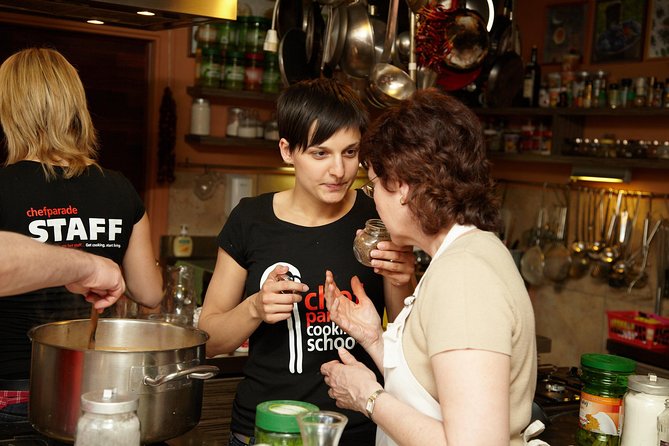
The best part of this Budapest experience is that you do not simply sit down to Hungarian food. You make it from scratch, then eat the results with wine, local drinks, and stories about Hungarian customs. Chicken paprikash with homemade nokedli is the star for many people, though the menu can vary.
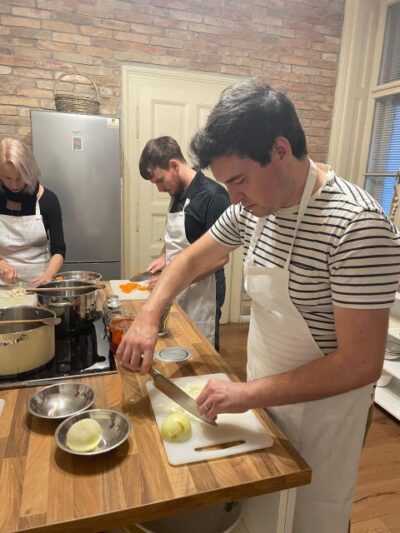
I like the hands-on cooking and the easy social setup. You chop vegetables, stir sauces, make spaetzle-like nokedli, and work with thin pastry rather than watching a chef do everything. I also like the optional Central Market Hall visit, where you can taste paprika, cheese, meats, pastries, and other Hungarian flavors before heading to class.
The main caution is practical: the market tour can feel rushed, and the cooking school location and return transport need careful checking. The basic experience ends at the school, and one past class had confusion about taxis and premium extras. Ask for the exact meeting and end arrangements before you go.
In This Review
- Key points at a glance
- What this Hungarian cooking class is really like
- Starting at Páva Street and the Central Market Hall
- Cooking goulash, paprikash, and nokedli
- Apple strudel and the pleasure of making dessert
- Wine, pálinka, and the Hungarian table
- How much attention will you get?
- Price, timing, and the value of the market add-on
- The transport issue you should settle before booking
- Who should book this experience?
- Should you book the market tour too?
- FAQ
- How long does the Hungarian cooking experience last?
- Where does the tour start?
- Where does the experience end?
- What dishes will I cook?
- Is a vegetarian menu available?
- Is the Central Market Hall tour included?
- What is the cancellation policy?
Key points at a glance
- Three dishes made from scratch: Goulash soup, chicken or mushroom paprikash with nokedli, and apple strudel are the advertised menu.
- The Central Market option adds context: You can learn how Hungarians shop, compare local foods, and taste ingredients before cooking.
- Small groups matter: The maximum is 15 people, and smaller classes can give you close attention from the instructor.
- Instructors are a major strength: Vesna, Bernadette, Brigitte, Betty, Adrienne, Sylvia, and others have led classes praised for patience and clear instruction.
- Drinks are part of the table: Expect Hungarian wine and local beverages, with a little pálinka tasting and sometimes an after-dinner taste of Unicum.
- Check the package details: The standard booking does not necessarily include an apron, cookbook, or taxi back to the market.
What this Hungarian cooking class is really like
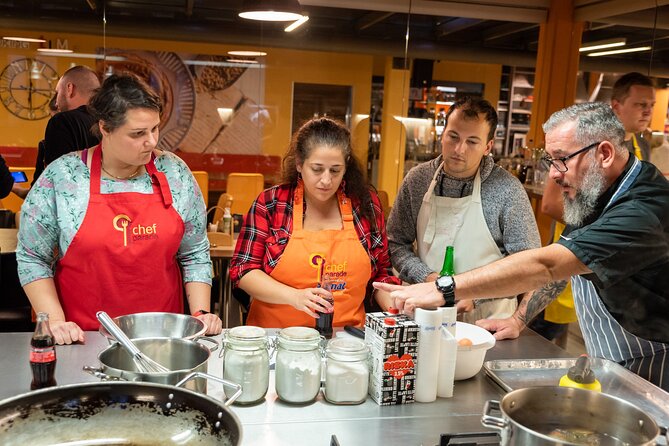
This is a cooking lesson with lunch built in. Over roughly four hours, you prepare a Hungarian menu, sit down together to eat it, and learn how food fits into everyday Hungarian life.
The tone is informal. You are not expected to be a professional cook. The instructors explain techniques in English and work with the group as the meal comes together. Several instructors are named in past class experiences, including Vesna, Bernadette, Brigitte, Betty, Sylvia, and Adrienne. You cannot choose a particular teacher from the information provided, but the teaching style is clearly an important part of the experience.
The class is capped at 15 people. That is large enough to create a friendly table, but small enough that the lesson can be more personal than a demonstration in a large studio. Some sessions may be much smaller. One couple found themselves alone in class, which turned a scheduling problem into a private-feeling lesson.
You should expect to cook a portion of each dish, not merely watch. The exact division of jobs depends on the class, but past menus involved preparing vegetables and stock, handling chicken and sauce, making nokedli, and assembling strudel. The results are served to the group, often with wine or beer.
More cooking classes in Budapest:
- Budapest Cooking Class & Market Tour with Local Guide & Wines
★ 5.0 · 553 reviews - Premium Hungarian Home Cooking Experience with Chef Marti
★ 5.0 · 169 reviews - Budapest: Hungarian Cooking Class and Market Walk
★ 5.0 · 91 reviews
Starting at Páva Street and the Central Market Hall
The supplied meeting information names Budapest’s Central Market Hall as the starting point, while the itinerary also lists Páva Street. This is the first detail I would confirm after booking, because the cooking school has been described at Páva Street 13 in Pest, with another possible school location at Bécsi Street 27 in Buda.
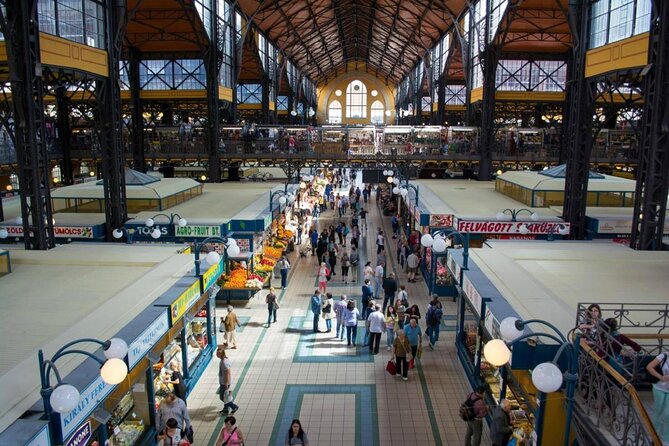
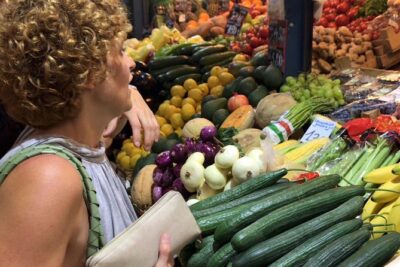
If you choose the market option, the Central Market Hall is the natural opening scene. This grand indoor market is one of Budapest’s most useful places for getting acquainted with Hungarian ingredients. The guide shows you how people shop, not just where tourists take photographs.
The market portion can include tastings of local produce, cheeses, meats, pastries, and paprika products. You may learn that similar-looking goods from different stalls can vary in quality, and that paprika is more than a red powder sprinkled over food. The guide can point out which varieties and products work best for cooking at home.
I like this part because it gives the recipes a sense of place. Goulash and paprikash are easier to understand when you have handled the ingredients and tasted local versions first. The market is also a good place to buy paprika or condiments for your suitcase, though you may not have much shopping time.
That last point matters. The market walk is intended as an introduction, not a leisurely shopping expedition. One session allowed about an hour, which was enough for an overview and tastings. Another felt rushed, with too much time spent warning people what not to buy and too little time to make purchases. If you want to shop seriously, plan to return to the market on your own.
Cooking goulash, paprikash, and nokedli
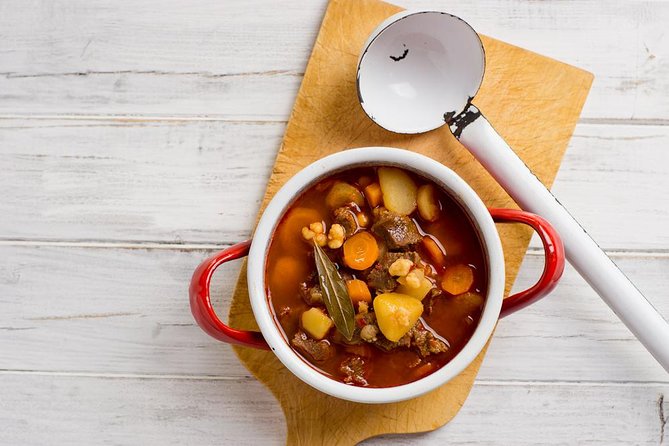
The advertised starter is goulash soup, a hearty beef soup with vegetables. Hungarian goulash is not simply a thick stew. In soup form, it depends on a paprika-based broth, beef, and vegetables, with the seasoning and cooking time doing much of the work.
The class gives you a chance to see how the soup is built rather than meeting it only in a restaurant bowl. In some sessions, the menu has included creamy potato soup instead, so do not assume the exact starter is fixed for every date.
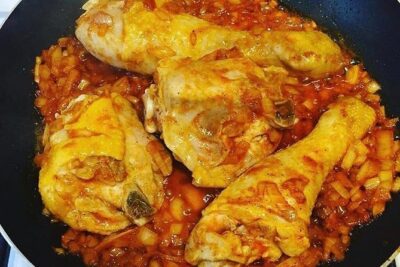
The main dish is usually chicken paprikash with nokedli. Paprikash is a creamy chicken dish shaped by paprika, onions, and a smooth sauce. Nokedli are small, fresh dumplings similar to Central European spaetzle. Making them yourself is one of the class’s most useful lessons because they are simple, filling, and practical to repeat at home.
You may also receive mushroom paprikash instead of chicken. A vegetarian menu is available on request, but options for allergies and religious dietary restrictions may be limited. State your needs when booking, not when you arrive.
The cooking is not necessarily a quick assembly line. One detailed class spent about an hour on the chicken paprikash, turning the chicken and stirring the sauce so it would not overcook. That is a good sign for anyone who wants to learn proper technique, though it also means the session can feel hurried if the group falls behind.
There is one important variation to understand. A past class used boneless, skinless chicken even though the recipe called for a different cut. The instructor adapted the dish and explained how to make the traditional version at home. If authentic technique matters to you, ask questions during class and take notes on the standard ingredients.
Apple strudel and the pleasure of making dessert
Dessert is apple strudel, made with thin pastry and a sweet apple and cinnamon filling. This is a worthwhile finale because pastry can look intimidating in a cookbook, yet the class breaks it into manageable steps.
You may prepare the filling, work with the pastry, and bake the strudel as part of the group meal. One class had enough extra strudel for people to take some back with them. That is not something I would count on, but it is a pleasant possibility.
The dessert also gives the class a different rhythm. Soup and paprikash teach you about seasoning, stirring, and heat. Strudel asks for care with texture and assembly. By the end, you have handled several basic Hungarian cooking methods rather than learning only one signature dish.
Recipes are provided to take home. Some people also bought the school’s cookbook, sweet paprika, and condiments, but those purchases are separate from the standard activity.
More Budapest markets:
- Budapest Food Tour: Market to Tavern with 14+ Tasters & Wines
★ 5.0 · 434 reviews - Budapest: Hungarian Cuisine in the Market Hall (german)
★ 4.8 · 146 reviews - Easy Cooking Class Budapest – with Market Walk (local wine & pálinka included)
★ 5.0 · 62 reviews - Budapest Great Market Hall Chef‑Led Private Tasting Tour
★ 5.0 · 61 reviews
Wine, pálinka, and the Hungarian table
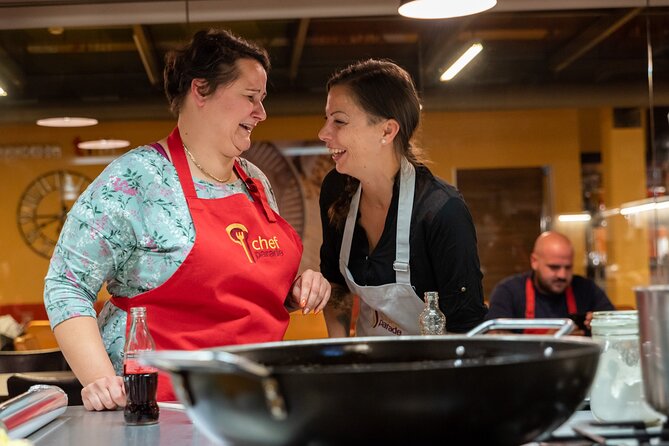
Food is only half the lesson. The class includes local snacks and drinks while you cook, with Hungarian wine and a little pálinka tasting woven into the storytelling.
Pálinka is a strong fruit spirit, and the tasting is meant to be small. You do not need to be a spirit enthusiast to appreciate its place in Hungarian hospitality. The class may also include beer or wine with lunch. One session ended with a taste of Unicum, though that was described as an extra rather than a guaranteed part of the program.
The drinks help turn the meal into a cultural exchange, but they also make this a poor choice if you want a strictly alcohol-free activity. The supplied details do not spell out a nonalcoholic option, so ask the school ahead of time if that is important to you.
I especially like the storytelling because it gives practical reasons behind the food. You hear about Hungarian traditions, cooking habits, and daily life while your hands are busy. It is a more natural way to learn culture than a formal lecture.
How much attention will you get?
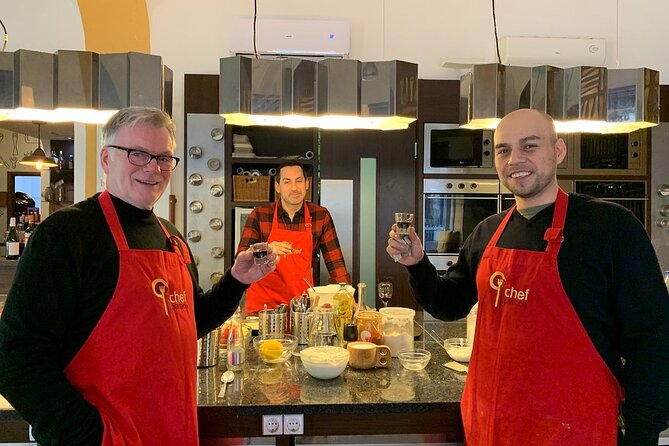
The maximum group size is 15, but the actual experience can vary. In a full class, you may prepare part of a dish and contribute to food served to everyone. In a small class, you can expect more direct correction and more time to ask questions.
The most praised instructors have been described as patient, approachable, lively, and easy to understand. Vesna received repeated praise for both the market walk and the cooking lesson. Bernadette was singled out for explaining not only what to do, but why a technique works and what alternatives are possible. Betty was praised for clear instruction and for sharing the cultural background of Hungarian food.
Those details matter if you are a beginner. You are not just handed a recipe and left alone with a pile of onions. The class is designed to teach skills you can use at home, such as preparing fresh dumplings, building a sauce, and working with paprika.
Still, a group class has limits. You may not personally perform every step of every recipe. If you want a private chef lesson with full control over the menu, this may not be the right format. If you want a social cooking session with plenty of shared food, it fits well.
Price, timing, and the value of the market add-on
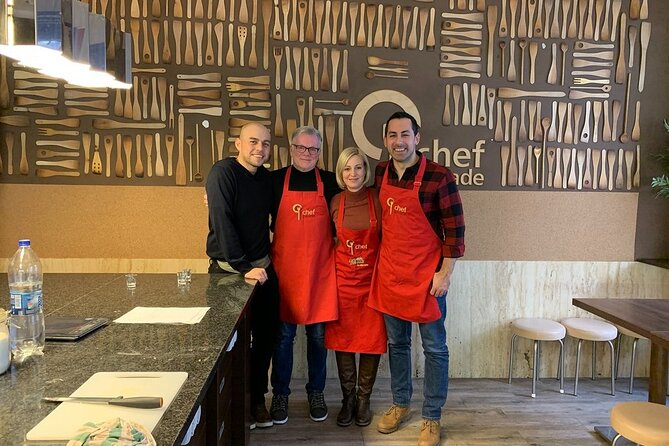
At $126.98 per person, this is not a cheap lunch. It is more useful to compare it with the cost of a guided market visit, a cooking lesson, a three-course meal, drinks, and recipes. If you value learning and want a food memory you can recreate, the price can make sense.
The market add-on improves the value for a first visit to Budapest because it connects the ingredients to the dishes. I would add it if you enjoy food shopping and want help understanding paprika, cheese, pastries, meats, and local produce.
I would be more cautious if your main goal is buying gifts. The market visit may be too short for relaxed shopping. You can visit Central Market Hall separately and take your time.
The activity lasts about four hours, so it uses a good part of a morning or afternoon. It is best scheduled when you do not have a tight museum reservation immediately afterward. Cooking, eating, and moving between locations can take longer than the posted estimate.
The booking is offered in English and includes a mobile ticket. It is available near public transportation. Free cancellation is allowed up to 24 hours before the start time, with no refund for later cancellations or late changes.
The transport issue you should settle before booking
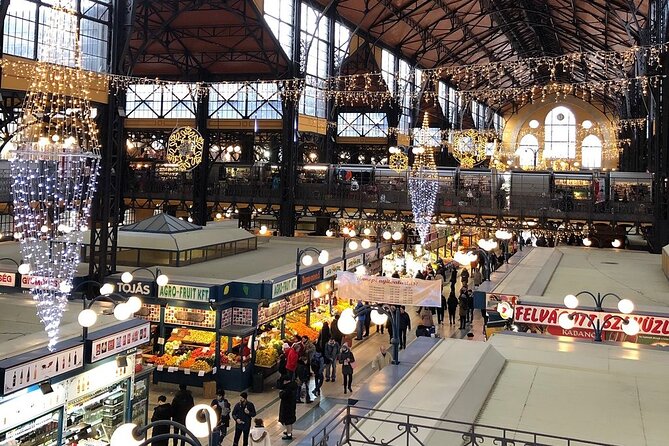
The most important practical wrinkle is the end point. The experience ends at the cooking school, either at Páva Street 13 in Pest or Bécsi Street 27 in Buda, according to the supplied details. That does not automatically mean you return to Central Market Hall.
One past group had confusion because some people had purchased a premium package that included transport, an apron, and a cookbook, while the basic booking did not include those extras. The group eventually shared a taxi back, but the wait was more than 20 minutes and the ride arrangement was awkward.
Do not assume that a taxi back is included simply because Central Market Hall is the meeting point. Confirm the exact school address, how you will get there, and how you will return before the class begins. If you are booking through a third-party site, check which package you have purchased.
This is not a reason to reject the cooking class. It is simply the sort of small detail that can affect your mood after a long meal and a busy afternoon.
Who should book this experience?
I would recommend it to you if food is one of the main ways you understand a place. It suits couples, families with adult children, friends, solo visitors comfortable joining a group, and anyone who wants more than a restaurant meal.
Beginners should feel at home. Past lessons have welcomed people who considered themselves noncooks, and the instructions are intended to be followed at the counter. Experienced cooks can enjoy the cultural background and pick up useful details, too. One retired chef still found new techniques to take home.
The class is also a smart choice near the end of your Budapest stay. You finish with recipes, food memories, and ingredients you can seek out again. It gives you a final taste of Hungary that is more personal than another dinner reservation.
I would think twice if you need strict control over ingredients, dislike shared meals, avoid alcohol, or want a slow market shopping trip. Dietary requests should be stated in advance, and the choices for allergies or religious restrictions may be limited.
Should you book the market tour too?
Yes, if you want the full food experience and can accept a brisk pace. The market tour gives you a useful introduction to Hungarian ingredients and helps you understand what you are about to cook. It also gives the instructor a chance to explain local quality and flavor before the practical work starts.
Skip it if you have already explored Central Market Hall carefully or want maximum time at the stove. You can take the cooking class alone and still get the main benefit: hands-on preparation, a shared meal, drinks, cultural stories, and recipes.
My biggest advice is to confirm the start point, school location, transport, menu, and package inclusions. Do that, and this is a strong pick for an authentic, good-humored afternoon in Budapest. You cook real Hungarian dishes, learn techniques you can repeat, and leave with more than a full stomach.
FAQ
How long does the Hungarian cooking experience last?
The experience lasts approximately four hours, including the cooking and meal. The optional market portion is included within the overall timing when selected.
Where does the tour start?
The supplied meeting information lists Central Market Hall in Budapest as the starting point. Páva Street is also listed in the itinerary, so confirm the exact meeting instructions after booking.
Where does the experience end?
The activity ends at the cooking school. The possible school addresses provided are Páva Street 13 in Pest or Bécsi Street 27 in Buda.
What dishes will I cook?
The advertised menu includes goulash soup, chicken paprikash with nokedli, and apple strudel. Mushroom paprikash may replace the chicken dish, and other past classes have included dishes such as creamy potato soup or palacsinta.
Is a vegetarian menu available?
A vegetarian menu is available on request. You must provide dietary requirements when booking, and options for allergies and religious dietary restrictions may be limited.
Is the Central Market Hall tour included?
The market visit is optional. It can include guidance through the market and tastings of Hungarian products such as produce, cheese, meats, pastries, and paprika.
What is the cancellation policy?
You can cancel up to 24 hours before the experience start time for a full refund. Cancellations or changes made less than 24 hours before the start time are not accepted for a refund.
More Shopping Tours in Budapest
- Budapest: Central Market Hall Guided Food Tour with Tastings
★ 4.9 · 46 reviews - Budapest Market Tour & Home Cooking Class with local Chef & Guide
★ 5.0 · 23 reviews - Budapest Christmas Market Tour with Basilica visit & Chimney cake
★ 5.0 · 18 reviews - Gourmet Market Walk at the Great Market Hall of Budapest
★ 4.5 · 18 reviews
Recently added around Budapest
- Hiking + Chairlift ride + viewpoints in Budapest★ 5.0 · 3 reviews
- Grand Budapest tour with private transportation★ 5.0 · 3 reviews
- FoolsCode: EscapeRoom/Sightseeing tour with Actor Tourguide★ 5.0 · 3 reviews
- Budapest: Private Customizable Tour in French★ 5.0 · 3 reviews
- Budapest: Private, Personalized Pub Crawl, 3 drinks included★ 4.5 · 3 reviews
- Budapest Drinks and Piano Show Cruise★ 4.5 · 3 reviews
- Discover Budapest Using Tram Two★ 5.0 · 3 reviews
- Budapest: Private 3-Hour Gödöllő Palace Tour★ 4.9 · 3 reviews
Cooking Classes, compared.
Budapest Cooking Class & Market Tour with Local Guide & Wines
Read our review →
Premium Hungarian Home Cooking Experience with Chef Marti
Read our review →
Easy Cooking Class Budapest – with Market Walk (local wine & pálinka included)
Read our review →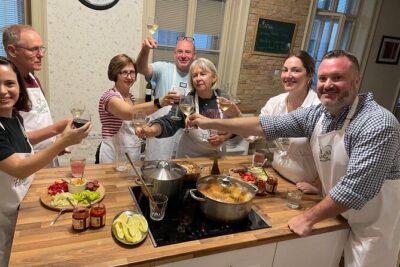
Budapest Market Tour & Home Cooking Class with local Chef & Guide
Read our review →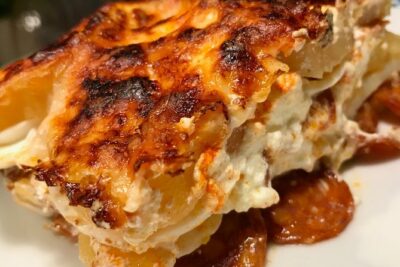
Hungarian Premium Cooking Class with 4-course meal
Read our review →Browse the lists this tour appears in