
Reviewed · JEWISH HERITAGE TOURS
Budapest Dohany, Heroes’, Rumbach synagogues & Jewish Ghetto Tour
Budapest’s Jewish Quarter is more than a collection of handsome synagogues. It is a place where religious life, war, loss, food, architecture, and today’s café culture sit side by side. This walking tour brings those layers together, beginning at the Great Synagogue and moving through the former ghetto to the restored Rumbach Synagogue.
I like two things especially: the tour puts three distinct Jewish traditions and architectural styles into one compact route, and its guides, including Milan, David, Micky, and Daniel, explain difficult subjects with care and personal connection. The main consideration is pace: 2 hours 20 minutes packs in a lot of talking, memorials, and synagogue visits, while the tour title suggests Heroes’ Square even though that stop is not listed in the route.
In This Review
- Key points to know before booking
- Starting at the Great Synagogue on Dohány Street
- The Tree of Life and the ghetto cemetery
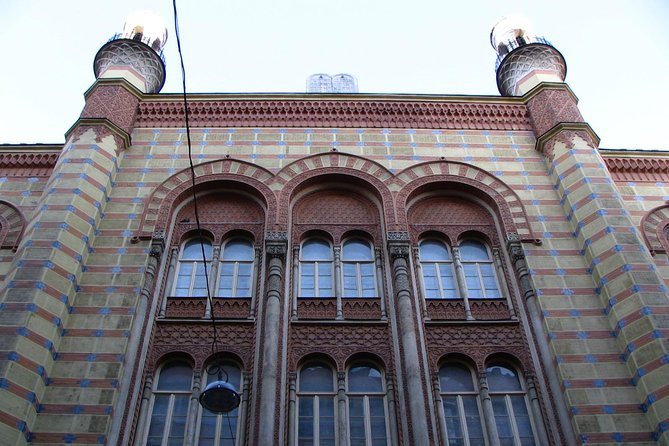
- Rumbach Synagogue and Otto Wagner’s Moorish design
- Kiraly Street, once the center of Jewish Pest
- Gozsdu Udvar and the present-day quarter
- Remembering Carl Lutz
- Spinoza Theater and the street’s cultural life
- Dob Street and the route through the former ghetto
- Kazinczy Street and Orthodox Budapest
- How much does $63.52 buy you?
- Dress, weather, and synagogue etiquette
- Who will get the most from this tour?
- Should you book the Budapest Jewish Quarter tour?
- FAQ
- How long does the tour last?
- Where does the tour start?
- Where does the tour end?
- Is admission to the Great Synagogue included?
- Is admission to Rumbach Street Synagogue included?
- Is admission to Kazinczy Street Synagogue included?
- What should I wear to enter the synagogues?
Key points to know before booking
- Three synagogue traditions in one short tour: Compare the Great Synagogue, Rumbach Synagogue, and the Orthodox center around Kazinczy Street.
- Holocaust sites are part of the route: See the Tree of Life memorial and the cemetery where more than 2,000 ghetto victims are buried.
- Guides add personal context: Milan, David, Micky, and Daniel are praised for clear explanations, thoughtful stories, and an easy manner.
- Rumbach Synagogue is the architectural surprise: Otto Wagner’s 1872 Moorish design gives the tour a memorable final interior.
- The walk is compact but talk-heavy: Most travelers can take part, yet you should allow attention and emotional energy for serious historical subjects.
- Dress for synagogue entry: Cover your shoulders and knees. Men can receive a head covering at the entrance, and additional cover is available for purchase.
Starting at the Great Synagogue on Dohány Street
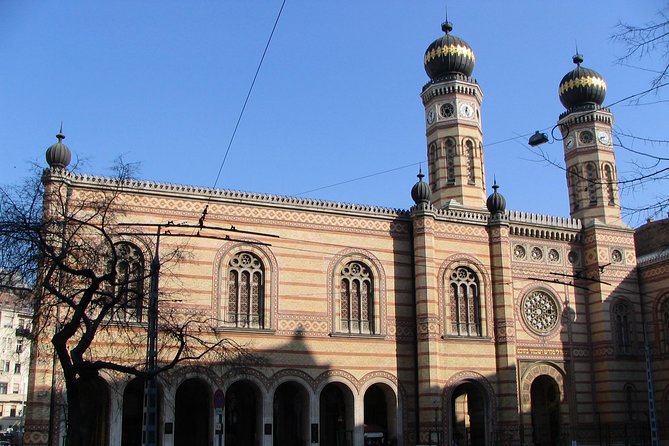
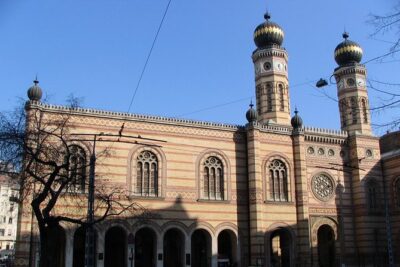
Meet at Dohány u. 2-4, in front of the Great Synagogue, also called the Central Synagogue. This is a convenient starting point in Pest, close to public transport and easy to fit into a day in the city.
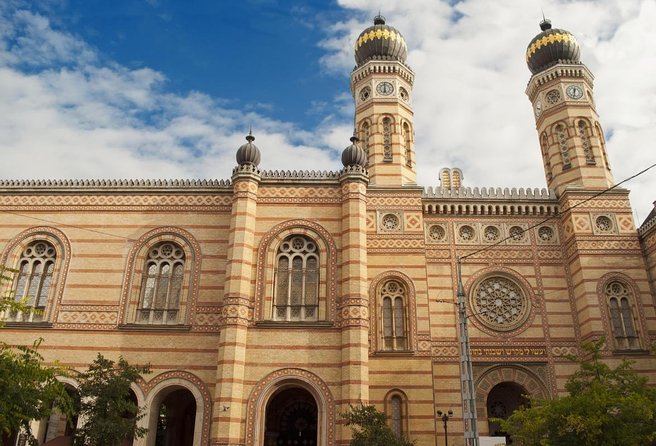
The first visit lasts about 30 minutes. The Great Synagogue is Europe’s largest Jewish temple, and its scale can surprise you before the guide says much at all. Inside, you learn about Hungarian Neologue Judaism, a movement that developed its own religious and cultural character within Hungarian Jewish life.
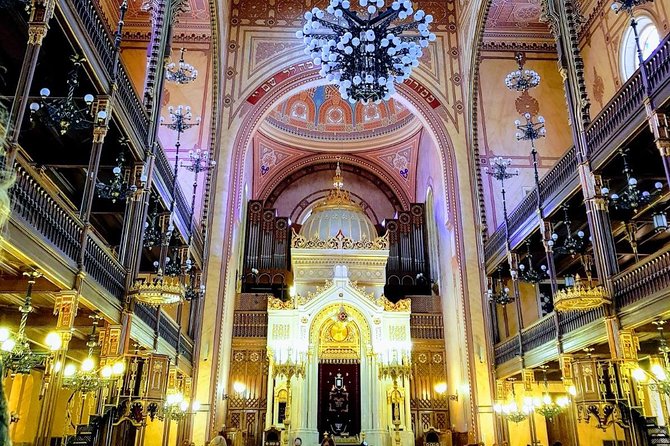
The building dates from the 1850s and mixes synagogue design with grand European architectural influences. Your guide also points out the organ, which was played by Franz Liszt. That detail helps explain why this building feels different from the smaller Orthodox synagogues later in the tour.
I find this opening useful because it gives you a framework for everything that follows. You are not simply looking at decorative interiors. You are learning how Jewish communities in Budapest differed in religious practice, social outlook, and architecture.
The Great Synagogue visit is included in the price. One practical point is easy to miss: the synagogue complex also has a museum in the basement, and the short visit may not leave time to explore every part of it. If that museum matters to you, ask your guide early about what is included and what you may need to visit separately.
More of Jewish Budapest:
- Budapest Jewish Heritage Memorial Walking Tour & Synagogue Entry
★ 5.0 · 568 reviews - Budapest: Jewish Heritage Guided Tour with Synagogue Ticket
★ 4.8 · 533 reviews - Budapest walking tour: Parliament and Shoes Memorial
★ 5.0 · 387 reviews
The Tree of Life and the ghetto cemetery
From the synagogue, the tour continues to Raoul Wallenberg Holocaust Memorial Park. Allow about 20 minutes here, though the subject may hold your attention longer than the clock suggests.
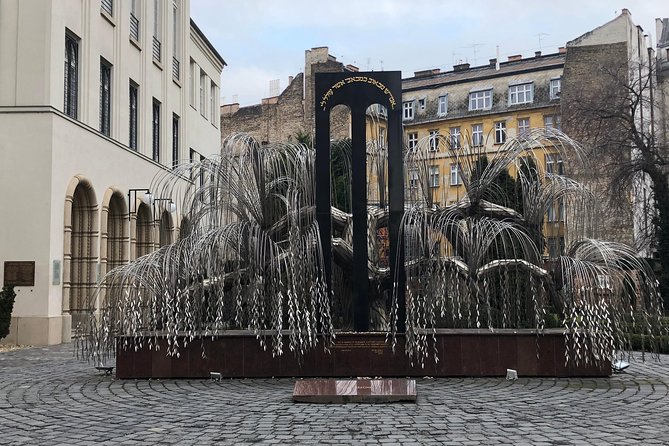
The focus is the Hungarian Holocaust and the people who helped save Jewish lives. The Emmanuel Tree of Life memorial records the names of victims on its leaves, creating a powerful visual reminder of the scale of the destruction. You also hear about Righteous Gentiles who risked their own lives to protect tens of thousands of Hungarian Jews.
The park includes a cemetery created on the former Budapest ghetto grounds. More than 2,000 victims are buried there. This is one of the tour’s most important stops because it places the Holocaust within the very streets you are walking through, rather than treating it as a distant chapter in a museum.
The guide’s approach matters here. Milan is particularly praised for combining historical detail with family stories, including accounts connected to Holocaust survival. David is also noted for bringing the subject to life through personal experience and a sense of connection to the local community.
Expect a serious tone. The guides may use humor at other points to keep the walk human and approachable, but the memorial park calls for quiet attention. If you prefer a light sightseeing tour, this is not the right choice. If you want to understand what happened in this part of Budapest, the stop gives the walk real purpose.
Rumbach Synagogue and Otto Wagner’s Moorish design
The Rumbach Street Synagogue is one of the strongest parts of the experience. The visit takes about 45 minutes, making it the longest single stop.
Designed by Viennese architect Otto Wagner in 1872, Rumbach is a striking Moorish-style building. It reopened after years of renovation, and its restored interior gives you a chance to see a very different expression of Jewish architecture from the Great Synagogue.
This contrast is where the tour earns its price. You can compare the grand Neologue style of Dohány with Rumbach’s more intimate, ornate design. The guide explains how architectural choices reflected the community that used each building, rather than treating the synagogues as pretty backdrops.
Several guides receive especially strong praise for this part of the route. Milan is described as engaging, warm, and able to answer detailed questions. Micky is appreciated for explaining how religious differences shaped the buildings, while David is praised for mixing historical facts with personal comments.
The tour ends at Rumbach Synagogue, which is useful if you have plans in the Jewish Quarter afterward. It also means you should not expect a return to Dohány Street. Check the exact closing point before planning your next activity.
Kiraly Street, once the center of Jewish Pest
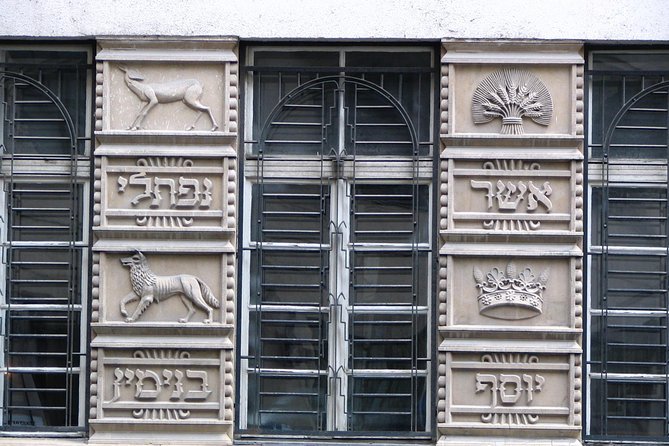
The outdoor walking section begins to connect the synagogues with ordinary city life. Kiraly Street receives about 10 minutes, but its role in the story is much larger than that short time suggests.
In the 18th and early 19th centuries, Kiraly Street was a major commercial route in Pest. Jewish shops, trade, and community life grew along this area, helping make it a central part of Jewish Budapest.
Today, the street again carries shops, restaurants, and cultural activity. Your guide uses buildings and street patterns to show how the district changed over time. The tour is not just about monuments. It is also about how a neighborhood can lose much of its population, survive, and later develop a new public identity.
This part is best understood as a moving lesson rather than a formal sightseeing stop. You may not spend long at any one building, so listen for the small details: Jewish motifs, old commercial roles, and clues to the district’s changing population.
A different kind of day in Budapest:
- Budapest: City Highlights Cruise with Welcome Drink
★ 4.6 · 35,610 reviews - Budapest: Unlimited Prosecco, Beer and Aperol Spritz Cruise
★ 4.8 · 25,310 reviews - Budapest: Széchenyi Spa Day Ticket with Optional Upgrades
★ 4.3 · 23,911 reviews - Budapest: Nighttime or Daytime Sightseeing Cruise
★ 4.2 · 21,062 reviews
Gozsdu Udvar and the present-day quarter
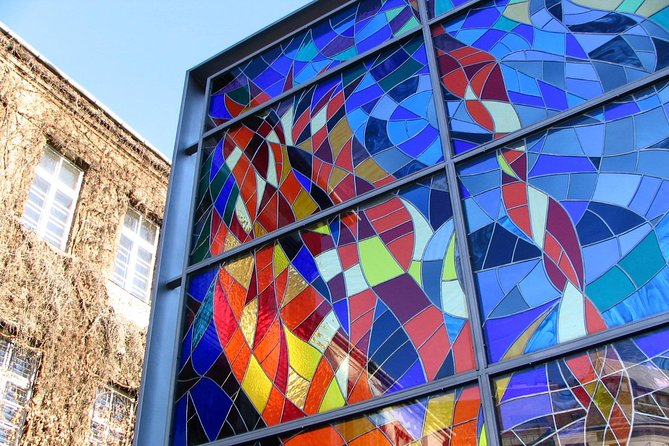
Gozsdu Udvar is described as one of the liveliest parts of the Jewish district. In earlier years, the courtyards held kosher salami stores, food shops, and apartments. Today, the passage is tied to dining, local art, crafts, antiques, and entertainment.
You get roughly 10 minutes here. That is enough for an introduction, but not enough to browse every shop or stop for a meal. One practical lesson is to resist planning a long food break during the tour. The route keeps moving, and stopping for flodni or another Jewish specialty may mean missing part of the explanation.
The district’s modern life can feel very different from the memorial park only a few minutes away. That contrast is part of the point. The tour shows you a neighborhood with painful memories, active religious institutions, restaurants, galleries, and nightlife all sharing the same streets.
Remembering Carl Lutz
The Carl Lutz Memorial is a brief five-minute stop. Lutz was a Swiss diplomat who helped save thousands of Hungarian Jews during the Holocaust.
The stop is short, but it adds another human face to the history of rescue. Rather than presenting the Holocaust only through numbers and dates, the guide explains how individual choices could protect lives under dangerous conditions.
Do not expect a long museum-style presentation here. The value is in the connection between the memorial and the surrounding streets. You are standing in the former ghetto area, hearing about someone who acted within that same urban setting.
Spinoza Theater and the street’s cultural life
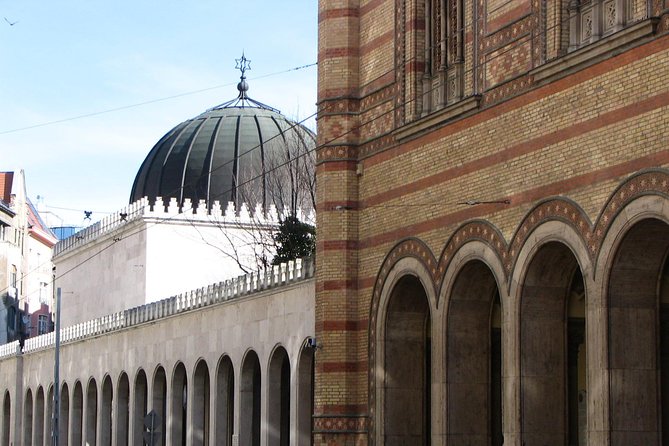
The Spinoza Theater receives about five minutes. Its name refers to Baruch Spinoza, the 17th-century Jewish Dutch philosopher of Portuguese Sephardi origin and an early figure of the Enlightenment.
The venue combines a restaurant, gallery, cultural stage, and theater. It gives the guide a chance to talk about Jewish cultural life beyond religious buildings and wartime history.
This is a small stop, but it helps keep the tour from becoming only a story of persecution. You see how Jewish identity in Budapest has also been expressed through food, philosophy, performance, and public culture.
Dob Street and the route through the former ghetto
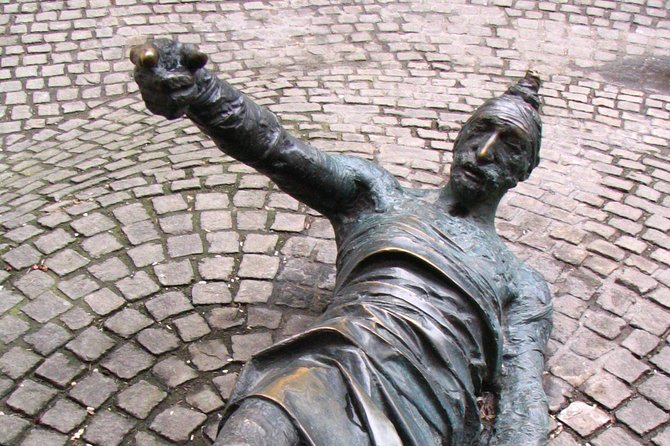
Dob Street runs parallel to Kiraly Street and once formed another central artery of Jewish Pest. It also passed through the Budapest ghetto.
The tour allows about 10 minutes here. Your guide links present-day street life with the area’s wartime boundaries and the earlier role of the street in Jewish commerce and community life.
This is where a good guide makes a major difference. On your own, you might see cafés, façades, and busy sidewalks without understanding what the streets meant in different periods. Guides such as Milan are praised for giving clear geographic context, which is especially useful in a district where the ghetto’s former limits are not always obvious.
The outdoor sections are not long hikes. One participant with a recent hip surgery found the walking manageable, but the route still involves standing and moving between sites. Wear comfortable shoes and be prepared to listen while standing outdoors.
Kazinczy Street and Orthodox Budapest
Kazinczy Street is the final major area on the route. The street is known today for ruin pubs and nightlife, but it is also home to Budapest’s Hungarian Orthodox Jewish center.
Here you see the Orthodox synagogue, mikveh, kosher restaurants and cafés, schools, butcher shops, and kosher food stores. The synagogue itself reflects early 20th-century Art Nouveau, known in Budapest as Secession architecture.
This stop adds a needed comparison to the Neologue Great Synagogue and Rumbach. Hungarian Jewish life was not one uniform tradition. Different communities shaped their own buildings, customs, institutions, and relationships with wider Hungarian society.
The schedule allows about 15 minutes. The listing says admission to the Kazinczy Street Synagogue is not included, so you should treat this part primarily as an exterior and neighborhood visit unless the guide confirms otherwise. This is also a useful place to ask about kosher food or flodni, the Hungarian Jewish layered cake mentioned along the route.
How much does $63.52 buy you?
At $63.52 per person, this is not the cheapest way to stroll through the Jewish Quarter. You are paying for an English-language guide, synagogue admissions at the included sites, and a focused account of Jewish Budapest rather than a general city walk.
The value is strongest if you want interpretation. The Great Synagogue and Rumbach Synagogue have admission costs of their own, and the guide links their designs to religious history, Hungarian identity, and the fate of the local community. That saves you from looking at three beautiful buildings without understanding why they differ.
The tour is also a good use of time if you have only a few days in Budapest. In just over two hours, you see major religious buildings, Holocaust memorials, the former ghetto, and current Jewish institutions.
The value is weaker if you mainly want independent exploration. The outdoor stops are brief, and the tour can feel talk-heavy. One critical assessment found there was not much walking and that a long lecture took up much of the time. That is fair. You should book this for explanation and context, not for a fast-paced neighborhood ramble.
The group can include up to 35 people. That is a moderate-to-large group for narrow streets and synagogue interiors. A strong guide can manage it well, and the guides are often praised for adjusting explanations to different levels of background knowledge, but you may want to stay close enough to hear clearly.
Dress, weather, and synagogue etiquette
Regular clothing is acceptable, but your shoulders must be covered and clothing must reach the knee before you enter. If needed, a cover can be purchased on site. Men can receive a head covering at the entrance.
Bring a layer. One person found the tour quite chilly, and parts of the route take place outdoors or in large stone interiors. Comfortable shoes are sensible, even though this is not a strenuous walk.
Synagogues can close without notice. If one synagogue is unavailable, the operator may offer another visiting time, but no refund is offered when only one site is affected because the experience is sold as a package. If all synagogues close, you can receive an alternative date or time, or a full refund.
The tour requires good weather. If poor weather cancels it, you are offered a different date or a full refund. Normal cancellation is free up to 24 hours before the start time, but changes or cancellations inside that window are not accepted.
Who will get the most from this tour?
I would choose this tour if you want a serious but approachable introduction to Hungarian Jewish history. It suits first-time visitors who want a clear route and people who care about architecture, religion, Holocaust history, or the Jewish community in Budapest today.
It is also useful if you are unsure how Neologue and Orthodox traditions differ. The tour gives you a direct visual comparison, then places both within the streets of the old Jewish district.
You may prefer a different plan if your main goal is Heroes’ Square. Despite the experience name, Heroes’ Square is not included in the supplied route. The listed walk covers Dohány Street, the memorial park, Rumbach, Kiraly, Gozsdu Udvar, Dob, and Kazinczy streets, ending at Rumbach Synagogue.
You should also allow extra time if you want to visit museums, shop for Jewish foods, or sit down at Gozsdu Udvar. The schedule is tightly arranged, and a food stop could make you miss part of the walk.
Should you book the Budapest Jewish Quarter tour?
Yes, if you want history explained by a thoughtful local guide, not just a series of synagogue entrances. Milan, David, Micky, and Daniel are all praised for clear delivery, warmth, personal stories, and the ability to answer questions. The strongest parts are the Great Synagogue, Raoul Wallenberg Memorial Park, and Rumbach Synagogue.
Book with realistic expectations. This is a compact, serious, sometimes lecture-heavy walk for a maximum of 35 people. Confirm the Heroes’ Square question, check what is open on your date, dress for synagogue rules, and leave food browsing for afterward.
At $63.52, I consider it good value for a visitor who wants context, architecture, and Holocaust remembrance in one outing. If that is your Budapest priority, this tour gives you a meaningful way into the Jewish Quarter.
FAQ
How long does the tour last?
The tour lasts approximately 2 hours and 20 minutes.
Where does the tour start?
It starts at Budapest, Dohány u. 2-4, 1075 Hungary, at the Great Synagogue.
Where does the tour end?
The program ends at Rumbach Street Synagogue, at Rumbach Sebestyén u. 13, 1074 Hungary.
Is admission to the Great Synagogue included?
Yes. Admission to the Great Synagogue is included.
Is admission to Rumbach Street Synagogue included?
Yes. The itinerary includes admission to Rumbach Street Synagogue.
Is admission to Kazinczy Street Synagogue included?
The itinerary states that admission to Kazinczy Street Synagogue is not included.
What should I wear to enter the synagogues?
Wear regular clothing with your shoulders covered and clothing reaching the knee. A cover can be purchased on site if needed, and men can receive a head covering at the entrance.
Recently added around Budapest
- Hiking + Chairlift ride + viewpoints in Budapest★ 5.0 · 3 reviews
- FoolsCode: EscapeRoom/Sightseeing tour with Actor Tourguide★ 5.0 · 3 reviews
- Grand Budapest tour with private transportation★ 5.0 · 3 reviews
- Budapest: Private Customizable Tour in French★ 5.0 · 3 reviews
- Budapest: Private, Personalized Pub Crawl, 3 drinks included★ 4.5 · 3 reviews
- Budapest Drinks and Piano Show Cruise★ 4.5 · 3 reviews
- Discover Budapest Using Tram Two★ 5.0 · 3 reviews
- Budapest: Private 3-Hour Gödöllő Palace Tour★ 4.9 · 3 reviews
Jewish Heritage Tours, compared.
Budapest Jewish Heritage Memorial Walking Tour & Synagogue Entry
Read our review →
Jewish Heritage Guided Tour with Synagogue Ticket
Read our review →
Budapest Dohany Synagogue & Hungarian Jewish Museum & free extras
Read our review →
Jewish History Guided Walking Tour with Historian
Read our review →
Browse the lists this tour appears in