
Reviewed · JEWISH HERITAGE TOURS
Budapest Grand Half-Day Jewish Heritage Tour
Budapest’s Jewish Quarter is not just a collection of old synagogues. It is a compact record of religious life, wartime suffering, survival, and a community still finding its place in the city. This four-hour tour brings those pieces together, beginning at Dohány Street Synagogue, the largest synagogue in Europe, and continuing into the streets of the former ghetto.
I like the way the tour joins major sights with smaller, human details, including the Tree of Life memorial, Carl Lutz’s rescue work, kosher shops, and a coffee-and-cake stop. I also like that you visit more than one synagogue, since Dohány’s grand scale and Kazinczy Street’s Orthodox setting offer very different views of Jewish life in Budapest.
The main drawback is the pace. Four hours is enough for a strong introduction, but not enough for leisurely time at every stop. One recent account also described a tour ending early because of a guide’s outside obligation, so I would confirm the schedule on the day and keep the afternoon flexible.
In This Review
- Key points to know before booking
- Starting beneath the towers of Dohány Street Synagogue
- The Jewish Museum puts daily life beside public history
- Memorial spaces that require quiet attention
- Rumbach Street and the Synagogue Triangle
- Walking through the former ghetto
- Carl Lutz and the Gozsdu Passage
- Kazinczy Street Synagogue and Orthodox Budapest
- Coffee, cake, and a useful lunch option
- How much does four hours for $116 represent?
- Who will get the most from this tour?
- Should you book the Budapest Grand Half-Day Jewish Heritage Tour?
- FAQ
- Where does the tour begin?
- How long does the experience last?
- What language is the tour conducted in?
- Which synagogue interiors are included?
- Is transportation or hotel pickup included?
- Is the tour suitable for wheelchair users?
Key points to know before booking
- Dohány Synagogue anchors the tour: You see the main sanctuary, Jewish Museum, memorial areas, and Jewish Center in one large opening section.
- The former ghetto is part of a walking story: Streets, synagogues, monuments, kosher businesses, and Gozsdu Passage help connect past events with Budapest today.
- Two synagogue experiences feel different: Dohány offers monumental scale, while Kazinczy Street Synagogue represents Budapest’s continuing Orthodox community.
- Guides make a major difference: Benjamin, Petra, Orsi, Borcsa, and other English-speaking guides have led departures, with strong praise for clear storytelling and thoughtful answers.
- A kosher break is included: Cake and coffee give you a short pause, and you receive a 10 percent discount at Carmel Restaurant if you choose its lunch option.
- This is a walking tour with restrictions: Wear comfortable shoes, bring a passport or ID card, and leave large bags and luggage behind.
Starting beneath the towers of Dohány Street Synagogue
The tour begins at Dohány u. 2, in central Budapest’s District VII. This is a convenient place to start because the synagogue, museum, memorial garden, and Jewish Center form one connected complex. You do not spend the first hour crossing town. Instead, the guide can build a clear story around a small number of important places.
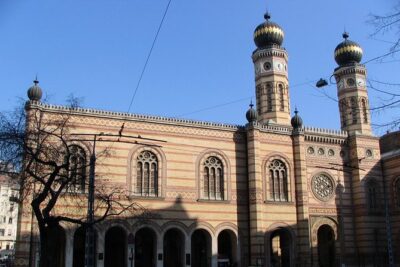
Dohány Street Synagogue is the visual headline. Its size and design immediately show that Budapest once had a large, confident Jewish community with the money and civic presence to build on a grand scale. The visit includes the interior, so you are not limited to a quick look from the pavement.
Expect the guide to spend substantial time explaining the synagogue and its setting. This is useful if you want context rather than a fast photo stop, but it may feel long if you prefer to keep moving. One account described sitting for close to an hour during the opening explanation. For many people, that talk is the foundation of the day; for others, it is the point where patience is first tested.
The English-language guiding is one of the tour’s strongest features. Benjamin has led several departures and is often singled out for his humor, direct answers, and ability to connect Jewish subjects with the wider story of Hungary and Budapest. Petra, Orsi, Borcsa, Abel, Barbara, Daniel, and Esther have also guided groups over the years, so the exact style depends on who leads your departure.
More of Jewish Budapest:
- Budapest Jewish Heritage Memorial Walking Tour & Synagogue Entry
★ 5.0 · 568 reviews - Budapest: Jewish Heritage Guided Tour with Synagogue Ticket
★ 4.8 · 533 reviews - Budapest walking tour: Parliament and Shoes Memorial
★ 5.0 · 387 reviews
The Jewish Museum puts daily life beside public history
After the synagogue, you visit the Jewish Museum with local guiding. The value here is its focus on lived religion. Objects and displays can show how families worshipped, marked holidays, organized community life, and passed traditions from one generation to the next.
I appreciate this part because it keeps the tour from becoming only a sequence of buildings and wartime memorials. The museum gives you a way to think about people before the destruction of the Holocaust, not just about the tragedy that followed. Your guide also provides the local setting, helping you understand why this part of Budapest became such an important center.
The amount of time available will depend on the group and the guide’s rhythm. Since the tour has several outdoor stops still ahead, you should not expect an all-day museum visit. Come ready to listen and ask questions rather than study every display at length.
Memorial spaces that require quiet attention
The route continues through the Martyrs’ Cemetery and Raoul Wallenberg Memorial Park. These are not decorative pauses. They give physical shape to the story of Budapest’s Jewish population during the Holocaust and to the many people who suffered and died.
The Tree of Life is the best-known feature in the park. Its metal leaves carry the names of victims, turning an enormous historical loss into individual names and families. A guide can explain the memorial’s meaning, but you will also want a little quiet time to take it in.
You also see the Temple of Heroes from outside and pass through the Jewish Center. The Temple of Heroes adds another layer to the complex, while the Jewish Center helps show that this is not simply a preserved monument. Religious and communal life continues here.
The sequence works well. You first encounter a functioning place of worship, then museum material, then memorials. That order helps you understand what was lost without reducing Jewish Budapest to loss alone.
Rumbach Street and the Synagogue Triangle
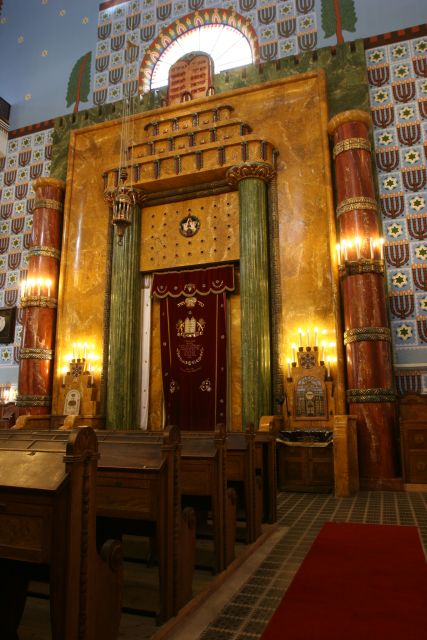
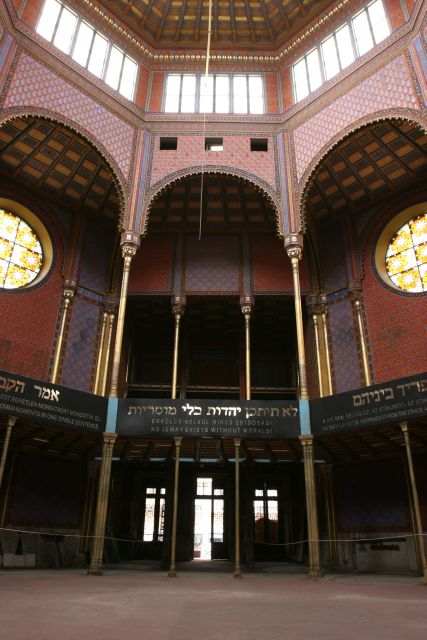
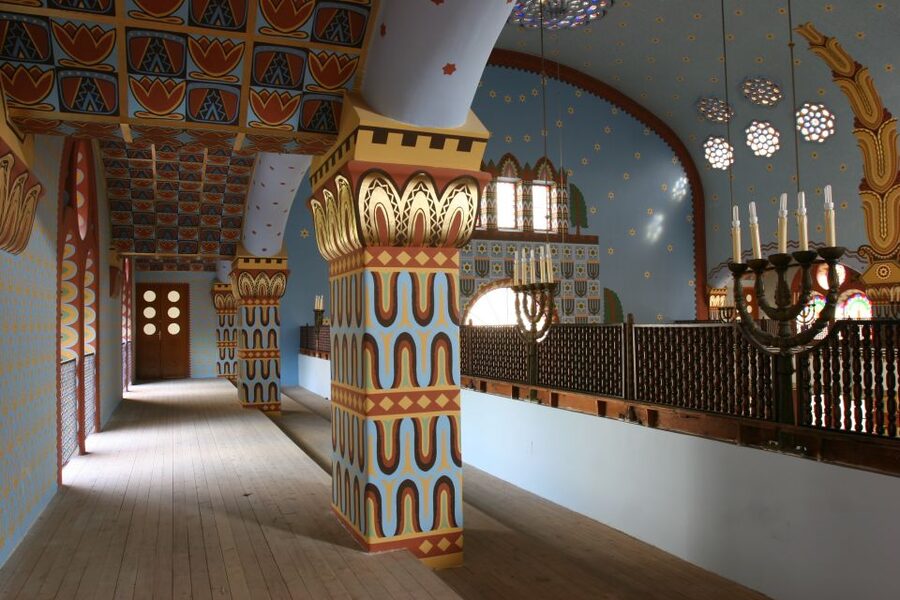
The tour then moves toward Rumbach Street Synagogue, one point in Budapest’s so-called Synagogue Triangle. The listed visit is outside, so you should not book this tour expecting a full interior tour of Rumbach.
That limitation is worth knowing, especially if you have seen photographs of its ornate interior and hope to enter. Even from the street, the building helps explain the variety of Jewish congregations that existed in Budapest. The tour uses the three-synagogue route to show different traditions and architectural settings rather than treating the Jewish community as one uniform group.
The first two major synagogue experiences are Dohány and Rumbach, followed by Kazinczy Street Synagogue later in the walk. The contrast is part of the point. You are looking at different religious identities, building styles, and chapters of communal life within a few city blocks.
More history walks in Budapest:
- Budapest: Historic Cruise with Welcome Drink
★ 4.7 · 6,512 reviews - Budapest Historical Sightseeing – Free Walking Tour
★ 5.0 · 1,302 reviews - Buda Castle District Dark History, Legends and Vampire Night Tour
★ 4.5 · 1,240 reviews - BloodThirsty Hungary: Walking tour & Dark Historical Stories
★ 4.9 · 633 reviews
Walking through the former ghetto
After the opening section, there is a break before the walk through the New Jewish Quarter. The route follows streets associated with the former ghetto, an area now filled with ordinary city life, restaurants, shops, nightlife venues, and restored or altered historic buildings.
This is where the tour becomes particularly useful for first-time visitors to Budapest. You get basic city background while learning how the neighborhood changed. The guide points out synagogues, monuments, kosher restaurants, and kosher shops, making the area easier to read after the tour ends.
Do not expect a preserved historical district where every building looks as it did decades ago. The value is in the layers. You are walking through a living Budapest neighborhood while learning what happened here and how Jewish life has continued and rebuilt.
The human stories are a major reason to choose the longer Grand Tour rather than only a synagogue visit. Past guides such as Benjamin and Borcsa have been praised for answering questions openly and connecting national, international, and local Jewish subjects. That matters in a neighborhood where the facts can be heavy and the political or religious questions are not always simple.
Carl Lutz and the Gozsdu Passage
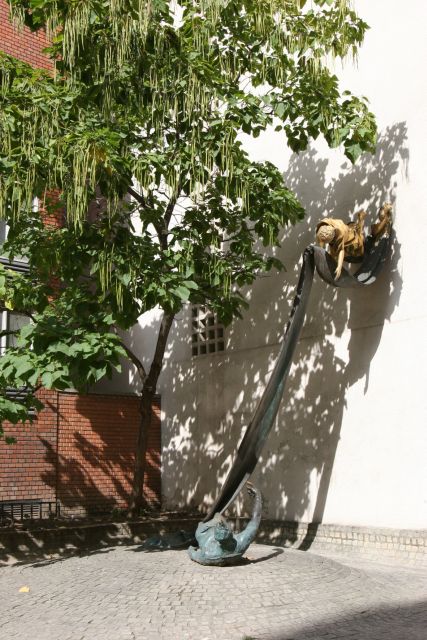
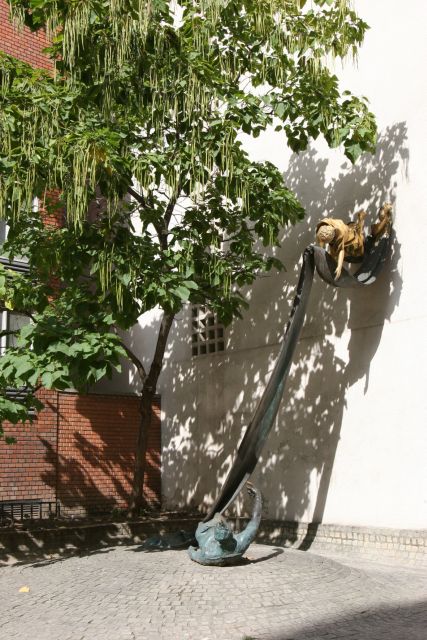
A stop at the Carl Lutz Memorial adds a story of rescue. Lutz, known as Hungary’s Schindler, worked to protect Jewish people during the Holocaust. The memorial gives the guide a chance to discuss individual action within a frightening period, rather than speaking only in broad numbers and dates.
From there, the route passes the Gozsdu Passage. This is one of the most recognizable pedestrian areas in the district, and it gives you a sharp change of mood. Cafes, shops, and social life occupy the same wider neighborhood that carries memories of persecution and forced confinement.
That contrast is not a flaw. It is one of the most honest parts of the walk. Budapest’s Jewish Quarter is not a museum sealed off from modern life. It can feel lively and commercial, sometimes even party-oriented, while nearby plaques and memorials ask you to remember a painful past.
The guide’s job is to keep those two realities connected. Strong guides do not turn the neighborhood into a grim procession, nor do they allow present-day entertainment to erase the history beneath it.
Kazinczy Street Synagogue and Orthodox Budapest
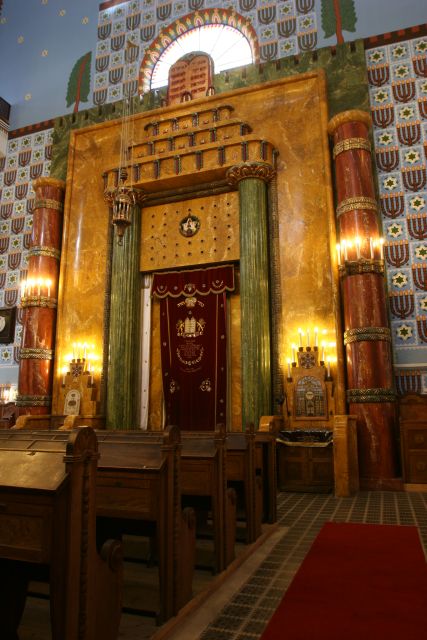
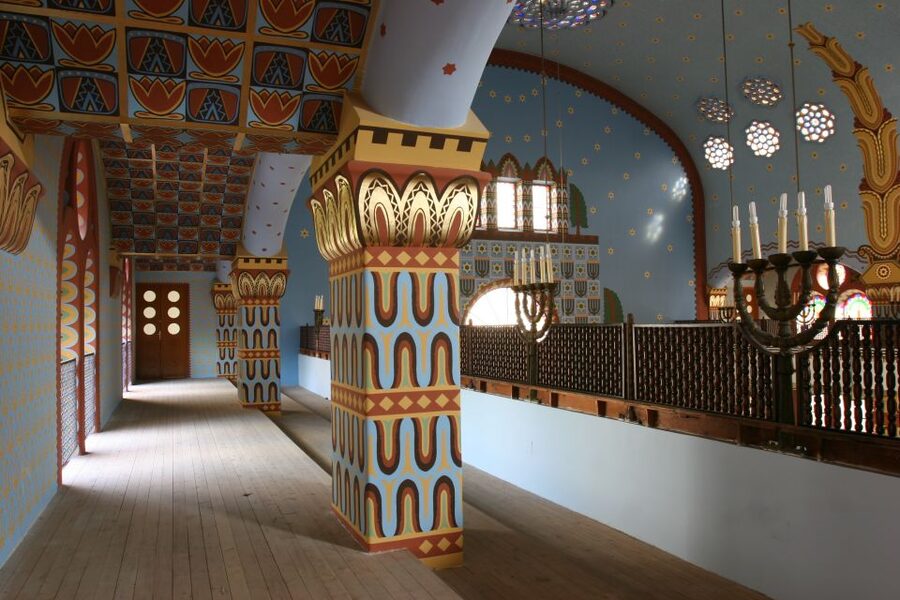
Kazinczy Street Synagogue is the final major stop and is listed as an inside visit. Built in an Art Nouveau style, it is one of the largest operating Orthodox synagogues in Europe. Its religious identity and architectural character differ from the grand Dohány complex, making this a valuable closing comparison.
The interior visit is especially important because the earlier Rumbach stop is outside only. You get a second chance to enter a working synagogue and see how the tour’s historical discussion connects with Jewish life today.
Your guide can explain the Orthodox setting and the place of the synagogue within the Jewish Quarter. The visit also prevents the tour from ending entirely in the past. You have seen persecution and memorials, but you also finish with an active religious institution.
Dress and conduct should be respectful at all synagogue stops. The activity information specifically asks you to bring a passport or ID card, so do not leave identification at your hotel.
Coffee, cake, and a useful lunch option
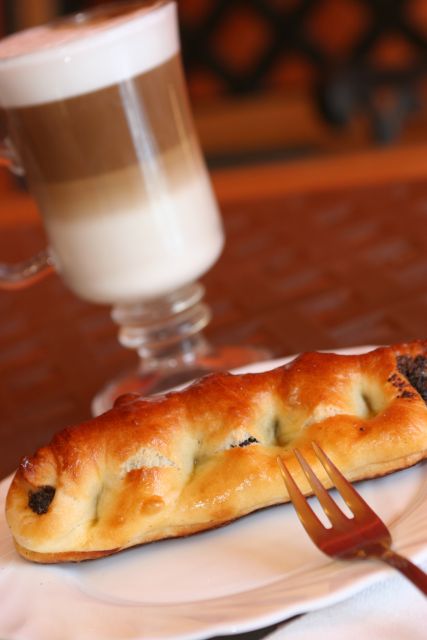
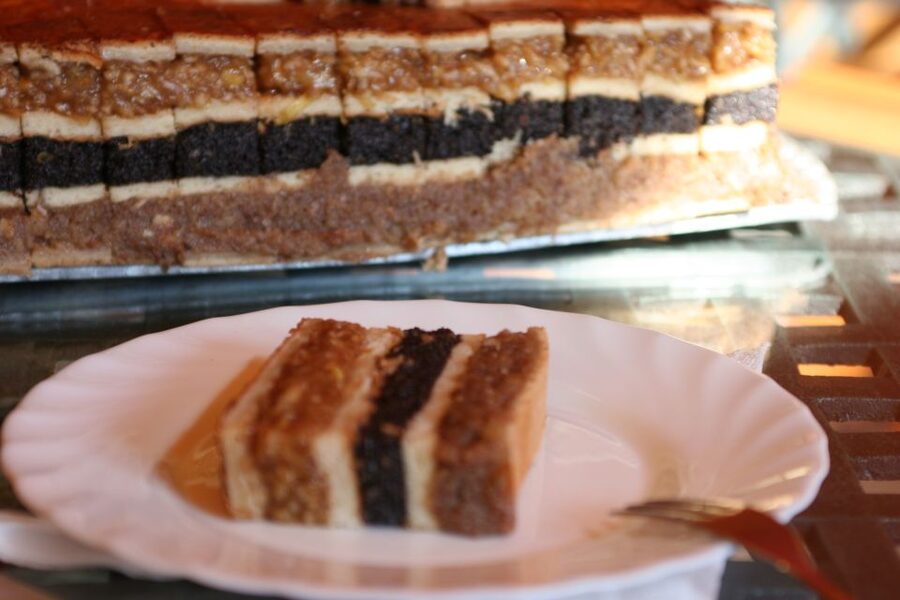
The tour includes cake and coffee at a kosher confectionery. This is a small feature, but it improves the four-hour format. The opening synagogue and museum section can be information-heavy, and the later walk involves several outdoor stops. A short pause gives you time to rest, ask follow-up questions, and chat with the group.
You also receive a 10 percent discount at Carmel Restaurant if you choose the lunch option. That makes the tour easier to fit into a day of sightseeing, especially if you want to continue exploring the Jewish Quarter after the official walk ends.
The food stop should not be the reason you book. It is best viewed as a practical pause and a chance to sample part of the neighborhood’s kosher life. The main value remains the guide and the access to the synagogue and museum complex.
How much does four hours for $116 represent?
At $116 per person, this is not a budget walking tour. The price includes the guide for the full experience and entrance fees for the Jewish Museum, Dohány Street Synagogue, Raoul Wallenberg Memorial Park, and Kazinczy Street Synagogue.
I think the price can make sense if you want a focused Jewish history tour with several admissions bundled together. You are paying for more than a walk past landmarks. The route combines religious buildings, museum material, memorial spaces, neighborhood history, and present-day community context.
The value depends heavily on the guide. The strongest departures have been led by people who explain clearly, handle difficult questions, and add humor without making light of painful subjects. Benjamin has been especially well regarded for this balance, while Petra, Orsi, and Borcsa have also led highly praised tours.
There are two cautions. First, you may not get equal time at every location because four hours covers a lot. Second, one pair of accounts described a departure that ended at about 1:05 instead of the expected 2:00 because the guide had a test. That appears to be an individual scheduling problem, not a feature to expect, but it is fair to confirm the end time before setting a tight afternoon plan.
The tour offers free cancellation up to 24 hours before departure and a reserve-now, pay-later option. Those policies help if your Budapest schedule is still moving around, but they do not change the need to check starting times when you book.
Who will get the most from this tour?
I would choose this for you if you want Jewish Budapest explained in one well-organized half-day. It suits first-time visitors who want both historical background and a look at the current neighborhood. It also suits families and mixed groups, including nonreligious visitors, as long as everyone is comfortable with serious subjects.
The tour is not limited to Jewish travelers. The content covers religion, architecture, Budapest, Hungarian history, the Holocaust, rescue efforts, and life in the city today. You do not need prior knowledge of Judaism to follow it, and the guides have been praised for welcoming questions from different generations.
It is also a good choice if you prefer a guide-led experience to piecing together several admissions on your own. You will hear the connections between Dohány, Rumbach, Kazinczy, the former ghetto, and the memorials rather than seeing them as unrelated sights.
I would hesitate if you dislike long explanations, want to explore each building at your own speed, or have limited walking ability. The activity is not suitable for wheelchair users, and you should wear comfortable shoes. Pickup is not included, so you must reach the Dohány Street meeting point yourself.
Large bags and luggage are not allowed. Bring only what you need, along with your passport or ID card.
Should you book the Budapest Grand Half-Day Jewish Heritage Tour?
Book it if you want a serious, well-rounded introduction to Jewish life in Budapest and value a strong English-speaking guide. The combination of Dohány Synagogue, the museum, the Tree of Life, the former ghetto, Carl Lutz Memorial, Gozsdu Passage, and Kazinczy Street Synagogue gives you far more context than a single-building visit.
At $116, it is best for readers who will make use of the guiding and included admissions. If you only want quick photographs of the synagogues, it is too long and too expensive. If you want to understand what you are seeing, ask direct questions, and connect Budapest’s past with its present, the four hours are well spent.
FAQ
Where does the tour begin?
The meeting point is Dohány Street Synagogue, Dohány u. 2, 1074, Budapest.
How long does the experience last?
The tour is scheduled for four hours. Starting times vary, so you need to check availability when booking.
What language is the tour conducted in?
The live tour guide speaks English.
Which synagogue interiors are included?
You visit the interior of Dohány Street Synagogue and Kazinczy Street Synagogue. Rumbach Street Synagogue is listed as an outside visit.
Is transportation or hotel pickup included?
No. Pickup is not included, and you must make your own way to the Dohány Street Synagogue meeting point.
Is the tour suitable for wheelchair users?
No. The activity is listed as not suitable for wheelchair users. Comfortable shoes are recommended, and pets, luggage, and large bags are not allowed.
More Half-Day in Budapest
- Countryside Half-day Gastro-Wine Tour from Budapest Meal & pickup
★ 5.0 · 1,450 reviews - Budapest Private Tuk Tuk Half-Day Tour
★ 5.0 · 606 reviews - From Budapest: Szentendre Half-Day Tour
★ 4.2 · 338 reviews - Budapest City Sightseeing Half-Day Tour
★ 4.5 · 230 reviews
Recently added around Budapest
- Hiking + Chairlift ride + viewpoints in Budapest★ 5.0 · 3 reviews
- FoolsCode: EscapeRoom/Sightseeing tour with Actor Tourguide★ 5.0 · 3 reviews
- Grand Budapest tour with private transportation★ 5.0 · 3 reviews
- Budapest: Private Customizable Tour in French★ 5.0 · 3 reviews
- Budapest: Private, Personalized Pub Crawl, 3 drinks included★ 4.5 · 3 reviews
- Budapest Drinks and Piano Show Cruise★ 4.5 · 3 reviews
- Discover Budapest Using Tram Two★ 5.0 · 3 reviews
- Budapest: Private 3-Hour Gödöllő Palace Tour★ 4.9 · 3 reviews
Jewish Heritage Tours, compared.
Budapest Jewish Heritage Memorial Walking Tour & Synagogue Entry
Read our review →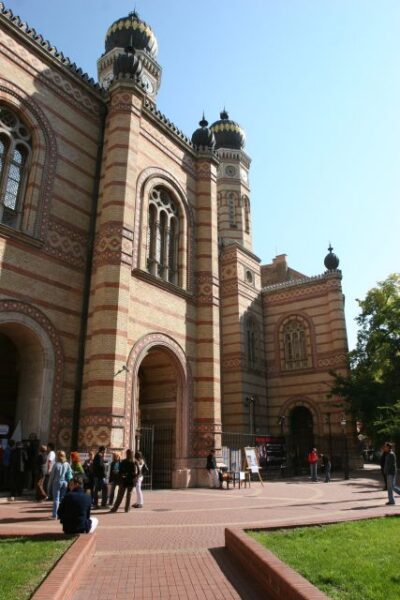
Jewish Heritage Guided Tour with Synagogue Ticket
Read our review →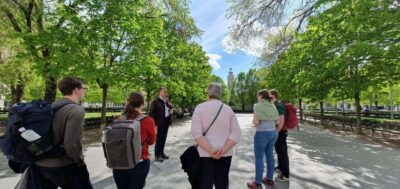
Budapest Dohany Synagogue & Hungarian Jewish Museum & free extras
Read our review →
Jewish History Guided Walking Tour with Historian
Read our review →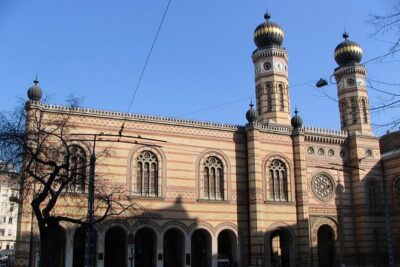
Budapest Dohany, Heroes’, Rumbach synagogues & Jewish Ghetto Tour
Read our review →
Browse the lists this tour appears in