
Reviewed · JEWISH HERITAGE TOURS
Budapest: Jewish Heritage Guided Tour with Synagogue Ticket
Budapest’s Jewish Quarter is not simply a collection of impressive synagogues. It is a place where religious life, flourishing commerce, wartime suffering, and present-day renewal all meet on the same few streets. This walking tour connects those pieces through Dohány Street Synagogue, the Jewish Museum, memorial sites, and neighborhood streets that still carry the marks of the past.
I like the way the tour combines major architectural sights with personal stories, rather than treating the district as a string of photo stops. I also like the choice between a two-hour visit and a longer four-hour version. The main caution is price: at $81 per person, it costs more than a simple self-guided synagogue visit, and the shorter museum visit may feel hurried if you want to read every display.
In This Review
- Key points to know before booking
- Why Budapest’s Jewish Quarter deserves a guided walk
- Beginning at Dohány Street Synagogue
- Seeing the Jewish Museum as a story of daily life
- Rumbach Street Synagogue and Moorish Revival style
- The Martyrs’ Cemetery and Raoul Wallenberg Memorial Park
- The Ghetto Wall and the longer four-hour route
- What the guides add to the history
- Two hours or four hours?
- Is $81 a fair price?
- Who should book this Budapest Jewish heritage tour?
- Should you book it?
- FAQ
- How long does the Budapest Jewish heritage tour last?
- What language is the tour conducted in?
- Which synagogue is the main highlight?
- Is entry to Dohány Street Synagogue included?
- Is the Jewish Museum included?
- What is included in the four-hour option?
- Does the tour visit Holocaust memorials?
- What should I bring?
- Is the tour suitable for wheelchair users?
Key points to know before booking
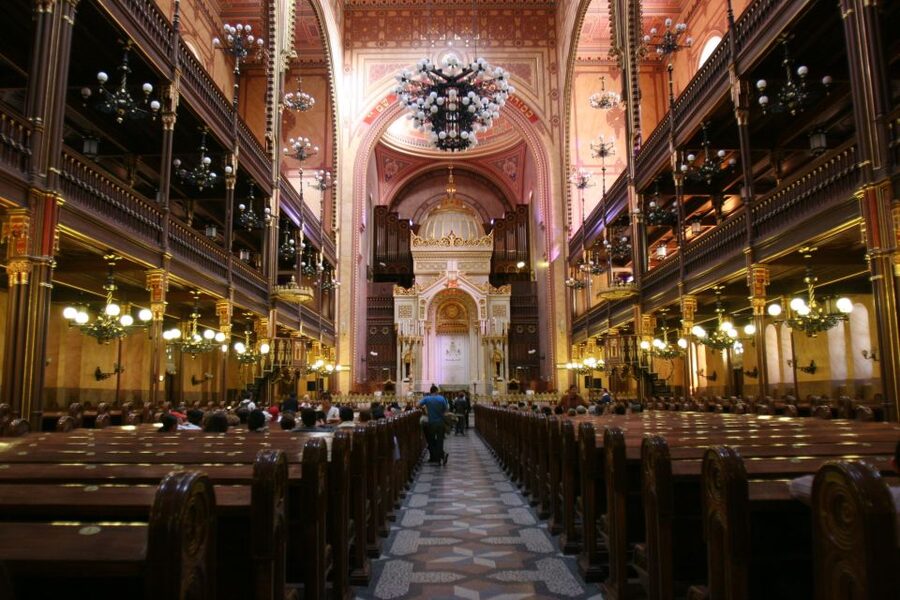
- Dohány Street Synagogue anchors the experience: You enter Europe’s largest synagogue and the world’s second largest, with time to take in its ornate interior and historical role.
- The Holocaust memorial stops are solemn: The Martyrs’ Cemetery, Raoul Wallenberg Memorial Park, Tree of Life, and Heroes’ Temple give the tour a serious emotional weight.
- The four-hour option adds real value: It includes entry to Rumbach Synagogue and the Ghetto Wall with exhibition, not just extra walking time.
- Guides make or break the experience: Benjamin is especially noted for his personal connection to Budapest’s Jewish community, while Orshi, Barbi, Suzanne, Scilla, Ursula, and others have also led highly praised tours.
- This is a walking tour with an important pace: Comfortable shoes matter, and the route is not suitable for wheelchair users.
- The focus reaches beyond the Holocaust: You also learn about Jewish customs, everyday life, architecture, Hungarian society, and Jewish life in Budapest today.
Why Budapest’s Jewish Quarter deserves a guided walk
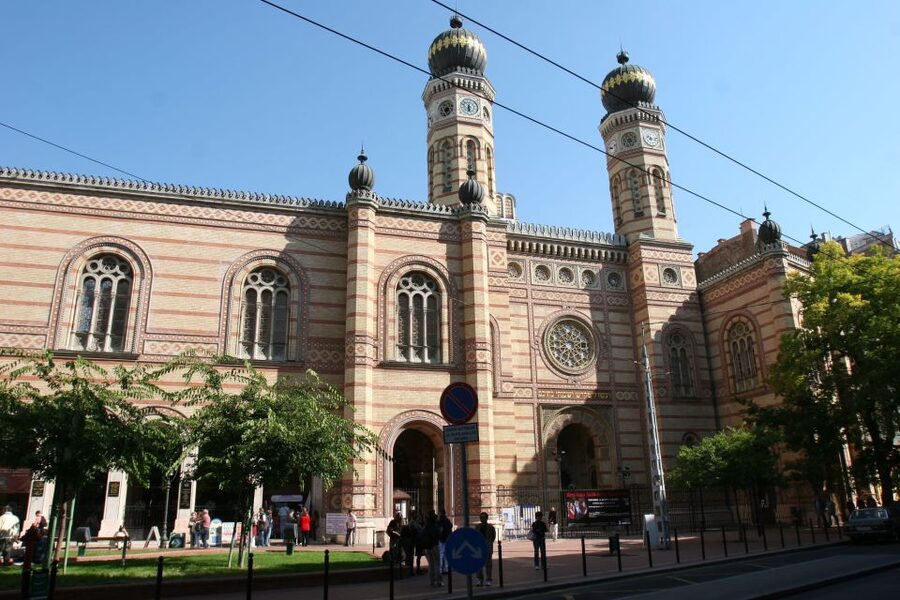
I find this part of Budapest easier to understand when you move through it on foot. The streets of the Pest Jewish Quarter bring together grand religious buildings, modest side streets, memorials, cafés, and signs of modern Jewish life.
A guide can explain how the neighborhood changed over time and why each building matters. Without that context, you might admire the Moorish Revival details of Rumbach Street Synagogue, glance at a memorial, and miss the connection between architecture, community life, and political history.
The tour also reaches beyond a single period. You hear about Hungarian Jewish life before the Second World War, the destruction and persecution of the Holocaust years, and the community’s survival and renewal afterward. That wider frame is important. The Jewish Quarter was not created by tragedy, and it is not defined only by tragedy.
The experience is conducted in English, with a live guide. Past tours have been led by Benjamin, Orshi, Barbi, Suzanne, Scilla, Ursula, and others. Benjamin receives especially strong praise for his warmth, humor, detailed answers, Budapest upbringing, and family connection to the area. You should not assume he will lead every departure, but the guide’s ability to explain the subject clearly is central to the tour’s value.
More of Jewish Budapest:
- Budapest Jewish Heritage Memorial Walking Tour & Synagogue Entry
★ 5.0 · 568 reviews - Budapest walking tour: Parliament and Shoes Memorial
★ 5.0 · 387 reviews - Walking Tour Budapest incl. the Shoes on the Danube Bank
★ 5.0 · 387 reviews
Beginning at Dohány Street Synagogue
The meeting point may vary by booking option, but Dohány Street Synagogue is one of the listed starting points. Check your confirmation carefully so you arrive at the correct place.
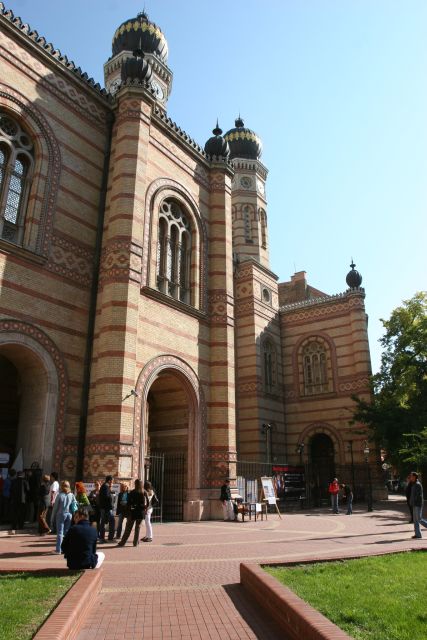
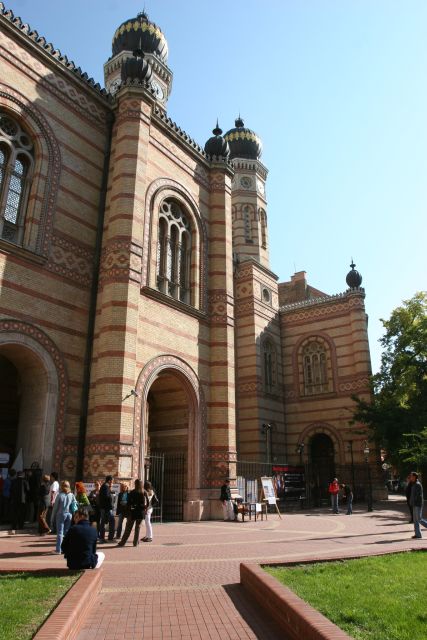
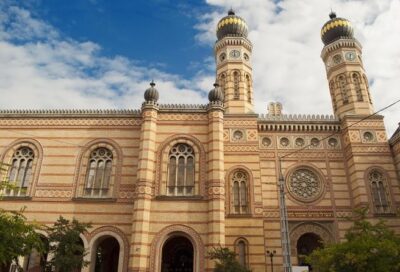
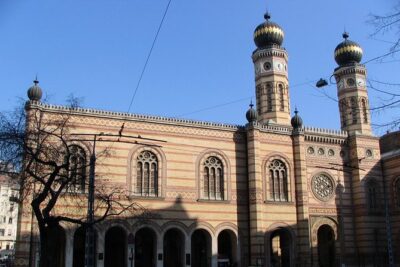
The synagogue is the tour’s major architectural moment. It is described as the largest synagogue in Europe and the second largest in the world. Once inside, look up at the high ceilings and take time with the ornate interior rather than rushing straight toward the next stop.
Its scale tells you something about the size and confidence of Budapest’s Jewish community during the period when the building was created. The style also makes it visually different from the plain or restrained synagogue interiors you may have seen elsewhere in Europe. Your guide explains how this building fits into Hungarian Jewish history and why it remains such an important site.
There is also a practical benefit to entering with the tour. The activity includes synagogue admission and a separate entrance for skipping the regular line. That can save time, though the exact queue conditions will vary with the day and season.
Modest dress is sensible for a religious site. Bring a passport or ID card, as identification may be required, and leave large bags and luggage behind. Pets are not allowed.
Seeing the Jewish Museum as a story of daily life
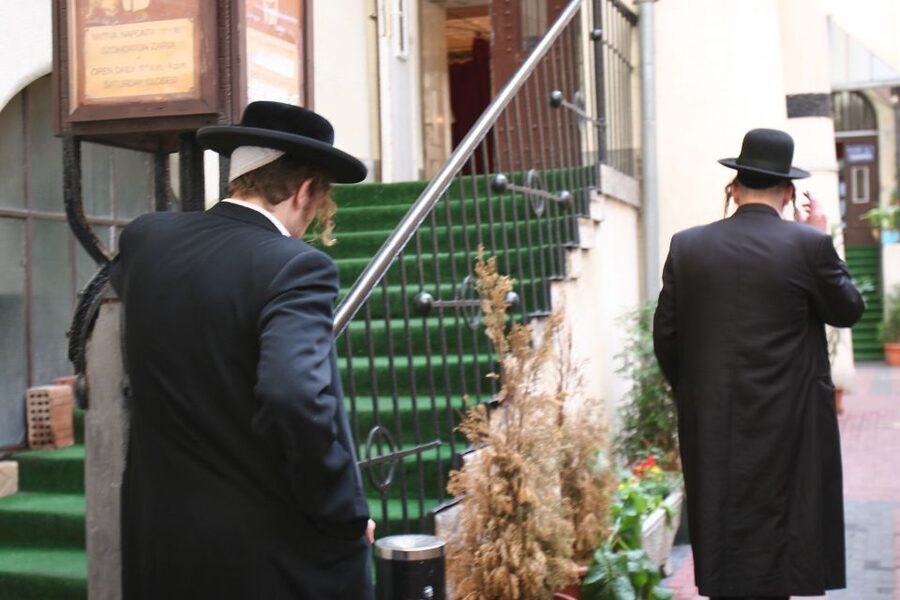
The Jewish Museum is more useful when you approach it as a record of people and practice, not just a display of old objects. The collection includes art from Hungary and Eastern Europe and covers Jewish traditions, holidays, and everyday life.
I appreciate this part of the route because it helps correct a common imbalance in Holocaust-focused sightseeing. The museum room dedicated to the Hungarian Holocaust is necessary and difficult, but the wider collection shows that Jewish life involved worship, family, celebrations, work, art, and community institutions long before the war.
The guide leads you through the museum, explaining the meaning behind objects and traditions. This is where questions are particularly useful. Several past visitors valued the chance to ask about customs, Hungarian society, and the present-day community rather than listening to a fixed speech with no room for discussion.
Allow yourself realistic expectations. The museum visit is part of a larger walking route, and one past assessment found that there was not enough time to read every label and examine every item in detail. If museums are your main interest, the four-hour option may suit you better, though the supplied details do not specify exactly how much extra museum time it provides.
Rumbach Street Synagogue and Moorish Revival style
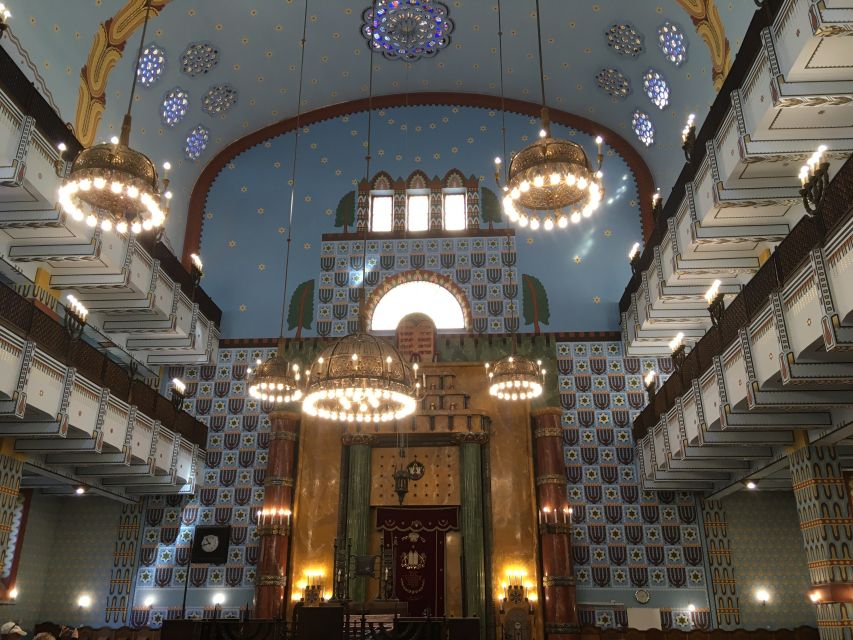
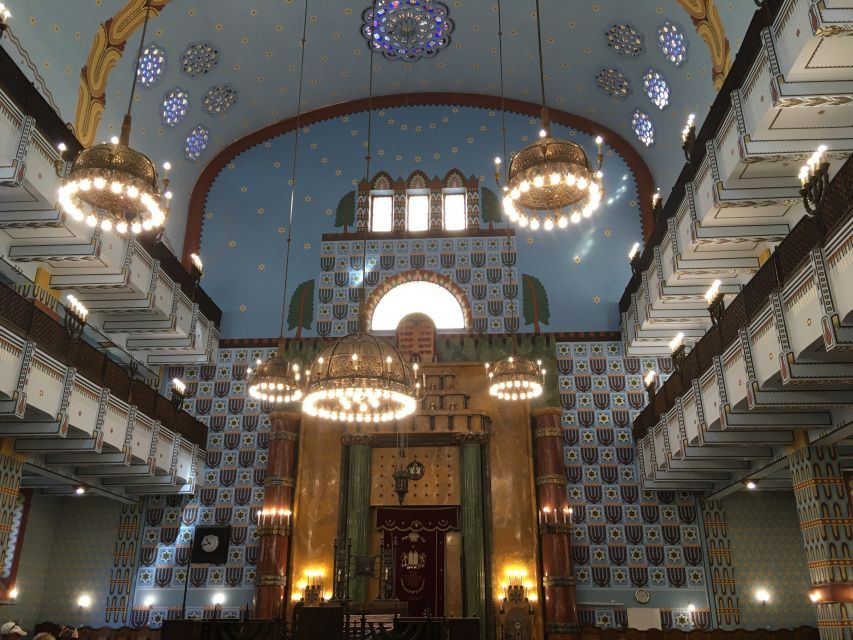
Rumbach Street Synagogue is an important architectural stop, even when viewed from outside. The short tour includes a look at the exterior, while the four-hour version includes entry.
Its Moorish Revival design gives the building an ornate, patterned appearance that differs from Dohány Street Synagogue. A guide can help you notice more than the façade, explaining how the synagogue relates to the history of the district and the different strands of Hungarian Jewish life.
If you care about interiors and architecture, choose the four-hour option. The extra admission changes Rumbach from a brief exterior sight into a proper visit. The shorter version still gives you the building and its story, but you will not receive the same access.
The itinerary also includes Kazinczy Street Synagogue. The provided details do not spell out whether you enter this building or view it from outside, so I would treat it as a neighborhood stop rather than assume a full interior visit.
More history walks in Budapest:
- Budapest: Historic Cruise with Welcome Drink
★ 4.7 · 6,512 reviews - Budapest Historical Sightseeing – Free Walking Tour
★ 5.0 · 1,302 reviews - Buda Castle District Dark History, Legends and Vampire Night Tour
★ 4.5 · 1,240 reviews - BloodThirsty Hungary: Walking tour & Dark Historical Stories
★ 4.9 · 633 reviews
The Martyrs’ Cemetery and Raoul Wallenberg Memorial Park
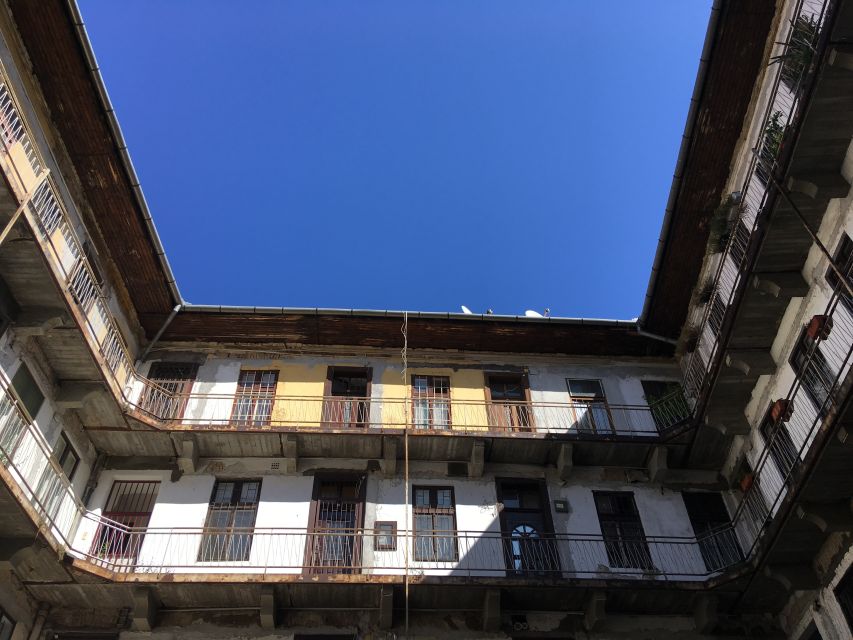
The mood changes sharply as the tour reaches its memorial sites. At the Martyrs’ Cemetery and Raoul Wallenberg Memorial Park, the subject is no longer mainly architecture or community customs. You are asked to face the violence inflicted on Hungarian Jews and to remember those who died.
The park’s Tree of Life is the most recognizable memorial here. Its metal leaves carry the names of victims, turning a large historical disaster into individual remembrance. Your guide provides the background, but the site itself calls for quiet attention.
The park also honors Raoul Wallenberg, the Swedish diplomat associated with efforts to protect Hungarian Jews during the Holocaust. The tour includes entry to the memorial park, giving you time to see the Tree of Life and understand why this location matters within the district.
The Heroes’ Temple and cemetery add another layer. These are not casual sightseeing stops, and the subject can be painful. I would not book this tour expecting light entertainment, even though the best guides use humor and conversation at appropriate moments. The experience is serious, but it is also presented with an emphasis on survival, continuity, and hope.
The Ghetto Wall and the longer four-hour route
The four-hour tour includes the Ghetto Wall with exhibition. This is one of the clearest reasons to consider upgrading from the two-hour version.
The wall helps you picture how persecution shaped the physical neighborhood. It is one thing to hear about restrictions and forced confinement in a museum; it is another to encounter a remaining section within the streets where those events took place.
The exhibition adds interpretation, though the supplied information does not specify its size or exact display contents. You should expect a focused historical stop rather than a large museum visit.
The longer route also gives the guide more time to connect the sites. Several people who booked the shorter experience later extended it to the grand tour because they wanted to continue listening and asking questions. That is a useful clue about pacing: the two-hour tour can introduce the district, while the four-hour version gives the subject more room to breathe.
What the guides add to the history
The strongest feature of this tour is the human explanation between the buildings. The route covers difficult material, and a good guide needs to be precise without turning suffering into a performance.
Benjamin is repeatedly singled out for his command of the subject, personal connection to Budapest, and willingness to answer questions in depth. His Budapest upbringing and Jewish family background give him a personal angle, while his style is described as warm, witty, and easy to follow.
Other guides have also made a strong impression. Orshi is praised for explaining Jewish customs and history clearly. Barbi is described as personable and well informed, while Suzanne, Scilla, and Ursula are noted for their passion, clarity, and sensitive handling of the wartime period.
You may hear personal perspectives about present-day Jewish life as well as the past. That matters because the tour does not stop in 1945. It addresses the community’s place in Hungarian society now, including the desire to remain an active part of the country.
The guide also creates space for conversation. Past participants received restaurant suggestions, a recommendation for a ruin bar, and, in some cases, coffee and cake at a kosher restaurant after the formal route. The coffee and cake are not listed as an included feature, so do not book expecting them, but you may find that the guide continues the conversation informally after the tour.
Two hours or four hours?
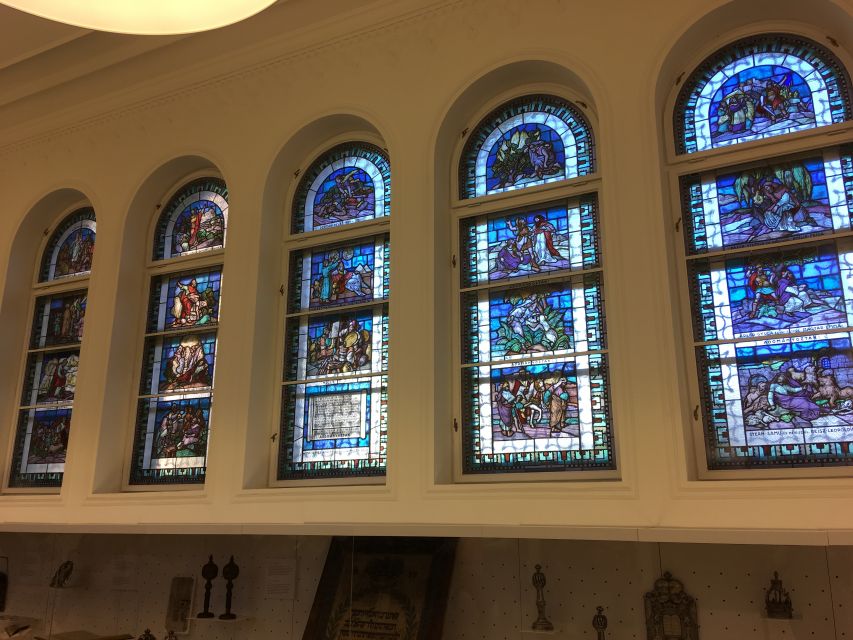
The two-hour version works for a first introduction. You see Dohány Street Synagogue, visit the Jewish Museum, walk through the Jewish Quarter, and reach major memorial points. It is a sensible choice if your Budapest schedule is tight or if you want a focused orientation before exploring alone.
The tradeoff is time. You may not have enough leisure to study every museum item, linger at memorials, and ask many questions. Walking between sites also means the tour is not a sequence of indoor visits.
The four-hour option is better for a serious study of the district. It includes Rumbach Synagogue entry and the Ghetto Wall with exhibition, and it gives the guide more time to explain the relationship between the sites.
I would choose four hours if you have a family connection to Hungarian Jewry, a strong interest in Jewish history, or a limited chance to return to Budapest. Choose two hours if you want the essential synagogue, museum, and memorial experience without giving the subject half a day.
Is $81 a fair price?
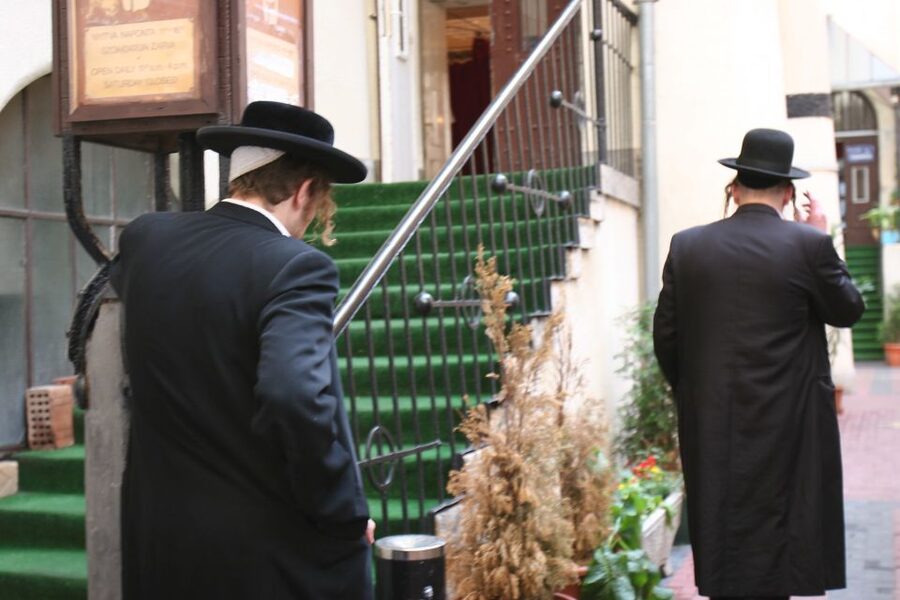
At $81 per person, this is not a budget walking tour. The price includes a live English-speaking guide, walking instruction, admission to the Jewish Museum, Dohány Street Synagogue, and Raoul Wallenberg Memorial Park. The four-hour version adds Rumbach Synagogue and the Ghetto Wall exhibition.
The value depends on how much context you want. If you only want to look inside Dohány Street Synagogue, buying a ticket separately may be cheaper. If you want one person to connect the synagogue, museum, cemeteries, memorials, neighborhood streets, and current Jewish life, the guided format offers more than admission alone.
The reviews give a useful warning about the price. One person considered it expensive compared with other tours, even while praising the guide and the experience. I agree that the cost is easier to justify for the four-hour option, when more admissions and more guided time are included.
Free cancellation up to 24 hours before the start and the reserve-now, pay-later option reduce some booking risk. These are practical advantages, but they do not change the basic calculation: book this for interpretation and access, not for a cheap walk.
Who should book this Budapest Jewish heritage tour?
I would recommend it to anyone who wants a clear introduction to Jewish life in Budapest, especially visitors who prefer conversation over reading signs on their own. It suits people interested in architecture, religious traditions, Hungarian history, the Holocaust, and the present-day Jewish community.
It is also a strong choice for visitors with Jewish family roots. The guides can help place family memories within the wider story of Budapest and Hungary, though you should not expect a private genealogy service.
The tour may be less suitable if you want a casual neighborhood stroll, dislike solemn historical sites, or prefer to spend long periods reading museum labels independently. It is not suitable for wheelchair users, and you need comfortable shoes for the walking route.
Bring identification and avoid luggage or large bags. Since the meeting point may differ by option, check the exact departure details before setting out.
Should you book it?
Book this tour if you want the Jewish Quarter explained as a living community, not just photographed as a historic district. The combination of Dohány Street Synagogue, museum collections, Rumbach’s architecture, the Tree of Life, cemetery, Heroes’ Temple, and Ghetto Wall gives you a serious and well-connected look at Budapest Jewish life.
I would favor the four-hour option for the best value, especially if Benjamin or another guide with a strong personal connection is leading your departure. Choose the shorter route if time is tight, but expect an introduction rather than a complete museum study.
The experience can be emotional, yet it does not leave you only with grief. Its strongest message is that a community existed before the catastrophe, suffered terribly, and continues to shape Budapest today.
FAQ
How long does the Budapest Jewish heritage tour last?
You can choose between a two-hour and four-hour version. Check availability for the specific starting times.
What language is the tour conducted in?
The tour is conducted in English with a live guide.
Which synagogue is the main highlight?
Dohány Street Synagogue is the main highlight. It is described as the largest synagogue in Europe and the second largest in the world.
Is entry to Dohány Street Synagogue included?
Yes. Entry to Dohány Street Synagogue is included, along with a separate entrance for the tour.
Is the Jewish Museum included?
Yes. The tour includes entry to the Jewish Museum and a guided visit through its collection.
What is included in the four-hour option?
The four-hour option includes entry to Rumbach Synagogue and the Ghetto Wall with exhibition. These are not included in the shorter option.
Does the tour visit Holocaust memorials?
Yes. The route includes Raoul Wallenberg Memorial Park, the Tree of Life, the Martyrs’ Cemetery, and the Heroes’ Temple.
What should I bring?
Bring a passport or ID card and comfortable shoes. Luggage and large bags are not allowed, and pets are not allowed.
Is the tour suitable for wheelchair users?
No. The activity is not suitable for wheelchair users.
Recently added around Budapest
- Hiking + Chairlift ride + viewpoints in Budapest★ 5.0 · 3 reviews
- FoolsCode: EscapeRoom/Sightseeing tour with Actor Tourguide★ 5.0 · 3 reviews
- Grand Budapest tour with private transportation★ 5.0 · 3 reviews
- Budapest: Private Customizable Tour in French★ 5.0 · 3 reviews
- Budapest: Private, Personalized Pub Crawl, 3 drinks included★ 4.5 · 3 reviews
- Budapest Drinks and Piano Show Cruise★ 4.5 · 3 reviews
- Discover Budapest Using Tram Two★ 5.0 · 3 reviews
- Budapest: Private 3-Hour Gödöllő Palace Tour★ 4.9 · 3 reviews
Jewish Heritage Tours, compared.
Budapest Jewish Heritage Memorial Walking Tour & Synagogue Entry
Read our review →

Budapest Dohany Synagogue & Hungarian Jewish Museum & free extras
Read our review →
Jewish History Guided Walking Tour with Historian
Read our review →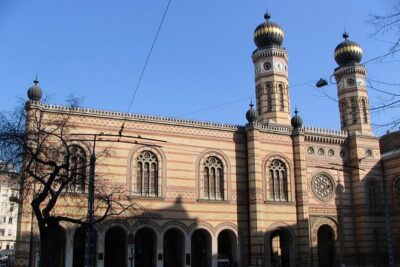
Budapest Dohany, Heroes’, Rumbach synagogues & Jewish Ghetto Tour
Read our review →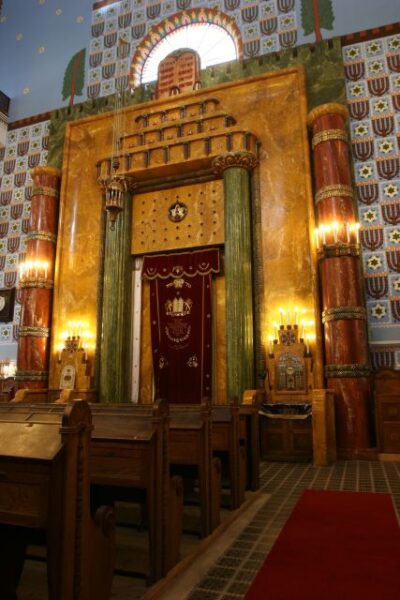
Browse the lists this tour appears in