
Reviewed · JEWISH HERITAGE TOURS
Budapest: Jewish History Guided Walking Tour with Historian
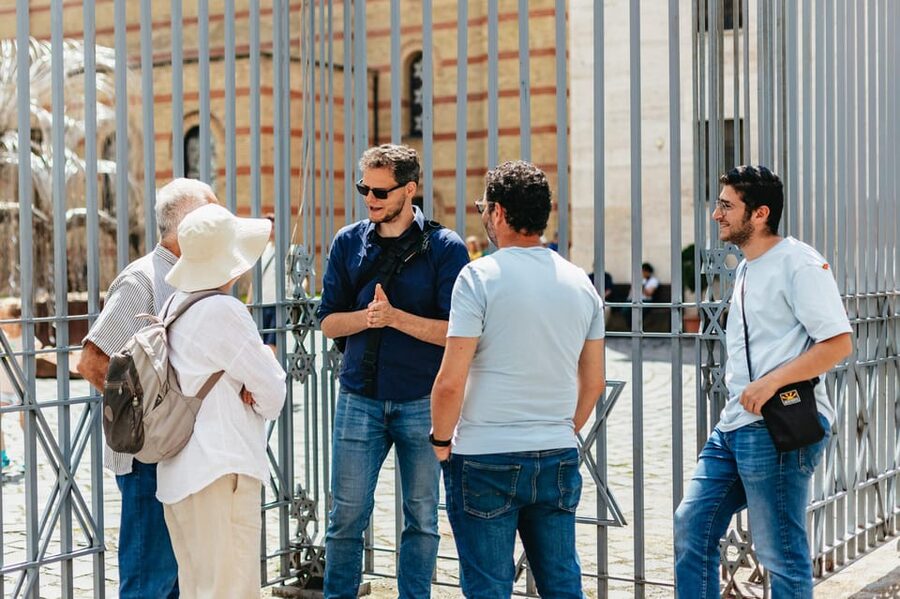
Budapest’s Jewish Quarter is more than a collection of pretty synagogues and nightlife streets. It is a place where Jewish life, persecution, survival, memory, street art, kosher food, and ruin pubs all sit within a few minutes’ walk. This 2.5-hour small-group tour gives that complicated mix a human voice.
I like the historian-led storytelling, especially the attention given to Raoul Wallenberg and Carl Lutz, two people who helped save Jewish lives in Budapest during the winter of 1944 and 1945. I also like the pause for coffee and flódni, a traditional Jewish Hungarian cake that gives the tour a welcome local flavor.
The main limitation is clear: you see the three synagogues from the outside only, and the walking route covers serious material at a fairly brisk pace. If you want to enter the Dohány Street Synagogue, you will need a separate ticket or visit.
In This Review
- Key points at a glance
- Starting beside Erzsébet Square
- The Jewish Quarter before the war
- Dohány Street Synagogue from the outside
- Rumbach Street and Kazinczy Street
- Walking through the former ghetto
- Raoul Wallenberg, Carl Lutz, and local courage
- Gozsdu Passage, street art, and present-day Budapest
- Coffee, flódni, and a short pause
- How the guides shape the experience
- Is $63 a fair price?
- Who should book this walk?
- Final verdict: a strong choice for context and honesty
- FAQ
- How long does the Budapest Jewish history walking tour last?
- Where does the tour meet?
- How do I reach the meeting point?
- Which synagogues can I see?
- Can I go inside the synagogues?
- Is food included?
- What language is the tour conducted in?
- How large is the group?
- Does the tour operate in bad weather?
Key points at a glance
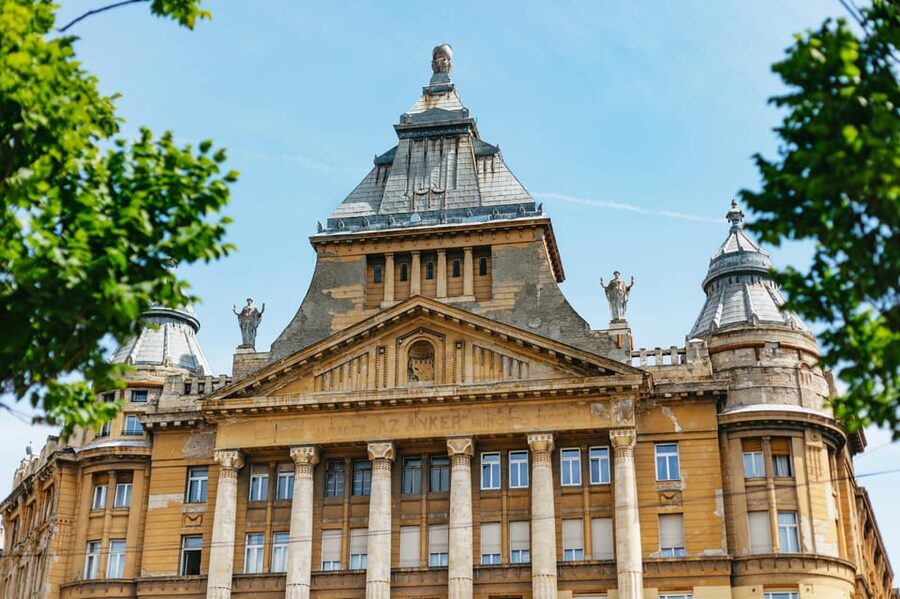
- Three major synagogues from the street: See the Dohány Street, Rumbach Street, and Kazinczy Street synagogues without admission being included.
- A serious look at wartime Budapest: Learn about the former ghetto and the people who protected Jewish residents in 1944 and 1945.
- A guide-led history lesson: English-speaking guides such as Barbara, Andrea, András, Gábor, Noémi, and Maggie have been praised for clear explanations and engaging stories.
- Coffee and flódni included: Take a 15-minute cafe break for a drink and a slice of local Jewish cake.
- Jewish life beyond World War II: Hear about the community before the war, its earlier restrictions and migrations, and its place in Budapest today.
- Small groups, up to 10 people: The limited size makes it easier to hear the guide and ask questions.
Starting beside Erzsébet Square
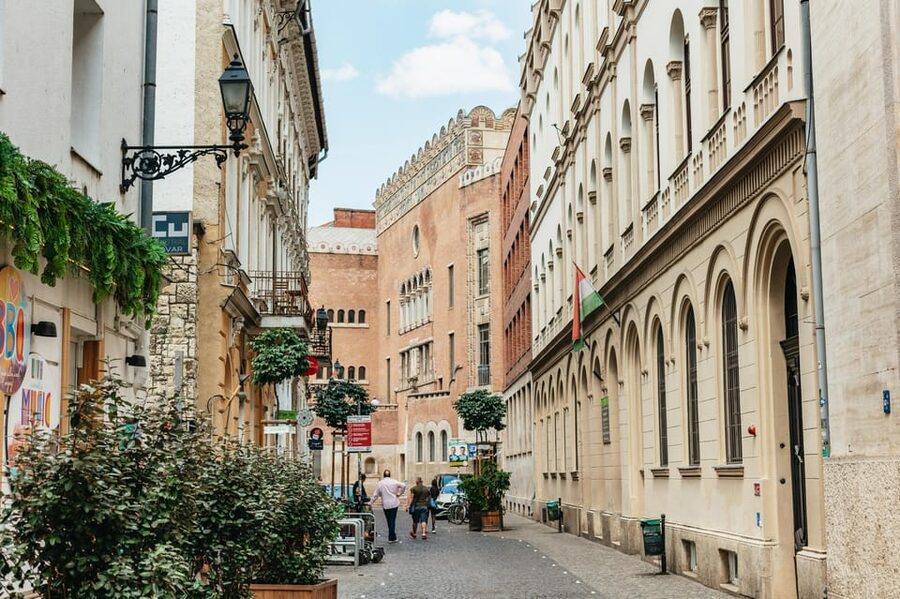
The meeting point is in front of the Kempinski Hotel Corvinus Budapest, facing the Ferris wheel on Erzsébet Square. This is a handy central starting point, and you can reach it from Deák Ferenc tér, one of Budapest’s main transport hubs. The M1, M2, and M3 metro lines all serve the area, along with several buses and trams.
I would arrive a few minutes early. The Ferris wheel is an obvious landmark, but the square can be busy, and the guide may be carrying the only sign or identifying detail for the group.
The tour is offered in English and is limited to 10 people. That matters here. Much of the experience depends on hearing names, dates, and personal stories while standing on ordinary city streets. A group of 10 is small enough for the guide to keep everyone together without turning the walk into a private tour.
The walk runs in all weather. Budapest can be hot in summer, cold in winter, and wet at any time, so wear shoes suited to pavement and bring protection from sun or rain. This is not a sit-down museum visit. You will be on your feet for most of the main 2 hour and 15 minute walking section, followed by a 15-minute cafe stop.
More of Jewish Budapest:
- Budapest Jewish Heritage Memorial Walking Tour & Synagogue Entry
★ 5.0 · 568 reviews - Budapest: Jewish Heritage Guided Tour with Synagogue Ticket
★ 4.8 · 533 reviews - Budapest walking tour: Parliament and Shoes Memorial
★ 5.0 · 387 reviews
The Jewish Quarter before the war
The 7th District has been a center of Jewish culture for more than 200 years. A good guide begins before World War II, which helps you understand the district as a living community rather than only as a site of tragedy.
You hear about Jewish migration into Budapest, movement between Hungary and Poland, and the restrictions placed on Jewish people at different times. One particularly useful historical point is the pressure placed on Jews to convert, along with the legal and social limits that shaped daily life.
This early section gives the later wartime story its proper setting. It explains why the district became such an important home for Jewish residents and why its synagogues, shops, and institutions mattered so much.
The tour also places Jewish history within the wider story of Hungary. Several guides have used maps or visual material to show how Hungary’s borders and political position changed over time. For visitors who know little about Hungarian history, this background is valuable because the country’s shifting territory and governments can otherwise be hard to follow.
Expect the guide to discuss difficult subjects directly. The strongest part of this experience is its refusal to smooth over the unpleasant parts of the past. That includes discrimination, political pressure, cooperation with persecution, and the suffering of Jewish residents. The tone is serious, but the guides also use humor and everyday stories to keep the walk accessible.
Dohány Street Synagogue from the outside
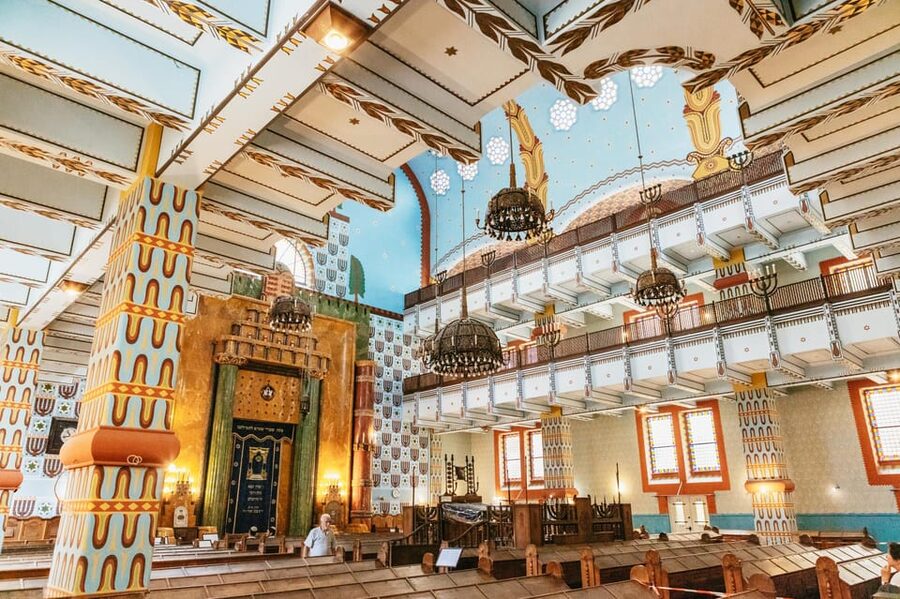
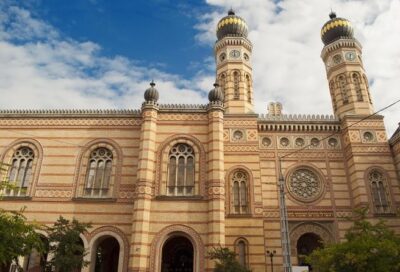
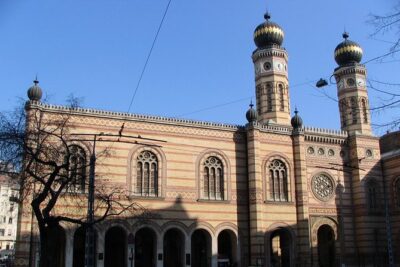
The Dohány Street Synagogue is the most recognizable stop on the route. It is often described as the largest synagogue in Europe, and its scale helps explain the size and importance of Budapest’s Jewish community when it was built.
You view the building from outside, with the guide explaining its role and design. The exterior is striking, but the key value here is the context. Without a guide, you might simply photograph the facade and move on. With one, the building becomes evidence of the community’s size, confidence, and place in Budapest’s urban life.
Do not assume synagogue admission is included. The advertised tour visits all three synagogues from the outside only. If you want to see the interior of the Dohány Street Synagogue, plan a separate visit and check its opening arrangements independently.
This is also a useful point to ask your guide about Jewish life in Budapest today. The walk is not limited to the past. It connects the old district to its current synagogues, kosher businesses, restaurants, and active community.
Rumbach Street and Kazinczy Street
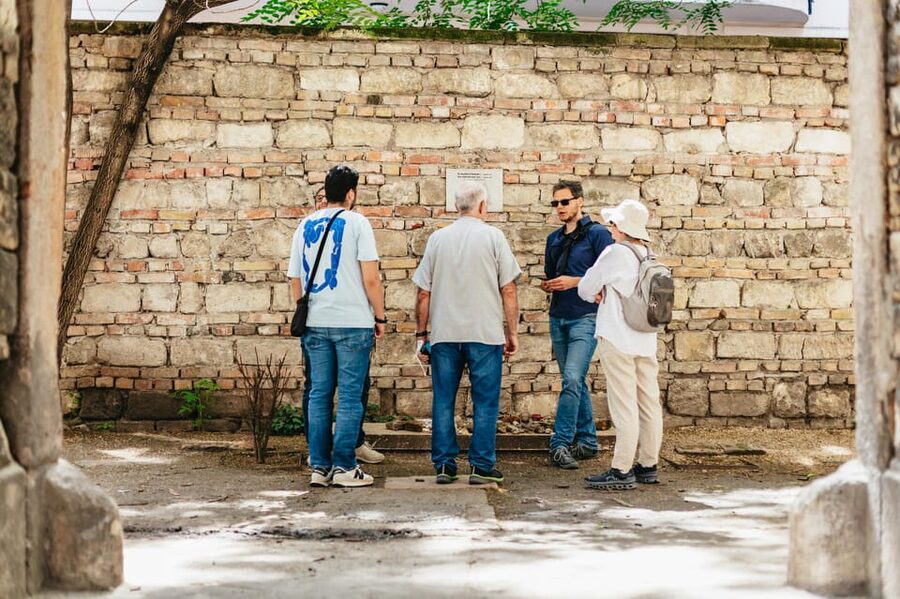
The route continues to the Rumbach Street Synagogue, designed by Viennese architect Otto Wagner and built in 1872. Its exterior is one of the more distinctive architectural sights in the quarter, and the guide explains how it fits into the religious and social divisions within Budapest’s Jewish community.
You also see the Kazinczy Street Orthodox Synagogue. Together, these three buildings show that Budapest’s Jewish community was not one uniform group. Different religious traditions created their own institutions and places of worship, each with its own identity.
The three exteriors make a useful comparison. The Dohány Street Synagogue gives you monumental scale. Rumbach Street adds architectural interest and Viennese influence. Kazinczy Street connects the walk to Orthodox Jewish life and the neighborhood’s continuing religious presence.
There has been occasional uncertainty about whether a synagogue interior visit is part of a particular departure. The stated arrangement for this experience is outside viewing only, so I would treat any interior access as unavailable unless the operator confirms it directly. That avoids an unpleasant surprise, especially if entering a synagogue is your main reason for booking.
More history walks in Budapest:
- Budapest: Historic Cruise with Welcome Drink
★ 4.7 · 6,512 reviews - Budapest Historical Sightseeing – Free Walking Tour
★ 5.0 · 1,302 reviews - Buda Castle District Dark History, Legends and Vampire Night Tour
★ 4.5 · 1,240 reviews - BloodThirsty Hungary: Walking tour & Dark Historical Stories
★ 4.9 · 633 reviews
Walking through the former ghetto
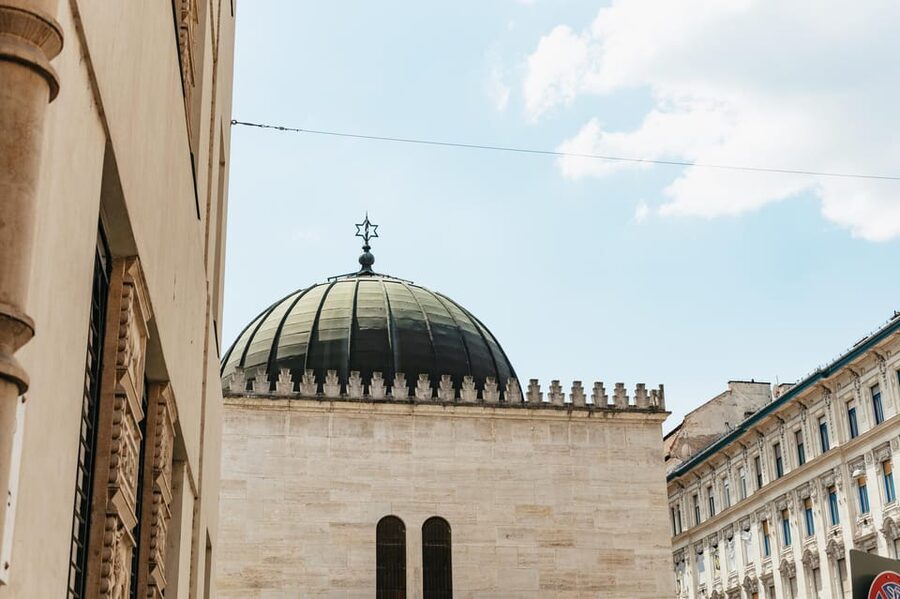
The most sobering section takes you along streets that formed part of Budapest’s former ghetto. You see a remaining section of the original ghetto wall and hear about how the area was enclosed during the final months of World War II.
The ghetto existed for less than two months, but that short period brought extreme hardship and danger. The point is not simply to locate a wall. It is to understand how quickly normal city life could be replaced by confinement, hunger, fear, and forced movement.
The guide helps connect the streets you see today with the people who lived there. Synagogues, kosher shops, restaurants, and apartment buildings are not just attractions on a walking route. They are reminders of a neighborhood that once functioned as a home, workplace, place of worship, and social center.
This part of the tour may feel emotionally heavy. That is appropriate, but it is worth knowing before you book. The experience deals openly with mass violence and persecution. It is best suited to you if you want history presented plainly rather than reduced to a quick sightseeing story.
Raoul Wallenberg, Carl Lutz, and local courage
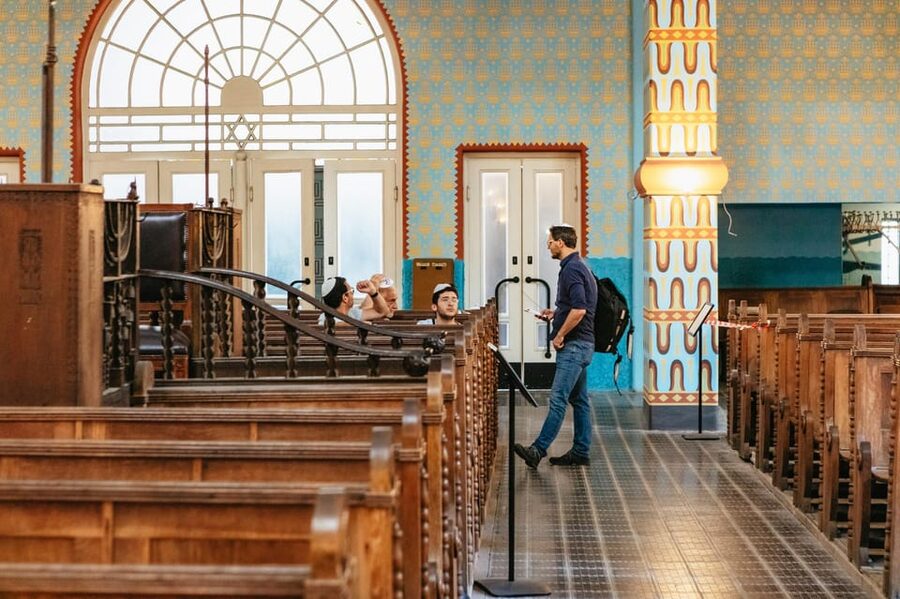
The tour pauses at memorials connected with Raoul Wallenberg and Carl Lutz. Both men helped save tens of thousands of Jewish lives during the winter of 1944 and 1945, and both were later recognized as Righteous Among the Nations.
Their stories give the route a needed human focus. The tour does not present the period only through laws, dates, and institutions. It also shows how individual decisions mattered when the political system was placing Jewish residents in grave danger.
Wallenberg is widely known, but the guide also gives attention to Carl Lutz and other local heroes. This wider view is important. Budapest’s wartime story includes international diplomats, Hungarian citizens, religious figures, and ordinary people who took risks to protect others.
I especially value this section because it avoids a simple good-versus-evil story. The guide addresses the actions of Hungarian authorities and the wider political setting while also showing courage and resistance. That balance helps you understand the period without turning the walk into either a patriotic tale or a list of atrocities.
Gozsdu Passage, street art, and present-day Budapest
The Jewish Quarter is now one of Budapest’s liveliest areas, and the route passes through Gozsdu Passage. Today, the passage is associated with restaurants, bars, shops, and nightlife. The guide explains how the area has changed and points out the famous ruin pubs nearby.
That modern setting can feel jarring after the former ghetto and wartime memorials. It is also one of the tour’s strengths. You see how Budapest has layered new uses over an older neighborhood instead of treating history as something sealed behind museum doors.
Street art adds another modern layer. The guide points out striking examples and lesser-known details around Erzsébet Town. These observations help you notice the district’s current character, but they are not the main purpose of the walk. If you are primarily interested in murals or nightlife, a dedicated street-art or ruin-pub tour would give you more time for those subjects.
The guide’s local tips are useful for planning the rest of your stay. You can ask about ruin pubs, kosher restaurants, kosher shops, and other parts of the quarter. The walk can therefore serve as both a history lesson and an orientation to one of central Budapest’s most popular districts.
Coffee, flódni, and a short pause
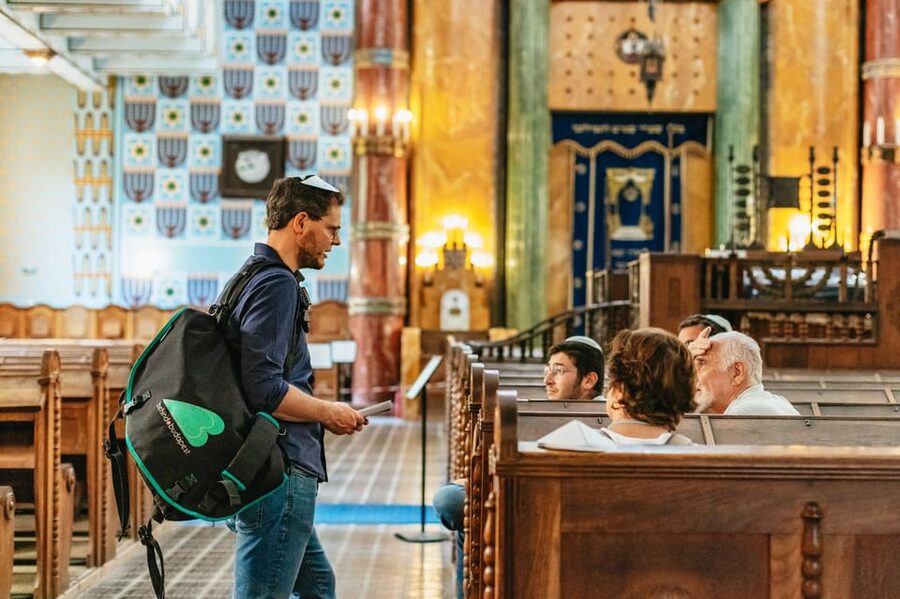
The included cafe stop lasts about 15 minutes and comes with coffee or a soft drink and flódni. Flódni is a Jewish Hungarian cake traditionally made with layered fillings, and trying it gives you a small but memorable connection to the food culture of the district.
Do not expect a full meal. This is a short break, not a food tour. Still, it improves the pace of the experience. After more than two hours of walking and listening, a drink and dessert give you a chance to sit, ask a question, and reset before continuing or heading to your next stop.
The food element also keeps the tour from feeling like a memorial-only route. Jewish life is presented through worship, politics, architecture, community, survival, and food. That broader view makes the experience feel more complete.
How the guides shape the experience
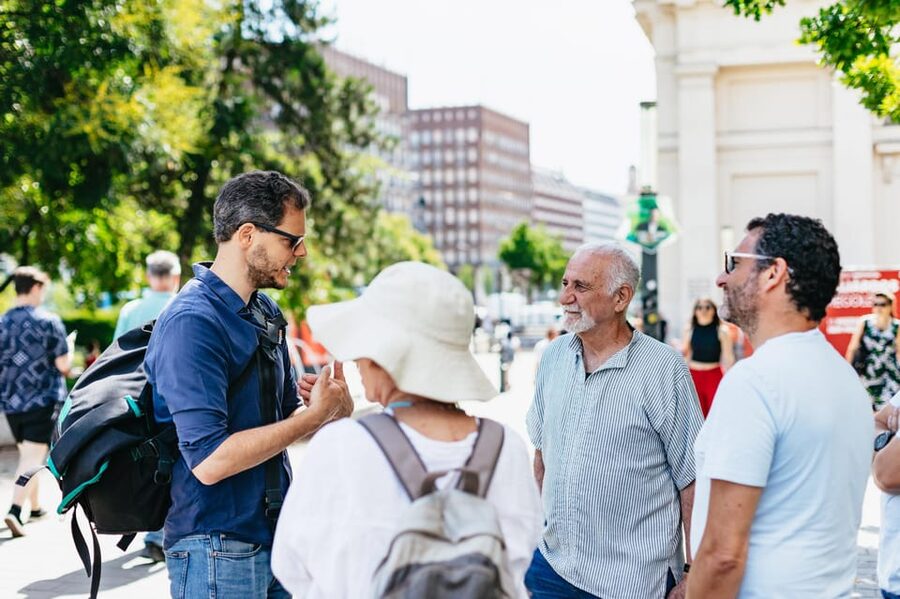
The guide is the most important part of this tour. Names associated with different departures include Barbara, Andrea, András, Gábor, Noémi, Maggie, Judit, Zsolt, Gabriel, Daniel, and others. The strongest guide qualities are clear speech, a good sense of timing, direct answers, and the ability to explain both Hungarian and Jewish history.
Several guides have been praised for using personal or family stories, while others are noted for humor and lively anecdotes. Noémi is described as warm, passionate, and attentive to individual needs. Gábor is repeatedly associated with energy, humor, and the ability to handle questions. András is praised for combining Hungarian history with the story of the Jewish Quarter.
Small groups help the guide adjust the pace. One group of 10 was considered comfortable for hearing explanations, while smaller groups allowed more questions and a more personal feel. If your group includes someone who needs a slower pace, mention it at the start. The walk is described as manageable, but it is still a substantial amount of walking, especially in hot weather.
Is $63 a fair price?
At $63 per person, this is not the cheapest way to walk around Budapest’s Jewish Quarter. The price makes more sense if you want a specialist guide, a small group, structured historical context, and a cafe stop rather than a general city walk.
You are paying for interpretation. The buildings and streets are free to see, but their meaning is not always obvious. A guide who can explain the community’s development, wartime restrictions, the former ghetto, rescue efforts, and present-day Jewish life adds the main value.
The price is less attractive if you mainly want synagogue interiors. Admission to all three synagogues is excluded, and the visits are outside only. In that case, compare this tour with a synagogue-focused option or budget separately for entry.
For visitors new to Hungarian history, I think the cost is reasonable. The tour covers far more than World War II and gives you a useful base for exploring the district on your own. The free cancellation period of 24 hours and the reserve-now, pay-later option also make it easier to fit into a changing Budapest schedule.
Who should book this walk?
I would choose this tour if you want:
- A serious introduction to Jewish life in Budapest
- Historical explanations rather than quick photo stops
- A guide who can connect architecture with politics and community life
- A small group where questions are practical
- A route that includes both memorials and present-day neighborhood life
It suits first-time visitors who want to understand the 7th District before returning on their own. It also works well for people with family or personal interest in Jewish history, provided they are comfortable with the difficult wartime material.
I would choose something else if you want a relaxed architectural stroll, a food-focused outing, or guaranteed access inside the synagogues. The tour has a lot to cover, and one four-star assessment noted that more time for questions would have helped. That is a fair tradeoff for a 2.5-hour format, but it means you should ask your most important questions as they arise.
Final verdict: a strong choice for context and honesty
This Budapest walking tour earns its high rating through its guides and its subject matter. The best part is not simply seeing three important synagogues. It is learning how Jewish Budapest developed, how restrictions and politics shaped the community, what happened in the former ghetto, and how people acted to save lives.
The exterior-only synagogue visits are the main drawback, and the schedule can feel full. Still, if you want a clear, direct introduction to the Jewish Quarter with coffee, flódni, wartime memorials, street art, and current local tips, I would book it. Add a separate synagogue interior visit if that matters to you.
FAQ
How long does the Budapest Jewish history walking tour last?
The tour lasts 2.5 hours. About 2 hours and 15 minutes are used for guided sightseeing in the Jewish Quarter, followed by a 15-minute coffee and dessert stop.
Where does the tour meet?
Meet in front of the Kempinski Hotel Corvinus Budapest, facing the Ferris wheel on Erzsébet Square.
How do I reach the meeting point?
You can reach the meeting point by the M1, M2, or M3 metro lines, as well as several buses and trams. Get off at Deák Ferenc tér.
Which synagogues can I see?
The route includes the Dohány Street Synagogue, the Rumbach Street Synagogue, and the Kazinczy Street Orthodox Synagogue.
Can I go inside the synagogues?
No. The visits to all three synagogues are from the outside only, and synagogue entry is not included.
Is food included?
Yes. The tour includes coffee or a soft drink and a local Jewish Hungarian cake called flódni at a cafe.
What language is the tour conducted in?
The live tour guide speaks English.
How large is the group?
The tour is limited to 10 participants.
Does the tour operate in bad weather?
Yes. The tour starts in all weather conditions, so dress appropriately for rain, cold, heat, or wind.
More Walking Tours in Budapest
- Budapest: Buda Castle Walk with Saint Stephen’s Hall
★ 4.5 · 3,012 reviews - Big Bus Budapest Hop-On Hop-Off Bus and Walking Tour
★ 3.5 · 2,206 reviews - Budapest: Buda Castle District Walking Tour
★ 4.6 · 2,108 reviews - Budapest City Landmarks Walking Tour in 2 Hours
★ 5.0 · 2,048 reviews
Recently added around Budapest
- Hiking + Chairlift ride + viewpoints in Budapest★ 5.0 · 3 reviews
- FoolsCode: EscapeRoom/Sightseeing tour with Actor Tourguide★ 5.0 · 3 reviews
- Grand Budapest tour with private transportation★ 5.0 · 3 reviews
- Budapest: Private Customizable Tour in French★ 5.0 · 3 reviews
- Budapest: Private, Personalized Pub Crawl, 3 drinks included★ 4.5 · 3 reviews
- Budapest Drinks and Piano Show Cruise★ 4.5 · 3 reviews
- Discover Budapest Using Tram Two★ 5.0 · 3 reviews
- Budapest: Private 3-Hour Gödöllő Palace Tour★ 4.9 · 3 reviews
Jewish Heritage Tours, compared.
Budapest Jewish Heritage Memorial Walking Tour & Synagogue Entry
Read our review →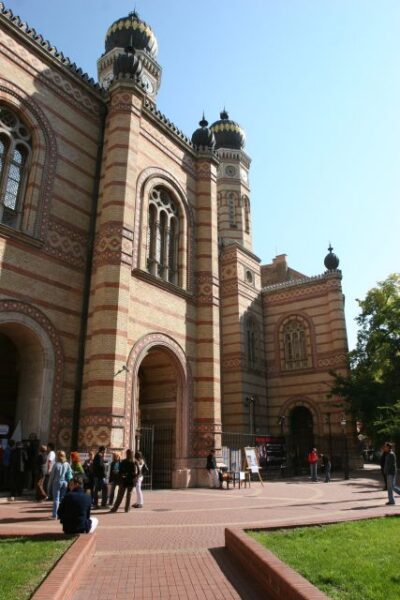
Jewish Heritage Guided Tour with Synagogue Ticket
Read our review →

Budapest Dohany Synagogue & Hungarian Jewish Museum & free extras
Read our review →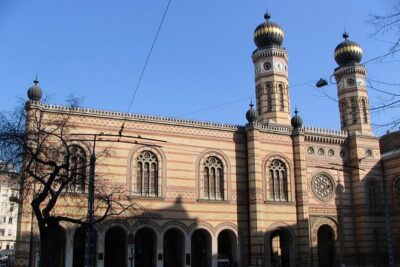
Budapest Dohany, Heroes’, Rumbach synagogues & Jewish Ghetto Tour
Read our review →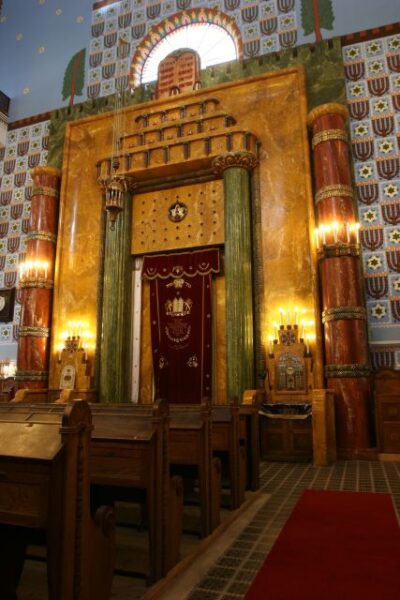
Browse the lists this tour appears in