
Reviewed · MEMENTO PARK TOURS
Guided Tour with Admission in Memento Park
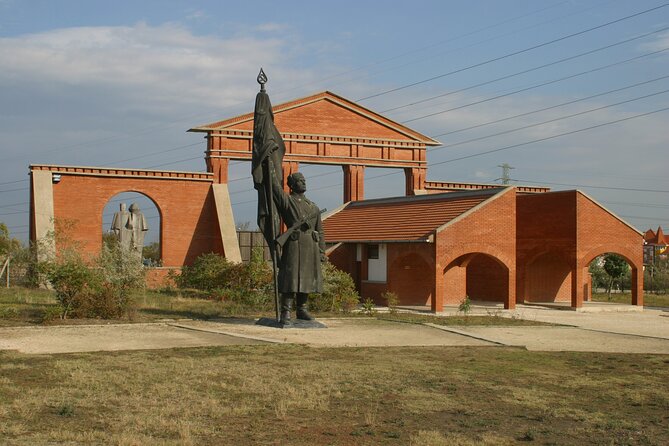
Memento Park is where Budapest sent its oversized communist statues after the regime fell. Instead of hiding them, the city placed them together outside the center, creating a sharp, memorable lesson in power, propaganda, and political memory. An English-speaking guide helps you read the symbols, jokes, and hard edges that are easy to miss on your own.
I like the personal stories woven into the tour, and I like the small group limit of 15, which gives you a fair chance to ask questions. Guides including Ilodi, Eszter, Esther, and Louisa have been praised for explaining both the history and the artistic meaning of the sculptures. The main drawback is the location outside central Budapest, so you need to allow extra time for reaching Balatoni út.
In This Review
- Key points at a glance
- Why Memento Park matters in Budapest
- What happens during the 11:30 guided tour
- Reading the statues instead of just photographing them
- The Barrack, film show, and photo exhibition
- Stalin’s Grandstand and the Trabant
- Is the $30.04 price good value?
- Timing, transport, and group comfort
- Who should book this experience?
- Final verdict: book it if context matters
- FAQ
- Where does the Memento Park guided tour start?
- What time does the tour begin?
- How long does the guided tour last?
- Is admission to Memento Park included?
- Is the tour offered in English?
- What else can I see after the guided walk?
- How large is the tour group?
Key points at a glance
- A park of displaced communist monuments: See statues removed from Budapest’s streets after the political changes of 1989 and 1990.
- A guide makes the difference: The tour explains the figures, symbols, and stories behind the sculptures instead of leaving you to guess.
- About 70 minutes with the guide: The guide can remain for roughly 20 minutes of questions afterward, then you can explore independently.
- More than statues: Your admission also includes the movie show, photo exhibition, Stalin’s Grandstand, and the famous Trabant.
- Small group setting: The maximum group size is 15 people, a useful limit for a history tour built around questions.
- A clear meeting plan: The tour starts at 11:30 am at Memento Park and ends at the same place.
Why Memento Park matters in Budapest
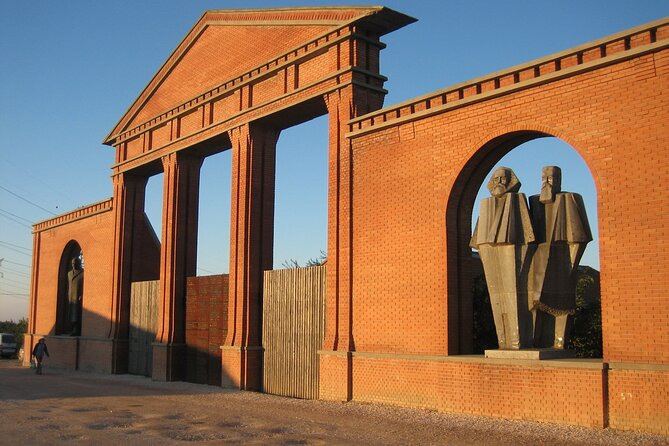
Budapest is full of grand buildings, elegant cafés, and reminders of the Austro-Hungarian era. Memento Park offers a different side of the city. Its statues speak about the decades when Hungary lived under a communist government closely tied to the Soviet Union.
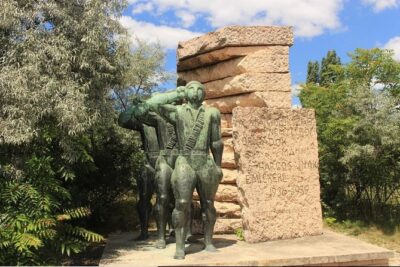
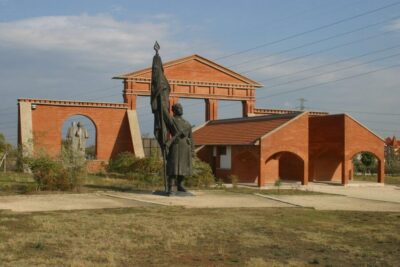
The park was created to hold monuments removed from public spaces after the end of communist rule. That setting changes how you see them. A statue that once dominated a square, framed a government building, or shaped an official public message now sits among other displaced monuments outside the city center.
That move is part of the story. The park is not simply a collection of old sculptures. It shows how a new political era dealt with the old one. The statues were not destroyed, but they no longer control the city’s public spaces.
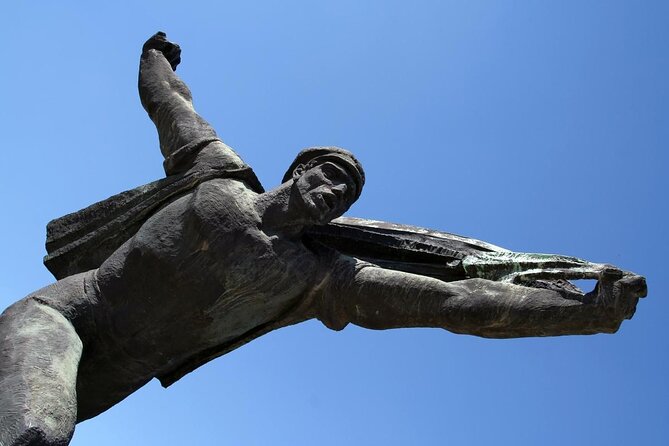
I find this more interesting than a standard museum display because the monuments still have their original size and force. You can look closely at gestures, faces, uniforms, flags, and poses. At the same time, their removal changes the meaning. A heroic figure can look strangely exposed when separated from the setting that once made it seem powerful.
You may recognize the broad visual language of communist public art: workers, soldiers, leaders, raised arms, and dramatic group scenes. Yet the guide’s job is to add the local details. Without that context, the park can seem like a collection of stern concrete figures. With an explanation, it becomes a record of how politics was presented to ordinary people.
More at Memento Park:
- Budapest: Memento Park Ticket
★ 4.5 · 46 reviews - Memento Park Visit with Private Trabant Transfer
★ 5.0 · 44 reviews - Memento Park Entrance Ticket
★ 4.5 · 38 reviews
What happens during the 11:30 guided tour
You meet at Memento Park, at the corner of Balatoni út and Szabadkai utca in Budapest’s 1222 district. The scheduled start is 11:30 am, and the activity ends back at the meeting point.
The guided portion is planned for about 70 minutes. That is long enough to move through the main sights without turning the visit into an all-day commitment. The pace should suit you if you want a clear introduction rather than hours of independent reading.
The best part of a guided walk here is interpretation. The sculptures do not always explain themselves. A guide can point out what a pose was meant to communicate, how the pieces worked as political images, and why certain details matter.
Past guides praised for this experience include Ilodi, Eszter, Esther, and Louisa. The strongest descriptions focus on their ability to connect the sculptures with everyday life under Soviet influence and Hungarian communist rule. You may hear personal anecdotes and real-life stories that make the period easier to understand as lived experience, not just a sequence of dates.
The tour also leaves room for questions. The guide remains available for about 20 minutes after the main walk, according to the tour details. That is useful because visitors often want to ask about a particular statue, Hungary’s political changes, or how the monuments were viewed before they came here.
The group can include no more than 15 people. That is a practical advantage. In a large group, questions can feel awkward and the guide may rush. With this limit, you have a better chance of hearing the explanations and getting a direct answer.
Reading the statues instead of just photographing them
You can visit Memento Park without a guide, but I would not choose that option if your main goal is to understand the site. You can certainly take photographs on your own. You can also see the scale and style of the monuments. The harder task is understanding what each piece was intended to do.
The guided experience turns the sculptures into political documents. A worker is not merely a worker. A soldier is not only a soldier. Their clothing, body position, direction of gaze, and relationship to other figures were selected to support a public message.
This is where the tour earns much of its price. You are not only paying for admission. You are paying for someone to provide the missing frame around the objects.
The artistic angle matters, too. Eszter has been praised for discussing both history and the artistic merits of the pieces. That balance is welcome. The park is not only about political oppression, and it is not only about sculpture. You need both sides to understand why the monuments remain worth seeing.
Some pieces may strike you as grim or even absurd. That tension is part of the experience. Monumental art aims to make political ideals appear permanent and unquestionable. Seen together in a park after the regime has ended, the same style can seem intimidating, theatrical, or oddly vulnerable.
The guide can help you notice these changes in meaning. That is the kind of detail you are unlikely to gain from a quick walk past the statues.
The Barrack, film show, and photo exhibition
After the guided section, you have time to continue exploring at your own pace. The Barrack includes a movie show and a photo exhibition. These additions help move the visit from outdoor sculpture to a wider look at communist-era life and imagery.
The supplied information does not specify the running time or exact contents of the film, so you should treat it as an included extra rather than plan your whole schedule around a particular screening. The same applies to the photo exhibition. You will have access to both as part of the park experience, but the time available can depend on how long you spend with the guide and questions.
I like having these indoor elements because the sculptures can leave you with broad impressions, while film and photographs can add visual evidence and a more human scale. They also give you a change of pace after walking among large outdoor monuments.
If you are short on time, follow the guide first. The explanations are the part that most changes what you see. Then use the remaining time for the Barrack, photographs, and any statues you want to revisit.
A few more Budapest tours worth comparing
- Budapest: Parliament Building Entry Ticket and Audio Guide
★ 4.5 · 3,844 reviews - Budapest: Opera House Guided Tour
★ 4.6 · 1,533 reviews - Budapest Small-Group Guided Tour on MonsteRoller e-Scooter
★ 5.0 · 1,517 reviews - Budapest: Guided Tour of the Parliament Building in Spanish
★ 4.6 · 1,240 reviews
Stalin’s Grandstand and the Trabant
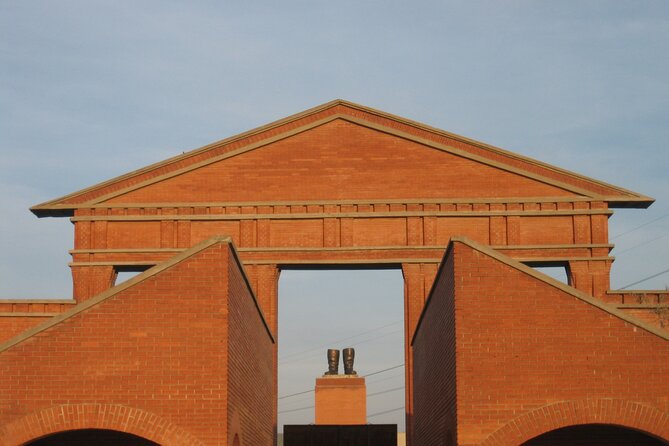
The tour also includes the secrets of Stalin’s Grandstand and a view of the majestic Trabant. These are distinctive parts of the visit, not minor extras.
Stalin’s Grandstand points to the way political leaders used public ceremony, spectacle, and architecture. A grandstand is built for display and observation, so it fits the park’s wider subject: how power presented itself to the public.
The word secrets suggests a story-led stop, but the provided details do not spell out exactly what you will be shown there. Your guide is the person who gives this feature meaning. Listen for the link between the structure and the political rituals associated with it.
The Trabant adds a touch of everyday life to a park filled with monumental ideals. Unlike a huge stone or metal statue, this small East German car represents ordinary transport from the communist period. It is an unexpected and memorable object among the monumental figures.
That contrast is useful. Political systems are often remembered through leaders and slogans, but daily life is also part of the story. The Trabant gives the visit a more familiar object to consider, and it provides one of the park’s most distinctive photo opportunities.
Is the $30.04 price good value?
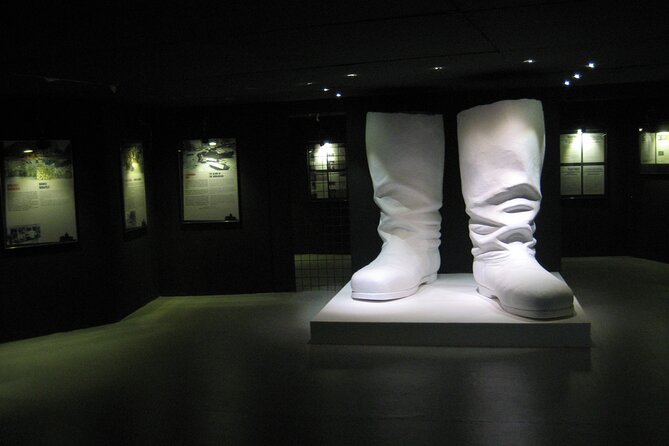
At $30.04 per person, this is not the cheapest short activity in Budapest. The tour lasts roughly one hour to one hour and ten minutes, with additional question time and independent exploration. For a quick attraction visit, the price may feel high.
The value improves if you care about context. Admission is included, the tour is in English, and the group is capped at 15 people. You also receive access to the movie show, photo exhibition, Stalin’s Grandstand, and Trabant.
I would compare this price with the cost of reaching the park and then seeing only the objects without help. If you already plan to visit Memento Park, the guided option makes more sense than treating the park as a simple photo stop. The sculpture explanations are the main reason to pay extra.
The tour is especially good value for first-time visitors to Budapest who want to understand the city beyond its central sights. It also suits anyone with an interest in twentieth-century politics, public art, or the way countries handle difficult memories.
The value is weaker if you dislike guided commentary or want a quiet, fully independent visit. You may prefer to spend your time taking photographs and reading at your own pace. Still, you can continue exploring after the guide finishes, so the format is not completely restrictive.
Timing, transport, and group comfort
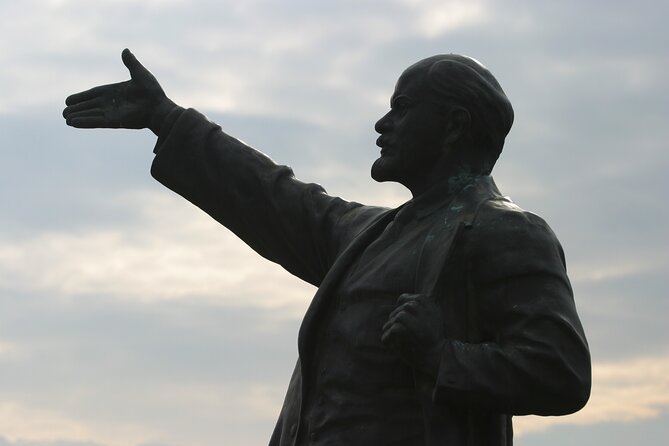
Memento Park is at Balatoni út and Szabadkai utca in the 1222 district, outside the central sightseeing zone. The activity information says the park is near public transportation, but it does not provide a specific route or travel time. Check your route before booking and leave enough margin to arrive for the 11:30 start.
Because the tour begins at a fixed time, arriving late could mean missing the opening explanation. That opening matters because it sets the political and historical frame for everything that follows.
The mobile ticket is convenient. Confirmation is provided at booking, and you can present the ticket on your phone. Service animals are allowed, and most people can participate according to the activity details.
The group limit of 15 is one of the better practical features. It does not make the experience private, but it should keep the walk manageable. You can hear the guide, ask questions, and move through the park without the heavy feel of a large coach group.
The activity ends where it begins. That makes planning simpler if you want to continue elsewhere afterward, though the tour does not include transportation beyond the meeting point.
Who should book this experience?
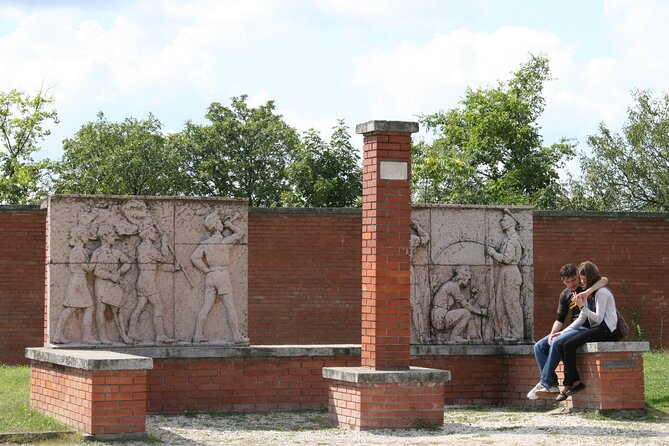
I would recommend it to you if you want more than a quick look at communist-era statues. The guide-led format is particularly useful if you do not already know much about Hungarian twentieth-century history.
It is also a strong choice for visitors who enjoy political art. The tour does not treat the sculptures as decoration. It helps you examine how public art can shape ideas about workers, soldiers, leaders, national identity, and authority.
History students, architecture fans, photographers, and adults interested in recent European history should find plenty to consider. The personal stories described in the tour make the period more approachable, while the sculptures provide the large visual impact.
Families with older children may also find it worthwhile, especially if a young person responds better to objects and stories than to a formal museum. The available information says most people can participate, but it does not give a specific child age recommendation.
I would think twice if your Budapest schedule is extremely tight. The park is outside the center, and the total outing requires more time than the one-hour guided portion alone. It is also not the right pick if you want only cheerful sightseeing. The subject includes political control, Soviet occupation, and the uneasy memory of dictatorship.
Final verdict: book it if context matters
Book this tour if you want Memento Park to make sense. The statues are worth seeing on their own, but the guide adds the political meaning, artistic details, and personal stories that turn a strange collection into a serious historical visit.
The $30.04 price is fair for admission, a small English-speaking group, and a roughly 70-minute explanation, especially with time for questions afterward. Plan carefully for the 11:30 meeting and the park’s location outside central Budapest.
Skip it only if you strongly prefer independent sightseeing or cannot spare the travel time. For most people interested in Budapest’s modern past, the guide is the part that makes this experience worth booking.
FAQ
Where does the Memento Park guided tour start?
It starts at Memento Park, at Balatoni út and Szabadkai utca sarok, 1222 Budapest, Hungary.
What time does the tour begin?
The scheduled start time is 11:30 am.
How long does the guided tour last?
The base guided portion lasts about 70 minutes. The guide may remain available for about 20 additional minutes for questions.
Is admission to Memento Park included?
Yes. The admission ticket is included in the activity price.
Is the tour offered in English?
Yes. The guided tour is offered in English.
What else can I see after the guided walk?
You can take photographs and explore the movie show, photo exhibition in the Barrack, Stalin’s Grandstand, and the Trabant.
How large is the tour group?
The activity has a maximum of 15 people.
Recently added around Budapest
- Hiking + Chairlift ride + viewpoints in Budapest★ 5.0 · 3 reviews
- FoolsCode: EscapeRoom/Sightseeing tour with Actor Tourguide★ 5.0 · 3 reviews
- Grand Budapest tour with private transportation★ 5.0 · 3 reviews
- Budapest: Private Customizable Tour in French★ 5.0 · 3 reviews
- Budapest: Private, Personalized Pub Crawl, 3 drinks included★ 4.5 · 3 reviews
- Budapest Drinks and Piano Show Cruise★ 4.5 · 3 reviews
- Discover Budapest Using Tram Two★ 5.0 · 3 reviews
- Budapest: Private 3-Hour Gödöllő Palace Tour★ 4.9 · 3 reviews
Memento Park Tours, compared.
Memento Park: Official Guided Tour with Entry Ticket
Read our review →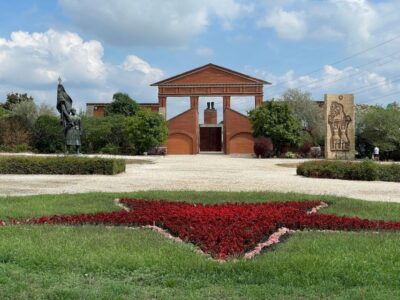
Browse the lists this tour appears in