
Reviewed · MEMENTO PARK TOURS
Memento Park: Official Guided Tour with Entry Ticket
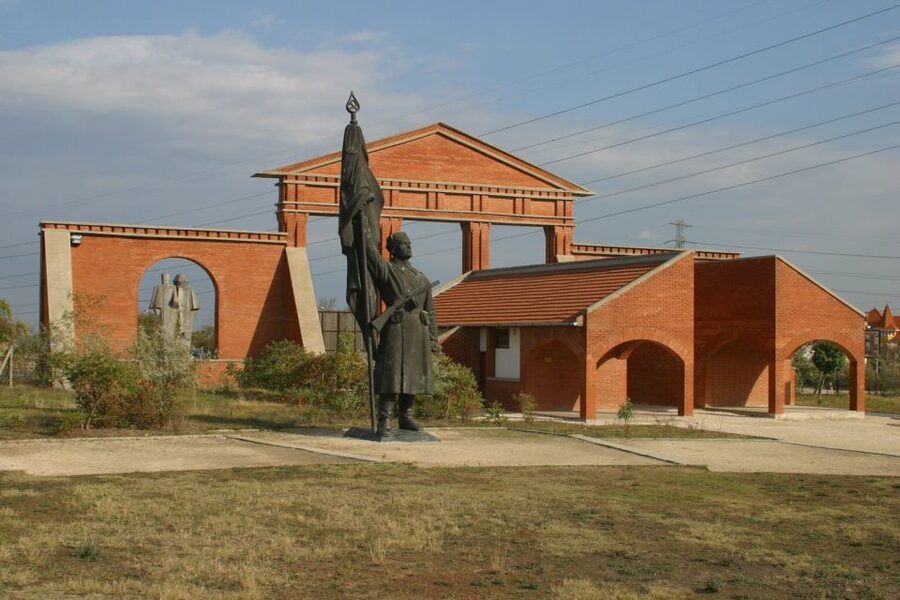
Memento Park gathers Budapest’s discarded communist monuments in one open-air museum, where bronze workers, soldiers, leaders, and political symbols reveal how a dictatorship used public art to shape public thought. The statues are huge, strange, and often unintentionally funny, but the real value comes from learning how to read them.
I like the clear historical context and the chance to see Stalin’s Grandstand from the inside, including its concealed rooms. I also like the human scale of the tour: guides explain what ordinary Hungarian life felt like behind the Iron Curtain, rather than treating the statues as mere curiosities.
The main drawback is practical: Memento Park sits outside central Budapest, and public transport takes about 40 minutes. The gravel paths and open-air setting also call for good shoes and weather protection.
In This Review
- Key points to know before you go
- Why Memento Park is worth the trip outside Budapest
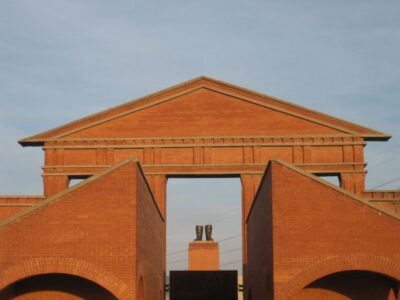
- Starting at Witness Square and Stalin’s Grandstand
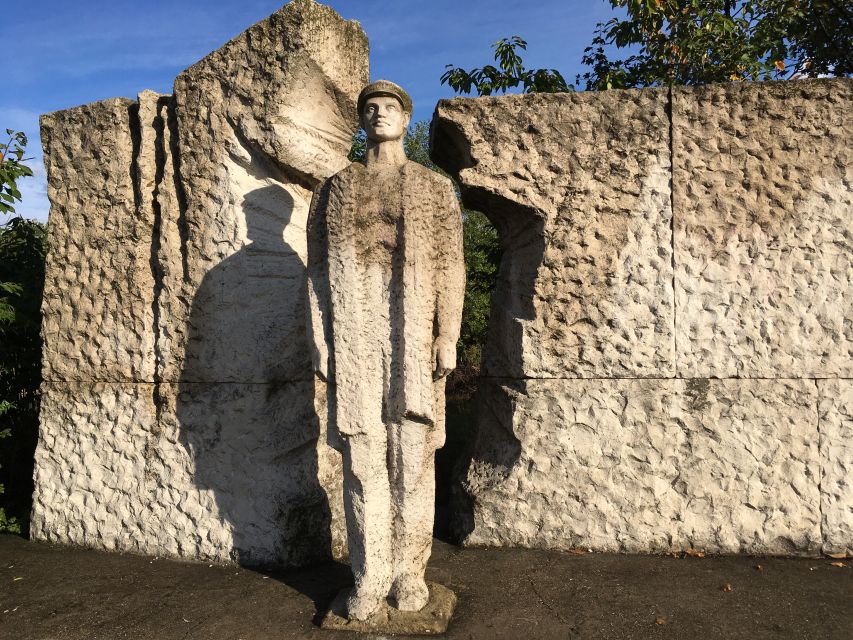
- Reading the statues in the Statue Park
- The Trabant and the everyday side of the story
- Finishing at the End Wall
- Staying longer for films and exhibits
- Is $28 good value?
- Timing, access, and what to bring
- Who will get the most from this tour?
- Should you book Memento Park?
- FAQ
- Where is Memento Park?
- How long does the guided tour take?
- What language is the tour in?
- Where do I meet the guide?
- Is admission included?
- Is transportation included?
- Can I visit the park after the guided walk?
- Is the tour available in bad weather?
- Is Memento Park wheelchair accessible?
- Are children under 10 allowed?
Key points to know before you go
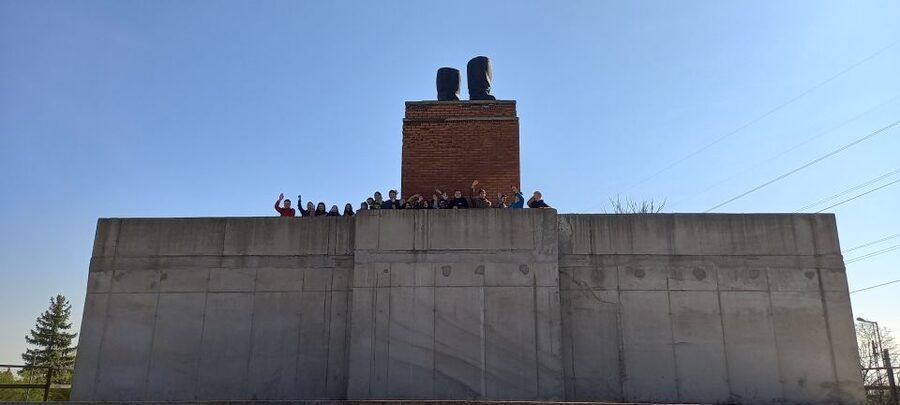
- Stalin’s Grandstand preserves a chilling stage for communist power: You see the balcony where leaders once watched parades, plus rooms that most casual museum visits could easily miss.
- The Statue Park is best with explanation: Workers, soldiers, political figures, and major events become easier to understand when your guide points out the symbols and intended message.
- The English tour is interactive: Plan to ask questions and share your own thoughts during the walk.
- An original Trabant adds a playful photo stop: This small East German car offers a hands-on reminder of everyday life in the communist bloc.
- The visit continues after the guided walk: You can watch old propaganda and spy-recruitment films, see exhibits in The Most Cheerful Barrack, and browse the shop.
- Allow extra time for the journey: The tour itself takes about 70 minutes, but the trip from Budapest and time for the exhibits make this a substantial half-day outing.
Why Memento Park is worth the trip outside Budapest
Memento Park is not a standard collection of beautiful statues. It is a holding place for monuments that once dominated Hungarian streets and squares, then lost their public role after the fall of communism. That change in setting matters.
In central Budapest, a monument can still blend into the city around it. Here, the statues are grouped together, removed from the places where they once instructed and impressed the public. You can look at them more honestly. Their size, stiff poses, raised arms, and idealized faces reveal the mechanics of political art.
I find this more useful than simply seeing a few old statues on a city walk. The guide helps you ask what each monument was trying to make people feel. Was it calling for sacrifice? Praising factory workers? Celebrating Soviet friendship? Presenting party leaders as heroic figures? Once you begin looking for those signals, the park becomes a lesson in visual persuasion.
The experience also moves beyond official slogans. You hear about daily life under the communist dictatorship and the pressure behind the public ceremonies. That human context keeps the visit from becoming a parade of unusual sculptures. You are not only looking at what the government wanted people to see. You are also considering what people believed, tolerated, joked about, or quietly endured.
More at Memento Park:
- Guided Tour with Admission in Memento Park
★ 5.0 · 48 reviews - Budapest: Memento Park Ticket
★ 4.5 · 46 reviews - Memento Park Visit with Private Trabant Transfer
★ 5.0 · 44 reviews
Starting at Witness Square and Stalin’s Grandstand
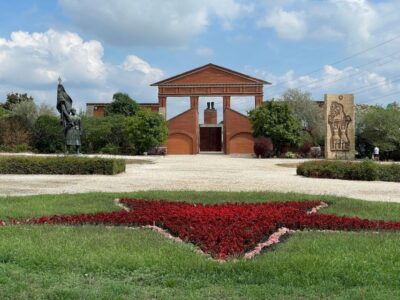
Meet your guide at the cash desk about 15 minutes before the start. After you show your voucher, the group begins at Witness Square, the open space in front of the park.
This first area introduces the museum from the outside. The setting gives you room to see the scale of the structures before entering the Statue Park itself. The tour then turns to Stalin’s Grandstand, one of the most striking parts of the visit.
The grandstand was built as a place from which communist leaders could watch public celebrations and parades. From the Waving Balcony, you get a view across the surrounding area and can imagine the controlled spectacle of a political ceremony. Leaders stood above the crowd, waving from a carefully designed platform while thousands gathered below.
The balcony is not just a photo point. It shows how architecture can arrange power. The person on the balcony is visible and elevated. The crowd is below, moving in an organized display. Your guide explains these details so you can connect the building’s design with the political message.
The hidden rooms add another layer. They are easy to overlook if you are only walking through the outdoor grounds, yet they help show that the grandstand was more than a decorative platform. The tour brings out the less public side of political ceremony, including the spaces used behind the scenes.
This section is especially good for visitors who enjoy architecture and political history. It is also where the guide’s storytelling matters most. One recent guide, Ildi, received particular praise for explaining both the building’s design and its symbolism. A guide who has lived through the communist period can also add a personal sense of what these public rituals meant beyond the official script.
Reading the statues in the Statue Park
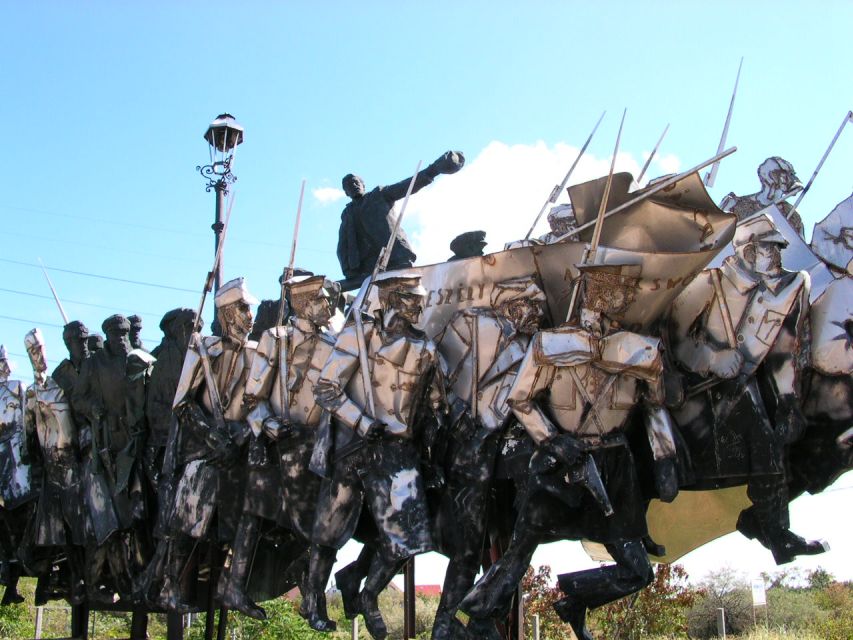
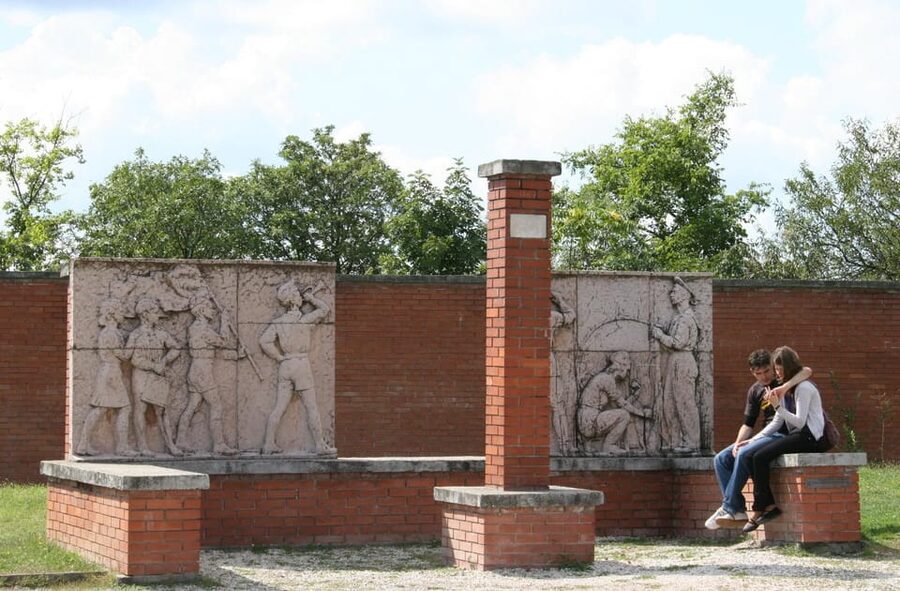
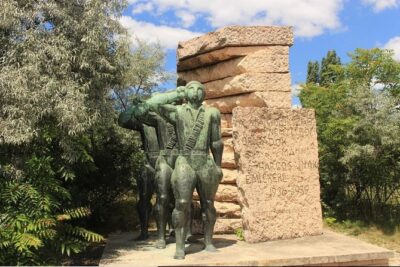
The Statue Park is the main event. Here, your guide introduces the unwanted remnants of Hungary’s communist era, including monuments to workers, Hungarian and international communist figures, and important moments in the workers’ movement.
The statues are deliberately hard to miss. Bronze bodies stretch upward. Arms reach forward. Faces look stern or idealized. Groups of workers are presented as a united force, often with little room for individual personality. Their size was part of the message: the state wanted its values to appear permanent and physically dominant.
I like this part because the guide teaches you how to decode the monuments instead of merely naming them. You learn to notice posture, scale, grouping, and gesture. A raised arm can suggest solidarity or command. A worker holding a tool can represent the dignity of labor while also serving as a political symbol. A group moving in the same direction can present unity, but also erase difference.
Some pieces will feel solemn. Others may seem awkward or unintentionally comic. That contrast is useful. Propaganda often tried to make political ideas look noble and inevitable, yet the passage of time can expose the theatrical quality of the pose. The tour allows you to appreciate the visual oddness without forgetting the serious system that created it.
The park also puts Hungarian monuments beside international communist imagery. That wider setting helps you understand Hungary’s place within the Soviet sphere. You are looking at local political messages, but also at a shared visual language used across communist countries.
This is a history-heavy visit. If you prefer to wander silently and photograph sculptures without background, the guided walk may feel like more information than you want. For most people, though, the explanations make the statues far more legible. Without them, you risk seeing only large bronze figures. With them, you can recognize how the monuments spoke to workers, party members, schoolchildren, and the wider public.
The Trabant and the everyday side of the story
The original Trabant offers a welcome change of pace. You can take a photo in the small retro car, a familiar object from life behind the Iron Curtain.
The car matters because it shifts the focus from official monuments to ordinary material life. The statues show what the state wanted to celebrate. The Trabant hints at what people actually encountered in their daily routines. It is compact, plain, and instantly associated with the communist bloc.
This stop is also a good reminder that the tour is not meant to be grim from beginning to end. The park has room for irony and curiosity. You can study a political statue one minute and pose beside a Trabant the next. That mixture keeps the experience approachable, especially for anyone who does not usually visit political museums.
Bring your camera, but do not expect the car to turn the outing into a light entertainment stop. The main purpose remains historical. The photo works best as a small, memorable detail within a serious visit.
A few more Budapest tours worth comparing
- Budapest: Széchenyi Spa Day Ticket with Optional Upgrades
★ 4.3 · 23,911 reviews - Budapest: Parliament Building Entry Ticket and Audio Guide
★ 4.5 · 3,844 reviews - Budapest: Full-Day Gellért Spa Ticket
★ 4.2 · 3,340 reviews - Budapest: Cinema Mystica Entry Ticket
★ 4.3 · 3,103 reviews
Finishing at the End Wall
The guided walk ends at the End Wall. By this point, you have moved from the architecture of political display to the statues that once filled public spaces, then toward the end of the communist era.
The final point gives the tour a sense of direction. This is not simply a collection of monuments arranged for decoration. The path reflects a political story: power creates symbols, places them in public view, and later removes them when the system changes.
The program is interactive, and you are encouraged to ask questions and share your thoughts. That makes a difference at a site where many details invite debate. You might want to ask how people responded to a particular statue, why certain figures were honored, or how the monuments were removed from Budapest. The guide can help connect your questions to the wider period.
The advertised guided portion is described as about 70 minutes. The schedule also lists a longer program with separate blocks, so allow more time than the walking estimate if you want to see the additional exhibits, watch the films, and take photographs. The exact pace can depend on the guide, group, and number of questions.
Staying longer for films and exhibits
After the tour, you are free to continue exploring. This is important when judging the $28 price. You are not paying only for an escorted walk through statues. Admission also covers the park and its premises, allowing you to stay for the extra material.
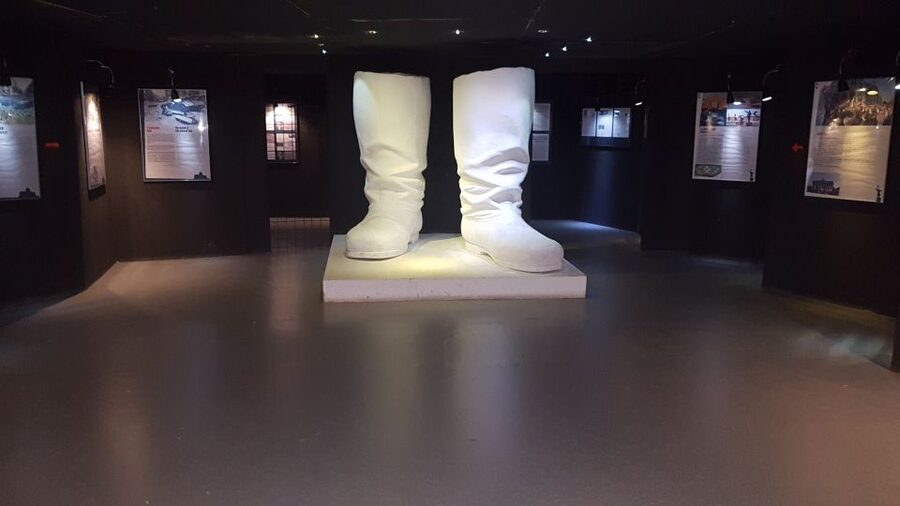
The Most Cheerful Barrack contains exhibitions and a movie show. The name has a dry, ironic edge, and the content adds another view of communist-era life. Old propaganda and spy-recruitment films can be unintentionally funny today, but they also show how authorities tried to shape behavior and loyalty.
I would save time for the films if this subject interests you. Moving images reveal the tone of the period in a way a still statue cannot. The acting, language, staging, and official optimism can all seem strange to modern eyes. At the same time, it is worth remembering that such films were not made simply to entertain. They were tools of persuasion.
You can also browse the souvenir shop. That will not be the main reason to come, but it gives you a final chance to reflect on the park’s mixture of history, irony, and material culture.
Is $28 good value?
At $28 per person, this is a reasonable price if you want context rather than a quick photo stop. Admission is included, as is the English guided tour, and you can remain afterward for the films and exhibitions. The guide is the part that gives the ticket its strongest value.
A self-guided visit may suit you if you already know Hungarian communist history or prefer to read at your own speed. But the monuments are not always self-explanatory. Their political language was designed for a particular era, and some of the meaning is easy to miss without help.
The tour also saves you from guessing which details matter. A good explanation of the grandstand, the statues, and daily life can turn an unusual collection into a coherent visit. Recent feedback gives the English guides high marks, with Ildi singled out for warmth, strong explanations, and attention to the group. One guide was also described as having lived through the Soviet period, which can add a personal dimension when available.
The value is weaker if you are looking for a central Budapest attraction that fits neatly between other sights. You need to spend time reaching the park, and transportation is not included. A taxi is an option, but it adds to the cost. Public transport takes about 40 minutes from central Budapest, so check the route and starting time before booking.
Timing, access, and what to bring
Arrive at the cash desk 15 minutes before the activity begins. Present your voucher to the guide before joining the group. The experience runs in rain or shine, so check the forecast and dress for exposure.
The park promenades are covered with gravel. Comfortable shoes are not optional if you want to walk without distraction. Sunscreen and weather-appropriate clothing are also sensible because much of the experience takes place outdoors.
The tour is wheelchair accessible, though the gravel surface may affect how easy movement feels. If access is important for you, confirm the conditions for your specific needs before arrival.
The experience is offered in English with a live guide. Children under 10 are not suitable for this activity, and the heavy political subject matter may be better for older children and adults.
Who will get the most from this tour?
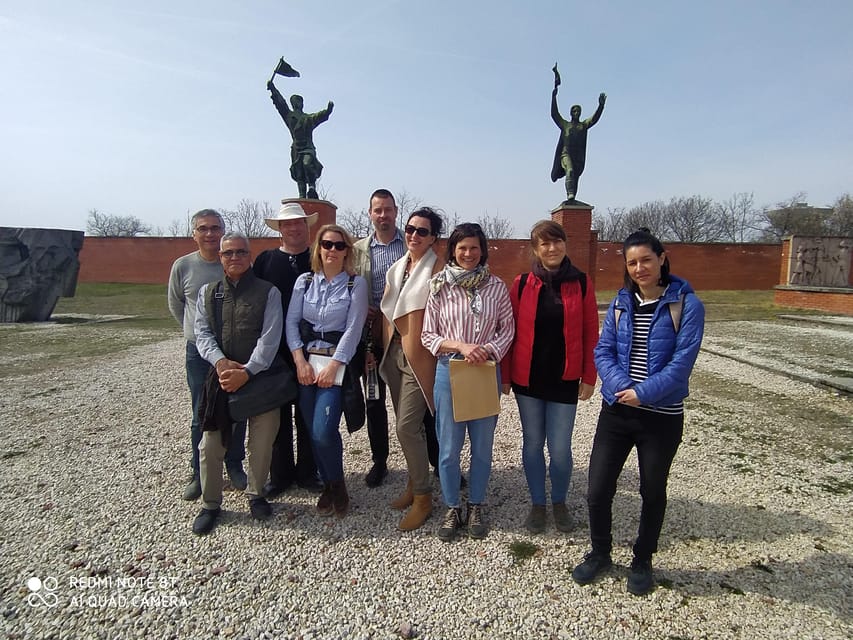
I would choose this for you if you are interested in Cold War history, political art, architecture, propaganda, or the daily experience of life under a dictatorship. It also suits anyone who wants to see a side of Budapest that is far removed from the usual central sights.
You will get more from it if you enjoy asking why a monument looks the way it does. The tour rewards curiosity more than quick sightseeing. Bring questions, since the program welcomes them.
I would be more cautious if your Budapest schedule is very short, you dislike history-heavy tours, or you want a relaxed indoor activity. The park is outside the center, the paths are gravel, and the weather can shape the experience.
Should you book Memento Park?
Book it if you want to understand the political symbols that once filled Budapest, not just photograph unusual statues. The guided explanations, Stalin’s Grandstand, the Trabant, and the extra films make the trip worthwhile for history-minded visitors.
Skip it if you have only a few hours in Budapest and prefer central landmarks. The journey takes effort, and the subject is serious. For the right audience, though, Memento Park offers one of the city’s clearest looks at how public art, architecture, and everyday life were shaped by communist rule.
FAQ
Where is Memento Park?
Memento Park is outside central Budapest, in Hungary. Reaching it by public transport from central Budapest takes about 40 minutes.
How long does the guided tour take?
The walking experience takes about 70 minutes. The schedule also includes additional program time, so allow longer if you plan to see the films, exhibitions, and other parts of the park.
What language is the tour in?
The live guided tour is in English.
Where do I meet the guide?
Meet the guide at the cash desk at Memento Park. Arrive 15 minutes before the activity starts and present your voucher.
Is admission included?
Yes. Admission to Memento Park and its premises is included with the guided tour.
Is transportation included?
No. You must arrange and pay for transportation to and from Memento Park.
Can I visit the park after the guided walk?
Yes. After the tour, you can take photographs, visit the souvenir shop, watch the movie show, and see the exhibitions in The Most Cheerful Barrack.
Is the tour available in bad weather?
Yes. The tour runs in rain or shine, so bring weather-appropriate clothing and suitable shoes.
Is Memento Park wheelchair accessible?
Yes, the activity is listed as wheelchair accessible. The promenades are covered with gravel, which may affect how easy movement is for some visitors.
Are children under 10 allowed?
No. The activity is not suitable for children under 10 years old.
Recently added around Budapest
- Hiking + Chairlift ride + viewpoints in Budapest★ 5.0 · 3 reviews
- FoolsCode: EscapeRoom/Sightseeing tour with Actor Tourguide★ 5.0 · 3 reviews
- Grand Budapest tour with private transportation★ 5.0 · 3 reviews
- Budapest: Private Customizable Tour in French★ 5.0 · 3 reviews
- Budapest: Private, Personalized Pub Crawl, 3 drinks included★ 4.5 · 3 reviews
- Budapest Drinks and Piano Show Cruise★ 4.5 · 3 reviews
- Discover Budapest Using Tram Two★ 5.0 · 3 reviews
- Budapest: Private 3-Hour Gödöllő Palace Tour★ 4.9 · 3 reviews
Memento Park Tours, compared.
Browse the lists this tour appears in