
Reviewed · COMMUNIST-ERA HISTORY TOURS
Budapest: Memento Park and Icons of Communism Guided Tour
Memento Park puts Hungary’s Communist past out in the open, among huge statues of Marx, Engels, Lenin, and other former heroes. The most striking sight is Stalin’s Boots, the only surviving piece of a statue pulled down by angry Hungarians during the 1956 uprising.
I like the small group of no more than seven, which gives you room to ask plain, direct questions about a difficult subject. I also like the private car transfer, since Memento Park sits about 16 kilometers from central Budapest and is less convenient to reach than the city’s main sights.
The main drawback is the travel time. The drive is listed at about 45 minutes each way, while the visit inside the park lasts about 1.5 hours. You are paying $63 for transport, entry, and a guide, so this makes the most sense if you want historical context rather than a quick look at statues.
In This Review
- Key Points Before You Book
- Why Memento Park Matters in Budapest
- Meeting at Batthyány Square
- The 45-Minute Ride to Memento Park
- Walking Among 41 Communist Monuments
- Stalin’s Boots and the 1956 Uprising
- Propaganda, Fear, and the Secret Police
- What the Guide Adds
- Is $63 a Fair Price?
- Who Will Get the Most From This Tour?
- Practical Details That Matter
- Should You Book the Memento Park Tour?
- FAQ
- Where does the tour begin?
- Where does the tour end?
- How long does the experience last?
- How far is Memento Park from central Budapest?
- Is transportation included?
- Is the entrance fee included?
- What language is the tour offered in?
- Can I take photographs at Memento Park?
Key Points Before You Book
- Stalin’s Boots tell the story of the 1956 uprising and Hungary’s demand for freedom.
- Forty-one Communist-era statues and plaques were moved here after the political system fell.
- Victor leads the tour when available, bringing local knowledge, humor, and personal feeling to a hard subject.
- Private car transport saves you the trouble of making your own way to the park outside central Budapest.
- The 1.5-hour park visit is focused, with time for guided explanations, walking, sightseeing, and photos.
- The tour suits history-minded visitors, including families with teenagers who want more than a museum label.
Why Memento Park Matters in Budapest
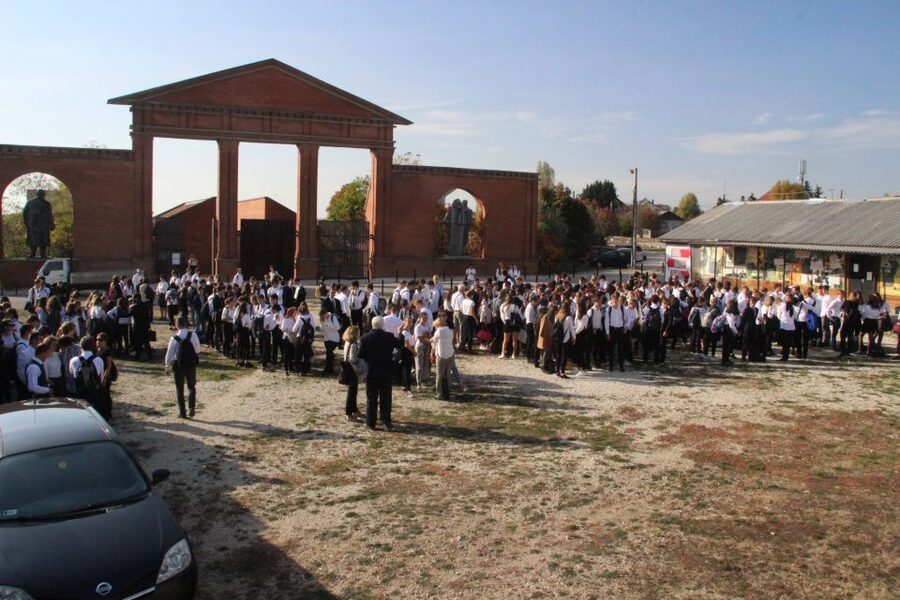
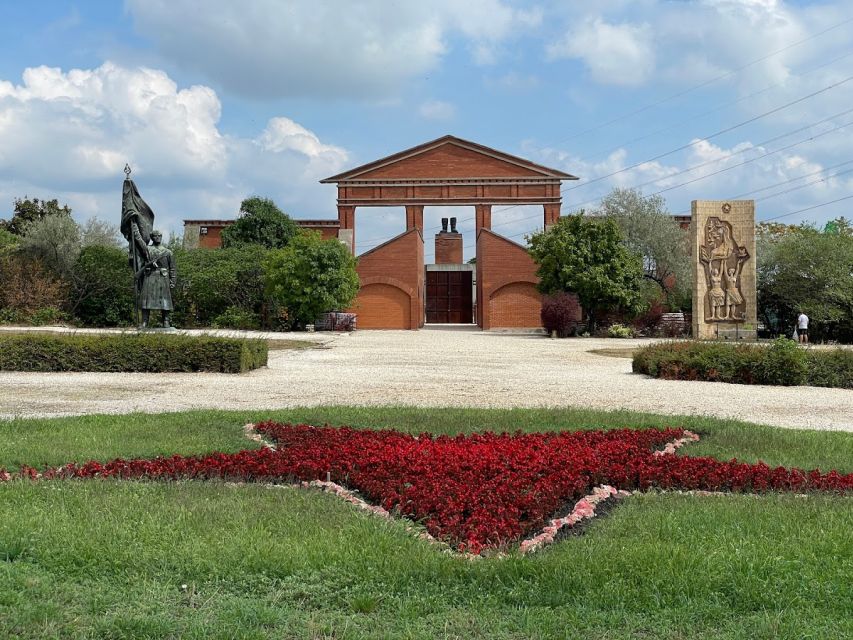
Memento Park is not a traditional museum filled with glass cases. It is an outdoor collection of statues and plaques removed from Budapest and other parts of Hungary after the Communist system collapsed. Instead of remaining in prominent squares, these monuments were placed together on the edge of the city.
That setting changes how you see them. In their original locations, statues of Communist leaders carried official power. Here, they are separated from government buildings and public ceremonies. You can walk among them, photograph them, and look at the failed heroes of a former political order without the old machinery of authority around them.
The tour aims to explain how Hungary came under Communist rule after the Second World War, why the ideology found room in the country, and how a theory associated with Marx became a harsh reality for millions. You are not simply counting statues. You are learning how political power changed the rule of law and how propaganda shaped ordinary life.
That context is important. On your own, you might recognize Lenin or Marx but miss the reason the monuments were so large, formal, and carefully placed. A guide can explain what the state wanted people to believe and how public images worked as tools of persuasion.
More on Budapest under communism:
- Budapest: Communist History Tour with House of Terror Option
★ 4.8 · 182 reviews - Budapest: 3-Hour Walking Tour About Communism (Small Group)
★ 4.7 · 70 reviews - Communism in Hungary with a Historian
★ 5.0 · 70 reviews
Meeting at Batthyány Square
The tour begins at Batthyány Square on the Buda side of the Danube. Look for St. Anne Church, the church with two towers, where you meet in front of the building. The square is easy to reach by Metro Line 2 or by trams 19 and 41.
This is a practical meeting point. It is close to the river and connected to central Budapest by public transport, but you should still allow enough time to find the church entrance and meet the guide without rushing.
The experience is led by a licensed English-speaking guide who also drives. Victor is the guide most often identified with this tour, and the strongest praise centers on his clear explanations, friendly manner, and ability to make the subject understandable. He is described as a local who takes pride in sharing Hungary’s story, which matters here because the subject is not just abstract twentieth-century politics.
The car transfer also gives you time to ask questions before reaching the park. Since the group is capped at seven people, the ride should feel more personal than a large coach excursion. The included bottle of water is a small but useful touch, especially on a warm day when you will be walking outdoors.
The 45-Minute Ride to Memento Park
Memento Park is about 10 miles, or 16 kilometers, from central Budapest. The listed journey takes roughly 45 minutes in each direction, making transport a major part of the three-hour schedule.
I see this as one of the tour’s real benefits. You do not need to work out the route yourself, navigate public transport, or arrange a taxi for the return trip. The car is also described as clean and comfortable, which makes the outward and return legs easier.
The tradeoff is simple: the park is not a full-day outing, but reaching it takes time. You will spend around 90 minutes in the car and about 90 minutes at the site. If you only want to see the statues and take a few photos, independent transport may feel more efficient. If you want the park explained as part of Hungary’s political story, the transfer becomes worthwhile.
One useful feature is the chance to ask the guide about the wider subject during the ride. The tour’s focus includes propaganda, the secret police, recruitment, intimidation, and the ways brave people tried to escape or resist. Those topics help prepare you for what the statues represent.
Walking Among 41 Communist Monuments
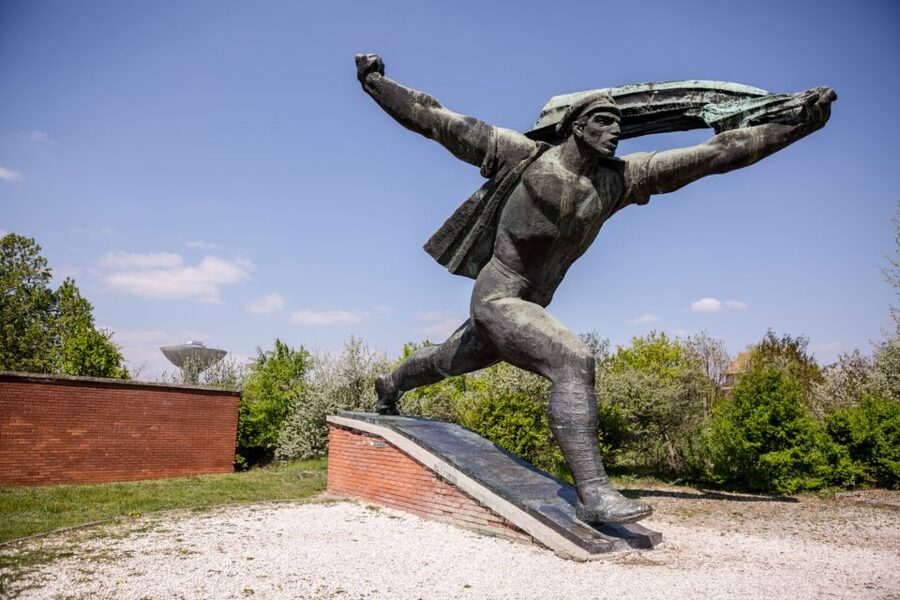
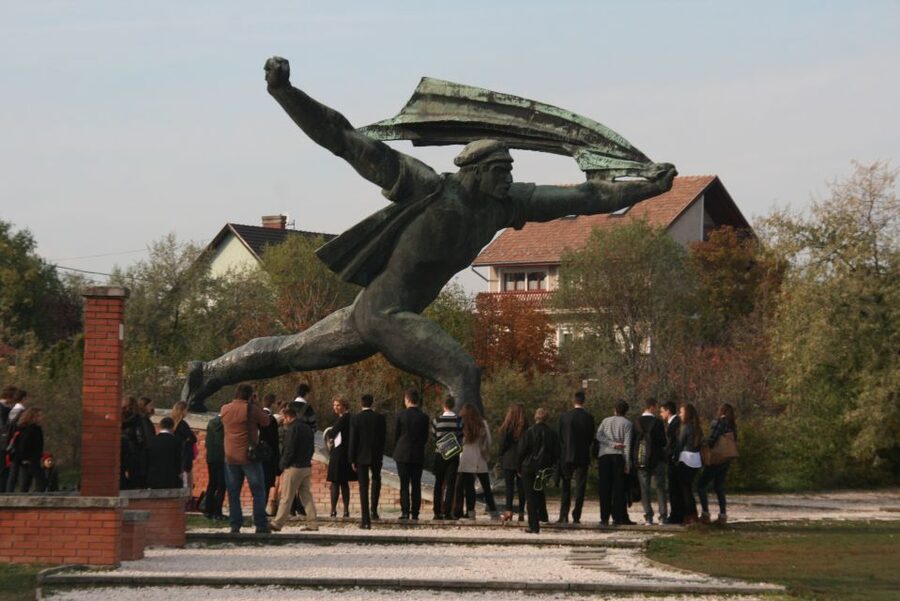
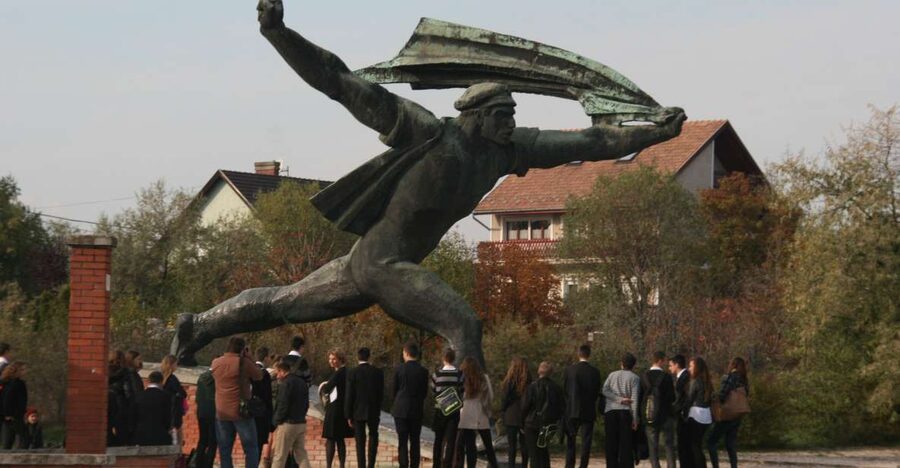
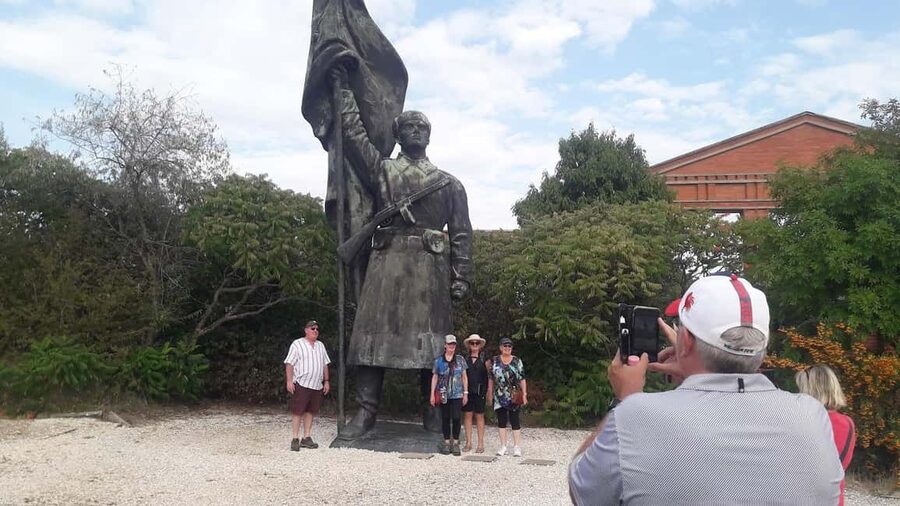
Inside Memento Park, you spend about 1.5 hours on a guided walk with time for sightseeing and photographs. The collection includes 41 statues and symbols connected to Hungary’s Communist period, including Marx, Engels, and Lenin.
The monuments are large and formal, built to make political leaders appear powerful and permanent. Seen together in one place, they can also look strangely theatrical. That contrast is part of the park’s effect. The statues once told people what to admire. Today, their relocation asks you to think about how quickly official certainty can disappear.
Your guide explains why the statues were removed after the fall of the system and how they were used during socialism. This is where the tour earns its price. A sign can identify a person, but it cannot easily explain how public monuments, speeches, ceremonies, and fear worked together.
The subject can be grim, but the tour is not presented as a dry political lecture. Victor’s approach is described as personable and sometimes funny, helping make a sad and cold place easier to understand without making light of the suffering connected to it.
You can take photographs throughout the statue park. If you want a picture with one of the monuments, the guide will gladly take it for you. That may sound minor, but the scale of the sculptures makes for memorable photographs, especially when you stand beside them and become part of the frame.
More at Memento Park:
- Guided Tour with Admission in Memento Park
★ 5.0 · 48 reviews - Budapest: Memento Park Ticket
★ 4.5 · 46 reviews - Memento Park Visit with Private Trabant Transfer
★ 5.0 · 44 reviews - Memento Park Entrance Ticket
★ 4.5 · 38 reviews
Stalin’s Boots and the 1956 Uprising
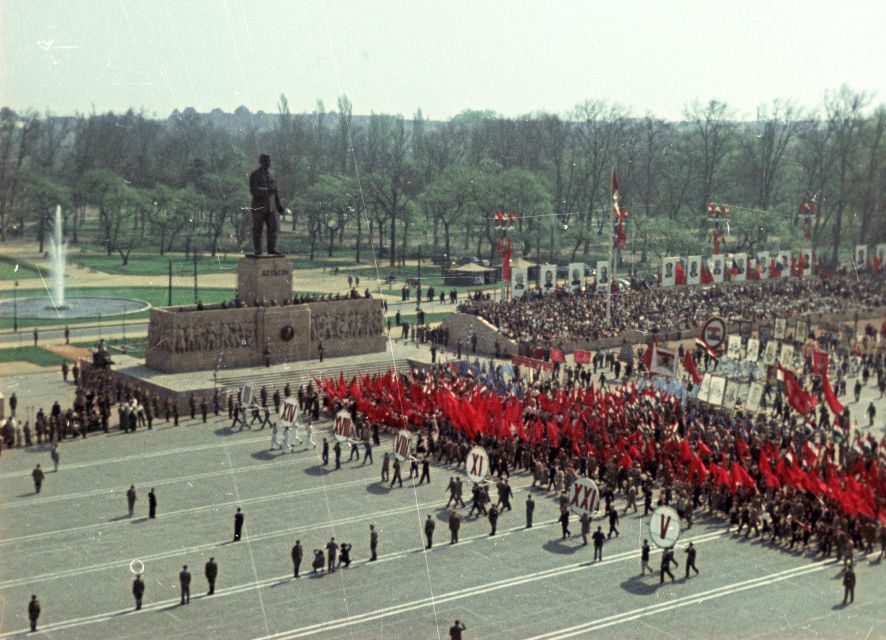
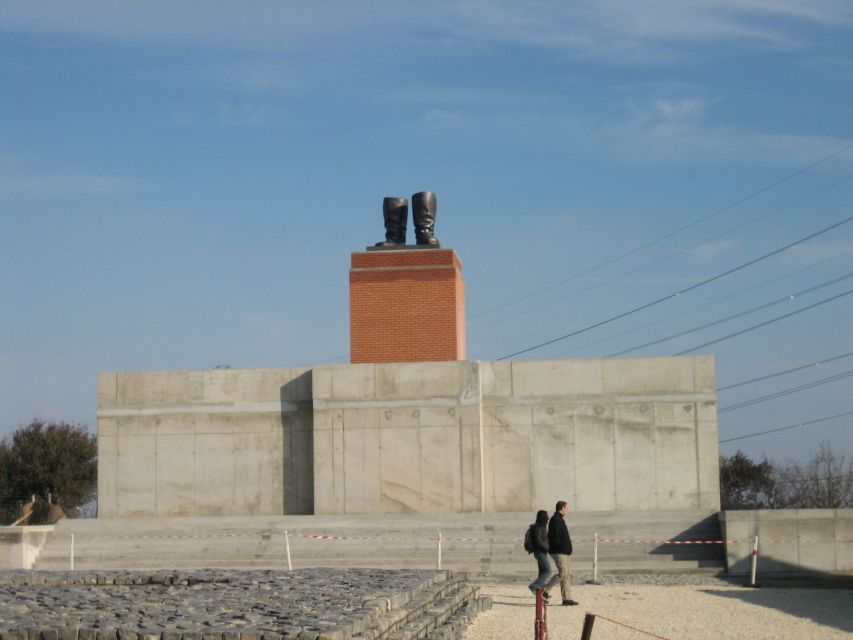
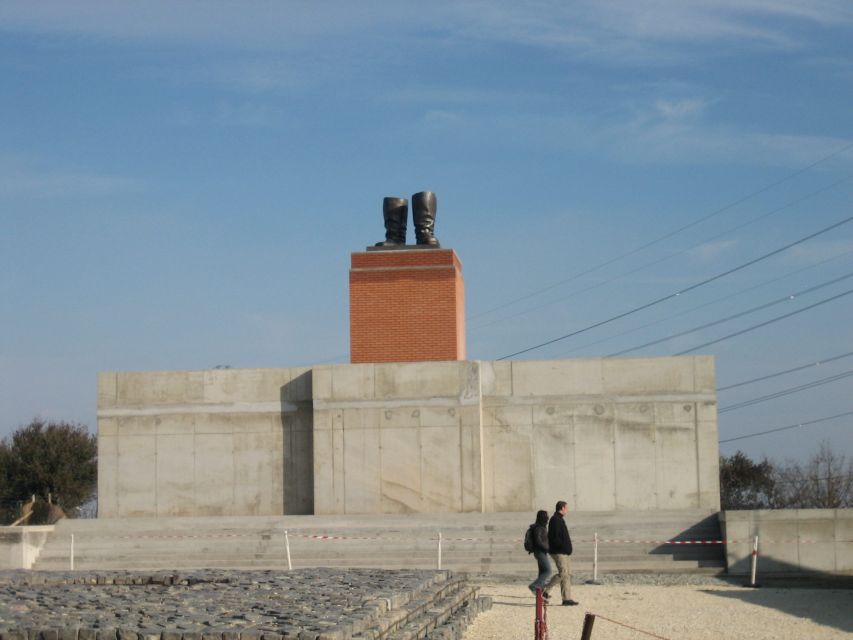
The emotional center of the visit is Stalin’s Grandstand and the remaining Boots of Stalin. The original statue of Stalin was enormous. During the 1956 uprising, angry Hungarians pulled it down, leaving only the boots attached to the base.
Those boots became a symbol of the public’s desire for freedom. The guide uses the site to help you picture the crowd, the anger, and the dramatic break between the dictator’s public image and the people who rejected it.
This is more powerful than seeing a complete statue in a conventional gallery. The missing body tells the story. You are looking at what remained after a crowd challenged the symbol of Soviet control.
The stop also shows why physical monuments matter in political life. A statue is not only decoration. It can tell people who has power, whose ideas are approved, and how history should be remembered. When people tear it down, they are attacking that public message as much as the stone or metal itself.
Propaganda, Fear, and the Secret Police
The tour also addresses the less visible side of Communist rule. You learn how the rule of law changed after the Communists gained power, how propaganda encouraged obedience, and how the secret police recruited new members.
For you, this part may be more useful than simply learning dates and names. It connects the large monuments to daily behavior. A political system does not rely only on statues. It also depends on institutions, pressure, surveillance, and the fear of being reported or intimidated.
The guide explains how an ordinary person could be drawn into the system or pressured by it. The supplied tour details do not promise a separate secret-police building or recreated interrogation room, so you should expect explanation and interpretation rather than a dramatic staged exhibit.
That is still valuable. Memento Park works best when you see it as a place for understanding, not as an amusement attraction. The statues provide the setting, while the guide supplies the human and political meaning.
What the Guide Adds
A self-guided visit would let you see the same monuments, but it would leave more of the interpretation to you. The park is outside central Budapest, and its symbols may not be immediately clear if you did not grow up with the history of Soviet influence in Eastern Europe.
A live English-speaking guide can adjust the explanation to your questions. With only a few people in the group, you can ask about Marxist theory, Hungary after the Second World War, the 1956 uprising, or how propaganda operated. You are not limited to a fixed audio recording.
Victor receives especially strong praise for making the history easy to follow and helping the place come alive. His local connection is another advantage. He is not simply naming the figures in the park, but presenting Hungary’s experience in a personal and approachable way.
The guide may also add sights on the journey back. One reported example includes Gellért Hill and the Poets’ Circle, though these extras should be treated as possible additions rather than guaranteed stops. The core promise is the car transfer, the park entrance, and the guided visit.
Is $63 a Fair Price?
At $63 per person, this is not the cheapest way to see Memento Park. The value comes from the combination of private transport, entrance, a licensed guide, a small group, and the return trip to the same central meeting point.
You also avoid the uncertainty of finding the park yourself. That matters because the site is 16 kilometers from the center, and the tour schedule is built around a three-hour round trip rather than a quick visit.
I would compare the price with your priorities. If you enjoy researching political history and are comfortable arranging your own transport, an independent visit may cost less. You would, however, lose the benefit of a guide who can explain why the statues mattered and answer questions as you walk.
If you are in Budapest for a short stay, the price can be reasonable because the tour handles the hard logistics in one block of time. The private car is also more comfortable than a large group transfer and gives you a chance to speak directly with the guide.
Who Will Get the Most From This Tour?
I would recommend this tour to anyone interested in modern European history, authoritarian politics, propaganda, or the personal effects of life under Communism. It is also a good choice if you prefer a guide to connect monuments with real events.
Families with older children or teenagers can benefit from the format. The tour has enough visual drama to hold attention, especially the giant statues and Stalin’s Boots, while the guide helps explain ideas that may otherwise feel distant or academic. One family found that teenagers responded well to Victor’s engaging approach.
You should think twice if your Budapest plans are built around central sights only or if you dislike spending time in a vehicle. The park is not in the city center, and the drive takes a substantial part of the schedule.
The subject is also serious. You will hear about intimidation, secret police recruitment, propaganda, and the loss of freedom. The guide may use humor to keep the discussion accessible, but this is still a historical site about dictatorship and suffering.
Practical Details That Matter
The total duration is three hours, with starting times varying by date and availability. The stated schedule includes about 45 minutes by van or car to Memento Park, 1.5 hours at the park, and about 45 minutes back to Batthyány Square.
Entry is included, and the tour skips the ticket line. Food is not included, so eat before you meet or plan to manage without a meal during the activity. A bottle of water is provided.
You can buy souvenirs, pictures, and postcards at the park shop. Photography at the statues is allowed, and the guide can take your picture at no extra charge.
The experience is offered in English and uses a small group limited to seven participants. You can cancel up to 24 hours before the activity for a full refund, and the reserve-now, pay-later option lets you hold a place without paying immediately.
Should You Book the Memento Park Tour?
Book it if you want to understand what the statues meant, not just see them. The strongest reason to choose this experience is the guide-led context, especially with Victor, combined with simple door-to-door transport from Batthyány Square.
Skip it if you have little interest in twentieth-century politics, need to keep every hour in central Budapest, or prefer independent sightseeing at the lowest possible cost. For everyone else, Memento Park offers a serious and unusual break from Budapest’s grand churches, bridges, and thermal baths.
The image of Stalin’s Boots is memorable, but the larger lesson is more useful: public symbols can shape how people think, and they can also be pulled down when people decide they have had enough.
FAQ
Where does the tour begin?
The meeting point is in front of St. Anne Church at Batthyány Square, next to the Danube. You can reach the square by Metro Line 2 or trams 19 and 41.
Where does the tour end?
The activity ends back at Batthyány Square, the same place where you meet the guide.
How long does the experience last?
The total duration is three hours. The schedule includes about 45 minutes to reach Memento Park, 1.5 hours at the park, and about 45 minutes to return.
How far is Memento Park from central Budapest?
Memento Park is about 10 miles, or 16 kilometers, from central Budapest.
Is transportation included?
Yes. The tour includes pickup at the meeting point, transport by private car to Memento Park, and transport back to the city.
Is the entrance fee included?
Yes. Admission to Memento Park is included, and the tour skips the ticket line.
What language is the tour offered in?
The live guided tour is offered in English.
Can I take photographs at Memento Park?
Yes. You can take photographs of the statues and monuments. The guide will also gladly take a picture of you with them at no extra charge.
Recently added around Budapest
- Hiking + Chairlift ride + viewpoints in Budapest★ 5.0 · 3 reviews
- FoolsCode: EscapeRoom/Sightseeing tour with Actor Tourguide★ 5.0 · 3 reviews
- Grand Budapest tour with private transportation★ 5.0 · 3 reviews
- Budapest: Private Customizable Tour in French★ 5.0 · 3 reviews
- Budapest: Private, Personalized Pub Crawl, 3 drinks included★ 4.5 · 3 reviews
- Budapest Drinks and Piano Show Cruise★ 4.5 · 3 reviews
- Discover Budapest Using Tram Two★ 5.0 · 3 reviews
- Budapest: Private 3-Hour Gödöllő Palace Tour★ 4.9 · 3 reviews
Communist-Era History Tours, compared.
Communist History Tour with House of Terror Option
Read our review →
3-Hour Walking Tour About Communism (Small Group)
Read our review →

Lives of Hungarians Under Communist and Capitalist system
Read our review →
Private Budapest Hammer & Sickle Communist Times Tour
Read our review →
Communist History Evening Walking Tour of Budapest
Read our review →Browse the lists this tour appears in