
Reviewed · JEWISH HERITAGE TOURS
Past and Present of Budapest Jewish District Tour
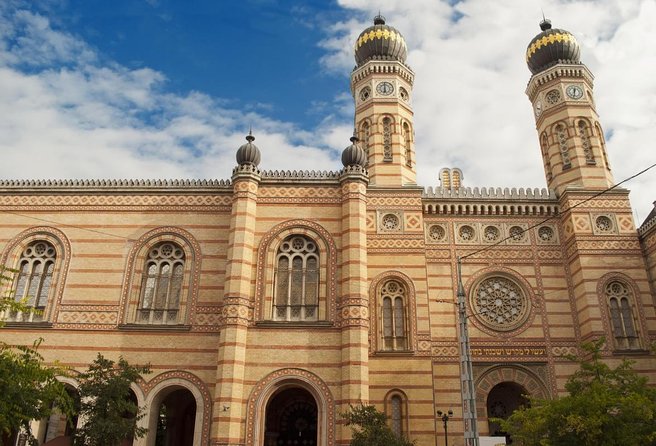
Budapest’s Jewish District is more than pretty synagogues and lively ruin bars. This walking tour connects the area’s Golden Age, wartime destruction, and present-day revival, while showing how Jewish life shaped District VII. You’ll hear about the Great Synagogue, Schutzpass documents, ghetto walls, kosher customs, and the city’s uneasy balance between memory and nightlife.
I like the clear route from Erzsébet tér to Szimpla Kert, which gives you a useful first look at District VII without spending half a day inside museums. I also like the range of guides, including Gary, Eszter, Dora, Edith, and Judith, who are praised for clear explanations, humor, and answers to questions.
The main limitation is important: you do not enter any synagogue. You see the exteriors, the Great Synagogue’s memorial courtyard and cemetery from outside, and the surrounding streets. Some guests also find the presentation broad rather than personal, so this works best as an introduction, not a full Jewish heritage study.
In This Review
- Key points at a glance
- Why this District VII walk matters
- Erzsébet tér begins with orientation
- Deák Ferenc tér and the story of Gaudiopolis
- The Great Synagogue is an exterior visit
- Rumbach Street Synagogue brings architecture and street art together
- Gozsdu Udvar shows the district’s modern face
- Kazinczy Street explains Orthodox life today
- Szimpla Kert is a lively finish
- The guides shape the experience
- What the pace and group size mean
- The tour’s value at $3.63
- Who should book this walk
- Should you book the Past and Present of Budapest Jewish District Tour?
- FAQ
- How long does the tour last?
- Where does the tour start?
- Where does the tour end?
- Does the tour enter the synagogues?
- Can I see the Great Synagogue memorial courtyard and cemetery?
- Is there an admission fee for Szimpla Kert?
- How much does the tour cost?
- What language is the tour offered in?
- How many people can join the tour?
Key points at a glance
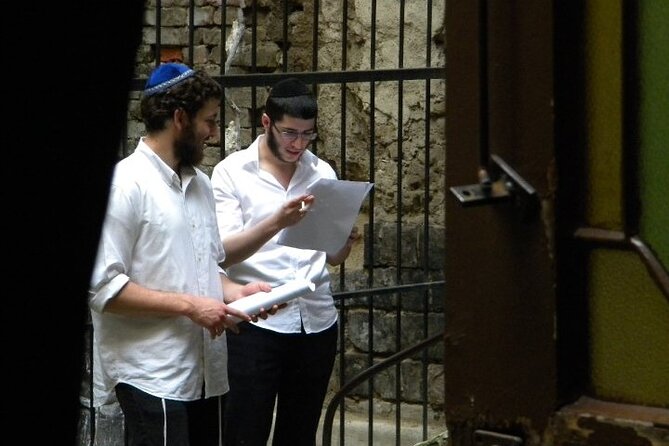
- Three major synagogues from the outside: See the Great, Rumbach Street, and Kazinczy Street synagogues while learning how Neolog and Orthodox Jewish life developed in Budapest.
- A serious wartime story: The tour covers Nazi occupation, the Budapest ghetto, Schutzpass documents, and the people who helped save Jewish lives.
- A useful past-to-present route: Start at Erzsébet tér and finish at Szimpla Kert, passing Gozsdu Udvar, street art, markets, and the last visible piece of ghetto wall.
- A donation-based walking tour: The $3.63 charge is a booking fee, not the guide’s pay. Guides depend on donations, so bring cash or another way to tip.
- A compact District VII introduction: At roughly 1 hour 45 minutes, it fits well on a first day in Budapest or before a paid synagogue visit.
- Walking shoes matter: You cover several streets and spend much of the time standing while the guide talks.
Why this District VII walk matters
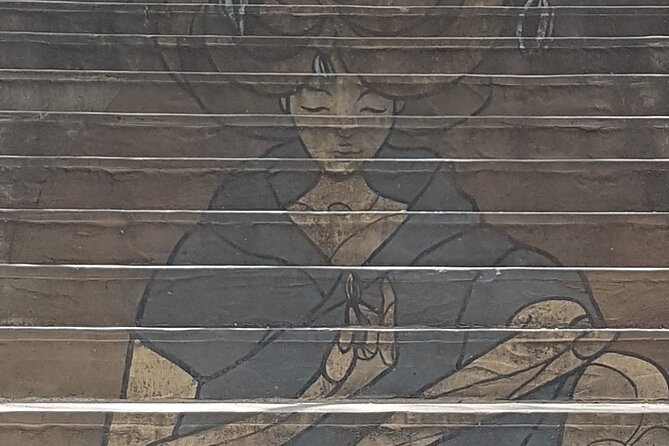
Budapest’s Jewish District, now mainly associated with District VII, can feel confusing at first. One street may hold a synagogue, a kosher restaurant, a memorial marker, a ruin bar, and a wall covered in modern art. The tour helps you read those layers instead of seeing them as unrelated sights.
The story begins with the growth of Jewish communities in Hungary and moves toward the Belle Epoque, when Budapest was a major Central European city. The guide then explains the forces that divided Jewish religious life and later the persecution and destruction of the Second World War.
That structure is one of the tour’s best features. You are not given a random collection of facts. You move from arrival and growth to religious differences, wartime danger, survival, and the current character of the neighborhood.
The subject is heavy. You will hear about the dangers faced by Hungarian Jews under Nazi occupation and about the destruction of the community. The walk does not treat the past as a decorative backdrop for nightlife. At the same time, it shows that Jewish life in Budapest was not only a story of tragedy. It includes faith, work, culture, community, survival, and an ongoing presence.
More of Jewish Budapest:
- Budapest Jewish Heritage Memorial Walking Tour & Synagogue Entry
★ 5.0 · 568 reviews - Budapest: Jewish Heritage Guided Tour with Synagogue Ticket
★ 4.8 · 533 reviews - Budapest walking tour: Parliament and Shoes Memorial
★ 5.0 · 387 reviews
Erzsébet tér begins with orientation
Meet by the Budapest Ferris Wheel in Erzsébet tér, a central location close to public transportation. The guide uses the opening ten minutes to explain the route and introduce the story of Hungarian Jews.
This is a practical starting point because the square is easy to find and gives the group room to gather. You should arrive ready to listen outdoors rather than expecting a formal welcome center or indoor introduction.
The first stop also sets the tone. The guide points toward the district and outlines the major sights, including the largest synagogue in Europe. The emphasis is on the period from Budapest’s Golden Age through the destruction of Jewish life during the war.
If you are new to Budapest, this first explanation gives you a frame for the streets ahead. If you already know the city center, it helps connect the grand central spaces with the more intimate lanes of District VII.
Deák Ferenc tér and the story of Gaudiopolis
At Deák Ferenc Square, the group spends about fifteen minutes on two subjects that add useful depth. One is Gaudiopolis, or the City of Joy, a postwar children’s community connected with efforts to protect and care for young people. The other is the Schutzpass, a protective document that helped save thousands of Jewish lives.
These details keep the tour from becoming a simple list of buildings. They show individual efforts and organized rescue alongside the larger political story.
The guide also points out remnants of the former medieval city wall. At this point, the focus shifts further back in time, explaining how Jewish people were excluded from trading within the city limits. That reminder is valuable because it shows that Jewish life in Budapest was shaped by changing laws and restrictions long before the twentieth century.
You spend about fifteen minutes here, mostly standing while the guide explains the site. If you have trouble hearing in open public spaces, move close to the guide and ask questions early. Several guides, including Edi and Eszter, are praised for speaking clearly and responding carefully, but group conditions can still affect how easy it is to follow every word.
The Great Synagogue is an exterior visit
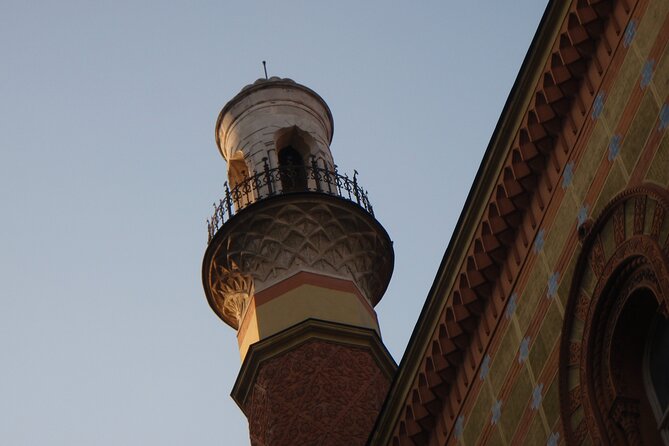
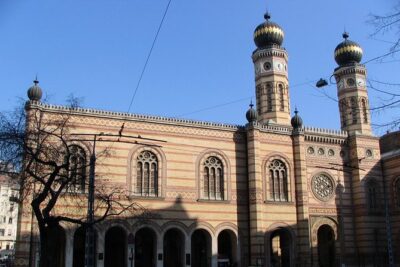
The Great, or Central, Synagogue is the visual centerpiece of the walk. The guide explains its place in European Jewish life, the Neolog movement, Orthodox Judaism, and Zionism.
You do not enter the synagogue. You see the building from outside, along with the memorial courtyard and cemetery from the exterior. This distinction is easy to miss when planning a short visit, so keep it in mind before booking.
The outside stop lasts about twenty minutes. That gives the guide time to explain the building and its setting, but it is not enough for a full architectural tour or an extended look at the interior. The synagogue has its own entrance fee and is better treated as a separate visit if you want to see the inside.
I see this limitation in two ways. On the positive side, skipping the entry keeps the walking tour moving and avoids using most of the time inside one building. On the negative side, anyone expecting to see the interiors of the three synagogues may feel disappointed.
Use this stop as a decision point. If the Great Synagogue interests you, note the opening details for a separate visit. The walking tour gives you the historical reasons to go, but not the complete synagogue experience itself.
A different kind of day in Budapest:
- Budapest: City Highlights Cruise with Welcome Drink
★ 4.6 · 35,610 reviews - Budapest: Unlimited Prosecco, Beer and Aperol Spritz Cruise
★ 4.8 · 25,310 reviews - Budapest: Széchenyi Spa Day Ticket with Optional Upgrades
★ 4.3 · 23,911 reviews - Budapest: Nighttime or Daytime Sightseeing Cruise
★ 4.2 · 21,062 reviews
Rumbach Street Synagogue brings architecture and street art together
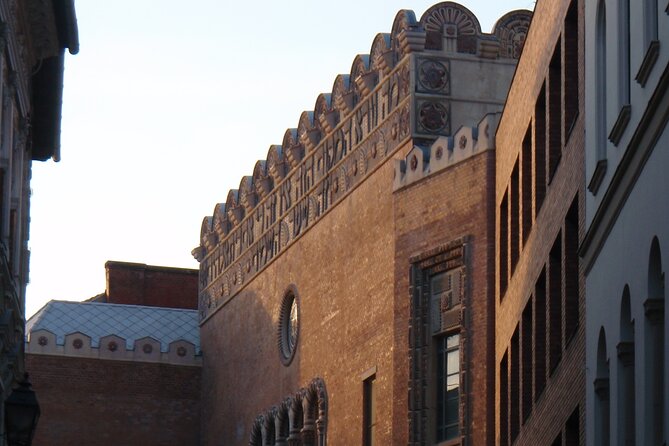
The walk continues to Rumbach Street Synagogue, where you learn about the beautifully restored building and its murals. Again, the group remains outside.
This stop lasts around fifteen minutes and adds an architectural contrast to the Great Synagogue. It also links Jewish heritage with the modern visual character of District VII, where historic facades sit beside murals and urban street art.
The outside-only format means you will not see the restored interior or study the murals in detail. Still, the guide can explain why the building matters and help you notice details you might otherwise pass without understanding.
This is a good place to ask focused questions. You might ask about the differences between the three synagogues, the communities they served, or the relationship between Budapest’s Jewish religious movements. The tour is strongest when you use the guide’s knowledge to connect the stops rather than simply taking photographs.
Gozsdu Udvar shows the district’s modern face
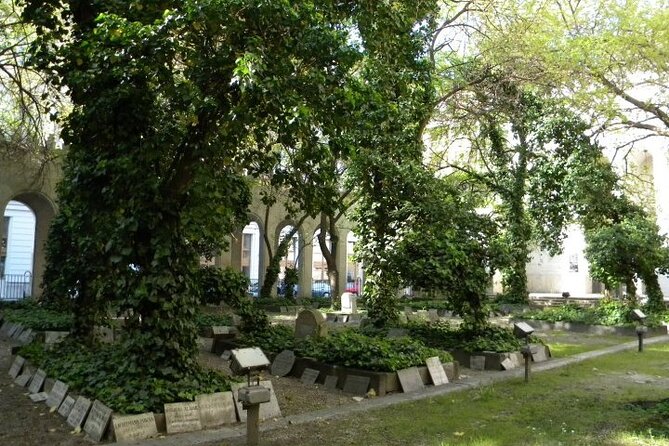
Gozsdu Udvar is a passage of entertainment, food, culture, and markets. It is also where the tour points out the last piece of the ghetto wall.
That pairing is striking. One side of the stop presents the district as a popular social quarter. The other points to the confined and dangerous conditions imposed on Jewish residents during the war.
The guide spends about fifteen minutes here, explaining the passage’s past and present. You should expect a lively public setting, not a quiet memorial. The atmosphere may feel very different from the serious material about the ghetto, which is precisely why the guide’s context matters.
This stop also makes the tour useful for later independent exploring. You can return to Gozsdu Udvar for food or browsing, but you will now understand that the passage belongs to a neighborhood with a painful past, not just a convenient evening hangout.
Kazinczy Street explains Orthodox life today

At Kazinczy Street Synagogue, the group stops outside for roughly fifteen minutes. The guide introduces the Orthodox community, described as numbering about 50 to 60 families, and explains kosher food and the Jewish ritual bath.
This is one of the more useful present-day sections because it moves beyond wartime history. You learn that Jewish life in Budapest is not confined to memorials and old buildings. Religious practice, food customs, and community institutions remain part of the district.
You will not enter the synagogue or ritual bath. The value comes from the explanation and from seeing how the building fits into the surrounding streets.
The contrast with the district’s nightlife is especially clear here. A short walk can take you from a religious site to a restaurant, bar, or market. The tour helps you understand that these are not separate parts of the city. They share the same blocks and sometimes compete for the same public space.
Szimpla Kert is a lively finish
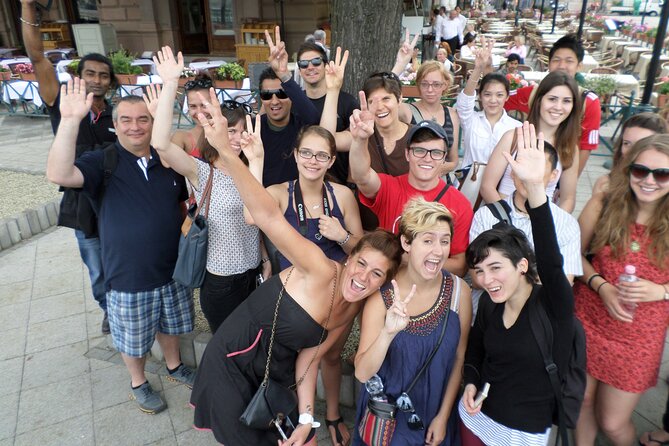
The final stop is Szimpla Kert, Budapest’s famous ruin bar on Kazinczy Street. The tour ends here after about fifteen minutes of further street art and murals.
There is no entry fee, and the guide offers a final orientation. You can stay for a drink, look at pop-up exhibitions, or use the location as a starting point for more time in District VII.
Ending here is practical. You finish near food, nightlife, and public transportation, rather than being left in an isolated corner of the city. It also gives the tour a present-day ending after a difficult historical route.
Still, Szimpla Kert is a busy social venue. If you want a calm place to reflect after the Holocaust sections, you may prefer to walk elsewhere after the tour. The ending is designed for orientation and exploration, not for a formal memorial conclusion.
The guides shape the experience
The company uses different guides, so the style can vary. Gary is repeatedly praised for his warmth, humor, passion, and ability to explain how Budapest’s Jewish community arrived, survived, and sometimes thrived. Eszter and Esther are noted for organization, care, and strong command of the subject.
Dora, Edith, Judith, Edi, Christine, Andy, Jude, and David are also named as guides who made the walk engaging in different ways. Edi is particularly appreciated for a steady pace and clear voice, including with a group of older participants. David is noted for humor and for making people feel included.
That range is worth knowing because a walking tour is shaped as much by delivery as by content. A strong guide can turn a street corner into a meaningful historical location. A less effective presentation may feel like a fast string of dates and facts.
One caution is fair. Some people may find a Hungarian accent difficult to follow, especially if English is not your first language. Another complaint concerned a guide walking too quickly and making the talk feel impersonal. That does not match the overall pattern of praise, but it is a useful reason to stay near the guide, speak up if you are falling behind, and ask for clarification.
The donation system also deserves clear attention. The $3.63 payment is a booking fee for administration and does not go toward the guide’s earnings. Guides depend entirely on donations at the end, and the amount is your choice. Treat the low advertised price as a reservation charge, not as the full cost of the experience.
What the pace and group size mean
The tour lasts about 1 hour 45 minutes and allows up to 25 people. The route includes seven stops, with most pauses lasting between fifteen and twenty minutes.
This is enough time for a strong overview, but not enough for long visits at each place. You will walk between stops, stand outdoors, listen, and then move on. Wear comfortable shoes and prepare for a walking tour rather than a seated lecture.
The group limit is moderate. Twenty-five people is small enough for a guide to address the whole group, but crowded streets and public squares can still make it harder to hear. The tour is offered in English and includes a mobile ticket.
Most people can participate, and service animals are allowed. The meeting point near public transportation makes it easy to reach from central Budapest. The route ends at Szimpla Kert, so plan your next activity from there rather than expecting to return to Erzsébet tér.
The tour’s value at $3.63
At $3.63 per person, the booking price is unusually low for a guided city walk. But the real value depends on your expectations.
You are paying for a structured introduction, not synagogue admissions. You also need to account for a discretionary donation to the guide. Even with that donation, this can be a good-value way to get oriented before deciding which buildings, museums, memorials, or food spots deserve more of your time.
I would not book it as a replacement for visiting the Great Synagogue, Rumbach Street Synagogue, or Kazinczy Street Synagogue interiors. I would book it if you want the neighborhood explained in context and prefer to spend less than two hours getting your bearings.
The tour can also save time. Instead of trying to find the three synagogues, the ghetto wall remnant, Gozsdu Udvar, and Szimpla Kert on your own, you move through them in one compact route. The guide also points you toward subjects for later research, including stumbling stones and miniature statues by Mihály Kolodko.
Who should book this walk
This tour suits first-time visitors who want a clear introduction to Budapest’s Jewish District. It is also useful for anyone interested in Jewish culture, religious movements, wartime history, urban change, and the way old neighborhoods acquire new uses.
It works well for adults and older participants who can manage an easy walking route and periods of standing. Edi’s praised pace suggests that some guides are attentive to comfort, but you should still wear good shoes and stay near the group.
You may want a different experience if you need synagogue interiors, detailed architectural study, a quiet memorial visit, or a highly personal account centered on local family stories. One criticism was that the historical account could feel generic and needed more Budapest-specific anecdotes. That is the main question to ask yourself: do you want a broad, well-organized overview, or a narrower and more intimate study?
Should you book the Past and Present of Budapest Jewish District Tour?
Book it if you want a short, affordable orientation to District VII and understand that all synagogue visits are exterior stops. The route is thoughtfully arranged, the subject matter is serious, and guides such as Gary, Eszter, Dora, Edith, and Edi have received strong praise for clarity, warmth, humor, and passion.
Skip it if entering the synagogues is essential to your plan, or if you want a slow, highly personal exploration. For most first-time visitors, I would use this walk as a starting point, then return independently to the building or memorial that affected you most.
You can cancel for a full refund up to 24 hours before the start time. After that, refunds and changes are not accepted.
FAQ
How long does the tour last?
The tour lasts approximately 1 hour and 45 minutes.
Where does the tour start?
It starts at the Budapest Ferris Wheel in Erzsébet tér, Budapest 1051.
Where does the tour end?
The walk ends at Szimpla Kert, at Kazinczy u. 14, Budapest 1075.
Does the tour enter the synagogues?
No. The tour visits the Great Synagogue, Rumbach Street Synagogue, and Kazinczy Street Synagogue from outside.
Can I see the Great Synagogue memorial courtyard and cemetery?
Yes. The tour shows the memorial courtyard and cemetery from outside, but does not enter the synagogue.
Is there an admission fee for Szimpla Kert?
There is no entry fee for Szimpla Kert.
How much does the tour cost?
The listed price is $3.63 per person. This is a booking fee for administration and does not contribute to the guide’s earnings. Guides depend on donations, and the amount is your choice.
What language is the tour offered in?
The tour is offered in English.
How many people can join the tour?
The maximum group size is 25 people.
Recently added around Budapest
- Hiking + Chairlift ride + viewpoints in Budapest★ 5.0 · 3 reviews
- FoolsCode: EscapeRoom/Sightseeing tour with Actor Tourguide★ 5.0 · 3 reviews
- Grand Budapest tour with private transportation★ 5.0 · 3 reviews
- Budapest: Private Customizable Tour in French★ 5.0 · 3 reviews
- Budapest: Private, Personalized Pub Crawl, 3 drinks included★ 4.5 · 3 reviews
- Budapest Drinks and Piano Show Cruise★ 4.5 · 3 reviews
- Discover Budapest Using Tram Two★ 5.0 · 3 reviews
- Budapest Urban Treats – Cake and Coffee House Tour★ 5.0 · 3 reviews
Jewish Heritage Tours, compared.
Budapest Jewish Heritage Memorial Walking Tour & Synagogue Entry
Read our review →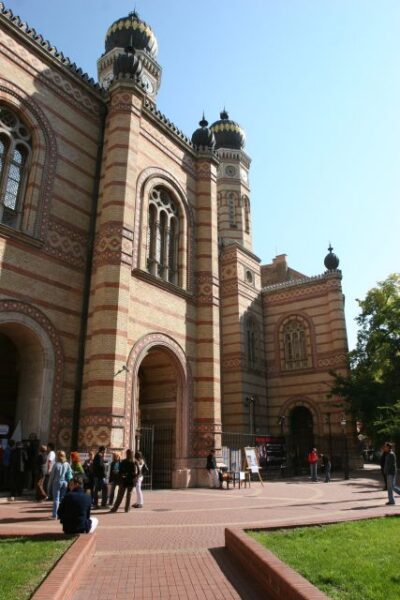
Jewish Heritage Guided Tour with Synagogue Ticket
Read our review →

Budapest Dohany Synagogue & Hungarian Jewish Museum & free extras
Read our review →
Jewish History Guided Walking Tour with Historian
Read our review →
Budapest Dohany, Heroes’, Rumbach synagogues & Jewish Ghetto Tour
Read our review →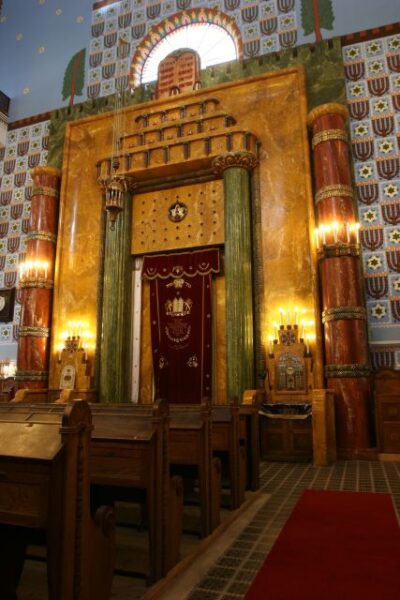
Browse the lists this tour appears in