
Reviewed · JEWISH HERITAGE TOURS
A Journey through Jewish Budapest – Walking Tour
Budapest’s Jewish quarter is not just a collection of grand synagogues. It is a record of several Jewish traditions, a neighborhood shaped by prosperity and persecution, and a place where memorials sit beside cafés and apartment blocks. This three-hour walking tour gives that story a human scale, with a historian guiding you from Theodor Herzl’s birthplace to the Shoes on the Danube.
I like two things in particular: the tour connects the grand Dohány Street Synagogue with smaller and less familiar sites, and the guides bring serious academic training without turning the walk into a lecture. I also like that the route ends quietly at the river, where you have time to think. The main consideration is cost: at $123 per person, you still pay separately for entry to Dohány Synagogue, listed at 14,500 Ft.
In This Review
- Key points at a glance
- Why this walk matters in Budapest
- Starting near Theodor Herzl’s birthplace
- Inside the Dohány Street Synagogue complex
- The Temple of Heroes, Jewish Museum, and Memorial Park
- The Ghetto Wall Memorial from 2014
- A luxurious mikve and Kazinczy Street
- Rumbach Street and the Status Quo Ante tradition
- Finishing at the Shoes on the Danube Bank
- The guides make the difference
- Is $123 a fair price?
- Practical advice before you book
- Who should book this Budapest walk?
- Should you book A Journey through Jewish Budapest?
- FAQ
- How long is A Journey through Jewish Budapest?
- Where does the tour meet?
- What language is the tour offered in?
- Is admission to Dohány Synagogue included?
- What sites are included on the route?
- What should I wear to Dohány Synagogue?
Key points at a glance
- Theodor Herzl’s birthplace: Begin at Madách Imre Way, near the square associated with the father of modern Zionism.
- Dohány Synagogue inside and out: Visit Europe’s largest Jewish house of worship, along with the Temple of Heroes, Jewish Museum, and Memorial Park.
- Three Jewish traditions in one walk: Learn how Neolog, Orthodox, and Status Quo Ante communities differed.
- A powerful memorial route: Move from the 2014 Ghetto Wall Memorial to the Shoes on the Danube Bank.
- Academic-level guiding: Your English-speaking guide may be a professor, doctoral student, historian, journalist, art critic, or published author.
- Small-group feel: Private and small-group options make it easier to ask questions and adjust the pace.
Why this walk matters in Budapest
Before World War II, about one-quarter of Budapest’s population was Jewish. That figure helps explain why Jewish life is woven into the city rather than confined to one museum or one place of worship.
You will see this in the range of buildings on the route. The Dohány Synagogue is grand and ceremonial. Kazinczy Street points toward Orthodox practice. Rumbach Street recalls the Status Quo Ante stream of Judaism. These were not simply different buildings. They represented different ways of worshipping, organizing community life, and relating to the wider city.
The tour focuses mainly on the last 200 years, with earlier periods added when they help explain a site. That focus is useful. You get a clear timeline instead of a rushed survey of every century, while still learning why Budapest became such an important center of Jewish life.
I would choose this walk if you want context before visiting the Jewish Quarter on your own. It is also a good fit if you prefer to ask questions and follow a connected story rather than move between isolated attractions.
More of Jewish Budapest:
- Budapest Jewish Heritage Memorial Walking Tour & Synagogue Entry
★ 5.0 · 568 reviews - Budapest: Jewish Heritage Guided Tour with Synagogue Ticket
★ 4.8 · 533 reviews - Budapest walking tour: Parliament and Shoes Memorial
★ 5.0 · 387 reviews
Starting near Theodor Herzl’s birthplace
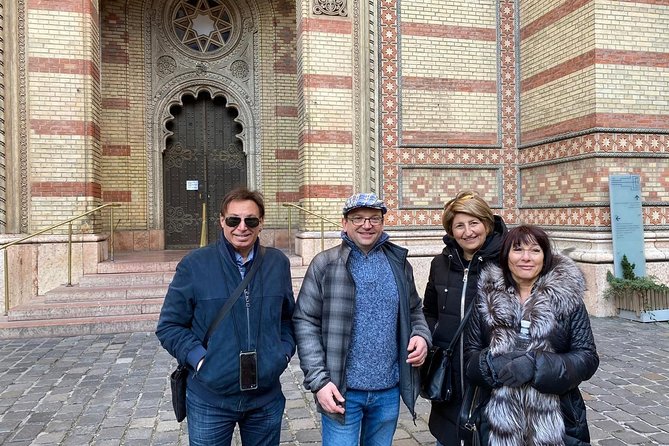
The walk begins around Madách Imre Way, with the exact meeting arrangement depending on the option you select. The stated meeting point is Kamara Café at Dohány utca 1/A, a practical location near the synagogue district.
One early stop is the square associated with Theodor Herzl, the father of modern Zionism. Seeing this place at the start gives the tour an important frame. Herzl is often treated as a distant historical figure, but placing his birthplace in Budapest brings the city’s Jewish intellectual and political life closer to street level.
Your guide can use this opening to explain the different paths available to Jewish residents before WWII. The tour is not limited to religious buildings. It considers identity, community, and the way Jewish life developed within Budapest’s wider society.
This is also when you can get a sense of your guide’s approach. The company describes its guides as professors, doctoral students, historians, journalists, art critics, and published authors. That range matters because the experience can be shaped by the guide’s specialty, but you should expect an academic tone rather than a purely theatrical performance.
Inside the Dohány Street Synagogue complex
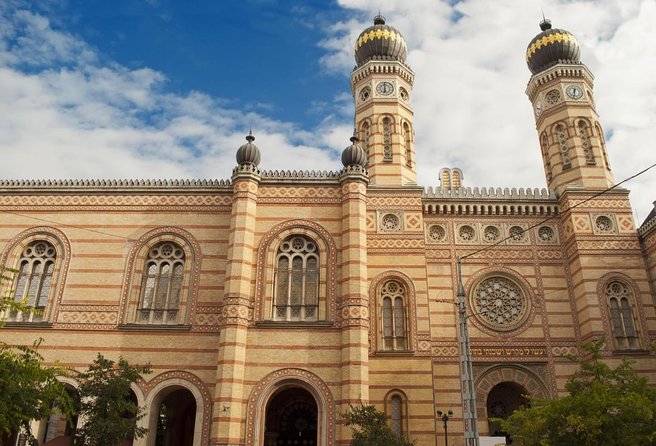
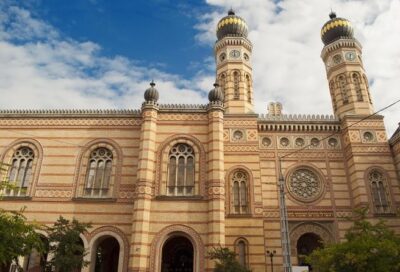
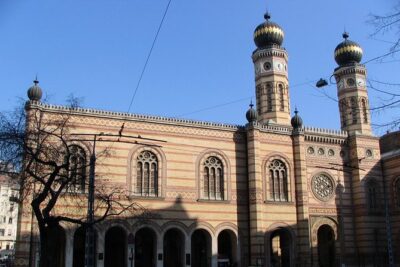
Dohány Street Synagogue is the visual centerpiece of the tour. It is described as the largest Jewish temple in Europe, and its Moorish Revival design gives it a different look from the churches and civic buildings around Budapest.
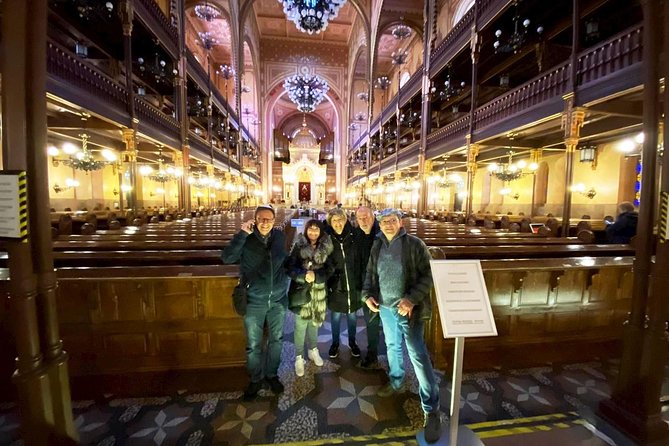
The exterior is only the beginning. With the required ticket, your visit includes the synagogue complex, the Temple of Heroes, the Jewish Museum, and a Memorial Park. A Jewish Studies scholar or historian helps tie these spaces together, so you are not left to guess why each part matters.
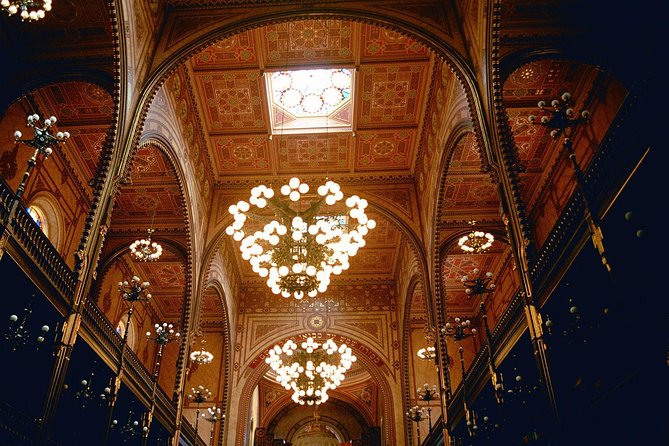
The lavish interior can be striking, but the value of the stop is not only architectural. The synagogue helps explain the status and confidence of Budapest’s Jewish community before the war. Its scale also gives you a useful contrast with the more intimate Orthodox spaces later in the walk.
Allow for the fact that admission is not included in the $123 tour price. The stated individual ticket cost is 14,500 Ft. This separate charge makes the total expense higher than the headline price, so check the current exchange rate and your booking details before you commit.
You must also dress appropriately. Visitors to Dohány Synagogue are asked to cover their shoulders and knees. If your clothing is borderline, plan ahead rather than treating this as a minor detail at the entrance.
The Temple of Heroes, Jewish Museum, and Memorial Park
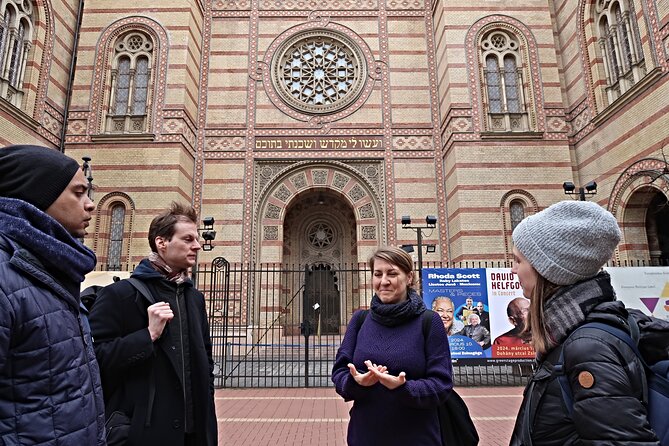
The additional spaces within the Dohány complex give the synagogue visit more weight. The Temple of Heroes and Memorial Park connect religious life with remembrance, while the Jewish Museum adds objects and interpretation to the larger historical story.
The museum portion is especially useful if you like a tour that combines buildings with evidence. You can see how customs, community structures, and personal lives fit into the wider account of Budapest Jewry.
The Memorial Park shifts the mood. It is not simply another stop on an architectural tour. You are asked to consider the damage done to the community and the effort to preserve the memory of those who were lost.
I like this layered approach because it prevents the synagogue from becoming a quick photo stop. You see the building, learn about the people who used it, and then confront the consequences of the Holocaust. That said, three hours is a tight window for several sites, so the amount of time inside each space may depend on questions, group size, and the guide’s pace.
More walking tours in Budapest:
- Budapest: Buda Castle Walk with Saint Stephen’s Hall
★ 4.5 · 3,012 reviews - Big Bus Budapest Hop-On Hop-Off Bus and Walking Tour
★ 3.5 · 2,206 reviews - Budapest: Buda Castle District Walking Tour
★ 4.6 · 2,108 reviews - Budapest City Landmarks Walking Tour in 2 Hours
★ 5.0 · 2,048 reviews
The Ghetto Wall Memorial from 2014
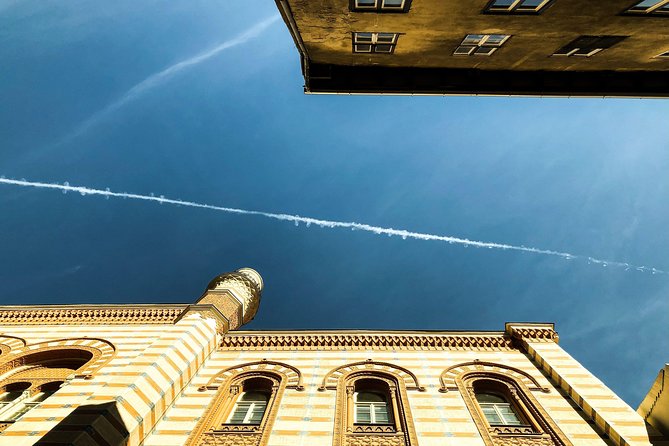
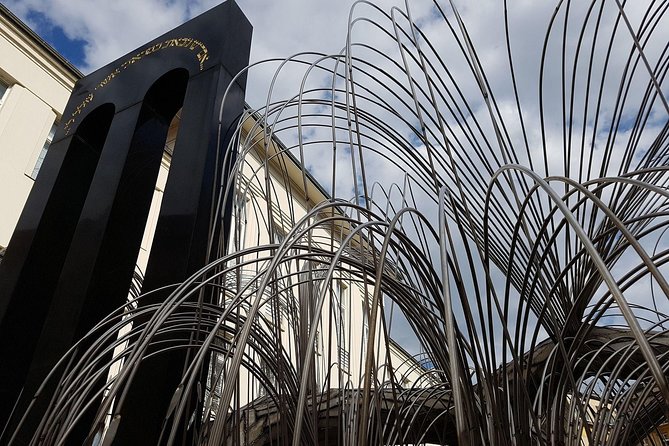
After leaving the Dohány complex, the walk continues to the neighboring Ghetto Wall Memorial, erected in 2014. The site offers a physical reminder of the wartime ghetto and helps connect the synagogue district to the lives that were confined here.
This section is valuable because it moves the story away from grand public buildings. You are looking at a neighborhood where ordinary residents lived, worked, worshipped, and later faced forced separation and violence.
The memorial is close enough to fit naturally into the route, but it deserves a pause. I would resist the urge to treat it as a quick photograph between synagogue visits. Ask your guide how the ghetto changed the area and how the surviving traces fit into modern Budapest.
A luxurious mikve and Kazinczy Street
The route passes a luxurious mikve, or Jewish ritual bath, before continuing to the exterior of the Art Nouveau Orthodox synagogue on Kazinczy Street. This change in scale and style is one of the tour’s strongest features.
The mikve points to the daily practices that shaped Jewish community life. It gives you a chance to consider religion not only as public worship, but also as a set of private and communal routines.
Kazinczy Street then introduces the Orthodox tradition. The synagogue’s Art Nouveau facade is visually impressive, but the key lesson is the difference in religious practice and community organization. You may not enter this synagogue on the walking route, so think of the stop as an architectural and historical explanation rather than a full interior visit.
I find this comparison more useful than seeing several synagogues without a guide. The buildings become evidence of disagreement, adaptation, and choice within Budapest’s Jewish population.
Rumbach Street and the Status Quo Ante tradition
The next major exterior is the Rumbach Street Synagogue. Its facade provides another change in style, but the larger point is the history of the Status Quo Ante stream of Judaism.
For many visitors, this will be a new term. That is one reason the guide matters. Instead of presenting Budapest’s Jewish community as one uniform group, the tour explains how different traditions occupied the same city and developed their own institutions.
The Rumbach stop also helps you read Budapest’s Jewish Quarter as a collection of communities rather than a single themed district. You are not just looking at decorative architecture. You are seeing the physical result of religious and social distinctions.
Since the itinerary specifies the exterior here, do not assume that your ticket includes entry to every synagogue on the route. Dohány is the main paid interior visit. Kazinczy and Rumbach are primarily seen from outside during this walk.
Finishing at the Shoes on the Danube Bank
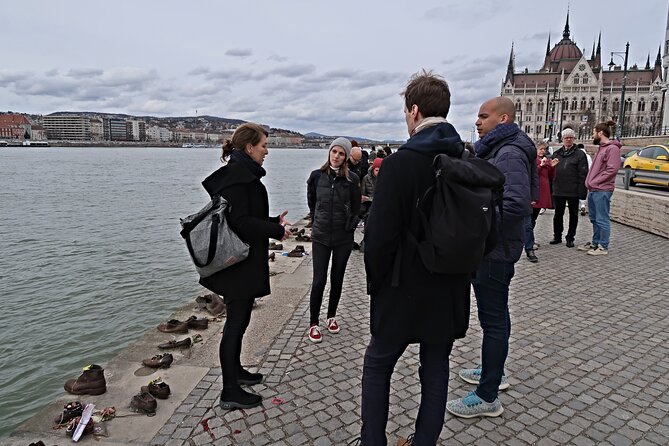
The tour ends at the Shoes on the Danube Bank memorial, one of Budapest’s most direct and difficult places of remembrance. The empty shoes along the river represent Jewish people who were killed here during the Holocaust.
The ending works because it is quiet. After the explanations, buildings, and changing Jewish traditions, the route narrows to individual lives. You are given space to reflect on what happened to people who had been part of Budapest for generations.
This is not a stop that needs theatrical presentation. A good guide knows when to explain and when to leave room for silence. The stated aim is also to consider the renewal of Budapest’s Jewish community today, so the tour does not end only with loss. It connects memory with the continuing life of the city.
The route information indicates arrival back at an unnamed road rather than a return to the original café. Plan your next move from the Danube area, and ask your guide for help if you need to orient yourself afterward.
The guides make the difference
The strongest feature of this experience is the guide. The tour is designed around historians and related academic specialists, not general city escorts. That gives you a better chance of getting precise answers about religious movements, wartime events, and the meaning of each memorial.
Several named guides have received especially warm feedback. Orsolya is described as thoughtful and thorough, and she checked with a group before moving on to the next stop. Endres provided an especially detailed account of the Great Synagogue and the changes forced on Budapest’s Jewish community during the Nazi era.
One particularly meaningful option involved cleaning Holocaust victims’ stumbling stones. Endres supplied the materials and joined the activity. This is not listed as a standard part of every tour, so do not book expecting it automatically, but it shows the sort of personal historical engagement that may be possible if you make a specific request.
The private and small-group formats are important here. On a subject this serious, you may want to ask about a family name, a religious term, or a confusing point in the timeline. A large group can make that harder. A private booking also gives you more control over pauses and discussion.
Is $123 a fair price?
At $123 per person for three hours, this is not a budget walking tour. The price is easier to justify if you choose a private or very small group and value an academic guide who can answer detailed questions.
You also need to add the Dohány Synagogue admission, listed separately at 14,500 Ft per person. That makes the full cost noticeably higher, but the tour includes more than a standard exterior walk. You receive a historian-led route, a guided visit to the Dohány complex, and a connected explanation of several Jewish traditions and memorial sites.
I would compare it with the cost of hiring a private historian for a shorter visit. If your main goal is a quick look at synagogue architecture, this may be too expensive. If you want the history explained carefully and have limited time in Budapest, the price can make sense.
The 4.9 rating from 26 reviews supports the idea that the guide quality is usually strong, but the small sample still means your experience will depend on the individual guide and group arrangement.
Practical advice before you book
Wear comfortable shoes. The tour lasts three hours and connects several sites on foot, ending at the Danube rather than clearly returning to the start.
Dress for synagogue entry, with shoulders and knees covered. This is the most important clothing rule, and it applies even if the rest of your Budapest sightseeing clothes are casual.
Keep the schedule flexible if you can. One guide allowed a time change, and the booking terms permit free cancellation up to 24 hours in advance. You can also reserve now and pay later, which helps if your Budapest plans are still shifting.
The tour is offered in English. Private and small-group choices are available, but the supplied details do not specify the maximum group size or the exact duration of each interior visit. Check those points when selecting your option.
Who should book this Budapest walk?
I would recommend it to first-time visitors who want a serious introduction to Jewish Budapest, history-minded travelers, and anyone who prefers a guide able to discuss religious differences rather than just point out facades.
It is also well suited to families with older children, private groups, and visitors who want to approach Holocaust memorials with care. The route offers enough variety to keep the walk from becoming a single long museum visit.
You may want another option if you mainly want inexpensive sightseeing, dislike solemn historical subjects, or need a fully accessible route with confirmed details. The supplied information does not provide accessibility guidance, so ask before booking if that is important to you.
Should you book A Journey through Jewish Budapest?
Book it if you want the Jewish Quarter explained by a historian and you are willing to pay extra for depth. The best reasons are the range of sites, the comparison between Jewish traditions, the included attention to the Dohány complex, and the thoughtful finish at the Shoes on the Danube.
Before booking, confirm the synagogue ticket cost, meeting details, group size, and what is included at Kazinczy and Rumbach. If the total price fits your budget, this is a strong choice for understanding how Jewish life shaped Budapest before WWII and how the city remembers that past today.
FAQ
How long is A Journey through Jewish Budapest?
The walking tour lasts three hours.
Where does the tour meet?
The stated meeting point is Kamara Café at Dohány utca 1/A. The exact starting location can depend on the option selected.
What language is the tour offered in?
The live tour guide speaks English.
Is admission to Dohány Synagogue included?
No. Dohány Synagogue tickets are listed separately at 14,500 Ft for an individual ticket.
What sites are included on the route?
The route includes Madách Imre Way, Dohány Street Synagogue, the Kazinczy Street Synagogue exterior, the Ghetto Memorial Wall, the Rumbach Street Synagogue exterior, and the Shoes on the Danube Bank memorial.
What should I wear to Dohány Synagogue?
Visitors are asked to have their shoulders and knees covered.
Recently added around Budapest
- Hiking + Chairlift ride + viewpoints in Budapest★ 5.0 · 3 reviews
- FoolsCode: EscapeRoom/Sightseeing tour with Actor Tourguide★ 5.0 · 3 reviews
- Grand Budapest tour with private transportation★ 5.0 · 3 reviews
- Budapest: Private Customizable Tour in French★ 5.0 · 3 reviews
- Discover Budapest Using Tram Two★ 5.0 · 3 reviews
- Budapest: Private, Personalized Pub Crawl, 3 drinks included★ 4.5 · 3 reviews
- Budapest Drinks and Piano Show Cruise★ 4.5 · 3 reviews
- Budapest: Private 3-Hour Gödöllő Palace Tour★ 4.9 · 3 reviews
Jewish Heritage Tours, compared.
Budapest Jewish Heritage Memorial Walking Tour & Synagogue Entry
Read our review →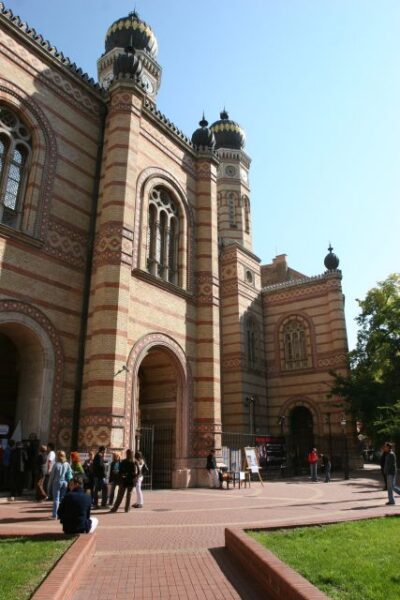
Jewish Heritage Guided Tour with Synagogue Ticket
Read our review →

Budapest Dohany Synagogue & Hungarian Jewish Museum & free extras
Read our review →
Jewish History Guided Walking Tour with Historian
Read our review →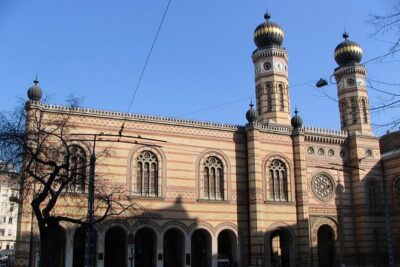
Budapest Dohany, Heroes’, Rumbach synagogues & Jewish Ghetto Tour
Read our review →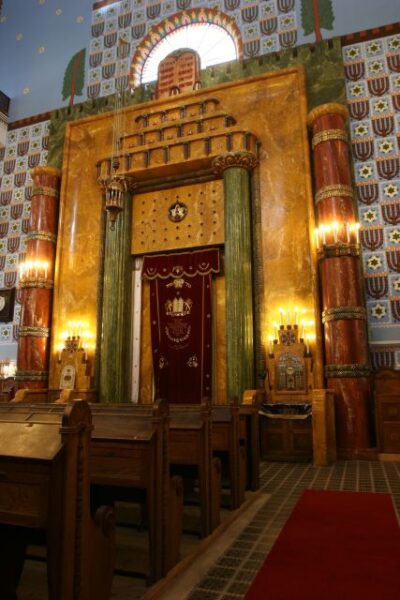
Browse the lists this tour appears in