
Reviewed · JEWISH HERITAGE TOURS
Budapest Jewish Heritage: Synagogues, Shoes, Secrets & Flódni
Budapest’s Jewish heritage is best understood on foot, where grand synagogues, wartime memorials, and ordinary side streets tell a connected story. This private walk links the Great Synagogue, Rumbach Street Synagogue, Kazinczy Street Synagogue, the former ghetto, and Shoes on the Danube with the personal guidance of a Jewish historian. The mix of architecture and human stories is the main draw.
I like two things especially. First, you compare three Jewish congregations and their different buildings rather than seeing one synagogue in isolation. Second, the tour ends with flódni, a traditional Jewish-Hungarian pastry, giving the serious history a small, human finish. The possible drawback is that entrance tickets are not included, so the advertised price does not cover every synagogue interior.
In This Review
- Key points
- Three synagogues, three faces of Jewish Budapest
- Rumbach Street Synagogue and the elegant middle ground
- Kazinczy Street and Orthodox Jewish life
- The 1944 ghetto, told through streets and memorials
- Shoes on the Danube, a quiet ten-minute pause
- Flódni and the taste of a surviving tradition
- Why a private guide changes the experience
- What the price does and does not cover
- Who will get the most from this walk
- Should you book Budapest Jewish Heritage?
- FAQ
- How long does the Budapest Jewish Heritage tour last?
- Where does the tour begin?
- Is hotel pickup available?
- Are synagogue entrance tickets included?
- Is this a private tour?
- What food is included?
Key points
- Three synagogues, three traditions: Compare the monumental Dohány Street Synagogue, Otto Wagner’s Rumbach Street building, and the Orthodox Kazinczy Street Synagogue.
- A private, conversational format: Only your group participates, making it easier to ask questions and shape the discussion.
- Strong wartime focus: The walk connects the 1944 ghetto, Carl Lutz, and the Shoes on the Danube memorial.
- Jewish guides with different strengths: Gabriella, Edith, Kata, Peter, and Miklos have each led particularly personal and historically focused visits.
- A meaningful final bite: Flódni, layered with traditional fillings, closes the walk with a taste of Jewish Budapest.
- Allow for extra costs: Synagogue admission tickets and public transportation are not included.
Three synagogues, three faces of Jewish Budapest
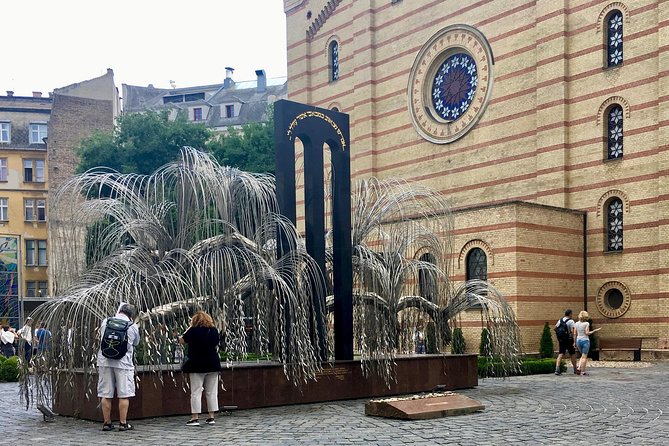
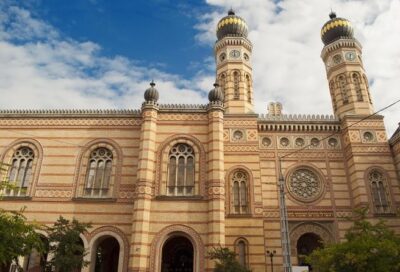
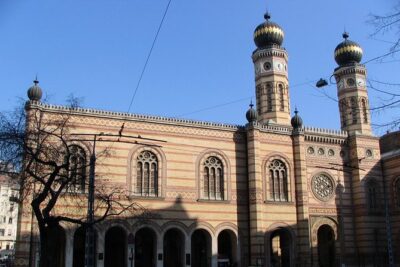
The walk begins near Herzl Square and the Great Synagogue at Dohány Street. This is an excellent starting point because the building gives you the scale of Budapest’s former Jewish community before the tour turns toward smaller, more intimate places.
The Great Synagogue is Europe’s largest synagogue, with room for about 3,000 people. Its size and ornate design reflect the confidence of Budapest’s Neolog Jewish community in the 19th century. Your guide explains the building’s unusual architectural features and places Hungarian Jewish life in the wider story of the city.
That context matters. This is not just a tour of attractive religious buildings. You learn how Hungarian Jews contributed to public life, science, art, business, and entertainment, while also confronting the destruction of the community during the Second World War. The discussion can include famous Hungarian Jews such as Tony Curtis and Estée Lauder, whose family connections remain part of the city’s wider Jewish story.
You spend about 20 minutes here. That is enough for an introduction, but not enough to see every part of the complex at leisure. Since admission is not included, ask before booking exactly which interior visits your departure includes and what you will need to pay separately.
More of Jewish Budapest:
- Budapest Jewish Heritage Memorial Walking Tour & Synagogue Entry
★ 5.0 · 568 reviews - Budapest: Jewish Heritage Guided Tour with Synagogue Ticket
★ 4.8 · 533 reviews - Budapest walking tour: Parliament and Shoes Memorial
★ 5.0 · 387 reviews
Rumbach Street Synagogue and the elegant middle ground
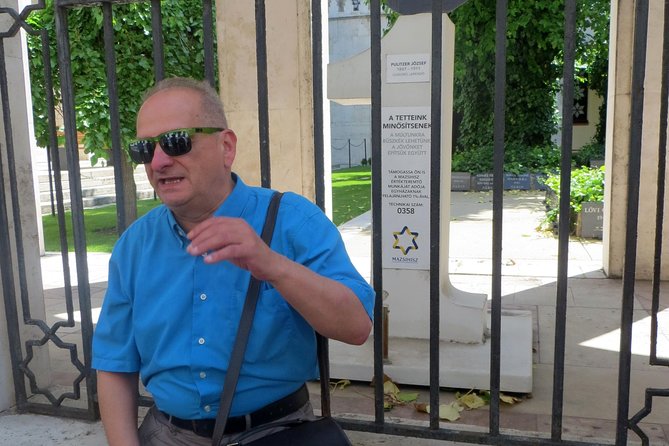
From the monumental Dohány building, the walk moves to the Rumbach Sebestyén Street Synagogue. Built in 1872 by Otto Wagner, it served Budapest’s more moderate Conservative community.
The synagogue is especially useful for comparison. Its Moorish-style interior is more intimate than the Great Synagogue, and its restored decoration has a lighter, more graceful feel. Your guide explains why different Jewish communities built separate synagogues and how their religious approaches differed.
This stop takes about 15 minutes. The short visit works well as part of a walking route, though anyone hoping for a long architectural inspection may find the timing brief. Admission is again not included, so budget for another ticket if the group enters.
I like this part of the route because it shows how religious identity, social position, and architectural taste overlapped. You are not simply collecting synagogue photographs. You are learning to read the buildings as signs of a community that was varied, urban, and connected to the changing culture of Budapest.
Kazinczy Street and Orthodox Jewish life
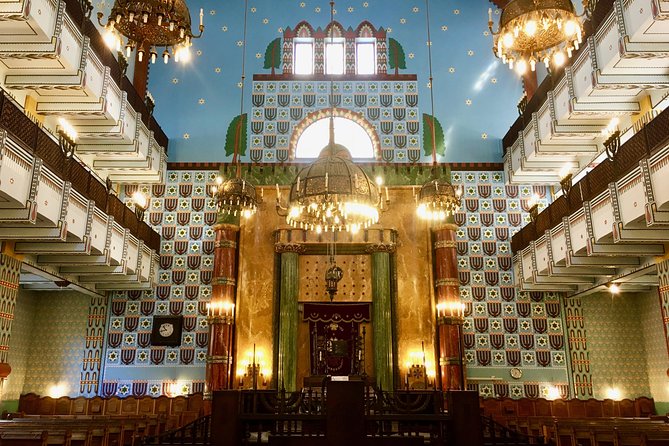
The third synagogue is on Kazinczy Street, in a smaller side street within the Jewish Quarter. Built in 1913, it served Budapest’s Orthodox community and uses a modern design with late Art Nouveau touches.
The bright interior and stained-glass ceiling windows, designed by Miksa Róth, give this building a very different mood from the other two synagogues. Your guide points out the differences in practice and community life, helping you understand that Budapest’s Jews did not form one uniform group.
The stop is listed at about 10 minutes, and admission is not included. That is a compact visit, so it is worth treating this as one piece of a larger explanation rather than a full museum-style tour.
Some guide-led experiences have also included a small house or tenement synagogue, with a shared snack in a kitchen setting. This is not listed as a guaranteed stop, so do not count on it. Still, it shows why the private format can be valuable: guides such as Gabriella, Kata, Edith, or Miklos may add personal stories or adjust the conversation to your interests when time allows.
The 1944 ghetto, told through streets and memorials
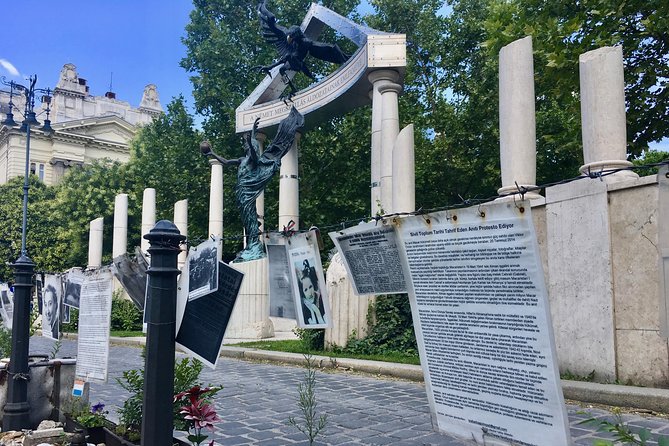
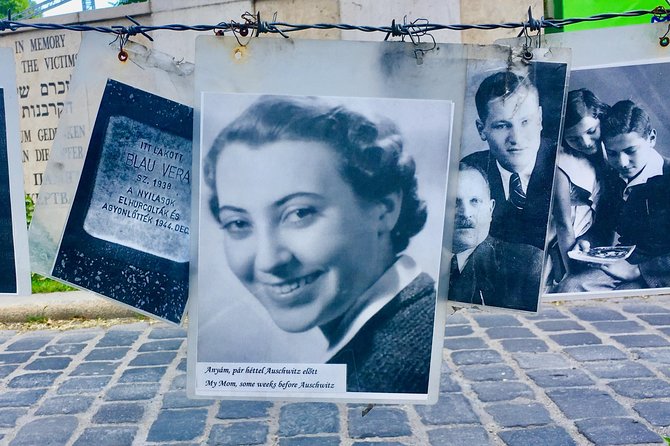
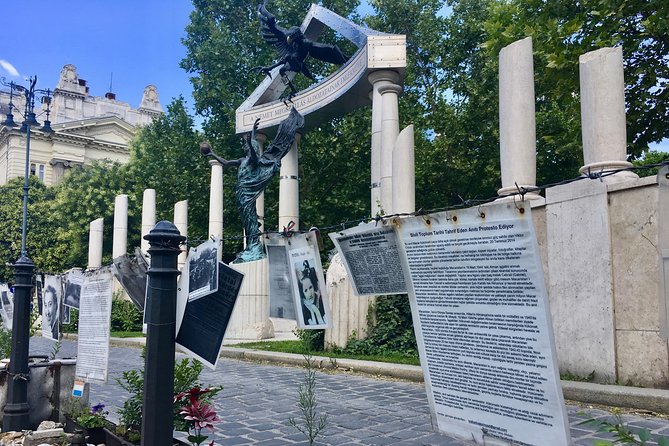
The tour then shifts from synagogue architecture to the harder story of wartime Budapest. Toward the end of the Second World War, Jewish residents were forced into a ghetto. A remaining section of the ghetto wall helps you picture how confinement changed the neighborhood.
This part depends heavily on the guide. A map or plaque can tell you where a boundary once ran, but a good historian helps you imagine daily life inside it: families living under pressure, limited movement, fear of deportation, and the eventual fate of many Hungarian Jews. The supplied schedule allows about 15 minutes for the Jewish Quarter and ghetto section, so the depth of the discussion may depend on your questions and the pace of the group.
Carl Lutz Memorial is another short but important pause. The Swiss diplomat helped save tens of thousands of Jews in Budapest from persecution and deportation. The monument gives the tour a point of focus for the actions of people who used their position to protect others.
The subject matter is painful, and this is not a light sightseeing walk. I appreciate that the tour connects the Holocaust to the streets you are actually walking through rather than treating it as a distant chapter. At the same time, one past participant wanted more detailed accounts of resistance and specific wartime incidents. If that is your main interest, say so at the beginning. The guide may frame the discussion differently, though the stated focus is Jewish heritage in its broader Hungarian setting.
More Hungarian pastries and chimney cake:
- Budapest All in One Small Group Walking Tour with Strudel Stop
★ 5.0 · 1,277 reviews - Budapest: Hungarian Chimney Cake Workshop in the City Center
★ 4.8 · 885 reviews - Chimney Cake Workshop Budapest Downtown – Kürtőskalács Class
★ 5.0 · 220 reviews - Hungarian Strudel Making Class: Stretch & Fill Two Ways
★ 5.0 · 76 reviews
Shoes on the Danube, a quiet ten-minute pause
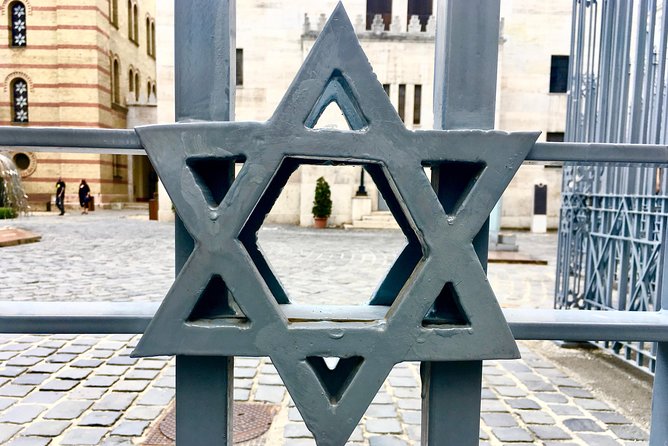
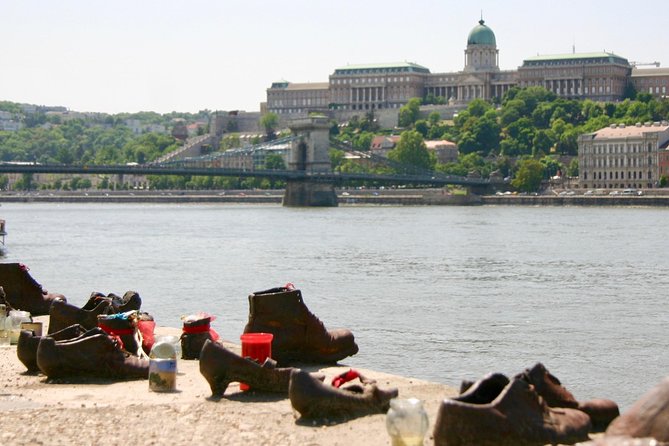
The Shoes on the Danube Bank memorial is one of Budapest’s most affecting sites. Bronze shoes line the riverbank, recalling Jewish victims who were ordered to remove their shoes before being shot. Their bodies were then carried away by the Danube.
The memorial is simple and direct. There is no large structure to distract you from the image of shoes left behind. The tour allows about 10 minutes here, including time to pay respects and hear the historical explanation.
This is a place for silence as much as information. Your guide can give the facts, but you will also want a moment to look across the river and consider the setting. The memorial is included in the experience, unlike the synagogue entrances, which makes it one of the tour’s clearest no-extra-cost stops.
The route’s emotional movement is well judged. You first see the community’s houses of worship and cultural confidence. Then you walk through the places where that community was confined and attacked. The memorial turns the history into a personal encounter without relying on spectacle.
Flódni and the taste of a surviving tradition
The final stop returns to Dohány Street for flódni, a traditional Jewish pastry associated with Hungarian Jewish cooking. It is made in layers and is often linked with fillings such as apple, walnut, poppy seed, and plum, although the exact serving details are not specified here.
The pastry is more than a sweet extra. Food helps explain how a community carried traditions through changing political conditions, migration, and loss. Ending with a small local specialty also gives you time to ask follow-up questions and process what you have seen.
The scheduled time is about 20 minutes. The tour describes this as a snack, not a full meal, so eat beforehand if you need lunch. Some guides have wrapped up with coffee or pastry in a nearby café, but a beverage is not guaranteed as part of the listed inclusions.
Why a private guide changes the experience
The tour costs $102.95 per person and lasts about 2 hours and 45 minutes. That is not a bargain-priced city walk, especially because entrance tickets are extra. The value comes from the private format and the specialist guide rather than from the number of included attractions.
Only your group participates. That gives you room to ask about family history, Hungarian Jewish identity, architecture, or the Holocaust without waiting for a large group to move along. It also helps if you are visiting on a tight schedule. One couple used the private format because they needed to return to a ship on time, and the guide kept the visit focused.
The guides bring different strengths. Gabriella is praised for warmth and a strong grasp of Hungarian Jewish history. Edith is described as someone who combines facts with questions that make you think about what you are seeing. Kata has shared personal connections to Hungarian Jewish life, including family experiences during the Holocaust and Soviet occupation. Miklos, a retired educator, has been especially effective at explaining how Hungarian Jewry developed within the country’s own political and social setting. Peter has also led an in-depth, conversational version of the route.
Guide assignments can vary, so you should not book solely to meet one named guide unless the provider confirms that person. Still, the repeated emphasis on personal discussion is a good reason to choose a private walk over a standard group lecture.
What the price does and does not cover
The $102.95 rate includes a private historian guide, a Jewish guide, hotel pickup when arranged, and the flódni snack. The exact pickup arrangement should be confirmed, since the meeting point is listed as Dohány u. 1 and the activity ends back at that meeting point.
Synagogue entrance tickets are not included. Public transportation tickets are also extra. The route is primarily described as a guided walk, so wear comfortable shoes and allow time for street crossings and pauses.
For two people, the total cost is substantial. I think it makes sense if you want a serious introduction and prefer conversation over a fixed group script. It is less compelling if you only want quick exterior photos or need a low-cost way to see the quarter.
The tour is also booked an average of 61 days ahead, which suggests that advance planning is sensible during busy periods. Confirmation arrives at booking, and free cancellation is available until 24 hours before the start time. Changes or cancellations inside that window are not accepted for a refund.
Who will get the most from this walk
I would choose this experience if you want to understand Budapest’s Jewish Quarter as a living part of the city, not just as a collection of buildings. It suits people interested in religious history, family heritage, architecture, the Holocaust, and the role of Jewish citizens in Hungarian public life.
It is also a good choice for Jewish visitors seeking a more personal connection. Kata’s personal family story, for example, has helped explain how Jewish identity continues in Hungary today. Non-Jewish visitors can also benefit, especially if they begin by telling the guide why they chose the tour. That gives the conversation a clearer direction.
You should think twice if you want a full museum visit at each synagogue. The timetable is tight, several stops are only 10 or 15 minutes, and admissions are separate. Likewise, if your priority is detailed military or resistance history, tell the guide early and ask if the standard route can give that subject enough time.
Most people can participate, and service animals are allowed. The tour is offered in English, with public transportation nearby. Hotel pickup is offered, but the stated start and finish point is at Dohány Street.
Should you book Budapest Jewish Heritage?
Book it if you value an expert conversation, want to compare three distinct synagogues, and are prepared for a serious look at the 1944 ghetto and wartime Budapest. The private setting, Jewish guides, and personal stories give the walk more flexibility than a standard group tour.
Before paying, ask about synagogue entry fees, confirm the pickup details, and explain whether you want more architecture, family history, or Holocaust history. If you want a personal, thoughtful introduction to Jewish Budapest and do not mind paying extra for admissions, this is a strong choice. If you want a cheap sightseeing loop with many interiors included, choose a less specialized tour.
FAQ
How long does the Budapest Jewish Heritage tour last?
The experience lasts approximately 2 hours and 45 minutes.
Where does the tour begin?
The listed meeting point is Budapest, Dohány u. 1, 1074 Hungary, near the Great Synagogue and Herzl Square.
Is hotel pickup available?
Yes. Hotel pickup is offered, although the stated meeting point is Dohány u. 1. Confirm the pickup arrangement when booking.
Are synagogue entrance tickets included?
No. Entrance tickets are not included. Public transportation tickets are also not included.
Is this a private tour?
Yes. Only your group participates in the activity.
What food is included?
The walk ends with an authentic Jewish dessert, flódni. A beverage is not listed as a guaranteed inclusion.
More History Walks in Budapest
- Budapest: Historic Cruise with Welcome Drink
★ 4.7 · 6,512 reviews - Budapest Historical Sightseeing – Free Walking Tour
★ 5.0 · 1,302 reviews - Buda Castle District Dark History, Legends and Vampire Night Tour
★ 4.5 · 1,240 reviews - BloodThirsty Hungary: Walking tour & Dark Historical Stories
★ 4.9 · 633 reviews
Recently added around Budapest
- Hiking + Chairlift ride + viewpoints in Budapest★ 5.0 · 3 reviews
- FoolsCode: EscapeRoom/Sightseeing tour with Actor Tourguide★ 5.0 · 3 reviews
- Grand Budapest tour with private transportation★ 5.0 · 3 reviews
- Budapest: Private Customizable Tour in French★ 5.0 · 3 reviews
- Budapest: Private, Personalized Pub Crawl, 3 drinks included★ 4.5 · 3 reviews
- Budapest Drinks and Piano Show Cruise★ 4.5 · 3 reviews
- Discover Budapest Using Tram Two★ 5.0 · 3 reviews
- Budapest: Private 3-Hour Gödöllő Palace Tour★ 4.9 · 3 reviews
Jewish Heritage Tours, compared.
Budapest Jewish Heritage Memorial Walking Tour & Synagogue Entry
Read our review →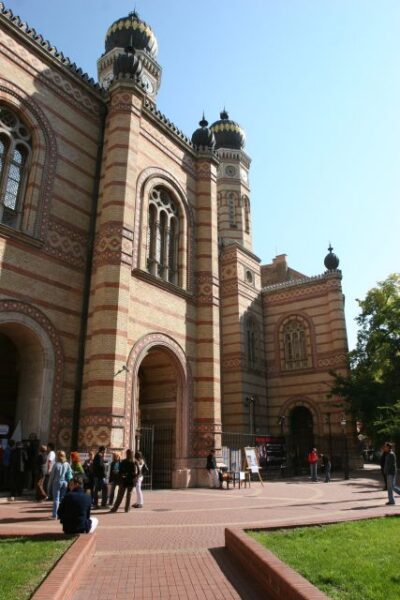
Jewish Heritage Guided Tour with Synagogue Ticket
Read our review →
Budapest Dohany Synagogue & Hungarian Jewish Museum & free extras
Read our review →
Jewish History Guided Walking Tour with Historian
Read our review →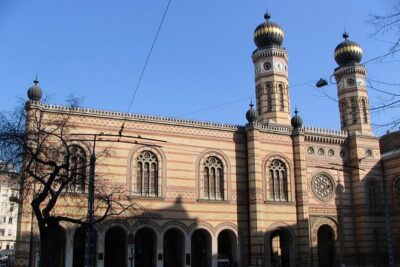
Budapest Dohany, Heroes’, Rumbach synagogues & Jewish Ghetto Tour
Read our review →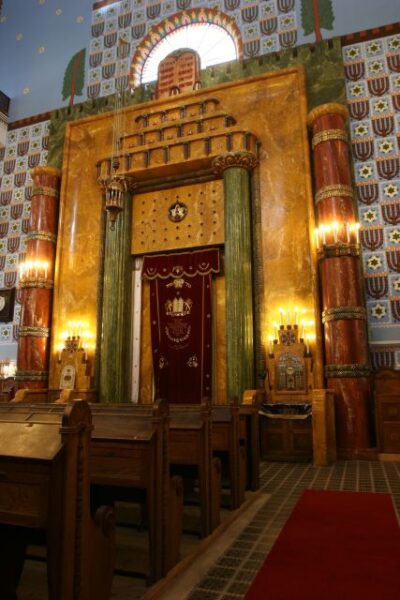
Browse the lists this tour appears in