
Reviewed · JEWISH HERITAGE TOURS
Budapest Jewish Heritage Tour
The most moving part of this private tour comes at the Danube, where empty shoes recall Jewish men, women, and children murdered on the riverbank. Along the way, guide György Rashad Salamon connects that memorial to Budapest’s synagogues, Jewish Museum, former ghetto area, and present-day neighborhood life. I like the personal pickup and the small-group format, and I like that the route includes both major sights and everyday streets. The main consideration is cost: at $272.20 for up to 10 people, it is good value for a full group, but expensive for one or two people once synagogue admission is added.
I especially like the way the tour uses public transport to reach the river rather than treating the Jewish quarter as an isolated museum visit. You get serious wartime history, Orthodox traditions, ruin bars, local art, and street life in one afternoon. The subject is sometimes painful, so come ready for a thoughtful four hours rather than a light sightseeing stroll.
In This Review
- Key points to know before booking
- A private route through Budapest’s Jewish quarter
- The Dohány Street Synagogue sets the tone
- Jewish Museum objects make the story personal
- District VII mixes memory with modern city life
- Kazinczy Street reveals a smaller Orthodox community
- Rumbach Street adds another architectural chapter
- Shoes on the Danube brings the history to the river
- What the guide adds to the afternoon
- The $272.20 price makes more sense for a group
- Timing, walking, and the emotional pace
- Who should book this private Jewish heritage tour?
- Should you book it?
- FAQ
- How long does the Budapest Jewish Heritage Tour last?
- What time does the tour start?
- Is the tour private?
- Is hotel pickup available?
- Are synagogue admission fees included?
- How do you get around during the tour?
- Is food included?
- What happens at Rumbach Street Synagogue?
Key points to know before booking
- Private group of up to 10: You have the guide to yourself, which allows the route and pace to adjust to your group.
- Dohány Street Synagogue leads the story: The world’s second-largest synagogue includes memorials, exhibitions, and the Cemetery of Heroes.
- Several admission fees are extra: Entry to the main synagogue, Jewish Museum, Kazinczy Street Synagogue, and Rumbach Street Synagogue is not included.
- Walking plus public transport: The tour begins with hotel pickup and uses Budapest’s transport network to reach the Danube.
- A serious memorial visit: Shoes on the Danube is a quiet, emotional stop that gives the historical material a human focus.
- Four hours at a 2:30 pm start: The afternoon schedule works well for fitting in another morning activity, but you should allow enough time for walking and transit.
A private route through Budapest’s Jewish quarter
Budapest’s Jewish heritage is not confined to one building. It runs through District VII, across synagogue courtyards, along former ghetto streets, into small Orthodox spaces, and finally to the Danube. This tour gives you a guide to connect those places instead of seeing each one as a separate photo stop.
The experience is private, so only your party participates. That matters here. You can ask questions about religious customs, wartime events, architecture, or modern neighborhood life without holding up a large group. The guide can also make small adjustments, as happened for a solo participant who was offered options while still following the main route.
Hotel pickup is offered, and the advertised start time is 2:30 pm. The tour lasts about four hours. You should expect a mix of walking, synagogue visits, and public transport rather than a vehicle carrying you from door to door.
More of Jewish Budapest:
- Budapest Jewish Heritage Memorial Walking Tour & Synagogue Entry
★ 5.0 · 568 reviews - Budapest: Jewish Heritage Guided Tour with Synagogue Ticket
★ 4.8 · 533 reviews - Budapest walking tour: Parliament and Shoes Memorial
★ 5.0 · 387 reviews
The Dohány Street Synagogue sets the tone
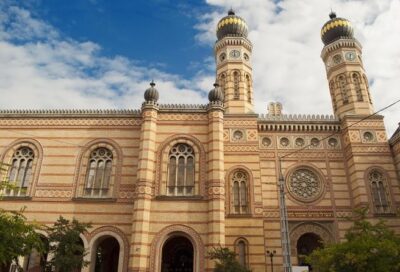
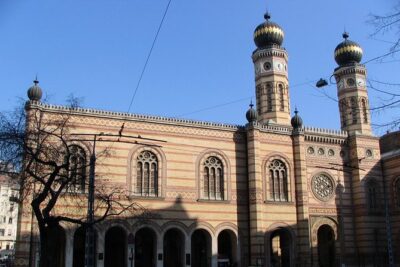
The first major stop is the Great, or Central, Synagogue on Dohány Street. It is described as the world’s second-largest synagogue, and its scale gives you an immediate sense of the size and importance of Budapest’s Jewish community.
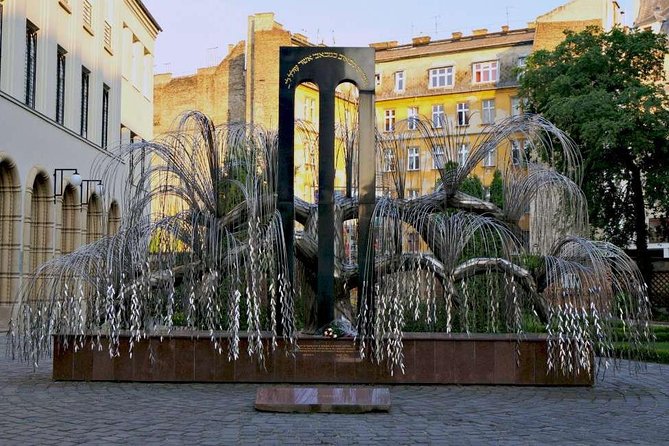
Plan roughly an hour here. The visit is not just about the main prayer hall. The grounds include exhibitions and memorials, the Cemetery of Heroes, the Holocaust Memorial, and the Tree of Life in Wallenberg Memorial Park. Those elements make the site more than an architectural landmark. They show how worship, community memory, and mourning occupy the same space.
The Cemetery of Heroes is particularly important because it connects the building to the suffering of Budapest’s Jewish population during the Holocaust. At the Tree of Life, the memorial form turns individual loss into something you can see and approach. The guide’s role is useful here, since plaques and formal displays cannot always explain how the sites fit together.
Admission is not included. Set aside money for the synagogue entry fee, and check the current ticket arrangements when booking. The tour price covers the guide and transportation tickets, not the entry costs at this and the other synagogues.
Jewish Museum objects make the story personal
The Hungarian Jewish Museum and Archives follows the synagogue visit and takes about 30 minutes. Its collection includes Jewish religious and cultural objects, among them what is described as the world’s oldest Torah finial.
That kind of object gives the tour a welcome change of pace. The synagogue grounds and memorials focus on public history. Museum objects show how Jewish life was practiced at home and in the community. A Torah finial may be small compared with the Dohány building, but it carries a long story of worship, craftsmanship, and survival.
The museum is another paid admission. Since the visit is brief, you should not expect to see every display in detail. Instead, think of it as a focused stop that gives context to the religious traditions discussed during the day.
This is also a good point to ask questions. György Rashad Salamon is praised for explaining Jewish events in relation to wider world history, while also giving close attention to Budapest’s own ghettos and wartime experience. You will get more from the museum if you treat the guide as an interpreter rather than simply following behind.
District VII mixes memory with modern city life
After the major synagogue and museum, the route moves through District VII, Budapest’s Jewish quarter. This is where the tour broadens beyond formal heritage sites.
You will see a district known for ruin bars, eclectic shops, avant-garde galleries, local art, and places to eat. That modern atmosphere can feel surprising beside the memorials and synagogues. It is also the point. Jewish Budapest is not only a story of destruction. It is also a story of neighborhoods, customs, businesses, culture, and life continuing in the same streets.
The walking portion takes about an hour. A guide adds value here by pointing out details you could easily pass without noticing and by explaining how the area’s older identity sits beside its current nightlife. You might see a fashionable café or art space, then turn toward a building tied to the quarter’s Jewish past.
I like this part because it prevents the afternoon from becoming a sequence of solemn interiors. Still, the modern side of District VII can be lively and noisy, especially around popular bars. If you want only quiet memorials and museum time, this section may feel less focused. If you want to understand how Budapest’s Jewish quarter functions today, it is essential.
Food and drinks are not included. The route passes places to eat, but you should not count on a scheduled meal. A small food stop, such as chimney cake, may be possible depending on timing and the guide’s arrangement, but it is not a promised part of the tour.
More history walks in Budapest:
- Budapest: Historic Cruise with Welcome Drink
★ 4.7 · 6,512 reviews - Budapest Historical Sightseeing – Free Walking Tour
★ 5.0 · 1,302 reviews - Buda Castle District Dark History, Legends and Vampire Night Tour
★ 4.5 · 1,240 reviews - BloodThirsty Hungary: Walking tour & Dark Historical Stories
★ 4.9 · 633 reviews
Kazinczy Street reveals a smaller Orthodox community
The Kazinczy Street Synagogue provides a different view of Jewish life. The stop lasts about 20 minutes and focuses on the small Orthodox community, including daily habits and customs.
Compared with the grand scale of Dohány Street, this synagogue can help you see that Budapest’s Jewish community was never one single group with one shared style. Different traditions shaped different places of worship. The guide can explain those distinctions in a way that is difficult to pick up from architecture alone.
Admission is not included. The visit is short, so it works best as part of the larger sequence rather than as a stand-alone attraction. You will not spend long enough here for an extensive museum visit, but you will see another side of Budapest’s religious life.
This is one reason the private format makes sense. A group with strong interest in customs and religious practice can use the stop for questions. A group more focused on architecture can keep moving at a quicker pace.
Rumbach Street adds another architectural chapter
The Rumbach Street Synagogue is the final synagogue in the Jewish Triangle. The planned visit lasts about 15 minutes, and the building is currently under reconstruction.
That note matters. You should not book this tour expecting a full interior visit or a complete presentation of the building. Conditions may change, but the stated information says reconstruction is underway. The stop is best understood as a brief look at an important site and the stories attached to it.
Together, Dohány, Kazinczy, and Rumbach show three different Jewish institutions within a compact part of Budapest. The contrast is useful. You see a monumental synagogue, a smaller Orthodox setting, and a building whose restoration points to the ongoing effort to preserve Jewish heritage.
Because admission is also not included here, ask about current access before your visit. The guide can still explain the site even if construction limits what you can enter.
Shoes on the Danube brings the history to the river
The tour finishes at Shoes on the Danube Bank, a memorial made of empty shoes along the river. You spend about 15 minutes here, but the emotional weight is far greater than the short stop suggests.
The memorial recalls victims who were ordered to remove their shoes before being shot into the Danube. The shoes are ordinary objects, which is exactly why the site is so effective. You are not looking at a grand monument removed from daily life. You are looking at the absence of people represented by something they left behind.
The guide uses this stop to explain the murders of Jewish men, women, and children and the broader history of Budapest during the Holocaust. One account of the tour describes the memorial as the most striking part of the day. That reaction makes sense. After visiting synagogues and walking through the former Jewish quarter, the riverbank gives the story a clear, solemn endpoint.
You reach the Danube using public transport, including the Metro according to the tour description and one detailed account of the route. This adds a practical Budapest experience to the afternoon and lets you see the Parliament building from the river area. Transportation tickets are included, so you do not need to arrange those separately.
Give yourself a little quiet time at the memorial. This is not a place for rushed photos or casual chatter. The tour includes light moments elsewhere, but this final stop deserves your attention.
What the guide adds to the afternoon
The experience is provided by György Rashad Salamon, also referred to as György or George in the tour material. He is described as a professional guide with strong knowledge of Budapest and Jewish history, and one account identifies him as a historian who places Jewish events within wider world history.
The most useful quality here is not simply the number of facts. It is the connection between places. You need someone to explain why the large Dohány complex, a small Orthodox synagogue, the District VII streets, and the Danube memorial belong in one story.
György also meets you at your hotel lobby when pickup is arranged. This is helpful if Budapest is new to you. The walk toward the Jewish quarter can serve as an introduction to the surrounding area before the formal stops begin.
The private setup gives you room to ask direct questions and request small changes. One solo participant received options and added insight while still seeing the main sites. That flexibility is less likely on a fixed large-group outing.
The $272.20 price makes more sense for a group
The listed price is $272.20 per group of up to 10 people, not per person. For a full group, the cost works out to about $27 per person before admission fees. For five people, it is roughly $54 each, and for two people it is about $136 each, again before synagogue and museum tickets.
That pricing is the key value question. If you are traveling with family or friends, a private guide for four hours can be a sensible use of money, especially since hotel pickup and transportation tickets are included. If you are alone or a couple, the price is much harder to justify unless Jewish Budapest is a top priority.
Admission fees are paid separately at the Great Synagogue, Jewish Museum, Kazinczy Street Synagogue, and Rumbach Street Synagogue. The exact total is not provided, so budget for those costs in addition to the tour. Food and drinks are also extra.
You are paying for more than entry. The price includes a private professional guide, a route linking several areas, public transport, and the chance to shape the conversation around your interests. That is good value for a full group that wants context, not just admission to a synagogue.
Timing, walking, and the emotional pace
Four hours is enough to cover the main route, but it is not a leisurely full-day exploration. The schedule gives about one hour to the Great Synagogue, 30 minutes to the museum, one hour to District VII, 20 minutes at Kazinczy Street, 15 minutes at Rumbach Street, and 15 minutes at Shoes on the Danube. Transit and movement between stops fill the remaining time.
You should have moderate physical fitness. The tour involves walking and public transport, with no promise of a vehicle throughout. Wear comfortable shoes and keep your schedule flexible around the four-hour estimate.
The 2:30 pm start is convenient if you want a free morning. It also means the tour moves from afternoon neighborhood activity toward a quieter, more reflective finish at the river. Exact daylight conditions will vary by season, and the tour information does not promise a particular sunset or evening view.
The subject matter calls for the right mindset. You will hear about ghettos, starvation, exposure, shootings, and mass death. The route also includes current cultural life and ordinary conversation, which gives the day some balance. Still, this is an important history tour first, and a casual neighborhood walk second.
Who should book this private Jewish heritage tour?
I would recommend it to you if you want a clear introduction to Budapest’s Jewish history and prefer a guide who can explain difficult subjects in person. It suits families, friends, and small groups especially well because the flat group price becomes more reasonable as more people join.
It is also a good choice if you want hotel pickup, help with Budapest public transport, and a route that combines major sights with less formal neighborhood exploration. You do not need to plan the connections between the Jewish quarter and the Danube yourself.
You may want another option if your priority is independent museum time, a slow architectural study, or the lowest possible cost. The four-hour schedule is focused, and several entry fees are extra. The Rumbach Street stop may also be limited by ongoing reconstruction.
Should you book it?
Book this tour if you want the Jewish quarter explained as a living part of Budapest, not just a list of synagogues. György Rashad Salamon’s role is especially valuable for linking religious traditions, wartime history, modern District VII, and the Shoes on the Danube memorial.
For a group of six to ten, the price is attractive. For a solo visitor or couple, compare the total cost with admission fees before booking. If the history matters to you and you want a private, serious, well-organized afternoon, this tour offers a strong route and a human focus. If you prefer to explore at your own pace, start with the Dohány Street Synagogue and Jewish Museum independently instead.
Free cancellation is available when you cancel at least 24 hours before the local start time. Changes or cancellations inside that window are not accepted for a refund.
FAQ
How long does the Budapest Jewish Heritage Tour last?
The tour lasts approximately four hours.
What time does the tour start?
The listed start time is 2:30 pm.
Is the tour private?
Yes. Only your group participates, with a maximum of 10 people.
Is hotel pickup available?
Yes. Hotel pickup is offered, and the guide can meet you in your hotel lobby.
Are synagogue admission fees included?
No. Admission to the Great Synagogue, Hungarian Jewish Museum, Kazinczy Street Synagogue, and Rumbach Street Synagogue is not included.
How do you get around during the tour?
The tour uses walking and public transport. Transportation tickets are included.
Is food included?
No. Food and drinks are not included.
What happens at Rumbach Street Synagogue?
The tour includes a short stop of about 15 minutes, but the synagogue is currently under reconstruction.
Recently added around Budapest
- Hiking + Chairlift ride + viewpoints in Budapest★ 5.0 · 3 reviews
- FoolsCode: EscapeRoom/Sightseeing tour with Actor Tourguide★ 5.0 · 3 reviews
- Grand Budapest tour with private transportation★ 5.0 · 3 reviews
- Budapest: Private Customizable Tour in French★ 5.0 · 3 reviews
- Budapest: Private, Personalized Pub Crawl, 3 drinks included★ 4.5 · 3 reviews
- Budapest Drinks and Piano Show Cruise★ 4.5 · 3 reviews
- Discover Budapest Using Tram Two★ 5.0 · 3 reviews
- Budapest: Private 3-Hour Gödöllő Palace Tour★ 4.9 · 3 reviews
Jewish Heritage Tours, compared.
Budapest Jewish Heritage Memorial Walking Tour & Synagogue Entry
Read our review →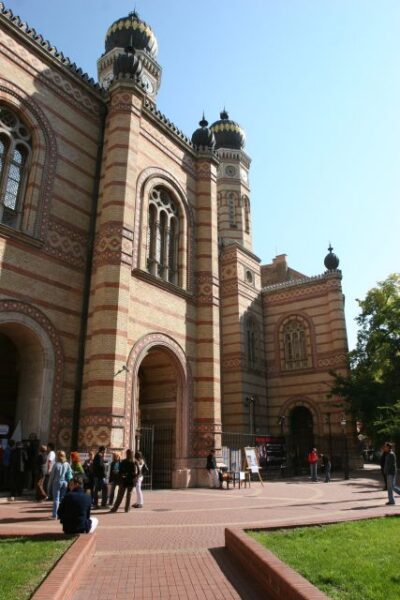
Jewish Heritage Guided Tour with Synagogue Ticket
Read our review →
Budapest Dohany Synagogue & Hungarian Jewish Museum & free extras
Read our review →
Jewish History Guided Walking Tour with Historian
Read our review →
Budapest Dohany, Heroes’, Rumbach synagogues & Jewish Ghetto Tour
Read our review →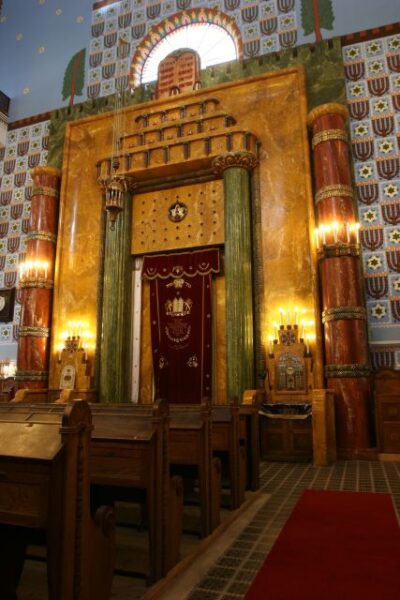
Browse the lists this tour appears in