
Reviewed · JEWISH HERITAGE TOURS
Jewish Heritage / Full tour
The most moving part of this Budapest tour comes before you reach the synagogue. At the Shoes on the Danube Bank, you face a small memorial with a large emotional weight. From there, the tour connects wartime memory, present-day Jewish life, and the grand Dohany Street Synagogue in one compact route.
I like the mix of solemn monuments and everyday Budapest. I also like that Edith, the licensed guide, leads a private group, so the three-hour visit can feel personal rather than scripted. The main drawback is cost control: the $48 price does not include synagogue admission or transport tickets, and the dress code is strict.
In This Review
- Key points to know before booking
- Why this three-hour route matters
- Meeting in central Budapest
- The Shoes on the Danube Bank
- Walking toward the German Occupation Memorial
- Entering the Dohany Street Synagogue complex
- The Tree of Life and Memorial Garden
- The Jewish Museum and Theodor Herzl’s birthplace
- Jewish District streets, art, and current life
- What the private format adds
- Is $48 a fair price?
- Practical preparation for the three hours
- Who should book this experience?
- Should you book it?
- FAQ
- How long does the Jewish Heritage tour last?
- Which language is the tour conducted in?
- Is the Dohany Street Synagogue entrance fee included?
- Are public transport tickets included?
- Where can the tour begin?
- What should I wear to the synagogue?
Key points to know before booking
- The Shoes on the Danube comes first: Allow yourself a quiet moment at this deeply affecting World War II memorial.
- Dohany Street Synagogue is the main event: The 1.5-hour guided visit covers the synagogue complex, Tree of Life, Heroes’ Temple, graveyard, and Jewish Museum.
- Edith leads the tour: She is a licensed English-speaking guide who can also arrange central-hotel pickup by agreement.
- The route uses public transport and walking: Transport takes about 10 minutes at one point, followed by roughly 30 minutes on foot before the German Occupation Memorial.
- The $48 fee is not the full expense: You must pay separately for entrance to the synagogue complex and public transport tickets.
- Dress respectfully: Shorts, short skirts, and sleeveless shirts are not allowed.
Why this three-hour route matters
Budapest’s Jewish heritage is not confined to one building. It appears in memorials beside the river, disputed public art, a former ghetto area, surviving religious sites, street art, restaurants, and present-day community life.
This tour gives you a useful arc. You begin with the murder and persecution of Hungarian Jews during the final years of World War II. You then examine how the city remembers German occupation. Finally, you spend substantial time inside the Dohany Street Synagogue complex, where the history becomes more detailed and personal.
That order works well. The river memorial is stark and open to the public, while the synagogue complex gives you time to absorb names, places, buildings, and Jewish traditions. I prefer this approach to a quick synagogue visit followed by a few disconnected monuments.
The tour lasts three hours, so you should not expect every Jewish site in Budapest. Instead, you get a focused introduction to the main monuments in and around the Jewish District, with a guide who can explain how the past relates to Jewish life today.
More of Jewish Budapest:
- Budapest Jewish Heritage Memorial Walking Tour & Synagogue Entry
★ 5.0 · 568 reviews - Budapest: Jewish Heritage Guided Tour with Synagogue Ticket
★ 4.8 · 533 reviews - Walking Tour Budapest incl. the Shoes on the Danube Bank
★ 5.0 · 387 reviews
Meeting in central Budapest
You can begin at one of two listed pickup points: the Lutheran church at Deak ter or Kossuth Lajos ter. Pickup from a central hotel is also possible by prior agreement, which helps if you are carrying luggage or prefer not to navigate the first meeting point.
The exact starting time depends on availability. Check it before you commit to lunch plans or a synagogue visit later in the day.
The first transfer uses public transport and takes about 10 minutes. Your transport ticket is not included, so keep that small extra cost in mind. This is not a sightseeing bus tour. You will be moving through the city as people in Budapest do, then walking between important locations.
That format has a practical advantage. You see how the Danube memorials, central squares, and Jewish District relate to each other instead of treating each place as an isolated attraction. The tradeoff is that rain, crowded streets, or a slow public transport connection may affect the pace.
The Shoes on the Danube Bank
The Shoes on the Danube Bank is the emotional center of the opening half. The memorial sits at the edge of the embankment, where dozens of iron shoes represent people who were forced to remove their shoes before being shot into the river during the terror of the war’s final years.
The design is simple. That is its power. There is no large building or long exhibition to distract you. You see the shoes, the river, and the city moving around them. I recommend giving this stop more than the scheduled 15-minute photo break if the group and timing allow.
The formal plan calls this a photo stop, but it deserves respectful attention rather than a quick snapshot. A good guide can provide the historical setting without turning the place into a performance.
This is also one of the tour’s most accessible stops in emotional terms. You do not need prior study to understand what the memorial asks you to remember. If you are sensitive to sites connected with mass violence, prepare for a serious moment early in the tour.
Walking toward the German Occupation Memorial
After the river stop, you continue on foot for about 30 minutes. This is not simply dead time between monuments. Walking gives you a better feel for central Budapest and allows the guide to connect the memorials to the city around them.
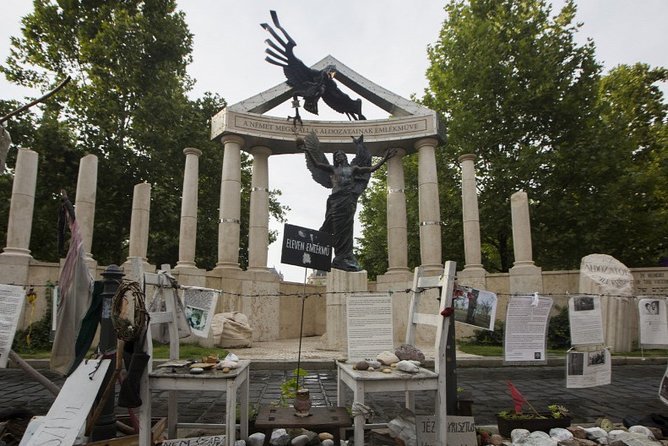
The next stop is the Memorial for Victims of the German Occupation, located at Szabadsag ter. It is one of Budapest’s most disputed public memorials. The monument presents Hungary as a victim of German occupation, while critics argue that this presentation does not fully address Hungary’s own role in the persecution of Jewish people.
That disagreement is exactly why the stop belongs on a Jewish heritage tour. You are not looking only at old buildings. You are also examining how a country chooses to describe difficult history in public space.
The visit is scheduled as a 15-minute photo stop. That is enough to see the monument and receive an introduction, but not enough for a long debate. Edith’s role is especially useful here because the memorial needs context. Without explanation, you might see only a symbolic sculpture. With explanation, you can understand why it remains controversial and what it suggests about the current situation of Hungary’s Jewish community.
More history walks in Budapest:
- Budapest: Historic Cruise with Welcome Drink
★ 4.7 · 6,512 reviews - Budapest Historical Sightseeing – Free Walking Tour
★ 5.0 · 1,302 reviews - Buda Castle District Dark History, Legends and Vampire Night Tour
★ 4.5 · 1,240 reviews - BloodThirsty Hungary: Walking tour & Dark Historical Stories
★ 4.9 · 633 reviews
Entering the Dohany Street Synagogue complex
Public transport takes you onward to Dohany Street Synagogue, where the tour ends after a guided visit of about 1.5 hours. This is the longest stop and the part that gives the outing its architectural and historical weight.
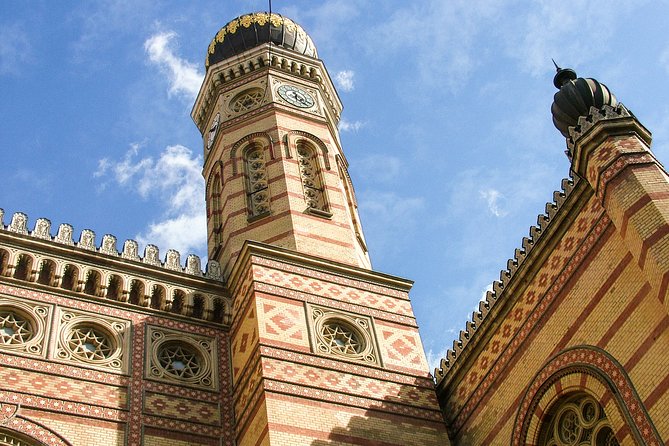
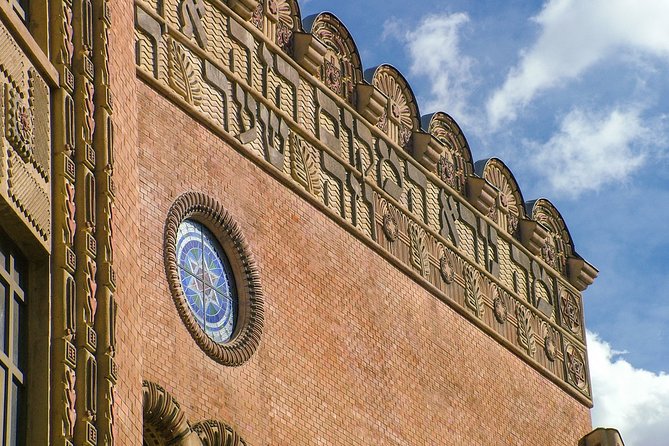
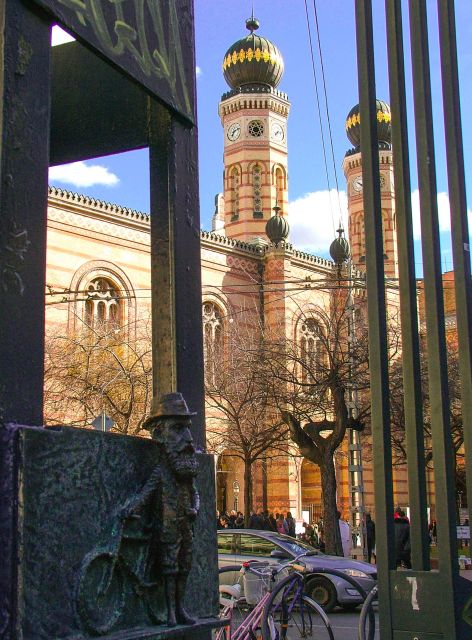
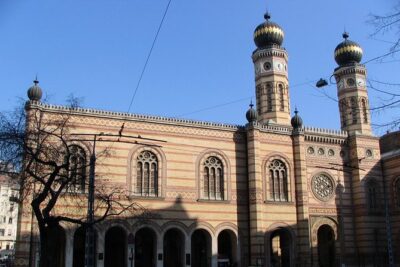
Dohany Street Synagogue is described as the second-largest synagogue in the world. It also sits at the edge of the former ghetto, so the location matters as much as the building itself. The complex includes more than the main synagogue. You see the Memorial Garden, the Tree of Life, the Heroes’ Temple, the graveyard, and the Jewish Museum.
Admission is not included in the $48 tour price. You also receive guidance within the Dohany complex, but you must pay the entrance fee separately. The tour offers skip-the-ticket-line access, which can be useful when you want to protect the limited time in a three-hour program.
The dress rules are firm. Shorts, short skirts, and sleeveless shirts are not permitted. Dress modestly from the start rather than hoping to adjust later. This is particularly important during warm Budapest weather, when casual sightseeing clothes may not meet the synagogue’s requirements.
The Tree of Life and Memorial Garden
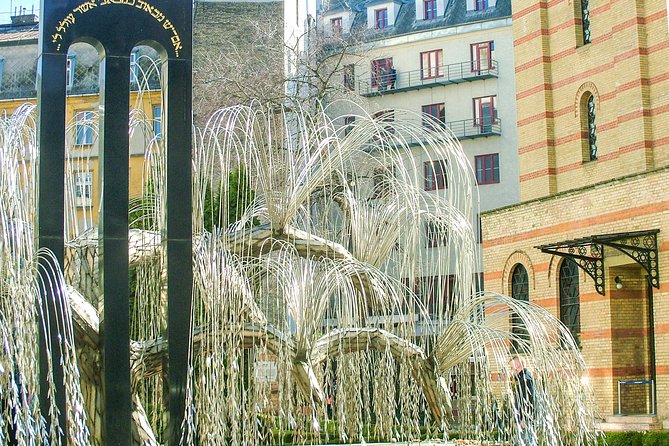
The Tree of Life is the best-known feature in the Memorial Garden. Its metal leaves carry the names of victims, making the tree both a memorial and a record of lives lost.
The garden gives the tour a quieter setting after the grand scale of the synagogue. I find that contrast useful. The building tells you about religious life and community strength, while the garden brings you back to individual people.
The complex also includes the Heroes’ Temple and a graveyard. These spaces add layers to the visit that you would miss with a quick look at the synagogue facade. The graveyard is especially significant because it lies within the former ghetto complex and connects the site directly to the suffering of Budapest’s Jewish population.
Your guide’s explanation matters here. The objects are visually clear, but their meaning is not always obvious if you are seeing them for the first time. A private format gives you a chance to ask about the memorials rather than simply moving with a large crowd.
The Jewish Museum and Theodor Herzl’s birthplace
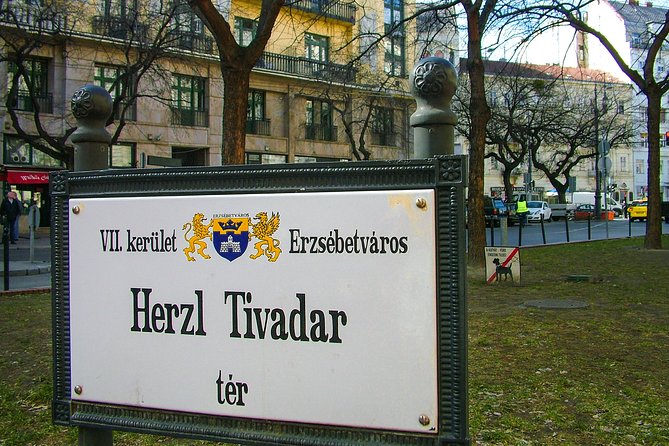
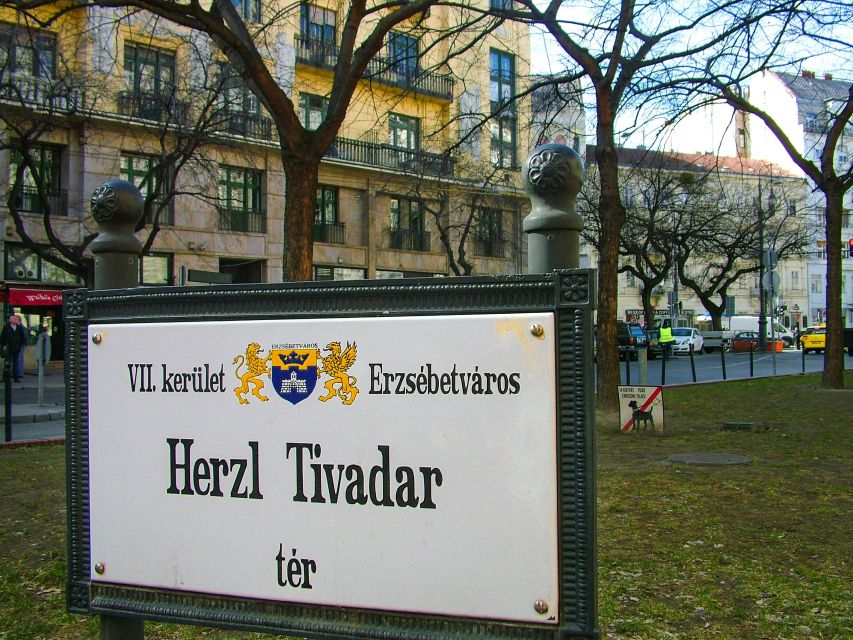
The Jewish Museum was built on the site where Theodor Herzl’s house of birth once stood. That detail gives the museum a strong link to both Budapest and the wider story of Jewish political life.
The museum forms part of the Dohany complex, so you do not need to arrange a separate visit during this tour. The available information does not specify the individual displays or the amount of free time inside, so I would treat Edith’s guided explanation as the main way to understand the site within the 1.5-hour visit.
If you already know the broad history of Hungarian Jewry, you can use the museum portion to ask more specific questions about local events, community life, or the relationship between the synagogue and the former ghetto. If you are new to the subject, listen for the basic timeline and key names, then return later if you want a slower museum visit.
Jewish District streets, art, and current life
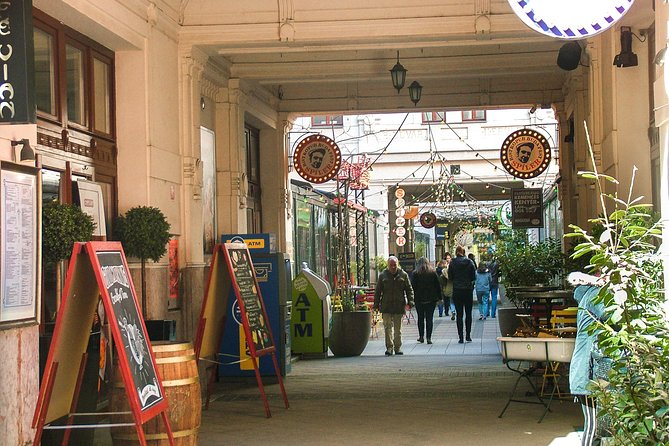
The Jewish District is part of a UNESCO heritage area, but it is not preserved as a silent museum. The streets also hold street art, nightlife, restaurants, and places connected to current Jewish life.
That mixture is important. A heritage tour can become too focused on loss, leaving you with the impression that Jewish life in Budapest ended in the war. This route aims to show both the historic record and the living community.
You will not spend the whole three hours exploring restaurants or nightlife venues. The main focus remains the memorials and synagogue complex. Still, the district setting gives you a reason to stay after the tour and walk around on your own.
The tour finishes at Dohany Street Synagogue, which is convenient if you want lunch nearby. The information provided does not name particular restaurants, so I would ask Edith for current suggestions during the tour rather than plan around a specific venue.
What the private format adds
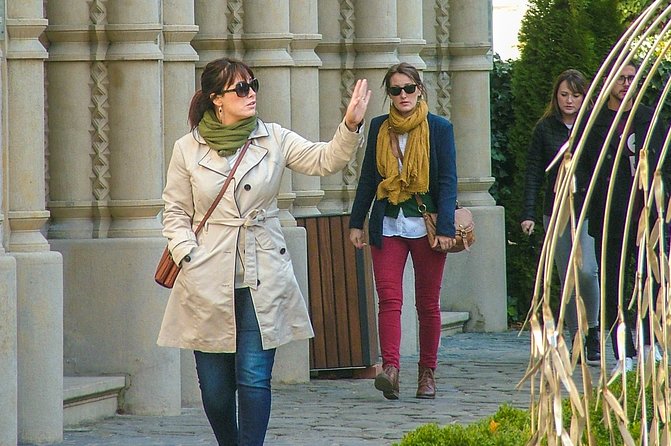
A private tour is most useful when you want conversation. Edith is the guide, and her English-language tour can be arranged for a private group. You can ask about the meaning of a memorial, current Jewish life, or details that would be skipped in a large group.
The feedback available for this experience repeatedly points to Edith’s preparation and availability. One assessment describes her as prepared and available, while another singles out her as a formidable guide. Even the tour completed in rain was described as interesting and unforgettable, which tells you that the substance of the route does not depend on perfect weather.
Still, private does not mean leisurely at every stop. The schedule includes public transport, a 30-minute walk, timed photo stops, and a 1.5-hour complex visit. If you want long periods for photography or a slow museum reading, you may need to ask Edith what can be adjusted.
The private setup is also easier for visitors with a specific interest in Jewish history. You can steer the conversation toward memorial design, religious buildings, wartime events, or present-day community questions. A standard group tour may give you the same major stops, but less room for personal questions.
Is $48 a fair price?
At $48 per person, the tour is not an all-inclusive admission package. You still pay for the Dohany Street Synagogue entrance and public transport tickets. That distinction matters when you compare the total cost with a self-guided visit.
The value comes from the guide and the private structure. You receive three hours with a licensed English-speaking guide, a planned route linking sites that are not all beside each other, and guidance inside the Dohany complex. You also avoid spending your own time working out which memorials belong together.
For one person, the price may feel high once admission is added. For a private group, the cost can make more sense, especially if several people want to ask questions or move at a shared pace.
I would book it if you want historical explanation more than simple entry to a synagogue. I would skip it if you only want to see Dohany Street Synagogue and prefer to arrange every component independently.
Practical preparation for the three hours
Wear comfortable shoes. The route includes public transport and roughly 30 minutes of walking, and Budapest’s streets may be tiring if you are already carrying bags or dealing with wet weather.
Dress for synagogue entry, not just for the forecast. Shorts, short skirts, and sleeveless shirts are not allowed. A modest outfit saves you from an awkward problem at the final stop.
Bring a little extra money for the synagogue entrance and transport. The tour price covers the private guide and guiding within the Dohany complex, but not those two costs.
Allow emotional space in your schedule. The Shoes on the Danube and the memorial garden are not casual attractions, and the German Occupation Memorial raises difficult questions about memory and responsibility. I would avoid placing a rushed appointment immediately afterward.
The tour is not suitable for children under six. It is also conducted in English, so you should be comfortable following a serious historical discussion in that language.
Free cancellation is available up to 24 hours before the start, and you can reserve now while paying later. Those policies are helpful if your Budapest plans are still shifting, but the exact starting time remains subject to availability.
Who should book this experience?
This tour suits you best if you want a guided introduction to Budapest’s Jewish District and prefer a personal conversation over a large group. It is especially useful for first-time visitors who want the major memorials connected in one route.
It also suits repeat visitors who saw the Jewish District before but missed the political meaning of the German Occupation Memorial or the wider Dohany complex. The route offers enough structure to orient you, while the private format leaves room for questions.
You may want another option if you dislike public transport, cannot walk for 30 minutes, or want a full-day study of Budapest’s Jewish history. Three hours gives you a strong outline, not every detail.
Should you book it?
Book this tour if you want to understand what you are seeing, not merely photograph it. The strongest elements are the personal guidance from Edith, the difficult but necessary stop at the German Occupation Memorial, and the extended visit to Dohany Street Synagogue’s Tree of Life, Heroes’ Temple, graveyard, and Jewish Museum.
Keep the added costs in mind, dress correctly, and expect a serious tone. For a private group seeking an honest look at memory, loss, and present-day Jewish life in Budapest, the $48 fee offers solid value.
FAQ
How long does the Jewish Heritage tour last?
The tour lasts three hours. Check availability for the available starting times.
Which language is the tour conducted in?
The tour is conducted in English with a live tour guide.
Is the Dohany Street Synagogue entrance fee included?
No. Entrance to the synagogue complex is not included in the tour price.
Are public transport tickets included?
No. Transportation tickets are not included. The route includes public transport, with one listed transfer taking about 10 minutes.
Where can the tour begin?
The listed pickup options are the Lutheran church at Deak ter and Kossuth Lajos ter. Pickup from central hotels is also possible by agreement.
What should I wear to the synagogue?
Shorts, short skirts, and sleeveless shirts are not allowed. Dress modestly so you can enter the synagogue complex.
Recently added around Budapest
- Hiking + Chairlift ride + viewpoints in Budapest★ 5.0 · 3 reviews
- FoolsCode: EscapeRoom/Sightseeing tour with Actor Tourguide★ 5.0 · 3 reviews
- Grand Budapest tour with private transportation★ 5.0 · 3 reviews
- Budapest: Private Customizable Tour in French★ 5.0 · 3 reviews
- Budapest: Private, Personalized Pub Crawl, 3 drinks included★ 4.5 · 3 reviews
- Budapest Drinks and Piano Show Cruise★ 4.5 · 3 reviews
- Discover Budapest Using Tram Two★ 5.0 · 3 reviews
- Budapest: Private 3-Hour Gödöllő Palace Tour★ 4.9 · 3 reviews
Jewish Heritage Tours, compared.
Budapest Jewish Heritage Memorial Walking Tour & Synagogue Entry
Read our review →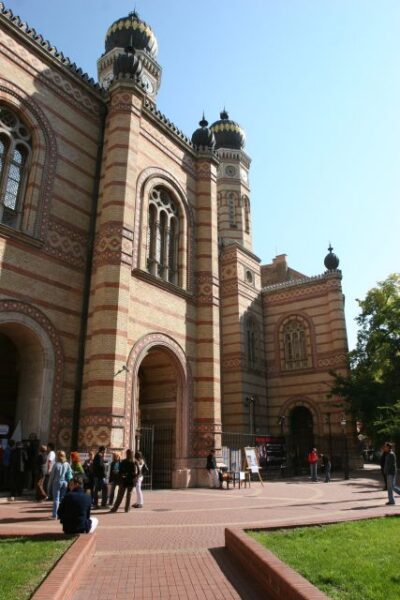
Jewish Heritage Guided Tour with Synagogue Ticket
Read our review →

Budapest Dohany Synagogue & Hungarian Jewish Museum & free extras
Read our review →
Jewish History Guided Walking Tour with Historian
Read our review →
Budapest Dohany, Heroes’, Rumbach synagogues & Jewish Ghetto Tour
Read our review →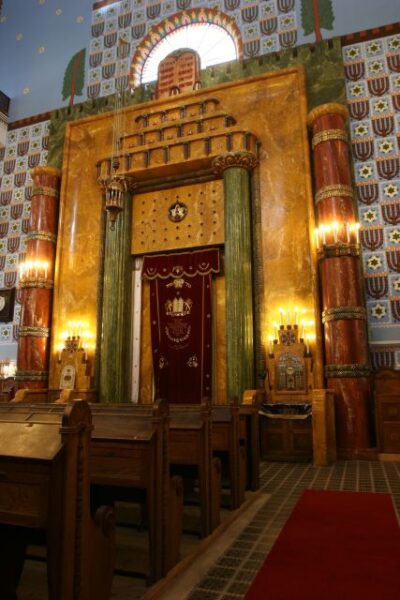
Browse the lists this tour appears in