
Reviewed · JEWISH HERITAGE TOURS
Jewish Heritage in Hungary with a Historian
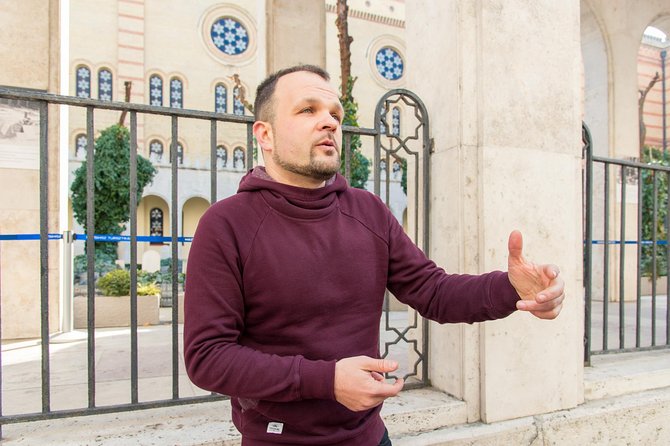
Budapest’s Jewish Quarter is more than a collection of handsome synagogues. It is a place where Jewish life, wartime memory, modern nightlife, and everyday Budapest meet on the same few streets. This 2.5-hour walk brings those layers together, with a historian guide such as Andrea, Gabor, Barbi, Noémi, or Andras explaining what you are seeing.
I like the small group of no more than 10, which gives you room to ask questions. I also like the mix of serious history and ordinary local life, from Raoul Wallenberg’s rescue work to Szimpla Kert and a slice of flódni. The main drawback is that the tour does not enter the Great Synagogue or the Kazinczy Street Synagogue, so you will need a separate ticket if you want to see their interiors.
In This Review
- Key points at a glance
- Why this walk gives you more than a synagogue tour
- Starting at Erzsébet tér at 10 a.m.
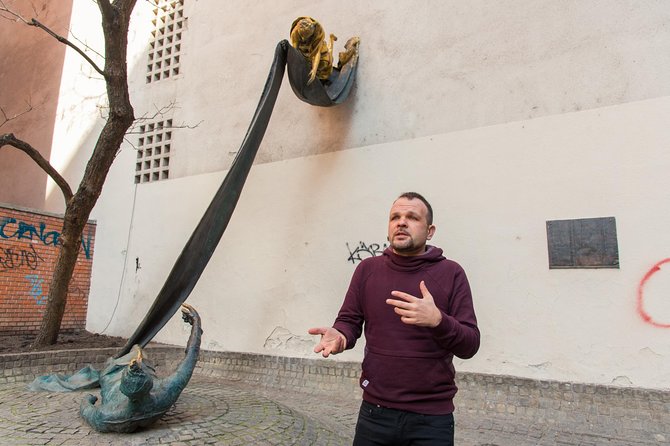
- Raoul Wallenberg’s statue and the moral choices of wartime Budapest
- Szimpla Kert: from ruined building to Budapest nightlife icon
- Gozsdu Udvar and the social side of the Jewish Quarter
- Kazinczy Street Synagogue and Orthodox Jewish tradition
- The Great Synagogue and the Dohány Street ending
- Flódni at Solinfo Café
- What $64.71 buys you
- Who will get the most from this experience
- Practical details before you book
- Should you book the Jewish Heritage in Hungary walk?
- FAQ
- Where does the Jewish Heritage in Hungary tour begin?
- Where does the tour end?
- How long does the tour last?
- What language is the tour offered in?
- How many people can join the tour?
- Does the tour enter the Great Synagogue?
- Is admission to the Kazinczy Street Synagogue included?
- Is the flódni tasting included?
- What is the cancellation policy?
Key points at a glance
- A historian-led walk through Budapest’s Jewish Quarter, covering Jewish life from the medieval period to the present.
- Three important synagogues, Rumbach Street, Kazinczy Street, and Dohány Street, viewed from the outside.
- Raoul Wallenberg’s statue, with attention to the diplomat who helped save Jewish lives.
- Szimpla Kert and Gozsdu Udvar, adding modern Budapest culture to the historical story.
- A taste of flódni, the traditional Jewish-Hungarian layered cake, at Solinfo Café.
- A maximum of 10 people, useful for a more personal conversation with the guide.
Why this walk gives you more than a synagogue tour
The best feature here is the way the tour connects Jewish history with present-day Budapest. You are not simply led from one religious building to another. The route moves through squares, nightlife streets, memorials, and cafés, showing how the Jewish Quarter has changed over time.
The historical scope is also broader than the Holocaust alone. The tour reaches back roughly 800 years, while still giving proper attention to the tragic events of the 1940s. That balance matters. You get a sense of Jewish life, religious communities, architecture, survival, and loss rather than one narrow chapter.
The guides are a major part of the experience. Andrea is described as warm, patient, and willing to shape the walk around the group’s questions. Gabor has been praised for explaining both the good and bad parts of Hungary’s past with clarity and honesty. Barbi is noted for placing Jewish history within the wider story of Hungary, while Noémi is known for an enthusiastic approach. Andras has also drawn praise for connecting past events with current issues.
That range of guides means the tone may vary slightly from one departure to another, but the central strength remains the same: this is intended as a conversation-led walk, not a memorized speech.
More of Jewish Budapest:
- Budapest Jewish Heritage Memorial Walking Tour & Synagogue Entry
★ 5.0 · 568 reviews - Budapest: Jewish Heritage Guided Tour with Synagogue Ticket
★ 4.8 · 533 reviews - Budapest walking tour: Parliament and Shoes Memorial
★ 5.0 · 387 reviews
Starting at Erzsébet tér at 10 a.m.
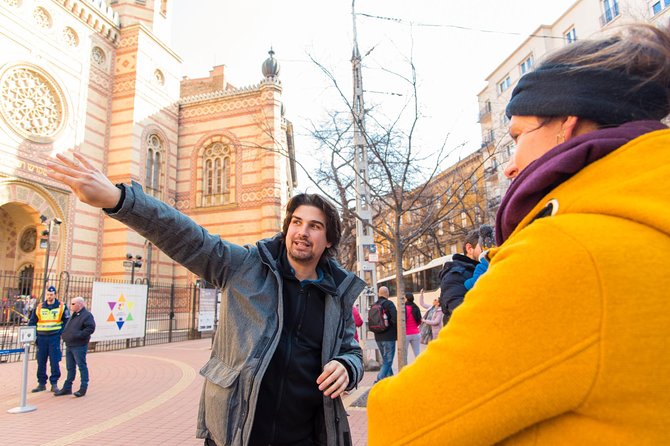
The walk begins at Kempinski Hotel Corvinus Budapest, at Erzsébet tér 7-8, at 10 a.m. Erzsébet tér is a practical starting point in central Pest, and the opening 20 minutes help place the Jewish Quarter within the larger city.
The square began as a medieval market area and later became one of Pest’s main public spaces. That makes it a useful first stop because the guide can begin with the growth of Budapest itself before focusing on Jewish communities.
I like this start because it avoids dropping you straight into a dense set of names and dates. You first get a sense of the city’s urban development, then move toward the streets where Jewish religious and commercial life became more concentrated.
The meeting point is central, but you should arrive with comfortable shoes and enough time to find the hotel entrance. The experience is a walking tour, and the route includes several stops with standing time.
Raoul Wallenberg’s statue and the moral choices of wartime Budapest
The 10-minute stop at Raoul Wallenberg’s statue turns the focus toward one of the most important diplomats connected with the rescue of Jewish people in Budapest.
Wallenberg’s work is an essential part of the city’s wartime story. His name is linked with efforts to protect Jewish lives during one of the darkest periods in Hungary’s history. At this stop, the guide explains his role and places it within the wider events taking place around Budapest.
This is a short stop, but it can carry a lot of weight. You may find that the guide’s treatment of this subject shapes the tone of the rest of the walk. The most useful approach is not to treat Wallenberg as an isolated hero, but to understand the danger, bureaucracy, and individual decisions that surrounded rescue work.
The tour does not present history as a simple tale of heroes and villains. Gabor, in particular, has been praised for speaking plainly about both the admirable and painful parts of Hungary’s past. That kind of honesty is valuable on a subject where polished stories can leave out too much.
Szimpla Kert: from ruined building to Budapest nightlife icon
The stop at Szimpla Kert lasts about 20 minutes and provides a sharp change of mood. It is described as Budapest’s first ruin bar, and the place that began the city’s famous ruin-bar trend.
For many people, Szimpla Kert is one of Budapest’s most recognizable modern attractions. Here, it works as more than a nightlife stop. The guide can show how an older part of the Jewish Quarter was repurposed for a new generation, adding a modern layer to streets shaped by earlier Jewish life and wartime destruction.
This contrast is one of the walk’s best ideas. You move from memorial history to a place associated with art, drinks, and late-night Budapest. The result is a more useful picture of the district. Neighborhoods do not freeze at the moment of tragedy. They continue to change, sometimes in ways that are exciting, noisy, or controversial.
The visit is a brief introduction rather than a full evening at the bar. If you want to return after the tour, you can treat this stop as a first look and come back later on your own.
More history walks in Budapest:
- Budapest: Historic Cruise with Welcome Drink
★ 4.7 · 6,512 reviews - Budapest Historical Sightseeing – Free Walking Tour
★ 5.0 · 1,302 reviews - Buda Castle District Dark History, Legends and Vampire Night Tour
★ 4.5 · 1,240 reviews - BloodThirsty Hungary: Walking tour & Dark Historical Stories
★ 4.9 · 633 reviews
Gozsdu Udvar and the social side of the Jewish Quarter
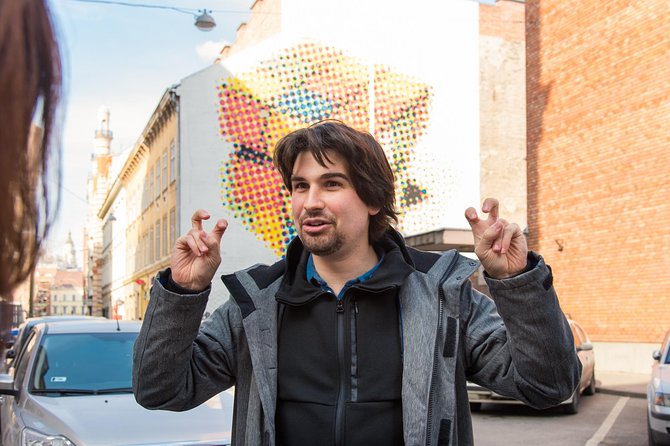
Gozsdu Udvar is another short stop, lasting around 10 minutes. It is described as one of Budapest’s most international streets, and it adds another view of how the neighborhood functions today.
The passage is associated with restaurants, shops, and social activity, but on this tour its value comes from context. Your guide links the area’s current character with the older Jewish Quarter around it.
I appreciate this kind of stop because it keeps the walk from becoming too solemn. The Jewish Quarter is a living part of Budapest, not only a memorial district. You may find the transition from historical explanation to modern street life especially helpful if this is your first visit to the area.
At the same time, this is one of the less focused historical stops. If you are interested only in synagogues and wartime history, Gozsdu Udvar may feel like a detour. If you want to understand how Budapest uses and reshapes its old districts, it earns its place.
Kazinczy Street Synagogue and Orthodox Jewish tradition
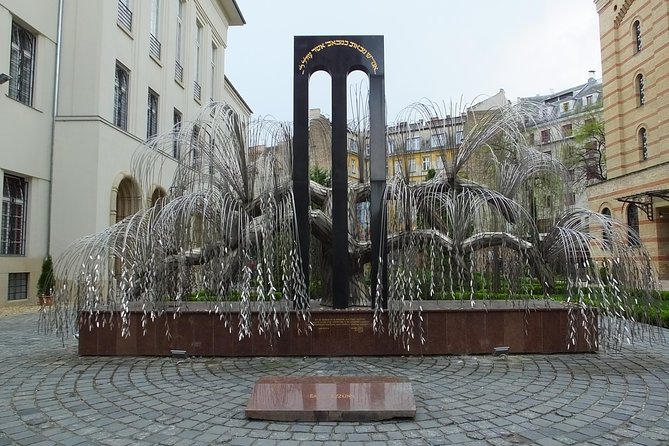
The walk then reaches the Kazinczy Street Synagogue, where about 20 minutes are devoted to the Orthodox Jewish community.
This is an important distinction. Jewish life in Budapest was never one single, uniform tradition. Different communities developed their own religious practices, institutions, and buildings. The Kazinczy Street stop helps explain that internal variety.
You should note that the tour does not include admission inside the synagogue. The guide discusses the building and the community from the outside, but an interior visit requires a separate ticket if available at the time of your visit.
That limitation is worth considering before you book. If your main goal is to see synagogue interiors, this walk will not replace an admission-based synagogue tour. If your main goal is to understand how different Jewish communities shaped Budapest, the explanation may be more important than the entry itself.
The Great Synagogue and the Dohány Street ending
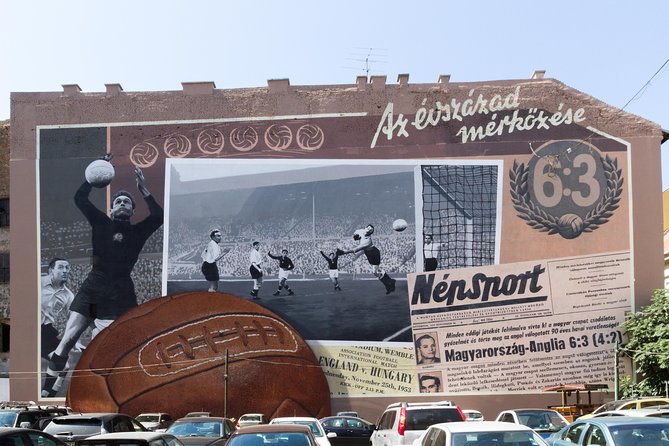
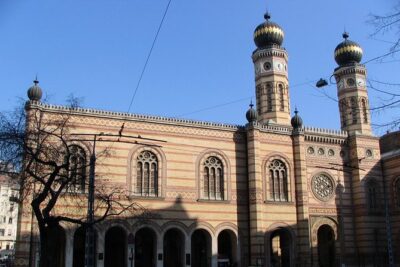
The Great Synagogue, also called Nagy Zsinagoga, receives the longest historical discussion, about 45 minutes. It is identified as Europe’s largest synagogue and is tied to roughly two centuries of Jewish history in Budapest.
The tour ends outside the Dohány Street Synagogue, at Wesselényi utca 1. This makes the building an important final point, even though the tour does not go inside.
A 45-minute explanation outside may seem long, but the site carries several layers of meaning. The guide can discuss the synagogue’s place in Budapest, the surrounding Jewish Quarter, and the events that affected the community over time.
The no-entry policy is the clearest weakness of the experience. The Great Synagogue is one of Budapest’s major sights, and many people will want to see its interior, grounds, and memorial features. You will need to arrange that separately. Still, there is a practical advantage to ending outside: you can continue directly into an individual visit instead of being rushed through the building as part of a larger group schedule.
If you plan to visit inside afterward, check opening details separately and allow extra time. The walking tour itself ends outside Dohány Street Synagogue, not at the starting point.
Flódni at Solinfo Café
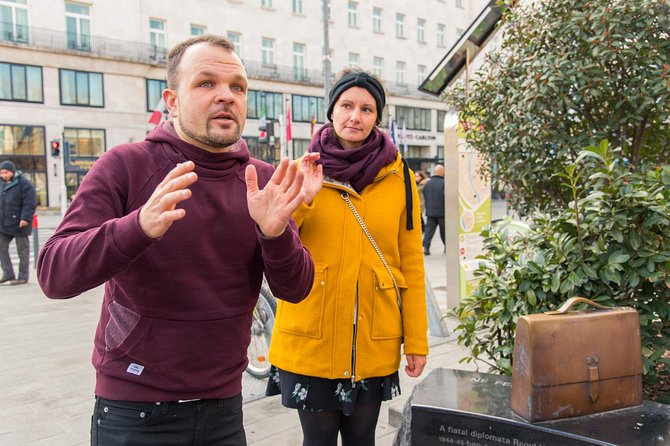
The final stop is Solinfo Café, where the tour includes a taste of flódni, a traditional Jewish cake popular in Hungary.
Flódni is a layered pastry associated with Jewish-Hungarian cooking. The tasting gives the tour a welcome sensory finish. After hearing about communities, buildings, and persecution, you get to encounter a food tradition that continues in ordinary life.
This is a small inclusion, but it adds real value. Food can explain cultural continuity in a way that dates and monuments cannot. The cake also gives the guide a chance to discuss Jewish influence on Hungarian life in a relaxed setting.
The tasting is included in the $64.71 price, while admission to the synagogues is not. That distinction is important when comparing this walk with a more expensive entry-based tour.
What $64.71 buys you
At $64.71 per person, this is not the cheapest way to see Budapest’s Jewish Quarter. The value depends on how much you want a guide’s interpretation rather than a quick walk past the buildings.
You are paying for about 2.5 hours with a historian, a small group capped at 10 people, a structured route, and the included flódni tasting. You also get time at seven listed stops, with the Great Synagogue receiving a substantial discussion.
The price is easier to justify if you are new to Budapest, have limited time, or want to ask detailed questions. It is less compelling if you already know the neighborhood well or plan to buy synagogue admission and take a self-guided walk using your own research.
The small group is the strongest value point. A group of 10 is large enough for a social atmosphere but small enough for direct questions. Several guide accounts emphasize patience, warmth, and willingness to tailor the discussion, which is exactly where a small group can make a difference.
The tour is also booked an average of 42 days in advance, so early planning is sensible if your Budapest dates are fixed.
Who will get the most from this experience
I would recommend this walk to you if you want historical context, not just photographs. It suits first-time visitors, people with a personal or family interest in Jewish history, and anyone who prefers a guide who can answer questions as the route unfolds.
It is also a good fit if you want to see the Jewish Quarter as part of modern Budapest. Szimpla Kert and Gozsdu Udvar prevent the experience from becoming a sequence of memorials, while the flódni tasting adds a human and cultural finish.
You may want a different product if synagogue interiors are your priority. None of the synagogue admissions is included, and the Great Synagogue is not entered. You should also think twice if you dislike walking tours with difficult subject matter. The route includes the Holocaust era and the loss experienced by Budapest’s Jewish community.
Most people can take part, the meeting point is near public transportation, and service animals are allowed. The tour is offered in English and uses a mobile ticket.
Practical details before you book
The tour starts at 10 a.m. at Kempinski Hotel Corvinus Budapest in Erzsébet tér and ends outside Dohány Street Synagogue at Wesselényi utca 1. Since the finish is different from the start, plan your next activity from the Jewish Quarter rather than expecting to return to Erzsébet tér.
The walk lasts approximately 2 hours and 30 minutes. Build in a little flexibility if you want to continue inside the Great Synagogue afterward.
The tour allows free cancellation up to 24 hours before the start time. Changes or cancellations within 24 hours are not accepted for a refund, and the cut-off follows Budapest local time.
Should you book the Jewish Heritage in Hungary walk?
Book it if you want a small, discussion-friendly history walk that covers more than the Holocaust and connects Budapest’s Jewish past with the streets you see today. The combination of a historian guide, Raoul Wallenberg, three synagogue exteriors, Szimpla Kert, Gozsdu Udvar, and flódni makes the route varied and memorable.
Do not book it as your only synagogue visit if you need interior access. Instead, pair it with a separate visit to the Great Synagogue, or choose an experience that includes admission.
For the right visitor, $64.71 is fair value for the guide’s time and the small group. I would especially choose it early in a Budapest stay, when the historical setting can help you understand the Jewish Quarter for the rest of your visit.
FAQ
Where does the Jewish Heritage in Hungary tour begin?
It begins at Kempinski Hotel Corvinus Budapest, Erzsébet tér 7-8, Budapest 1051, at 10 a.m.
Where does the tour end?
The tour ends at Budapest, Wesselényi utca 1, outside the Dohány Street Synagogue.
How long does the tour last?
The experience lasts approximately 2 hours and 30 minutes.
What language is the tour offered in?
The tour is offered in English.
How many people can join the tour?
The maximum group size is 10 people.
Does the tour enter the Great Synagogue?
No. The tour discusses the Great Synagogue from outside but does not visit its interior. Admission is not included.
Is admission to the Kazinczy Street Synagogue included?
No. Admission to the Kazinczy Street Synagogue is not included.
Is the flódni tasting included?
Yes. A local Jewish cake called flódni is included at Solinfo Café.
What is the cancellation policy?
You can cancel for a full refund up to 24 hours before the experience starts. Cancellations or changes made less than 24 hours before the start time are not accepted for a refund.
Recently added around Budapest
- Hiking + Chairlift ride + viewpoints in Budapest★ 5.0 · 3 reviews
- FoolsCode: EscapeRoom/Sightseeing tour with Actor Tourguide★ 5.0 · 3 reviews
- Grand Budapest tour with private transportation★ 5.0 · 3 reviews
- Budapest: Private Customizable Tour in French★ 5.0 · 3 reviews
- Budapest: Private, Personalized Pub Crawl, 3 drinks included★ 4.5 · 3 reviews
- Budapest Drinks and Piano Show Cruise★ 4.5 · 3 reviews
- Discover Budapest Using Tram Two★ 5.0 · 3 reviews
- Budapest: Private 3-Hour Gödöllő Palace Tour★ 4.9 · 3 reviews
Jewish Heritage Tours, compared.
Budapest Jewish Heritage Memorial Walking Tour & Synagogue Entry
Read our review →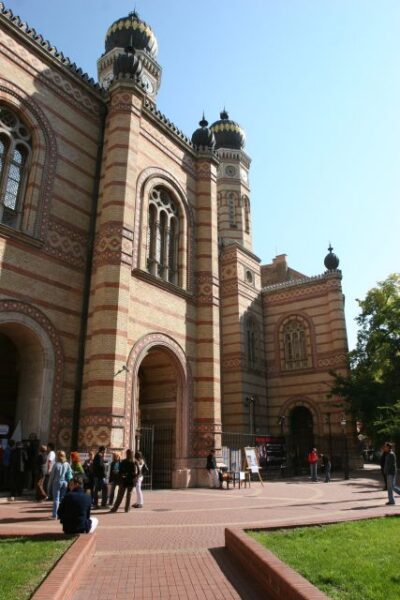
Jewish Heritage Guided Tour with Synagogue Ticket
Read our review →

Budapest Dohany Synagogue & Hungarian Jewish Museum & free extras
Read our review →
Jewish History Guided Walking Tour with Historian
Read our review →
Budapest Dohany, Heroes’, Rumbach synagogues & Jewish Ghetto Tour
Read our review →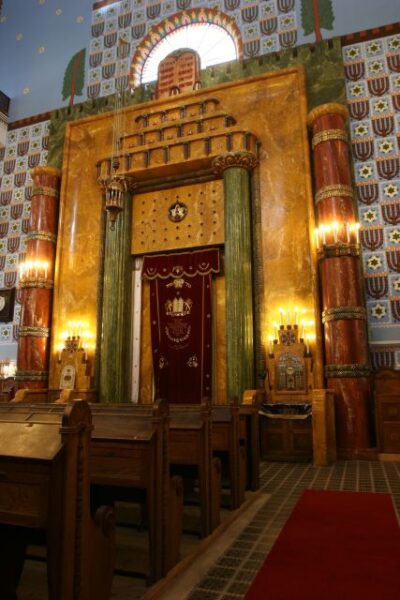
Browse the lists this tour appears in