
Reviewed · COMMUNIST-ERA HISTORY TOURS
Budapest Hammer & Sickle Communist Times Tour
The most useful part of this Budapest tour is its mix of street-level history and ordinary home life. You move from Parliament and Liberty Square, where political power and protest shaped Hungary, to a Retro Interactive Museum filled with the objects, games, books, and household details of the communist era.
I like the way the tour connects the 1956 Revolution to World War I, World War II, the Soviet occupation, and the fall of the Iron Curtain. I also like the small group limit of 10, since guides such as Anna, George, Laszlo, Tomas, and Rebecca have been able to answer questions and adjust the discussion to the people in front of them.
The main drawback is that this is a serious history walk, not a light sightseeing stroll. The afternoon can also be hard to hear if traffic, helicopters, or aircraft are nearby, and there is no audio equipment or headset. At $79.65, you are paying for the guide’s interpretation as much as for the places you see.
In This Review
- Key points before you book
- Why the Retro Museum matters
- Starting at Deák Square and setting the historical frame
- St. Stephen’s Basilica and the pressure on religious life
- Liberty Square and the last Soviet memorial
- Parliament Square and the first days of 1956
- The October 25 memorial and the human cost of protest
- Imre Nagy, execution, and the return of political memory
- How the walk feels in practice
- Who will get the most from this tour
- Is $79.65 a fair price?
- Practical booking advice
- Should you book the Budapest Hammer & Sickle tour?
- FAQ
- How long is the Budapest Hammer & Sickle tour?
- What time does the tour begin?
- Where does the tour start?
- Where does the tour end?
- Is the tour offered in English?
- Is entry to the Retro Interactive Museum included?
- Is Parliament admission included?
- Is transportation provided?
- Is the tour suitable for children?
- Can I cancel for a refund?
Key points before you book
- A rare look at everyday communist life: The indoor exhibition uses a period-style living room, household objects, books, games, photos, and printed material to explain how families lived.
- The 1956 Revolution comes alive on location: Parliament Square, the October 25 memorial, and Imre Nagy’s statue give the political story a physical setting.
- A small group helps the history feel personal: The tour accepts no more than 10 people, and private or near-private departures have allowed for long question-and-answer sessions.
- The route covers more than communism: You also receive an overview of Hungary in World War I and World War II, plus the transition out of Soviet control.
- The timing works well for an afternoon: It begins at 3 p.m. and lasts about two and a half hours, ending near Liberty Square in central Pest.
- Plan for outdoor conditions: The tour runs in all weather, and you should wear suitable clothing and comfortable shoes.
Why the Retro Museum matters
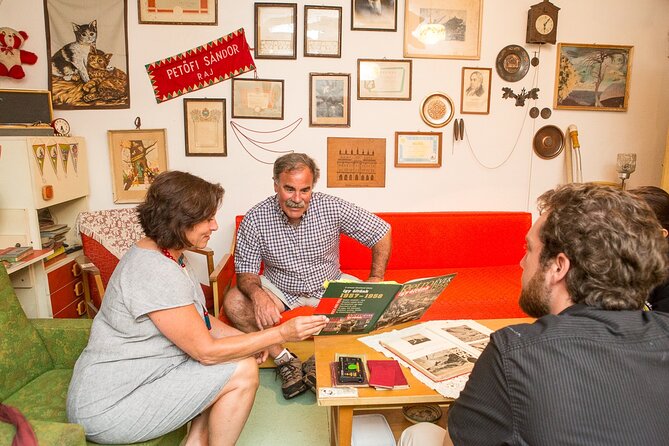
A political walking tour can leave you with statues, dates, and speeches, but little sense of how people actually lived. This experience tries to fix that problem with an interactive Retro Museum visit.
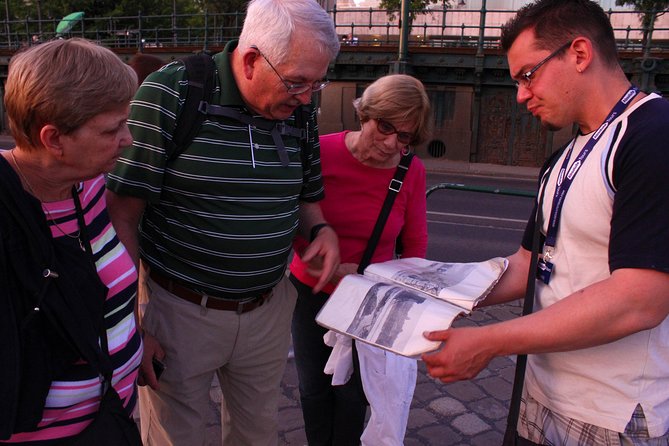
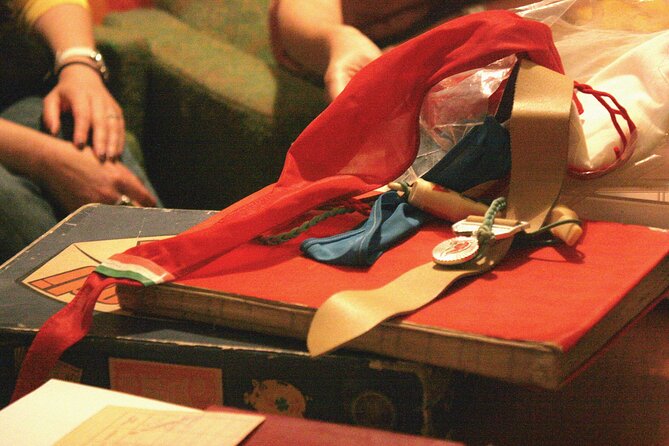
The indoor section may begin in a basement or a recreated communist-era apartment, depending on how the guide structures the afternoon. The setting includes the sort of objects that explain daily life better than a long speech can: books, board games, childhood items, photos, soda, and household goods. Guides explain how children were raised, how families spent free time, and what people could buy or could not easily find.
The banana lines are a memorable example. A simple food item becomes a lesson in shortages, waiting, supply, and status. Stories about black markets and the difficulty of obtaining a passport show that communist control affected more than elections and newspapers. It shaped holidays, travel, shopping, school, and family plans.
I especially value this part because it gives you something concrete to remember. You may forget a date, but a room filled with familiar-looking objects, paired with an explanation of why some goods were scarce, can make the period easier to understand.
The museum section is also where the guide’s personal style matters most. Anna has been praised for explaining the period in a clear and even-handed way while adding family stories. George, Tomas, Rebecca, Celeste, and Laszlo have each been described as warm, passionate, and able to explain the subject in depth. Your guide will vary, but the experience depends heavily on that person’s ability to tell a careful story rather than deliver a memorized lecture.
More on Budapest under communism:
- Budapest: Communist History Tour with House of Terror Option
★ 4.8 · 182 reviews - Communism in Hungary with a Historian
★ 5.0 · 70 reviews - Budapest: 3-Hour Walking Tour About Communism (Small Group)
★ 4.7 · 70 reviews
Starting at Deák Square and setting the historical frame
The meeting point is outside the Lutheran Church of Ferenc Deák Square, at Deák Ferenc tér 4. This is a practical central location near public transportation, so you can reach it from many parts of Budapest without arranging a hotel transfer.
The tour begins at 3 p.m. Your guide first sets Hungary’s recent past in a wider frame. That means a short look at the country’s role in World War I and World War II, followed by the end of the war, Soviet occupation, and the Communist Party’s rise to power.
This opening matters. The 1956 Revolution did not appear out of nowhere, and the later communist period cannot be understood without knowing how Hungary’s borders, political system, and relationship with Moscow changed during the first half of the 20th century.
Expect a brisk overview rather than a full course in Hungarian history. The guide then uses central Budapest as a classroom, linking buildings and squares to the turning points already introduced. If you enjoy political history, this approach gives you plenty to ask about. If your interest is mainly architecture or food, the subject may feel dense.
St. Stephen’s Basilica and the pressure on religious life
The first listed stop is St. Stephen’s Basilica, where you learn how communism affected religious life and the operation of different churches.
The tour does not include admission to the basilica, and the stop is scheduled for about 15 minutes. That means the emphasis is on the church as a symbol and on the political treatment of religion, not on an extended interior visit.
This is a useful early stop because it broadens the topic beyond Soviet monuments and revolutionary violence. A government can control daily life through schools, travel rules, employment, and food supply, but religious institutions also reveal how power was exercised. Your guide explains that pressure through the setting of one of Budapest’s best-known churches.
If you want a detailed look inside the basilica, plan a separate visit. The short stop is enough to place religion in the story, but not enough for a full church tour.
Liberty Square and the last Soviet memorial
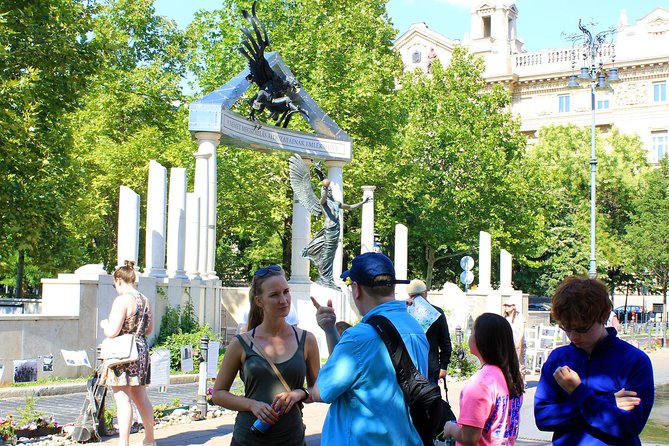
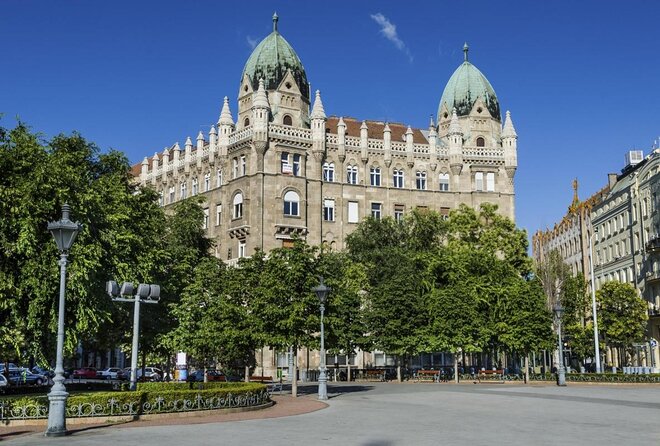
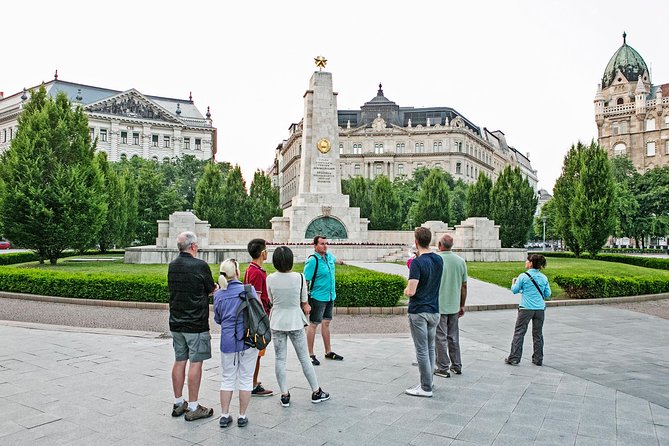
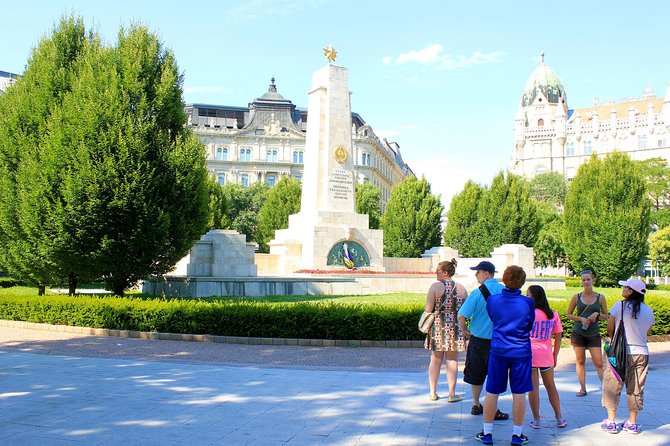
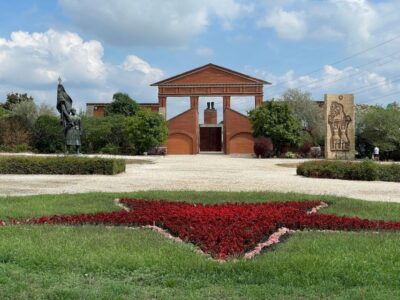
From the basilica, the route continues to Szabadság tér, or Liberty Square. Here, the Soviet Memorial helps explain the final phase of World War II, the start of the occupation, and the way the Communist Party took control of Hungary.
Liberty Square is especially useful because it places different periods of Hungarian memory close together. The square is tied to the Soviet presence, the 1956 Revolution, and the later struggle over how Hungary should remember its 20th-century past.
The stop lasts about 15 minutes and admission is free. Your guide does the work of connecting the memorial to the political story, so listen for the shift from wartime liberation to occupation and then to one-party rule. That distinction is important. The end of Nazi control did not mean Hungary immediately regained full independence.
The route ends near Liberty Square, but it is not simply a stop along the way. You return to this part of central Pest after seeing the other memorials, so the square helps bring the afternoon together.
A different kind of day in Budapest:
- Budapest: City Highlights Cruise with Welcome Drink
★ 4.6 · 35,610 reviews - Budapest: Unlimited Prosecco, Beer and Aperol Spritz Cruise
★ 4.8 · 25,310 reviews - Budapest: Széchenyi Spa Day Ticket with Optional Upgrades
★ 4.3 · 23,911 reviews - Budapest: Nighttime or Daytime Sightseeing Cruise
★ 4.2 · 21,062 reviews
Parliament Square and the first days of 1956
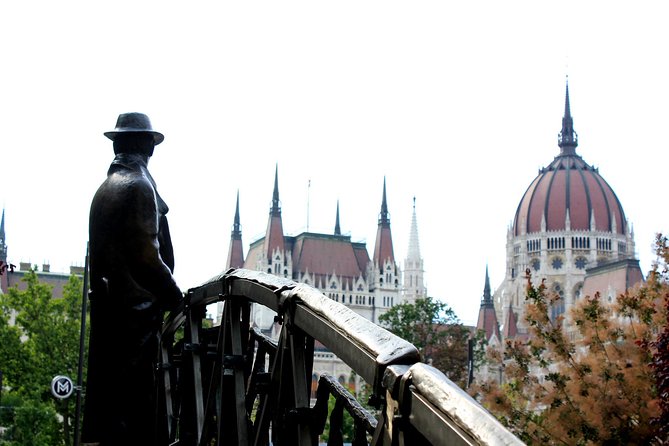
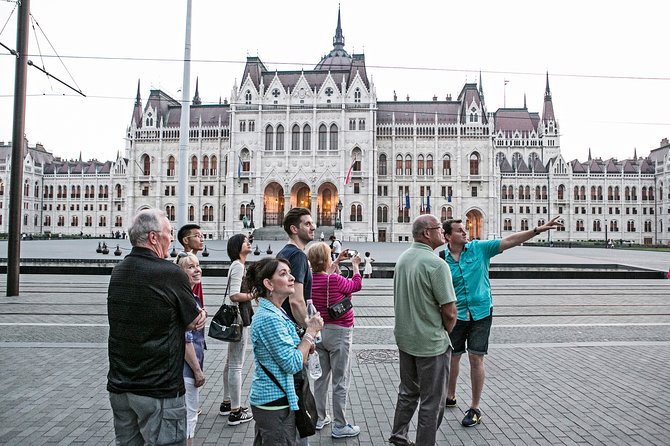
The Hungarian Parliament Building is the tour’s major political setting. The square in front of Parliament played an important role during the opening days of the 1956 Revolution, and the guide explains what led to the uprising and how the party leadership responded.
The Parliament stop lasts about 20 minutes. Admission to the building itself is not included, so you should not expect an interior Parliament visit. The focus is the square, the public demonstrations, the speeches, and the first shots associated with the revolution.
October 23 remains Hungary’s national day of remembrance for the 1956 Revolution. The date marks the climax of a long demand for greater freedom from Soviet policy and the local communist government. Your guide places the protests within that larger struggle and explains why the events became so important to modern Hungarian identity.
This is one of the best reasons to take the tour early in your Budapest stay. Once you know what happened in this square, later walks past Parliament, Liberty Square, and other central landmarks carry more meaning.
The October 25 memorial and the human cost of protest
The In memoriam 1956. October 25. Memorial and Exhibition focuses on one of the most painful episodes of the revolution. On October 25, the second day of the uprising, military authorities and Soviet tanks fired into a crowd gathered in the area.
The memorial includes archive footage and personal recollections. It is a free stop lasting about 15 minutes, but the emotional weight is greater than the short schedule suggests.
This is where the tour moves from political causes to human consequences. Instead of treating 1956 as a clean sequence of dates, the exhibition helps you consider what the event looked and felt like for people caught in the street.
The guide’s explanation is essential here. Archive material can be difficult to interpret without context, especially if you do not know the political structure of Hungary at the time. The small group makes it easier to pause, ask questions, and take in the memorial without being rushed by a large crowd.
Imre Nagy, execution, and the return of political memory
The statue of Imre Nagy provides another personal focus. Nagy was a communist leader who challenged Soviet leaders in Moscow and became associated with the 1956 Revolution. He was later executed for treason.
The tour also explains how his reburial became an important moment in Hungary’s change of regime. This detail links the failed revolution of 1956 to the later fall of communist rule. Political memory did not disappear after the uprising was crushed. It returned decades later as Hungary moved toward freedom.
The stop lasts about 15 minutes and admission is free. You will not spend a long time at the statue, but the site gives the guide a chance to explain Nagy’s complicated position. He was not simply an outsider attacking communism. His story shows how the system produced leaders who later challenged Moscow’s control.
This is a good example of the tour’s wider purpose: to show that history is rarely divided into simple heroes and villains. Hungary’s road from communist rule to the fall of the Iron Curtain involved people working within the system, resisting it, and later redefining their earlier choices.
How the walk feels in practice
The tour lasts about two hours and 30 minutes, though some departures have run closer to three hours. You spend part of the time indoors and part walking through central Pest. The route is manageable for most people, but it is still a walking tour, so comfortable shoes are sensible.
There is no hotel pickup or drop-off. You meet at Deák Square and finish near Liberty Square at Szabadság tér 1. That ending is useful if you want to continue sightseeing in the city center, though you need to arrange your own return transportation.
A coffee, tea, or soft drink is included. Some departures have also included a snack or a late lunch in an interesting setting, but the dependable inclusion is the drink. Do not book this expecting a full meal.
The tour operates in all weather. Budapest can be cold, wet, or windy, and outdoor explanations become less comfortable when you are standing still in poor conditions. Bring clothing suited to the forecast. Since there are no headphones or audio equipment, stay close to the guide, especially near busy roads or public events.
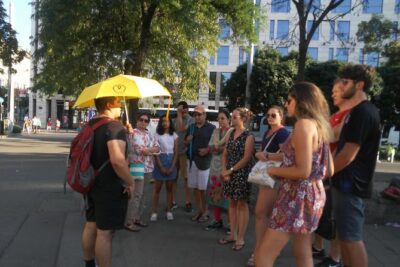
The group maximum of 10 is a real advantage. Several departures have had only two or three people, and one was private because only one person booked. That creates room for detailed questions and allows the guide to focus on your interests. It also means the experience may feel more like a conversation than a standard sightseeing presentation.
Who will get the most from this tour
I would choose this tour if you want to understand Budapest beyond its grand buildings and thermal baths. It suits people interested in modern European history, political change, family stories, and the way large events affect ordinary routines.
It is also useful for first-time visitors. The stops give you a working map of central Pest and explain why Parliament, Liberty Square, the basilica, and the revolution memorials matter. You come away with context that can improve the rest of your stay.
The tour is not recommended for children under 14. Younger children may also find the subject matter and the steady historical discussion difficult, though the period objects in the museum could interest older teenagers.
You should also consider your preferred tour style. If you want a quick introduction with many photo stops, this may feel too serious. If you like asking questions and hearing political history explained carefully, the small group is a strong fit.
Is $79.65 a fair price?
At $79.65 per person, this is not the cheapest way to hear about Budapest’s communist period. You can find free walking tours in the city, and one person felt a free option might provide more outdoor walking.
The value comes from the combination of a small group, an English-speaking guide, the indoor Retro Museum visit, the structured historical timeline, and the chance to ask detailed questions. You are not only paying to look at landmarks. You are paying for someone to explain how World War II, Soviet control, the 1956 Revolution, and everyday shortages fit together.
The price makes more sense if you are likely to use the tour as a foundation for the rest of your visit. It also becomes better value when the group is very small and the guide can tailor the discussion. If your group wants a private conversation about Hungarian history, the experience may justify the cost.
On the other hand, much of the outdoor sightseeing is free, and the tour does not include Parliament admission or hotel transport. If you mainly want to see buildings from the outside, you can spend less by exploring independently. The deciding question is simple: do you want facts and places, or facts, places, and a guide who can connect them?
Practical booking advice
The tour is offered in English and confirmation is provided when you book. It is generally suitable for most people, but you should be comfortable walking between central stops and standing outdoors in changing weather.
Because the guide has no microphone or headphones, arrive ready to keep within speaking distance. If you have hearing concerns, a small departure is helpful, but the absence of audio equipment remains a limitation.
You can cancel for a full refund if you do so at least 24 hours before the 3 p.m. start time. Changes or cancellations made less than 24 hours in advance are not accepted for a refund.
Should you book the Budapest Hammer & Sickle tour?
Book it if you want a serious, human explanation of Hungary’s communist period and the 1956 Revolution. The best features are the recreated everyday-life setting, the Parliament and Liberty Square stops, and the personal attention possible in a group of 10 or fewer.
I would especially recommend taking it near the beginning of your Budapest visit. It helps you read the city’s memorials and political spaces with sharper eyes.
Skip it if you want a mostly outdoor walk, a broad sightseeing tour, or a cheap introduction to Budapest. At this price, the guide and the indoor exhibition must matter to you. For history-minded visitors who want to understand how ordinary Hungarian families lived under Soviet-backed rule, this is a worthwhile afternoon.
FAQ
How long is the Budapest Hammer & Sickle tour?
The tour lasts approximately two hours and 30 minutes. Some departures have run for about three hours.
What time does the tour begin?
The scheduled start time is 3 p.m.
Where does the tour start?
The meeting point is the Lutheran Church of Ferenc Deák Square, Deák Ferenc tér 4, 1052 Budapest.
Where does the tour end?
The tour ends near Liberty Square in central Budapest, at Szabadság tér 1, 1054 Budapest.
Is the tour offered in English?
Yes. An English-speaking guide leads the experience.
Is entry to the Retro Interactive Museum included?
Yes. Entry to the Budapest Retro Interactive Museum is included, with the guide explaining the artifacts and stories connected to daily life behind the Iron Curtain.
Is Parliament admission included?
No. The Parliament stop focuses on the square and its role in the 1956 Revolution. Admission to the building is not included.
Is transportation provided?
No. Hotel pickup and drop-off are not included. The meeting point is near public transportation.
Is the tour suitable for children?
The experience is not recommended for children under 14.
Can I cancel for a refund?
Yes. You can receive a full refund by canceling at least 24 hours before the experience start time. Cancellations or changes made less than 24 hours before the start are not accepted for a refund.
Recently added around Budapest
- Hiking + Chairlift ride + viewpoints in Budapest★ 5.0 · 3 reviews
- FoolsCode: EscapeRoom/Sightseeing tour with Actor Tourguide★ 5.0 · 3 reviews
- Grand Budapest tour with private transportation★ 5.0 · 3 reviews
- Budapest: Private Customizable Tour in French★ 5.0 · 3 reviews
- Budapest: Private, Personalized Pub Crawl, 3 drinks included★ 4.5 · 3 reviews
- Budapest Drinks and Piano Show Cruise★ 4.5 · 3 reviews
- Discover Budapest Using Tram Two★ 5.0 · 3 reviews
- Budapest: Private 3-Hour Gödöllő Palace Tour★ 4.9 · 3 reviews
Communist-Era History Tours, compared.
Communist History Tour with House of Terror Option
Read our review →
3-Hour Walking Tour About Communism (Small Group)
Read our review →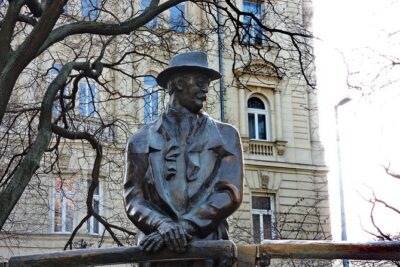

Lives of Hungarians Under Communist and Capitalist system
Read our review →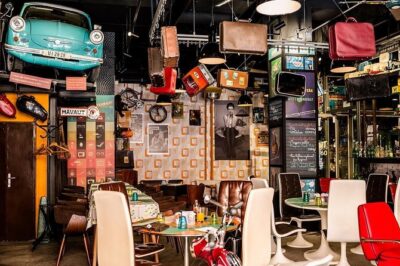
Private Budapest Hammer & Sickle Communist Times Tour
Read our review →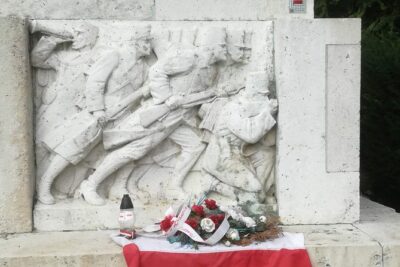
Communist History Evening Walking Tour of Budapest
Read our review →Browse the lists this tour appears in