
Reviewed · COMMUNIST-ERA HISTORY TOURS
Communist Budapest Walking Tour
Communist Budapest becomes much easier to understand when you connect its monuments, squares, stadiums, and surviving propaganda art. This three-hour walk links the 1956 uprising with the Cold War, the Soviet presence, and the political changes that reshaped Hungary.
I like the small-group format, which gives you room to ask questions, and I like the way the route mixes famous places with less obvious details, such as the old socialist-realist statues at Puskas Stadium. The main drawback is that the tour is about history, not standard sightseeing, and the House of Terror Museum admission is not included.
The tour is led by an expert local historian, with guides such as Andras and Kata receiving especially warm praise for their clear explanations and willingness to discuss difficult parts of Hungarian history. You travel between some stops by public transport, and you may need to buy Budapest metro or tram tickets if you do not already have a pass.
In This Review
- Key points about Communist Budapest
- Why this tour matters in Budapest
- Starting near Frankel Leó út and reaching Parliament
- Liberty Square: Soviet power, American support, and the Cold War
- Ronald Reagan’s Budapest connection
- Bem József Square and the opening of the 1956 uprising
- Puskas Stadium and propaganda in stone
- Ending at the House of Terror
- The guide makes or breaks the experience
- Who should book this walk
- Is $126.50 a fair price?
- Should you book Communist Budapest?
- FAQ
- How long is the Communist Budapest Walking Tour?
- What language is the tour offered in?
- Where does the tour start?
- Where does the tour end?
- Is admission to the House of Terror Museum included?
- Do I need to buy public-transport tickets?
- How many people can join the tour?
- Can I cancel for a full refund?
Key points about Communist Budapest
- A focused three-hour route: Connect Parliament, Freedom Square, Puskas Stadium, Bem József Square, and the House of Terror.
- History brought down to street level: Learn how propaganda, Soviet power, the 1956 uprising, and the Cold War affected daily life in Budapest.
- A useful small-group setting: The tour is designed for a personal experience, with group size limited to six in the main description and a maximum of eight in the additional booking information.
- Strong guide-led discussion: Andras and Kata are named as guides who explain events clearly and welcome detailed questions.
- A thoughtful endpoint: Finish outside the House of Terror, where you can continue on your own if you want a longer look at Hungary under dictatorship.
- Good public-transport planning: The guide helps with metro and tram tickets, but those fares are not part of the tour price.
Why this tour matters in Budapest
Budapest has plenty of grand architecture, but its 20th-century political story is often harder to read. Communist symbols were removed, altered, or placed in museums, so you can walk through the city without understanding what its public spaces once meant.
This tour helps you read those spaces. A statue of Ronald Reagan is not just a photo stop. A Soviet War Memorial is not simply another monument. A stadium decorated with socialist-realist sculpture reveals how the government used sport, public art, and mass gatherings to shape public life.
I like this approach because it avoids treating communism as a vague chapter between the Second World War and the fall of the Berlin Wall. You get a sharper sense of the tensions involved: Soviet control and Hungarian resistance, official propaganda and private opinion, fear and humor, political change and everyday routine.
The experience costs $126.50 per person, which is a serious price for a three-hour walk. Its value depends on what you want from Budapest. If you only want landmarks and photos, it is likely too specialized. If you want a historian who can connect scattered monuments and answer questions in real time, the small-group format makes the cost easier to justify.
More on Budapest under communism:
- Budapest: Communist History Tour with House of Terror Option
★ 4.8 · 182 reviews - Communism in Hungary with a Historian
★ 5.0 · 70 reviews - Budapest: 3-Hour Walking Tour About Communism (Small Group)
★ 4.7 · 70 reviews
Starting near Frankel Leó út and reaching Parliament
The meeting point is at Frankel Leó út 2-4 in Budapest’s second district. From there, the group uses the subway to reach Kossuth Square, the broad public space in front of the Hungarian Parliament Building.
The public-transport element is worth noting before you book. Your guide helps you purchase Budapest tram and metro tickets if you do not have a visitor pass, but those tickets are an extra cost. Keep a little time in your schedule for meeting up and handling the fare before the walk gets underway.
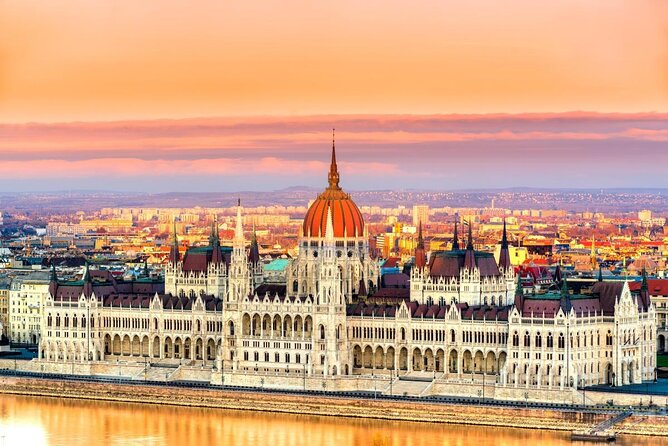
Kossuth Square is a fitting opening because Parliament symbolizes the Hungarian state, while the nearby monuments recall the 1956 revolution. Here, the guide sets up the political story before moving into the Cold War material at Liberty Square.
You will not spend the entire tour inside buildings. Much of the value comes from listening to the explanation while looking at places where political events actually unfolded. Wear good walking shoes and bring water. One especially useful piece of advice from the experience is simple: expect to learn a lot in a short time, rather than stroll at a relaxed sightseeing pace.
Liberty Square: Soviet power, American support, and the Cold War
Liberty Square, also called Freedom Square, is one of the most layered stops on the route. The square includes the Soviet War Memorial, the US Embassy, and the statue of Ronald Reagan. Together, these sites show how Budapest remembers outside power in different ways.
The Soviet memorial is the key point of tension. It recalls the Soviet Army, but its presence in central Budapest can also prompt questions about occupation, liberation, memory, and political control. The guide explains the background rather than leaving you with a quick photograph and a label.
The US Embassy adds another layer. The tour uses the area to discuss Cold War politics and the relationship between Hungary and the West. You also hear about an atomic shelter, a practical reminder that the Cold War was not only fought through speeches and borders. It shaped how people thought about danger, survival, and the future.
This is one of the strongest sections for anyone who wants context. The locations are close together, but their meanings pull in different directions. A short walk across the square can take you from Soviet military power to American influence and the fear of nuclear conflict.
The stop lasts about 25 minutes, and there is no admission fee. Since much of the discussion takes place outdoors, your comfort will depend on the weather. Morning and afternoon departures give you some flexibility, but neither option changes the fact that this is a talk-and-look experience rather than a museum visit.
Ronald Reagan’s Budapest connection
The Ronald Reagan statue receives its own stop, lasting about 10 minutes. The tour explains the Hungarian sense of gratitude toward Reagan for his efforts to bring down the Iron Curtain.
This is a useful corrective to a simple monument tour. The statue is not presented only as an American political symbol. It is also part of Hungary’s memory of the end of Communist rule and the country’s connection to wider Cold War events.
I find this stop valuable because it shows how public memory keeps changing. Budapest contains reminders of Soviet domination, but it also contains monuments to people associated with the collapse of that system. The contrast makes more sense when a guide explains why the statue matters in Hungary.
There is no admission fee, and the stop is brief. Do not expect a long lecture in one place. Instead, use it as a compact link between the broader Cold War discussion and the later focus on Hungarian protest and revolution.
More walking tours in Budapest:
- Budapest: Buda Castle Walk with Saint Stephen’s Hall
★ 4.5 · 3,012 reviews - Big Bus Budapest Hop-On Hop-Off Bus and Walking Tour
★ 3.5 · 2,206 reviews - Budapest: Buda Castle District Walking Tour
★ 4.6 · 2,108 reviews - Budapest City Landmarks Walking Tour in 2 Hours
★ 5.0 · 2,048 reviews
Bem József Square and the opening of the 1956 uprising
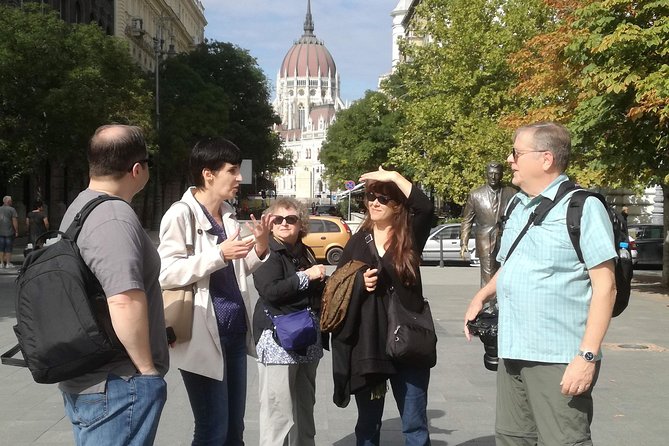
Bem József Square is one of the most important political stops. The first major demonstration of the 1956 uprising began here, making the square central to the story of Hungarian resistance.
The guide explains what made the uprising possible and how public demonstrations grew into a national crisis. The importance of this stop comes from its connection to ordinary public action. You are not only hearing about leaders and treaties. You are standing in a place where people gathered and events began to move beyond the government’s control.
A coffeehouse on the square has kept its original 1960s interior. That detail may sound modest beside revolution and Cold War power, but it helps bring the period closer to daily life. A preserved café interior can show the mood and design of an era in a way that a monument cannot.
The stop lasts about 25 minutes and is free to visit. It is also a good place to ask questions, especially if you want to understand how Communist Hungary felt from the inside rather than simply memorize dates.
Puskas Stadium and propaganda in stone
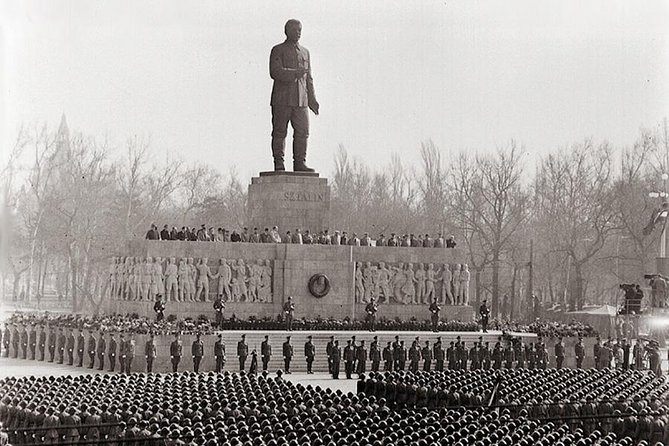
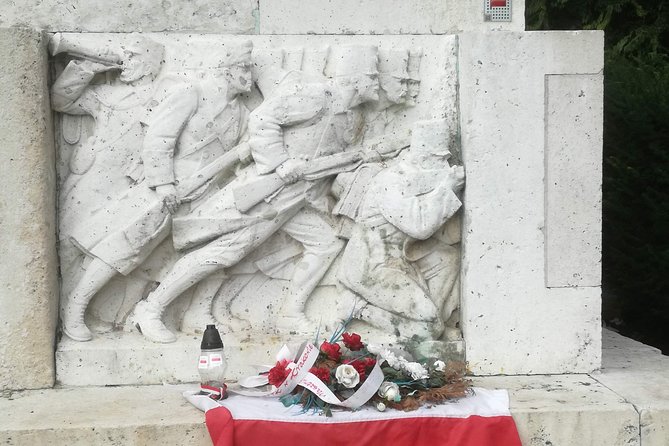
The former People’s Stadium, now Puskas Ferenc Stadium, offers a different look at the Communist period. The route stops to see the surviving socialist-realist statues, which reveal the style of propaganda favored by the regime.
These sculptures were not random decoration. Socialist realism presented an idealized image of strength, labor, unity, and the state. At a sports complex, that message could be tied to physical achievement, national pride, and the power of mass events.
The stop takes about 20 minutes and has no admission fee. You should expect to view the stadium and its statues from the outside, not attend a match or enter a sporting exhibition. The appeal is visual and political: the art shows how ideology was placed in everyday public settings.
This is one of the route’s less predictable stops. If you have already seen Budapest’s Parliament, basilicas, and grand avenues, the old People’s Stadium gives you a different kind of city story. It also rewards attention to details that you might otherwise walk past.
Ending at the House of Terror
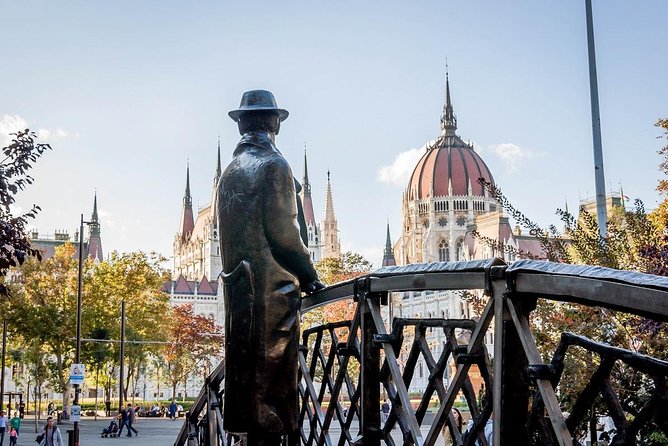
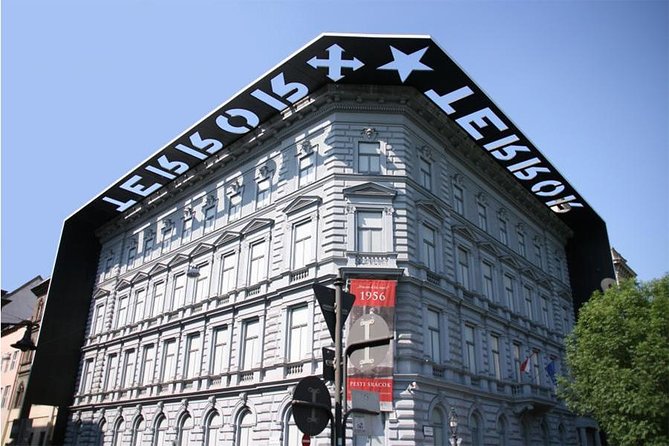
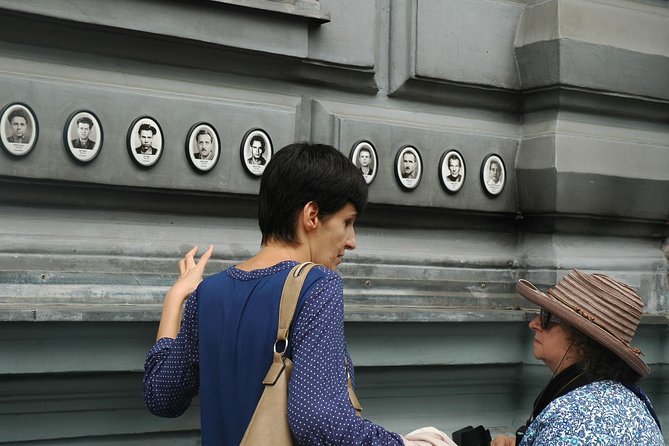
The tour finishes outside the House of Terror Museum at Andrássy út 60. The building once housed the Communist secret services, and a section of the Berlin Wall is displayed in front.
The museum itself is not included in the $126.50 tour price. That is both a limitation and a practical advantage. You do not have to spend the whole afternoon inside after a demanding walking discussion, but you can continue on your own if the subject has caught your interest.
Ending here gives the tour a clear final note. The earlier stops explain public space, Soviet power, protest, propaganda, and Cold War symbolism. The House of Terror points you toward the machinery of repression and the personal cost behind those political systems.
Plan your next step before the tour begins. If you want to visit the museum, check how much time you have and allow for a separate admission purchase. If you prefer a lighter afternoon, the endpoint is also convenient for moving on along Andrássy Avenue.
The guide makes or breaks the experience
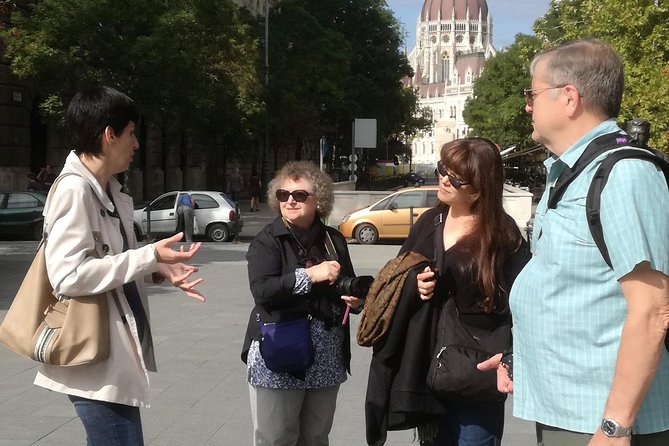
This tour relies heavily on the guide. The route itself is spread across ordinary city spaces, and the meaning is not always obvious without explanation.
Andras is praised for handling questions with depth and detail while keeping the conversation open. Kata is described as well informed and able to help participants understand what life under communism felt like. Those qualities matter more here than a polished performance.
A good guide can explain why one monument is still present, why another was added later, and how official messages differed from private experience. The strongest part of the experience is likely to be the conversation: ask about the 1956 uprising, the Soviet Army, everyday life, propaganda, or Hungary’s changing relationship with the United States.
The main description limits the group to six people, while the additional information gives a maximum of eight. Either way, this is a much smaller setting than a large city walk, but you should confirm the exact group size when booking if that detail matters to you.
Who should book this walk
I would choose this tour if you have already seen Budapest’s main sights and want to understand the political forces that shaped the city. It also suits anyone interested in the Cold War, the 1956 revolution, Soviet influence, political monuments, or modern European history.
You do not need to be a history specialist. The guide-led format lets you ask basic questions, and the stops give the story a physical setting. At the same time, the tour is serious and discussion-heavy. If you want only scenic views, shopping, or a relaxed introduction to Budapest, choose a different walk.
The experience is offered in English, with morning and afternoon departures. Most people can participate, and the route stays near public transportation. Good shoes and water are sensible because the tour lasts about three hours and includes walking between several locations.
Is $126.50 a fair price?
At $126.50 per person, this is not a low-cost way to see Budapest. You also pay separately for any metro or tram tickets you need, and the House of Terror Museum is not included.
The price makes more sense if you value access to a specialist guide and a small group. You are paying for connections between places that would otherwise seem unrelated, plus the chance to stop and ask questions. A self-guided route could take you to several of the same public monuments, but it would not provide the same explanation of their political meaning.
The tour also saves research time. In three hours, you move from Parliament to Freedom Square, the Reagan statue, Bem József Square, Puskas Stadium, and the House of Terror. That is a lot of ground and context for one focused outing.
My advice is to book it only if the subject interests you. For the right person, the price buys clarity, not just transportation between landmarks. For a visitor looking for general Budapest sightseeing, the cost is harder to defend.
Should you book Communist Budapest?
Book this tour if you want Budapest’s Communist and Cold War story explained at the places where it happened. The best reasons are the small-group setup, the expert local historian, the unusual stadium stop, and the thoughtful use of Liberty Square and Bem József Square.
Go in expecting a serious history walk, not a standard city tour. Wear comfortable shoes, bring water, budget for public transport tickets, and decide if you want to add the House of Terror afterward.
If you are curious about how Hungary moved from Soviet control to the end of the Iron Curtain, I think this is a strong choice. If you want only Budapest’s postcard sights, spend your money elsewhere.
FAQ
How long is the Communist Budapest Walking Tour?
The guided walk lasts approximately three hours.
What language is the tour offered in?
The tour is offered in English.
Where does the tour start?
The meeting point is at Frankel Leó út 2-4, 1027 Budapest.
Where does the tour end?
The tour ends outside the House of Terror Museum at Andrássy út 60, 1062 Budapest.
Is admission to the House of Terror Museum included?
No. The tour concludes outside the museum, and museum admission is not included.
Do I need to buy public-transport tickets?
You may need Budapest tram or metro tickets if you do not already have a visitor pass. The guide can help you purchase them, but they are not included.
How many people can join the tour?
The main tour description says the group is limited to six people. Additional information gives a maximum of eight participants, so confirm the exact group size when booking if needed.
Can I cancel for a full refund?
Yes. You can cancel at least 24 hours before the experience start time for a full refund. Cancellations or changes made less than 24 hours before the start time are not accepted for a refund.
Recently added around Budapest
- Hiking + Chairlift ride + viewpoints in Budapest★ 5.0 · 3 reviews
- FoolsCode: EscapeRoom/Sightseeing tour with Actor Tourguide★ 5.0 · 3 reviews
- Grand Budapest tour with private transportation★ 5.0 · 3 reviews
- Budapest: Private Customizable Tour in French★ 5.0 · 3 reviews
- Budapest: Private, Personalized Pub Crawl, 3 drinks included★ 4.5 · 3 reviews
- Budapest Drinks and Piano Show Cruise★ 4.5 · 3 reviews
- Discover Budapest Using Tram Two★ 5.0 · 3 reviews
- Budapest: Private 3-Hour Gödöllő Palace Tour★ 4.9 · 3 reviews
Communist-Era History Tours, compared.
Communist History Tour with House of Terror Option
Read our review →
3-Hour Walking Tour About Communism (Small Group)
Read our review →

Lives of Hungarians Under Communist and Capitalist system
Read our review →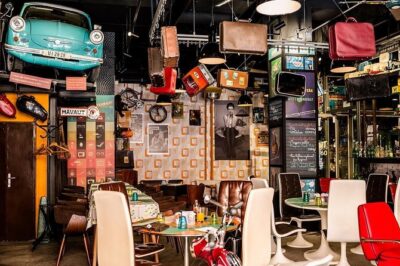
Private Budapest Hammer & Sickle Communist Times Tour
Read our review →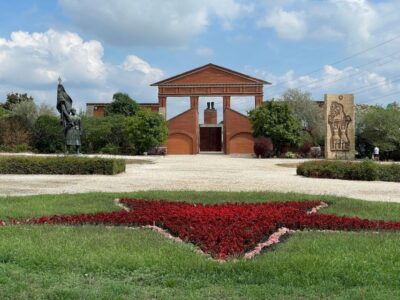
Communist History Evening Walking Tour of Budapest
Read our review →Browse the lists this tour appears in