
Reviewed · COMMUNIST-ERA HISTORY TOURS
Budapest: 3-Hour Walking Tour About Communism (Small Group)
Budapest’s Communist past is not locked away in a museum. It is written into bullet holes, statues, squares, subway stations, and ordinary buildings around central Pest. This three-hour walk helps you read those clues, then brings the subject down to daily life with family stories and a drink in a café that has changed little since 1961.
I like two things here: the historian-led context, which places Communism within Hungary’s wider story, and the personal touch from guides such as Judit, Greg, Virág, Dániel, Zsuzsanna, and Monica. The main consideration is that the tour covers a large political subject in only three hours, so anyone wanting a strict, year-by-year account may find the discussion more conversational than tightly chronological.
In This Review
- Key points to know before booking
- Starting at Deák tér, where Budapest’s layers meet
- Why the wider Hungarian story comes first
- Reading bullet holes, statues, and everyday details
- Family stories make the political personal
- The red M2 subway adds a useful change of pace
- A drink in a café that opened in 1961
- How the guides shape the experience
- Is $57 a fair price?
- Who should book this Budapest Communist tour?
- My booking advice
- FAQ
- Where does the tour meet?
- How do I get to the meeting point?
- How long does the tour last?
- What language is the tour conducted in?
- How large is the group?
- Is public transportation included?
- Is the café drink included?
- Can I cancel or pay later?
Key points to know before booking
- A walk through central Pest: Begin at Deák tér and see how modern Budapest still carries traces of war, revolution, socialism, and political change.
- Personal stories from Communist Hungary: Family memories explain shortages, pressure, humor, work, church, media, and everyday compromises in a way dates alone cannot.
- A ride on the red M2 subway: Your transportation ticket is included, adding a useful piece of Budapest’s public life to the walk.
- A café opened in 1961: Stop for a drink and conversation in a retro place that has retained much of its old character.
- A small group of no more than 10: The format suits questions and discussion, especially if you want to explore political or family-history topics.
- Strong value for history-minded visitors: At $57 per person, the price includes the guide, subway ticket, and café drink, not just a guided stroll.
Starting at Deák tér, where Budapest’s layers meet
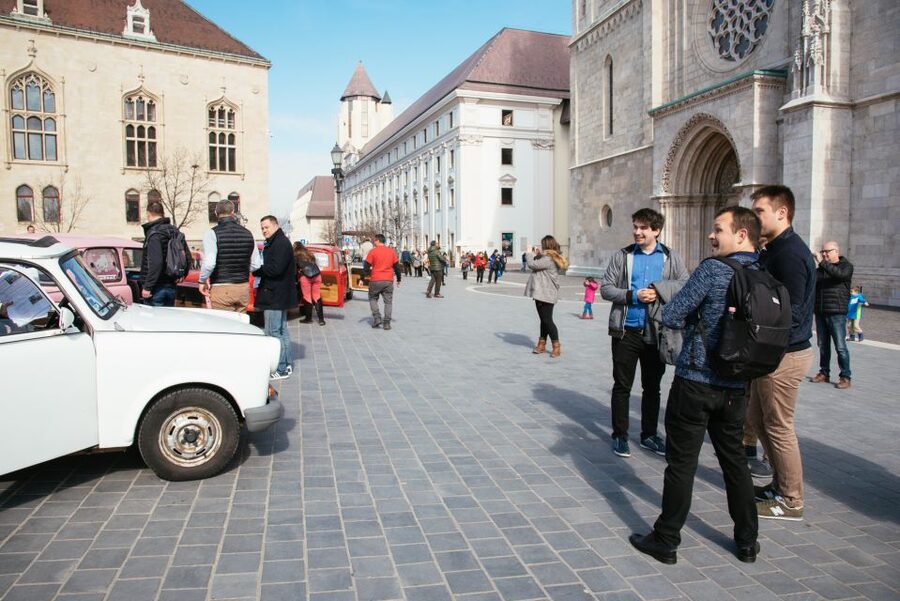
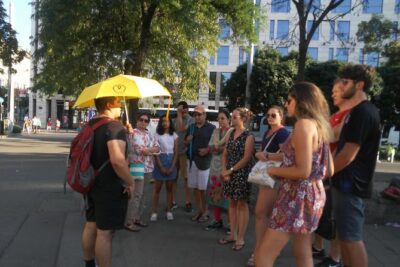
The meeting point is in front of the Kempinski Hotel Corvinus Budapest, facing the Ferris wheel on Erzsébet Square. This is Deák Ferenc tér, one of the easiest places in Budapest to reach, with M1, M2, and M3 subway lines plus several buses and trams serving the area.
That central location matters. You do not spend the first part of the morning finding a distant neighborhood. You meet in the heart of Pest, close to major sights and public transport, then set out on foot through one of the city’s more pleasant central areas.
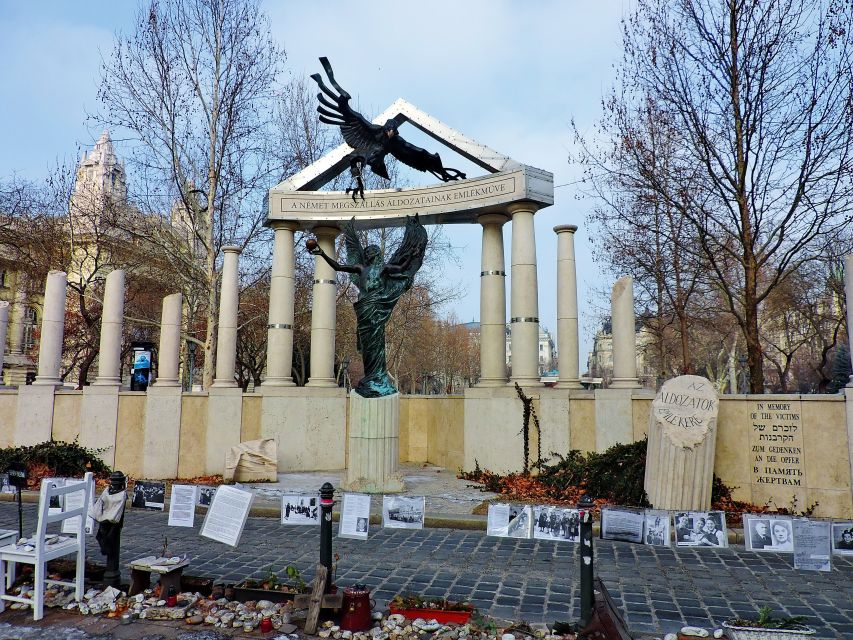
The walk is not built around a single grand Communist monument. Instead, it uses the city itself as evidence. You may look at a building, a square, a statue, or a mark left by violence and hear how it connects to World War II, the 1956 revolution, Communist rule, or the changes of 1989 and the early 1990s.
This approach is useful because political history can feel abstract when it is presented only through leaders and slogans. In Budapest, the physical setting gives the story weight. A street corner can raise questions about occupation, protest, control, memory, or the way a city chooses to remember.
More on Budapest under communism:
- Budapest: Communist History Tour with House of Terror Option
★ 4.8 · 182 reviews - Communism in Hungary with a Historian
★ 5.0 · 70 reviews - Budapest Hammer & Sickle Communist Times Tour
★ 4.5 · 68 reviews
Why the wider Hungarian story comes first
The tour aims to explain how Communist ideology arrived, how it operated, and what it left behind. To make that clear, the guide first provides background beyond the Communist period itself.
The wider setting includes the damage and political upheaval surrounding World War II, followed by the postwar transformation of Hungary. From there, the story moves toward the 1956 uprising, the later softer form of socialism, and the eventual opening that led to the end of the system.
That wider frame is one of the tour’s strongest features. Several guides, including Judit and Greg, have been praised for explaining Hungarian history before concentrating on Communism. This helps you understand why the same square, public building, or monument can carry several meanings at once.
You will also hear about the period after 1956, when Hungary moved toward a less openly harsh version of socialism. The tour can connect that era to the gradual changes in politics, church life, media, and ordinary routines, as well as the breaking down of the Hungary-Austria border.
The subject is not treated as a simple contest between good and bad. The commentary deals with political paradoxes and the way Hungary was repeatedly pressured and manipulated by outside powers while retaining its own identity. If you enjoy asking why events unfolded as they did, the small-group format should give you room to take the conversation further.
Reading bullet holes, statues, and everyday details
Central Budapest offers visible reminders of its troubled modern past. Bullet holes are among the clearest clues, but they are only part of the story.
The guide points out important buildings, monuments, central squares, street art, pop-culture references, and small details of daily urban life. These observations help connect official history with the way people actually experience a city. A statue is not just a photo stop if you understand who placed it there, what it once represented, and how Hungarians view it now.
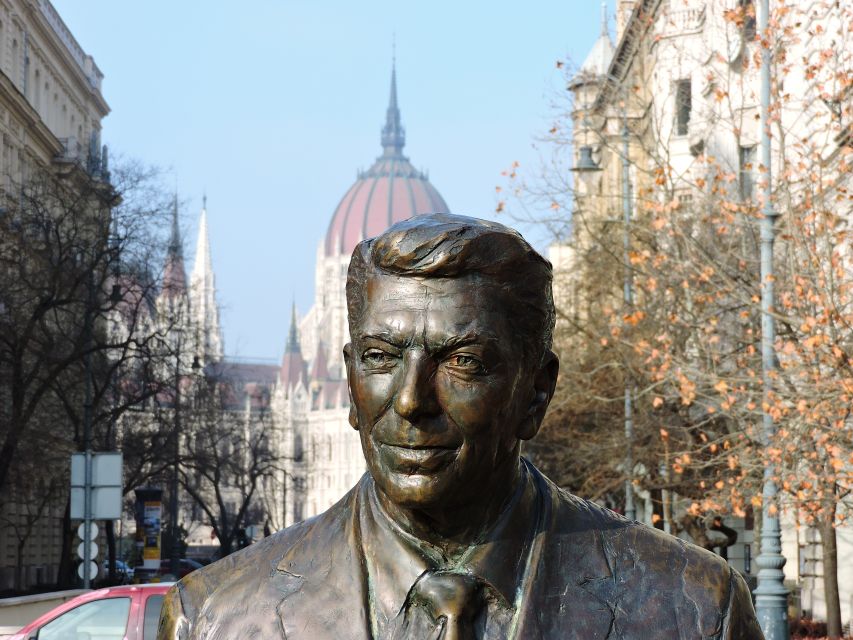
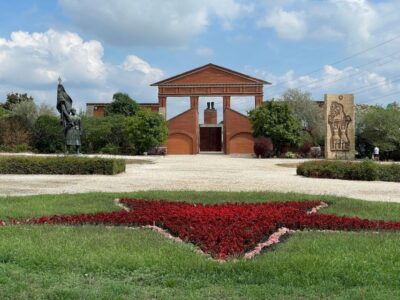
One particularly useful theme is the difference between seeing and understanding. You might pass an old Soviet monument and assume it is simply a leftover from the past. The guide can explain why such a monument remains, how local feelings about it developed, and how other symbols, including Ronald Reagan, fit into the public memory of the period.
The tour does not promise a long list of named attractions, and that is worth noting. Its strength is interpretation rather than monument collecting. If you want to check off every major Budapest sight, choose a general city tour. If you want to understand why a familiar part of Pest feels politically charged, this walk is more suitable.
Family stories make the political personal
The most praised feature of this experience is the use of real family stories. Guides share memories from their own lives, along with stories passed down by relatives and friends.
That personal material adds something a textbook cannot. Instead of hearing only about ideology, state control, and economic policy, you get a sense of how people adjusted their behavior, found humor in difficult conditions, and handled the limits placed on work, travel, religion, media, and speech.
Dániel has been especially noted for mixing family stories with the historical timeline. Greg’s personal connection comes from growing up in Budapest and discussing everyday life during and after socialism. Zsuzsanna has also used stories from her own experience and from people close to her to show how history still shapes Hungarian culture.
These stories are not just entertaining extras. They help you understand why the Communist period cannot be reduced to one uniform experience. The system changed over time, and people lived with a mixture of fear, routine, compromise, practical creativity, and occasional absurdity.
You should also expect questions to be welcomed. The small groups are limited to 10 participants, and at times the group may be much smaller. That can make the walk feel tailored to your interests. One visitor described having a particularly personal discussion about post-1956 socialism, the border with Austria, politics, church, media, and life after the transition.
More walking tours in Budapest:
- Budapest: Buda Castle Walk with Saint Stephen’s Hall
★ 4.5 · 3,012 reviews - Big Bus Budapest Hop-On Hop-Off Bus and Walking Tour
★ 3.5 · 2,206 reviews - Budapest: Buda Castle District Walking Tour
★ 4.6 · 2,108 reviews - Budapest City Landmarks Walking Tour in 2 Hours
★ 5.0 · 2,048 reviews
The red M2 subway adds a useful change of pace
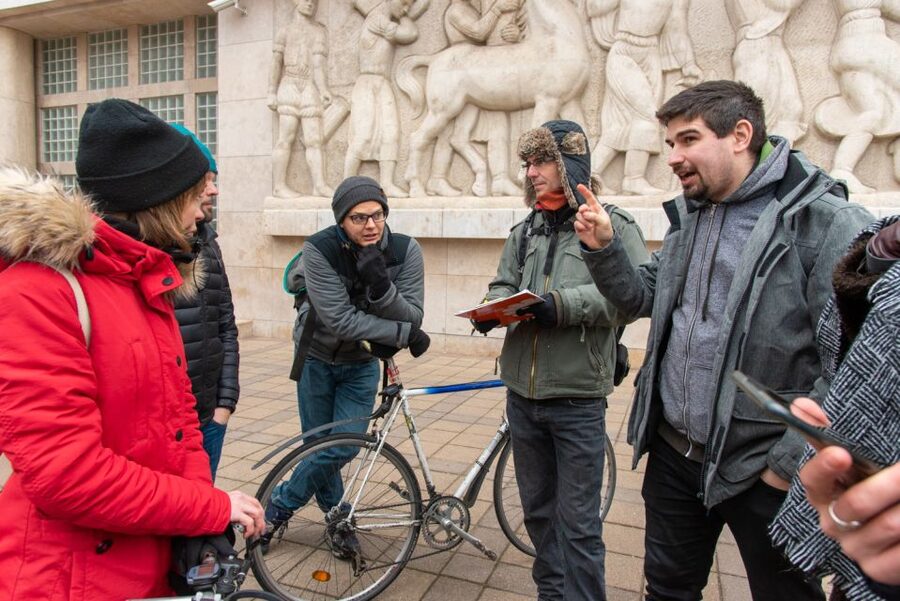
The tour includes a ride on Budapest’s red M2 subway line, with the transportation ticket provided. This is a short but worthwhile part of the experience.
A subway ride gets you out of the pattern of walking from one sight to the next. It also places you inside an everyday part of Budapest rather than keeping you on a sightseeing route. Public transport is part of how a city functions, and using it makes the tour feel less like a lecture delivered outdoors.
The M2 ride also supports the theme of the tour. Budapest’s transit system belongs to the city’s modern story, linking central districts and generations of residents. Your guide can continue the discussion as you move through the city, though the supplied details do not specify the exact station sequence or length of the ride.
You should wear comfortable shoes, since the subway does not replace the walking. The tour lasts three hours, and much of the value comes from moving through central Pest while listening and discussing. The pace is likely best for someone comfortable spending a sustained morning or afternoon on foot.
A drink in a café that opened in 1961
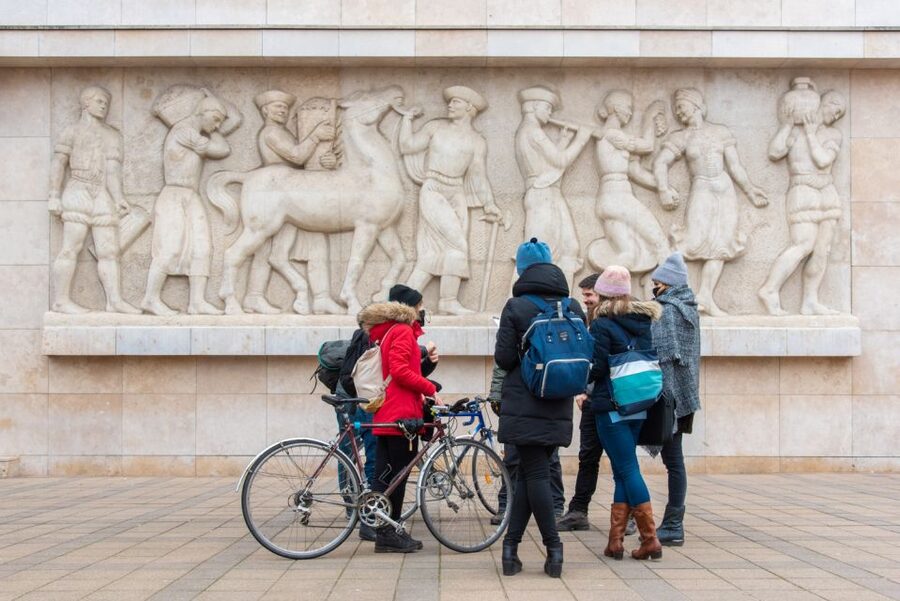
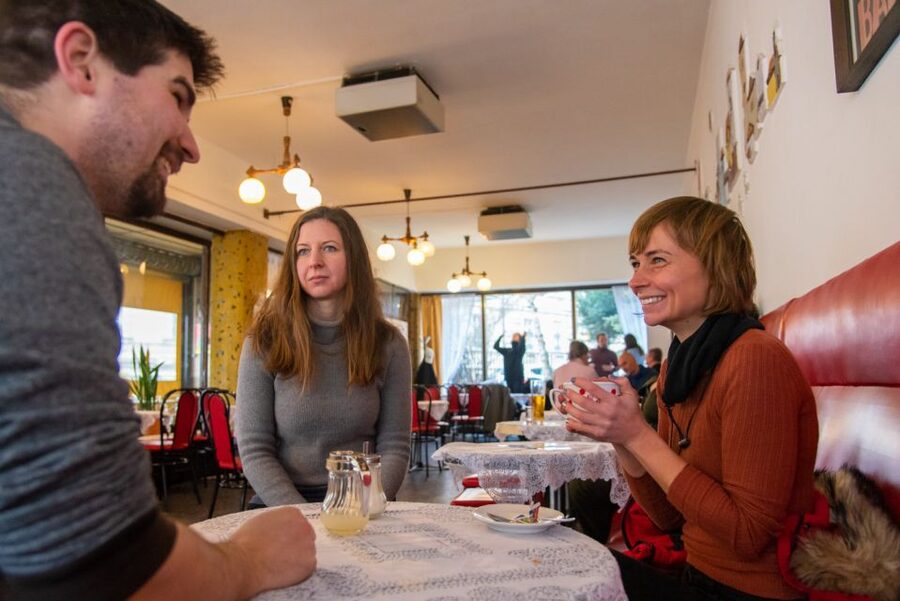
The included drink at a cult retro café is more than a refreshment stop. The café opened in 1961 and has changed very little since then, making it a fitting setting for a conversation about the later Communist period.
This is where the tour shifts from street interpretation to informal discussion. You can sit down, ask questions, and think through the material while looking at a place that has carried its own history for decades.
The drink is included in the $57 price, but the bigger value is the setting. A café can show how ordinary public life continued under a political system that often felt far from ordinary. It also gives the guide space to explain comic moments and personal memories that might feel less natural while crossing a busy street.
Do not expect a grand dining experience. The attraction is the atmosphere and conversation, not a meal. If you prefer tours that keep moving from landmark to landmark, the café pause may feel like a slower section. I see it as a welcome break, especially because the subject is serious and discussion-heavy.
How the guides shape the experience
The guide is the main reason to book this tour. The listed experience uses English-speaking historians and has been led by several guides, including Judit, Greg, Virág, Dániel, Gergely, Zsuzsanna, and Monica.
The individual style may vary. Judit has been praised for her warmth, clear answers, and ability to keep the group engaged. Greg is a strong fit for people interested in later socialism, the border with Austria, church, media, and political change. Virág has been described as animated and effective at keeping participants involved during the walk.
Monica’s style has been noted for making the experience feel personal, while Zsuzsanna has been particularly good at linking monuments and buildings to street art, pop culture, and small signs of modern Hungarian life. These details suggest that the tour is not delivered as a fixed speech with no room for exchange.
One useful caution: the quality of a history walk depends heavily on the guide assigned that day. The available guide names give you a sense of the team, but you may not be able to choose a specific person when booking. Still, the repeated praise for clear explanations, personal stories, and open discussion makes the format a promising choice.
Is $57 a fair price?
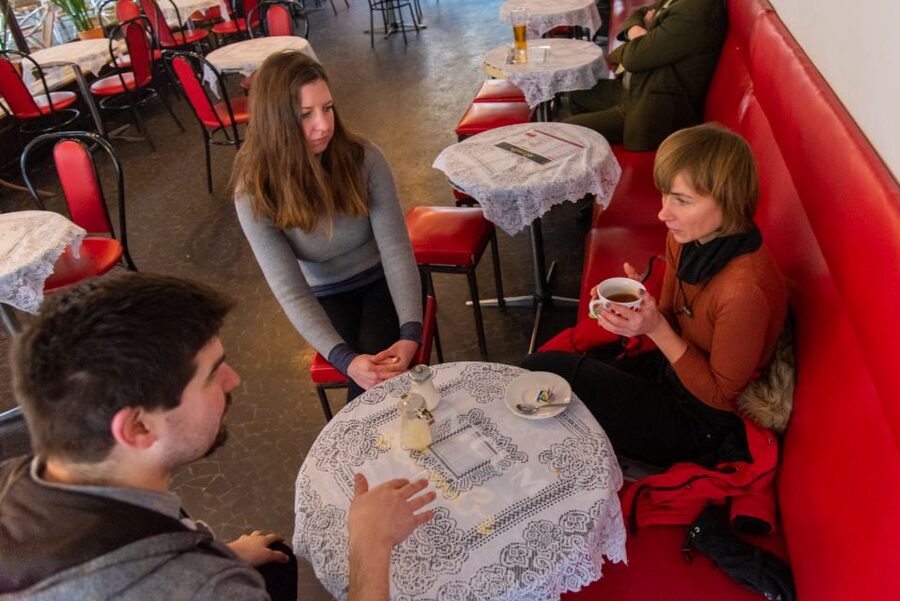
At $57 per person, this is not the cheapest walking tour in Budapest. The price makes more sense when you consider what is included: three hours with an expert guide, a subway ticket, and a drink at a historic retro café.
You are paying mainly for interpretation. The walk does not appear to include museum admission, a full meal, or a long list of paid attractions. Its value depends on how much you want help making sense of Hungary’s political past.
For a visitor who might otherwise read several books, visit a museum, and still struggle to connect the pieces, the price is reasonable. The guide provides a framework, local perspective, and the chance to ask direct questions. For someone interested only in attractive streets and famous views, a standard sightseeing walk may offer better value.
The free cancellation policy allows you to cancel up to 24 hours before the tour for a full refund. You can also reserve now and pay later, which is useful when your Budapest plans are still shifting.
Who should book this Budapest Communist tour?
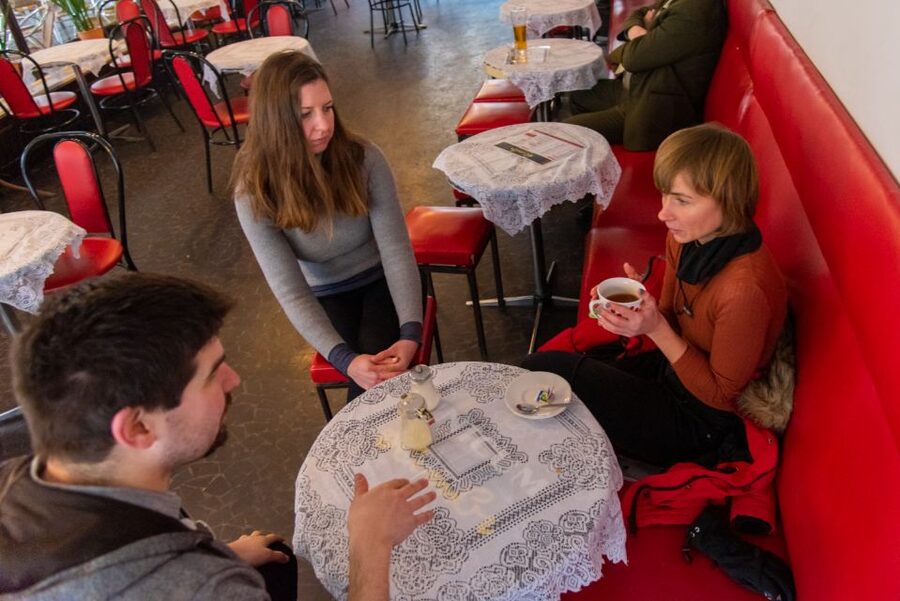
I would choose this experience if you have an interest in history, politics, culture, or the way public memory shapes a city. It is also a good fit if you want to understand Budapest beyond the usual central sights.
The tour suits first-time visitors because it provides background that helps the rest of your stay make more sense. It also works for repeat visitors who have already seen the main attractions and now want to understand the symbols and stories behind them.
You should be ready to listen, walk, and participate. The experience is not simply a string of photo stops. It asks you to think about ideology, power, family life, resilience, and the political arguments that still shape Hungary.
The main drawback is the limited time. Three hours can introduce the subject well, but it cannot cover every event, personality, and regional difference in Hungarian Communism. One useful improvement would be a more strictly chronological structure, particularly for visitors who want a clear timeline.
My booking advice
Book this tour if you want local explanation rather than surface sightseeing. The mix of central Pest, personal memories, the M2 subway, and the 1961 café gives the subject a human scale that a museum visit alone may not provide.
Skip it if your Budapest schedule is packed with major landmarks, or if you prefer a tightly ordered academic lecture. For most history-minded visitors, though, $57 is a fair exchange for three hours of focused guidance and a clearer understanding of how Hungary’s Communist past still appears in everyday Budapest.
FAQ
Where does the tour meet?
The meeting point is in front of the Kempinski Hotel Corvinus Budapest, facing the Ferris wheel on Erzsébet Square. The address is Erzsébet tér 7, 1051 Budapest.
How do I get to the meeting point?
You can reach Deák Ferenc tér by the M1, M2, or M3 subway lines. Several buses and trams also serve the area.
How long does the tour last?
The walking tour lasts three hours. Starting times vary, so you should check availability for the date you want.
What language is the tour conducted in?
The tour is conducted in English by a live guide.
How large is the group?
The activity is a small-group tour limited to 10 participants.
Is public transportation included?
Yes. The tour includes a transportation ticket for the ride on Budapest’s red M2 subway line.
Is the café drink included?
Yes. A drink at the retro café is included in the tour price.
Can I cancel or pay later?
You can cancel up to 24 hours in advance for a full refund. The reserve-now, pay-later option lets you secure a place without paying immediately.
More 3-Hour Experiences in Budapest
- 3-Hour Orientation Walking Tour of Buda and Pest
★ 4.8 · 1,834 reviews - Budapest: 3-Hour Grand City Tour and Castle Walk
★ 4.3 · 1,437 reviews - Budapest: 3-Hour Live Guided Sightseeing Tour
★ 4.4 · 1,041 reviews - 3 Hours Budapest Segway Grand City Tour Buda, Margaret and Pest
★ 5.0 · 255 reviews
Recently added around Budapest
- Hiking + Chairlift ride + viewpoints in Budapest★ 5.0 · 3 reviews
- FoolsCode: EscapeRoom/Sightseeing tour with Actor Tourguide★ 5.0 · 3 reviews
- Grand Budapest tour with private transportation★ 5.0 · 3 reviews
- Budapest: Private Customizable Tour in French★ 5.0 · 3 reviews
- Budapest: Private, Personalized Pub Crawl, 3 drinks included★ 4.5 · 3 reviews
- Budapest Drinks and Piano Show Cruise★ 4.5 · 3 reviews
- Discover Budapest Using Tram Two★ 5.0 · 3 reviews
- Budapest: Private 3-Hour Gödöllő Palace Tour★ 4.9 · 3 reviews
Communist-Era History Tours, compared.
Communist History Tour with House of Terror Option
Read our review →

Lives of Hungarians Under Communist and Capitalist system
Read our review →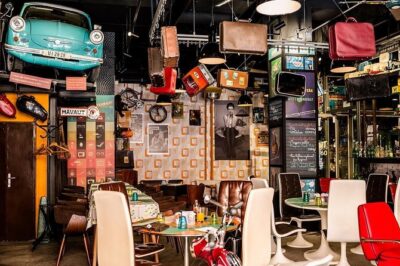
Private Budapest Hammer & Sickle Communist Times Tour
Read our review →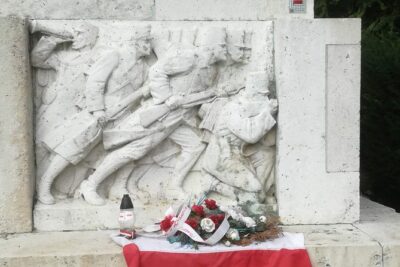
Communist History Evening Walking Tour of Budapest
Read our review →Browse the lists this tour appears in