
Reviewed · COMMUNIST-ERA HISTORY TOURS
Lives of Hungarians Under Communist and Capitalist system
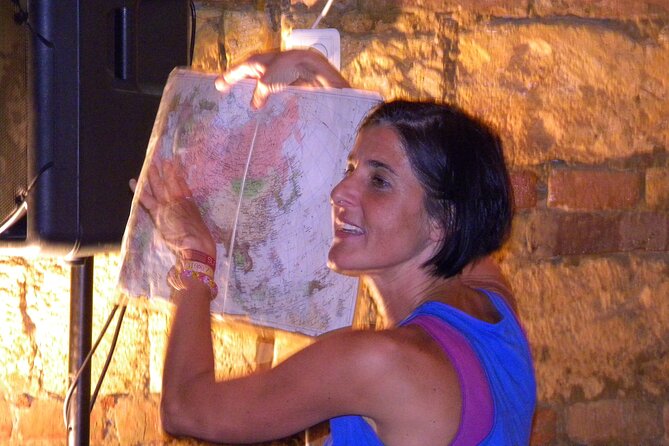
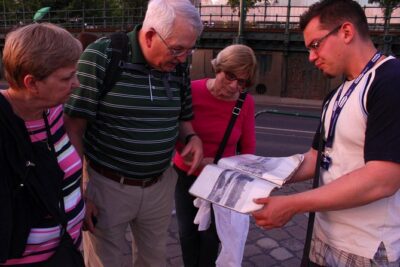
The most useful part of this Budapest walking tour is its human scale. Instead of treating Communism as a chapter in a textbook, your guide explains how it shaped daily choices, from where you lived and studied to whether you could leave the country. Guides who lived through the period add personal memories that make the subject easier to grasp.
I like the clear route from the Budapest Eye to Parliament, and I like the range of subjects covered in a short time. You hear about cars and passports, churches and schools, propaganda and sport, then finish with the 1956 uprising. The main drawback is the unusual pricing: the $4.65 booking fee does not pay the guide, so you should plan to give a tip, commonly around €10 per person.
In This Review
- Key points at a glance
- Why this Budapest Communist history walk matters
- Starting beside the Budapest Eye
- Fröccsterasz and the rules of getting around
- St. Stephen’s Basilica and religious life
- District V: apartments, schools, media, and memory
- Szabadság tér and Budapest’s contested symbols
- Parliament and the memory of 1956
- What the $4.65 price really means
- Who will get the most from this walk
- Timing, cancellations, and useful planning
- Should you book the Budapest Communist history tour?
- FAQ
- Where does the tour begin?
- Where does the tour end?
- What time does the tour start?
- How long does the tour last?
- What is included in the price?
- Do I need to tip the guide?
- How many people can join?
- Can I cancel for a full refund?
Key points at a glance
- Personal accounts from the Communist era: Your guide lived through the period and explains how politics affected ordinary family life.
- A useful Budapest route: The 90-minute walk links Erzsébet tér, St. Stephen’s Basilica, Szabadság tér, and Parliament.
- More than political history: Topics include housing, health care, education, travel documents, religion, cars, media, sport, and the Olympic Games.
- A close look at 1956: The final stop covers the uprising, its heroes, bullet holes, and childhood memories of the period.
- Small-group format: The group can include up to 20 people, with no admission fees at the stops.
- Tip-based payment: Your booking fee covers administration and marketing, while the guide depends on your donation at the end.
Why this Budapest Communist history walk matters
Budapest is full of grand buildings and dramatic political landmarks, but it is easy to look at them only from the outside. This tour gives you a way to connect those places with ordinary routines. The guide does not focus only on party leaders or official dates. Instead, you learn how government policy reached into kitchens, classrooms, churches, apartment blocks, and family conversations.
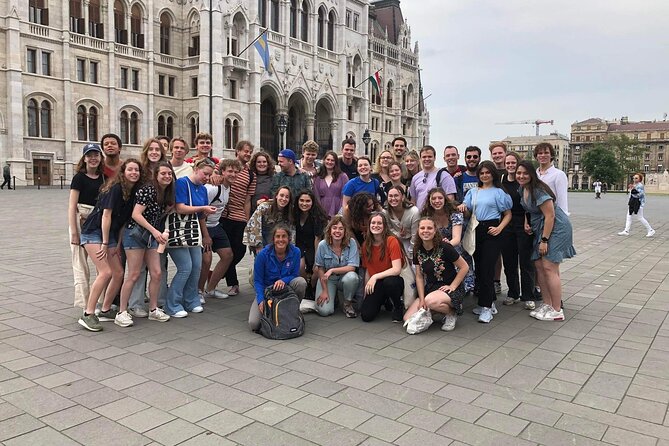
That approach is especially useful if you are visiting Hungary with teenagers or have only a basic understanding of Central European history. A personal explanation can make an otherwise distant subject easier to follow. One parent described how the guide’s experiences helped bring school lessons to life for the family’s teenagers. That is a good clue about the tour’s strength: it turns abstract history into something you can picture.
The tour also covers the period after Communism. That matters because 1989 did not erase the old system overnight. You hear why some people feel nostalgia for parts of the Communist era, even while understanding its limits and hardships. The discussion is intended to be balanced, not a simple story of bad old times followed by perfect new ones.
More on Budapest under communism:
- Budapest: Communist History Tour with House of Terror Option
★ 4.8 · 182 reviews - Communism in Hungary with a Historian
★ 5.0 · 70 reviews - Budapest: 3-Hour Walking Tour About Communism (Small Group)
★ 4.7 · 70 reviews
Starting beside the Budapest Eye
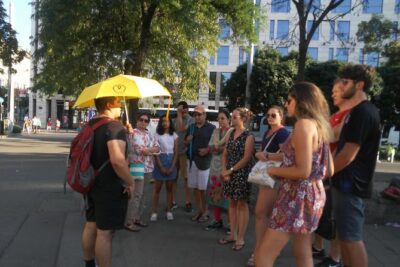
Meet your licensed guide about 20 meters from the Budapest Eye in Erzsébet tér. The tour begins with roughly 15 minutes of interactive background on Hungarian and Central European Communism, which gives the rest of the walk a useful frame.
This opening is practical. Hungary’s experience was not identical to that of East Germany, Poland, Czechoslovakia, or the Soviet Union. A short introduction helps you place Hungary within the wider Communist system before the guide moves into local examples.
The meeting point is central and easy to connect with by public transport. The start time is 3:30 pm, so you can spend the earlier part of the day at a museum or market and still join the walk. Since the route is outdoors, wear comfortable shoes and be prepared to listen while standing at several locations. The supplied details do not mention a scheduled café stop, so do not count on sitting down for a break.
Fröccsterasz and the rules of getting around
At Fröccsterasz, the subject shifts to travel and transportation. This is one of the tour’s most concrete sections. You see basic travel documents and hear how entering and leaving Hungary worked under Communism.
For many people, the idea of needing official permission to travel is more powerful when connected to a passport or other document. The guide also talks about famous Communist-era car models and other forms of transport. These details may sound light compared with political repression, but they show how the system appeared in everyday life.
Cars were not simply a matter of personal taste. Availability, waiting, and status could all shape what a family drove. Transport also affected how freely people could move around the country and beyond it. The guide uses these subjects to explain the difference between local travel and international travel.
This stop should appeal to you if you enjoy practical social history. You are not just hearing who governed Hungary. You are learning what it felt like to plan a trip, obtain documents, and live with limited choice.
St. Stephen’s Basilica and religious life
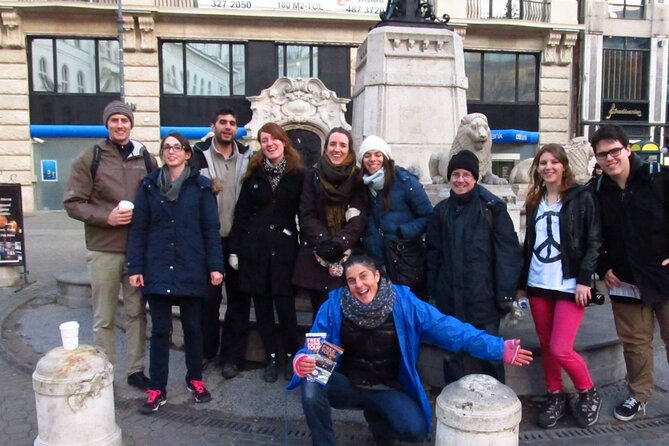
The stop at St. Stephen’s Basilica examines how different religious groups managed under Communism. The point is not that every family experienced religion in the same way. The guide explains how religious life could vary from one household to another.
That family-by-family focus is important. Official policy, public behavior, private belief, and church attendance did not always match. A family might keep religious traditions at home, attend services openly, or avoid the subject in public. The exact experience depended on denomination, family background, and personal choices.
The basilica gives the discussion a strong setting, but you should not expect an interior visit or an admission ticket as part of this walk. The stop is an outdoor history talk near the building. Its value comes from the explanation, not from a formal church tour.
If you want to understand how political systems affect personal belief, this is a worthwhile section. It also gives the walk some balance by showing that Communist history was not only about economics and state control.
A different kind of day in Budapest:
- Budapest: City Highlights Cruise with Welcome Drink
★ 4.6 · 35,610 reviews - Budapest: Unlimited Prosecco, Beer and Aperol Spritz Cruise
★ 4.8 · 25,310 reviews - Budapest: Széchenyi Spa Day Ticket with Optional Upgrades
★ 4.3 · 23,911 reviews - Budapest: Nighttime or Daytime Sightseeing Cruise
★ 4.2 · 21,062 reviews
District V: apartments, schools, media, and memory
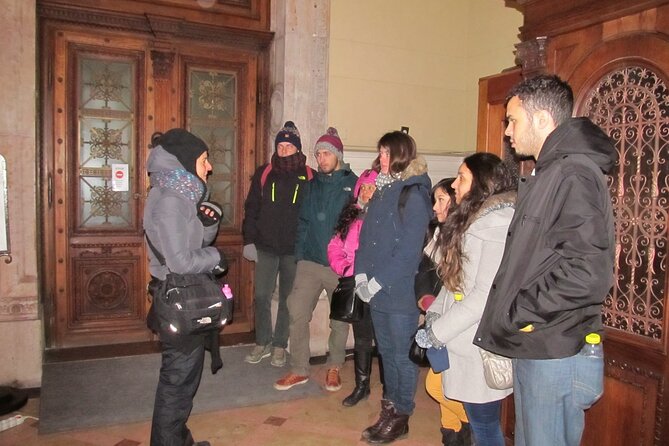
In Budapest’s Inner City, the guide widens the discussion to housing, health care, education, media, sport, and the Olympic Games. This is likely the broadest stop, and it may also be the point where you hear the most comparisons between Communism and post-Communism.
Housing is a useful subject because it touches nearly every family. The guide explains how people lived and how the state shaped access to homes. Health care and education reveal another side of the system. Official promises and day-to-day reality could be quite different, and personal experiences varied.
Media and propaganda show how the government tried to shape public information. Sport and the Olympics add another angle, since athletic success could become a source of national pride and political messaging. These subjects keep the tour from becoming a narrow account of police, prisons, and party offices.
You also hear why some Hungarians feel nostalgia for Communism. That does not mean the guide presents the system as harmless. It means the discussion recognizes that people may remember stable employment, predictable services, or a simpler social structure while still acknowledging censorship and restricted freedom. I find this kind of explanation more useful than a neat good-versus-bad story.
The drawback is time. With only about 20 minutes here, the guide can introduce many topics but cannot give each one a long treatment. If you want detailed coverage of one subject, ask questions as you walk.
Szabadság tér and Budapest’s contested symbols
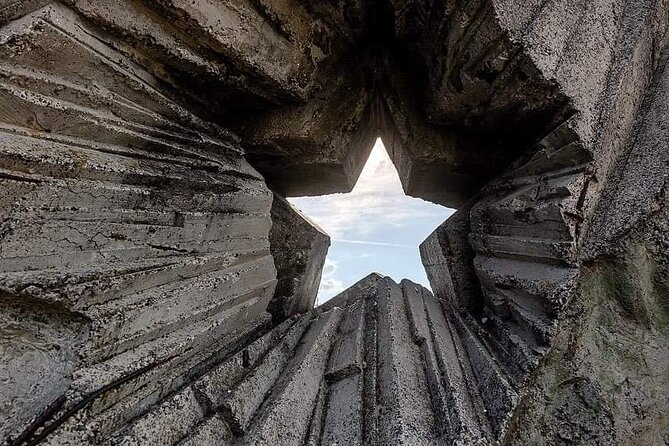
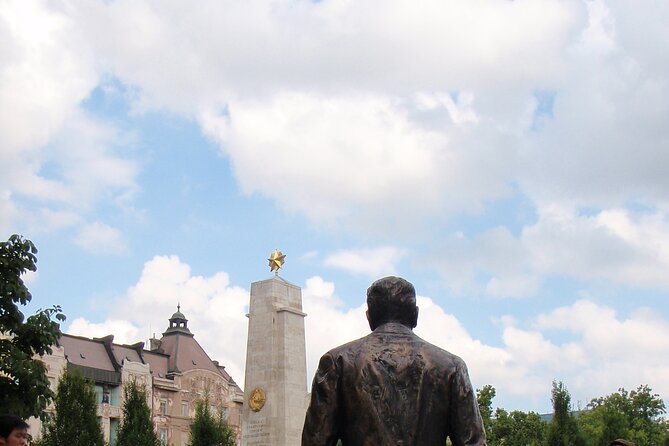
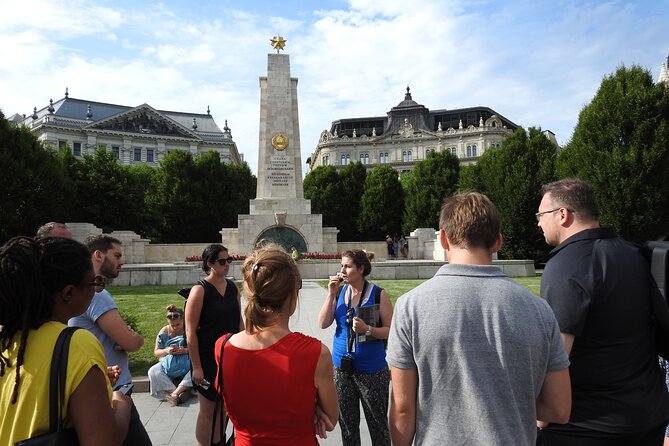
Szabadság tér brings the tour into the city’s public argument over history. Here, you see two controversial monuments, urban art linked to political memory, and the emergency exit of the F4 military nuclear bunker.
The combination is revealing. Monuments do not simply decorate a city. They tell you which version of the past is being presented, protected, challenged, or mocked. The guide explains the different meanings around the square and points out guerilla statues and other unofficial responses.
The bunker reference adds a practical Cold War layer. It reminds you that the fear of military conflict was built into the city’s security planning. You also hear about the second most guarded building in Budapest, which sheltered a prominent Hungarian person for more than 15 years. The supplied details do not name that person, so the guide’s explanation on the day will be important.
This is one of the more visually interesting stops because you can connect spoken history with monuments and public art. It is also a place where the guide may need to explain competing interpretations carefully. If you prefer a simple, fixed version of history, this section may feel less tidy. That is part of its value.
Parliament and the memory of 1956
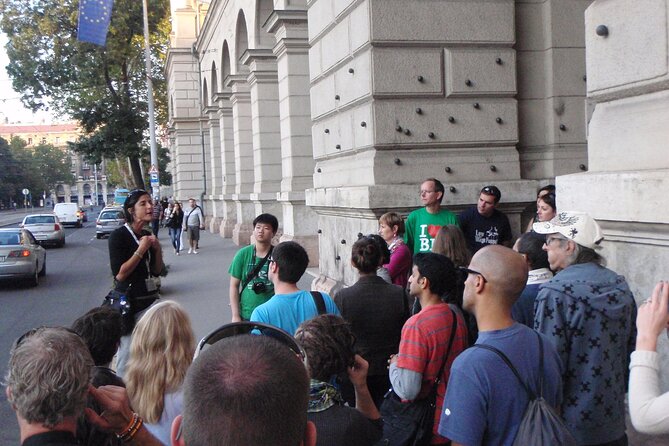
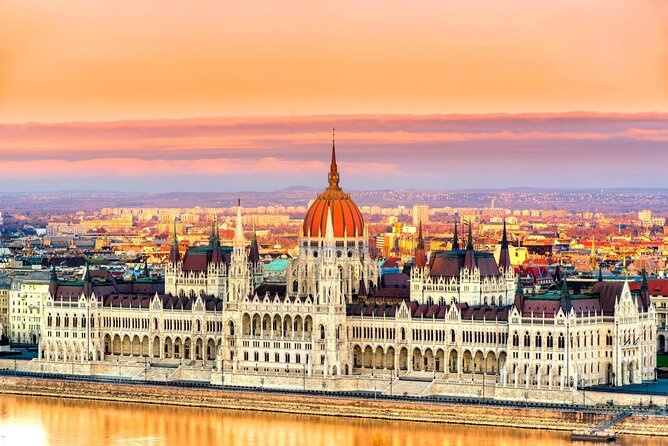
The walk ends at the Hungarian Parliament Building, near Kossuth Lajos tér. Here, the focus turns to the 1956 uprising, its heroes, and the experience of living through the revolution as a child.
You also see bullet holes on the facades of residential buildings around Parliament. Physical traces like these can make the uprising easier to understand than a list of dates. The buildings connect the political crisis to streets where families lived, worked, and tried to stay safe.
The guide discusses the revolution in depth within the limits of the 15-minute stop. You learn about the people who resisted and about the memories of those who experienced the events directly or grew up with their effects. Because the guide lived under Communism, the discussion can include the emotional side of the period, not just the public record.
Ending at Parliament is practical as well as symbolic. The final point is about 50 meters from the M2 red metro line, making it easy to continue your afternoon or return to your accommodation. It also leaves you near one of Budapest’s major sights if you want to look around after the walk.
What the $4.65 price really means
The advertised $4.65 is an administrative and marketing booking fee. It reserves your place, but it does not contribute to the guide’s earnings. The guide works for tips, and the commonly suggested amount is about €10 per person, though you decide what to give.
That makes the real cost higher than the booking fee. You should treat this as a tip-based walking tour rather than a fully paid $4.65 excursion. The arrangement can offer good value if you want a focused introduction to Hungarian Communist history and are comfortable judging the guide’s work at the end.
The tour includes no admission tickets because the stops are public places viewed from outside. You are paying mainly for the guide’s time, interpretation, personal stories, and the route. At 90 minutes, the experience is compact enough to fit into a busy Budapest schedule.
The group size can reach 20 people. That is still manageable for a city walk, but the listening experience depends on where you stand and how clearly the guide projects. Arrive close to the meeting time so you can find the group near the Budapest Eye without rushing.
Who will get the most from this walk
I would choose this tour if you want more than Budapest’s imperial buildings and scenic views. It suits you especially well if you enjoy modern European history, family stories, political memory, or the way governments shape ordinary routines.
It is also a strong choice for families with older children and teenagers. The guide’s personal account can help connect classroom subjects with real places and choices. The tour does not require you to know Hungarian history in advance, since it begins with a short background lesson.
You may want a different experience if you are looking for museum interiors, long historical lectures, or a detailed architectural tour. This is an outdoor walking discussion with several short stops. Its strength is the range of subjects and the human perspective, not extensive time at any one monument.
Service animals are allowed, the route is near public transportation, and most people can participate. The supplied information does not provide detailed accessibility notes about pavement, seating, or step-free movement, so contact the provider if those points matter to you.
Timing, cancellations, and useful planning
The advertised duration is about one hour and 30 minutes, although the itinerary descriptions refer to a two-hour route in one section. Plan for at least 90 minutes and allow a little extra time if the discussion runs long or the group asks questions.
The tour begins at 3:30 pm and ends by Parliament. You do not return to the starting point, so plan your next activity from Kossuth Lajos tér rather than Erzsébet tér. The end point is close to the M2 red metro line, which is helpful for onward transport.
Your confirmation arrives when you book, and the booking uses a mobile ticket. Free cancellation is available if you cancel at least 24 hours before the start time. Changes or cancellations made inside that window are not accepted for a refund, and the cut-off follows Budapest local time.
Should you book the Budapest Communist history tour?
Book it if you want a short, thoughtful walk led by someone with lived experience of the Communist period. The strongest features are the personal stories, the practical subjects such as travel and housing, and the final focus on 1956 around Parliament.
Just budget honestly. The $4.65 fee is not the guide’s payment, so plan on a tip, commonly around €10 per person. If you accept that arrangement and prefer social history to formal sightseeing, this is a good-value way to understand how Hungary’s past still shapes public memory and everyday life.
FAQ
Where does the tour begin?
It begins about 20 meters from the Budapest Eye in Erzsébet tér, Budapest 1051.
Where does the tour end?
The tour ends at the Hungarian Parliament Building, Kossuth Lajos tér 1-3. The conclusion point is about 50 meters from the M2 red metro line.
What time does the tour start?
The scheduled start time is 3:30 pm.
How long does the tour last?
The stated duration is approximately one hour and 30 minutes. One itinerary description refers to a two-hour route, so allow some flexibility.
What is included in the price?
The booking fee is included. It covers administration and marketing and guarantees your place on the tour.
Do I need to tip the guide?
Yes, tipping is not included. The guides depend on donations, and the commonly stated amount is €10 per person, though the final amount is your choice.
How many people can join?
The maximum group size is 20 people.
Can I cancel for a full refund?
You can cancel at least 24 hours before the start time for a full refund. Cancellations or changes made less than 24 hours before the start are not accepted for a refund.
Recently added around Budapest
- Hiking + Chairlift ride + viewpoints in Budapest★ 5.0 · 3 reviews
- FoolsCode: EscapeRoom/Sightseeing tour with Actor Tourguide★ 5.0 · 3 reviews
- Grand Budapest tour with private transportation★ 5.0 · 3 reviews
- Budapest: Private Customizable Tour in French★ 5.0 · 3 reviews
- Budapest Drinks and Piano Show Cruise★ 4.5 · 3 reviews
- Discover Budapest Using Tram Two★ 5.0 · 3 reviews
- Budapest: Private, Personalized Pub Crawl, 3 drinks included★ 4.5 · 3 reviews
- Budapest: Private 3-Hour Gödöllő Palace Tour★ 4.9 · 3 reviews
Communist-Era History Tours, compared.
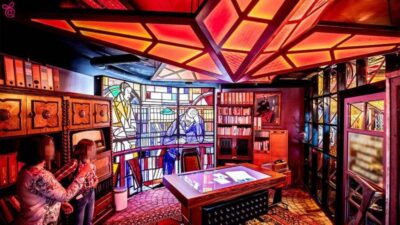
Communist History Tour with House of Terror Option
Read our review →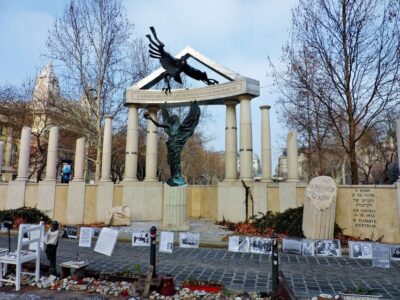
3-Hour Walking Tour About Communism (Small Group)
Read our review →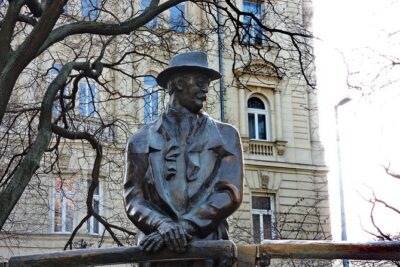
Private Budapest Hammer & Sickle Communist Times Tour
Read our review →
Communist History Evening Walking Tour of Budapest
Read our review →Browse the lists this tour appears in