
Reviewed · COMMUNIST-ERA HISTORY TOURS
Budapest: Communist History Tour with House of Terror Option
Budapest’s Communist past is easiest to grasp when you see it in the city itself. This small-group tour links Parliament, Soviet memorials, Cardinal Mindszenty’s refuge, a Cold War bunker, and sites tied to the 1956 uprising before taking you to a museum. I especially like the choice of two very different endings: the playful Budapest Retro Center or the grim House of Terror. I also like the small groups, limited to 10 people, which give guides such as Alexandra, Flora, Bea, and Noémi room to answer real questions.
The subject is often painful, and the House of Terror can be emotionally heavy. The walking route also requires a reasonable pace, so you may want the Retro Center if you prefer a lighter finish or need a less intense museum visit.
In This Review
- Key points at a glance
- Why Budapest’s Communist story works best on foot
- Cardinal Mindszenty and the meaning of exile
- The Cold War bunker hidden beneath everyday Budapest
- The 1956 Revolution comes into focus
- Morning choice: Budapest Retro Center
- Afternoon choice: the House of Terror Museum
- Guided House of Terror option
- What the guides add to the experience
- Pace, group size, and practical comfort
- Is $58 a fair price?
- Who should book it?
- Should you book this Budapest Communist history tour?
- FAQ
- Where does the Budapest Communist history tour take place?
- How long does the tour last?
- What language is the tour in?
- How many people are in each group?
- What museums can I choose from?
- What is included in the price?
- Does the tour include the House of Terror ticket?
- Is the House of Terror visit guided?
- Where do I collect the museum ticket?
- Can I cancel the booking?
Key points at a glance
- Parliament to Liberty Square: Begin among Budapest’s grandest public buildings and monuments, then connect them to Hungary’s Soviet-controlled past.
- A Cold War bunker beneath the city: Look for the ventilation channels of a secret nuclear shelter built during the Cold War.
- Two sharply different museum choices: See everyday Communist-era life at the Budapest Retro Center or confront political terror at the House of Terror.
- Personal Hungarian insight: Guides including Veronika, Adam, Kati, and Alexandra have brought family memories and firsthand experience into the history.
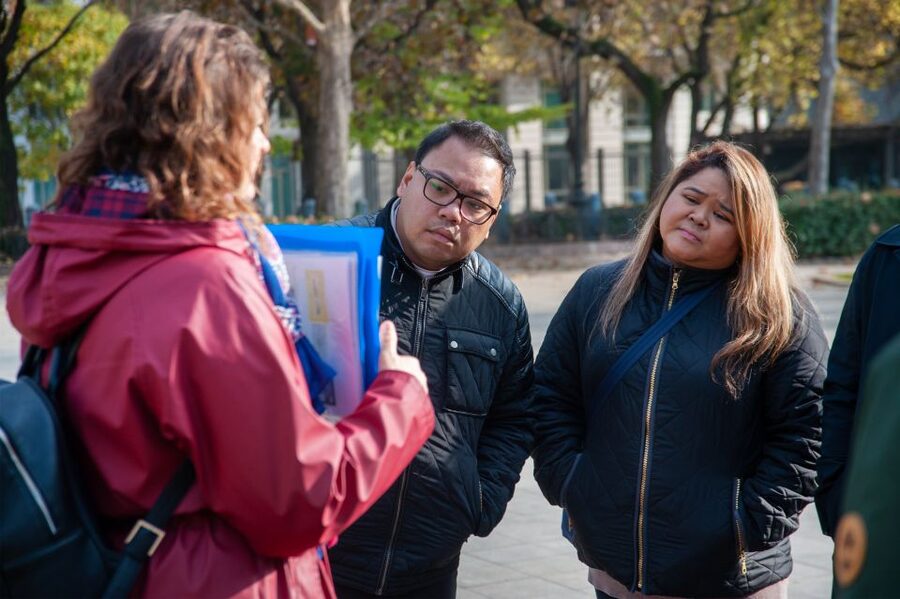
- Small English-speaking groups: With no more than 10 people, you can ask questions without shouting over a crowd.
- Strong value for history-minded visitors: At $58 per person, the fee covers the guide, the walking tour when selected, and the chosen museum ticket.
Why Budapest’s Communist story works best on foot
Hungary’s Communist period lasted about 45 years under Soviet military occupation. That number can feel abstract in a museum label. On foot, it becomes a story about public squares, church leaders, monuments, revolution, surveillance, and the ordinary objects people used at home.
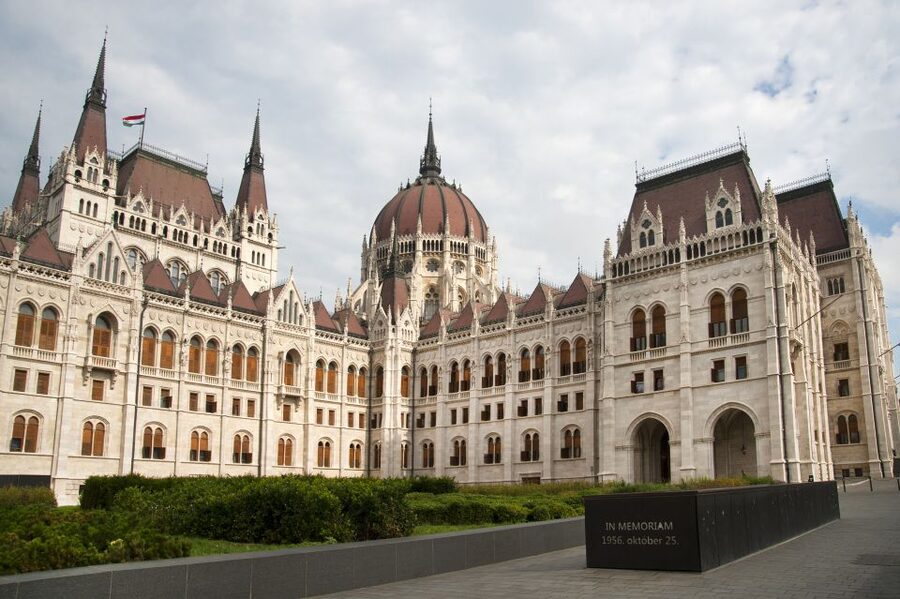
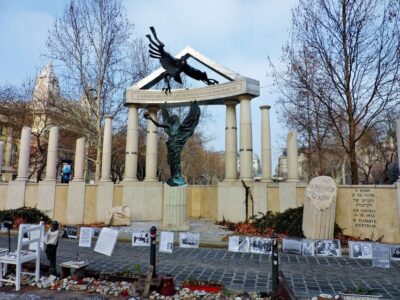
The route starts near the Hungarian Parliament, an impressive setting for a tour about power. Here, you are introduced to dramatic memorials connected with the victims of the Communist dictatorship. The location matters because it places political history in the heart of present-day Budapest, not in a distant archive.
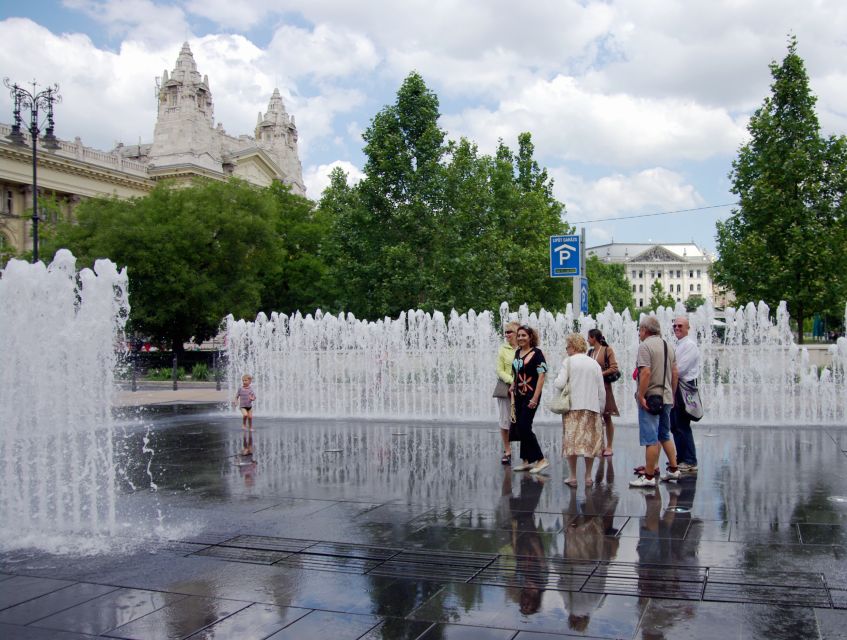
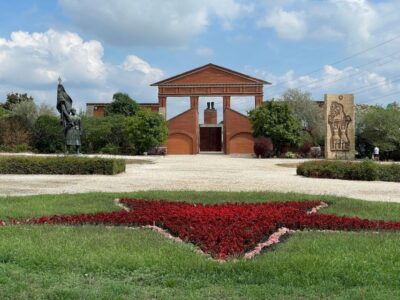
From there, you continue toward Liberty Square. The square contains the Soviet Liberation Memorial, described as the last Communist monument in Budapest still in its original location. That makes it an especially useful stop. You are not simply looking at an old statue. You are considering how a city chooses to preserve, tolerate, or reinterpret symbols of an unwanted political era.
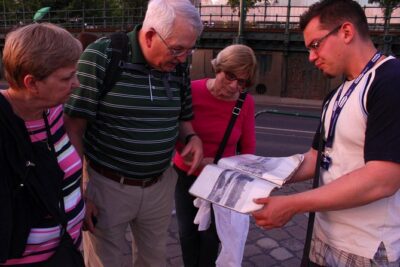
I like this opening because it gives you visual anchors before the museum visit. You can ask why a monument remains, what it once meant, and how Hungarians relate to it now. Guides trained in history, including Alexandra, Flora, and Bea, have been praised for explaining the period clearly and answering questions with patience.
More on Budapest under communism:
- Budapest: 3-Hour Walking Tour About Communism (Small Group)
★ 4.7 · 70 reviews - Communism in Hungary with a Historian
★ 5.0 · 70 reviews - Budapest Hammer & Sickle Communist Times Tour
★ 4.5 · 68 reviews
Cardinal Mindszenty and the meaning of exile
One of the route’s more unusual stops concerns Cardinal József Mindszenty, the anti-Communist Catholic Church leader who spent many years in exile inside the United States Embassy. You see the famous windows associated with his refuge.
This detail helps explain the pressure placed on religious and political figures during the Communist era. It also adds a human scale to the grand political story. Instead of hearing only about governments and armies, you learn how one prominent Hungarian lived in a state of enforced isolation.
For you, this may be one of the most memorable parts of the walk because it is easy to miss on an ordinary sightseeing route. It is also a good moment to ask your guide about the relationship between the Communist government, the Catholic Church, and foreign powers.
The experience is conducted in English. A few guides have also adapted to mixed-language groups when needed, including one instance in which Alexandra explained the tour in both English and Hungarian. That does not mean bilingual guiding is guaranteed, but it shows that the small format can allow for some flexibility.
The Cold War bunker hidden beneath everyday Budapest
The tour also takes you to the ventilation channels of a secret underground nuclear bunker built during the Cold War. You may not spend a long time inside a complete bunker complex, so do not book this expecting a large standalone military museum.
Its value is in the idea. The channels point to the fear and planning that shaped life during the Cold War. Budapest was not only dealing with the political control of the Soviet system. It was also preparing for the possibility of nuclear conflict.
This is the sort of detail a guide can make useful. A bare passageway is easy to overlook. With context, it becomes evidence of how governments prepared for catastrophe and how public life carried on above ground.
The 1956 Revolution comes into focus
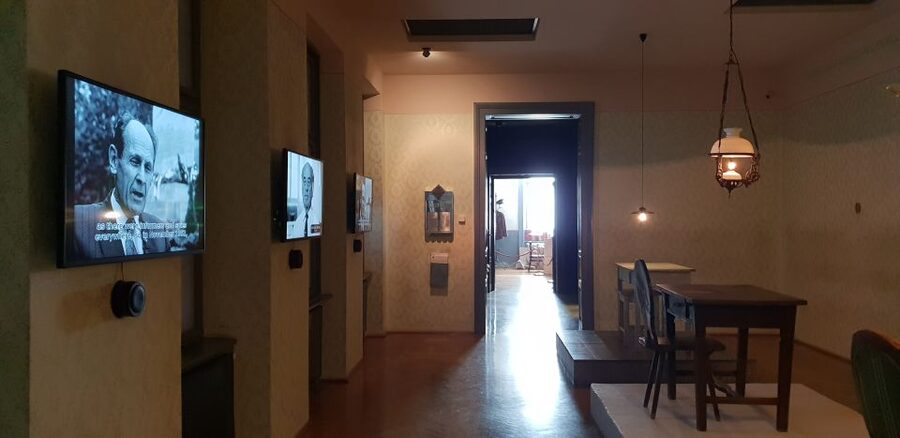
The walking route includes places connected with Hungary’s anti-Soviet revolution of 1956. Your guide explains what happened at the relevant sites and how the uprising affected the country.
This is a key turning point in the tour. The story moves beyond the slow restrictions of dictatorship and into open resistance. You learn about the bravery of the revolution, the Soviet response, and the consequences that followed.
The subject can become complicated quickly. A short tour cannot provide every political detail, and the two-hour format means your guide must choose what to emphasize. That is why the quality of the explanation matters so much. Guides such as Kati and Veronika have been praised for adding personal stories and explaining the period with dates, facts, and a clear sense of how it affected ordinary Hungarians.
I would not choose this tour only for Cold War scenery. Choose it because you want the connections between the places. The memorials, embassy windows, bunker channels, and 1956 sites work together as a compact introduction to Hungary’s recent past.
More history walks in Budapest:
- Budapest: Historic Cruise with Welcome Drink
★ 4.7 · 6,512 reviews - Budapest Historical Sightseeing – Free Walking Tour
★ 5.0 · 1,302 reviews - Buda Castle District Dark History, Legends and Vampire Night Tour
★ 4.5 · 1,240 reviews - BloodThirsty Hungary: Walking tour & Dark Historical Stories
★ 4.9 · 633 reviews
Morning choice: Budapest Retro Center
The morning option finishes with a one-hour guided visit to the Budapest Retro Center. This is the lighter and more playful choice.
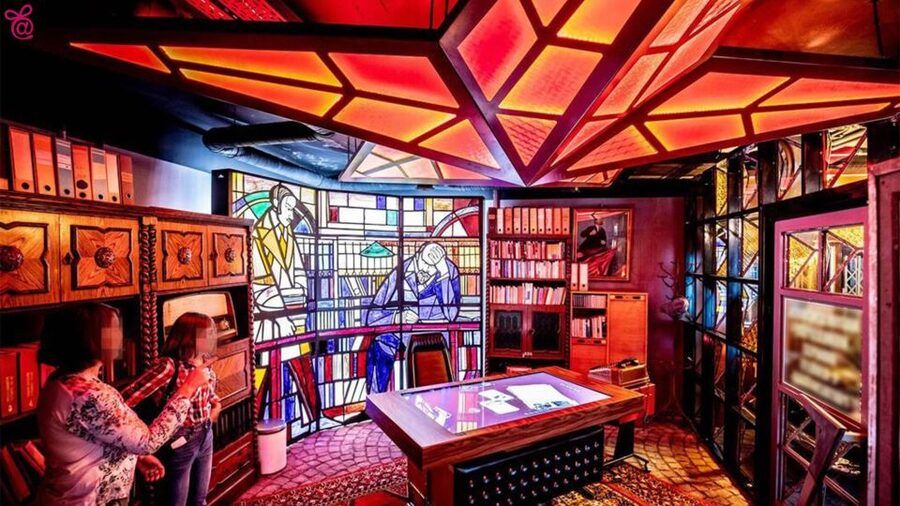
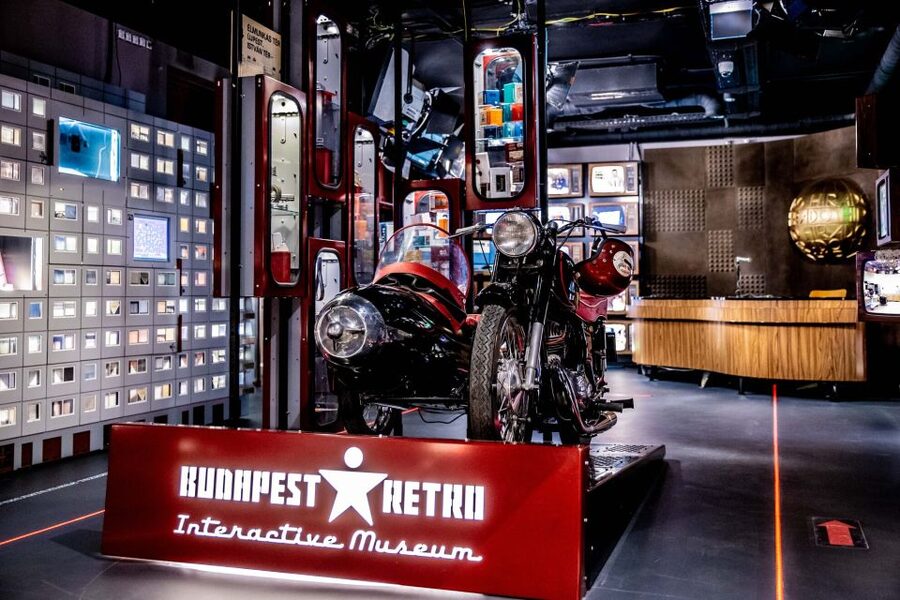
The collection covers the 1960s through the 1980s and is arranged over three floors. You can see street scenes, typical vehicles, Soviet-Hungarian space-flight material, period home interiors, and thousands of objects from daily life.
The museum’s strength is its attention to ordinary things. Political history often focuses on leaders, police, prisons, and revolutions. The Retro Center asks what people saw in their streets, drove, kept at home, and watched on television.
Interactive features add some humor. You can dress as a Communist comrade or try presenting a television news broadcast from the period. These activities make the museum a sensible pick for families, younger visitors, and anyone who wants historical context without spending the entire afternoon in a dark mood.
Do not mistake the playful presentation for a shallow subject. Everyday objects can reveal how an official system shaped taste, work, transport, home design, and public messaging. The drawback is that the Retro Center will not give you the same detailed account of imprisonment, interrogation, and political violence found at the House of Terror.
If you are visiting Budapest with children or with someone who is less interested in political trauma, I would choose this option. It also gives you a more relaxed ending after the serious material about the revolution and Soviet rule.
Afternoon choice: the House of Terror Museum
The afternoon option adds an entry ticket to the House of Terror Museum, the former headquarters of the Hungarian State Protection Police, known as AVO. You visit the museum on your own after the walking tour unless you choose the separate guided House of Terror option.
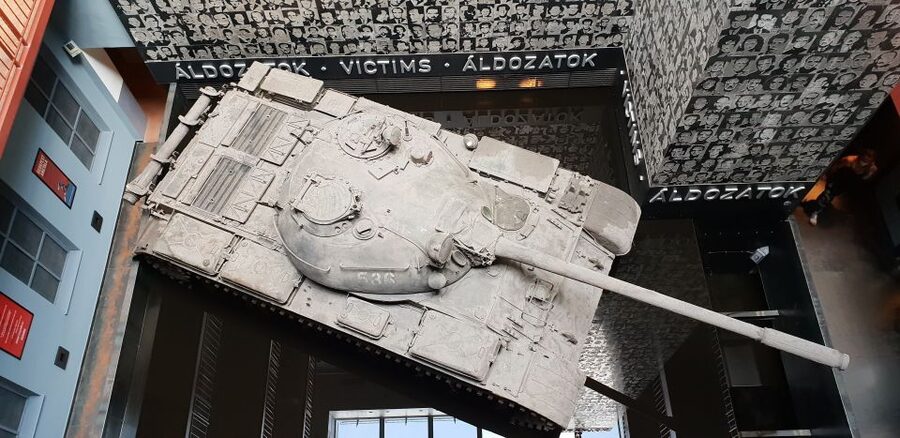
The building is tied to some of the most brutal years of Hungarian dictatorship. Inside, the exhibits cover the period from World War II and Nazi rule through Soviet Communist occupation. The subject is not presented as a simple switch from one regime to another. The museum focuses on the machinery of repression, the people caught in it, and the continuation of fear across political systems.
You can expect exhibits about the economy and daily life of the 1950s, interrogation and torture cells, the office of the feared director, mass deportations, labor camps, political trials, the 1956 Revolution, and the road to the end of Communism in 1989.
This is a powerful museum, but it is not an easy one. The material is disturbing, and the atmosphere can be haunting. If you are sensitive to scenes of imprisonment and torture, plan your day with care. You may want time afterward to walk, eat, or sit somewhere quiet rather than rushing straight into another major sight.
The House of Terror visit is also best for visitors who want a serious museum experience. The walking tour gives you the citywide setting, while the museum brings you into the institutions of repression. That combination can be more useful than visiting the museum alone, since you already have a basic timeline and know why the building matters.
Guided House of Terror option
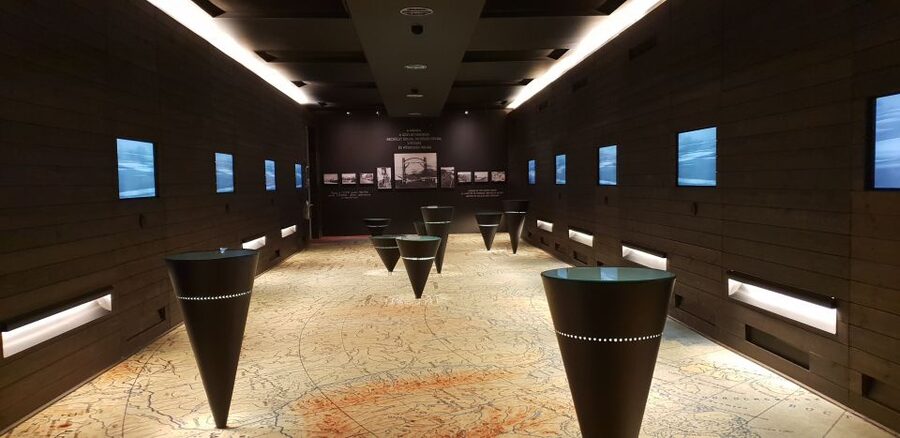
A third choice provides a guided visit inside the House of Terror. This is the strongest option if you want the museum explained as you go.
A guide can help you place the exhibits in sequence: World War II, Nazi rule, Soviet occupation, the 1950s, political trials, the 1956 uprising, and the end of Communist rule in 1989. You can also ask questions when an exhibit raises a difficult point or when the museum’s presentation assumes background knowledge.
Several guides have been singled out for making the museum easier to understand. Noémi has extended a visit when needed to cover important exhibits, while Alexandra has been praised for clear explanations and a compassionate approach. Flora has also been valued for answering questions patiently and adjusting her explanations to the group.
The guide is an independent professional, not a museum employee. This matters because your tour is not an official museum presentation, and the guide gives you an outside historical interpretation. Your museum ticket comes from the guide, so do not wait in the ticket-office line looking for it.
One caution: the museum itself may have changing conditions, including renovations or temporary closures. Bradley’s visit took place while the House of Terror was closed for renovations, and the guide adapted the experience. Check the current arrangement before booking if the museum is the main reason you are going.
What the guides add to the experience
The best reason to book this tour is the guide. Budapest’s Communist past involves shifting borders, competing political forces, Soviet control, local collaboration, resistance, and memories that remain personal. A good guide keeps the timeline understandable without reducing everything to a list of dates.
The guide team includes names such as Alexandra, Flora, Bea, Noémi, Kati, Veronika, Adam, Naomi, and others. Assignments can vary, so you cannot select a particular person unless the booking system specifically allows it.
What you can reasonably expect is an English-speaking guide who explains the sites and responds to questions. The strongest guiding style combines facts with personal context. Veronika has spoken about growing up in Communist Hungary, and Adam has shared memories of his own childhood under the system. Kati has connected Hungarian events with American involvement and support.
That personal angle is particularly useful when you are trying to understand what official history left unsaid. The tour can also be meaningful if your family has Hungarian roots. One visitor joined to understand grandparents who lived under Soviet rule, and another had family ties to Hungary that made the route especially emotional.
You do not need prior study. A high school student interested in Communism can follow it, while a history teacher can still find fresh material. The guide’s job is to meet you at your level, and the small group makes that easier.
Pace, group size, and practical comfort
The advertised duration is two hours. The morning Retro Center visit adds a one-hour guided museum visit after the walk, while the museum arrangements vary by option. Read the exact selection carefully because the meeting point can change with the booking.
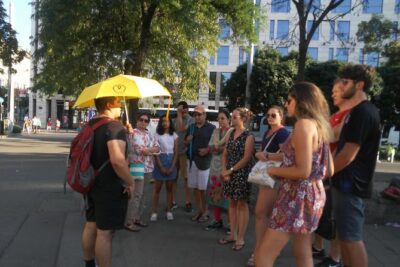
Groups are limited to 10 people. That is small enough for useful questions and easier movement through city streets. Some departures may be even smaller, and a few people have ended up with what felt like a private tour when no one else booked.
The walking pace is steady. That is good for covering several central locations, but it can be demanding if you are ill, tired, or using walking aids. One guide adjusted her speaking pace so members using walking aids could catch up, but you should still plan honestly around your own mobility.
Wear comfortable shoes and allow room for pauses. You will want to stop for photographs and to absorb the monuments, but this is a history walk rather than a slow café stroll. If you are unwell, the route may be difficult to enjoy fully.
The meeting point is not identical for every option. Confirm it before setting out, especially if you are choosing the Retro Center or House of Terror arrangement.
Is $58 a fair price?
At $58 per person, this is not the cheapest way to spend two hours in Budapest. You are paying for a specialist English-speaking guide, a small group, the Communist-themed walk when included, and admission to the selected museum.
The value is strongest if you would otherwise visit the House of Terror without enough background. The museum can be intense and information-heavy. A guide gives you a structure before you enter and helps you connect what you see to Parliament, Liberty Square, the Cold War bunker, and the 1956 sites.
The Retro Center option offers a different kind of value. The museum admission is paired with a guided walk, and the collection adds household and popular-culture details that a conventional political tour may skip.
I would not pay this price if you only want a quick look at Soviet-era monuments or if you prefer reading museum panels at your own pace. I would pay it if you want a focused introduction to modern Hungarian history and expect to ask questions.
Free cancellation up to 24 hours before the start and the option to reserve now and pay later reduce the risk of fitting it into a changing Budapest schedule.
Who should book it?
I recommend this tour to anyone interested in the Cold War, 20th-century Europe, dictatorship, church-state conflict, or the 1956 Hungarian Revolution. It is also a smart choice for visitors with Hungarian family connections who want more than a postcard view of Budapest.
Choose the morning Retro Center if you prefer daily life, old vehicles, television, interiors, and a lighter mood. Choose the afternoon House of Terror option if you want to see the former police headquarters and are comfortable exploring the museum independently.
Choose the guided House of Terror visit if the museum is your priority and you want help with its timeline and difficult subjects. The walking route gives the city context, but the museum guide does the most to explain the exhibits in a clear order.
Should you book this Budapest Communist history tour?
Book it if you want Budapest’s Communist era explained through real streets and buildings rather than a string of disconnected facts. The strongest features are the small group, the thoughtful route, and guides who can add Hungarian family memories to the public story.
Think carefully about the museum ending. The Retro Center is more playful and approachable. The House of Terror is more direct, disturbing, and emotionally demanding. At $58, the tour earns its price when you value interpretation and questions. It is less useful if you only want to wander through a museum alone.
FAQ
Where does the Budapest Communist history tour take place?
The experience takes place in central Budapest, with stops near the Hungarian Parliament, Liberty Square, the Cardinal Mindszenty exile site, the Cold War bunker area, and locations linked with the 1956 Revolution.
How long does the tour last?
The advertised duration is two hours. The morning option also includes a one-hour guided visit to the Budapest Retro Center after the walking portion.
What language is the tour in?
The tour is conducted in English by a live guide. Guides may sometimes help with mixed-language groups, but bilingual guiding is not listed as a standard feature.
How many people are in each group?
The group is limited to 10 participants, allowing more room for questions and easier movement between stops.
What museums can I choose from?
You can choose the Budapest Retro Center or the House of Terror Museum, depending on the option selected. A separate guided House of Terror option is also available.
What is included in the price?
The price includes a professional tour guide, the Communist-themed walking tour when that option is selected, and entry to the Budapest Retro Center or House of Terror Museum according to your booking.
Does the tour include the House of Terror ticket?
The House of Terror ticket is included when you select the relevant House of Terror option. Check the exact option because the morning choice visits the Budapest Retro Center instead.
Is the House of Terror visit guided?
The afternoon option includes a House of Terror ticket for a visit on your own. A third option provides a guided visit inside the museum.
Where do I collect the museum ticket?
Your guide gives you the museum ticket. Do not look for it at the museum ticket office.
Can I cancel the booking?
You can cancel up to 24 hours in advance for a full refund. You can also reserve now and pay later, keeping your plans flexible.
Recently added around Budapest
- Hiking + Chairlift ride + viewpoints in Budapest★ 5.0 · 3 reviews
- FoolsCode: EscapeRoom/Sightseeing tour with Actor Tourguide★ 5.0 · 3 reviews
- Grand Budapest tour with private transportation★ 5.0 · 3 reviews
- Budapest: Private Customizable Tour in French★ 5.0 · 3 reviews
- Budapest: Private, Personalized Pub Crawl, 3 drinks included★ 4.5 · 3 reviews
- Budapest Drinks and Piano Show Cruise★ 4.5 · 3 reviews
- Discover Budapest Using Tram Two★ 5.0 · 3 reviews
- Budapest: Private 3-Hour Gödöllő Palace Tour★ 4.9 · 3 reviews
Communist-Era History Tours, compared.
3-Hour Walking Tour About Communism (Small Group)
Read our review →

Lives of Hungarians Under Communist and Capitalist system
Read our review →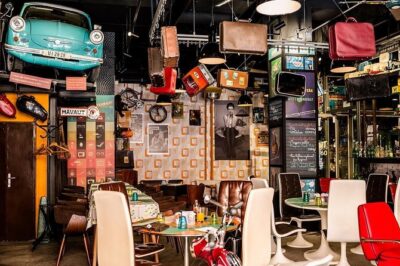
Private Budapest Hammer & Sickle Communist Times Tour
Read our review →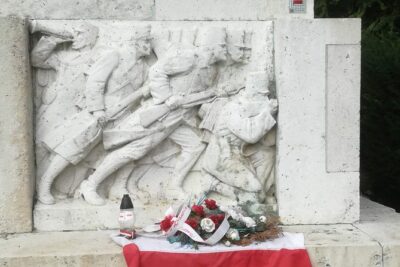
Communist History Evening Walking Tour of Budapest
Read our review →Browse the lists this tour appears in