
Reviewed · COMMUNIST-ERA HISTORY TOURS
Private Budapest Hammer & Sickle Communist Times Tour
Prague’s grand squares carry some of Europe’s hardest modern stories. On this private walk, you follow the route from Nazi occupation and wartime resistance to the Prague Spring, Soviet tanks, and the Velvet Revolution of 1989. The city’s medieval streets become a stage for political courage, fear, and change.
I like the personal format, with only your group taking part, and I like the chance to hear from guides who can add lived experience. Guides such as Martina, who grew up under communism, and others including Honza, Mike, and Mikel have been praised for making the past feel immediate. The main drawback is a practical one: the supplied details conflict, calling the tour both Budapest and Prague, so confirm the city and meeting point before paying.
In This Review
- Key points to know before you book
- First, sort out the Budapest and Prague mix-up
- Bartolomejska Street and the darker side of Old Town
- National Avenue and two generations of protest
- Wenceslas Square, from liberalization to Soviet tanks
- Republic Square and the road to the 1945 uprising
- Old Town, Gottwald’s balcony, and Einstein’s Prague
- The Old Jewish Cemetery and former security headquarters
- Letna Park and the vanished Stalin monument
- What $133.67 per person really buys
- Guide quality is the deciding factor
- Walking conditions, weather, and pace
- Who should book this Prague history walk?
- Should you book it?
- FAQ
- Is this tour in Budapest or Prague?
- How long does the tour last?
- Is the tour private?
- What historical periods does the tour cover?
- Which major places are visited?
- Is a guide included?
- Is pickup available?
- Is the tour suitable for children?
- Is the tour suitable for people with limited mobility?
- Can I cancel for a refund?
Key points to know before you book
- Prague, not Budapest, is the route described: Every stop and historical reference points to Prague, despite the Budapest title and location line.
- A private three-hour walk covers major 20th-century sites: You visit former Nazi, Communist Party, and KGB-related buildings, along with Wenceslas Square, Republic Square, Old Town, and Letna Park.
- The tour connects several turning points: Hear about Nazi occupation, the 1945 Prague Uprising, the 1948 Communist takeover, the 1968 Prague Spring, and the 1989 Velvet Revolution.
- Guide quality matters here: Strong guides such as Honza, Martina, Mike, Mikel, and Yonas have made the history vivid with personal memories, photographs, and extra material.
- Expect a demanding walk: The route includes about two hours of continuous walking, stairs, high curbs, and slippery surfaces.
- The price buys privacy, not museum entry: At $133.67 per person, value is strongest for a small private group that wants discussion and flexibility.
First, sort out the Budapest and Prague mix-up
The experience is presented under a Budapest title and lists Budapest as its location, but the complete route is unmistakably in Prague. It refers to Wenceslas Square, National Avenue, Republic Square, the Old Jewish Cemetery, Prague’s Charles University, and Letna Park on the Vltava River.
That is not a small wording issue. If you are staying in Budapest, do not assume this is a cross-border excursion or a Budapest walking tour. Confirm with Absolute Tours that your booking is for Prague and ask for the exact meeting point. One poor experience came from vague directions, with the guide appearing surprised that the group had found the starting place.
Once that point is settled, the tour offers a focused way to see Prague beyond castles, churches, and pretty lanes. It is about the city as a political center, where public squares became places of protest and ordinary buildings became headquarters for secret police and party officials.
More on Budapest under communism:
- Budapest: Communist History Tour with House of Terror Option
★ 4.8 · 182 reviews - Communism in Hungary with a Historian
★ 5.0 · 70 reviews - Budapest: 3-Hour Walking Tour About Communism (Small Group)
★ 4.7 · 70 reviews
Bartolomejska Street and the darker side of Old Town
The walk begins in central Prague with an introduction to the city’s 20th-century story. The first major stop is Bartolomejska Street, where a former Second World War prison was used by secret police to torture prisoners.
This is a strong opening because it shifts your attention away from Prague’s polished tourist center. You are not simply admiring architecture. You are being shown how power operated behind plain walls, and how fear could exist a few steps from the city’s grandest public spaces.
The subject matter is serious. The tour is not recommended for children under 14, and that seems sensible given the discussion of torture, occupation, political repression, and executions. I would also avoid scheduling this as a light family outing between pastry stops.
National Avenue and two generations of protest
National Avenue divides Prague’s Old Town and New Town. Here, your guide explains two very different protest movements that took place along the same broad thoroughfare.
In 1939, students protested against the occupying Nazis. In 1989, another student demonstration helped set off the events that brought down communist rule. That connection gives the street unusual force. You can stand in one place and consider how two generations faced very different versions of oppression.
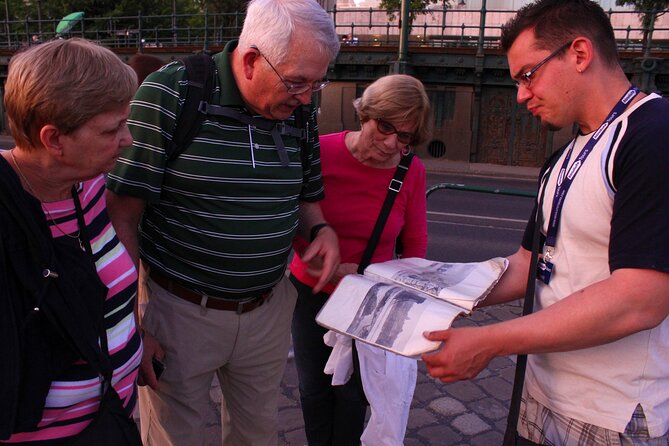
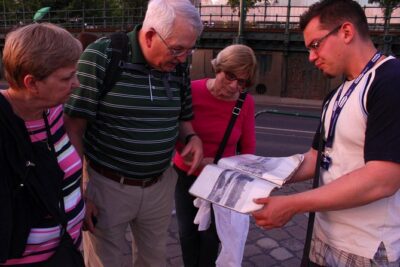
This is where the guide’s storytelling can make or break the experience. The best guides bring supporting material, such as old photographs and newspaper articles on a tablet. Mike has been praised for explaining not just what happened, but what daily life under Nazi and Communist rule felt like. Mikel and Yonas were also singled out for their energy, patience, and command of the subject.
You should expect to stop outdoors while the guide talks. In cold weather, this can become uncomfortable. One practical improvement would be a route that uses more indoor spaces during bad weather, but the tour runs in all conditions, so wear warm or waterproof clothing as needed.
Wenceslas Square, from liberalization to Soviet tanks
Wenceslas Square is the emotional center of the route. It is one of Prague’s best-known public spaces, but this tour asks you to see it as the setting for national resistance and political change.
Your guide places you in 1968, when the Prague Spring attempted to loosen the grip of the communist state. Reforms were crushed when Soviet-led forces sent tanks into Czechoslovakia. The story continues into early 1969, when Jan Palach’s protest became one of the era’s most painful symbols.
The square also returns in 1989, when mass demonstrations helped end communist rule. The value here is not just learning dates. You see how a familiar commercial and civic space became a meeting place for crowds demanding change.
I like this part for first-time visitors because it helps you understand Prague’s modern identity. The city’s story is not only about ancient kings or ornate buildings. It is also about public action, censorship, occupation, and the risk people took by gathering together.
A few more Budapest tours worth comparing
- Private Budapest TukTuk Tour: Custom Route, Hotel Pickup
★ 5.0 · 1,307 reviews - Budapest Essentials Private Tour Highlights and Hidden Gems
★ 5.0 · 861 reviews - Budapest Private Tuk Tuk Half-Day Tour
★ 5.0 · 606 reviews - Budapest One Way Private Transfer to or from Airport
★ 4.5 · 548 reviews
Republic Square and the road to the 1945 uprising
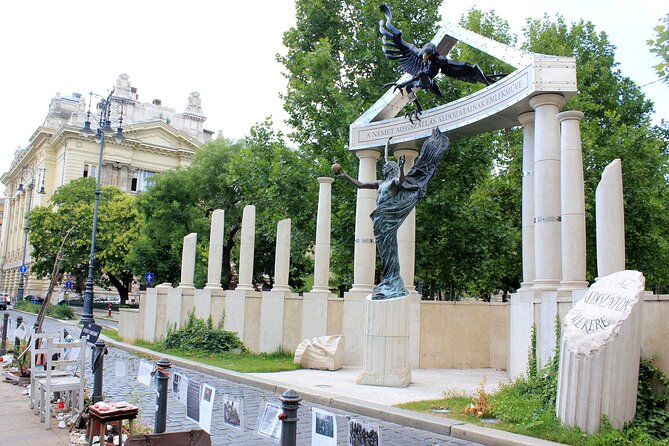
Republic Square offers another compact lesson in changing power. It takes its name from the 1918 declaration of an independent Czechoslovakia, but its later story is more complicated.
During the Second World War, Czech resistance members set up secret radio stations connected with the Prague Uprising of 1945. Your guide explains how those broadcasts helped organize resistance as the war drew to a close.
Then comes the sharp historical twist. Only three years later, the square became home to the Communist Party. The same public center that represented independence was absorbed into a new political order.
This stop shows why a walking tour can work better than a lecture hall. You move through the actual spaces where governments announced authority, resistance groups spread information, and political loyalties changed. Still, the tour’s historical structure may feel less tidy than a textbook. One guide was praised for enthusiasm but criticized for presenting the story issue by issue rather than in a clear chronological order.
Old Town, Gottwald’s balcony, and Einstein’s Prague
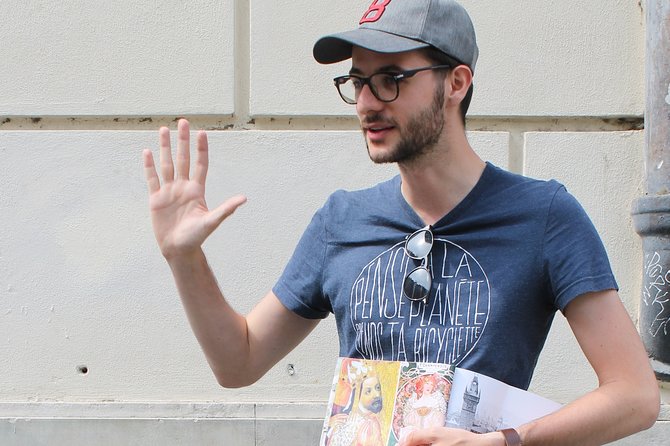
The route continues through Old Town to the balcony from which Klement Gottwald declared the Communist takeover of the Czechoslovak government in 1948. It is an important site because it marks the point when postwar political tension became a new one-party regime.
The balcony is not presented as a grand museum display. Its importance comes from the words spoken there and the way a public announcement can reshape a country. A good guide will help you picture the crowd, the political pressure, and the speed with which democratic institutions were pushed aside.
You also see the place where Albert Einstein lived while working at Prague’s Charles University. The tour connects his scientific theories with the later invention of the atom bomb. That link adds a broader international frame, though it can feel like a side road if you mainly want political history.
One advantage of a private tour is that you can ask your guide to adjust the emphasis. Several guides have tailored the walk toward the Cold War, everyday communist life, the Nazi era, or the period after communism. If Einstein and science are less important to you, say so early.
The Old Jewish Cemetery and former security headquarters
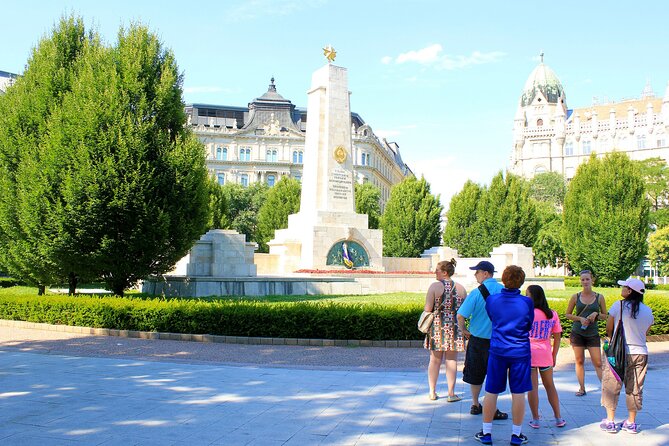
The walk reaches the old Jewish quarter, including the Old Jewish Cemetery and other historic landmarks. These sites widen the story beyond the Communist period and show how Prague’s political history intersects with its Jewish history and the Nazi persecution of Europe’s Jewish population.
You also view buildings connected with the Nazi SS and communist-era KGB. The tour’s wording groups major security institutions together, so you should expect exterior viewing rather than a full museum visit at every stop. The power of these locations comes from knowing what happened inside or what decisions were made there.
Some routes connected with Prague’s wartime past may also touch on the crypt where the assassins of Reinhard Heydrich hid in 1942, a highlight mentioned by one participant. Since the route details supplied for this experience do not formally list that crypt as a stop, confirm with Absolute Tours if it is important to you.
Do not expect a polished sequence of indoor exhibits. This is primarily a street-level tour. One person felt too much time was spent in a museum and would have preferred to visit it independently at the end. That suggests you should clarify the indoor portion before booking if museum time is not your priority.
Letna Park and the vanished Stalin monument
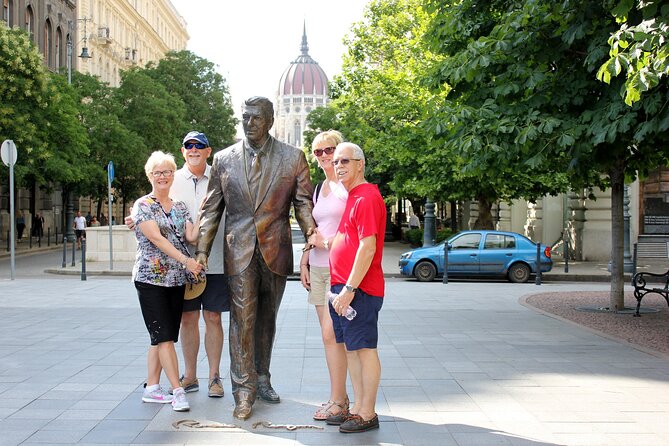
The final major setting is Letna Park, beside the Vltava River. Here, the guide tells the story of the enormous Stalin statue built in 1955 and destroyed in 1962.
The monument’s short life captures the absurdity and instability of Stalinist politics. It was built as a symbol of Soviet power, then removed when the political climate changed. The site also gives the walking tour a more open ending after hours among dense streets and government buildings.
The tour then ends in central Prague. Pick-up is offered, but drop-off is not included, so confirm where the walk begins and where it finishes. Since public transportation is nearby, getting back to your hotel or continuing sightseeing should be manageable, but you will need to arrange that yourself.
What $133.67 per person really buys
The listed price is $133.67 per person. That is a serious charge for a three-hour walk, particularly if you are booking for two people. The price makes more sense for a private group that wants the guide’s full attention, the ability to ask questions, and some flexibility in choosing the historical focus.
The tour includes a licensed English-speaking guide, a beverage stop, and pickup. It does not include drop-off or separate admission charges. The description lists the route as a private activity, while the general features also refer to group discounts and a maximum of 15 people. Confirm how the price changes with your party size and exactly what is included in your booking.
For a couple or family with a strong interest in modern European history, the private format may be worth the extra cost. You can discuss the Prague Spring, Soviet rule, wartime resistance, or everyday life without being limited to a fixed script. If you are alone or mainly want a quick orientation, the price is harder to justify.
The refreshment stop is welcome, but it is not the reason to book. You are paying for access to a specialist guide and a carefully chosen set of places, not for food or major attractions with admission included.
Guide quality is the deciding factor
This tour has received a 4.4 rating from 47 reviews, but the range of experiences is wide. The strongest praise goes to guides who can connect public events with personal experience.
Martina, who lived through the Communist period, gave one group insight that made the tour memorable. Other guides, including Honza, Mike, Mikel, Yonas, and Martin, were praised for preparation, patience, enthusiasm, and the use of photographs or articles to explain the past. Martin even adjusted the route to visit Prague’s public library after learning that a participant was a librarian.
That kind of attention is exactly what you want from a private tour. You should tell the guide before starting what interests you most. Ask for more Cold War history, Nazi resistance, daily life under communism, or the 1989 revolution if one subject matters more than another.
There are also warnings. One guide spent 75 minutes talking in one place before the walking portion began, which was especially unpleasant on a hot day. Another person found the guide’s English difficult to follow. A third described the route as aimless and said the guide seemed unprepared for the requested topic.
These problems are not reasons to reject the tour outright, but they are reasons to set expectations clearly. Confirm the guide’s language ability, the approximate walking route, and the main period you want covered.
Walking conditions, weather, and pace
The tour lasts about three hours, or roughly three and a half hours in the longer description. Either way, set aside most of an afternoon. The route includes about two hours of continuous walking, high curbs, stairs, and slippery surfaces.
This is not suitable for people with limited mobility. Wear shoes with a firm grip, and dress for the weather. The walk runs in rain and cold, and several stops take place outdoors while the guide explains events.
The pace may feel comfortable to an active walker, but standing still can be tiring. If your group includes older children, remember that the recommended minimum age is 14 because of the subject matter, not simply the walking distance.
The beverage stop gives you a brief pause, but do not count on it to replace a meal or provide shelter from poor weather. Carry water and dress for the forecast.
Who should book this Prague history walk?
I would recommend it to you if modern European history is a main reason for visiting Prague. It works especially well if you want to understand the Prague Spring, Soviet control, the Velvet Revolution, wartime resistance, or the physical traces of political power.
It also suits repeat visitors who have already seen the Old Town’s famous sights. The route lets you read familiar streets in a different way. Instead of passing quickly through Republic Square or Wenceslas Square, you learn why those places mattered during several political crises.
You may want another tour if your interests are mainly medieval architecture, art, food, or interior museums. The route is serious, often outdoors, and built around explanation rather than big-ticket attractions.
Should you book it?
Book this tour if you are comfortable with a demanding walk and want a private conversation about Prague’s Nazi and Communist past. The best guides, especially those with personal memories or strong visual material, can turn ordinary streets into powerful history lessons.
Before booking, verify the Prague location, meeting point, duration, and guide’s English. Ask if the crypt, museum, or any indoor site is included if those places matter to you. I would also request a clear chronological route if you prefer events in time order.
The tour is not flawless, and the high price requires the right guide and the right subject interest. For a small group that values privacy and modern history, it can be an excellent use of an afternoon. For everyone else, Prague offers cheaper walks that may cover more general sights.
FAQ
Is this tour in Budapest or Prague?
The supplied title and location refer to Budapest, but every described stop is in Prague. Confirm the destination with Absolute Tours before booking.
How long does the tour last?
The tour is described as lasting about three hours, with the longer itinerary specifying approximately three and a half hours.
Is the tour private?
Yes. Only your group takes part in the activity. The general information also mentions group discounts and a group limit of 15 people.
What historical periods does the tour cover?
The tour covers Prague during Nazi occupation and the Second World War, the 1945 Prague Uprising, the 1948 Communist takeover, the 1968 Prague Spring, the period of Soviet rule, and the 1989 Velvet Revolution.
Which major places are visited?
The route includes Bartolomejska Street, National Avenue, Wenceslas Square, Republic Square, Old Town, the old Jewish quarter, the Old Jewish Cemetery, sites connected with the Nazi SS and communist-era KGB, and Letna Park.
Is a guide included?
Yes. The experience includes a licensed English-speaking expert guide.
Is pickup available?
Pickup is offered. Drop-off is not included.
Is the tour suitable for children?
The tour is not recommended for children under 14 because of its subject matter.
Is the tour suitable for people with limited mobility?
No. It includes about two hours of continuous walking, high curbs, stairs, and slippery surfaces.
Can I cancel for a refund?
You can cancel at least 24 hours before the experience start time for a full refund. Cancellations or changes made less than 24 hours before the start time are not accepted for a refund.
Recently added around Budapest
- Hiking + Chairlift ride + viewpoints in Budapest★ 5.0 · 3 reviews
- FoolsCode: EscapeRoom/Sightseeing tour with Actor Tourguide★ 5.0 · 3 reviews
- Grand Budapest tour with private transportation★ 5.0 · 3 reviews
- Budapest: Private Customizable Tour in French★ 5.0 · 3 reviews
- Budapest: Private, Personalized Pub Crawl, 3 drinks included★ 4.5 · 3 reviews
- Budapest Drinks and Piano Show Cruise★ 4.5 · 3 reviews
- Discover Budapest Using Tram Two★ 5.0 · 3 reviews
- Budapest: Private 3-Hour Gödöllő Palace Tour★ 4.9 · 3 reviews
Communist-Era History Tours, compared.
Communist History Tour with House of Terror Option
Read our review →
3-Hour Walking Tour About Communism (Small Group)
Read our review →
Lives of Hungarians Under Communist and Capitalist system
Read our review →
Communist History Evening Walking Tour of Budapest
Read our review →Browse the lists this tour appears in