
Reviewed · COMMUNIST-ERA HISTORY TOURS
Communist History Evening Walking Tour of Budapest
Budapest’s communist past is easiest to understand on foot, where grand buildings, memorials, and ordinary streets reveal how political power changed the city. This two-hour evening walk runs from Blaha Lujza tér to Parliament Square, linking about 22 locations across central districts.
I like the small maximum of 15 people, which gives you a fair chance to hear the guide and ask questions. I also like the focus on lived history, including the effect of communism on religion, the 1956 uprising, and the choices made by Hungarians who tried to escape the system.
The main drawback is that you walk about 3 kilometers and spend much of the tour outdoors, so comfortable shoes and suitable weather matter. Some stops are beautiful squares, while others are simply places of painful historical importance.
In This Review
- Key points to know before you book
- Why Budapest works so well for a communist history walk
- Starting at Blaha Lujza tér at 6:00 pm
- St. Stephen’s Basilica and the Communist treatment of religion
- Liberty Square, a compact lesson in power and protest
- Parliament Square and the 1956 uprising
- What the guide adds beyond a museum visit
- Group size, walking demands, and comfort
- Is $36.01 a fair price?
- Who will get the most from this walk?
- Booking, cancellation, and the final call
- FAQ
- How long does the Communist History Evening Walking Tour of Budapest last?
- Where does the tour begin?
- Where does the tour end?
- How far do you walk?
- What language is the tour offered in?
- How many people can join the tour?
- Is bottled water included?
Key points to know before you book
- A walk from Blaha Lujza tér to Parliament: The route crosses central Budapest and ends near Kossuth Lajos tér metro station and tram 2.
- About 22 locations and monuments: The tour uses the city itself as its classroom, rather than relying only on museum displays.
- Strong coverage of 1956: Liberty Square and Parliament Square help explain protests, bloodshed, and resistance to Communist rule.
- Victoria may lead the walk: She is described as a university history professor with clear English, humor, and a strong grasp of Hungarian life.
- A small English-language group: The tour accepts no more than 15 people and includes bottled water.
- A practical evening schedule: The walk begins at 6:00 pm and takes about two hours, with free cancellation up to 24 hours before departure.
Why Budapest works so well for a communist history walk
Budapest can look like a city of grand churches, cafes, bridges, and imperial avenues. That surface tells only part of the story. The Communist period changed what people could own, say, worship, and do for a living, and those changes still shape Hungarian society.
I like this walk because it places those questions beside actual buildings and public squares. You are not only hearing about a former political system in a museum room. You are walking past a basilica affected by state control, a square linked with protests, and Parliament, where the 1956 uprising ended in terrible bloodshed.
The experience covers the years of Communist rule and the road toward freedom. It also connects politics with daily life. That matters in Budapest, where the past is often close to the present rather than sealed away behind glass.
The tour is led in English. Victoria receives especially strong praise for her clear speech, humor, teaching style, and ability to discuss present-day Budapest as well as the past. The supplied information does not guarantee that she leads every departure, so I would treat her as the named guide associated with the experience, not as a promise for every date.
More on Budapest under communism:
- Budapest: Communist History Tour with House of Terror Option
★ 4.8 · 182 reviews - Communism in Hungary with a Historian
★ 5.0 · 70 reviews - Budapest: 3-Hour Walking Tour About Communism (Small Group)
★ 4.7 · 70 reviews
Starting at Blaha Lujza tér at 6:00 pm
Your meeting point is Blaha Lujza tér, in the 8th District. The tour begins at 6:00 pm, a useful time for fitting history into a full day of sightseeing without giving up the evening.
From there, the group walks toward Andrássy Avenue. Along the way, the guide explains how the area and its former monuments changed under communism. This opening section is important because it sets up the main idea of the tour: political systems reshape public spaces, not just government offices.
You should arrive ready to walk rather than expecting a series of long stops. The route covers roughly 3 kilometers, and the guide discusses many locations, so some explanations will take place on sidewalks and in open squares.
One practical point is worth knowing. A few explanations may happen in noisy or crowded spots, depending on where the group pauses. One piece of feedback specifically suggested choosing quieter places rather than a fountain, a smelly corner, or a busy thoroughfare. That is a minor issue, but it is useful to keep in mind if you have difficulty hearing outdoors.
St. Stephen’s Basilica and the Communist treatment of religion
The first named stop is St. Stephen’s Basilica, or Szent István Bazilika. You spend about 10 minutes here, and there is no admission charge for the tour stop.
The basilica provides a clear way to discuss the relationship between Communism and the Hungarian church. The guide explains how religion and religious institutions were affected by the Communist state, giving you a sense of the pressure placed on faith and organized worship.
This stop also brings in one of Hungary’s best-known football players, Ferenc Puskás. The story concerns his flight from the Communist system and his later burial at the basilica. That link gives the political history a human face. It is not only about laws and institutions, but also about the choices made by a famous Hungarian whose career and life crossed national borders.
I find this a good early stop because the basilica is visually impressive and easy to locate. At the same time, you should not expect to tour the church interior as part of the experience. The point here is the historical explanation outside or around the site, not a full religious monument visit.
Liberty Square, a compact lesson in power and protest
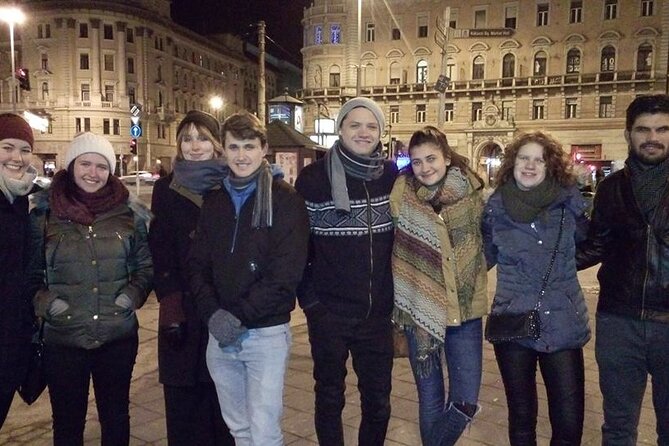
Liberty Square is one of the most important stops on the route. The guide spends about 15 minutes explaining its political past, including the former Stock Exchange and its closure at the beginning of the Communist period.
That detail helps explain the scale of the political change. Communism did not simply replace one government with another. It altered economic life and removed institutions that had operated under an earlier system.
The square was also the scene of bloody protests. Here, I would pay close attention to the guide’s explanation of how public space became a place for resistance, confrontation, and state power. A square can look calm today while carrying memories of fear and violence.
Liberty Square is also a place where several layers of twentieth-century history meet. The information supplied for the tour specifically links it with Communist history and protest, while other nearby monuments may add to the setting. I would let the guide direct the focus rather than trying to turn this stop into a general monument tour.
The 15-minute visit is short enough to keep the walk moving, but long enough for a useful explanation. If you are especially interested in political symbolism, this may be one of the strongest parts of the route.
More history walks in Budapest:
- Budapest: Historic Cruise with Welcome Drink
★ 4.7 · 6,512 reviews - Budapest Historical Sightseeing – Free Walking Tour
★ 5.0 · 1,302 reviews - Buda Castle District Dark History, Legends and Vampire Night Tour
★ 4.5 · 1,240 reviews - BloodThirsty Hungary: Walking tour & Dark Historical Stories
★ 4.9 · 633 reviews
Parliament Square and the 1956 uprising
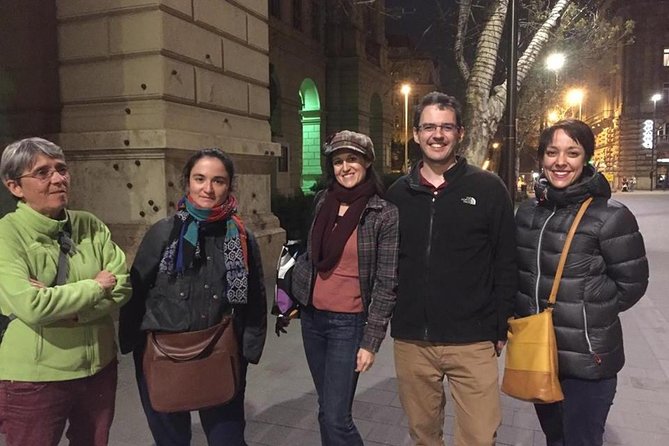
The tour ends at Kossuth Lajos tér, the square beside the Hungarian Parliament Building. The stop lasts about 15 minutes and focuses on the 1956 uprising against the ruling Communist Party.
This is where the walk reaches its most painful subject. The site saw considerable bloodshed, and the guide explains why Parliament Square became central to the uprising. Standing in the place itself helps you understand the physical setting of the events in a way a general city tour usually cannot.
The ending also gives the route a clear arc. You begin with changes to streets and monuments, then look at religion and personal choices, move to economic and political protest at Liberty Square, and finish at the center of the 1956 revolt.
The tour ends on Parliament Square, close to Kossuth Lajos tér red-line metro station and tram 2. That is convenient if you want to continue exploring Budapest or return to your hotel by public transport.
Parliament Square is one of the more attractive parts of the walk, but the subject is not light. I would not book this tour expecting only pretty evening views. Its purpose is to explain resistance, sacrifice, and the effects of political rule.
What the guide adds beyond a museum visit
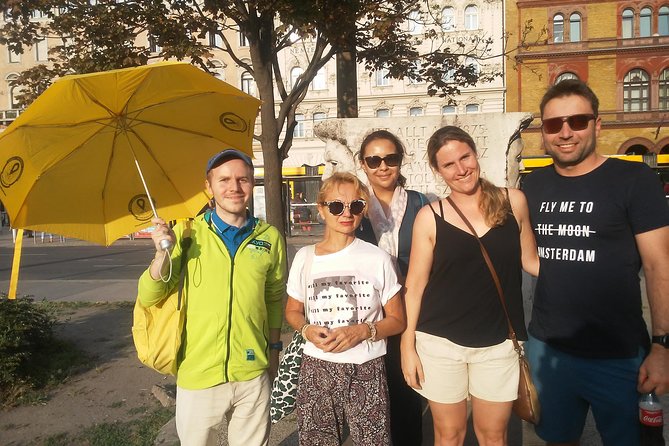
A museum can show documents, photographs, and objects. This walk adds movement and place. You can connect each explanation with the street, building, or square where the story unfolded.
That is particularly helpful for visitors who find dates and political labels hard to remember. The guide can show how one part of central Budapest relates to another, then explain what changed in that area. The route gives you a physical sequence to remember after the tour ends.
The strongest guide style here appears to be personal and direct. Victoria is described as a university history professor who explains not just the official story, but also what it was like to live in Budapest and how the Communist period affects society today.
That present-day connection is one of the tour’s best features. You are not asked to treat communism as a closed chapter with no bearing on modern Hungary. Instead, the walk asks you to consider how past regimes influence public memory, culture, religion, and political attitudes.
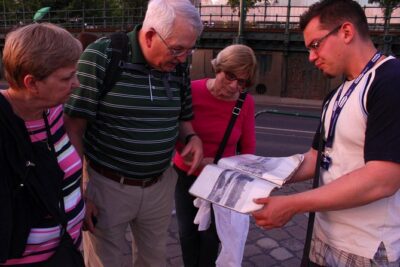
The guide is also expected to answer questions. If you have a particular interest in resistance, football, church life, or the 1956 uprising, this small group format gives you a better chance to raise it than a large bus tour would.
Group size, walking demands, and comfort
The maximum group size is 15 people. That is small enough for a more personal exchange, though the actual feel depends on how many people book a particular departure.
You need to be able to walk or wheel yourself for about 3 kilometers. The tour takes place outdoors and includes sidewalks, avenues, and public squares. I would wear comfortable shoes and bring a light layer, since the start is in the evening and weather can change.
Bottled water is included. That is a modest benefit, but it is useful on a walking route with several stops. Alcoholic drinks, parking, and various landing or facility fees are not included. Scuba equipment is also listed among the exclusions, though it has no practical connection to this city walk.
Service animals are allowed, and the meeting point is near public transportation. Most people who can manage the stated walking distance should be able to take part.
The tour requires good weather. If poor conditions cancel it, you are offered another date or a full refund. Since the experience is entirely built around walking and outdoor explanations, this weather condition makes sense.
Is $36.01 a fair price?
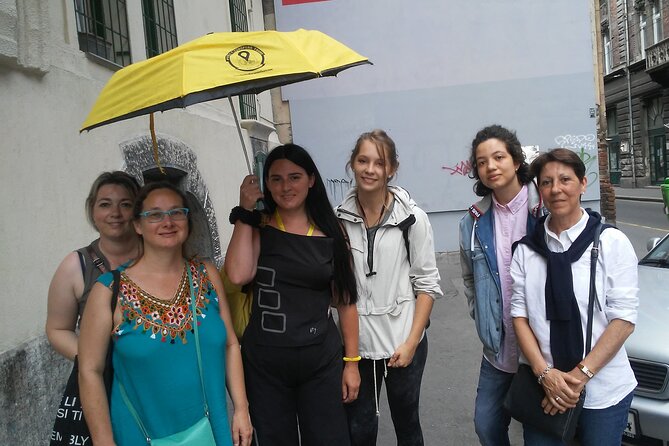
At $36.01 per person, this is not the cheapest way to spend two hours in Budapest. You can walk past many of these buildings on your own without paying anything.
The value comes from the explanation. A self-guided walk can show you St. Stephen’s Basilica, Liberty Square, and Parliament, but it is much harder to understand what happened there, why the sites matter, and how the Communist period changed Hungarian life.
The tour also covers about 22 locations and monuments, not just the three main stops. That gives you a broader route through central Budapest than the short stop list suggests. Some locations may be less scenic, but their historical importance is part of the point.
I would consider the price reasonable if you care about twentieth-century Europe, political history, or modern Hungary. It is less useful value if you want a general introduction to Budapest’s architecture, a church interior tour, or a broad sightseeing walk with many major attractions.
A visit to the House of Terror Museum can work well alongside this experience. The walking tour gives you streets, squares, and a guide’s spoken context. The museum offers a more concentrated presentation of dictatorship and repression. Taking both would give you a fuller picture, although the subjects can make for a serious day.
Who will get the most from this walk?
I would recommend it most strongly to:
- History-focused visitors who want more than dates and famous buildings.
- First-time visitors who want to understand how central Budapest connects to twentieth-century politics.
- People interested in Communism and resistance across Central and Eastern Europe.
- Students and families with older children who can manage the walking distance and engage with difficult subjects.
- Visitors who prefer small groups and the chance to ask questions.
- Anyone curious about modern Hungarian society, not only the period before 1989.
I would be more cautious if you dislike outdoor walking, need a quiet indoor setting, or want a light evening activity. The tour deals with protests, bloodshed, religious restrictions, and the sacrifices made in resisting Communist rule.
It can also be less suitable for someone looking for a general Budapest orientation. The route includes attractive places, but its purpose is political and social history rather than a complete introduction to the city.
Booking, cancellation, and the final call
You receive confirmation at booking. Free cancellation is available until 24 hours before the 6:00 pm start time for a full refund. Changes or cancellations inside that 24-hour window are not accepted for a refund.
The tour needs a minimum number of participants, so a departure can be canceled if that number is not reached. In that case, you are offered another date or experience, or a full refund.
I would book this Communist History Evening Walking Tour of Budapest if you want to understand the city through its recent political past. The strongest reasons are the compact route, the small group, the focus on real places, and the chance to hear a guide such as Victoria connect historical events with life in Hungary today.
I would skip it if your priority is grand architecture, shopping, or a relaxed sunset stroll. For the right audience, though, the $36.01 price buys something a free walk cannot: a clear thread joining streets, institutions, personal stories, and the long road from Communist rule toward freedom.
FAQ
How long does the Communist History Evening Walking Tour of Budapest last?
The tour lasts approximately two hours.
Where does the tour begin?
It begins at Blaha Lujza tér in Budapest, Hungary, at 6:00 pm.
Where does the tour end?
The tour ends at Parliament Square, at Kossuth Lajos tér 1-3. It is close to Kossuth Lajos tér red-line metro station and tram 2.
How far do you walk?
You must be able to walk or wheel yourself approximately 3 kilometers.
What language is the tour offered in?
The tour is offered in English.
How many people can join the tour?
The maximum group size is 15 participants.
Is bottled water included?
Yes. Bottled water is included. Alcoholic beverages, parking fees, and other listed facility or landing fees are not included.
More Budapest Evenings
- Budapest: 1-Hour Evening Sightseeing Cruise with Drink
★ 4.5 · 8,330 reviews - Budapest By Night Sightseeing Cruise
★ 4.1 · 5,835 reviews - Budapest: Evening Cruise including Drinks and Live Music
★ 4.1 · 5,512 reviews - Budapest: Buda Castle District Vampires and Myths Night Tour
★ 4.6 · 3,830 reviews
More Walking Tours in Budapest
- Budapest: Buda Castle Walk with Saint Stephen’s Hall
★ 4.5 · 3,012 reviews - Big Bus Budapest Hop-On Hop-Off Bus and Walking Tour
★ 3.5 · 2,206 reviews - Budapest: Buda Castle District Walking Tour
★ 4.6 · 2,108 reviews - Budapest City Landmarks Walking Tour in 2 Hours
★ 5.0 · 2,048 reviews
Recently added around Budapest
- Hiking + Chairlift ride + viewpoints in Budapest★ 5.0 · 3 reviews
- FoolsCode: EscapeRoom/Sightseeing tour with Actor Tourguide★ 5.0 · 3 reviews
- Grand Budapest tour with private transportation★ 5.0 · 3 reviews
- Budapest: Private Customizable Tour in French★ 5.0 · 3 reviews
- Budapest: Private, Personalized Pub Crawl, 3 drinks included★ 4.5 · 3 reviews
- Budapest Drinks and Piano Show Cruise★ 4.5 · 3 reviews
- Discover Budapest Using Tram Two★ 5.0 · 3 reviews
- Budapest: Private 3-Hour Gödöllő Palace Tour★ 4.9 · 3 reviews
Communist-Era History Tours, compared.
Communist History Tour with House of Terror Option
Read our review →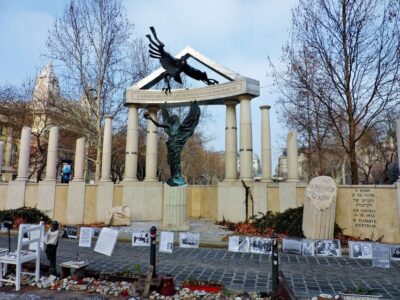
3-Hour Walking Tour About Communism (Small Group)
Read our review →

Lives of Hungarians Under Communist and Capitalist system
Read our review →
Private Budapest Hammer & Sickle Communist Times Tour
Read our review →
Browse the lists this tour appears in