
Reviewed · COMMUNIST-ERA HISTORY TOURS
Life Under Communism” with optional visit to the House of Terror
Budapest’s communist past is not locked away in one museum. It appears in Soviet memorials, bullet-scarred walls, grand public squares, and the stories tied to the 1956 uprising. This private walking tour connects those pieces, then lets you add either Memento Park or the House of Terror Museum.
I like the personal scale, since your group of up to five gets one guide rather than a large crowd. I also like the mix of political history and ordinary life, including a coffee stop at Bambi Presszó, a café linked with old communist-era culture.
The main caution is that the tour has several options, and the difference matters. Confirm exactly what you selected, especially the museum visit, admission, coffee, and local transportation, before setting out.
In This Review
- Key points to know before booking
- Why Budapest’s communist past works best as a walking story
- Liberty Square and the Soviet memorial
- Kossuth Square and the 1956 massacre
- Petőfi Statue and the Danube-side route
- Corvin köz and the young fighters of 1956
- Gellért Square and the Liberty Statue
- Memento Park: Soviet statues outside the city center
- House of Terror: a darker museum choice
- Coffee at Bambi Presszó
- Price, private format, and overall value
- Who should book this Budapest history tour
- Should you book it?
- FAQ
- How long does the tour last?
- Is this a private tour?
- What language is offered?
- Does the tour include hotel pickup?
- Can I choose the House of Terror Museum?
- Is Memento Park included?
- Is coffee at Bambi Presszó included?
- What is the cancellation policy?
Key points to know before booking
- A private history walk: Your group alone takes part, with an English-speaking local guide.
- Strong 1956 focus: Liberty Square, Kossuth Square, and Corvin köz connect directly to Hungary’s revolution.
- Bambi Presszó stop: Plan for coffee and conversation about daily life behind the Iron Curtain.
- Two different add-ons: Choose Memento Park for statues and public memory, or the House of Terror for a museum experience.
- Three hours is a tight fit: The city route covers several districts and may feel brisk, especially with a museum visit.
- Best for history-minded visitors: The tour suits you if you want context, personal stories, and discussion rather than a quick list of sights.
Why Budapest’s communist past works best as a walking story
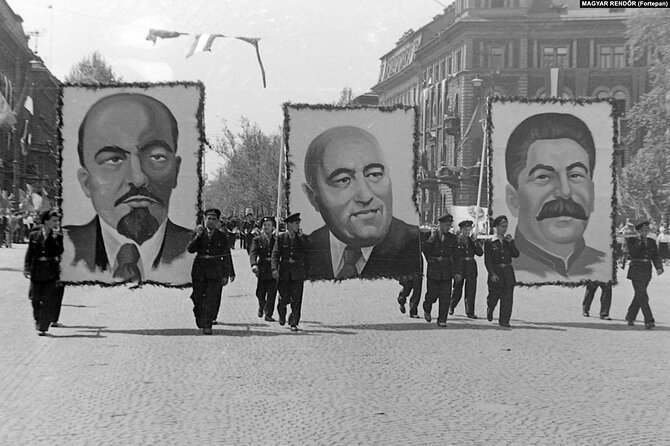
A standard Budapest sightseeing walk usually gives you the Parliament, the Danube, and a few grand buildings. This experience asks a different question: what happened here when Hungary was controlled by a one-party state and tied to the Soviet Union?
The answer comes through places that still look ordinary. A broad square becomes the setting for a postwar Soviet memorial. A pleasant city-center park recalls a prison-like Habsburg building and later political events. A residential corner recalls young people facing Soviet tanks with improvised weapons.
That is the tour’s main strength. You are not only looking at objects. You are connecting public spaces with fear, protest, war, and daily survival.
The company is small, and the guides have different backgrounds and styles. Miklós is described as a teacher-like guide who can give a condensed account of Hungarian history and answer detailed questions. Balázs is noted for adapting the walk to the group and adding personal stories. Another guide, Agy, is described as having firsthand experience of the communist period.
That personal element matters here. Political history can become a parade of dates. A guide who can explain how people managed work, food, travel, censorship, and public speech gives the subject a human scale.
More on Budapest under communism:
- Budapest: Communist History Tour with House of Terror Option
★ 4.8 · 182 reviews - Communism in Hungary with a Historian
★ 5.0 · 70 reviews - Budapest: 3-Hour Walking Tour About Communism (Small Group)
★ 4.7 · 70 reviews
Liberty Square and the Soviet memorial
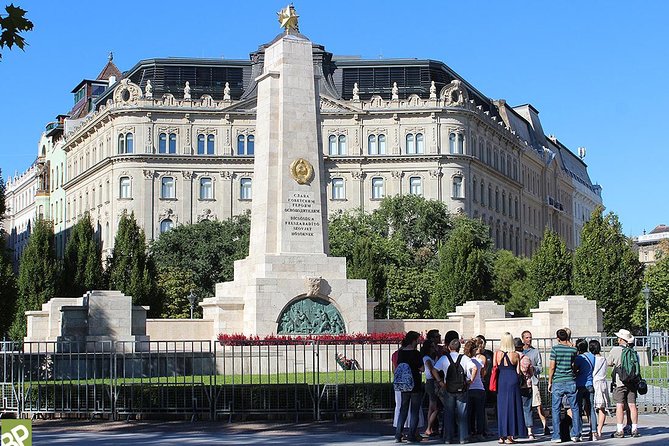
The tour begins at Liberty Square, or Szabadság tér. The first major subject is the Soviet memorial to the siege and capture of Budapest near the end of World War II.
The monument recalls the 50-day encirclement of the city by Soviet forces. Its message is politically loaded. The Soviet army helped defeat Nazi Germany, but Soviet military control also led to decades of communist rule. You get to consider both facts at once, which is essential for understanding why the monument remains a difficult subject in Budapest.
Liberty Square itself helps explain the city’s changing power structures. During the Habsburg era, the site held the Újépület, a fortress-like building often compared with the Bastille. Later, the space became an open civic area surrounded by government and financial buildings.
The square is a good first stop because it does not feel like a museum. People sit, walk, and rest here. You are looking at a normal public space while discussing war, occupation, and political memory. That contrast gives the stop its force.
Expect some standing and walking while the guide explains the memorial and the square. If you prefer long, quiet visits at each site, mention that early. The route covers a lot in a short time.
Kossuth Square and the 1956 massacre
From Liberty Square, the route continues toward Kossuth Square, home of the Hungarian Parliament Building. The building is one of Budapest’s grandest sights, but the tour focuses less on its architecture and more on what happened in front of it.
During the 1956 revolution, civilian demonstrators gathered here. A firefight broke out, and many people were killed. The exact death toll remains uncertain. The crowd included men, women, children, and older people, a detail that helps you picture the event as a civilian tragedy rather than a simple clash between armed groups.
The massacre helped push Budapest and the country toward open revolt. Soon, local resistance fighters confronted Soviet forces, and the uprising became one of the defining events of Hungary’s twentieth century.
You have about 20 minutes at Kossuth Square. That is enough for an explanation and an exterior look, but not a full Parliament tour. Admission to the building is not part of the listed experience.
The square also gives you a chance to pause and orient yourself. Across from Parliament are the Museum of Ethnography and the Ministry of Agriculture. The setting is formal and impressive, yet the history discussed here is tense and unresolved.
Petőfi Statue and the Danube-side route
The route then reaches the Petőfi Statue and Március 15. Square near the foot of Erzsébet Bridge. The statue honors Sándor Petőfi, a poet closely associated with Hungarian national identity and revolution.
This is also the location of Budapest’s oldest church. The square was renovated in 2011 and functions as a social space as well as a sightseeing stop. That makes it useful for the tour’s wider theme: political history does not happen only in official buildings. Statues, bridges, squares, and gathering places all shape how a city remembers itself.
The walk across one of Budapest’s bridges adds a welcome change of pace. You move from Pest toward Buda and arrive near Gellért Hill. The bridge crossing gives you views of the river and the city, though the tour’s main focus remains the historical meaning of the places around you.
Bring comfortable shoes. The route crosses several central areas, includes a bridge walk, and continues through different parts of the city. The operator describes the physical demand as moderate, and the tour is near public transportation.
A different kind of day in Budapest:
- Budapest: City Highlights Cruise with Welcome Drink
★ 4.6 · 35,610 reviews - Budapest: Unlimited Prosecco, Beer and Aperol Spritz Cruise
★ 4.8 · 25,310 reviews - Budapest: Széchenyi Spa Day Ticket with Optional Upgrades
★ 4.3 · 23,911 reviews - Budapest: Nighttime or Daytime Sightseeing Cruise
★ 4.2 · 21,062 reviews
Corvin köz and the young fighters of 1956
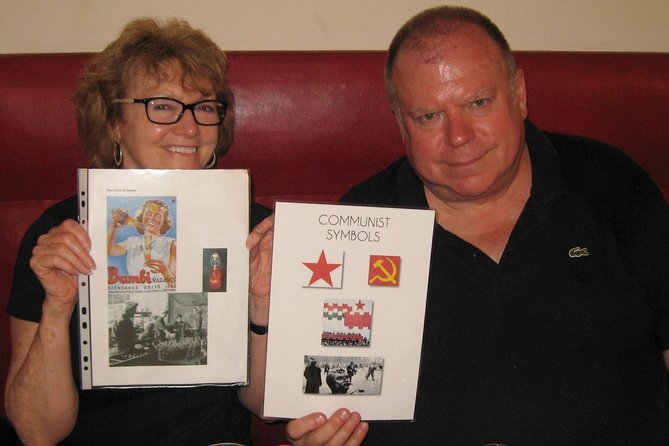
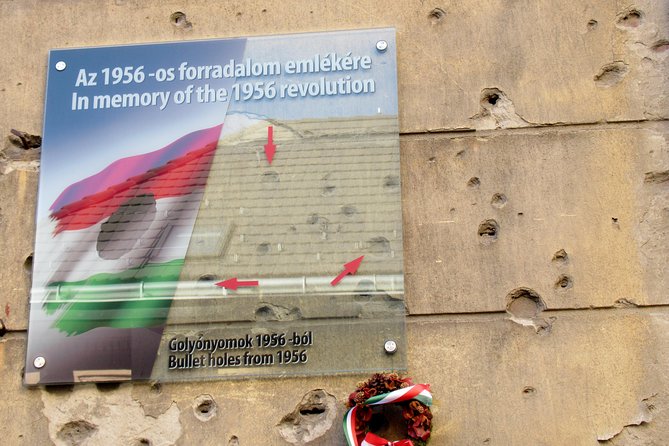
Corvin köz is one of the most important stops for understanding the 1956 revolution. In October and November 1956, local young people made this area a major resistance center.
They used Molotov cocktails and guns taken from soldiers against Soviet tanks. The image is striking because it shows how uneven the fight was. These were not conventional military units with matching equipment. They were local fighters using the streets and buildings they knew.
The guide discusses the battle, the Soviet invasion, and the aftermath. This is likely to be one of the most vivid sections of the tour because the location helps you imagine the conflict at street level.
Corvin köz also corrects a common oversimplification. The 1956 uprising was not only a debate among politicians. It involved students, workers, families, and neighborhood groups. The site brings that wider participation into view.
If you want a serious discussion of the revolution, this stop deserves time. If your group is mainly interested in architecture or broad city sightseeing, the detail may feel heavy. That is the basic choice with this tour: it favors explanation over a fast-moving checklist.
Gellért Square and the Liberty Statue
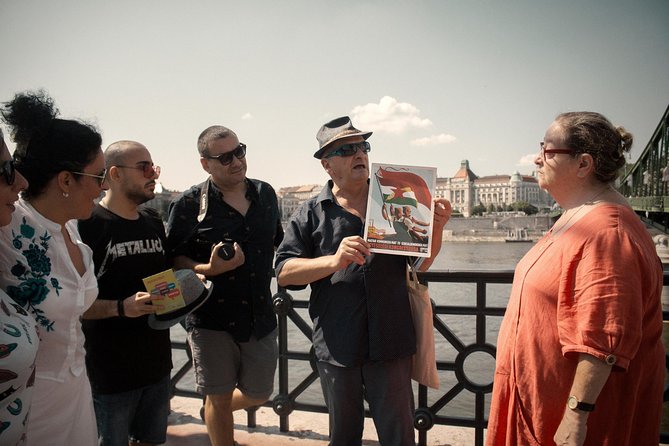
The walk ends in the Gellért Hill area, at St. Gellért Square. The square is named for Bishop Gellért, also called the Martyr in connection with Hungarian Christianity.
From here, you can see the Liberty Statue, erected in 1947 to commemorate the Soviet liberation of Hungary. Once again, the symbolism is complicated. The statue originally celebrated Soviet victory, but later political changes altered how Hungarians viewed such monuments.
This is a fitting final city stop because it brings the tour back to the problem of public memory. A monument can carry one message when it is built and a different message decades later. The guide can help you understand that change without reducing it to a simple good-versus-bad story.
The city portion is advertised at about three hours, but the exact length depends on the selected option and the pace of your group. One account describes a private visit lasting more than four hours, partly because the guide adjusted the route for a group member with limited mobility. Do not assume that every booking will run that long, but the example shows that the guides may adapt when time allows.
Memento Park: Soviet statues outside the city center
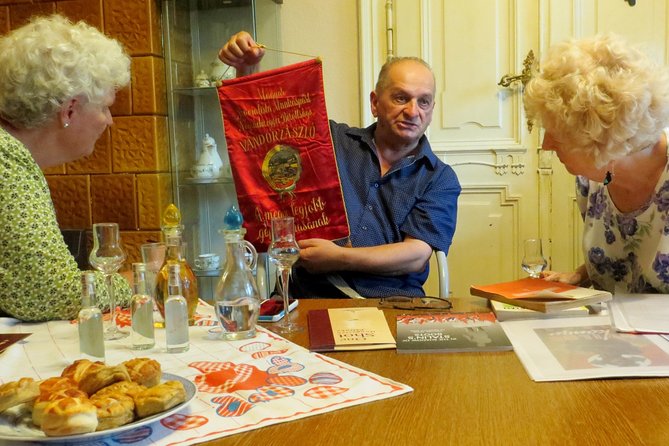
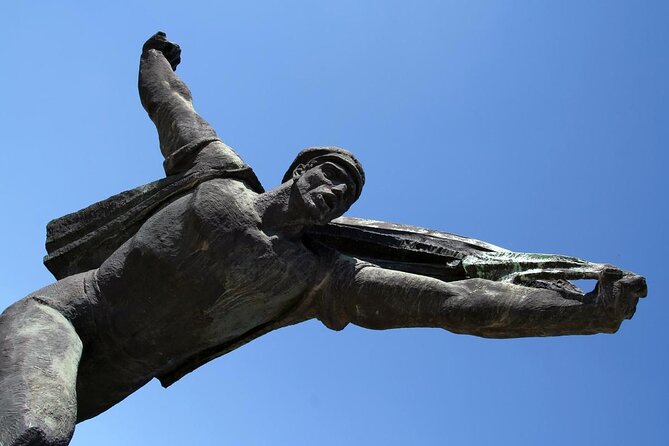
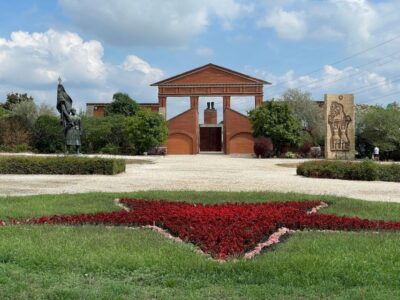
Memento Park is the choice for you if you want to examine communist-era monuments in one place. After the collapse of communism in 1989, Budapest had to decide what to do with public statues celebrating the old system.
Instead of destroying them all, the city saved many and created Memento Park in 1993. The result is an open-air collection of monuments removed from their original settings.
That relocation is part of the point. A statue that once commanded a central square loses some of its power when placed among other discarded symbols. You can look at the figures, slogans, and heroic poses with more distance. The park turns political art into an object for study.
The visit lasts about one hour, and admission is included when this option is chosen. Local transportation is a separate practical matter to clarify. The route to the park requires getting beyond the central sightseeing area, and a private guide may use Budapest’s public transport with you. A group transport pass was mentioned as an extra cost in one experience, so ask what fares you should expect.
Memento Park is not a substitute for the House of Terror. It is quieter and more focused on monuments and state symbolism. Choose it if you want to understand how a city handles unwanted statues after a political system falls.
House of Terror: a darker museum choice
The House of Terror Museum offers a more concentrated indoor experience. It occupies a building on Andrássy Avenue that was used by both the Hungarian fascist Arrow Cross movement and the communist state security apparatus.
The exterior was rebuilt with a stark black frame, blade-like walls, and a granite walkway. Inside, a Soviet T-54 tank is on display. The building itself is designed to feel like a memorial, not just a collection of objects.
The visit lasts about one hour, with admission included when this option is selected. The museum deals with repression under two successive dictatorships, so the tone is far darker than the city walk. You should choose it if you want exhibits and a strong visual presentation of imprisonment, surveillance, and political terror.
You should also confirm the exact booking choice. The experience has a city-only option, a Memento Park option, and a House of Terror option. The distinction is important, and a receipt or booking page may not be enough if the option name is unclear to you. Contact the operator before the day of the tour if the museum is the main reason you are booking.
The museum can also change the rhythm of the day. A guide may give historical context outside, but the time inside is not the same as having a private lecture in every gallery. If you want to spend much longer examining the exhibits, a separate museum visit may suit you better.
Coffee at Bambi Presszó
The stop at Bambi Presszó gives the experience a welcome everyday angle. This café is described as the last stronghold of communist culture, making it a useful place to discuss what life felt like beyond official speeches and monuments.
A café can reveal small details that political sites cannot. You may hear about routines, social habits, shortages, public caution, and the ways people learned to live with a system they could not openly challenge. The setting also gives your feet a break.
Food and drink are not included in the listed price, so budget for your own coffee. One past booking raised confusion about this point. I would ask before the tour begins rather than assume the drink is covered.
Price, private format, and overall value
The listed cost is $280.33 per group of up to five people. At the maximum group size, that works out to roughly $56 per person. For two people, the per-person cost is much higher, but you are paying for a private guide rather than a seat on a large group walk.
That private format is valuable if you want to ask questions or shape the conversation around family history, the 1956 revolution, or daily life under communism. It also lets the guide adjust the pace. Several accounts describe guides helping with Budapest transportation and offering suggestions for time after the tour.
The value is less clear if you mainly want a quick introduction to Budapest. The route is historical and discussion-heavy, and the price does not automatically cover every possible extra. Food and drink, hotel pickup and drop-off, and entrance tickets not listed are excluded. The selected visit option determines whether Memento Park or the House of Terror admission is included.
The experience is booked, on average, about 28 days ahead. That suggests you should reserve early if your dates are fixed, especially since private tours have limited guide availability. Confirmation arrives at booking, and free cancellation is available until 24 hours before the start time.
Children must be accompanied by an adult. Service animals are allowed. The tour is near public transportation, but the route calls for moderate physical fitness and includes walking through central Budapest.
Who should book this Budapest history tour
I would choose this experience if you want more than a monument-by-monument explanation. It suits history students, families with an interest in twentieth-century Europe, and anyone who wants to understand why Budapest’s public spaces carry such complicated messages.
It is also a good fit if you value a flexible guide. Miklós, Balázs, and Agy are associated with different strengths, including personal stories, historical detail, and help using public transportation. You can ask for a guide who matches your interests when making contact, though a specific guide may not be guaranteed.
I would be cautious if you need a polished, tightly scripted presentation. The quality depends heavily on the individual guide, and some people have found a guide too quiet or too restrained. If you have hearing concerns, ask for clear projection and request that smoking not take place during the walk.
For the add-on, choose Memento Park for monuments, state art, and the question of what happens to statues after a dictatorship ends. Choose House of Terror for a more intense museum visit about repression. Do not assume you will receive both in a three-hour experience.
Should you book it?
Book this tour if Budapest’s communist era is a priority and you want a private conversation tied to real places. The strongest parts are the 1956 sites, the personal accounts, the Bambi Presszó stop, and the chance to see how political symbols change meaning.
Before paying, confirm four things: your guide, your chosen option, what admission covers, and the cost of coffee or local transportation. With those details clear, this can be a thoughtful and unusual way to understand modern Budapest. If you want only major sights and light commentary, spend your money on a standard city tour instead.
FAQ
How long does the tour last?
The tour is advertised at approximately three hours. A private booking may last longer if the guide adjusts the pace or route, but you should plan around the stated duration.
Is this a private tour?
Yes. Only your group takes part, with a maximum of five people per group.
What language is offered?
The experience is offered in English.
Does the tour include hotel pickup?
Pickup is offered as a feature, but hotel pickup and drop-off are listed as not included. Confirm the exact pickup arrangement before booking.
Can I choose the House of Terror Museum?
Yes. The House of Terror is one of the available visit options. Select or confirm that option specifically, since the city route and Memento Park are separate choices.
Is Memento Park included?
Admission to Memento Park is included when that option is chosen. Local transportation and any other unlisted entrance costs should be confirmed separately.
Is coffee at Bambi Presszó included?
Additional food and drink are not included. Plan to pay for your own coffee unless the operator confirms otherwise for your booking.
What is the cancellation policy?
You can cancel at least 24 hours before the local start time for a full refund. Cancellations or changes made less than 24 hours before the start time are not accepted for a refund.
Recently added around Budapest
- Hiking + Chairlift ride + viewpoints in Budapest★ 5.0 · 3 reviews
- FoolsCode: EscapeRoom/Sightseeing tour with Actor Tourguide★ 5.0 · 3 reviews
- Grand Budapest tour with private transportation★ 5.0 · 3 reviews
- Budapest: Private Customizable Tour in French★ 5.0 · 3 reviews
- Budapest: Private, Personalized Pub Crawl, 3 drinks included★ 4.5 · 3 reviews
- Budapest Drinks and Piano Show Cruise★ 4.5 · 3 reviews
- Discover Budapest Using Tram Two★ 5.0 · 3 reviews
- Budapest: Private 3-Hour Gödöllő Palace Tour★ 4.9 · 3 reviews
Communist-Era History Tours, compared.
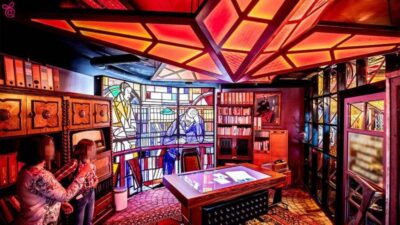
Communist History Tour with House of Terror Option
Read our review →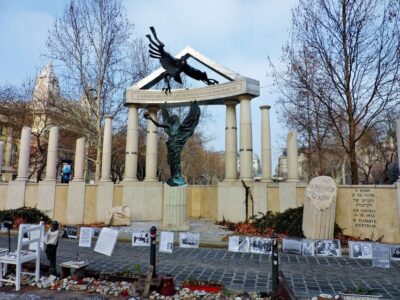
3-Hour Walking Tour About Communism (Small Group)
Read our review →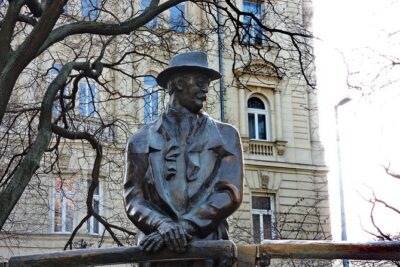
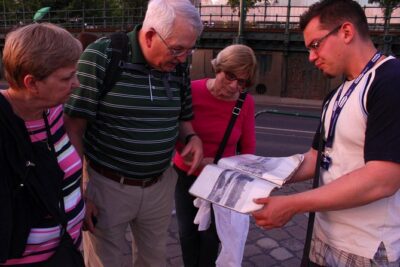

Lives of Hungarians Under Communist and Capitalist system
Read our review →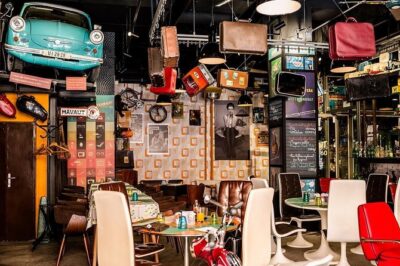
Private Budapest Hammer & Sickle Communist Times Tour
Read our review →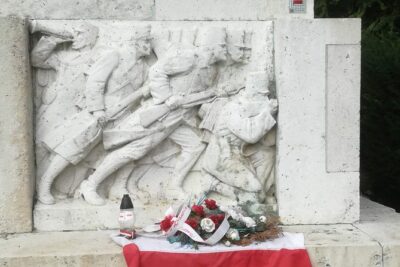
Browse the lists this tour appears in