
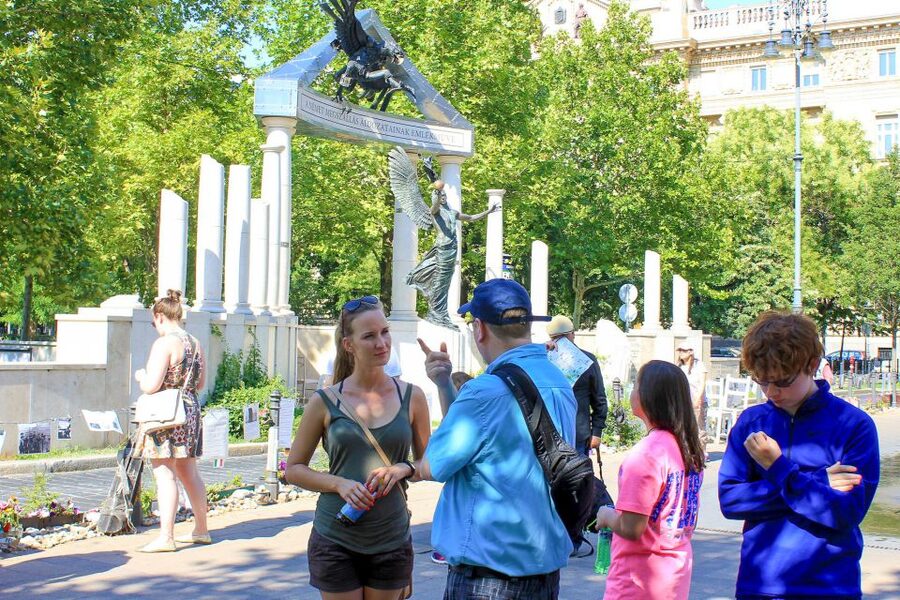
Reviewed · COMMUNIST-ERA HISTORY TOURS
Budapest: Hammer & Sickle Communism Walking Tour
Budapest’s communist past is easiest to understand on foot, where ordinary streets become places of protest, control, and compromise. This 2.5-hour walk connects daily life behind the Iron Curtain with the 1956 Revolution, then leads you toward Parliament and Liberty Square’s Soviet memorial.
I like the focus on everyday questions, such as getting a passport, going to school, driving Trabant cars, and even drinking spirits at work. I also like the small exhibition on 1956 and the chance to hear how early protests grew into open resistance. The main drawback is the $72 price, which may feel high if you already know Hungarian history or prefer a self-guided walk.
The tour is best for adults and older teenagers who want context rather than a quick photo stop. One guide named George earned special praise for an engaging walk, while another visitor found the presentation short on energy and structure. Your experience will depend partly on the guide assigned to your small group.
In This Review
- Key points at a glance
- Why Budapest’s communist story works best as a walking tour
- Meeting at Deák Ferenc Square
- Daily life behind the Iron Curtain
- The 1956 Revolution and the first protests
- Walking through downtown Pest to Parliament
- Liberty Square and the last Soviet monument
- The included coffee and Hungarian treat
- Is $72 a fair price?
- Who should book this experience?
- Practical details before you reserve
- Should you book the Hammer & Sickle tour?
- FAQ
- How long does the Budapest communist walking tour last?
- Where does the tour meet?
- Is the tour offered in English?
- What places does the tour visit?
- Is food included?
- Is the tour suitable for children?
- Can I cancel the booking?
Key points at a glance
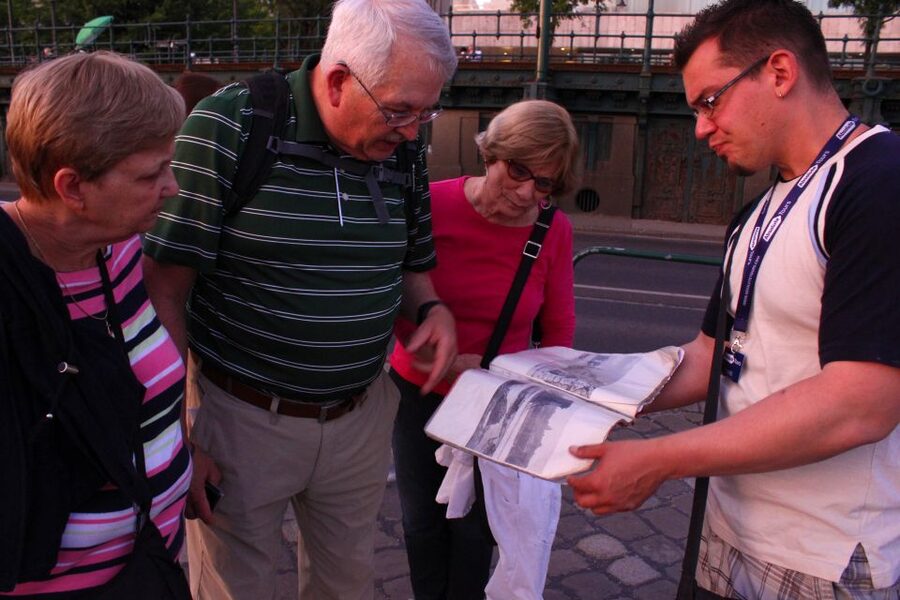
- 1956 Revolution exhibition: Visit a small display dedicated to the uprising and the first protests against the communist regime.
- Everyday communist life: Hear how passports, school, work, travel, and consumer goods shaped daily life.
- Parliament and Liberty Square: Walk through central Pest to major political sites, including the last Soviet monument.
- Two hours of continuous walking: Wear good shoes and prepare for changing weather.
- English-speaking guide: A licensed guide leads the walk, with private and small-group choices available.
- Coffee or a soft drink included: The refreshment gives the tour a pleasant pause, though food is not included.
Why Budapest’s communist story works best as a walking tour
Hungary’s communist period lasted roughly 50 years, but a list of dates does not tell you what that period felt like. This walk aims to connect political events with the small rules and habits that shaped ordinary life.
You will hear about living behind the Iron Curtain, when international travel was tightly controlled and a passport was not a routine item in a drawer. You will also learn about school life, work, cars, and social customs. The details about Trabant cars and workplace drinking may sound amusing now, but they help explain the shortages, routines, and odd compromises of the time.
I find this approach more useful than a tour that talks only about party leaders and monuments. You can understand a regime better when you learn what it meant for a family trying to travel, a student sitting in class, or a worker navigating an official workplace.
The setting helps. You are not shut inside a museum for the entire experience. You walk through downtown Pest, where the streets, squares, and government buildings provide the backdrop for the story. The past is discussed in the same places where political power and public protest once collided.
More on Budapest under communism:
- Budapest: Communist History Tour with House of Terror Option
★ 4.8 · 182 reviews - Communism in Hungary with a Historian
★ 5.0 · 70 reviews - Budapest: 3-Hour Walking Tour About Communism (Small Group)
★ 4.7 · 70 reviews
Meeting at Deák Ferenc Square
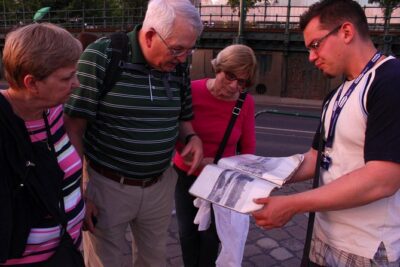
The meeting point is in front of the pale yellow Lutheran Church at 1052 Budapest, Deák Ferenc tér 4. Look for your guide on the church steps.
Deák Ferenc Square is in the heart of downtown, so it is a practical starting point for a walking tour. The central location also means you can reach the meeting point without arranging a separate transfer. Pickup may be available from centrally located accommodation if you provide those details when booking, but pickup and drop-off are not included as standard.
Arrive ready to walk. The tour involves about two hours of continuous movement within the 2.5-hour experience. Comfortable shoes matter more than stylish ones, and weather-appropriate clothing is essential because the tour operates in all weather conditions.
The route is not described as difficult, but it is not designed for people with mobility impairments. You should also plan around the weather. Rain, heat, or cold will affect how much attention you can give to the guide, especially during outdoor explanations in the squares.
Daily life behind the Iron Curtain
The strongest part of the tour is its attention to practical life. Political history can feel remote until you learn how the system affected simple decisions.
Your guide explains how passports worked and what it meant to live in a country where leaving was not as easy as booking a flight. School life is another useful subject, since education reveals how an ideology reached children and families. Work culture, spirits, and the famous Trabant cars add a lighter touch without removing the seriousness of the subject.
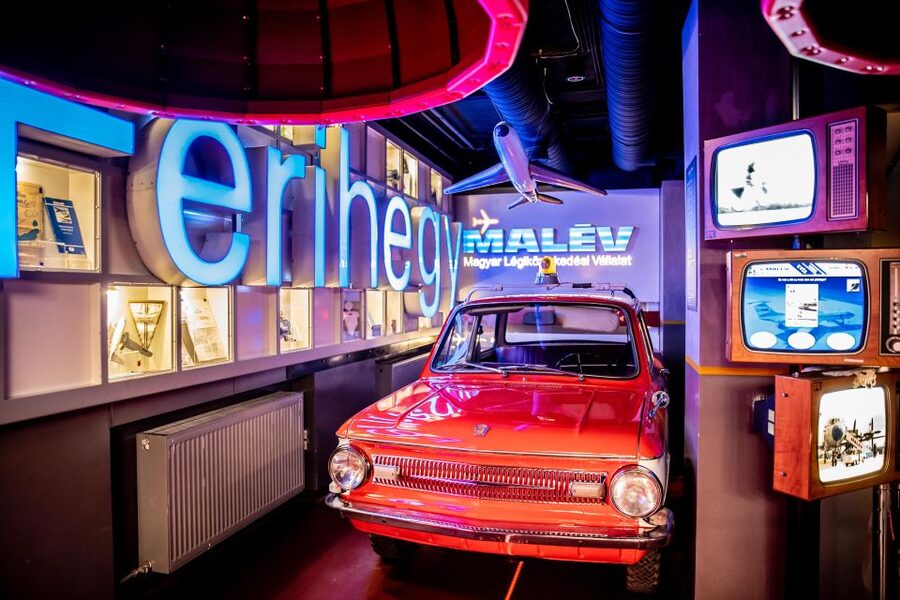
The Trabant is especially useful as a symbol. It was not simply an old car with a distinctive shape. For many people, it represented limited choice, waiting, and the material reality of life under state socialism. You may also hear about the way people negotiated shortages and official rules, though the exact examples can vary with the guide.
I appreciate that this material gives you a way to ask better questions later. Instead of thinking only about communism as a political label, you begin to see it as a system that affected travel, school, employment, transport, and social behavior.
The drawback is that a 2.5-hour tour cannot explain every part of Hungarian life in equal detail. If you want a scholarly study of economics, Soviet influence, or post-1989 politics, this walk will give you a strong starting point rather than the final word.
The 1956 Revolution and the first protests
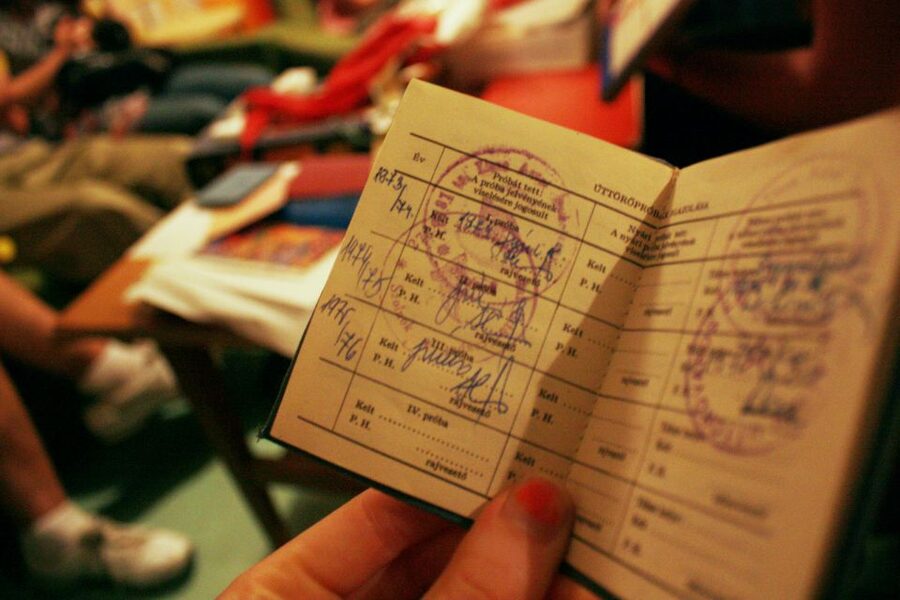
The tour gives special attention to the 1956 Revolution, one of the key events in modern Hungarian history. You visit a small exhibition commemorating the uprising and hear about the first protests against an unethical and repressive regime.
The exhibition is not presented as a huge museum visit. Think of it as a focused stop that supports the guide’s explanation. That can be an advantage if you prefer a moving tour with a few carefully chosen visual details instead of hours spent indoors.
Your guide places the revolution within the larger period of communist rule, explaining how discontent turned into public action. You will hear about the first demonstrations and the fight back against the authorities. The walk then takes you toward places connected with political power, helping you picture how events unfolded in the city.
This is a serious subject, and the tour is not recommended for children under 14. Older teenagers may enjoy it if they have an interest in history, but parents should expect political violence, repression, and difficult choices to be part of the discussion.
The quality of the explanation matters greatly here. One guide, George, was praised for making the subject interesting and conversational. Another visitor wanted a clearer sequence and more enthusiasm. I would choose a private or small-group option if you care strongly about asking questions and keeping the discussion focused.
More walking tours in Budapest:
- Budapest: Buda Castle Walk with Saint Stephen’s Hall
★ 4.5 · 3,012 reviews - Big Bus Budapest Hop-On Hop-Off Bus and Walking Tour
★ 3.5 · 2,206 reviews - Budapest: Buda Castle District Walking Tour
★ 4.6 · 2,108 reviews - Budapest City Landmarks Walking Tour in 2 Hours
★ 5.0 · 2,048 reviews
Walking through downtown Pest to Parliament
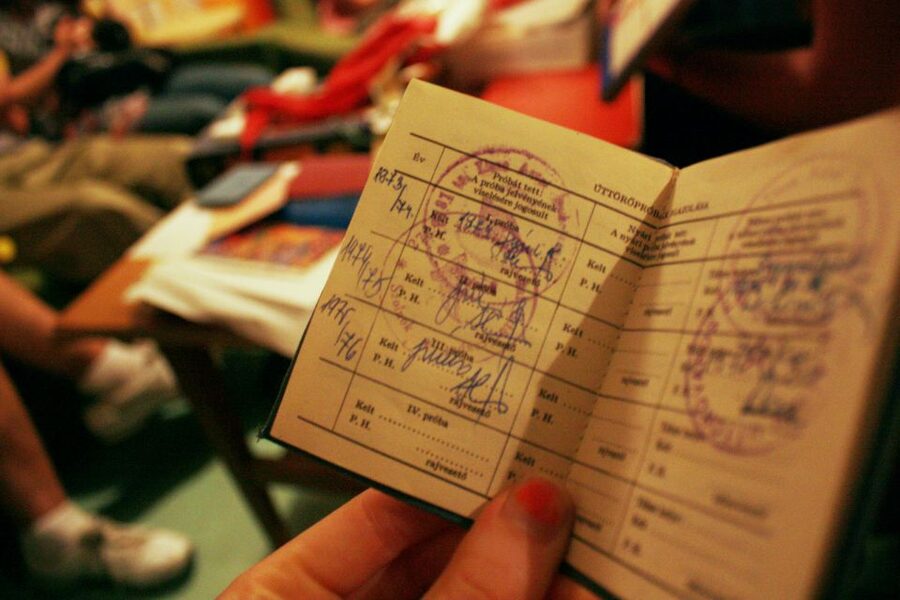
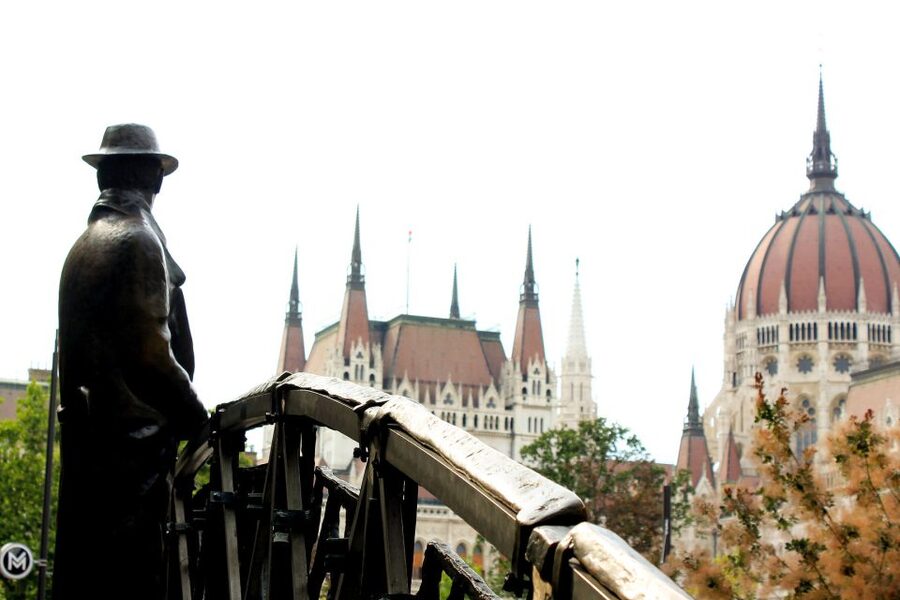
After the historical introduction and exhibition, you follow smaller streets through downtown Pest. The route leads toward the Hungarian Parliament, one of Budapest’s most important political buildings.
The value of this part is not simply seeing Parliament. The building gives the discussion a physical center. You are walking toward a place that represents national government while hearing how power operated during communist rule.
Your guide also points out areas where political action took place. That connection between location and story is what makes a walking tour useful. You are not only memorizing that protests happened in Budapest. You are standing in the city and learning how public spaces became stages for resistance and official power.
Do not expect a full Parliament interior tour from this activity. The listed experience is an outdoor walking route with historical explanations, an exhibition stop, and a refreshment. If you want to tour the Parliament building inside, that would require a separate plan.
The route through Pest should suit you if you enjoy learning while moving. It may be less appealing if you want long pauses, extensive museum time, or a compact sightseeing route with many famous landmarks. The focus is political history, not a general introduction to Budapest.
Liberty Square and the last Soviet monument
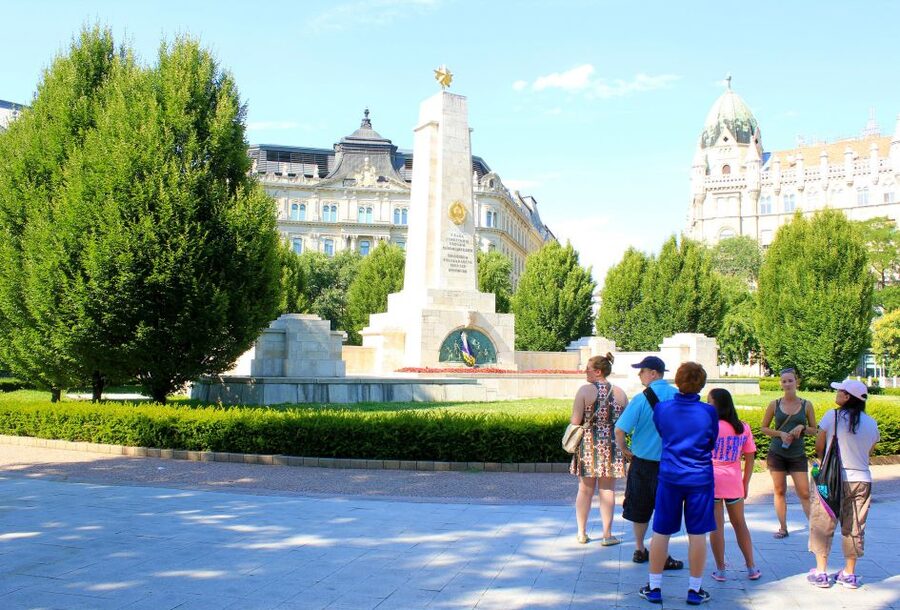
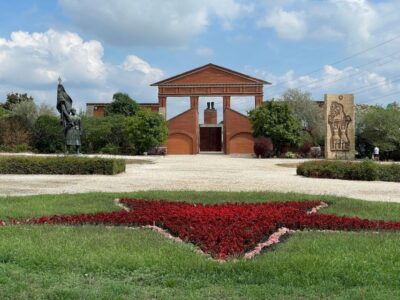
The walk continues to Liberty Square, where you see the last Soviet monument in the area. This is one of the tour’s most meaningful stops because the square brings several layers of Hungarian political memory into one place.
Liberty Square is especially effective for a discussion about memory. A Soviet memorial is not just an object from the past. It raises questions about occupation, liberation, public space, and how a country remembers a difficult period. Your guide provides the context that a quick photograph cannot.
This stop also gives the tour a clear ending point. The walk has moved from daily life, to protest, to national government, and finally to a memorial connected with Soviet power. That sequence helps tie the history together.
You should not expect the monument to be presented in isolation. The point is to understand how it fits into Budapest’s political story. The guide’s skill in keeping the chronology clear will matter, especially for anyone who does not already know the difference between the postwar communist takeover, the 1956 uprising, and later decades of communist rule.
The included coffee and Hungarian treat

A coffee, tea, or soft drink is included. One account of the experience also recalls coffee and a traditional Hungarian dessert at Trabant 60, though the current details specifically list a refreshment rather than a guaranteed dessert.
Treat this as a welcome pause, not a meal. Food is not included, so eat beforehand or plan lunch afterward. The break can also help you absorb a heavy subject. Communist history includes repression and protest, and a short café-style pause keeps the experience from becoming relentlessly grim.
The refreshment has modest financial value, but its practical value is greater. After two hours of walking, a drink is useful, particularly in hot or cold weather. Still, do not book the tour for the included beverage. You are paying mainly for the guide’s interpretation and the route through politically important parts of Pest.
Is $72 a fair price?
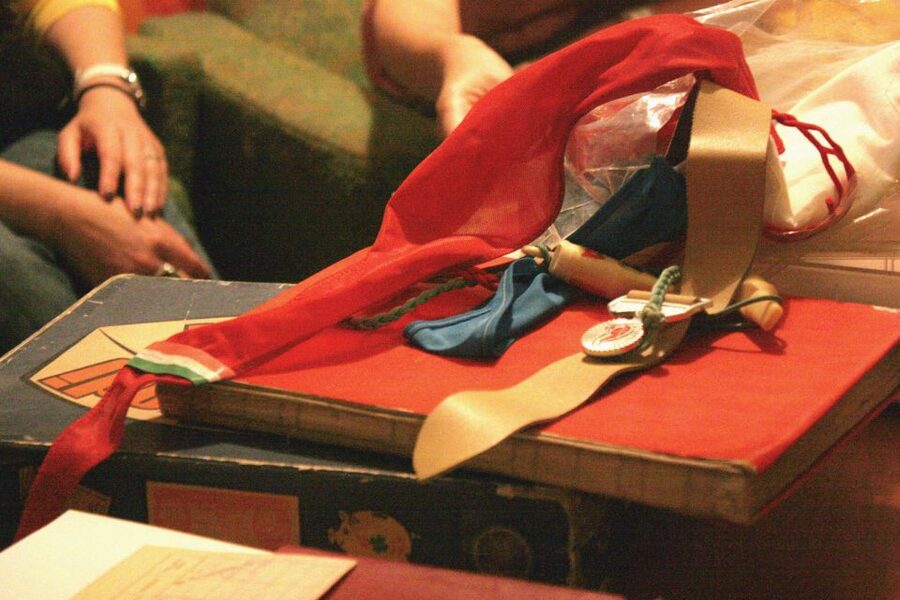
At $72 per person, this is not a bargain-priced stroll. The price makes more sense if you choose a private or small group, want an English-speaking specialist, and value the chance to ask questions about Hungary’s communist period.
A strong guide can make the fee worthwhile. Several people found the tour informative, personable, and easy to follow, including one person who already knew a fair amount about communism and still learned more about Hungary. That is a good sign for history-minded visitors who want local detail rather than a generic Cold War talk.
The value is weaker if you are mainly looking for famous sights. Parliament and Liberty Square can be visited independently, and the walk does not include a full meal or Parliament entry. You are buying interpretation, not a long list of admissions.
The guide can also affect the value. George received special praise for his friendly, informed approach. One less positive experience described the guide as lacking enthusiasm and needing a clearer sequence. I would check whether a private option fits your budget if a personal, question-friendly experience matters to you.
Who should book this experience?
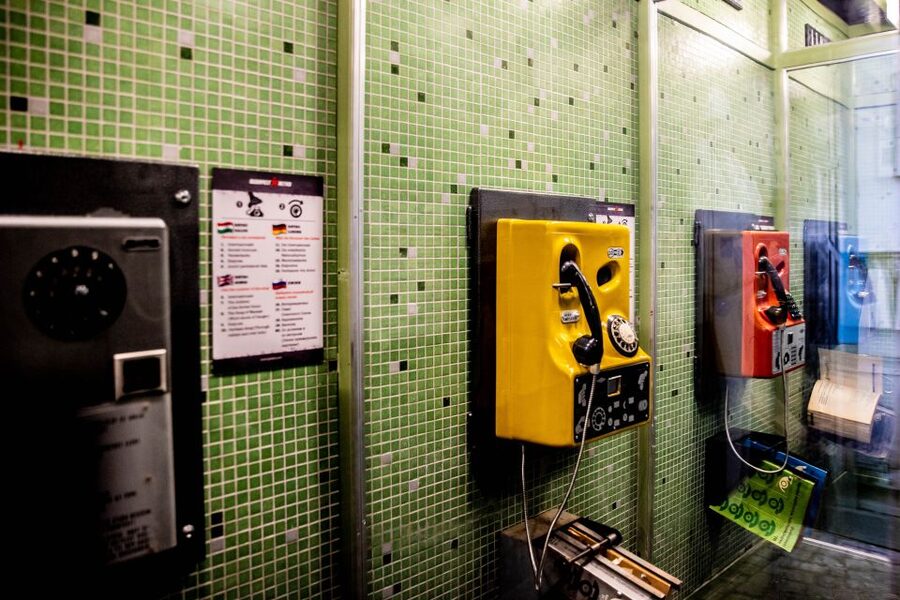
I would recommend this tour to adults, history students, Cold War enthusiasts, and anyone curious about how political systems affect normal routines. It is also a good choice early in a Budapest visit because it gives later sightseeing more context.
You will get the most from it if you already know a little about twentieth-century Europe but want a clearer Hungarian story. You do not need expert knowledge, though. The guide explains the basic framework and then adds local examples about school, passports, cars, work, and protest.
Families with older teenagers may consider it, but children under 14 are not suitable for the subject. The walking requirement also matters. If you have mobility limitations, this is not the right activity.
I would skip it if you want a relaxed sightseeing walk with little political discussion, a food tour, or an indoor museum experience. The subject is the reason to book, and the tour spends much of its time explaining rather than entertaining.
Practical details before you reserve
The tour lasts 2.5 hours and is conducted in English by a licensed live guide. Private and small-group formats are available, and availability should be checked for the starting times that fit your schedule.
Cancellation is free up to 24 hours before the activity for a full refund. You can also reserve now and pay later, which is useful if your Budapest plans are still shifting.
Wear comfortable shoes and clothes suitable for the forecast. Since the tour runs in all weather, bring whatever protection the day requires. There is no standard pickup or drop-off, so plan your route to Deák Ferenc Square unless you arrange optional pickup from centrally located accommodation.
Should you book the Hammer & Sickle tour?
Book it if you want to understand Budapest through the lives of people who lived under communism, not just through monuments and dates. The 1956 exhibition, the walk to Parliament, and Liberty Square’s Soviet memorial give the tour a clear historical shape, while the stories about passports, school, work, and Trabant cars make the subject personal.
At $72, I would call it a worthwhile but not automatic purchase. It is best value in a private or small group with a strong guide, particularly if you are willing to ask questions. If your main goal is cheap sightseeing, explore Liberty Square and Parliament on your own. If you want the political meaning behind those places, this walk is the better choice.
FAQ
How long does the Budapest communist walking tour last?
The tour lasts 2.5 hours. About two hours involve continuous walking.
Where does the tour meet?
Meet at 1052 Budapest, Deak Ferenc ter 4, in front of the pale yellow Lutheran Church, on the church steps.
Is the tour offered in English?
Yes. The tour has a live English-speaking guide.
What places does the tour visit?
The route goes through downtown Pest to the Hungarian Parliament and Liberty Square, where you see the last Soviet monument. It also includes a small exhibition about the 1956 Revolution.
Is food included?
A coffee, tea, or soft drink is included. Food is not included.
Is the tour suitable for children?
The tour is not recommended for children under 14 because of the subject matter. The activity is also not suitable for people with mobility impairments.
Can I cancel the booking?
Yes. You can cancel up to 24 hours in advance for a full refund. Reserve now and pay later is also available.
Recently added around Budapest
- Hiking + Chairlift ride + viewpoints in Budapest★ 5.0 · 3 reviews
- Grand Budapest tour with private transportation★ 5.0 · 3 reviews
- FoolsCode: EscapeRoom/Sightseeing tour with Actor Tourguide★ 5.0 · 3 reviews
- Budapest: Private Customizable Tour in French★ 5.0 · 3 reviews
- Budapest: Private, Personalized Pub Crawl, 3 drinks included★ 4.5 · 3 reviews
- Budapest Drinks and Piano Show Cruise★ 4.5 · 3 reviews
- Discover Budapest Using Tram Two★ 5.0 · 3 reviews
- Budapest: Private 3-Hour Gödöllő Palace Tour★ 4.9 · 3 reviews
Communist-Era History Tours, compared.
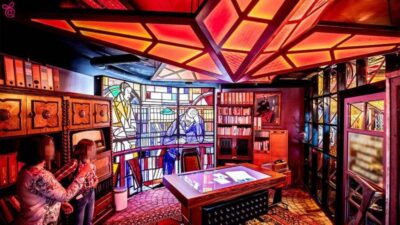
Communist History Tour with House of Terror Option
Read our review →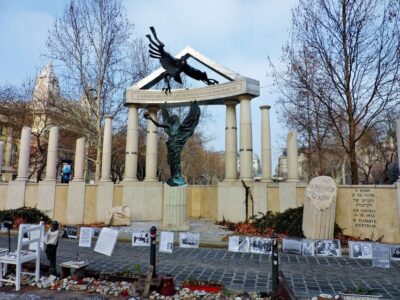
3-Hour Walking Tour About Communism (Small Group)
Read our review →

Lives of Hungarians Under Communist and Capitalist system
Read our review →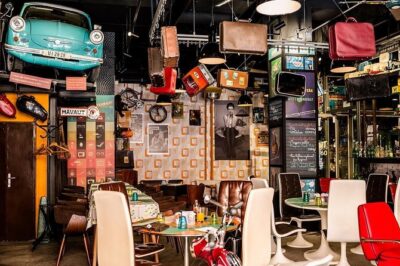
Private Budapest Hammer & Sickle Communist Times Tour
Read our review →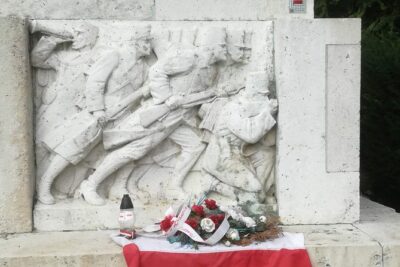
Browse the lists this tour appears in