
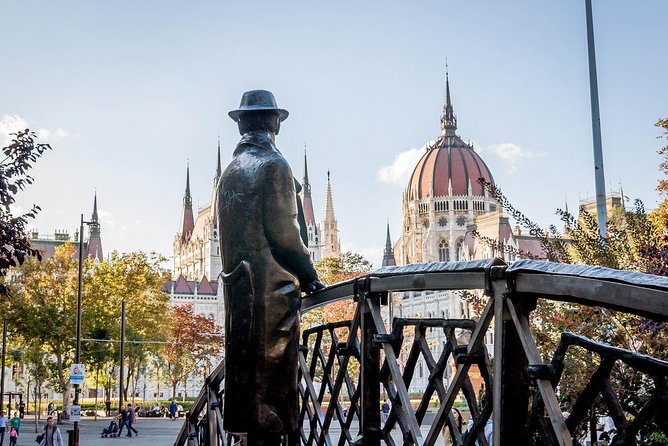
Reviewed · COMMUNIST-ERA HISTORY TOURS
Communist Budapest Private Walking Tour
Budapest’s communist past comes into focus through ordinary streets, grand political monuments, and places tied to the 1956 uprising. This private tour links Parliament, Liberty Square, Bem József Square, Puskás Stadium, and the former secret police headquarters into one clear story about Hungary from 1949 to 1989.
I like the private format, which lets a historian adjust the discussion to your interests. I also like the practical route, especially the chance to see socialist housing and propaganda art rather than only the famous city center. The main drawback is price: at $393.17 per group, it makes the most sense for several people sharing the cost.
In This Review
- Key points at a glance
- Why communist Budapest is worth seeing
- Starting near Parliament and the 1956 uprising
- Liberty Square and the Cold War in plain view
- Puskás Stadium and socialist realist propaganda
- Ronald Reagan’s statue and Hungary’s American connection
- Bem József Square and the first big demonstration
- The 1970s housing estate and everyday life
- Ending outside the House of Terror Museum
- What the private guide adds
- Price, group size, and practical value
- Who should book this Budapest walk
- My booking verdict
- FAQ
- How long does the Communist Budapest Private Walking Tour last?
- What language is the tour offered in?
- Is hotel pickup available?
- Are metro and tram tickets included?
- Where does the tour end?
- Is admission to the House of Terror Museum included?
- What sites are included in the route?
- How many people can join the private tour?
Key points at a glance
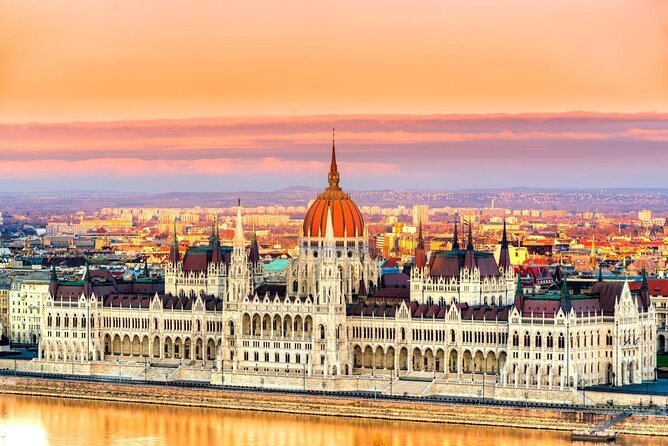
- 1956 begins at Bem József Square: See where the first major demonstration of the Hungarian uprising began.
- Cold War Budapest in one route: Visit Liberty Square, the Soviet Army monument, Ronald Reagan’s statue, and an atomic shelter.
- Socialist architecture gets attention: The tour includes a 1970s housing estate and socialist realist statues at Puskás Stadium.
- A historian leads the walk: Andras and Kata are among the guides associated with this experience, with a clear, personal storytelling style.
- Public transport is part of the experience: Metro and tram tickets are not included, but the guide helps you buy them if needed.
- The ending points to deeper study: Finish outside the House of Terror Museum, with entry available separately.
Why communist Budapest is worth seeing
Budapest is often sold through its thermal baths, grand cafés, river views, and Habsburg architecture. Those sights deserve your time, but they tell only part of the city’s story. From 1949 to 1989, Hungary lived under a one-party communist system shaped by Soviet power, shortages, surveillance, political pressure, and the distinctive compromises of what became known as goulash communism.
That phrase points to a system that could be less rigid than the Soviet model in some areas, while still limiting political freedom. Daily life could include subsidized services and a degree of consumer comfort, but also long queues, restricted travel, censorship, and fear of the secret police. The tour helps you connect those broad ideas to real addresses and public spaces.
I find this approach more useful than simply reading dates on plaques. At Bem Square, political change feels tied to a specific crowd and a specific starting point. At the former People’s Stadium, large statues and sporting architecture show how the state used public spectacle. At Liberty Square, memorials from different political eras compete for attention in a single urban setting.
More on Budapest under communism:
- Budapest: Communist History Tour with House of Terror Option
★ 4.8 · 182 reviews - Budapest: 3-Hour Walking Tour About Communism (Small Group)
★ 4.7 · 70 reviews - Communism in Hungary with a Historian
★ 5.0 · 70 reviews
Starting near Parliament and the 1956 uprising
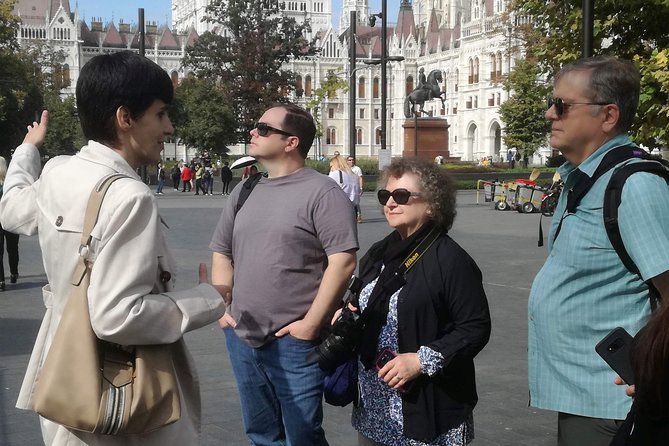
The route begins with public transport to Kossuth Square, in front of the Hungarian Parliament Building. Depending on your pickup arrangement, your guide may meet you at your central hotel or flat and lead you by metro, tram, or on foot. If you already have a Budapest transport pass, bring it. If not, the guide assists with the required tickets.
The Parliament area is a strong opening because it connects national politics with the 1956 Revolution. You will examine monuments associated with the uprising before moving toward Liberty Square. The tour does not treat 1956 as a distant textbook event. Instead, it uses the surrounding buildings and memorials to explain how Hungarians challenged Soviet-backed rule and how that challenge was crushed.
You should expect about 25 minutes here. That is enough for a focused introduction, but not enough for a full museum-style treatment of the revolution. If 1956 is your main interest, tell your guide at the start. The private structure gives you a better chance of getting more detail than you would on a fixed group walk.
Liberty Square and the Cold War in plain view
Liberty Square offers one of the tour’s most striking clusters of political symbols. Here you discuss the Cold War near the US Embassy, see the monument to the Soviet Army, and consider the presence of Ronald Reagan’s statue. The square also has an atomic shelter connected with the anxious military mood of the period.
This is useful because Cold War politics can seem abstract when reduced to rival speeches and shifting borders. In this square, the tension becomes physical. The US Embassy represents the Western power watched closely by the communist state. The Soviet monument reflects the force behind Hungary’s postwar political order. Reagan’s statue reflects a later Hungarian view of the American president and his role in bringing down the Iron Curtain.
The tour also shows how public memory can change. A monument built to honor one political system may later be questioned, reframed, or placed beside symbols of opposition. I like this stop for that reason. It is not just about identifying statues. It is about asking who placed them there, what message they were meant to send, and how people read them now.
Puskás Stadium and socialist realist propaganda
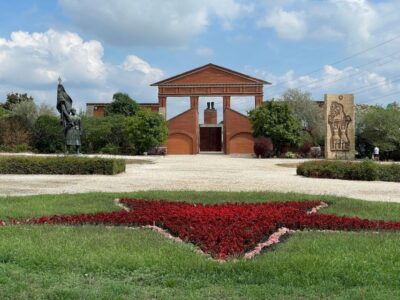
The former People’s Stadium, now Puskás Stadium, provides a different view of communist power. The tour pauses for about 20 minutes to look at classic socialist realist statues that remain in place. These figures were designed to project strength, discipline, work, athleticism, and loyalty to the state.
You do not need to be an art specialist to understand the effect. Socialist realism favored clear messages and idealized bodies. Workers, athletes, and soldiers were shown as powerful examples of the society the regime wanted to present. The statues near the stadium make that propaganda style easier to read.
This stop also broadens the tour beyond protests and secret police offices. A political system does not operate through fear alone. It also uses sports, public ceremonies, architecture, and mass gatherings to shape identity. The former People’s Stadium was associated with large public events and the pageantry of the era.
The stop is outside, and admission is free. That keeps the pace moving, though anyone wanting to enter the stadium or study its modern sporting role would need to make separate plans. The value here is the guide’s explanation of what you are seeing, not an indoor stadium visit.
More walking tours in Budapest:
- Budapest: Buda Castle Walk with Saint Stephen’s Hall
★ 4.5 · 3,012 reviews - Big Bus Budapest Hop-On Hop-Off Bus and Walking Tour
★ 3.5 · 2,206 reviews - Budapest: Buda Castle District Walking Tour
★ 4.6 · 2,108 reviews - Budapest City Landmarks Walking Tour in 2 Hours
★ 5.0 · 2,048 reviews
Ronald Reagan’s statue and Hungary’s American connection
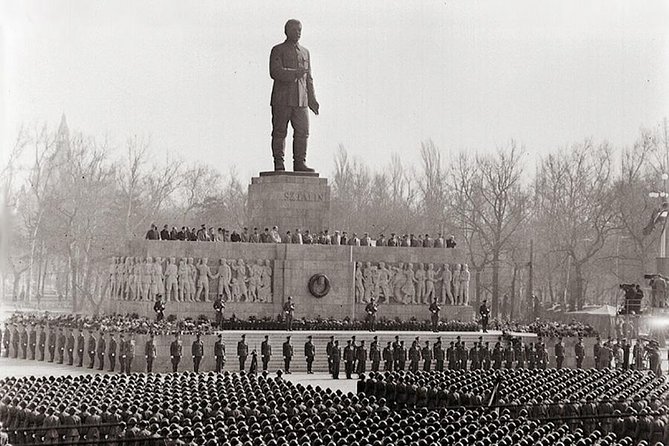
The Ronald Reagan statue gets its own short stop of about 10 minutes. It is easy to pass by a monument like this without understanding why it is in Budapest. Your guide explains the Hungarian sense of obligation to Reagan for his efforts against the Iron Curtain.
This is a useful counterpoint to the Soviet monument nearby. The tour presents both the local and international sides of Hungary’s communist experience. Hungarians lived under a system shaped by Moscow, but they also watched the wider contest between East and West. Reagan’s statue represents one later interpretation of how that contest ended.
I would not treat this as a full study of US foreign policy. It is a compact stop that works best as part of the larger route. The private format helps here, since you can ask how the monument fits into Hungarian memory and political symbolism.
Bem József Square and the first big demonstration
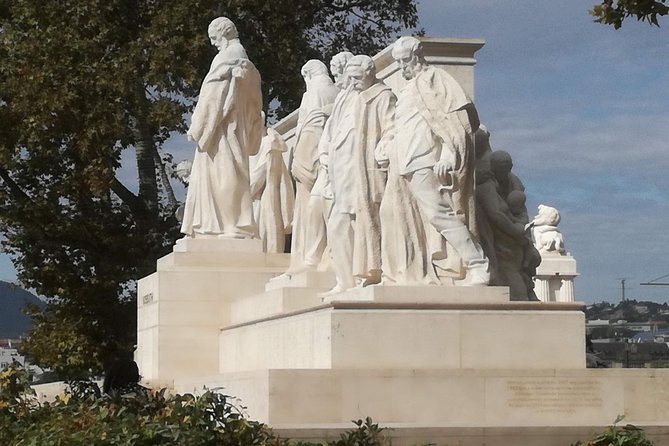
Bem József Square is one of the most important stops for anyone interested in the 1956 uprising. The first major demonstration began here, making the square a place where public protest moved from scattered feeling to visible political action.
You have about 25 minutes to explore the square and discuss its role. This is the point where the tour’s earlier context should begin to connect. Parliament, Cold War rivalry, state control, and public monuments all lead toward the question of what happens when people challenge the system in the street.
A coffeehouse on the square has retained its original interior from the 1960s. That small detail matters. Political history is not only found in official buildings and monuments. A café interior can suggest the look and feel of everyday life during the period, even if it cannot explain every part of it.
The tour does not promise a meal or a café stop, so treat the coffeehouse as a visual and historical detail rather than a planned refreshment break. If you want time there, ask your guide. A private tour is most useful when you make your priorities clear.
The 1970s housing estate and everyday life
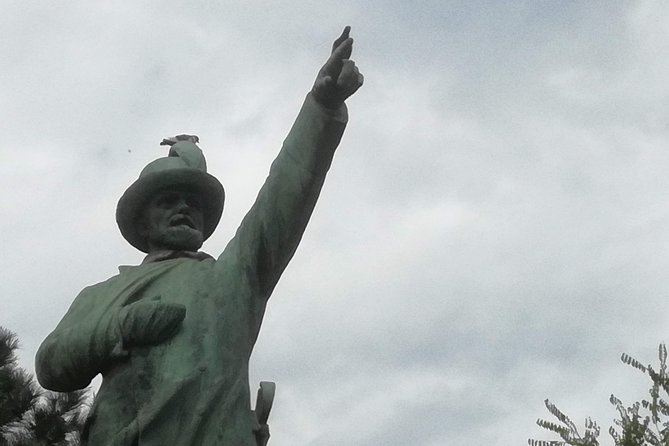
The itinerary also includes a 1970s housing estate, an important feature for understanding life beyond political centers. Large housing projects were part of the communist effort to provide modern homes for a growing urban population. They also created neighborhoods shaped by standardized design and state planning.
For you, this stop may be less instantly dramatic than Parliament or the House of Terror. That is precisely why it has value. Communist rule was experienced in apartment blocks, transport systems, workplaces, schools, shops, and queues, not only in famous political squares.
The housing estate helps explain the mixed reality of goulash communism. State housing and basic social guarantees could offer stability, yet daily life still included privations and limits. Your guide can help place the buildings within that balance of material security and political restriction.
The supplied route details do not specify the exact housing estate or the amount of time spent there. Ask when booking or at the start if this is a priority for you. The broader point is clear: this tour makes room for ordinary urban life, not just major symbols.
Ending outside the House of Terror Museum
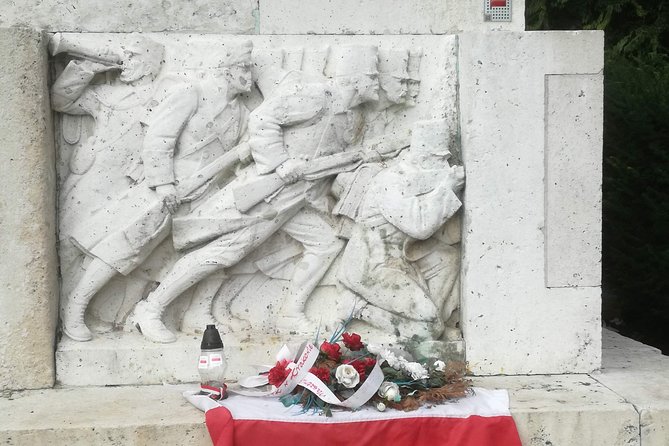
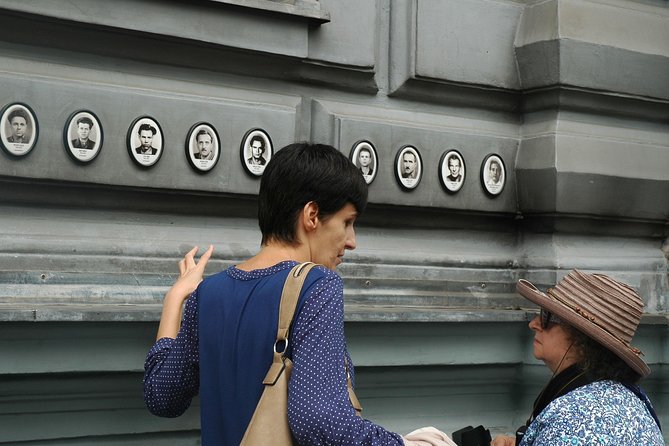
The walk concludes outside the House of Terror Museum at Andrássy út 60. The building was once the headquarters of Hungary’s communist secret services, and a section of the Berlin Wall sits in front of it.
Entry to the museum is not included. That is both a limitation and a sensible way to end a three-hour walk. You receive the outside context first, then decide if you have the time and energy for an indoor visit. The museum is the natural next step if you want exhibits about Hungary’s experience under fascist and communist dictatorships.
Do not assume you can simply add the museum without planning. The tour ends outside, and the exhibit requires its own admission. If you want to visit after the walk, check the museum’s opening arrangements separately and allow enough time.
The endpoint also works well for your Budapest schedule. It places you on Andrássy Avenue rather than returning you to the start, so you can continue exploring the city from there. The exact amount of walking is combined with metro and tram travel, which makes comfortable shoes and a valid transport ticket sensible choices.
What the private guide adds
The guide is the heart of this experience. Andras is described as kind, flexible, and able to adjust the tour to match a group’s interests. Kata is noted for explaining clearly and bringing a broad world view, humor, grace, and charm to the discussion.
Those qualities matter on a subject that can quickly become a string of dates and political labels. A good guide can explain why a statue is still present, how a square was used, or what an abstract policy meant for ordinary households. Andras and Kata are named guides associated with the tour, but you should not assume you will receive one of them unless the provider confirms it.
The tour is offered in English. Since it is private, you can ask for more attention to the 1956 Revolution, Cold War politics, architecture, propaganda, or daily life. If your group has mixed interests, say so early. Three hours is enough for a strong introduction, but not enough to cover every part of Hungary’s twentieth-century story in equal detail.
Price, group size, and practical value
The listed price is $393.17 per group. That sounds high beside a standard walking tour, but the comparison is not quite fair. You are paying for a private historian, hotel or flat pickup in central Budapest, a tailored discussion, and a route that uses public transport to connect sites spread across the city.
For two people, the cost is substantial. For four to six people, it becomes easier to justify, especially if everyone has a serious interest in the subject. The published details contain different group limits: the price description says up to 10 people, the highlights mention a maximum of 6, and the additional information says a maximum of 8. Confirm the exact capacity before booking, especially for a larger party.
Transport tickets are not included. Your guide assists with buying metro or tram tickets if you do not have a pass, so this is a small extra cost rather than a major complication. Pickup is offered from a central hotel or flat, but you need to provide the address when requested. If you do not provide one, meet at the default starting point 15 minutes before departure.
You can choose a morning or afternoon start. Morning may leave time for the House of Terror afterward, while an afternoon tour could fit better around other Budapest sights. Either way, the endpoint is fixed at the museum, not back at your accommodation.
Who should book this Budapest walk
I would choose this tour if you want political history tied to real places and prefer asking questions rather than following a large group. It suits adults, students, families with older children, and anyone who has already seen the main sights and wants to understand the city’s twentieth century.
It is also a good choice if you want a historian’s help reading Budapest’s public art. The statues, memorials, embassy, shelter, housing estate, and former secret police headquarters all make more sense when someone explains the messages behind them.
I would hesitate if you want a relaxed stroll through picturesque streets, an interior-heavy tour, or a cheap introduction to Budapest. Much of the experience is outdoors, several stops are brief, and the price is built around private guiding. You also need to pay separately for public transport and the House of Terror Museum.
The free cancellation policy allows you to cancel up to 24 hours before the start time for a full refund. Changes made less than 24 hours before departure are not accepted, with cut-off times based on Budapest local time.
My booking verdict
Book this tour if communist-era Budapest is a real priority and you can share the cost with a small group. The best parts are the combination of major political sites with less obvious places such as the 1970s housing estate and the socialist statues near Puskás Stadium.
The strongest reason to choose it is the private historian. Andras and Kata bring the kind of clear explanation and personal perspective that can turn a scattered set of monuments into a connected story. I would confirm the group-size limit, ask which guide is assigned, and decide in advance if you want to add the House of Terror afterward.
If you mainly want Budapest’s grand architecture and café culture, spend your money elsewhere. If you want to understand how Hungary lived under communist rule, this is a focused and practical three-hour choice.
FAQ
How long does the Communist Budapest Private Walking Tour last?
The tour lasts approximately three hours.
What language is the tour offered in?
The tour is offered in English.
Is hotel pickup available?
Yes. Your guide can meet you at a central hotel or flat and lead the group by metro, tram, or on foot. You need to provide the address when requested.
Are metro and tram tickets included?
No. Transport tickets are not included, but the guide will help you purchase the required tickets if you do not already have a transport pass.
Where does the tour end?
The tour ends outside the House of Terror Museum at Andrássy út 60 in Budapest.
Is admission to the House of Terror Museum included?
No. The tour concludes outside the museum, and entry to the exhibit is not included.
What sites are included in the route?
The route includes the Parliament area, Kossuth Square, Liberty Square, the Ronald Reagan statue, Puskás Stadium, Bem József Square, a 1970s housing estate, socialist-era statues, and the former communist secret service headquarters.
How many people can join the private tour?
The published details give different limits, including up to 6, up to 8, and up to 10 people. Confirm the applicable maximum with Insight Cities before booking.
Recently added around Budapest
- Hiking + Chairlift ride + viewpoints in Budapest★ 5.0 · 3 reviews
- FoolsCode: EscapeRoom/Sightseeing tour with Actor Tourguide★ 5.0 · 3 reviews
- Grand Budapest tour with private transportation★ 5.0 · 3 reviews
- Budapest: Private Customizable Tour in French★ 5.0 · 3 reviews
- Budapest: Private, Personalized Pub Crawl, 3 drinks included★ 4.5 · 3 reviews
- Budapest Drinks and Piano Show Cruise★ 4.5 · 3 reviews
- Discover Budapest Using Tram Two★ 5.0 · 3 reviews
- Budapest Urban Treats – Cake and Coffee House Tour★ 5.0 · 3 reviews
Communist-Era History Tours, compared.
Communist History Tour with House of Terror Option
Read our review →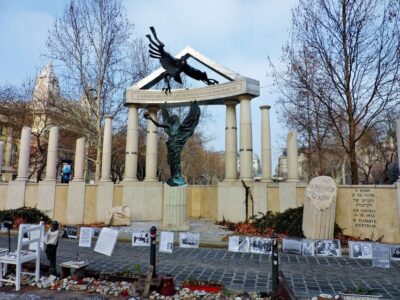
3-Hour Walking Tour About Communism (Small Group)
Read our review →

Lives of Hungarians Under Communist and Capitalist system
Read our review →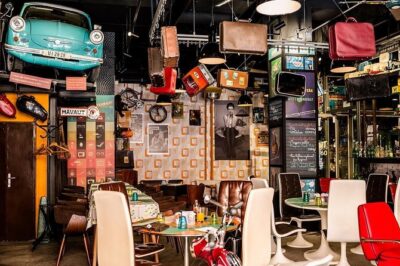
Private Budapest Hammer & Sickle Communist Times Tour
Read our review →
Browse the lists this tour appears in